
SYMBIOSIS FOOD CHAINS Unit 5 Ecology Introduction Relationships
SYMBIOSIS & FOOD CHAINS Unit 5 - Ecology
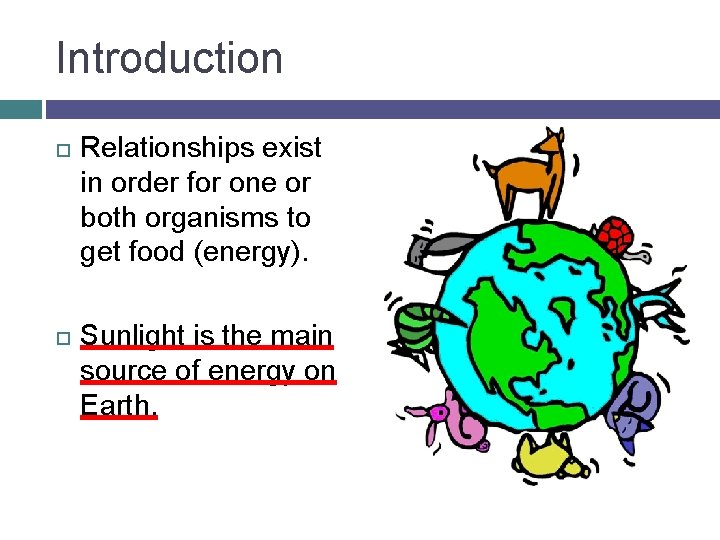
Introduction Relationships exist in order for one or both organisms to get food (energy). Sunlight is the main source of energy on Earth.
Food Chains/Food Webs Section 1

Feeding Style Autotrophs Producers �Produce their own food; get energy from sunlight Heterotrophs Consumers �acquire energy from other organisms.
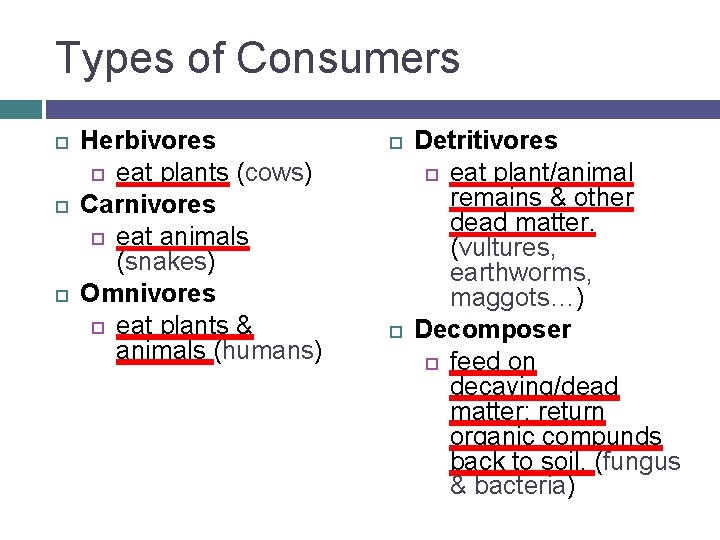
Types of Consumers Herbivores eat plants (cows) Carnivores eat animals (snakes) Omnivores eat plants & animals (humans) Detritivores eat plant/animal remains & other dead matter. (vultures, earthworms, maggots…) Decomposer feed on decaying/dead matter; return organic compunds back to soil. (fungus & bacteria)
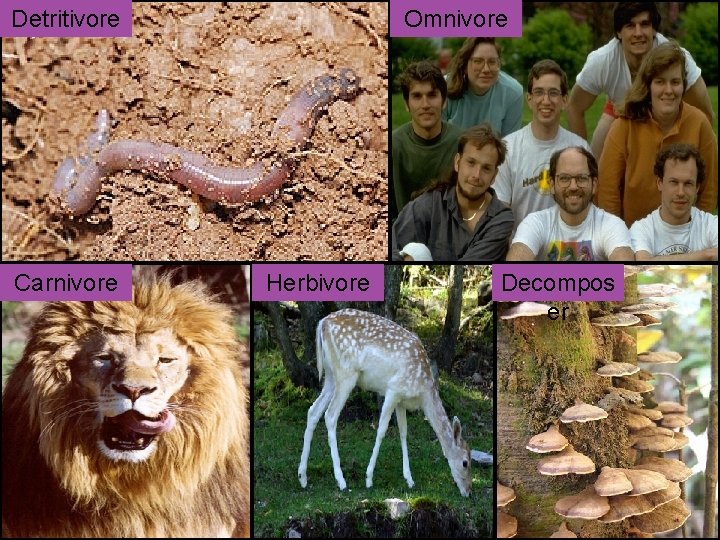
Detritivore Carnivore Omnivore Herbivore Decompos er
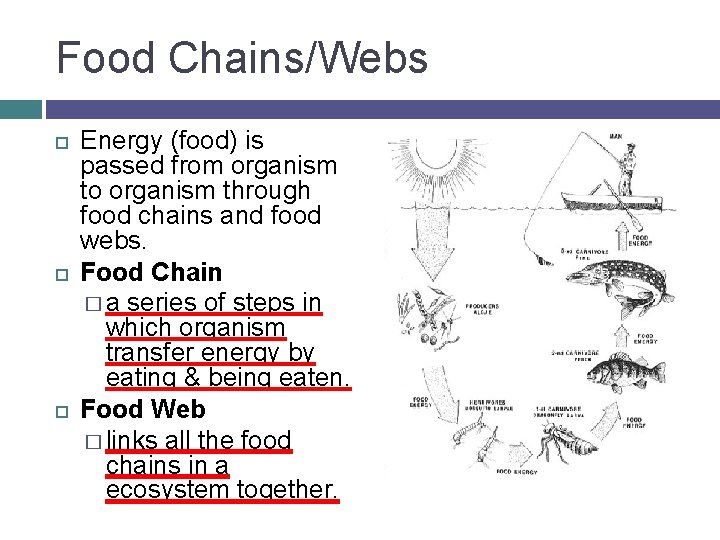
Food Chains/Webs Energy (food) is passed from organism to organism through food chains and food webs. Food Chain � a series of steps in which organism transfer energy by eating & being eaten. Food Web � links all the food chains in a ecosystem together.
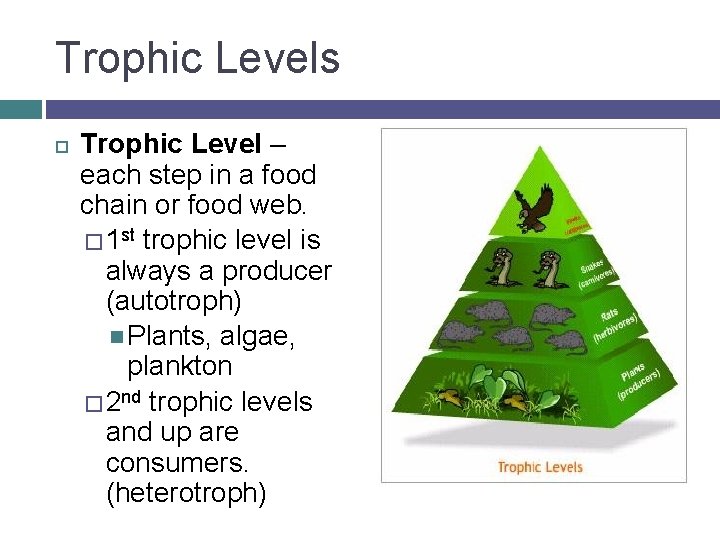
Trophic Levels Trophic Level – each step in a food chain or food web. � 1 st trophic level is always a producer (autotroph) Plants, algae, plankton � 2 nd trophic levels and up are consumers. (heterotroph)
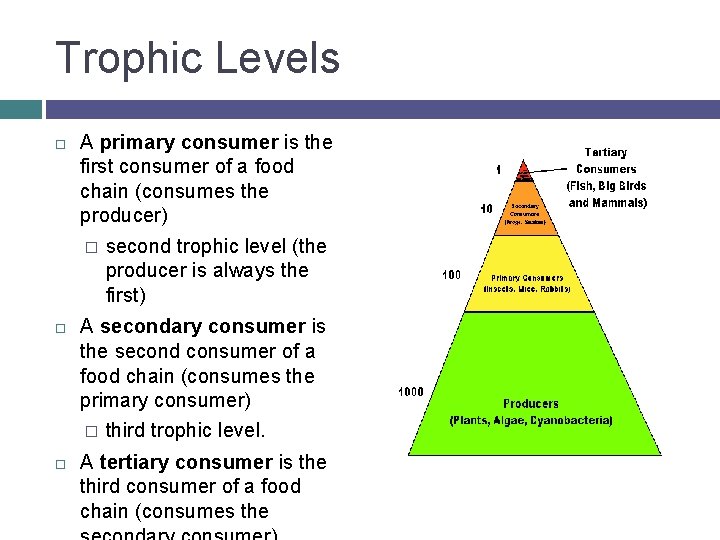
Trophic Levels A primary consumer is the first consumer of a food chain (consumes the producer) � second trophic level (the producer is always the first) A secondary consumer is the second consumer of a food chain (consumes the primary consumer) � third trophic level. A tertiary consumer is the third consumer of a food chain (consumes the
Relationships Section 2
Relationships I. ) Symbiosis 2 or more species live together in a close, long-term association. II. ) Predation � one organism feeds on another; one benefits and one is hurt (may or may not be kill)
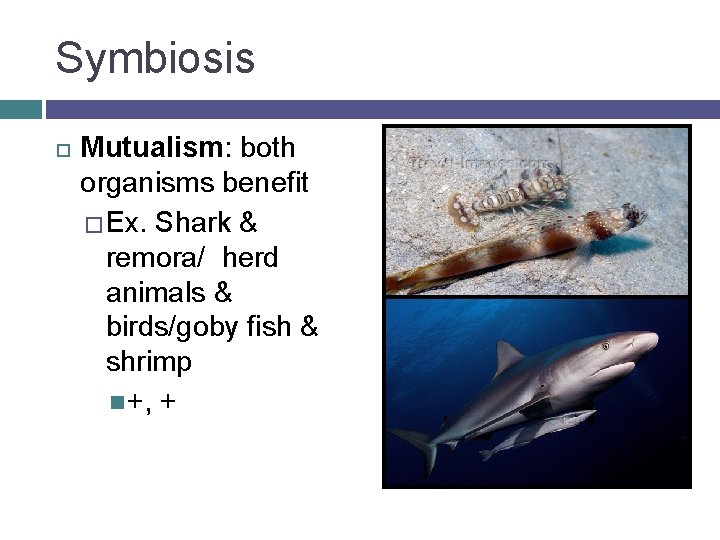
Symbiosis Mutualism: both organisms benefit � Ex. Shark & remora/ herd animals & birds/goby fish & shrimp +, +
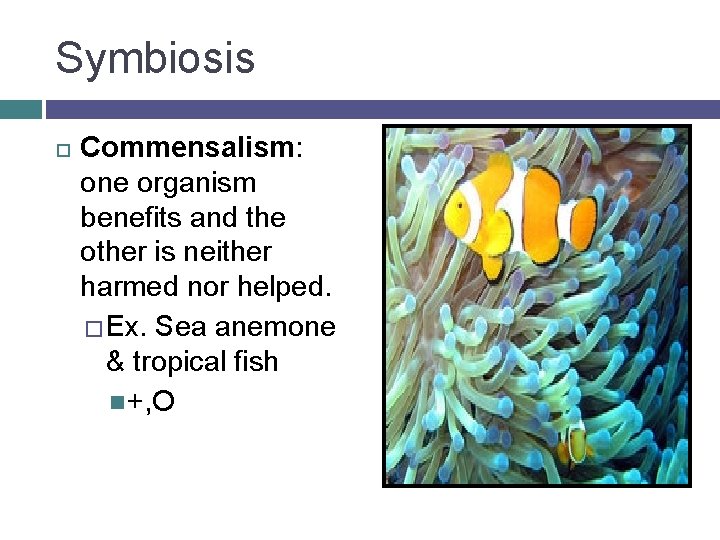
Symbiosis Commensalism: one organism benefits and the other is neither harmed nor helped. � Ex. Sea anemone & tropical fish +, O
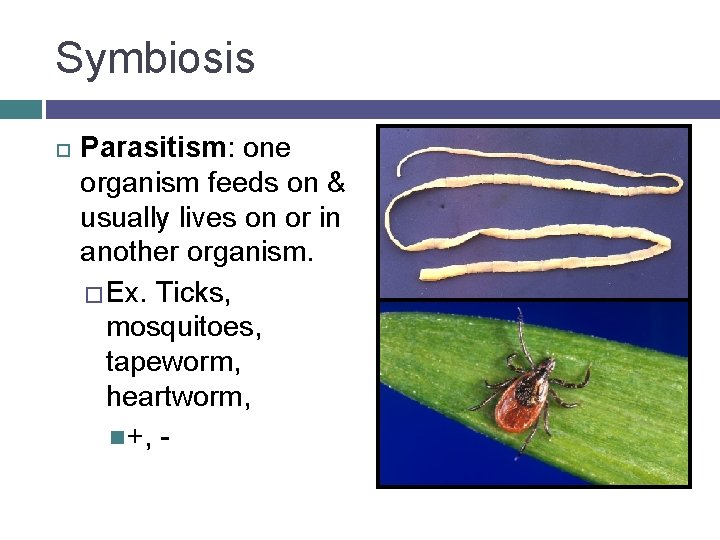
Symbiosis Parasitism: one organism feeds on & usually lives on or in another organism. � Ex. Ticks, mosquitoes, tapeworm, heartworm, +, -
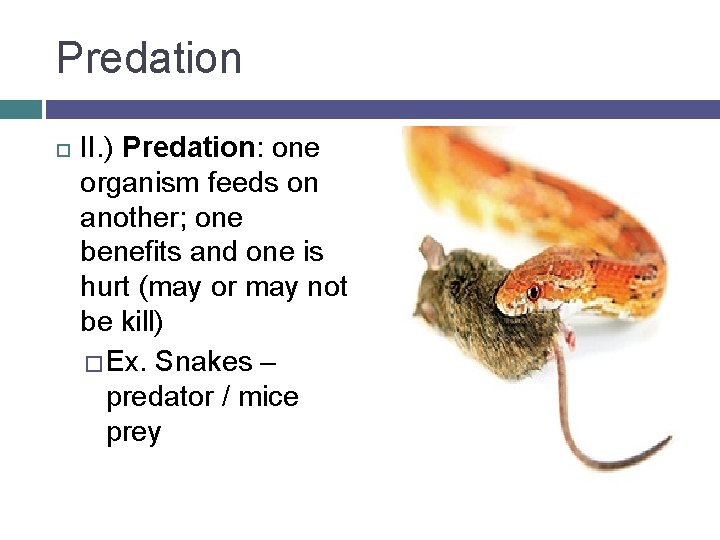
Predation II. ) Predation: one organism feeds on another; one benefits and one is hurt (may or may not be kill) � Ex. Snakes – predator / mice prey
- Slides: 15