
SYLICA 2013 Bowater lectures Using Omic Technologies to
SYLICA 2013 Bowater lectures Using ‘Omic Technologies to Investigate Gene Function SYLICA 'Omic Technologies – Bowater Feb 2013
Bowater Lectures in Brno, Feb. 2013 4 lectures on linked topics will be delivered during the coming week: • Contemporary DNA Sequencing Technologies – 26/2/2013 @ 10: 00 • Using ‘Omic Technologies to Investigate Gene Function – 26/2/2013 @ 14: 00 • Biophysical Methods to Study Molecular Interactions – 27/2/2013 @ 10: 00 • Synthetic Biology & Nanotechnology: Tomorrow’s Molecular Biology? – 28/2/2013 @ 10: 00 SYLICA 'Omic Technologies – Bowater Feb 2013
Genomics, ‘Omics & Technology • Molecular biology: major scientific discipline for past ~50 years • Genomics = “analysis of genomes”: became important science during 1990’s • Analyses of various other biological molecules have developed into their own scientific disciplines; e. g. Metabolomics = “analysis of metabolites”, etc. • Transcriptomics/Proteomics: developed during past 10 -15 years • Bioinformatics: has developed as major branch of science - enables efficient analysis of data from “omics” experiments SYLICA 'Omic Technologies – Bowater Feb 2013
Genomics & Technology • Significance of “omics” coincides with dramatic improvements in different technologies: Ømolecular biology: increased range of approaches for purification and manipulation of proteins and nucleic acids Øcomputers: required for gathering and analysis of data Øinternet: allows data to be shared, quickly and easily • All developments have increased speed and costeffectiveness - available to much wider audience SYLICA 'Omic Technologies – Bowater Feb 2013
Transcriptomes • Genome: all of hereditary information encoded in the DNA (or RNA) • Transcriptome: set of all m. RNAs ("transcripts”) produced from a genome • Term can be applied to: Øcomplete set of transcripts for a given organism Øspecific subset of transcripts present in a particular cell type or under specific growth conditions • Transcriptome varies because it reflects genes that are actively expressed at any given time SYLICA 'Omic Technologies – Bowater Feb 2013
DNA Microarrays Show Differences in Gene Expression • Microarray chips contain fragments from genes in the group to be analyzed – Full genome of bacteria or yeast, or protein families from larger genomes • m. RNA or c. DNA from different samples are differentially tagged • Analysis on the same chip shows differences SYLICA 'Omic Technologies – Bowater Feb 2013
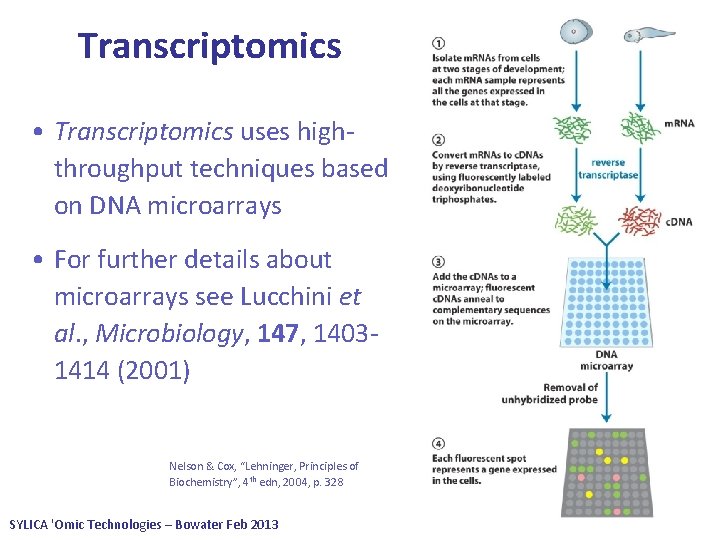
Transcriptomics • Transcriptomics uses highthroughput techniques based on DNA microarrays • For further details about microarrays see Lucchini et al. , Microbiology, 147, 14031414 (2001) Nelson & Cox, “Lehninger, Principles of Biochemistry”, 4 th edn, 2004, p. 328 SYLICA 'Omic Technologies – Bowater Feb 2013
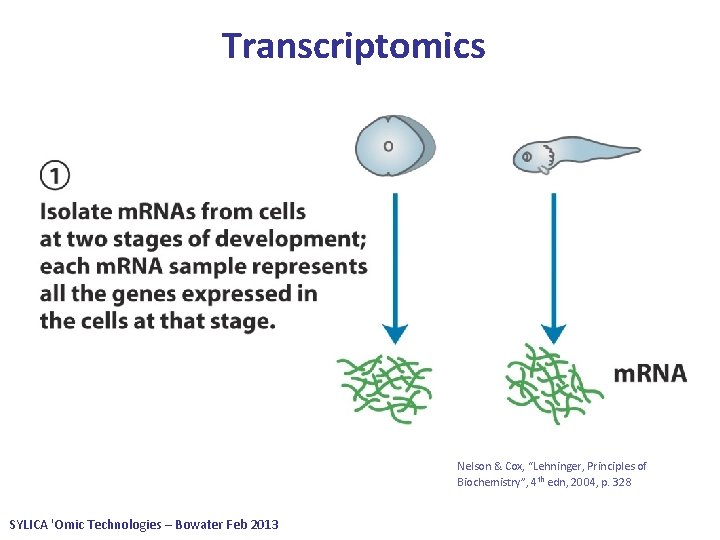
Transcriptomics Nelson & Cox, “Lehninger, Principles of Biochemistry”, 4 th edn, 2004, p. 328 SYLICA 'Omic Technologies – Bowater Feb 2013
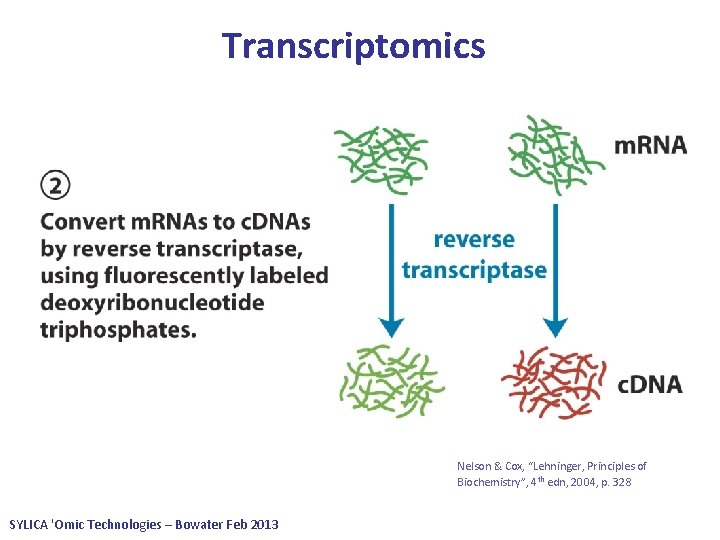
Transcriptomics Nelson & Cox, “Lehninger, Principles of Biochemistry”, 4 th edn, 2004, p. 328 SYLICA 'Omic Technologies – Bowater Feb 2013
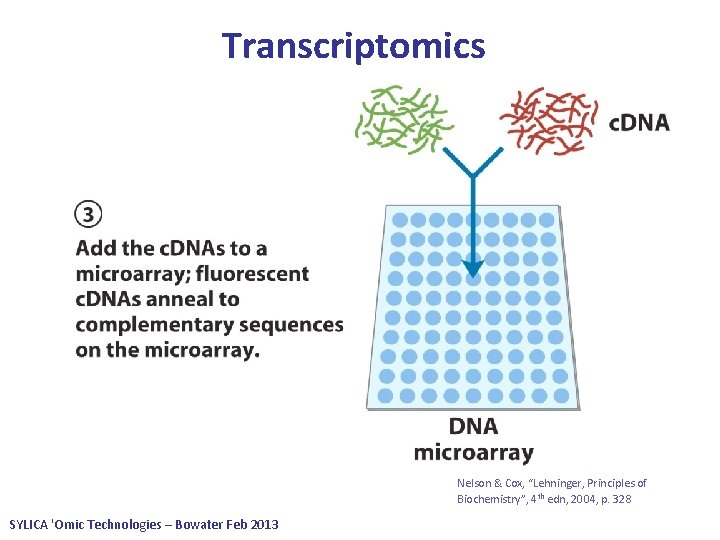
Transcriptomics Nelson & Cox, “Lehninger, Principles of Biochemistry”, 4 th edn, 2004, p. 328 SYLICA 'Omic Technologies – Bowater Feb 2013
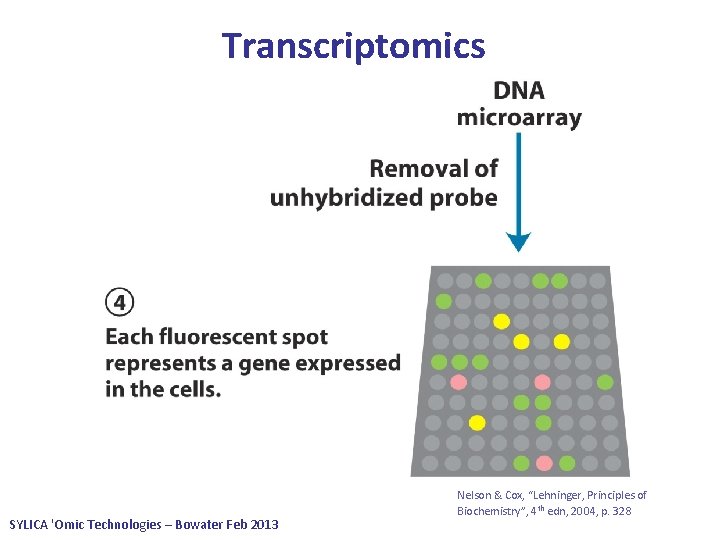
Transcriptomics SYLICA 'Omic Technologies – Bowater Feb 2013 Nelson & Cox, “Lehninger, Principles of Biochemistry”, 4 th edn, 2004, p. 328
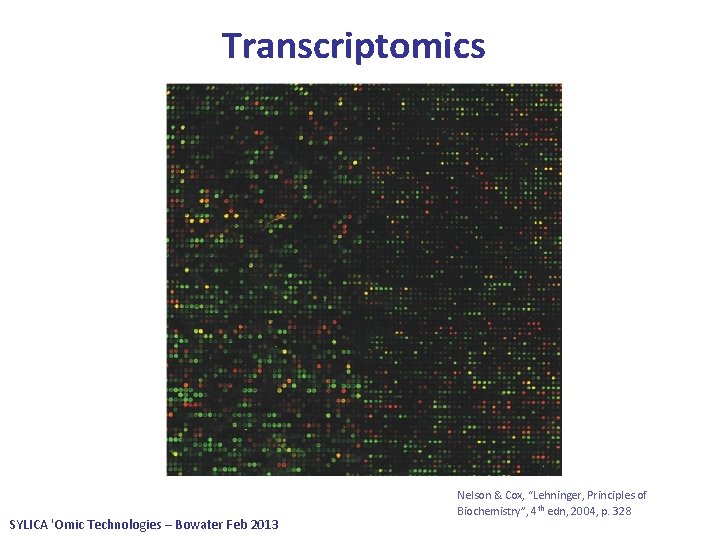
Transcriptomics SYLICA 'Omic Technologies – Bowater Feb 2013 Nelson & Cox, “Lehninger, Principles of Biochemistry”, 4 th edn, 2004, p. 328
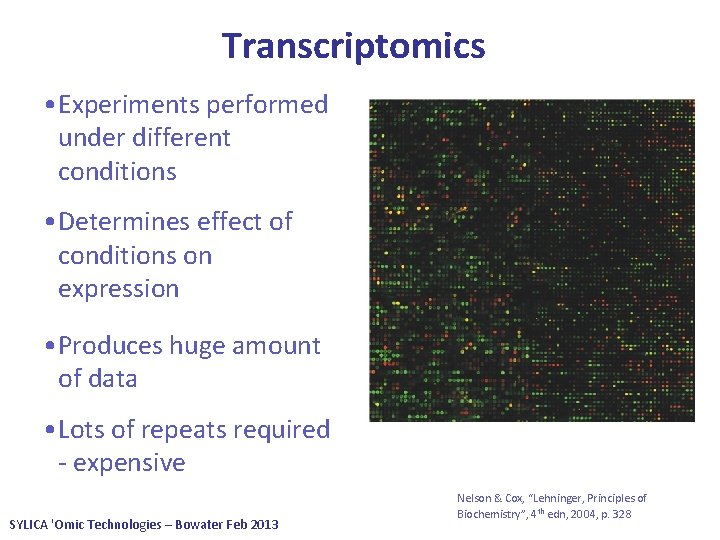
Transcriptomics • Experiments performed under different conditions • Determines effect of conditions on expression • Produces huge amount of data • Lots of repeats required - expensive SYLICA 'Omic Technologies – Bowater Feb 2013 Nelson & Cox, “Lehninger, Principles of Biochemistry”, 4 th edn, 2004, p. 328
Polymerase Chain Reaction (PCR) • Used to amplify DNA in the test tube – Can amplify regions of interest (genes) within DNA – Can amplify complete circular plasmids • Mix together – Target DNA – Primers (oligonucleotides complementary to target) – Nucleotides: d. ATP, d. CTP, d. GTP, d. TTP – Thermostable DNA polymerase • Place the mixture into thermocycler – Melt DNA at ~95°C – Cool to ~ 50– 60°C, primers anneal to target – Polymerase extends primers in 5’ 3’ direction – After a round of elongation is done, repeat steps SYLICA 'Omic Technologies – Bowater Feb 2013
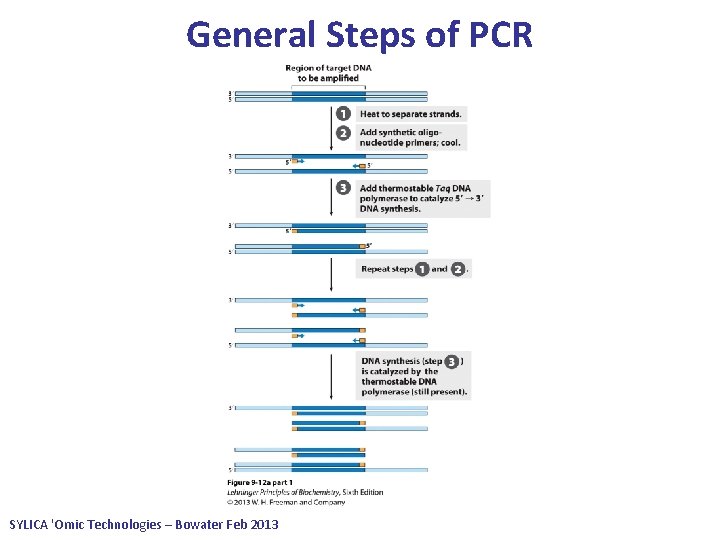
General Steps of PCR SYLICA 'Omic Technologies – Bowater Feb 2013
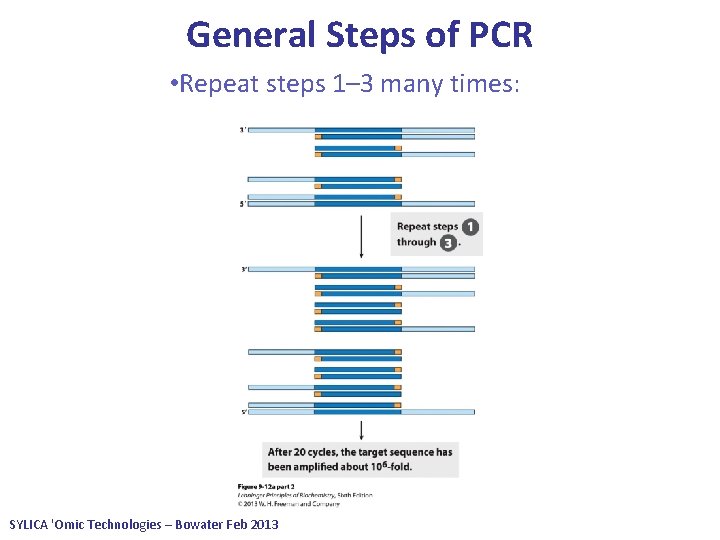
General Steps of PCR • Repeat steps 1– 3 many times: SYLICA 'Omic Technologies – Bowater Feb 2013
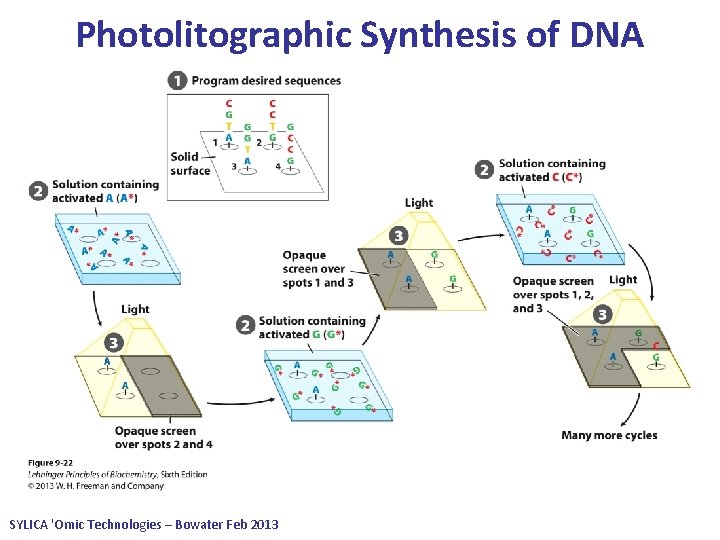
Photolitographic Synthesis of DNA SYLICA 'Omic Technologies – Bowater Feb 2013
DNA Microarrays: Applications DNA microarrays allow simultaneous screening of many thousands of genes: high-throughput screening • Genome-wide genotyping – Which genes are present in this individual? • Tissue-specific gene expression – Which genes are used to make proteins? • Mutational analysis – Which genes have been mutated? SYLICA 'Omic Technologies – Bowater Feb 2013
Adaptations to PCR • Reverse Transcriptase PCR (RT-PCR) – Used to amplify RNA sequences – First step uses reverse transcriptase to convert RNA to DNA • Quantitative PCR (Q-PCR) – Used to show quantitative differences in gene levels SYLICA 'Omic Technologies – Bowater Feb 2013
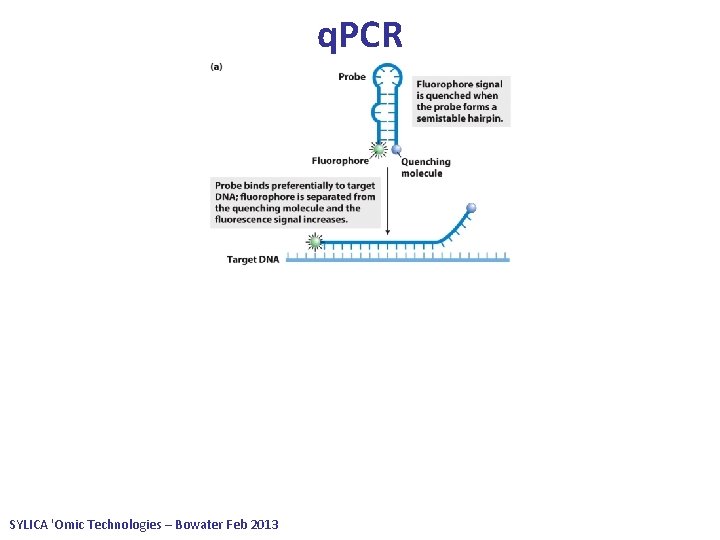
q. PCR SYLICA 'Omic Technologies – Bowater Feb 2013
Proteomes • Proteome: set of all proteins produced under a given set of conditions • Term can be applied to: Øcomplete set of proteins for a given organism Øspecific subset of proteins present in a particular cell type or under specific growth conditions • Proteome varies because it reflects genes that are actively expressed at any given time • Proteomics analyses many samples using 2 Delectrophoresis and mass spectrometry • High-throughput, but less than transcriptomics SYLICA 'Omic Technologies – Bowater Feb 2013
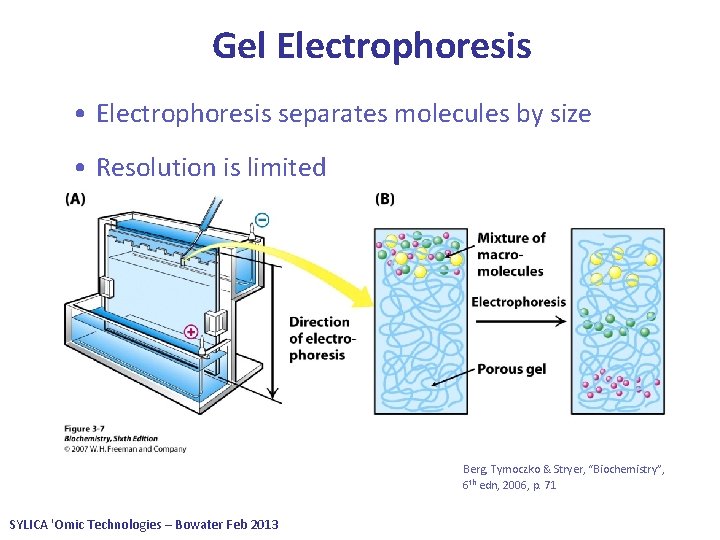
Gel Electrophoresis • Electrophoresis separates molecules by size • Resolution is limited Berg, Tymoczko & Stryer, “Biochemistry”, 6 th edn, 2006, p. 71 SYLICA 'Omic Technologies – Bowater Feb 2013
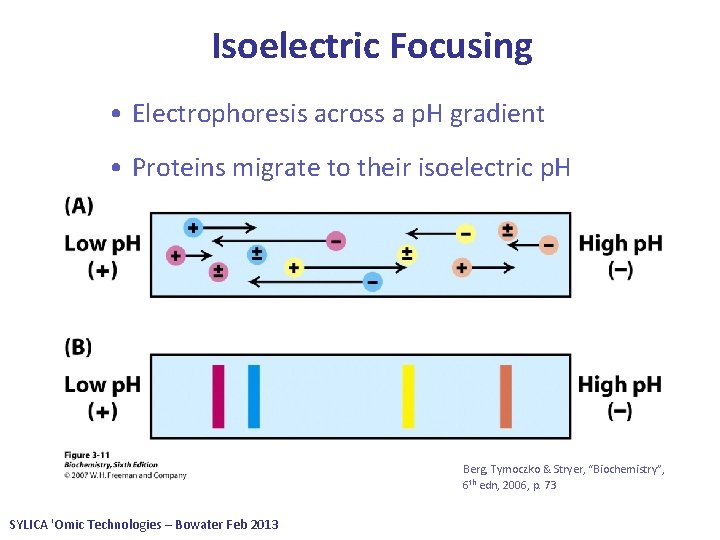
Isoelectric Focusing • Electrophoresis across a p. H gradient • Proteins migrate to their isoelectric p. H Berg, Tymoczko & Stryer, “Biochemistry”, 6 th edn, 2006, p. 73 SYLICA 'Omic Technologies – Bowater Feb 2013
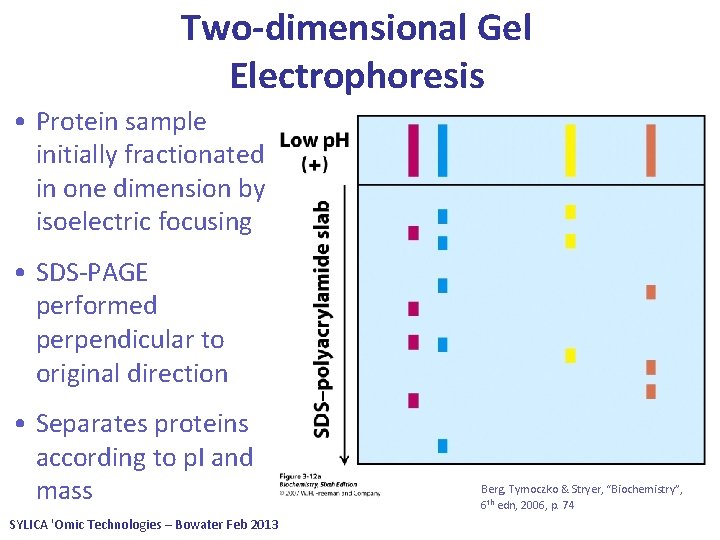
Two-dimensional Gel Electrophoresis • Protein sample initially fractionated in one dimension by isoelectric focusing • SDS-PAGE performed perpendicular to original direction • Separates proteins according to p. I and mass SYLICA 'Omic Technologies – Bowater Feb 2013 Berg, Tymoczko & Stryer, “Biochemistry”, 6 th edn, 2006, p. 74
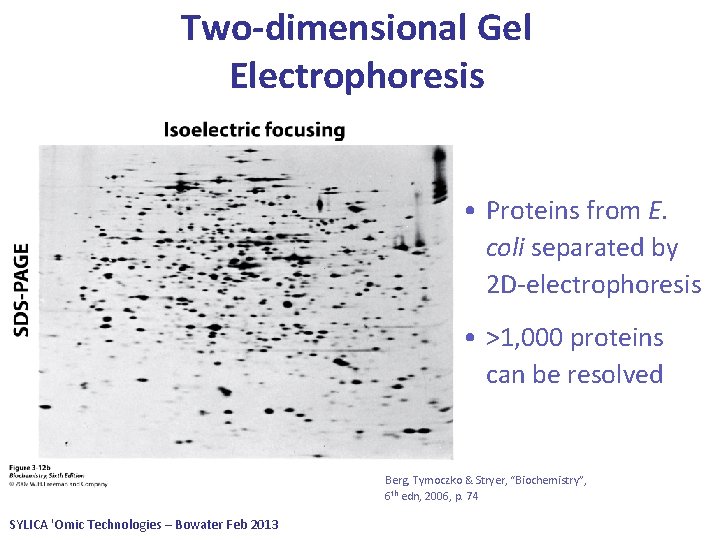
Two-dimensional Gel Electrophoresis • Proteins from E. coli separated by 2 D-electrophoresis • >1, 000 proteins can be resolved Berg, Tymoczko & Stryer, “Biochemistry”, 6 th edn, 2006, p. 74 SYLICA 'Omic Technologies – Bowater Feb 2013
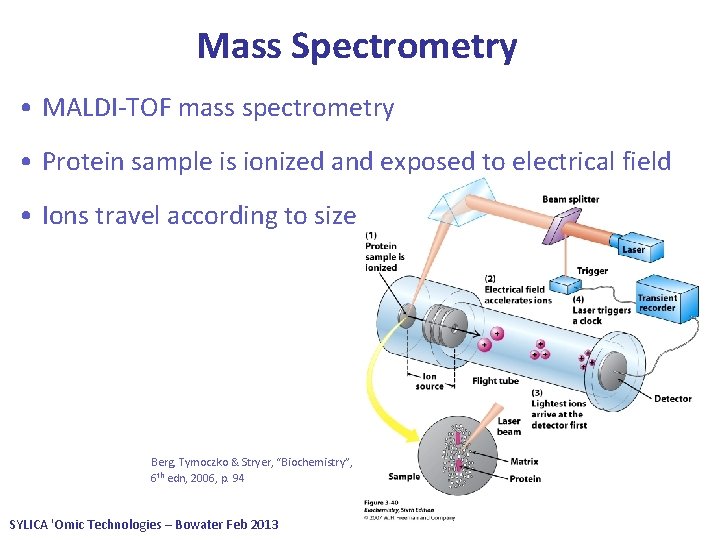
Mass Spectrometry • MALDI-TOF mass spectrometry • Protein sample is ionized and exposed to electrical field • Ions travel according to size Berg, Tymoczko & Stryer, “Biochemistry”, 6 th edn, 2006, p. 94 SYLICA 'Omic Technologies – Bowater Feb 2013
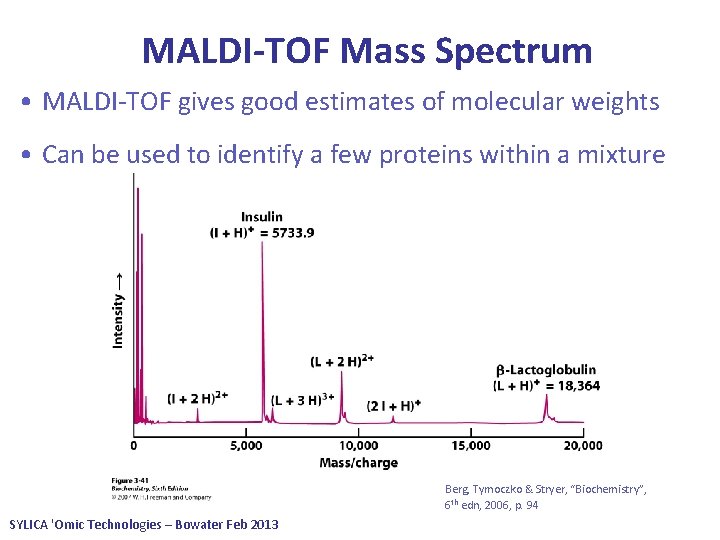
MALDI-TOF Mass Spectrum • MALDI-TOF gives good estimates of molecular weights • Can be used to identify a few proteins within a mixture Berg, Tymoczko & Stryer, “Biochemistry”, 6 th edn, 2006, p. 94 SYLICA 'Omic Technologies – Bowater Feb 2013
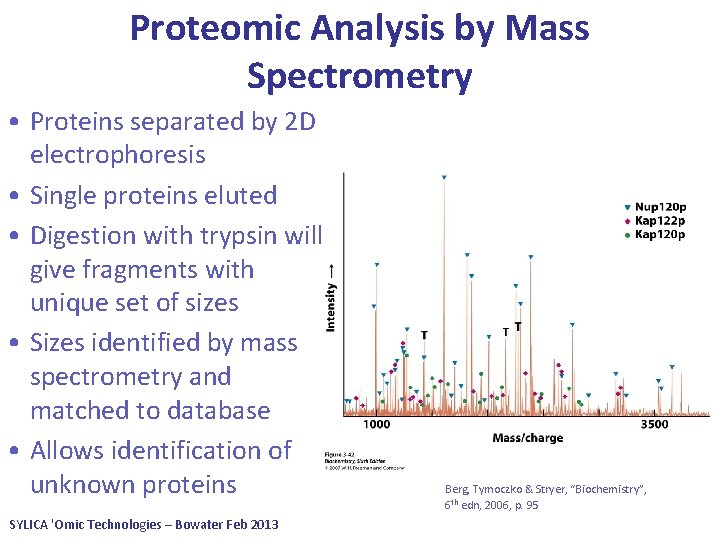
Proteomic Analysis by Mass Spectrometry • Proteins separated by 2 D electrophoresis • Single proteins eluted • Digestion with trypsin will give fragments with unique set of sizes • Sizes identified by mass spectrometry and matched to database • Allows identification of unknown proteins SYLICA 'Omic Technologies – Bowater Feb 2013 Berg, Tymoczko & Stryer, “Biochemistry”, 6 th edn, 2006, p. 95
Transcriptomics v Proteomics • Transcriptomics and proteomics are both very powerful • Differences in their practical application: ØTranscriptomics is robust, relatively cost-effective and user-friendly ØProteomics still relatively limited – problems can remain with purification and stability of proteins • Increasing potential to combine and compare data sets - for discussion see Hegde et al. , Curr. Opin. Biotech. , 14, 647 -651 (2003) SYLICA 'Omic Technologies – Bowater Feb 2013
Bioinformatics: Mining the Data SYLICA 'Omic Technologies – Bowater Feb 2013
Bioinformatics & Databases · Latest biological data is gathered, organised and disseminated through large databases · Databases include: - EBI, NCBI, Pfam, SMART, SWISS-PROT, TAIR · Information in bioinformatic databases: - sequences, structures, homology searches · Fast search engines allow searches by all with internet access – databases are as useful as the results they help generate! · Improved tools for analysis of sequences SYLICA 'Omic Technologies – Bowater Feb 2013
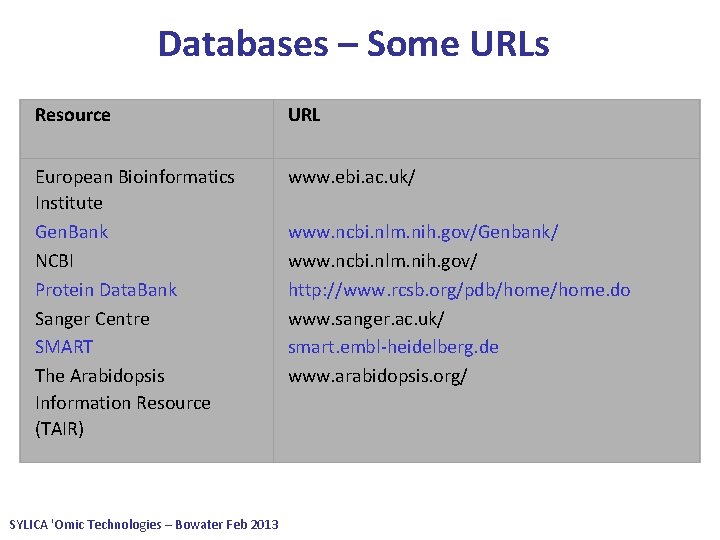
Databases – Some URLs Resource URL European Bioinformatics Institute Gen. Bank NCBI Protein Data. Bank Sanger Centre SMART The Arabidopsis Information Resource (TAIR) www. ebi. ac. uk/ www. ncbi. nlm. nih. gov/Genbank/ www. ncbi. nlm. nih. gov/ http: //www. rcsb. org/pdb/home. do www. sanger. ac. uk/ smart. embl-heidelberg. de www. arabidopsis. org/ SYLICA 'Omic Technologies – Bowater Feb 2013
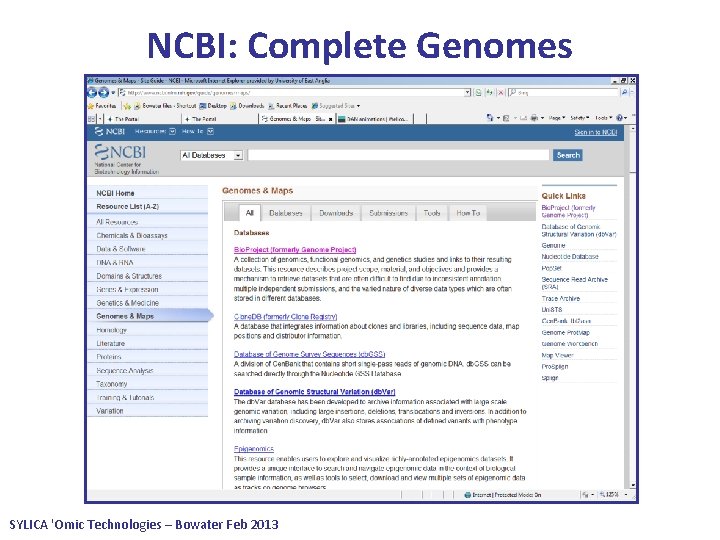
NCBI: Complete Genomes SYLICA 'Omic Technologies – Bowater Feb 2013
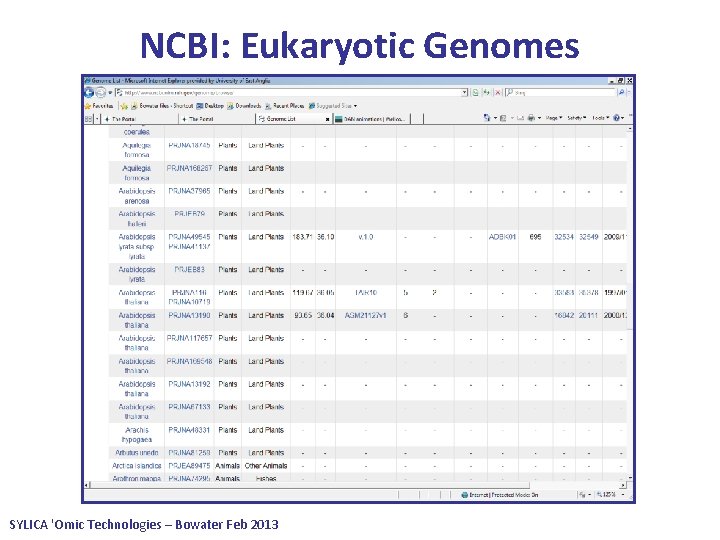
NCBI: Eukaryotic Genomes SYLICA 'Omic Technologies – Bowater Feb 2013
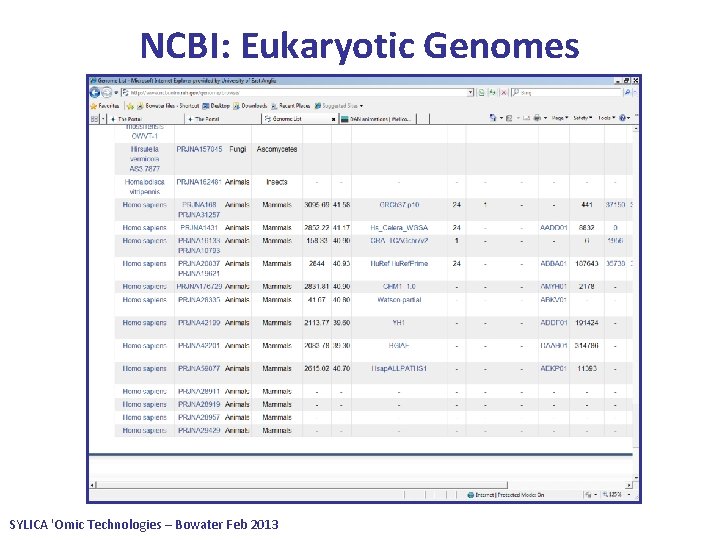
NCBI: Eukaryotic Genomes SYLICA 'Omic Technologies – Bowater Feb 2013
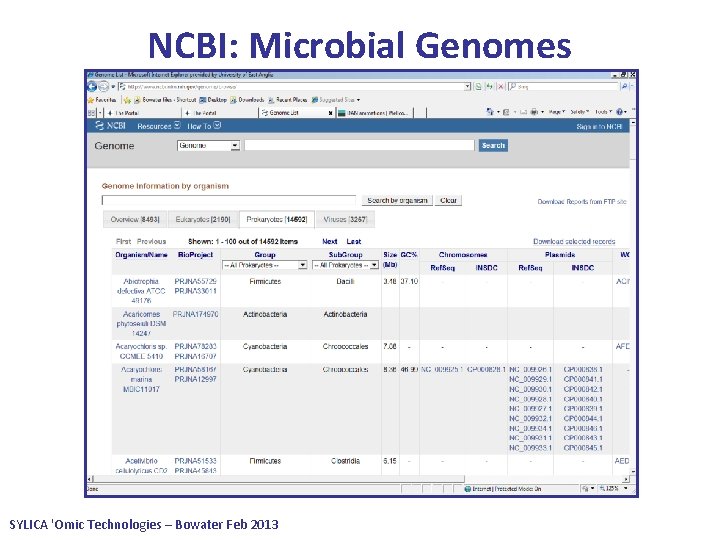
NCBI: Microbial Genomes SYLICA 'Omic Technologies – Bowater Feb 2013
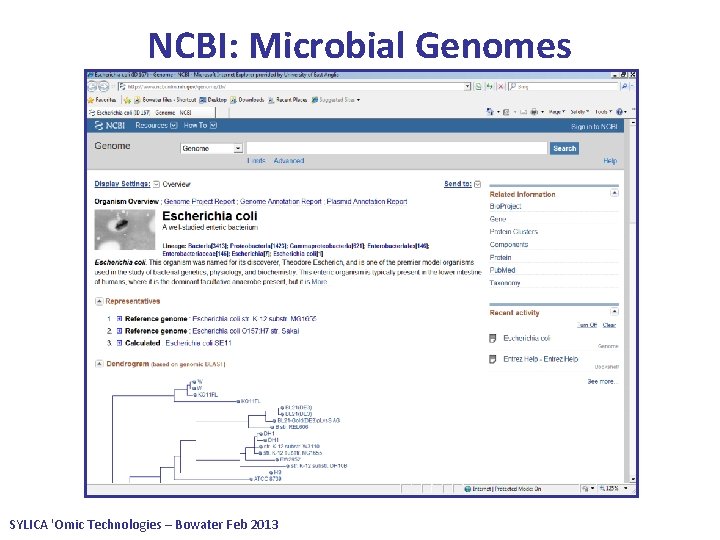
NCBI: Microbial Genomes SYLICA 'Omic Technologies – Bowater Feb 2013
Databases - The Caveats · Databases contain mistakes (low as a proportion of total data) - primary data errors - data analysis errors - annotation errors · Errors are difficult to correct · Make the interpretation of data your own responsibility!! SYLICA 'Omic Technologies – Bowater Feb 2013
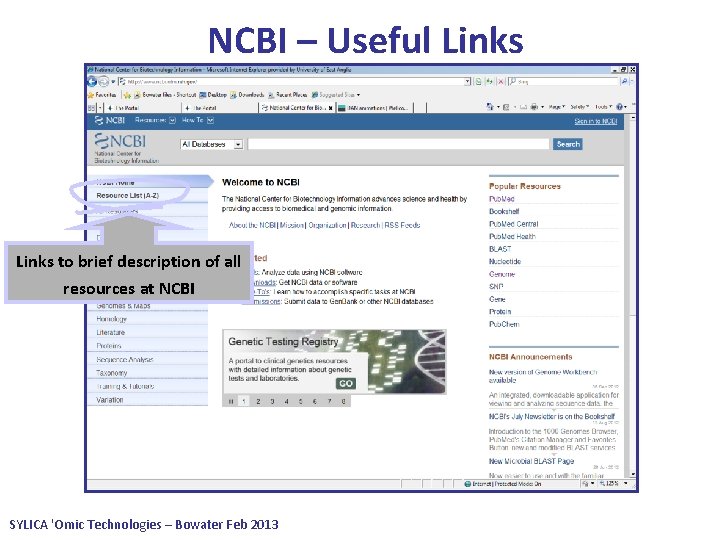
NCBI – Useful Links to brief description of all resources at NCBI SYLICA 'Omic Technologies – Bowater Feb 2013
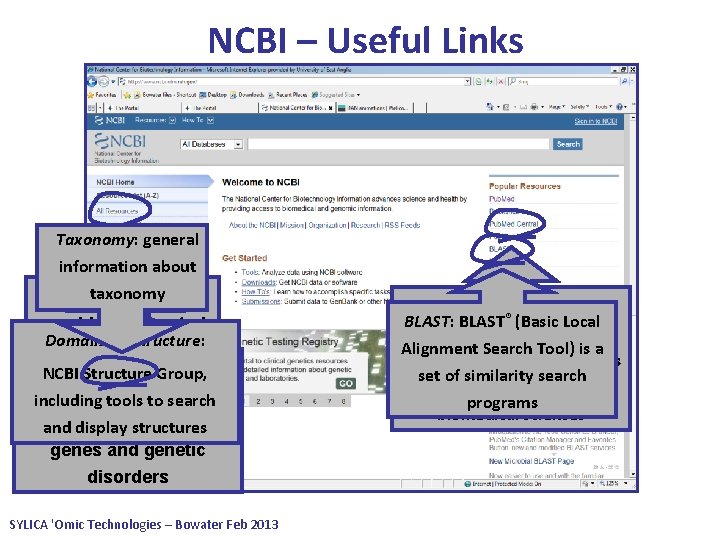
NCBI – Useful Links Taxonomy: general information about All taxonomy resources: provides integrated Domains & Structure: access to nucleotide Genetics & Medicine: NCBIand Structure Group, protein continuously updated including tools to search sequence data from catalogues of human and display structures >100, 000 organisms genes and genetic disorders SYLICA 'Omic Technologies – Bowater Feb 2013 Pub. Med: retrieval system BLAST: BLAST® (Basic Local containing citations, Alignment Search Tool) is a abstracts, and indexing terms set of similarity search for journal articles in the programs biomedical sciences
Databases Summary • Many databases are available - some have lot of general information (NCBI, EBI) - some have specific data (Pfam, SWISS-PROT) - some relate to specific research interests (TAIR) • Become well acquainted with specific databases • Wide range of databases, web sites and other resources are available for in silico analysis of biological data • Great advantages, but beware caveats and potential pitfalls – understand capabilities and limitations! • Use information intelligently: - always ask if the conclusions make biological sense - may require further analyses or experimentation SYLICA 'Omic Technologies – Bowater Feb 2013
“Omics” Overview • Analyses of various biological molecules have developed into their own scientific disciplines; e. g. Metabolomics = “analysis of metabolites”, etc. • Transcriptome: set of all m. RNAs ("transcripts”) produced from a genome • Proteome: set of all proteins produced under a given set of conditions • Both can vary because they reflect genes that are actively expressed at any given time • Transcriptomics and proteomics are both powerful, but are used differently: transcriptomics is cheaper and more user friendly than proteomics SYLICA 'Omic Technologies – Bowater Feb 2013
- Slides: 42