
SYDE 575 Image Processing Introduction Read Textbook Chapters
SYDE 575: Image Processing Introduction Read Textbook Chapters 1 & 2

What is Digital Image Processing? • Definition: manipulation of digital image for enhancement, compression, transmission, information extraction or analysis – “manipulation” involves denoising, enhancement, registration, color mapping, rescaling, feature point detection, illumination reduction, … • Digital image defined as a 2 -d function: f(x, y) • ‘x’ and ‘y’ are spatial (in-plane) coordinates • f(x, y) is the value (usually stored as discrete) at a spatial (x, y) location • With multiple images of the same scene, one can deduce 3 -d geometry and pixels in the image could have 3 -d coordinates e. g. , f(x, y, z) where (x, y, z) represents spatial coordinates • A video is defined as a 3 -d function: f(x, y, t) where ‘t’ represents time

Computer Vision Scene Image Processing Image Analysis Image Understanding Information • Image Analysis: content extraction e. g. , segmentation, shape description, boundary detection, mathematical morphology, texture feature extraction, motion estimation • Image Understanding: decision making based on content extraction; covered in SD 372 and SD 675 • SD 575 deals primarily with “Image Processing” and, later in the course, “Image Analysis”
Why is image processing difficult? • Mapping from a 3 -d world to a 2 -d plane • Measured intensity is a function of many factors • Interpreting groups of pixels as interesting objects is easy for the human, but not for the computer • Loads of data to process! • Local windows versus global interpretation
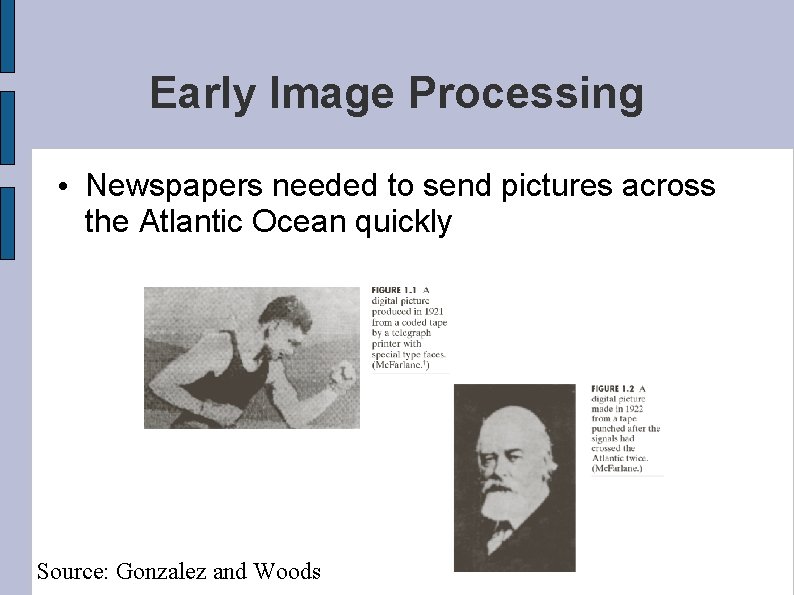
Early Image Processing • Newspapers needed to send pictures across the Atlantic Ocean quickly Source: Gonzalez and Woods

Early Image Processing • Capturing and transmitting images from space Source: Gonzalez and Woods
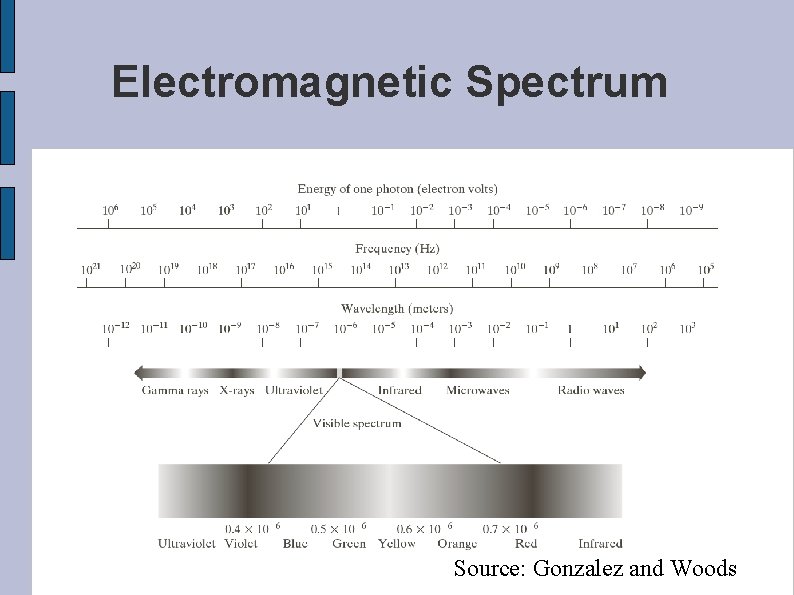
Electromagnetic Spectrum Source: Gonzalez and Woods
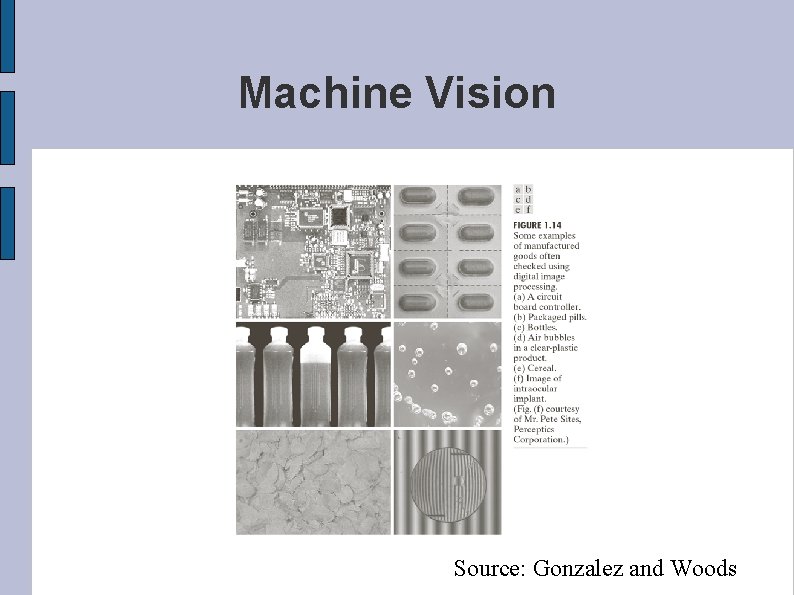
Machine Vision Source: Gonzalez and Woods
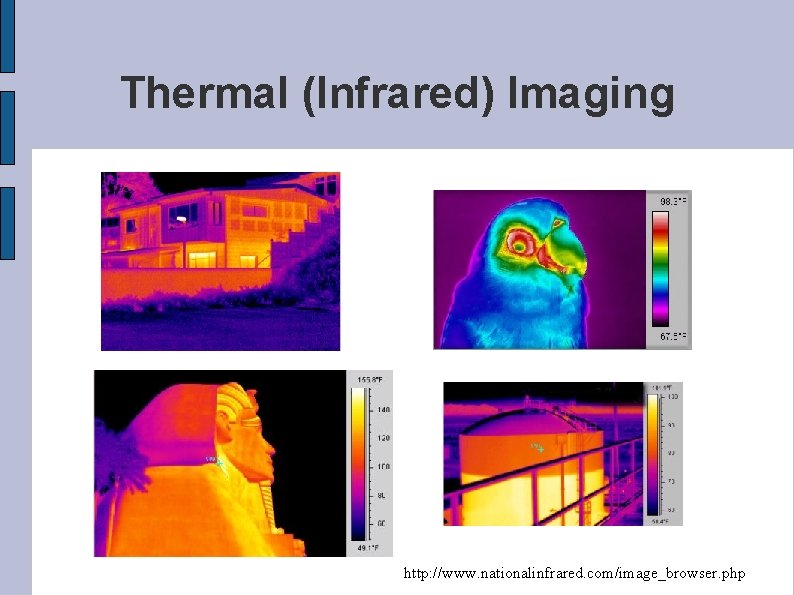
Thermal (Infrared) Imaging http: //www. nationalinfrared. com/image_browser. php
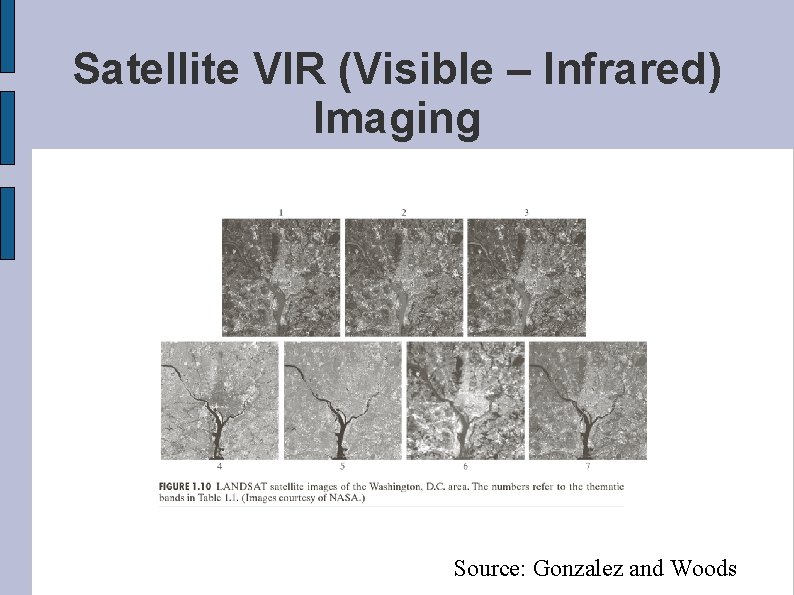
Satellite VIR (Visible – Infrared) Imaging Source: Gonzalez and Woods
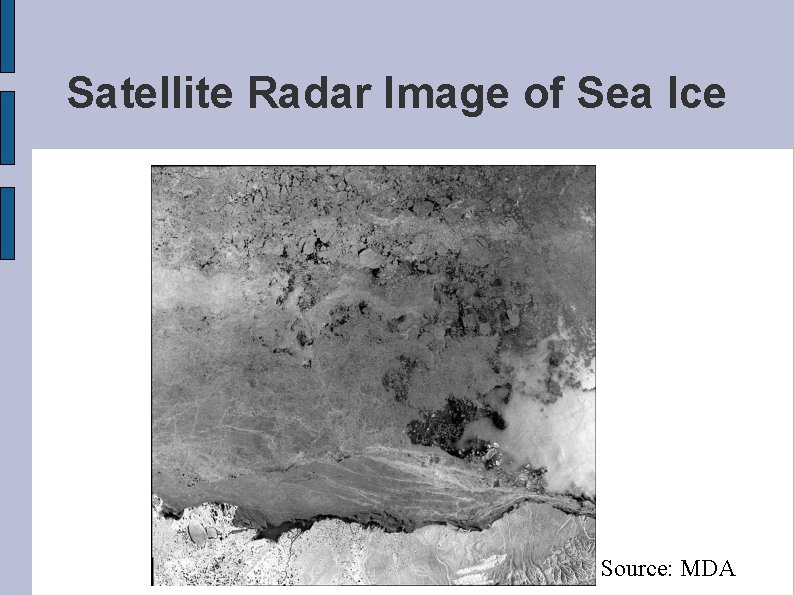
Satellite Radar Image of Sea Ice Source: MDA
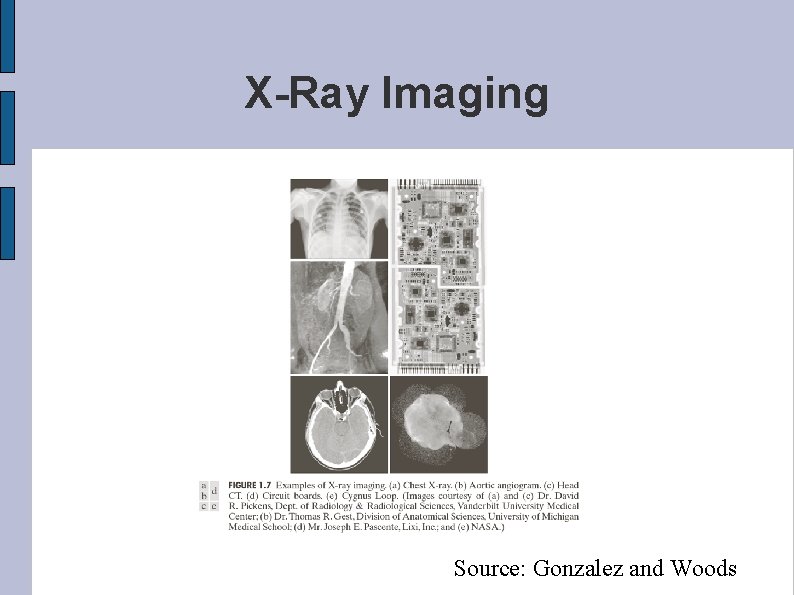
X-Ray Imaging Source: Gonzalez and Woods
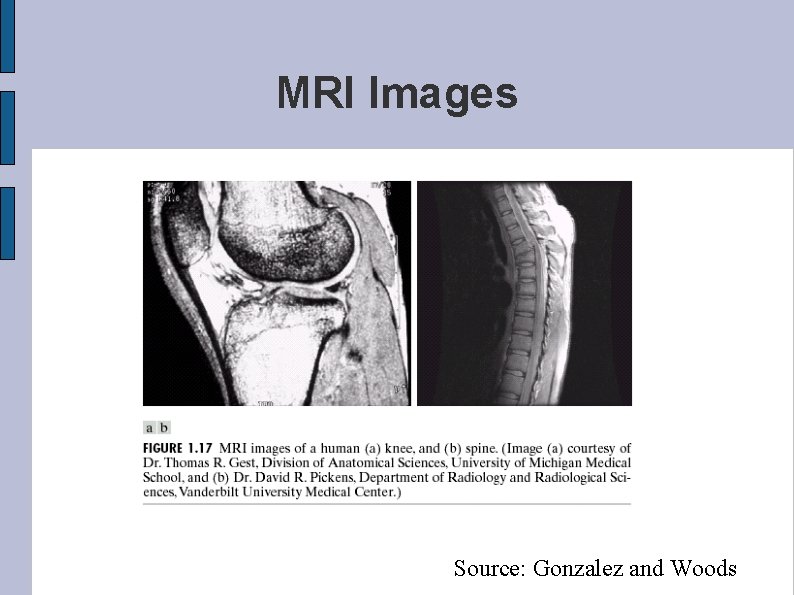
MRI Images Source: Gonzalez and Woods
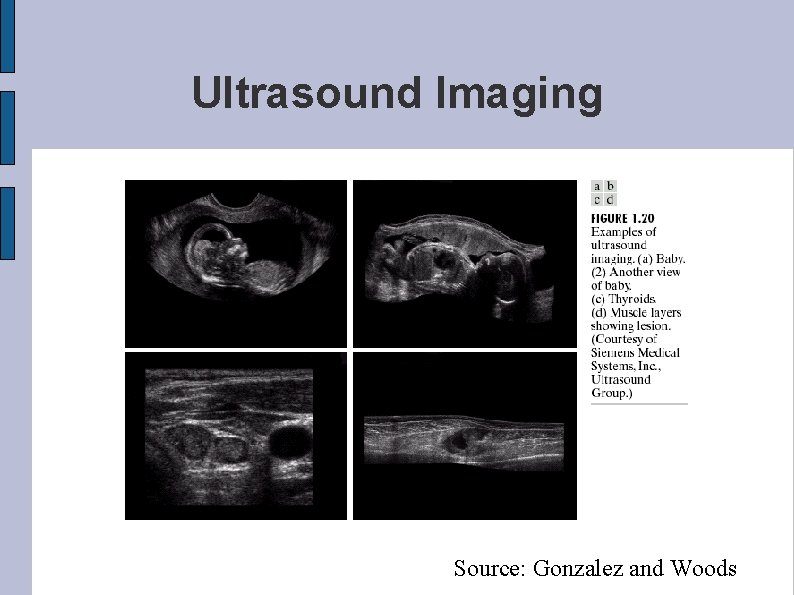
Ultrasound Imaging Source: Gonzalez and Woods
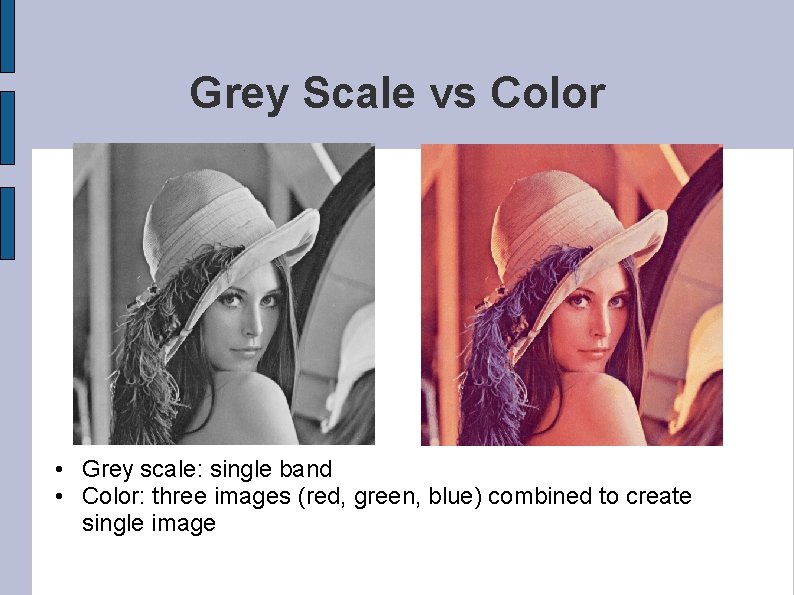
Grey Scale vs Color • Grey scale: single band • Color: three images (red, green, blue) combined to create single image
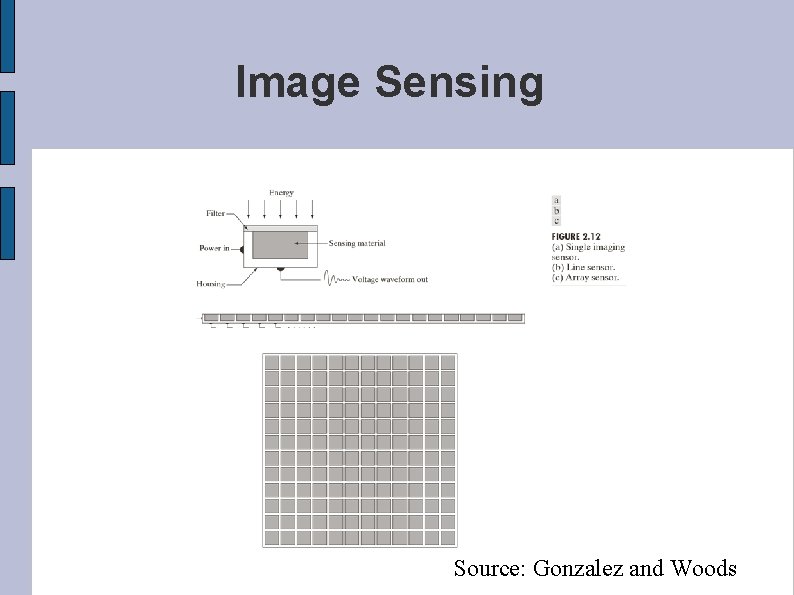
Image Sensing Source: Gonzalez and Woods
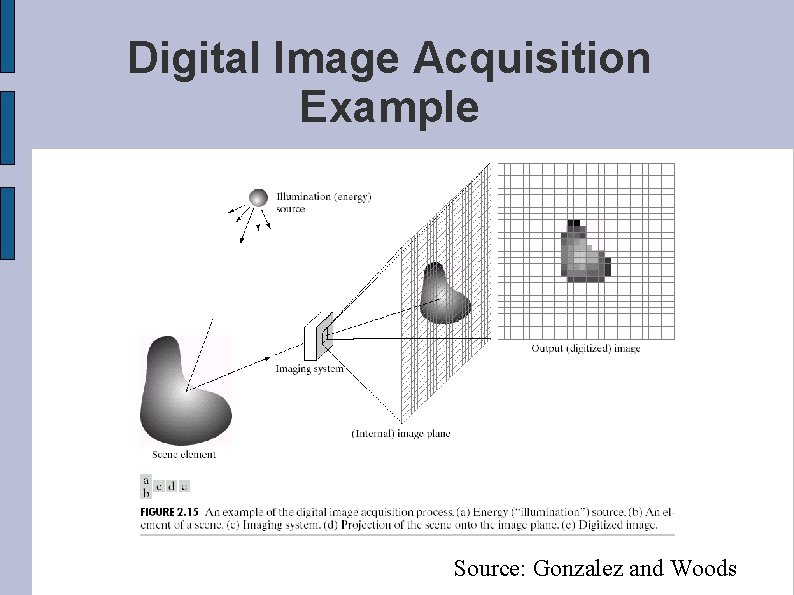
Digital Image Acquisition Example Source: Gonzalez and Woods
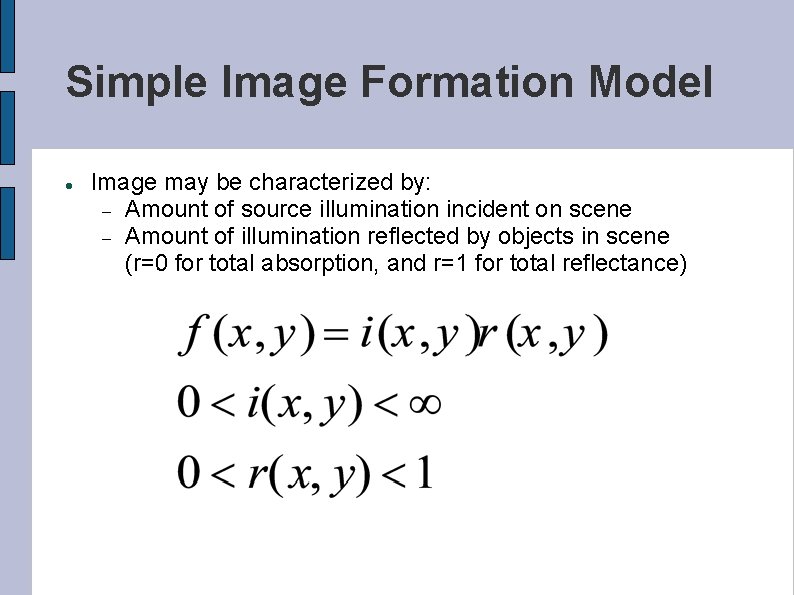
Simple Image Formation Model Image may be characterized by: Amount of source illumination incident on scene Amount of illumination reflected by objects in scene (r=0 for total absorption, and r=1 for total reflectance)
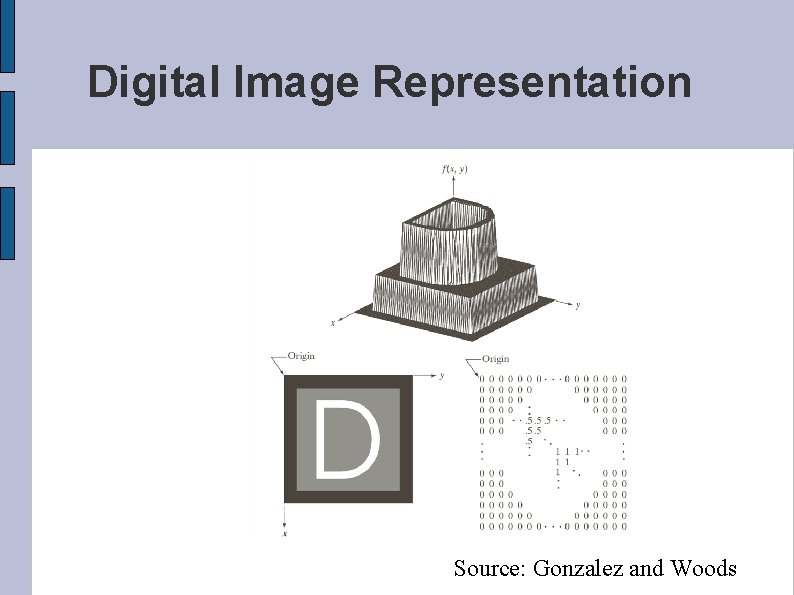
Digital Image Representation Source: Gonzalez and Woods
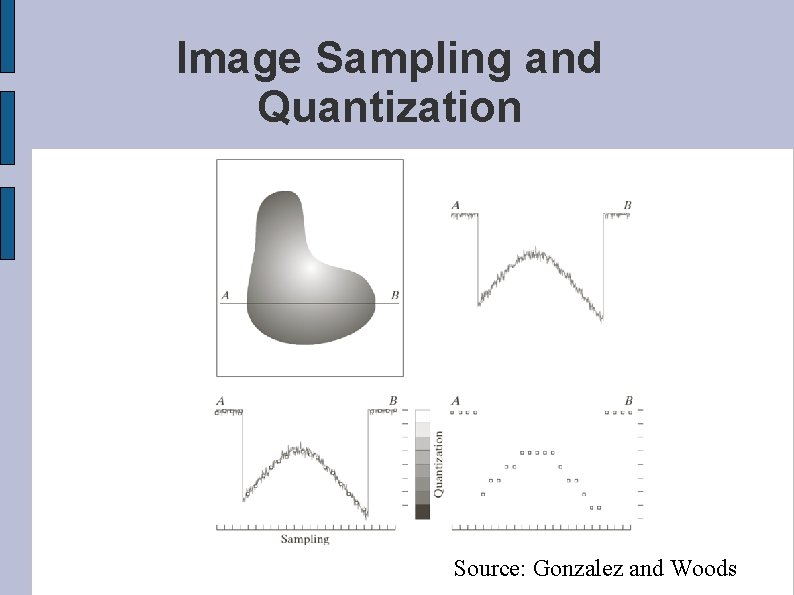
Image Sampling and Quantization Source: Gonzalez and Woods
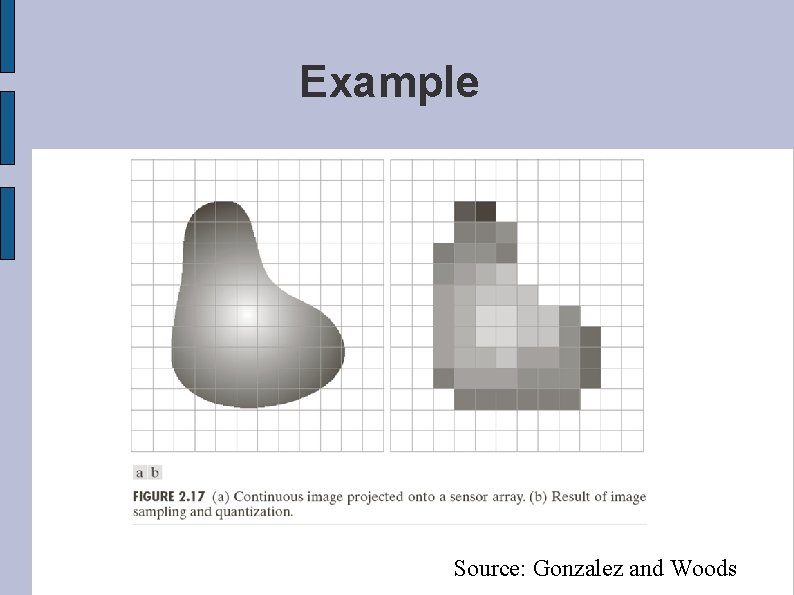
Example Source: Gonzalez and Woods
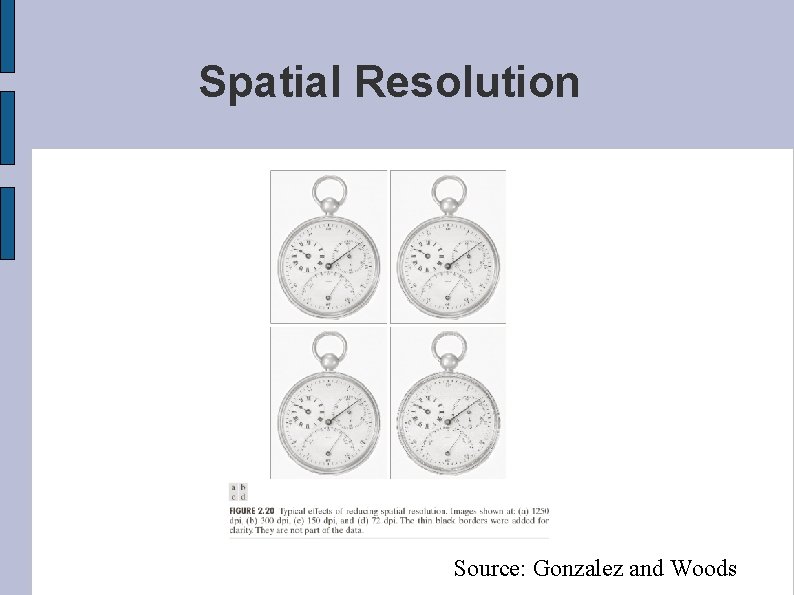
Spatial Resolution Source: Gonzalez and Woods
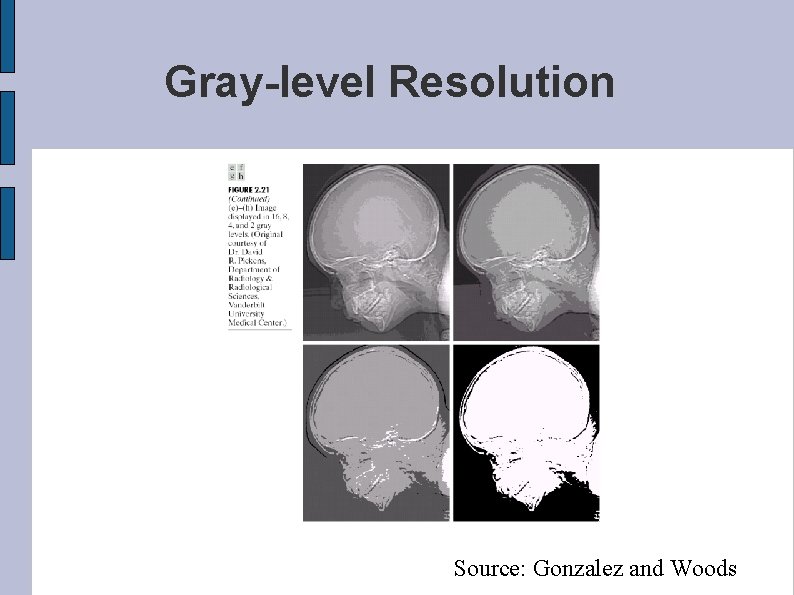
Gray-level Resolution Source: Gonzalez and Woods
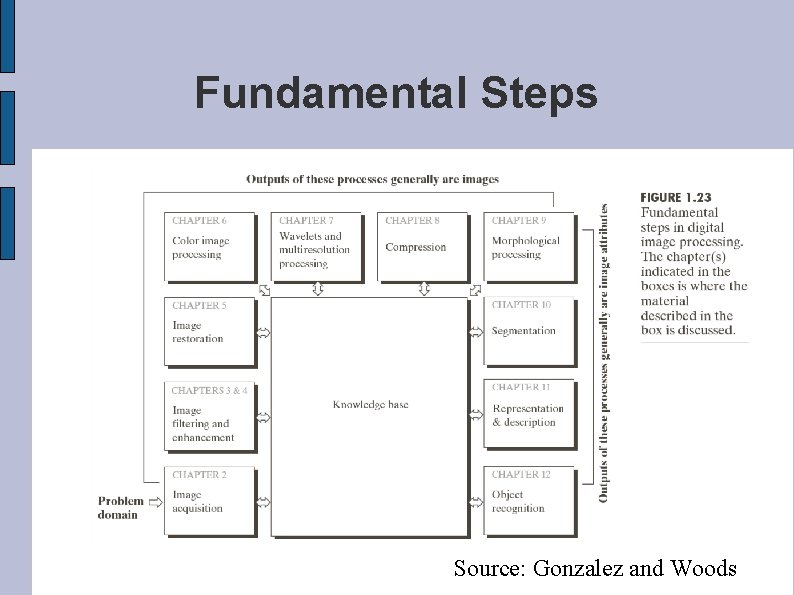
Fundamental Steps Source: Gonzalez and Woods
Vision and Image Processing (VIP) Lab • UW Research Lab that conducts research in computer vision • Covers many applications: remote sensing, biomedical, video analytics, 3 d reconstruction, etc. • Many connections to industry to conduct applied research • Directors: Profs. Clausi, Wong, and Fieguth • http: //vip. uwaterloo. ca

Graduate Studies • If you are interested in graduate studies, chat with faculty members in your field of interest • Make sure that you apply for scholarships – NSERC/OGS applications due typically in October • We are always looking for a few new graduate students to conduct research in the VIP lab (start Spring or Fall terms)
- Slides: 26