
Swiss Federal Research Institute WSL European research programm

- Slides: 27
Swiss Federal Research Institute WSL European research programm RECIPE Socio-economics consequences of peatland exploitation in Switzerland Froidevaux Viviane
Part 1: Peat and peatland use in Switzerland Peat extraction Litter meadows Present use of raised bogs Regional distribution Political framework in Switzerland Chronology of Swiss mire protection Legal organisation and application of mire habitats and landscapes protection in Switzerland Economic importance of peat extraction and peatland The peat market Alternative uses of peatlands
Part 2: Agriculture General presentation General ideas in matter of agricultural exploitation of mire areas Tourism General presentation Examples of agricultural and touristical management in Swiss mire landscapes The mire landscape of Schwägalp The mire landscape of La Gruère
Partie 1: Peat and peatland use in Switzerland Peat extraction Litter meadows Present use of raised bogs Regional distribution Political framework in Switzerland Chronology of Swiss mire protection Legal organisation and application of mire habitats and lanscapes protection in Switzerland Economic importance of peat extraction and peatlands The peat market Alternative uses of peatlands
Part 2: Agriculture General presentation General ideas in matter of agricultural exploitation of mire areas Tourism General presentation Examples of agricultural and touristical management in Swiss mire landscapes The mire landscape of Schwägalp The mire landscape of La Gruère
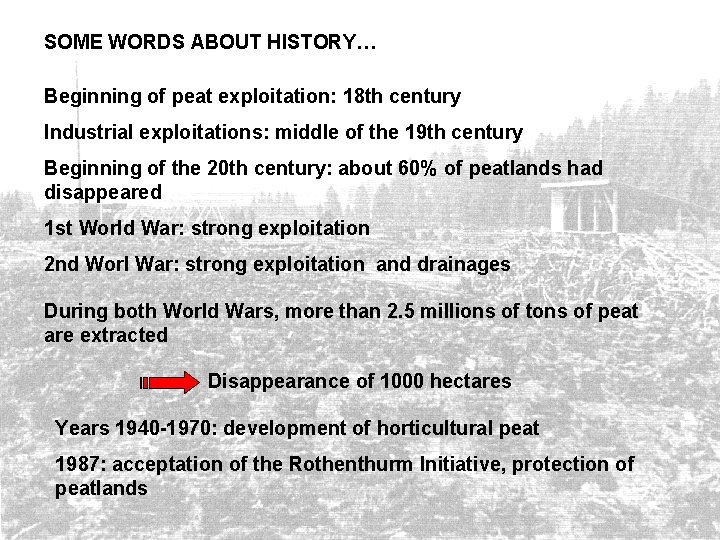
SOME WORDS ABOUT HISTORY… Beginning of peat exploitation: 18 th century Industrial exploitations: middle of the 19 th century Beginning of the 20 th century: about 60% of peatlands had disappeared 1 st World War: strong exploitation 2 nd Worl War: strong exploitation and drainages During both World Wars, more than 2. 5 millions of tons of peat are extracted Disappearance of 1000 hectares Years 1940 -1970: development of horticultural peat 1987: acceptation of the Rothenthurm Initiative, protection of peatlands
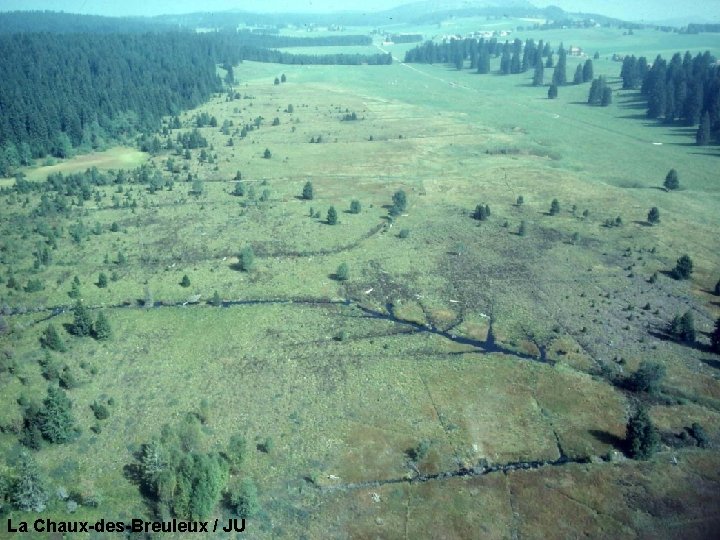
La Chaux-des-Breuleux / JU
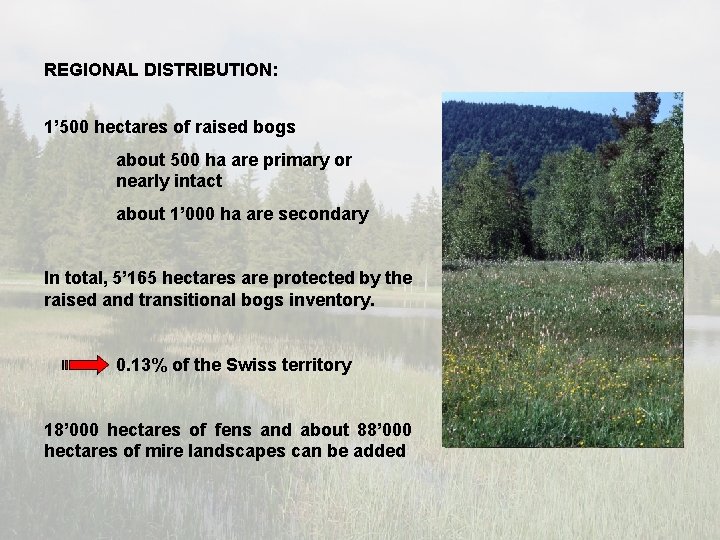
REGIONAL DISTRIBUTION: 1’ 500 hectares of raised bogs about 500 ha are primary or nearly intact about 1’ 000 ha are secondary In total, 5’ 165 hectares are protected by the raised and transitional bogs inventory. 0. 13% of the Swiss territory 18’ 000 hectares of fens and about 88’ 000 hectares of mire landscapes can be added
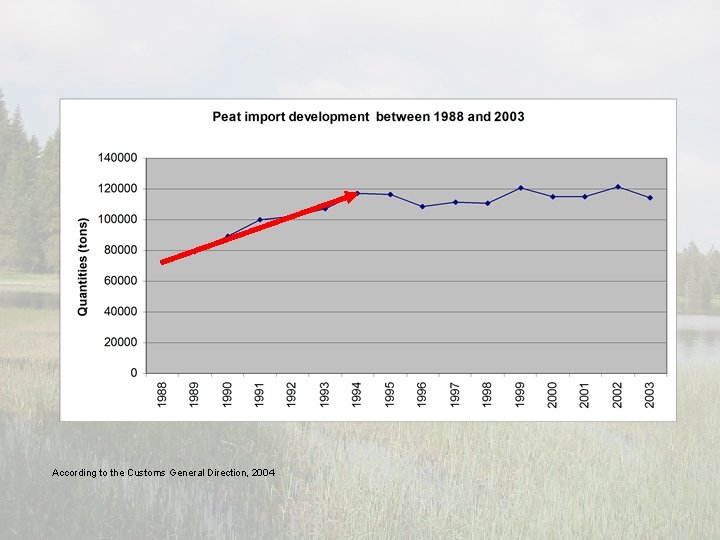
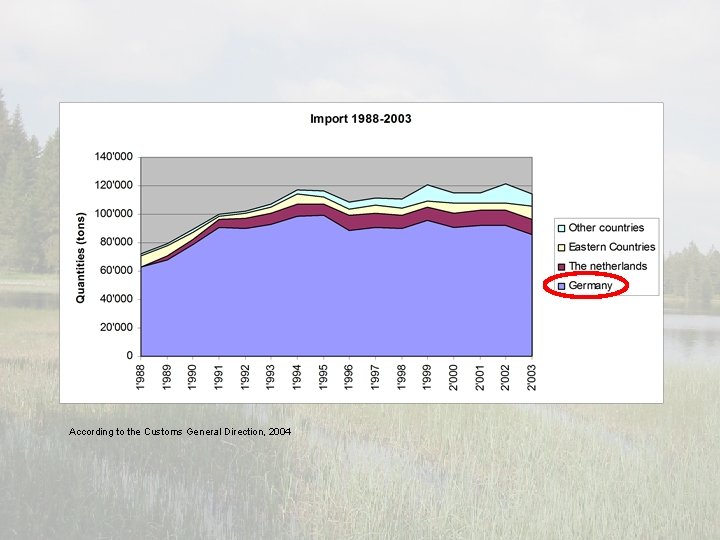
THE PEAT MARKET: IMPORT Diverse origins, but principally France Germany Italy Sweden Latvia Lithuania Belgium The Netherlands Belarus Russia On average: 115’ 000 tons of peat are imported every year
According to the Customs General Direction, 2004
According to the Customs General Direction, 2004
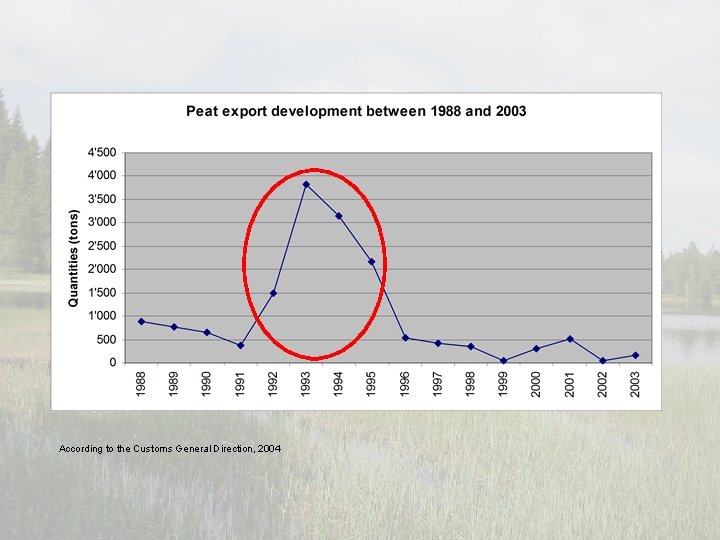
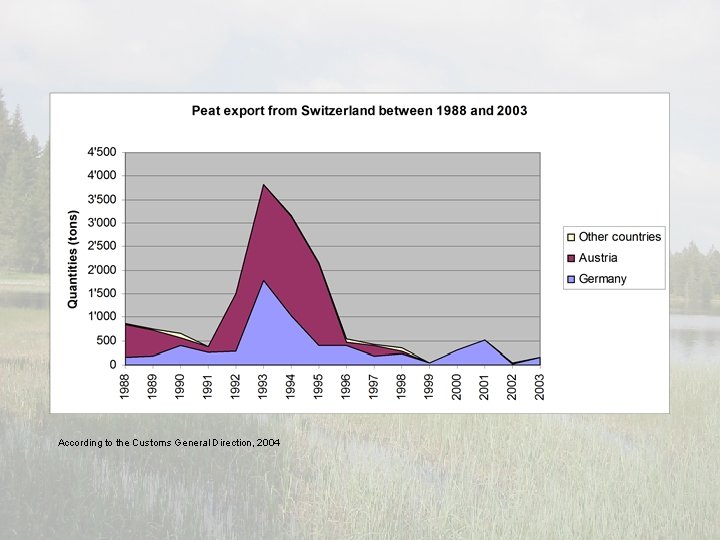
THE PEAT MARKET: EXPORT Does Switzerland export peat? YES! What for peat? Industrial or manufactured products that are produced on our territory from rough peat Principal partners: GERMANY AUSTRIA The quantities are very varying and not high
According to the Customs General Direction, 2004
According to the Customs General Direction, 2004
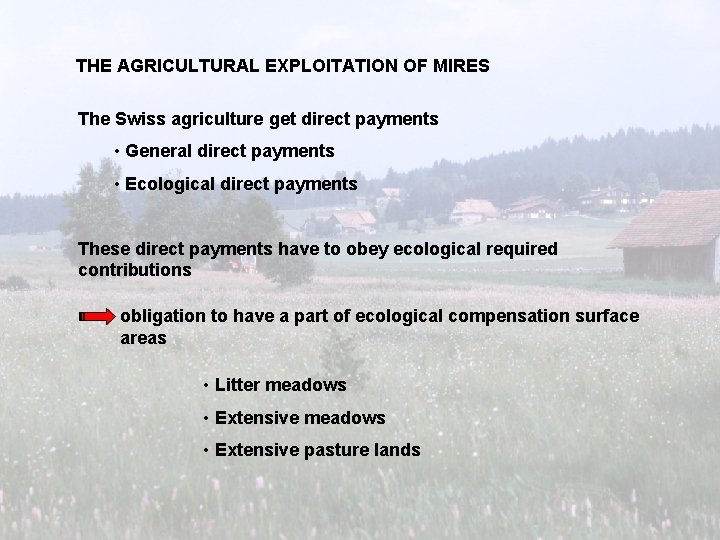
THE AGRICULTURAL EXPLOITATION OF MIRES The Swiss agriculture get direct payments • General direct payments • Ecological direct payments These direct payments have to obey ecological required contributions obligation to have a part of ecological compensation surface areas • Litter meadows • Extensive pasture lands
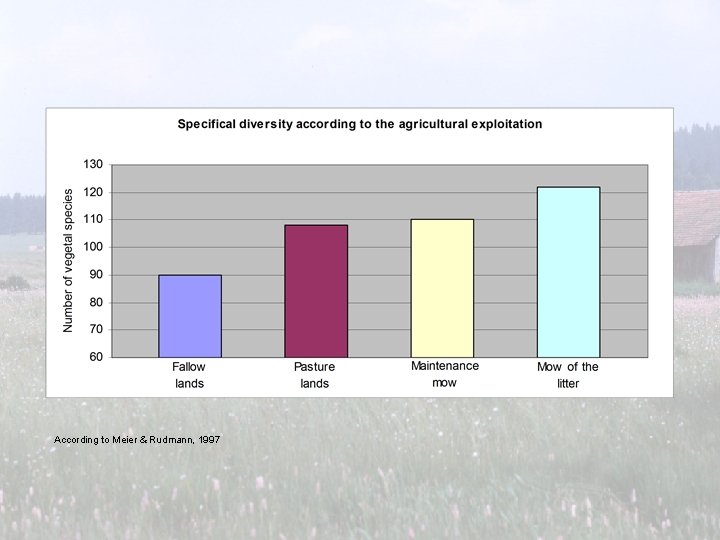
According to Meier & Rudmann, 1997
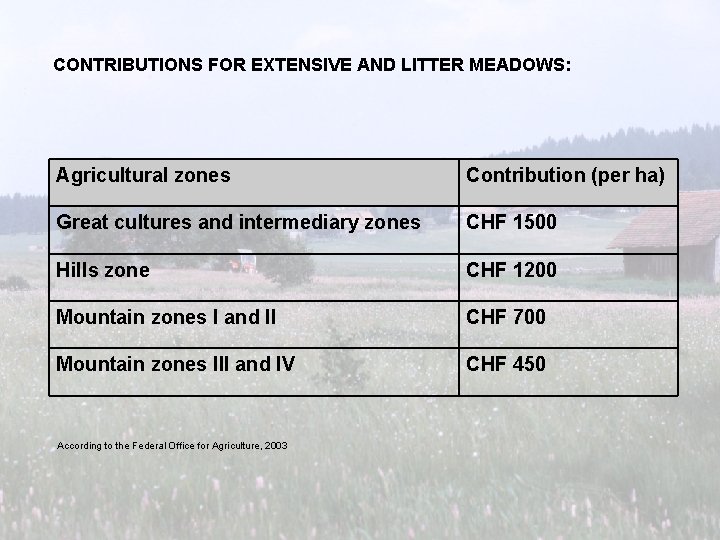
CONTRIBUTIONS FOR EXTENSIVE AND LITTER MEADOWS: Agricultural zones Contribution (per ha) Great cultures and intermediary zones CHF 1500 Hills zone CHF 1200 Mountain zones I and II CHF 700 Mountain zones III and IV CHF 450 According to the Federal Office for Agriculture, 2003
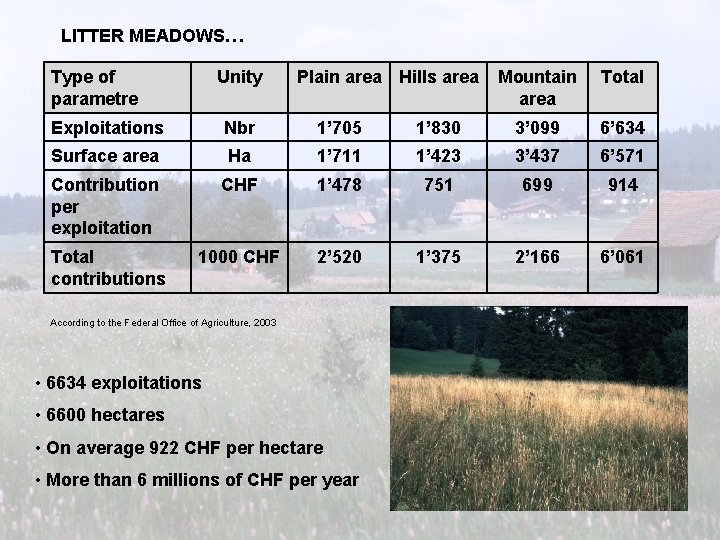
LITTER MEADOWS… Type of parametre Unity Plain area Hills area Mountain area Total Exploitations Nbr 1’ 705 1’ 830 3’ 099 6’ 634 Surface area Ha 1’ 711 1’ 423 3’ 437 6’ 571 Contribution per exploitation CHF 1’ 478 751 699 914 Total contributions 1000 CHF 2’ 520 1’ 375 2’ 166 6’ 061 According to the Federal Office of Agriculture, 2003 • 6634 exploitations • 6600 hectares • On average 922 CHF per hectare • More than 6 millions of CHF per year
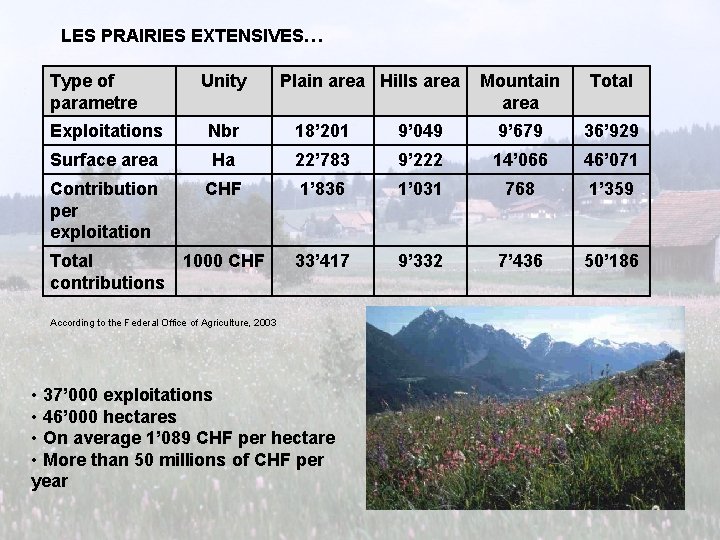
LES PRAIRIES EXTENSIVES… Type of parametre Unity Plain area Hills area Mountain area Total Exploitations Nbr 18’ 201 9’ 049 9’ 679 36’ 929 Surface area Ha 22’ 783 9’ 222 14’ 066 46’ 071 Contribution per exploitation CHF 1’ 836 1’ 031 768 1’ 359 Total contributions 1000 CHF 33’ 417 9’ 332 7’ 436 50’ 186 According to the Federal Office of Agriculture, 2003 • 37’ 000 exploitations • 46’ 000 hectares • On average 1’ 089 CHF per hectare • More than 50 millions of CHF per year
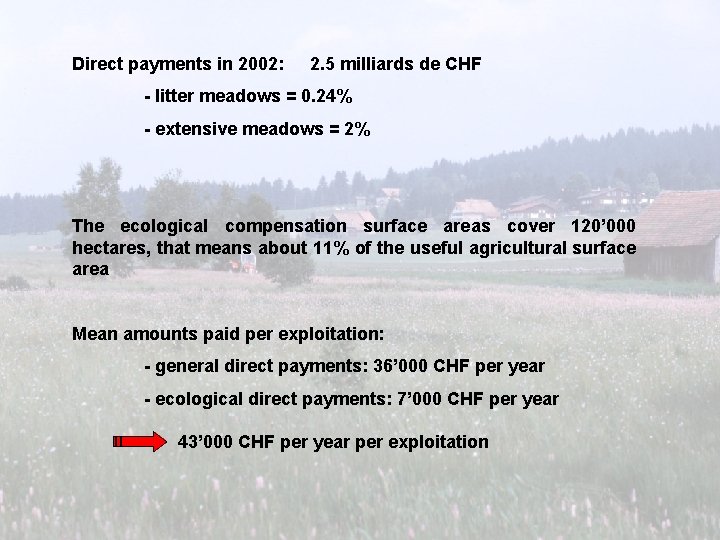
Direct payments in 2002: 2. 5 milliards de CHF - litter meadows = 0. 24% - extensive meadows = 2% The ecological compensation surface areas cover 120’ 000 hectares, that means about 11% of the useful agricultural surface area Mean amounts paid per exploitation: - general direct payments: 36’ 000 CHF per year - ecological direct payments: 7’ 000 CHF per year 43’ 000 CHF per year per exploitation
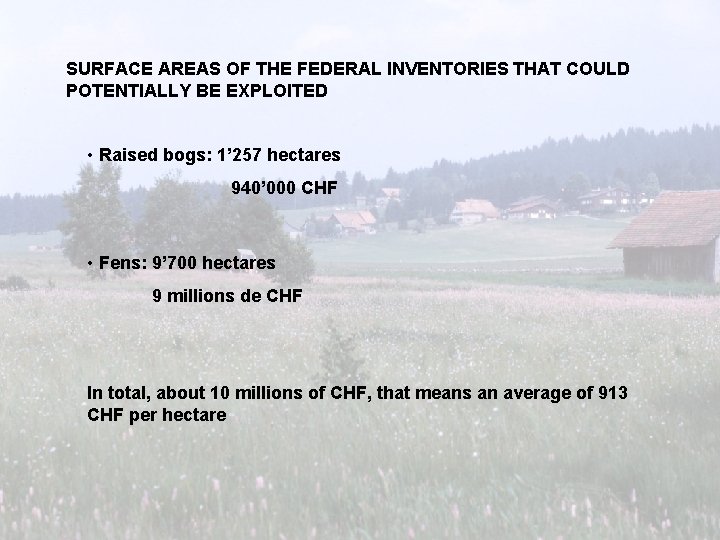
SURFACE AREAS OF THE FEDERAL INVENTORIES THAT COULD POTENTIALLY BE EXPLOITED • Raised bogs: 1’ 257 hectares 940’ 000 CHF • Fens: 9’ 700 hectares 9 millions de CHF In total, about 10 millions of CHF, that means an average of 913 CHF per hectare
TOURISM IN MIRES In 1998, 30. 6 billions of CHF were spent in the tourism sector Added value: 12. 9 billions de CHF 3. 4% of the GDP Landscape and nature are the main reasons of the choice of Switzerland as holydays site. - Landscape utility: 2. 5 billions of CHF - Landscape value: 70 billions of CHF The mire landscape have a very strong impact in the landscape Observation: big lack of pieces of data!
MAIN PROBLEMS: Incomes engendered by landscapes are not used for their maintenance or their development. Without infrastructures, tourism can not produce added value and therefore can not produce money. The landscape remains a public good with free access. It is very difficult to determine to him a market price. We have to attribute an utility value to the nature protection and define its economical importance as capital and factor of production that is essential to the national economy.
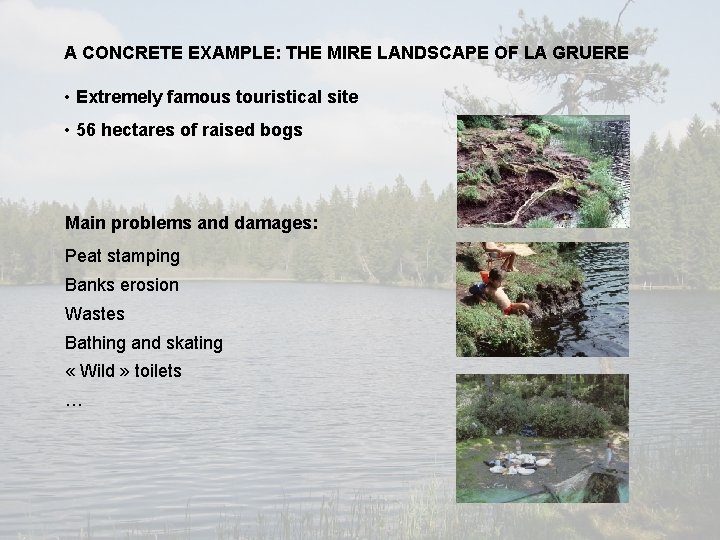
A CONCRETE EXAMPLE: THE MIRE LANDSCAPE OF LA GRUERE • Extremely famous touristical site • 56 hectares of raised bogs Main problems and damages: Peat stamping Banks erosion Wastes Bathing and skating « Wild » toilets …
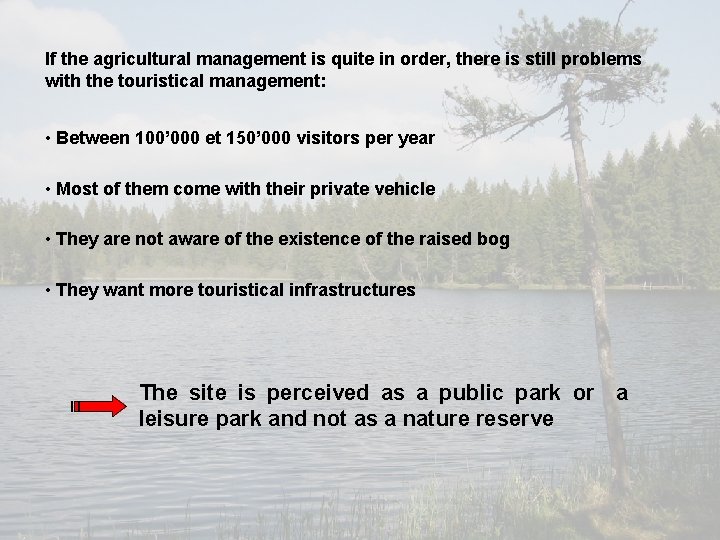
If the agricultural management is quite in order, there is still problems with the touristical management: • Between 100’ 000 et 150’ 000 visitors per year • Most of them come with their private vehicle • They are not aware of the existence of the raised bog • They want more touristical infrastructures The site is perceived as a public park or a leisure park and not as a nature reserve
Proposals of touristical management: • Maintenance of the current situation Always more damages • Ideal protection of the peatland Emptying of the lake • To establish a balance between the nature protection and tourism Picnic zones, dustbins, toilets, pontoons, ways around the lake and the reserve Option A: fishing and bathing are allowed Option B: fishing and bathing are not allowed
IN CONCLUSION… Countries partner of RECIPE can be divided into two groups: • Countries were exploitation is maintained or intensifyied Durability in the exploitation • Countries were the exploitation stopped or will stop Re-use of the sites The contribution of Switzerland is an examle of what could happen in the other countries if they continue to exploit strongly their peatlands.