
Swine Parasites Introduction Most parasitic infections of swine



- Slides: 25
Swine Parasites
Introduction: Most parasitic infections of swine will be diagnosed by finding the adult or larval parasites or the lesions they produce while performing a necropsy. However, in reviewing the common spp. Of swine parasites, a characteristic egg has also been included.
Internal Parasites (Ascarid) Ascaris suum � Whipworms (Trichuroidea) Trichuris suis � Nodular worms (Nodular worm) � Roundworms Oesophagostomum dentatum � Stomach worms Hyostrngylus, Ascarops, Physocephalus � Lung worms (Metastrongyloidea) Metastrongylus spp. � Kidney worms Stephanurus � Threadworms ransomi (Rhabditoidea) Strongyloides
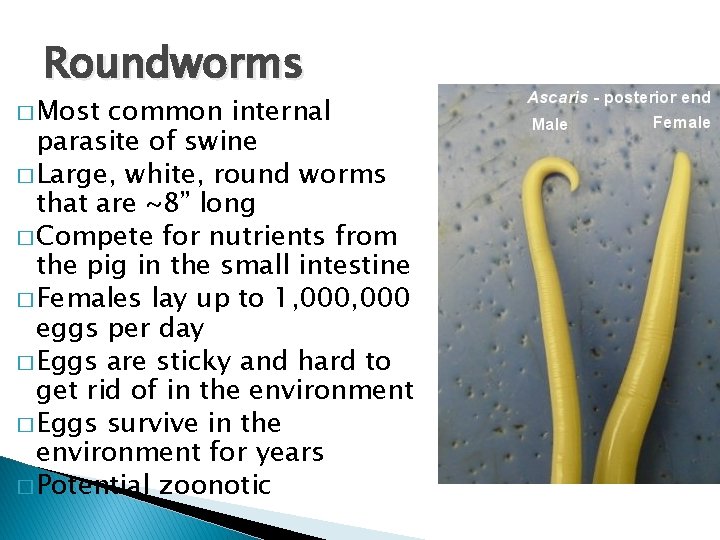
Roundworms � Most common internal parasite of swine � Large, white, round worms that are ~8” long � Compete for nutrients from the pig in the small intestine � Females lay up to 1, 000 eggs per day � Eggs are sticky and hard to get rid of in the environment � Eggs survive in the environment for years � Potential zoonotic
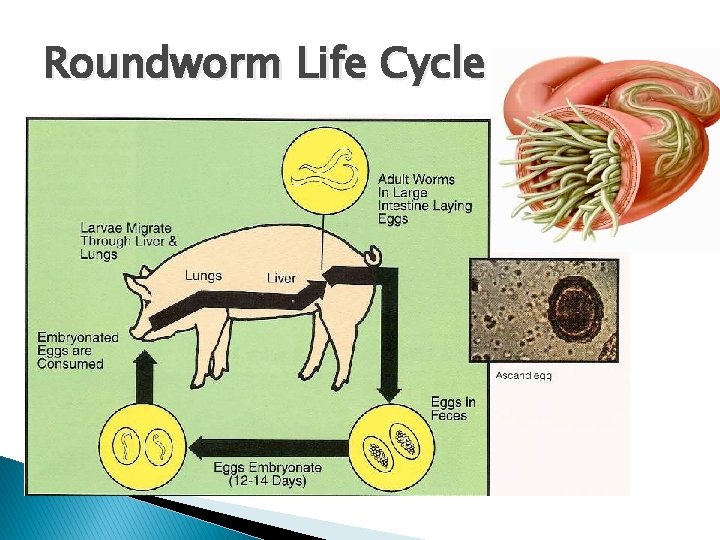
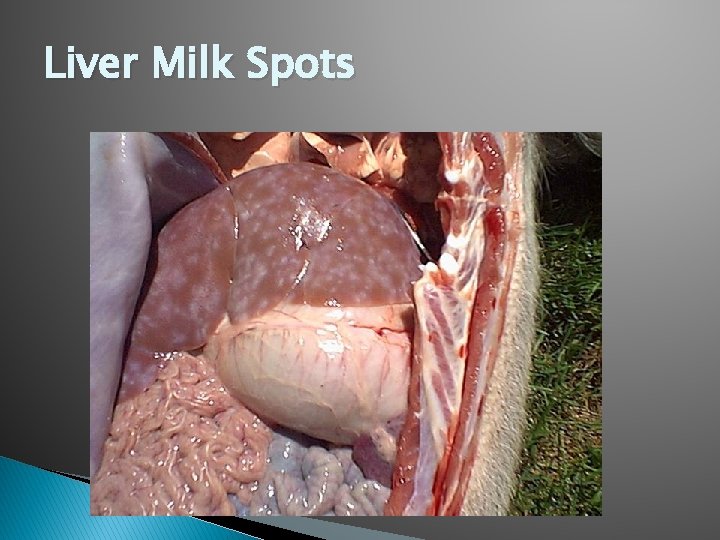
Roundworms � Life cycle Eggs are shed in feces (can survive for years in soil) Eggs requires 2 weeks to become infective Eggs ingested by pig Eggs hatch in gut Larvae travel through gut mucosa and blood stream to liver (liver migration leaves scarring – milk spots) ◦ Larvae travel through bloodstream to lungs ◦ Migrate up trachea (coughed up) and reswallowed to get back into gut ◦ Mature to adult stage in small intestine ◦ ◦ ◦
Roundworm Life Cycle
Adult Ascaris suum: heavy infection Large numbers of adult worms adult may occlude or perforate the gut. Migration into the bile duct has been reported. This migration may occur after treatment.
Liver Milk Spots
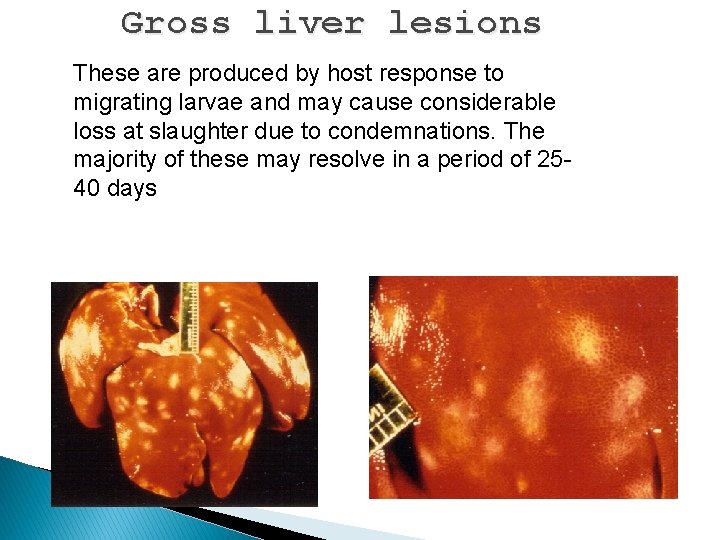
Gross liver lesions These are produced by host response to migrating larvae and may cause considerable loss at slaughter due to condemnations. The majority of these may resolve in a period of 2540 days
Ascaris Diagnosis � Egg in fecal flotation � Adults found on small intestine � “Milk spots” found on liver Treatment � Febendazole 3 mg/kg x 3 d � Ivermectin 0. 3 mg/kg IM, SQ � Levamisole 5 -8 mg/kg PO
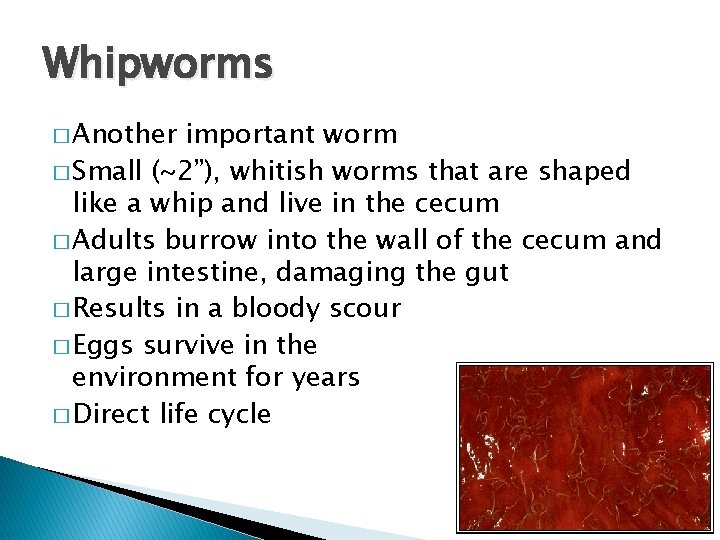
Whipworms � Another important worm � Small (~2”), whitish worms that are shaped like a whip and live in the cecum � Adults burrow into the wall of the cecum and large intestine, damaging the gut � Results in a bloody scour � Eggs survive in the environment for years � Direct life cycle
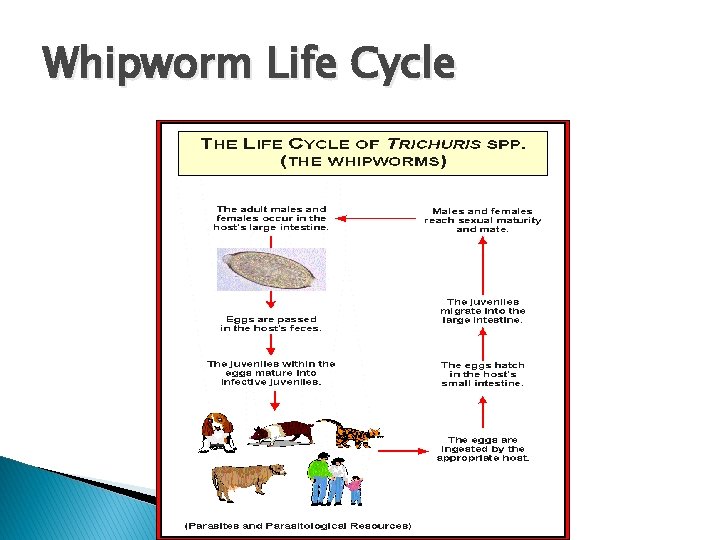
Whipworm Life Cycle
Trichuris suis egg: ( 50 – 60 u x 21 – 25 u) Trichuroid egg with mucoid plugs. These are common worms of swine
Trichuris Diagnosis � Egg in fecal flotation � Adults found on cecum and colon Treatment � Dichlorvos 12 -22 mg/kg PO � Febendazole 3 mg/kg x 3 d � Ivermectin 0. 3 mg/kg IM, SQ � Levamisole 5 -8 mg/kg PO
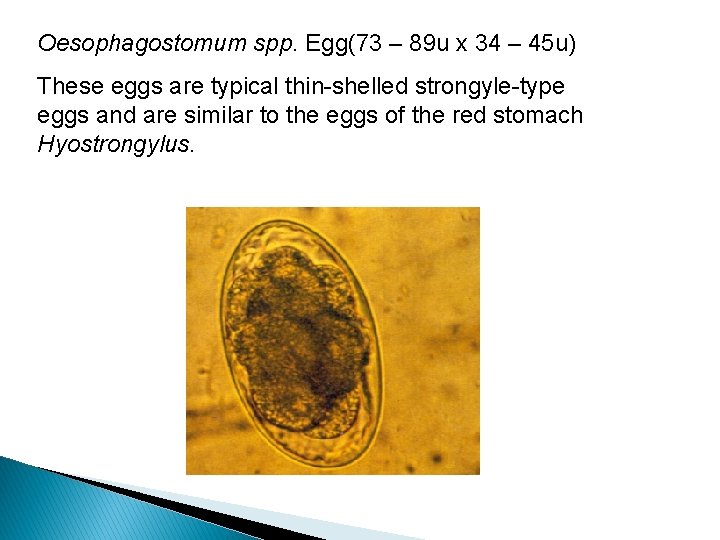
Oesophagostomum spp. Egg(73 – 89 u x 34 – 45 u) These eggs are typical thin-shelled strongyle-type eggs and are similar to the eggs of the red stomach Hyostrongylus.
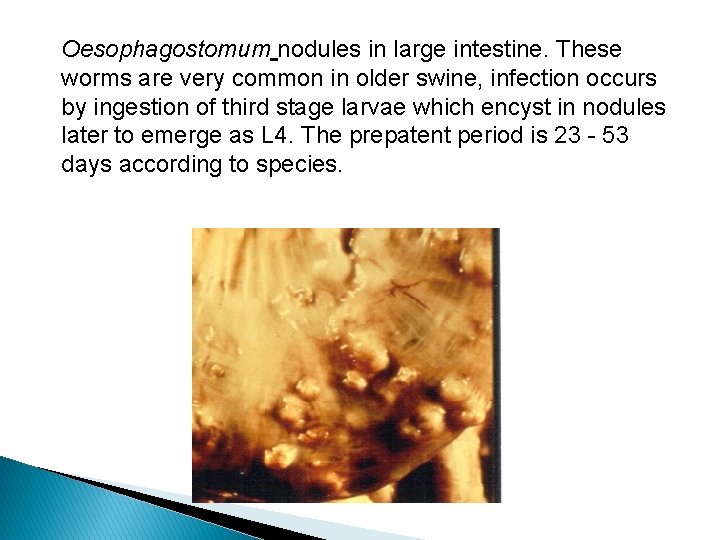
Oesophagostomum nodules in large intestine. These worms are very common in older swine, infection occurs by ingestion of third stage larvae which encyst in nodules later to emerge as L 4. The prepatent period is 23 - 53 days according to species.
Oesophagostomum : The nodular worm of swine are elastic considered non-pathogenic although very heavy infections may cause G. I. disturbances. Rx: piperazine salt, TBZ. levamisole. fenbendazole, ivermectin. Dechlorvos, and pyrantel.
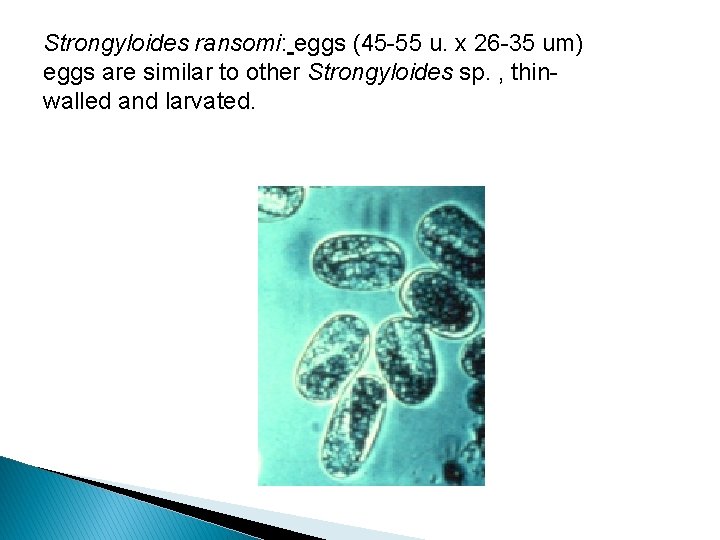
Strongyloides ransomi: eggs (45 -55 u. x 26 -35 um) eggs are similar to other Strongyloides sp. , thinwalled and larvated.
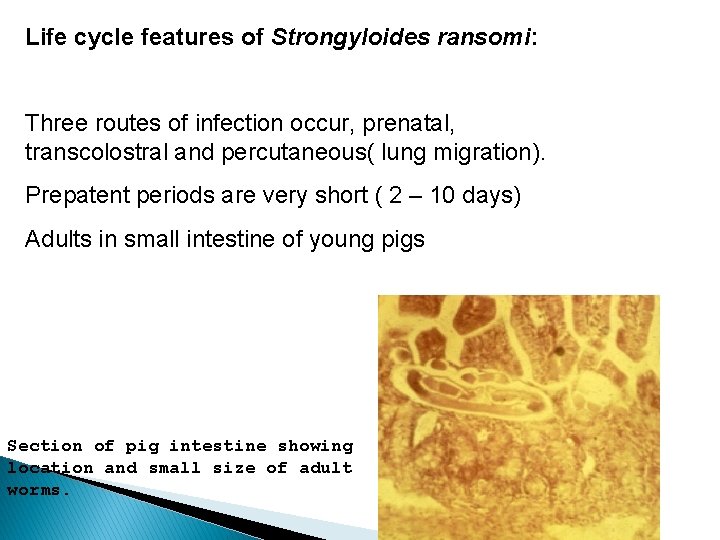
Life cycle features of Strongyloides ransomi: Three routes of infection occur, prenatal, transcolostral and percutaneous( lung migration). Prepatent periods are very short ( 2 – 10 days) Adults in small intestine of young pigs Section of pig intestine showing location and small size of adult worms.
Strongyloides: The earliest parasitic infection producing signs in very young animals. Rx – Ivermectin, levamisole.
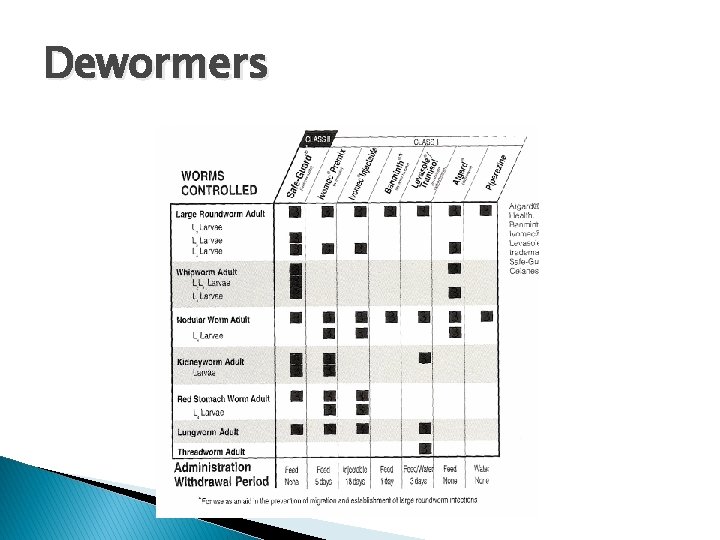
Dewormers
When To Deworm � When clinical signs are seen ◦ Coughing ◦ Weight loss ◦ Scour � Every 6 -8 week on heavily infected lots � Can monitor with fecal exams
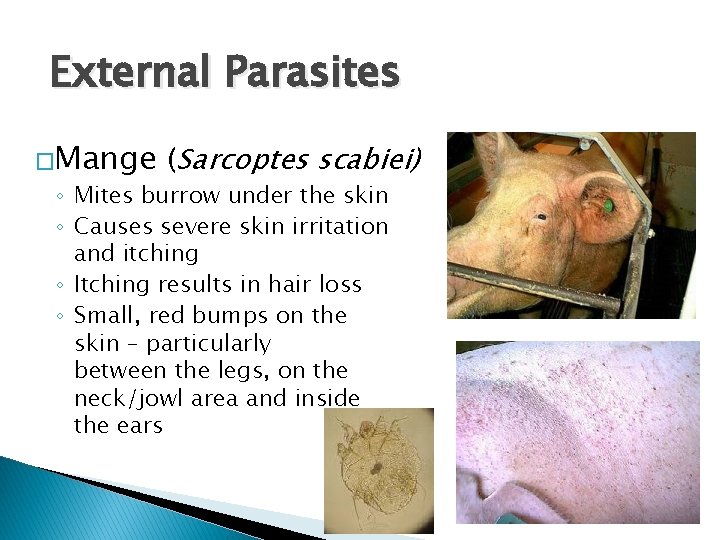
External Parasites �Mange (Sarcoptes scabiei) ◦ Mites burrow under the skin ◦ Causes severe skin irritation and itching ◦ Itching results in hair loss ◦ Small, red bumps on the skin – particularly between the legs, on the neck/jowl area and inside the ears
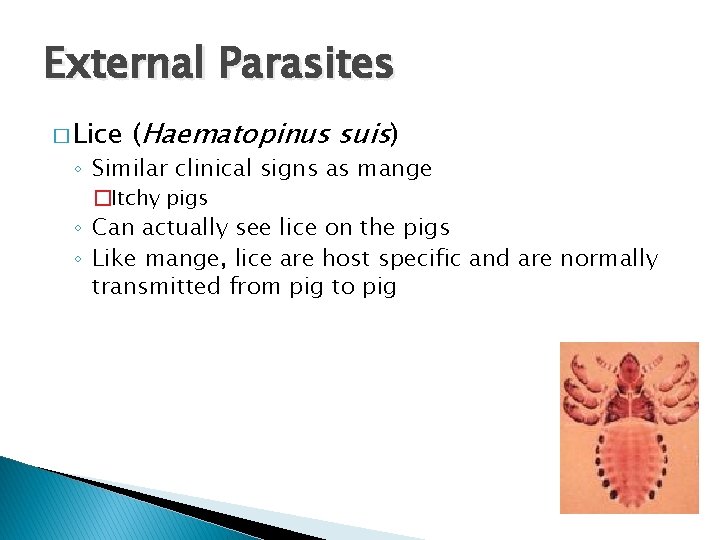
External Parasites � Lice (Haematopinus suis) ◦ Similar clinical signs as mange �Itchy pigs ◦ Can actually see lice on the pigs ◦ Like mange, lice are host specific and are normally transmitted from pig to pig
Lice and Mange Treatment � Ivermectin is the most common treatment ◦ Injectable or feed grade �Also effective for internal parasites � Pour-ons also available