
Swine diseases Respiratory diseases Atrophic rhinitis Bordetella bronchiseptica
Swine diseases
Respiratory diseases Atrophic rhinitis: Bordetella bronchiseptica and Pasteurella multocida (primarily type D) Swine influenza: influenza virus Mycoplasma pneumoniae: “enzootic pneumonia, ” Actinobacillus pleuropneumoniae: Gramnegative Pasteurella: Gram negative Verminous pneumonia
Atrophic rhinitis Bordatella bronchiseptica ◦ aerobic, Gram-negative rod Pasteurella multocida ◦ Gram negative coccobacillus High ammonia Restricted to swine (described in dog and goat) In the United States, AR is becoming a rare disease as ◦ early weaning, age segregation and/or vaccination.
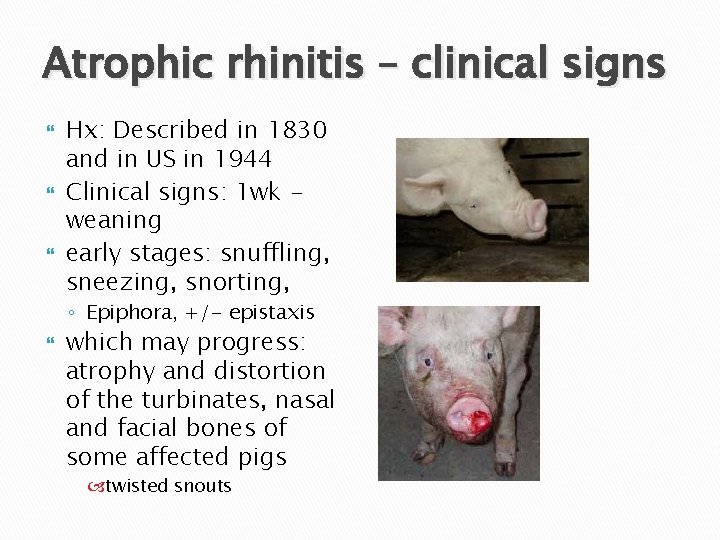
Atrophic rhinitis – clinical signs Hx: Described in 1830 and in US in 1944 Clinical signs: 1 wk weaning early stages: snuffling, sneezing, snorting, ◦ Epiphora, +/- epistaxis which may progress: atrophy and distortion of the turbinates, nasal and facial bones of some affected pigs twisted snouts
Atrophic rhinitis cont. . . Dff: rhinitis: porcine reproductive and respiratory syndrome virus (PRRS), pseudorabies virus (PRV), inclusion body rhinitis (cytomegalovirus), or excessive dust or ammonia Diagnosis Necropsy - 2 nd premolar or 1 st cheek tooth in pigs less than 6 months of age Nasal culture for either organism
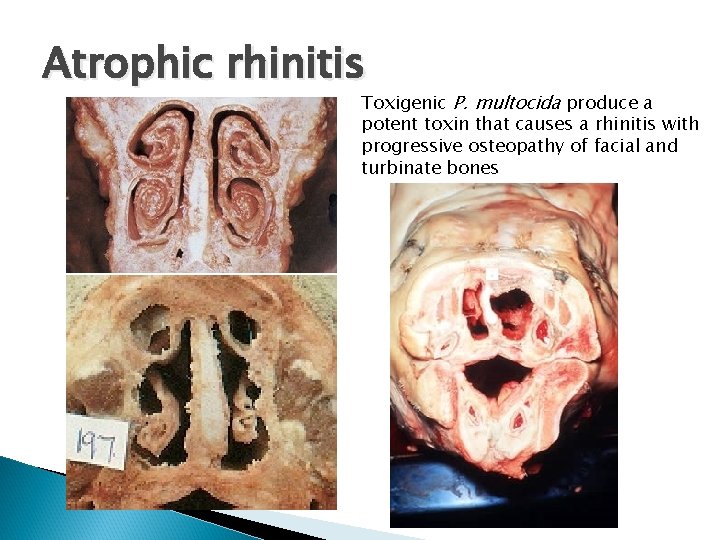
Atrophic rhinitis Toxigenic P. multocida produce a potent toxin that causes a rhinitis with progressive osteopathy of facial and turbinate bones
Atrophic rhinitis Treatment tetracyclines in the feed: farrowing/weaning LA 200 to neonates Control or eradicate ◦ improvement of husbandry: management and housing, including ventilation, all in all out, reduce stress ◦ vaccination program for the breeding stock, pigs, or both.
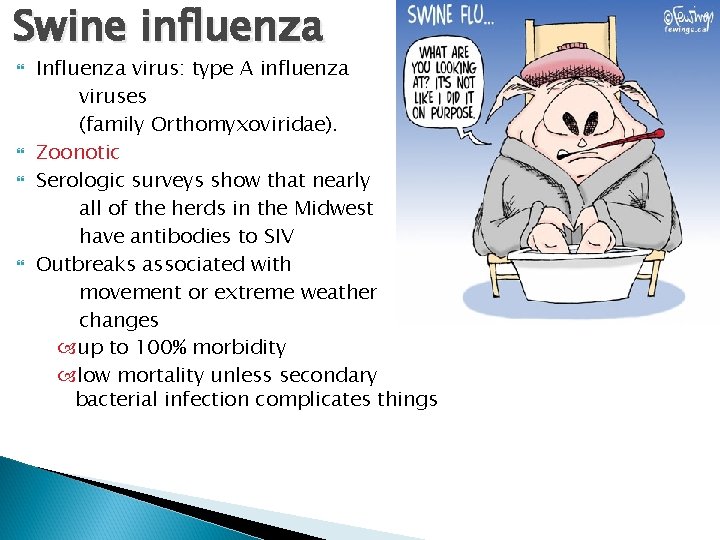
Swine influenza Influenza virus: type A influenza viruses (family Orthomyxoviridae). Zoonotic Serologic surveys show that nearly all of the herds in the Midwest have antibodies to SIV Outbreaks associated with movement or extreme weather changes up to 100% morbidity low mortality unless secondary bacterial infection complicates things
Swine influenza - Hx Swine influenza subtype H 1 N 1: ◦ 1 st appeared in western Illinois in 1918 ◦ influenza pandemic that killed an estimated 20 million people worldwide interspecies transmission: among swine, chickens, ducks, turkeys, many wild birds and people 2 or more strains of virus: potential for reassortment (genetic “shift”). H 3 N 2 and H 1 N 2 emerged during the 1990 s: triple reassortment” variants that are comprised of swine, human, and avian viral genes
Swine influenza - CS inflammation with widespread degeneration and necrosis of cells lining bronchi and bronchioles Sudden: sudden onset of fever, occulonasal discharge, prostration and weakness Progression: paroxysmal coughing over a relatively short course of 5 -7 days low mortality Both lungs are non-collapsed. There is diffuse tan consolidation of cranial lobes, and multifocal lobular consolidation of the caudal lobes, consistent with bronchointerstitial pneumonia Credit: Dr. B. Janke, Iowa State University, College of Veterinary Medicine, Veterinary Diagnostic Laboratory
Swine influenza cont. . . Diagnosis Necropsy - cranioventral pneumonia: fluorescent antibody technique on fresh lung sections immunohistochemistry techniques on formalin-fixed lung sections Treatment - supportive Prevention closed herd control secondary infections keep away from humans (no shows!) inactivated by many disinfectants (2 wks environment)
Mycoplasma hyopneumoniae Enzootic pneumonia: acute and severe disease, PRDC (porcine resp dz complex) Weaned – grower/finisher increases the severity of several other infections: (PRRS) and influenza Carrier swine very costly, widespread disease of swine, largely because of its negative effects on growth rate and feed efficiency
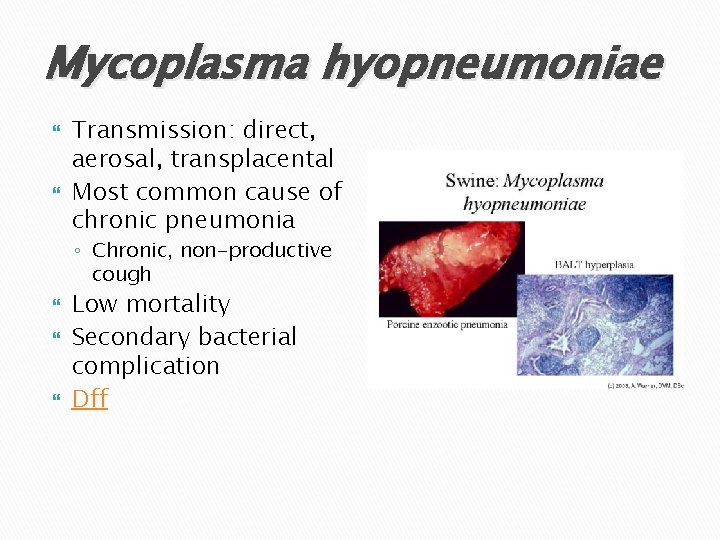
Mycoplasma hyopneumoniae Transmission: direct, aerosal, transplacental Most common cause of chronic pneumonia ◦ Chronic, non-productive cough Low mortality Secondary bacterial complication Dff
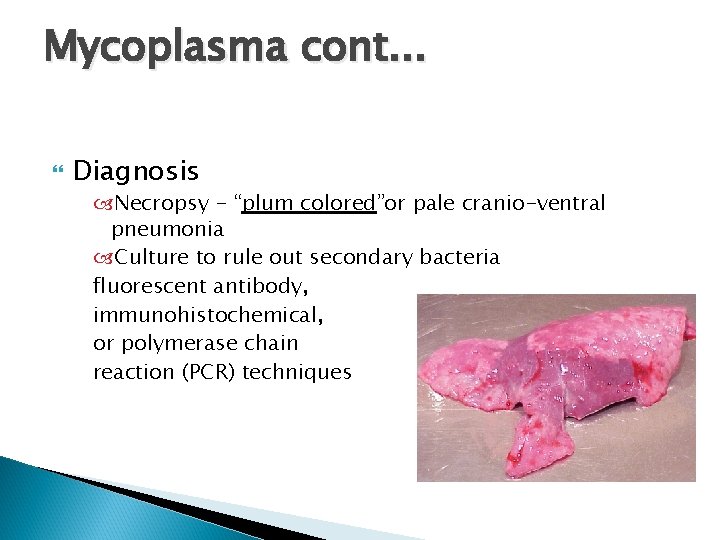
Mycoplasma cont. . . Diagnosis Necropsy - “plum colored”or pale cranio-ventral pneumonia Culture to rule out secondary bacteria fluorescent antibody, immunohistochemical, or polymerase chain reaction (PCR) techniques
Mycoplasma cont. . . Treatment - Lincomycin in feed Prevention - improve management
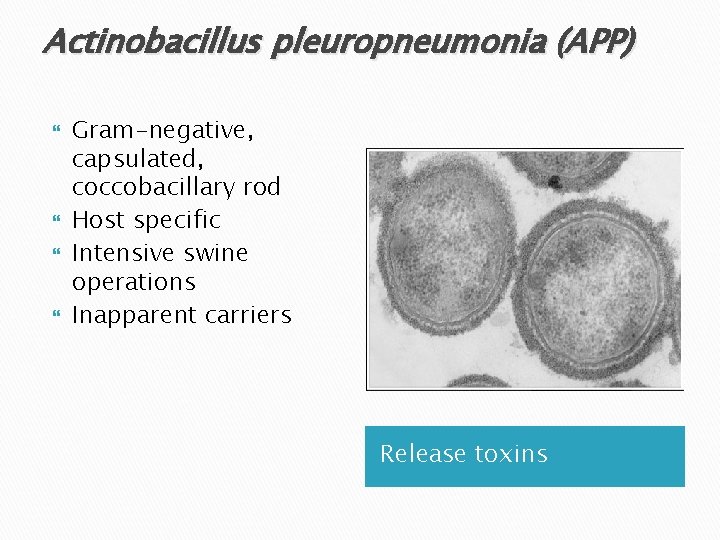
Actinobacillus pleuropneumonia (APP) Gram-negative, capsulated, coccobacillary rod Host specific Intensive swine operations Inapparent carriers Release toxins
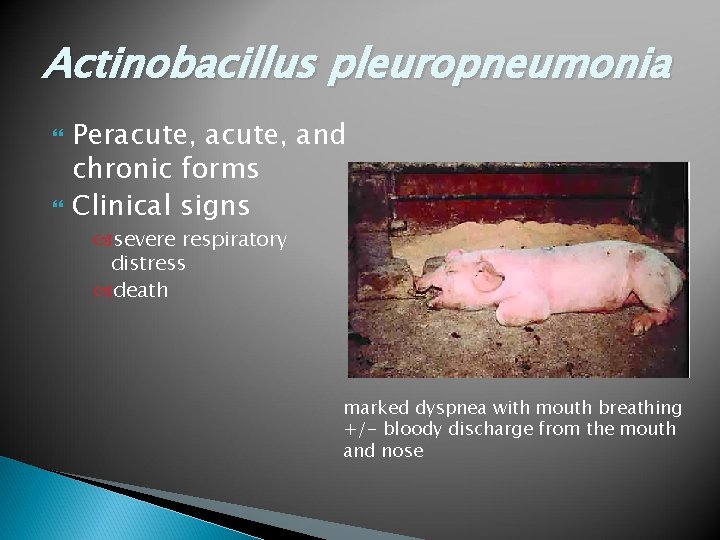
Actinobacillus pleuropneumonia Peracute, and chronic forms Clinical signs severe respiratory distress death marked dyspnea with mouth breathing +/- bloody discharge from the mouth and nose
Actinobacillus cont. . . Risk factors: ◦ Overstocking, inadequate ventilation, coinfection with other respiratory pathogen, stress Diagnosis necropsy - fibrinous pleuropneumonia often diaphragmatic lobes most severe culture is difficult complement fixation serology Treatment ceftiofur (Naxcel) and procaine penicillin Control vaccination of young pigs
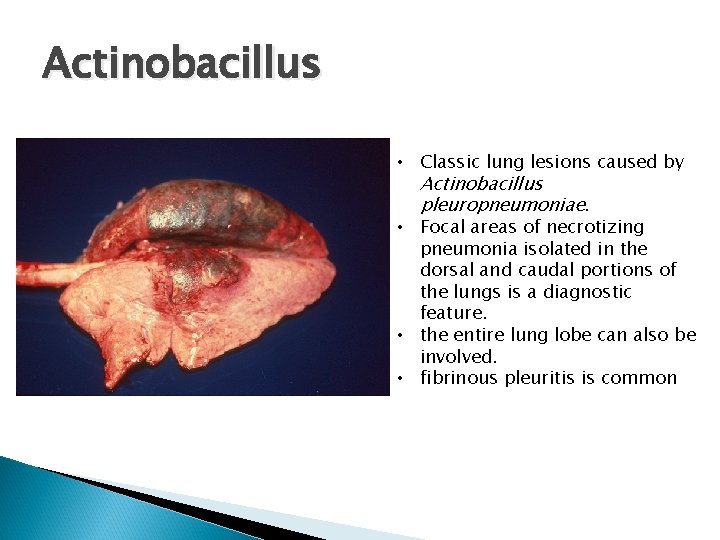
Actinobacillus • Classic lung lesions caused by Actinobacillus pleuropneumoniae. • Focal areas of necrotizing pneumonia isolated in the dorsal and caudal portions of the lungs is a diagnostic feature. • the entire lung lobe can also be involved. • fibrinous pleuritis is common
Pasteurella multocida Gram negative coccobacillus Most common bacterial isolate from pig lungs opportunistic pathogen mycoplasma, influenza, actinobacillus, stress clinical signs moist productive cough dyspnea some die
Pasteurella cont. . . Diagnosis necropsy - suppurative cranio-ventral bronchopneumonia may be pleuritis similar to actinobacillus culture Treatment - penicillin, tetracyclines Control look for underlying disease medicate feed and water (tetracyclines)
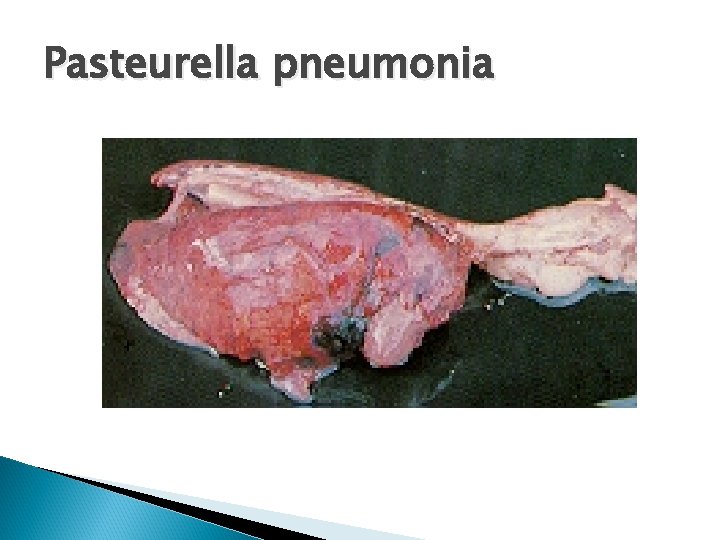
Pasteurella pneumonia
Verminous pneumonia Ascaris suum - direct life cycle ◦ pneumonia, hepatitis, and ill thrift Metastrongylus elongatus - earthworm intermediate Problem with pasture pigs Clinical signs poor doer respiratory distress Secondary bacterial infection “Milk spots” liver, worms in the GI Levamisole, ivermectin
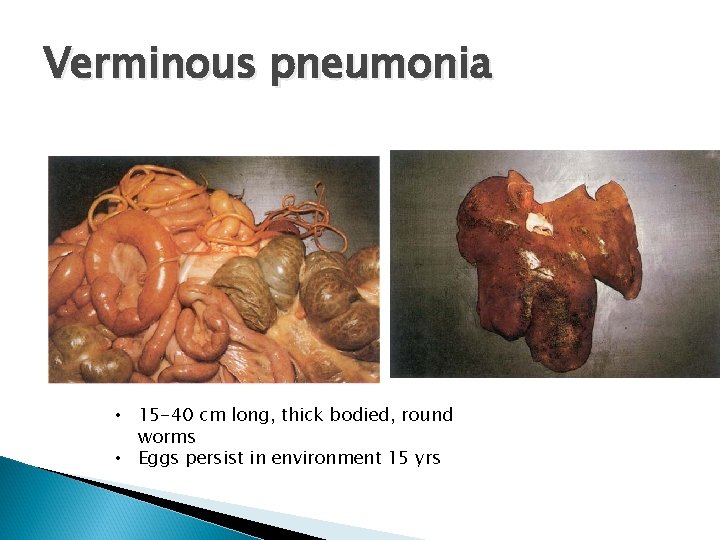
Verminous pneumonia • 15 -40 cm long, thick bodied, round worms • Eggs persist in environment 15 yrs
Gastrointestinal diseases Stomach Ulcers Small intestine E. coli (piglets): Gram-negative, flagellated bacilli TGE (piglets): coronavirus Clostridium (piglets): large, anaerobic, Gram positive bacillus Coccidiosis (>7 days): protozoa Rota virus (post weaning) Salmonella (any): Gram-negative bacilli
Gastrointestinal disease cont. . . Large intestine Swine dysentery (grower/finishers): Gram-negative, anaerobic Proliferative enteropathy (grower/finishers) Hemorrhagic bowel syndrome Proliferative illeitis Whipworms (growers) Salmonella (any): Gram-negative bacilli
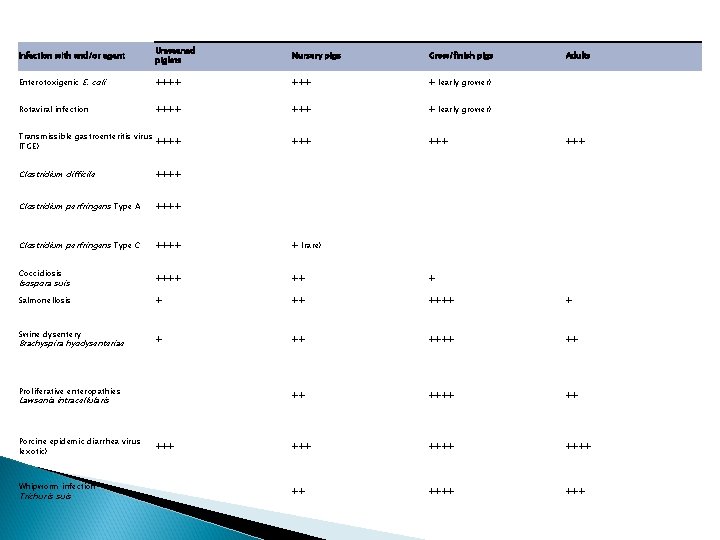
Infection with and/or agent Unweaned piglets Nursery pigs Grow/finish pigs Enterotoxigenic E. coli ++++ + (early grower) Rotaviral infection ++++ + (early grower) Transmissible gastroenteritis virus ++++ (TGE) +++ Adults +++ Clostridium difficile ++++ Clostridium perfringens Type A ++++ Clostridium perfringens Type C ++++ + (rare) ++++ ++ ++++ +++ ++++ ++ +++ Coccidiosis Isospora suis Salmonellosis Swine dysentery Brachyspira hyodysenteriae Proliferative enteropathies Lawsonia intracellularis Porcine epidemic diarrhea virus (exotic) Whipworm infection Trichuris suis +++
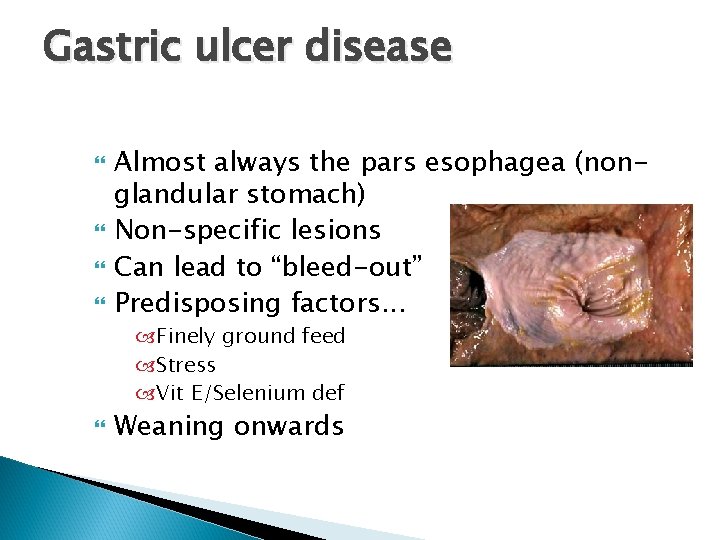
Gastric ulcer disease Almost always the pars esophagea (nonglandular stomach) Non-specific lesions Can lead to “bleed-out” Predisposing factors. . . Finely ground feed Stress Vit E/Selenium def Weaning onwards
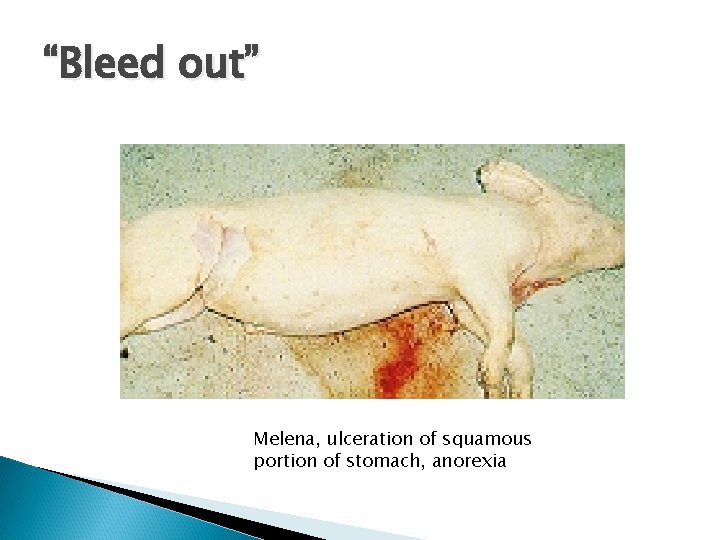
“Bleed out” Melena, ulceration of squamous portion of stomach, anorexia
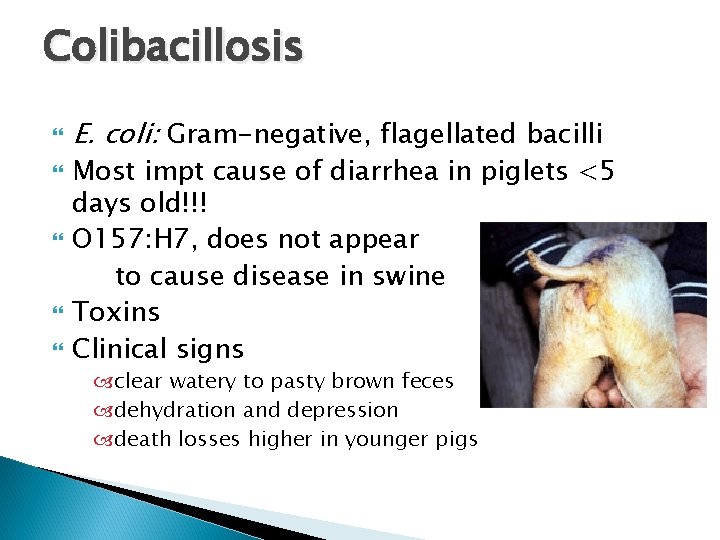
Colibacillosis E. coli: Gram-negative, flagellated bacilli Most impt cause of diarrhea in piglets <5 days old!!! O 157: H 7, does not appear to cause disease in swine Toxins Clinical signs clear watery to pasty brown feces dehydration and depression death losses higher in younger pigs
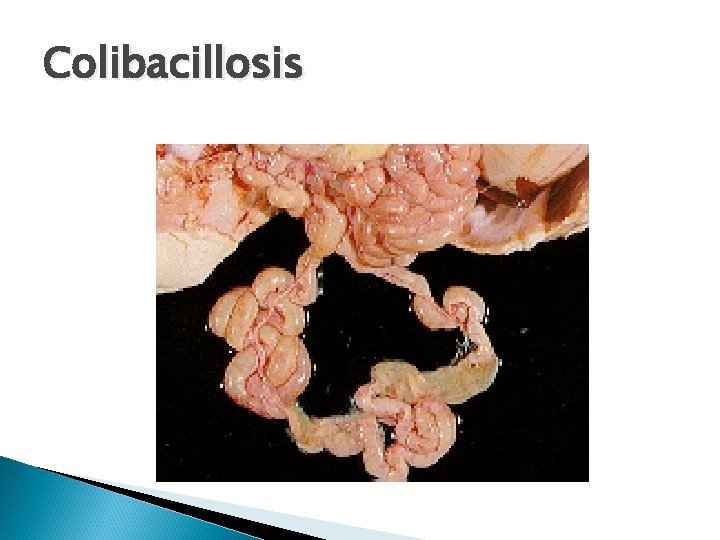
Colibacillosis cont. . . Diagnosis ph of feces (>8) culture of organism (large number) necropsy - dilated gas filled small intestine Treatment Ampicillin, tetracyclin, gentamicin, fluids Control sanitation, vaccination of sow
Colibacillosis
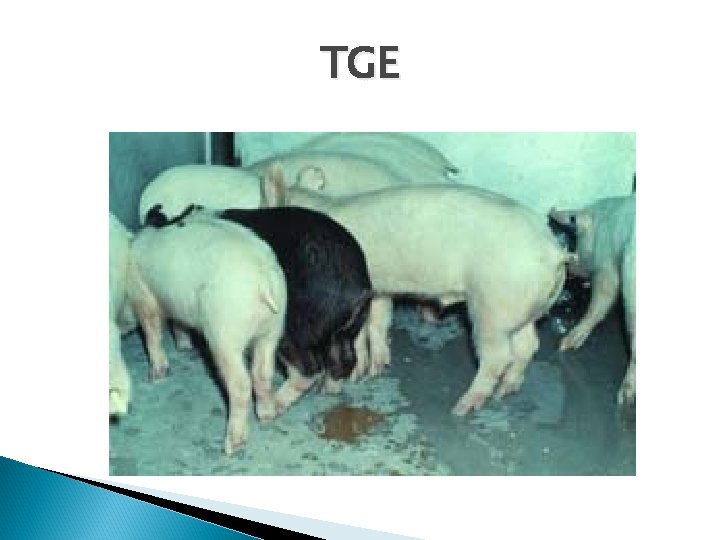
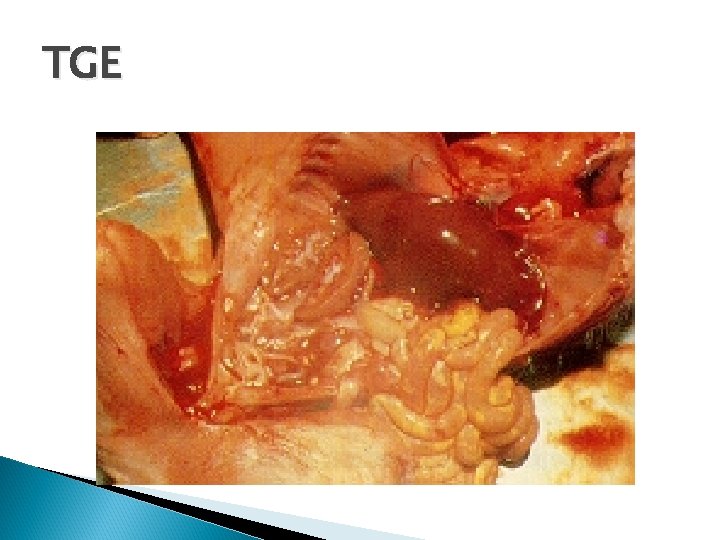
TGE - transmissable gastroenteritis Coronavirus (similar to FIP) Epidemic form (all ages) Endemic form (1 -8 weeks old) WINTER disease Clinical signs Neonates (1 -8 days)– watery diarrhea with undigested milk, vomiting and high mortality rates in piglets Growers, finishers - diarrhea recovers <7 days Morbidity and mortality high in pigs <2 weeks old
TGE cont. . . Diagnosis ELISA, immunoflourescence of gut contents Necropsy undigested milk in small intestine thin walled, transparent small intestine Treatment - supportive Control isolate new additions for 2 weeks, keep dogs and bird away (carriers) Immunization of sows or piglets Grind up piglet guts and feed to pregnant sows
TGE
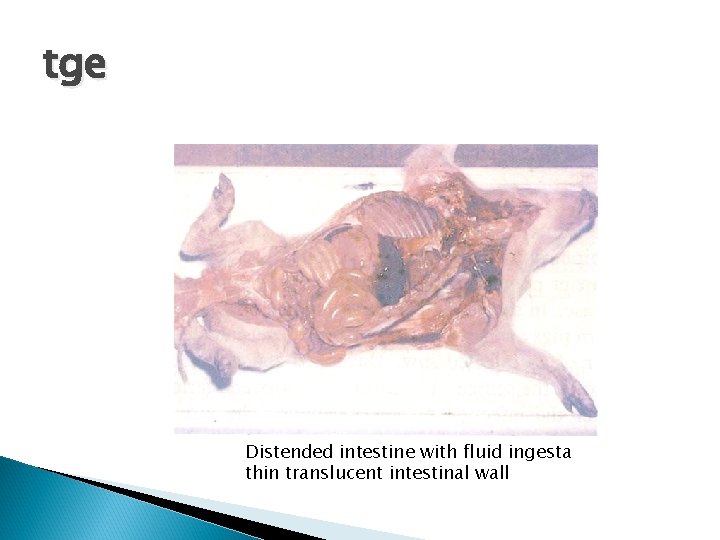
tge Distended intestine with fluid ingesta thin translucent intestinal wall
TGE
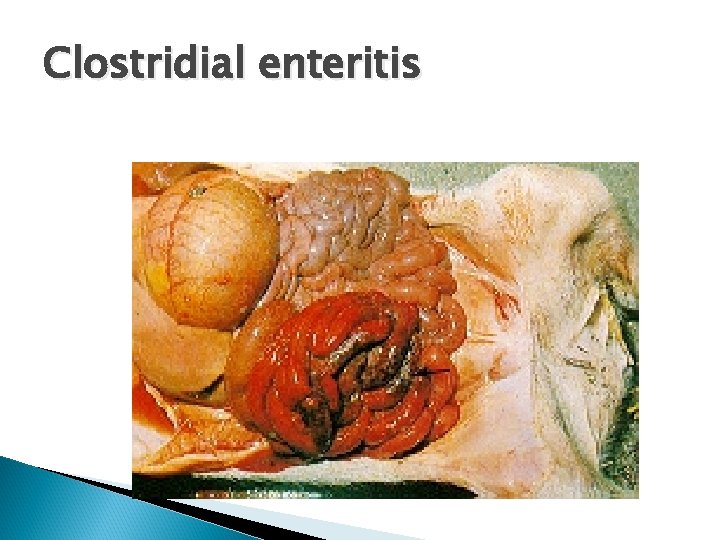
Clostridial enteritis Clostridium perfringens type C sudden death in 1 -2 day old piglets Clinical signs BLOODY DIARRHEA Diagnosis Necropsy - blood in jejunum with flecks of mucosa, necrosis of small intestine Clinical signs Histopathology - large gram positive rods
Clostridial enteritis
Clostridial enteritis cont. . Treatment usually die too quickly type C antitoxin Control Sanitation Type C antitoxin within minutes of birth Vaccination of sow Prophylactic bacitracin or penicillin to piglets
References http: //www. aphis. usda. gov/animal_health/an imal_dis_spec/swine/ http: //www. ncsu. edu/project/swine_extensio n/ncporkconf/2002/roberts. htm http: //www. vetmed. wisc. edu/pbs/zoonoses/ Erysipelas/erysipelasindex. html http: //vetmed. iastate. edu/vdpam/newvdpam-employees/food-supply-veterinarymedicine/swine-diseases/haemophilus -parasuishttp: //vetpath. wordpress. com/category/necr opsy-cases/
References http: //www. fmv. utl. pt/atlas/figado/pages_us /figad 015_ing. htm http: //www. cfsph. iastate. edu/Disease. Info/dis ease. php? name=influenza&lang=en http: //microgen. ouhsc. edu/a_pleuro/a_pleur o_home. htm
- Slides: 42