
Swallowing and Nutrition Topics Module 1 Understanding stroke
- Slides: 42
Swallowing and Nutrition
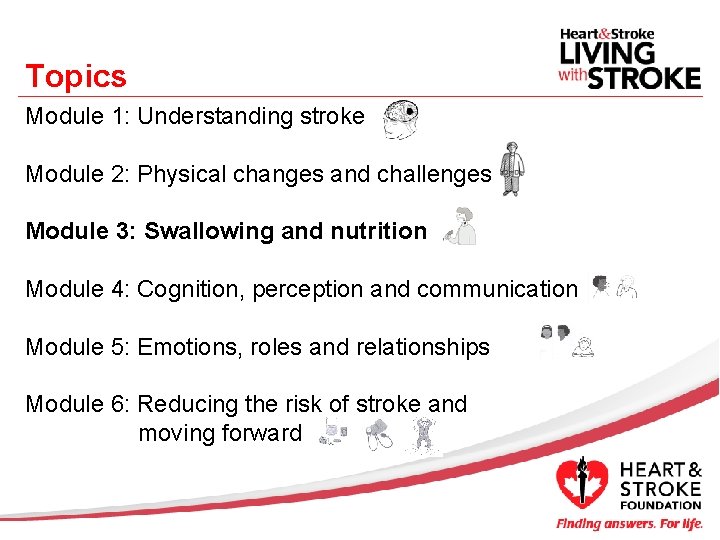
Topics Module 1: Understanding stroke Module 2: Physical changes and challenges Module 3: Swallowing and nutrition Module 4: Cognition, perception and communication Module 5: Emotions, roles and relationships Module 6: Reducing the risk of stroke and moving forward
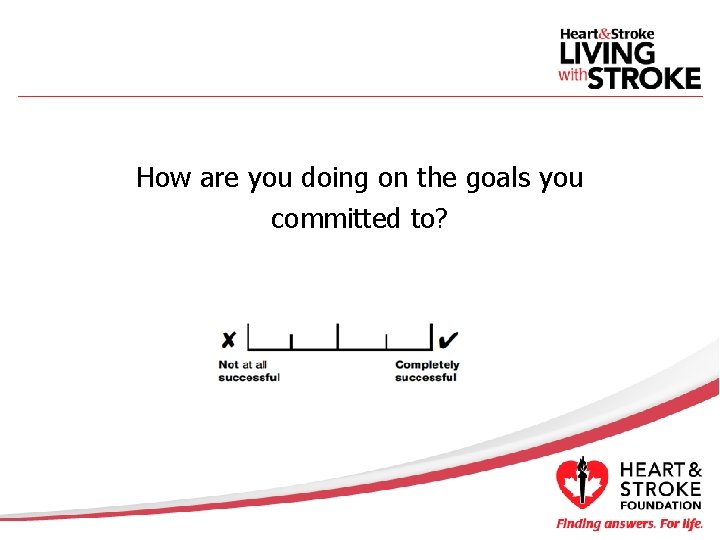
How are you doing on the goals you committed to?
Video: Professional video (dietitian)
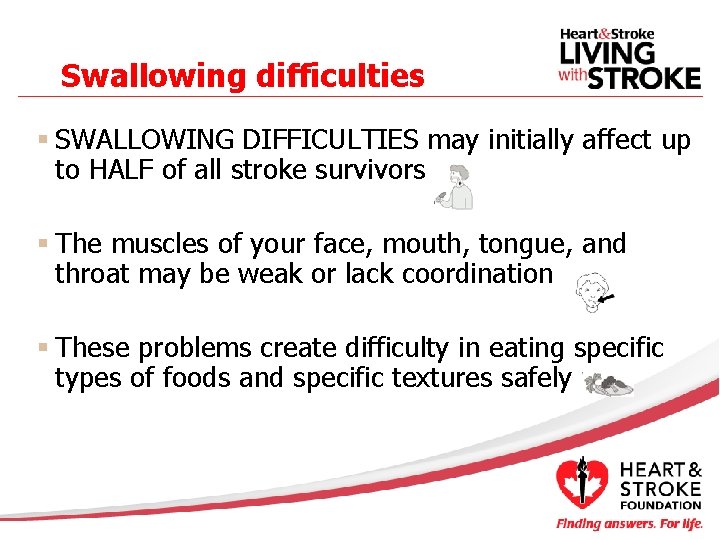
Swallowing difficulties § SWALLOWING DIFFICULTIES may initially affect up to HALF of all stroke survivors § The muscles of your face, mouth, tongue, and throat may be weak or lack coordination § These problems create difficulty in eating specific types of foods and specific textures safely
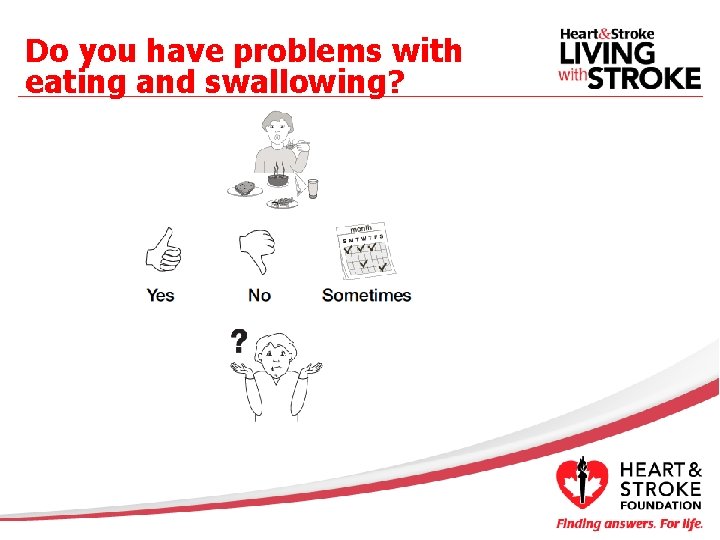
Do you have problems with eating and swallowing?
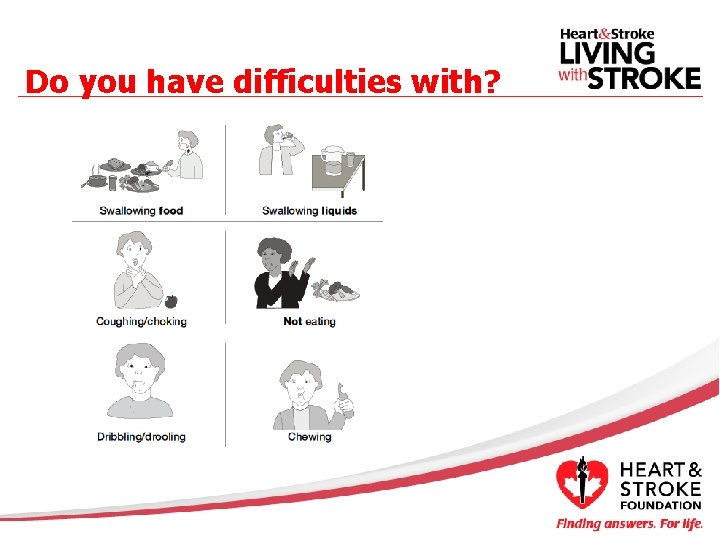
Do you have difficulties with?
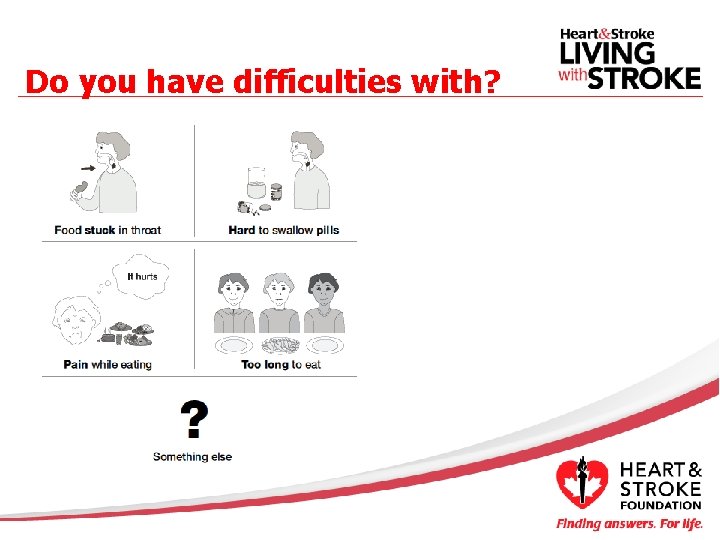
Do you have difficulties with?
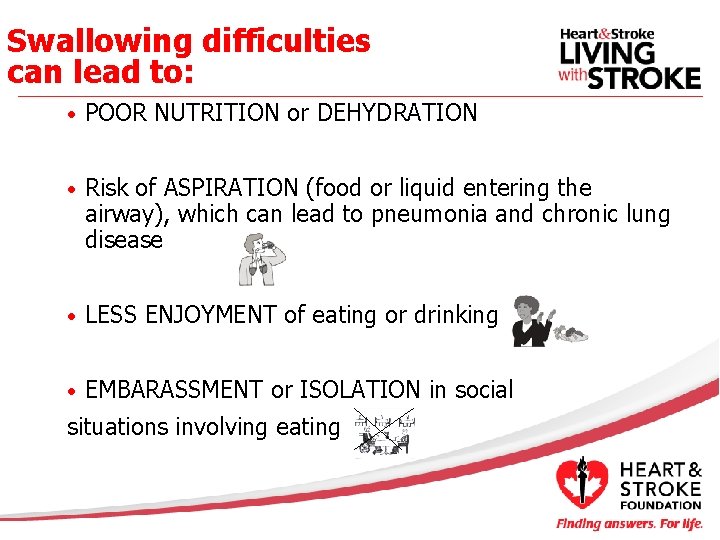
Swallowing difficulties can lead to: • POOR NUTRITION or DEHYDRATION • Risk of ASPIRATION (food or liquid entering the airway), which can lead to pneumonia and chronic lung disease • LESS ENJOYMENT of eating or drinking • EMBARASSMENT or ISOLATION in social situations involving eating
How has your ability to SWALLOW changed since your stroke? BETTER WORSE NO CHANGE
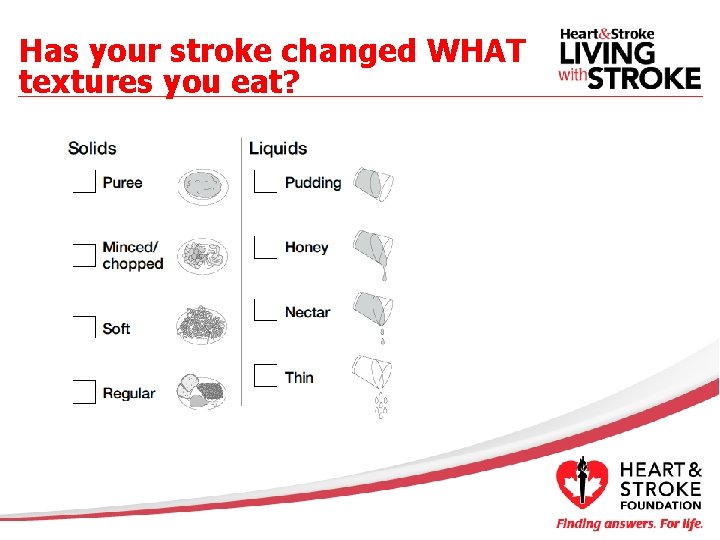
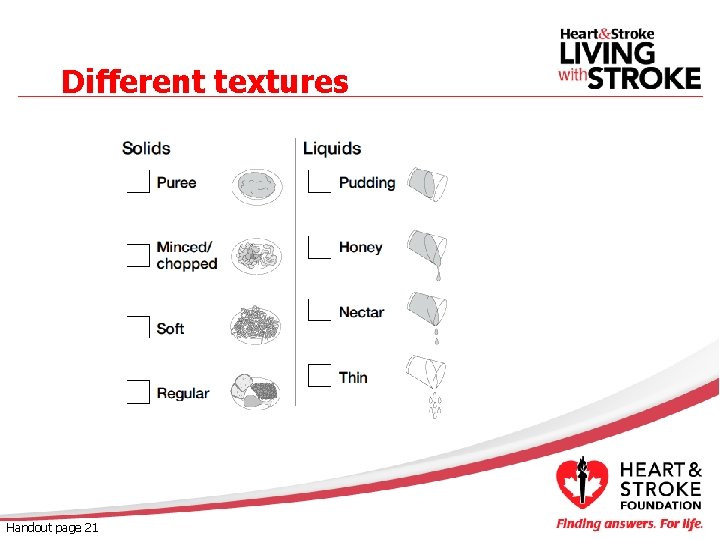
Has your stroke changed WHAT textures you eat?
Has your stroke changed WHAT you eat? I have not changed what I eat healthier foods
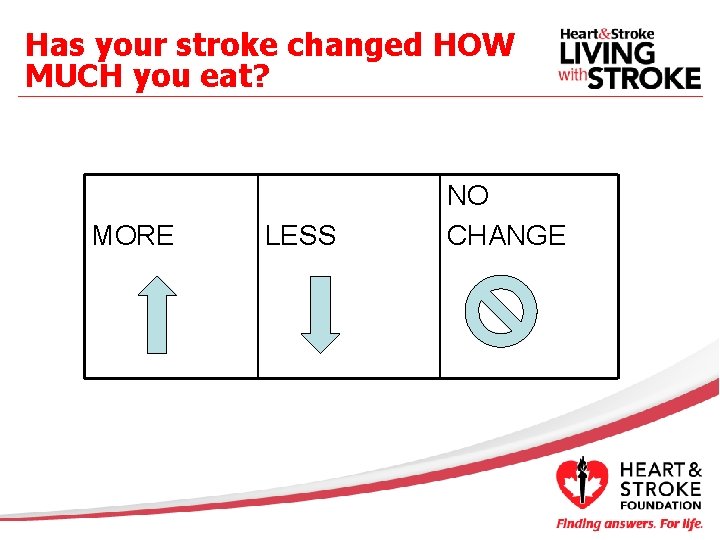
Has your stroke changed HOW MUCH you eat? MORE LESS NO CHANGE
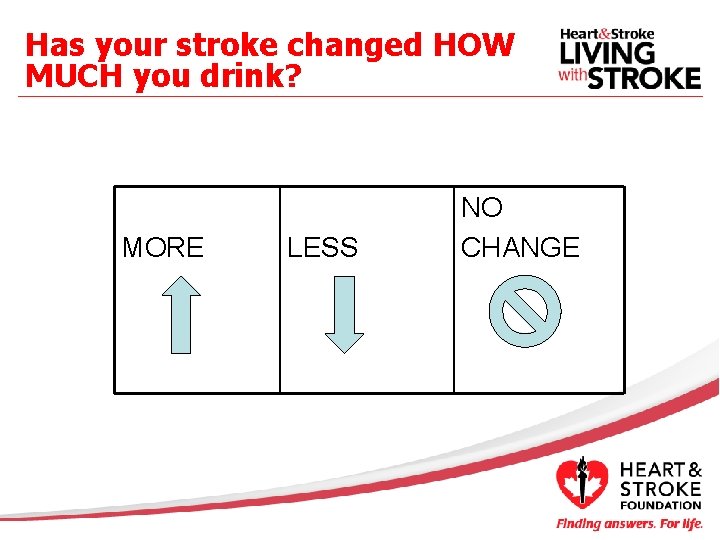
Has your stroke changed HOW MUCH you drink? MORE LESS NO CHANGE
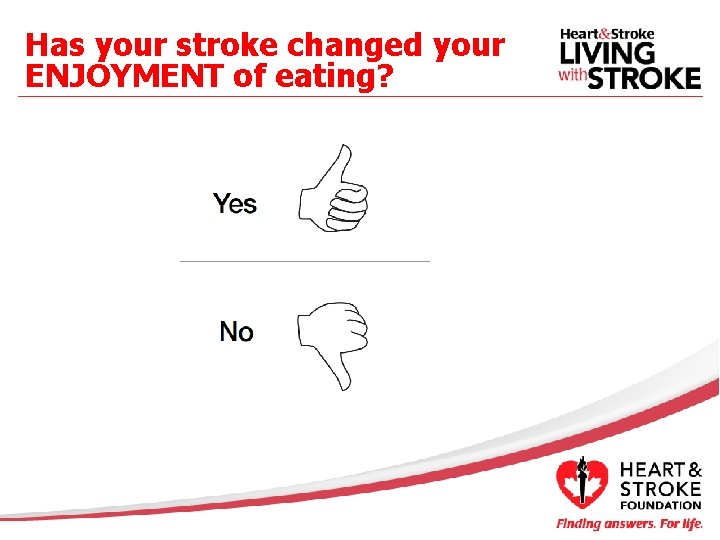
Has your stroke changed your ENJOYMENT of eating?
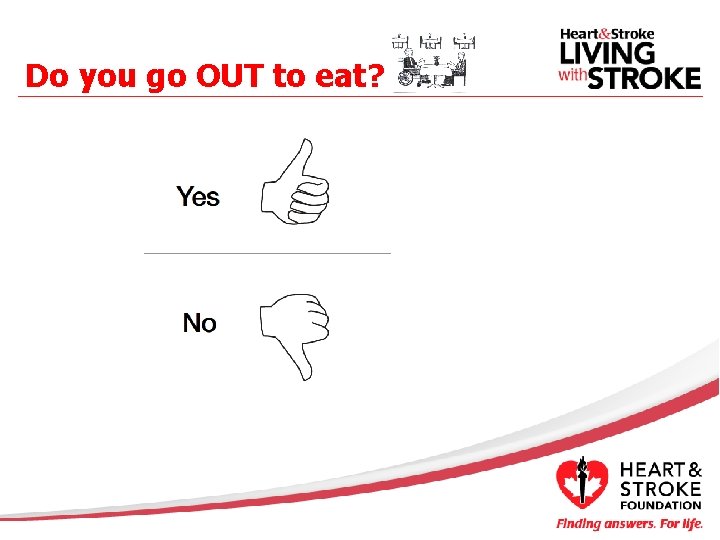
Do you go OUT to eat?
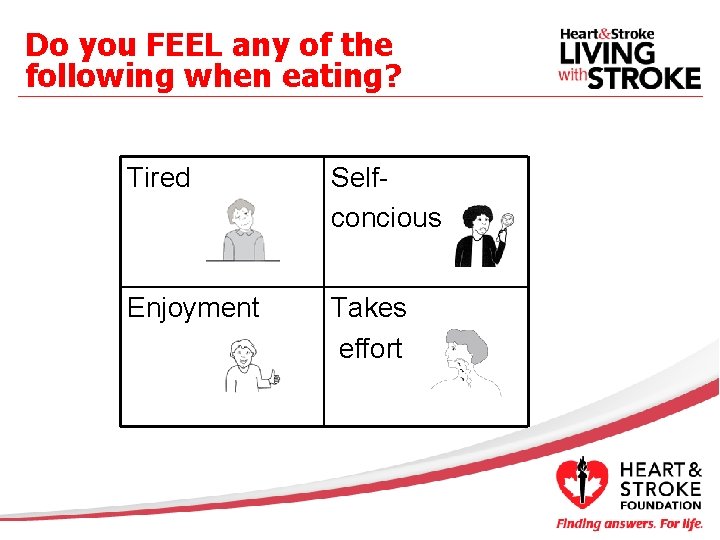
Do you FEEL any of the following when eating? Tired Selfconcious Enjoyment Takes effort
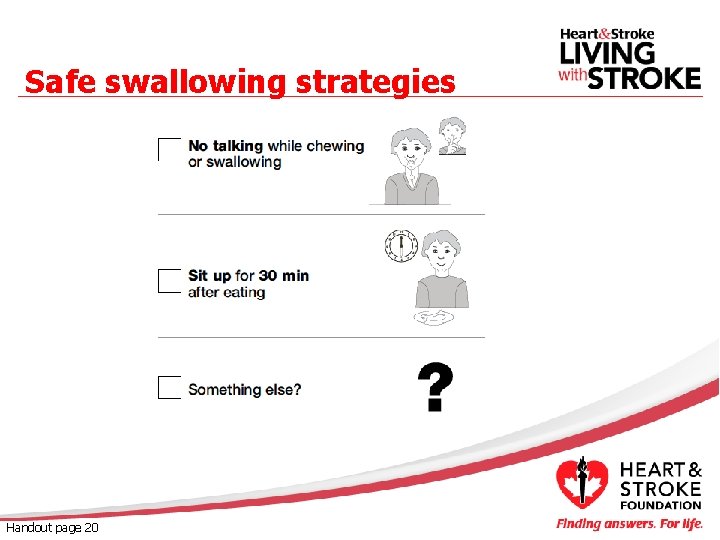
What TREATMENTS are available for people with swallowing disorders? • Using SAFE SWALLOWING STRATEGIES • CHANGING TEXTURES of foods and liquids
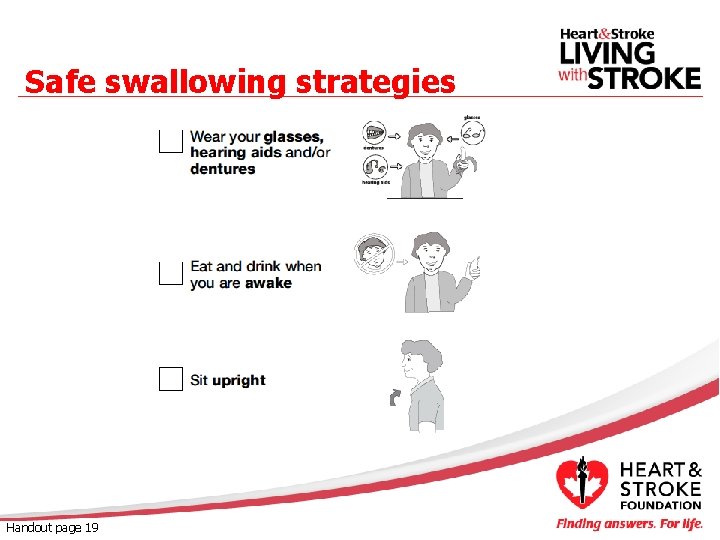
Safe swallowing strategies Handout page 19
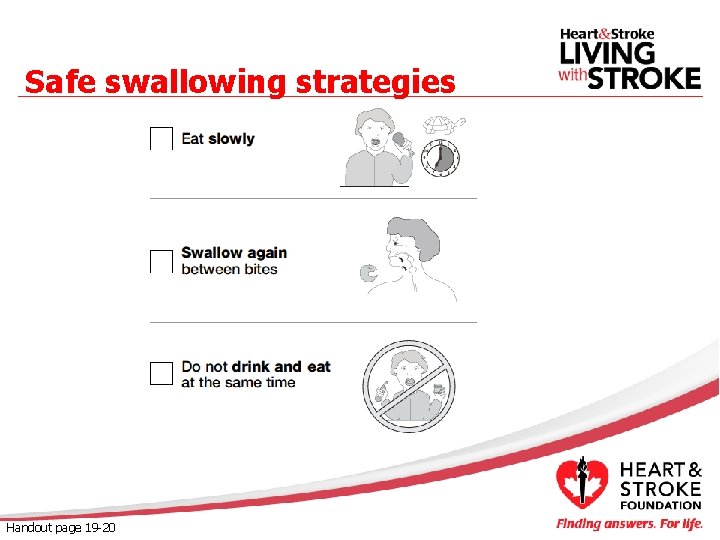
Safe swallowing strategies Handout page 19 -20
Safe swallowing strategies Handout page 20
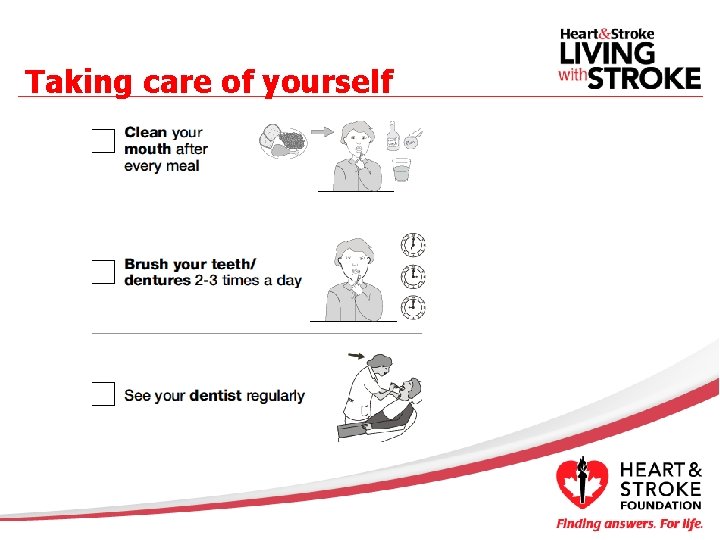
Taking care of yourself
Different textures Handout page 21
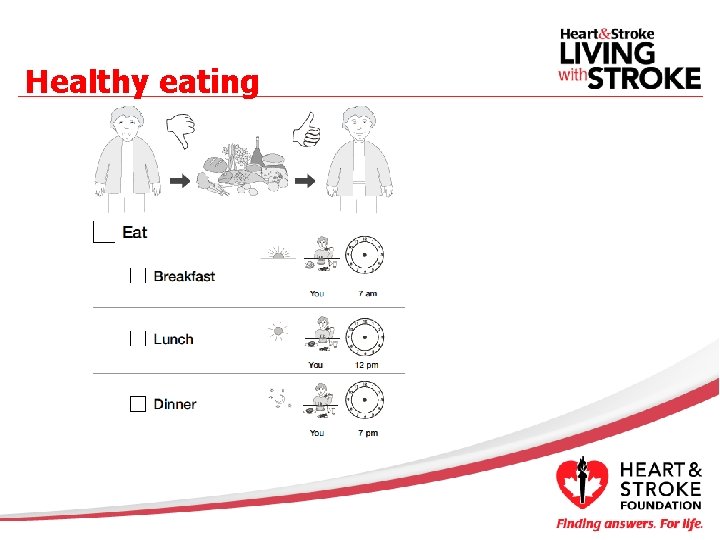
Healthy eating
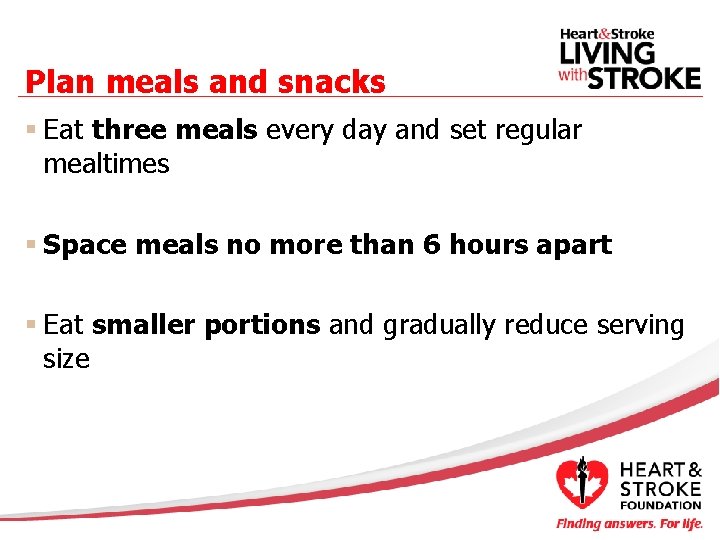
Plan meals and snacks § Eat three meals every day and set regular mealtimes § Space meals no more than 6 hours apart § Eat smaller portions and gradually reduce serving size
Nutrition Guidelines § Follow Canada’s Food Guide Link to Canada’s Food Guide
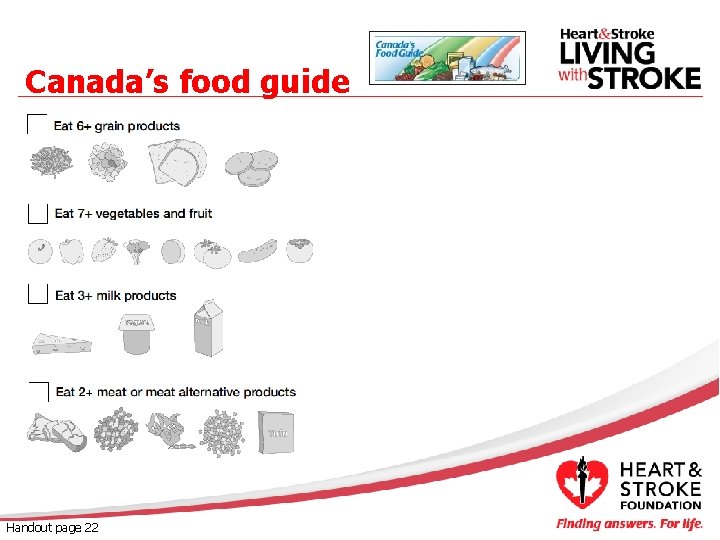
Canada’s food guide Handout page 22
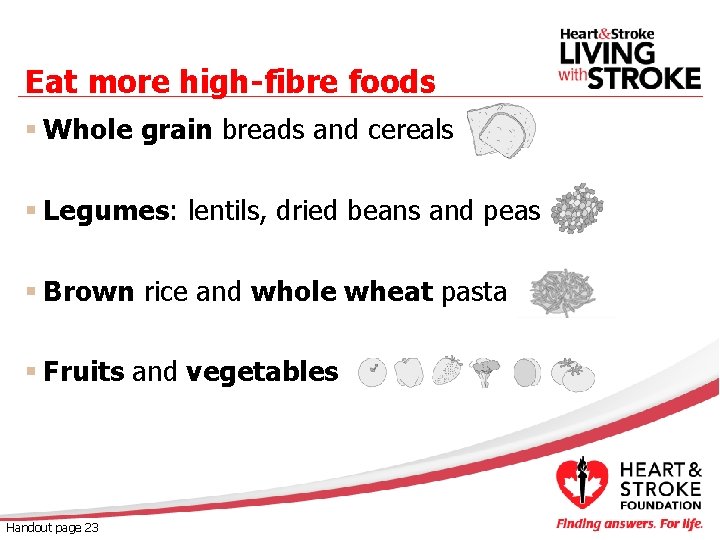
Eat more high-fibre foods § Whole grain breads and cereals § Legumes: lentils, dried beans and peas § Brown rice and whole wheat pasta § Fruits and vegetables Handout page 23
Limit § Salt § Fat § Sugar Handout page 23
Salt § Remove salt shaker from the table and substitute salt free seasonings § Reduce the amount of salt you add when cooking § Use reduced-sodium or no-salt added products
Salt § Limit foods with high salt content. Examples are: • cured meats, such as bacon or ham • brined foods such as pickles, olives and sauerkraut • condiments such as MSG (monosodium glutamate), ketchup, soy sauce, barbeque sauce
Salt § Instead of salt experiment with seasonings such as herbs, spices, lemon zest, vinegar, and saltfree seasoning blends § Sodium intake should be limited to 1, 500 mg (2/3 tsp) a day if diagnosed with high blood pressure § No more than 2300 mg (about 1 tsp) of sodium a day otherwise
Fats § Use half as much vegetable oil, soft or liquid margarine and salad dressing § Choose fat-free salad dressings § Choose lower-fat dairy products § Read food labels and select foods with less than 3 grams of fat per serving
Sugar § Limit consumption of high sugar foods such as cakes, pies, and candy bars § Limit consumption of regular soft drinks and fruit drinks. Drink water instead. § Eat fruit canned in fruit juice, not syrup § Add fruit to plain yogurt
Read Food labels § Select foods with: • NO added SALT • NO added SUGAR • NO TRANS FAT or FAT-FREE
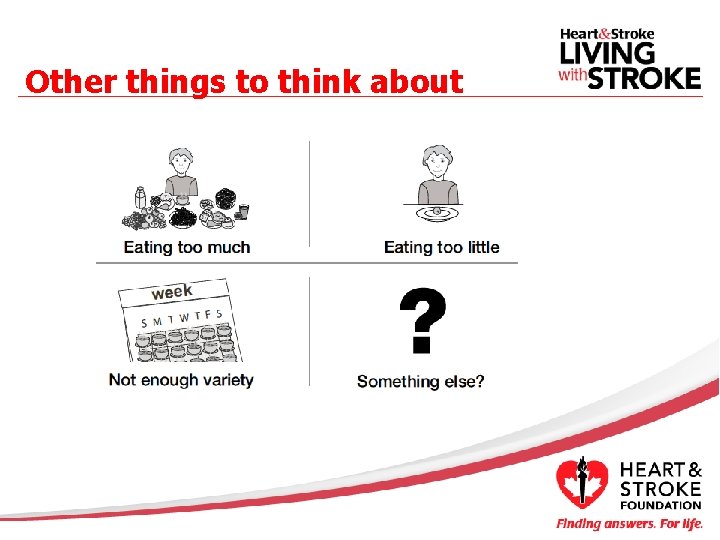
Other things to think about
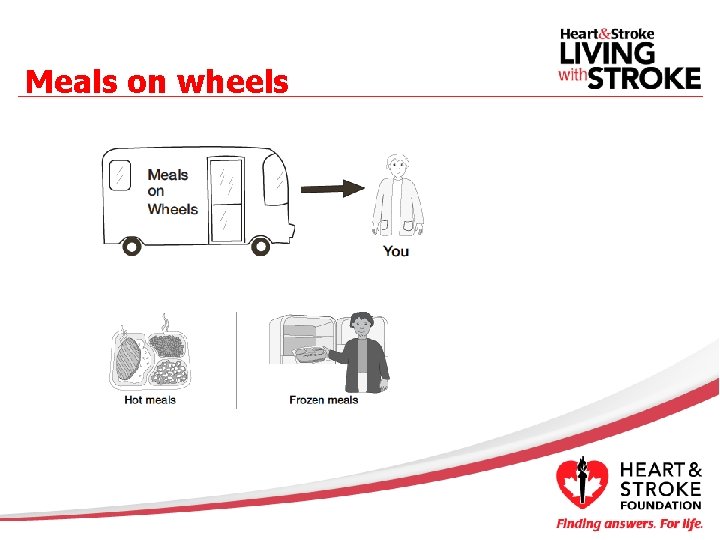
Meals on wheels
Plan meals and snacks § You may benefit from a healthy snack: • Fruits and vegetables • Unsalted nuts • Plain popcorn without butter or salt
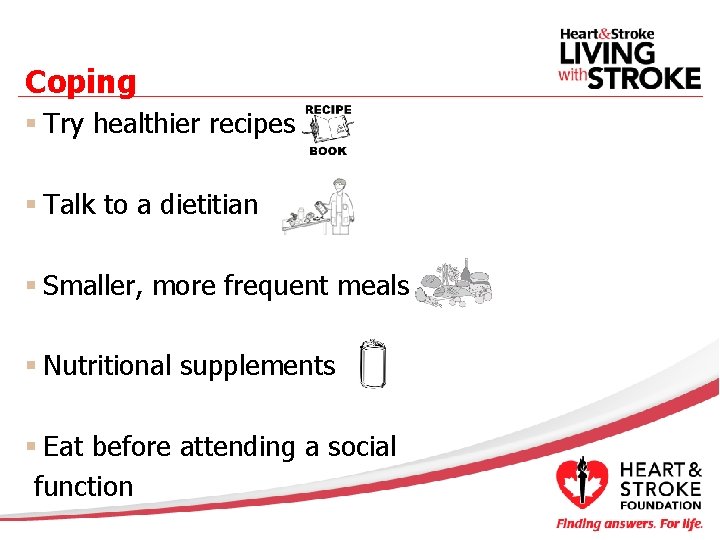
Coping § Try healthier recipes § Talk to a dietitian § Smaller, more frequent meals § Nutritional supplements § Eat before attending a social function
Can you come up with a goal to eat a healthier diet?
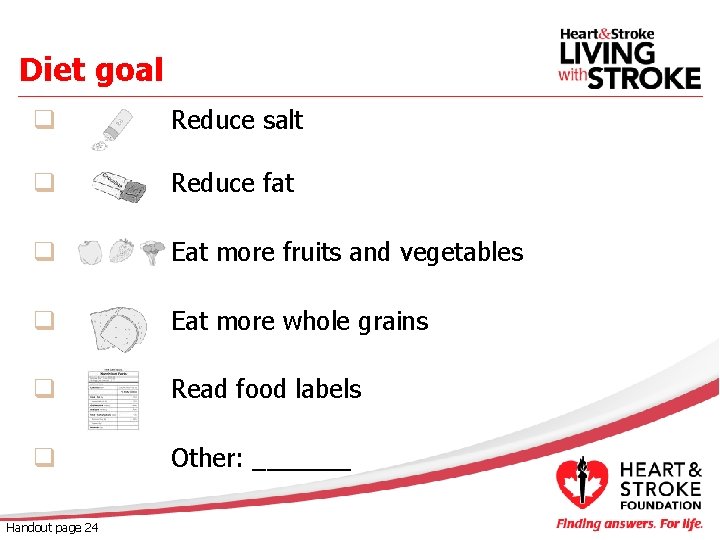
Diet goal q Reduce salt q Reduce fat q Eat more fruits and vegetables q Eat more whole grains q Read food labels q Other: _______ Handout page 24
Acknowledgements § Aphasia Institute § Providence Healthcare