
SW Cancer Alliances Colorectal Pathway Plan Michael Thomas


- Slides: 14
SW Cancer Alliances Colorectal Pathway Plan Michael Thomas SWAG Clinical Lead Melanie Feldman PCA Clinical Lead
The SW CRC Pathway Case for Change – Mike to add to slides as appropriate CRC is the 4 th most common cancer in the UK, 42000 are diagnosed each year. More than doubling referrals into cancer diagnostic pathways since 2015, a gap in capacity for endoscopy and radiology provision, surgical and oncology services, and a financially limited environment § 2 WW pathways have become seen as a reliable means of ensuring a patient is investigated promptly §The pathways consume huge volumes of resource for those without cancer, people often being referred into the pathways year after year. §limited diagnostic capacity means that patients in routine pathways have extended waits yet 20% of cancer patients start in routine pathways and 20% don’t present at all until an emergency develops – these people having more advanced disease
The SW CRC Pathway Case for Change – Mike to add to slides as appropriate SW Clinical Senate Sept 2018 To what extent are providers in the South West able to deliver the national commissioning pathways for colorectal cancer patients? What are the key areas for pathway redesign and provision of service that will improve the quality of experience & timeliness of treatment for patients across the region? One model of care will not suit all yet the drive to constantly find local solutions to local problems leads to duplication of work, paralysis in the face of huge challenge and inequitable provision of services which leads to compromised patient outcomes.
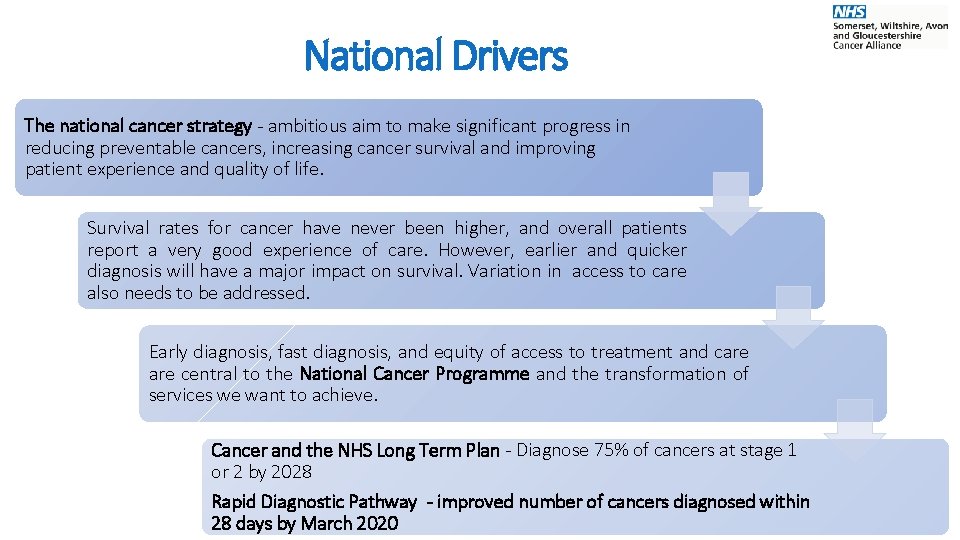
National Drivers The national cancer strategy - ambitious aim to make significant progress in reducing preventable cancers, increasing cancer survival and improving patient experience and quality of life. Survival rates for cancer have never been higher, and overall patients report a very good experience of care. However, earlier and quicker diagnosis will have a major impact on survival. Variation in access to care also needs to be addressed. Early diagnosis, fast diagnosis, and equity of access to treatment and care central to the National Cancer Programme and the transformation of services we want to achieve. Cancer and the NHS Long Term Plan - Diagnose 75% of cancers at stage 1 or 2 by 2028 Rapid Diagnostic Pathway - improved number of cancers diagnosed within 28 days by March 2020
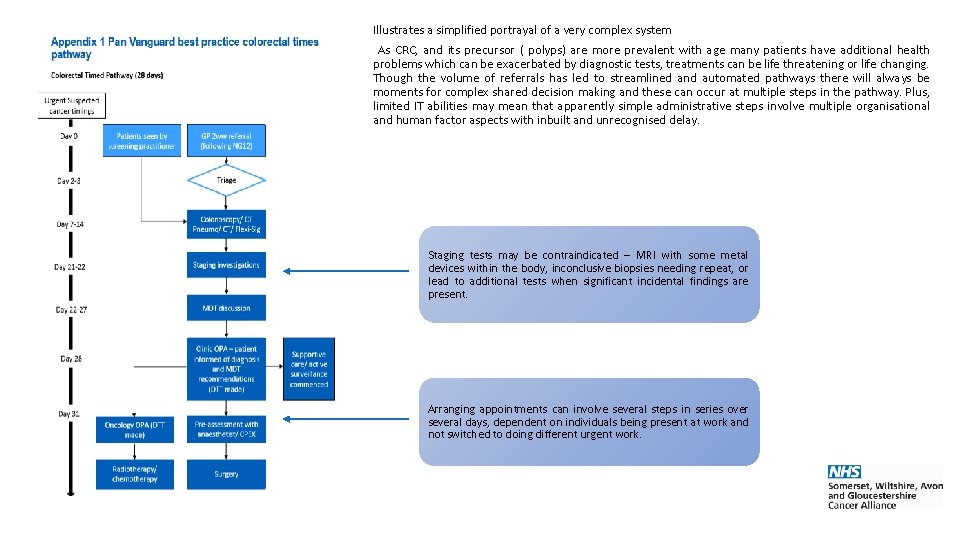
Illustrates a simplified portrayal of a very complex system As CRC, and its precursor ( polyps) are more prevalent with age many patients have additional health problems which can be exacerbated by diagnostic tests, treatments can be life threatening or life changing. Though the volume of referrals has led to streamlined and automated pathways there will always be moments for complex shared decision making and these can occur at multiple steps in the pathway. Plus, limited IT abilities may mean that apparently simple administrative steps involve multiple organisational and human factor aspects with inbuilt and unrecognised delay. Staging tests may be contraindicated – MRI with some metal devices within the body, inconclusive biopsies needing repeat, or lead to additional tests when significant incidental findings are present. Arranging appointments can involve several steps in series over several days, dependent on individuals being present at work and not switched to doing different urgent work.
Project Approach & Outcomes Peer review visits with two outputs: 1. A report for each Trust outlining areas of strength, weakness, challenge and good practice. 2. A handbook of the good practice and practical solutions in use throughout the region which can be used as a resource for change elsewhere. Site Visits Potential dates Timetable will be shared once finalized The peer review need not be onerous, mixing collection of established data sets with site visits where decision making can be discussed and patient views sought. Site visits are the key time when clinicians can learn about each others’ practice and build networks across the region. Mike Thomas Clinical Lead SWAG Melanie Feldman Clinical Lead PCA Ousaima Alhamouieh Transformation Project Manager SW Pathway Group
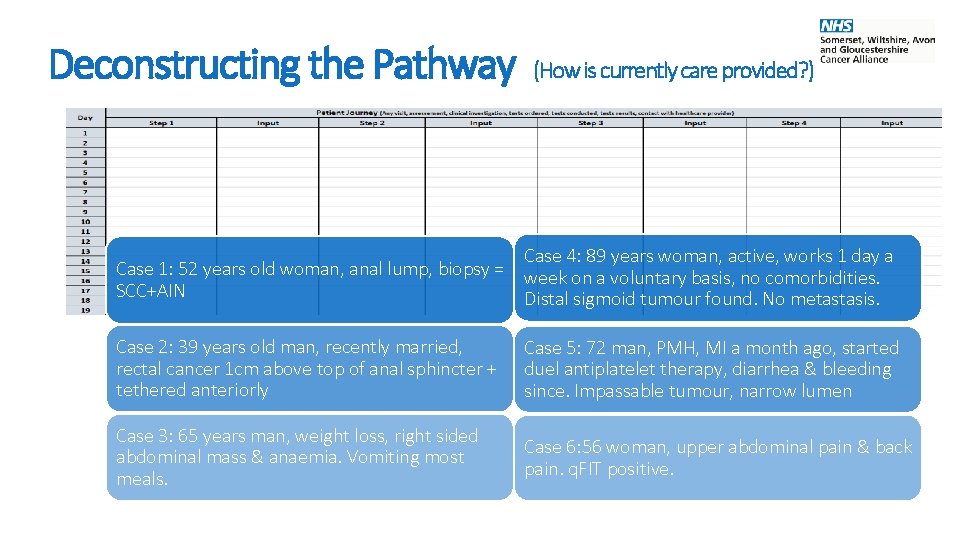
Deconstructing the Pathway (How is currently care provided? ) Case 4: 89 years woman, active, works 1 day a Case 1: 52 years old woman, anal lump, biopsy = week on a voluntary basis, no comorbidities. SCC+AIN Distal sigmoid tumour found. No metastasis. Case 2: 39 years old man, recently married, rectal cancer 1 cm above top of anal sphincter + tethered anteriorly Case 5: 72 man, PMH, MI a month ago, started duel antiplatelet therapy, diarrhea & bleeding since. Impassable tumour, narrow lumen Case 3: 65 years man, weight loss, right sided abdominal mass & anaemia. Vomiting most meals. Case 6: 56 woman, upper abdominal pain & back pain. q. FIT positive.
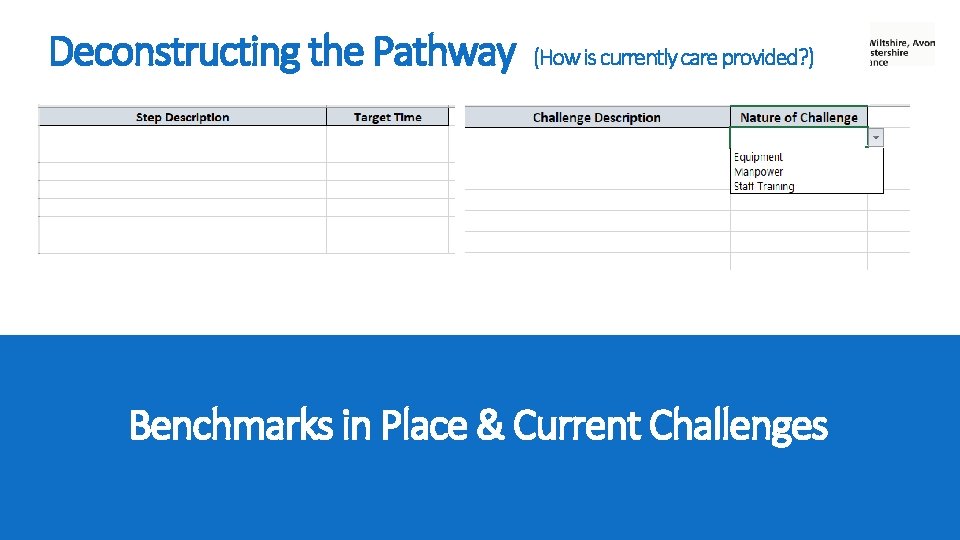
Deconstructing the Pathway (How is currently care provided? ) Benchmarks in Place & Current Challenges
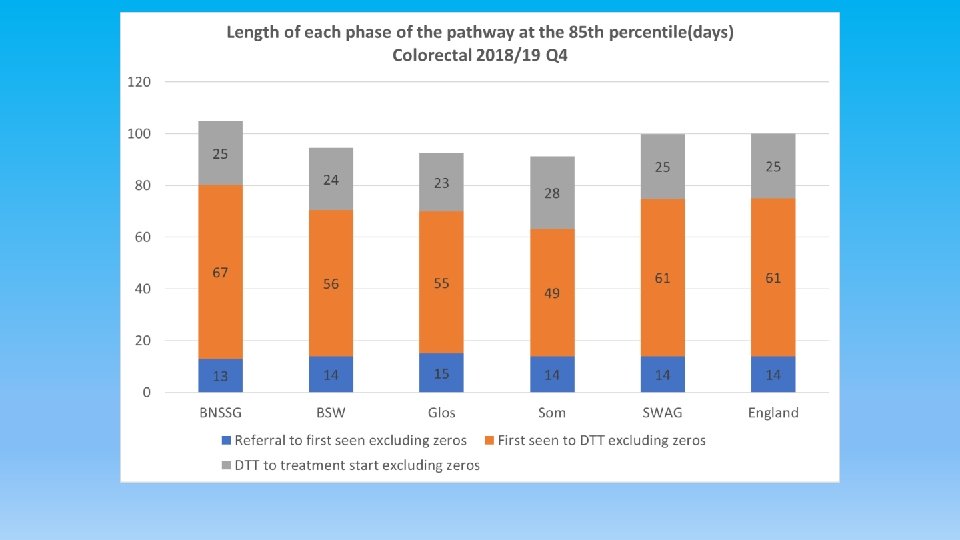
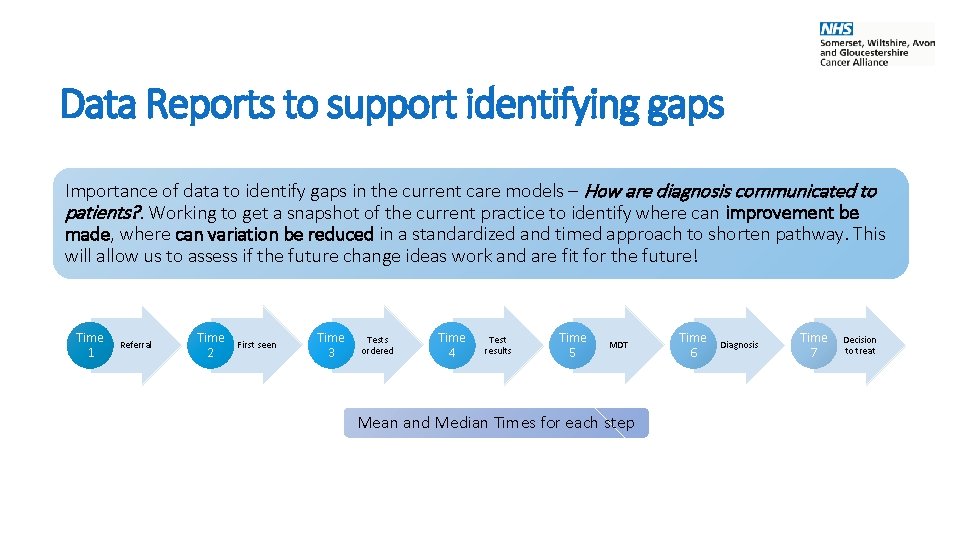
Data Reports to support identifying gaps Importance of data to identify gaps in the current care models – How are diagnosis communicated to patients? . Working to get a snapshot of the current practice to identify where can improvement be made, where can variation be reduced in a standardized and timed approach to shorten pathway. This will allow us to assess if the future change ideas work and are fit for the future! Time 1 Referral Time 2 First seen Time 3 Tests ordered Time 4 Test results Time 5 MDT Mean and Median Times for each step Time 6 Diagnosis Time 7 Decision to treat
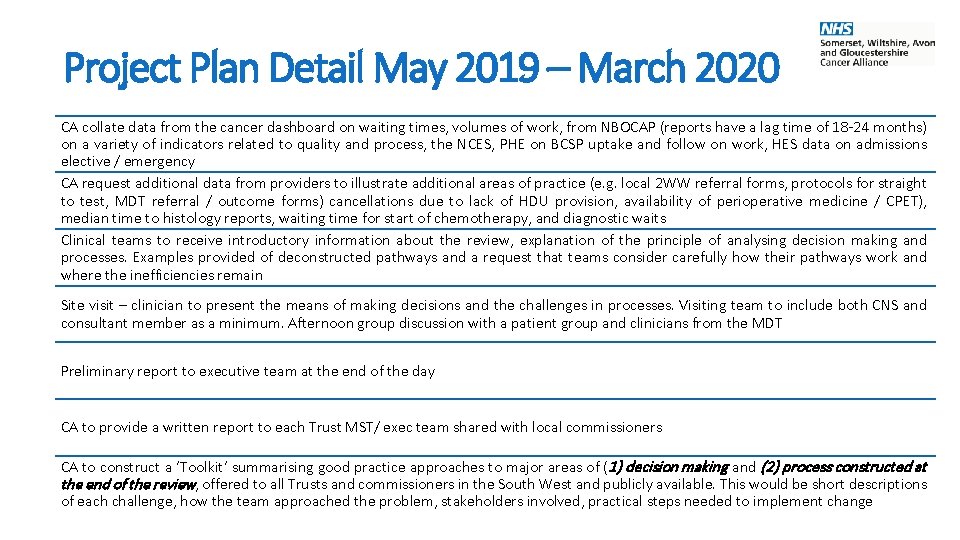
Project Plan Detail May 2019 – March 2020 CA collate data from the cancer dashboard on waiting times, volumes of work, from NBOCAP (reports have a lag time of 18 -24 months) on a variety of indicators related to quality and process, the NCES, PHE on BCSP uptake and follow on work, HES data on admissions elective / emergency CA request additional data from providers to illustrate additional areas of practice (e. g. local 2 WW referral forms, protocols for straight to test, MDT referral / outcome forms) cancellations due to lack of HDU provision, availability of perioperative medicine / CPET), median time to histology reports, waiting time for start of chemotherapy, and diagnostic waits Clinical teams to receive introductory information about the review, explanation of the principle of analysing decision making and processes. Examples provided of deconstructed pathways and a request that teams consider carefully how their pathways work and where the inefficiencies remain Site visit – clinician to present the means of making decisions and the challenges in processes. Visiting team to include both CNS and consultant member as a minimum. Afternoon group discussion with a patient group and clinicians from the MDT Preliminary report to executive team at the end of the day CA to provide a written report to each Trust MST/ exec team shared with local commissioners CA to construct a ‘Toolkit’ summarising good practice approaches to major areas of (1) decision making and (2) process constructed at the end of the review, offered to all Trusts and commissioners in the South West and publicly available. This would be short descriptions of each challenge, how the team approached the problem, stakeholders involved, practical steps needed to implement change
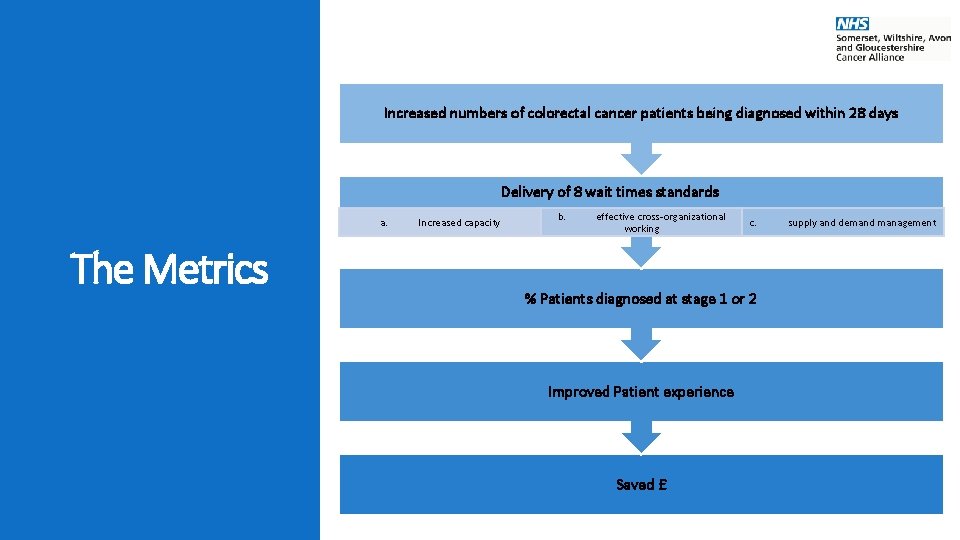
Increased numbers of colorectal cancer patients being diagnosed within 28 days Delivery of 8 wait times standards a. The Metrics Increased capacity b. effective cross-organizational working c. % Patients diagnosed at stage 1 or 2 Improved Patient experience Saved £ supply and demand management
CHART OF POTENTIAL 12 MONTH ROADMAP FOR 19/20 Actions A Discover - Benchmark B Define – Standards agreed by SW pathway group C Develop – Self Assessment, peer visits and report D Deliver – Quality Standards Framework E Evaluation - F Milestone report 1 2 3 4 5 6 7 8 9 Apr 19 May 19 Jun 19 Jul 19 Aug 19 Sep 19 Oct 19 Nov 19 Dec 19 10 Jan 20 The project will begin in May 2019 with a first milestone report expected Sep, 19. 11 Feb 20 12 Mar 20
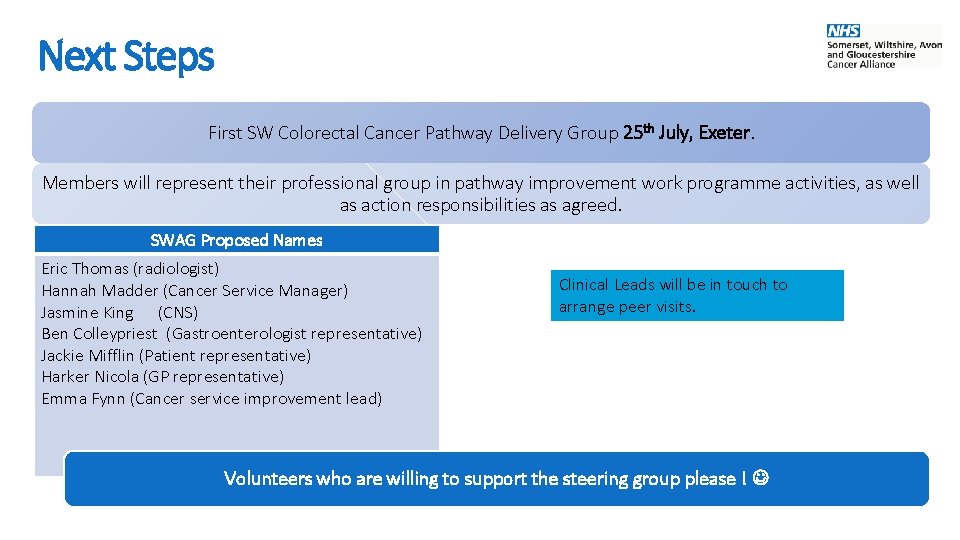
Next Steps First SW Colorectal Cancer Pathway Delivery Group 25 th July, Exeter. Members will represent their professional group in pathway improvement work programme activities, as well as action responsibilities as agreed. SWAG Proposed Names Eric Thomas (radiologist) Hannah Madder (Cancer Service Manager) Jasmine King (CNS) Ben Colleypriest (Gastroenterologist representative) Jackie Mifflin (Patient representative) Harker Nicola (GP representative) Emma Fynn (Cancer service improvement lead) Clinical Leads will be in touch to arrange peer visits. Volunteers who are willing to support the steering group please !