
Suxamethonium Scoline Apnoea Dr S Spijkerman Pathophysiology Suxamethonium
- Slides: 8
Suxamethonium (Scoline) Apnoea Dr S Spijkerman
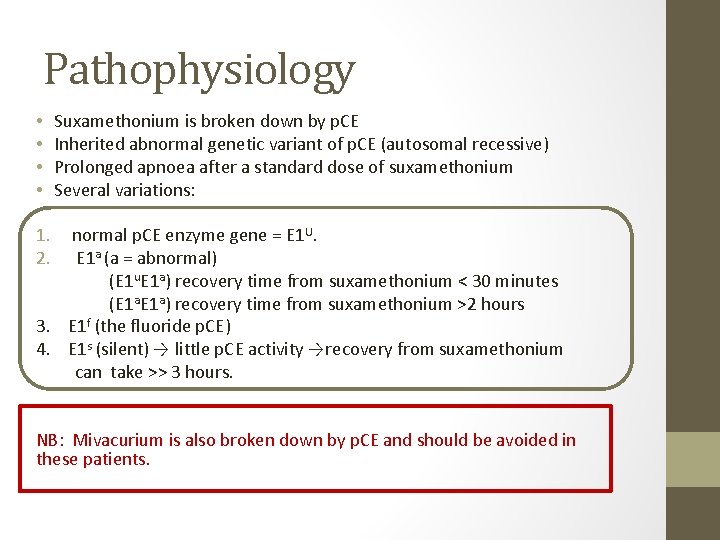
Pathophysiology • • Suxamethonium is broken down by p. CE Inherited abnormal genetic variant of p. CE (autosomal recessive) Prolonged apnoea after a standard dose of suxamethonium Several variations: 1. 2. normal p. CE enzyme gene = E 1 U. E 1 a (a = abnormal) (E 1 u. E 1 a) recovery time from suxamethonium < 30 minutes (E 1 a) recovery time from suxamethonium >2 hours 3. E 1 f (the fluoride p. CE) 4. E 1 s (silent) → little p. CE activity →recovery from suxamethonium can take >> 3 hours. NB: Mivacurium is also broken down by p. CE and should be avoided in these patients.
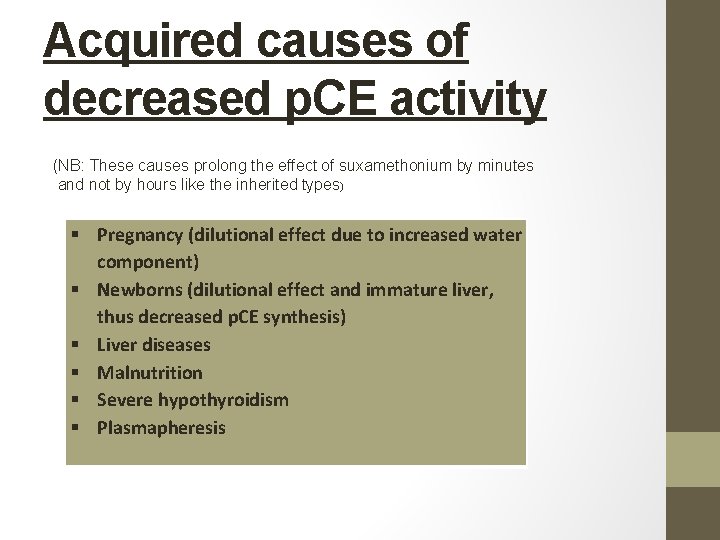
Acquired causes of decreased p. CE activity (NB: These causes prolong the effect of suxamethonium by minutes and not by hours like the inherited types) § Pregnancy (dilutional effect due to increased water component) § Newborns (dilutional effect and immature liver, thus decreased p. CE synthesis) § Liver diseases § Malnutrition § Severe hypothyroidism § Plasmapheresis
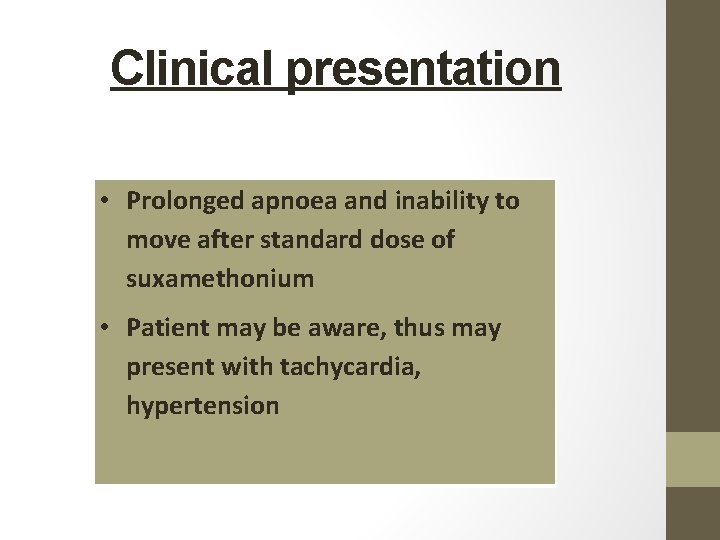
Clinical presentation • Prolonged apnoea and inability to move after standard dose of suxamethonium • Patient may be aware, thus may present with tachycardia, hypertension
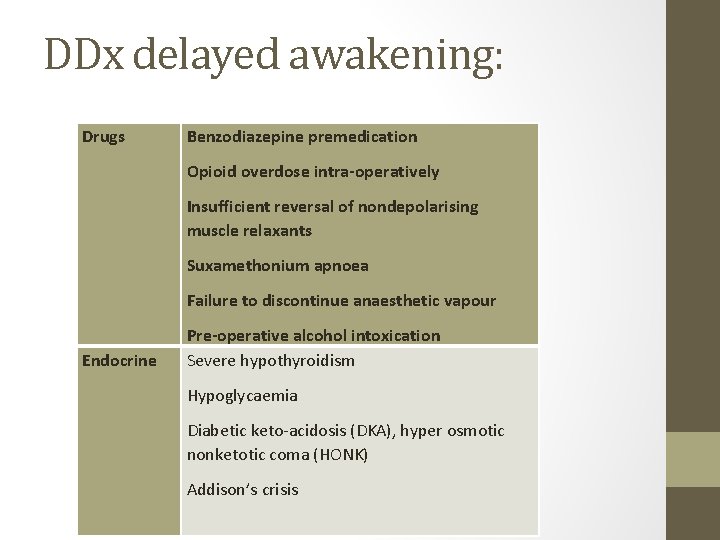
DDx delayed awakening: Drugs Benzodiazepine premedication Opioid overdose intra-operatively Insufficient reversal of nondepolarising muscle relaxants Suxamethonium apnoea Failure to discontinue anaesthetic vapour Endocrine Pre-operative alcohol intoxication Severe hypothyroidism Hypoglycaemia Diabetic keto-acidosis (DKA), hyper osmotic nonketotic coma (HONK) Addison’s crisis
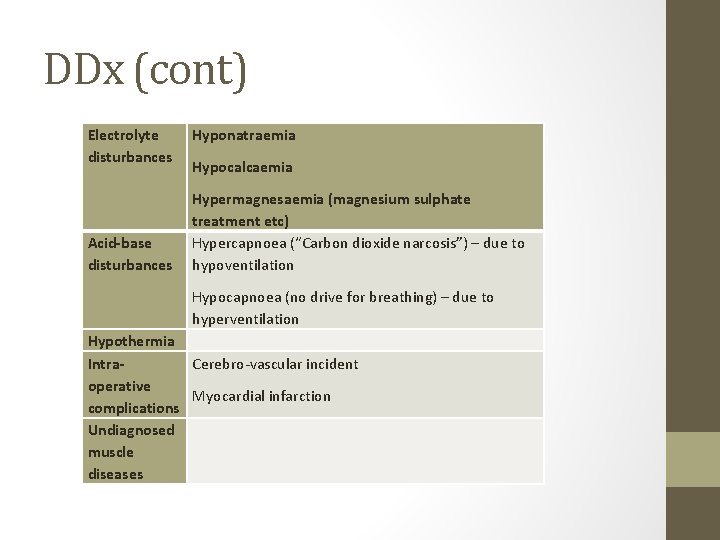
DDx (cont) Electrolyte disturbances Acid-base disturbances Hyponatraemia Hypocalcaemia Hypermagnesaemia (magnesium sulphate treatment etc) Hypercapnoea (“Carbon dioxide narcosis”) – due to hypoventilation Hypocapnoea (no drive for breathing) – due to hyperventilation Hypothermia Intra. Cerebro-vascular incident operative Myocardial infarction complications Undiagnosed muscle diseases
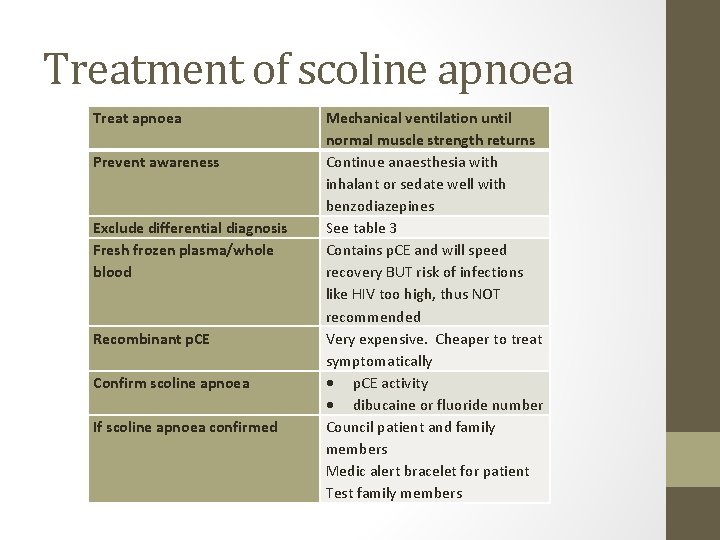
Treatment of scoline apnoea Treat apnoea Prevent awareness Exclude differential diagnosis Fresh frozen plasma/whole blood Recombinant p. CE Confirm scoline apnoea If scoline apnoea confirmed Mechanical ventilation until normal muscle strength returns Continue anaesthesia with inhalant or sedate well with benzodiazepines See table 3 Contains p. CE and will speed recovery BUT risk of infections like HIV too high, thus NOT recommended Very expensive. Cheaper to treat symptomatically p. CE activity dibucaine or fluoride number Council patient and family members Medic alert bracelet for patient Test family members
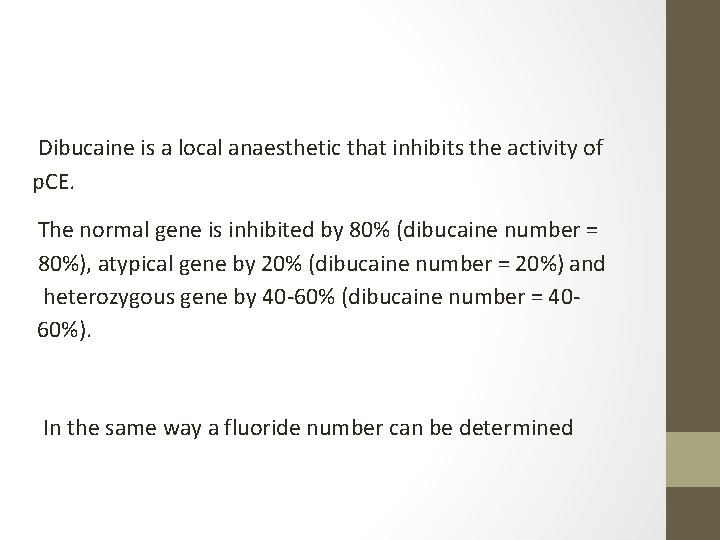
Dibucaine is a local anaesthetic that inhibits the activity of p. CE. The normal gene is inhibited by 80% (dibucaine number = 80%), atypical gene by 20% (dibucaine number = 20%) and heterozygous gene by 40 -60% (dibucaine number = 4060%). In the same way a fluoride number can be determined