
Sustaining Continuous Improvement Important Questions Are you processes
- Slides: 28
Sustaining Continuous Improvement
Important Questions § Are you processes consistently effective? § Do your approaches address your organization’s needs? § How good are your results? § Is your organization learning, innovating, and improving? “What got you here won’t get you there” 2
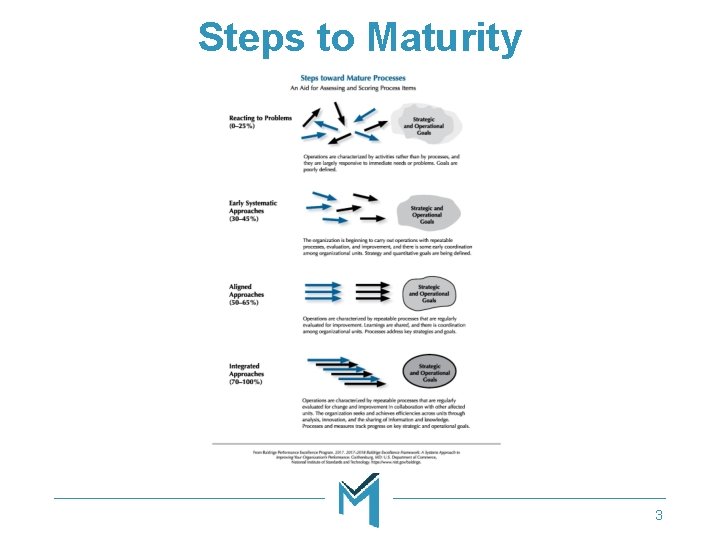
Steps to Maturity 3
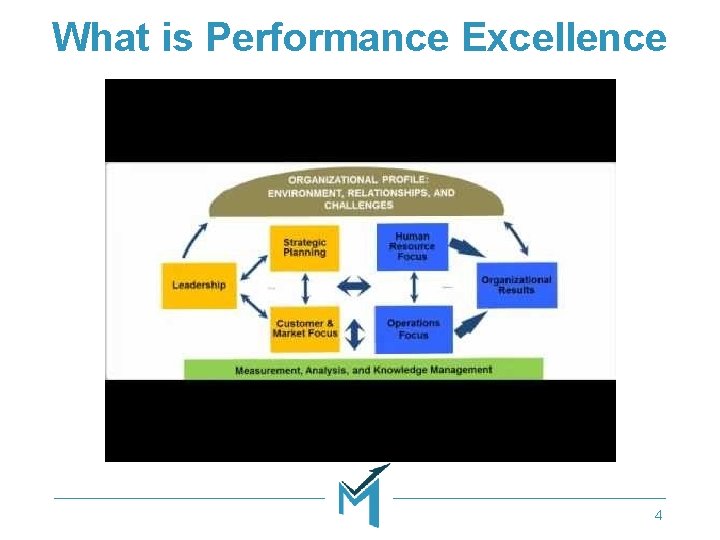
What is Performance Excellence 4
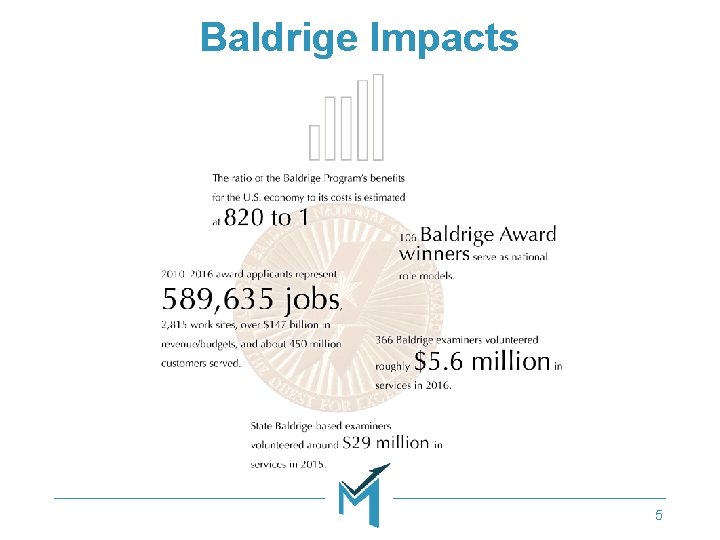
Baldrige Impacts 5
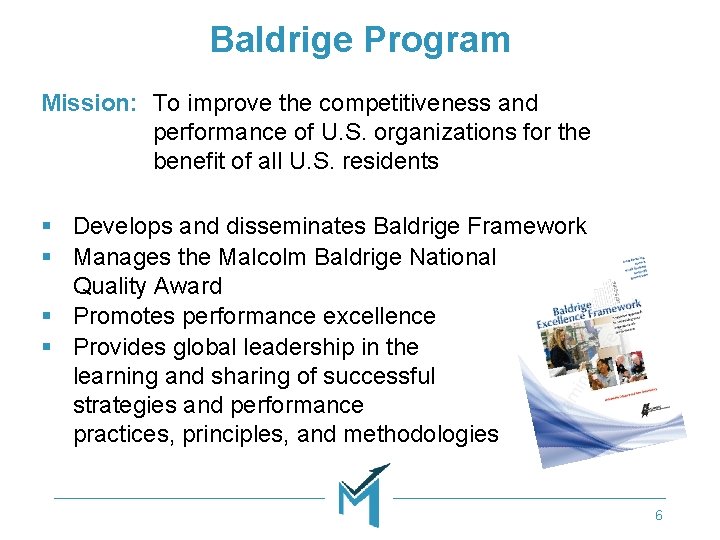
Baldrige Program Mission: To improve the competitiveness and performance of U. S. organizations for the benefit of all U. S. residents § Develops and disseminates Baldrige Framework § Manages the Malcolm Baldrige National Quality Award § Promotes performance excellence § Provides global leadership in the learning and sharing of successful strategies and performance practices, principles, and methodologies 6
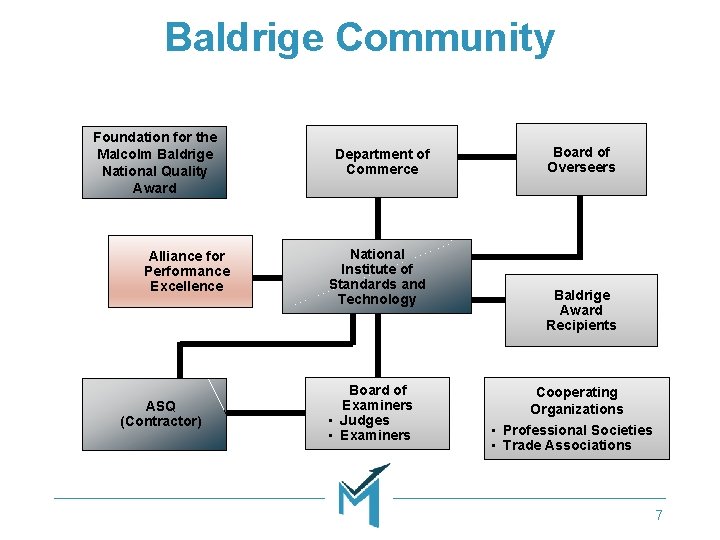
Baldrige Community Foundation for the Malcolm Baldrige National Quality Award Alliance for Performance CV Excellence ASQ (Contractor) Department of Commerce National Institute of Standards and Technology Board of Examiners • Judges • Examiners Board of Overseers Baldrige Award Recipients Cooperating Organizations • Professional Societies • Trade Associations 7
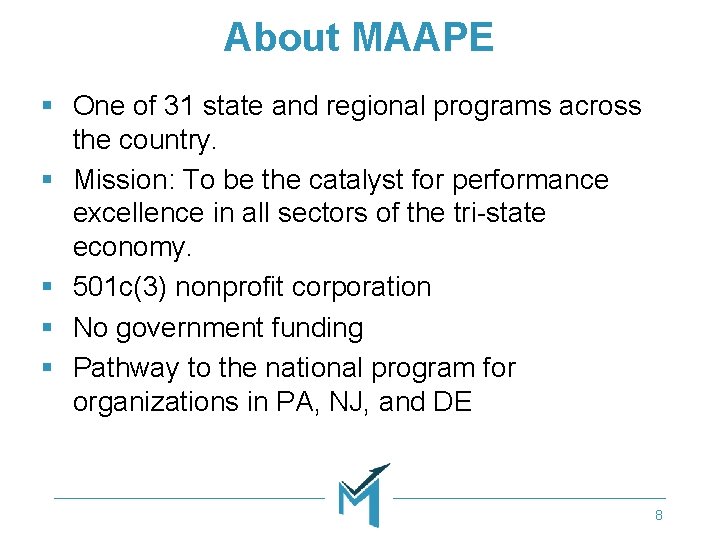
About MAAPE § One of 31 state and regional programs across the country. § Mission: To be the catalyst for performance excellence in all sectors of the tri-state economy. § 501 c(3) nonprofit corporation § No government funding § Pathway to the national program for organizations in PA, NJ, and DE 8
COMPONENTS OF THE BALDRIGE FRAMEWORK
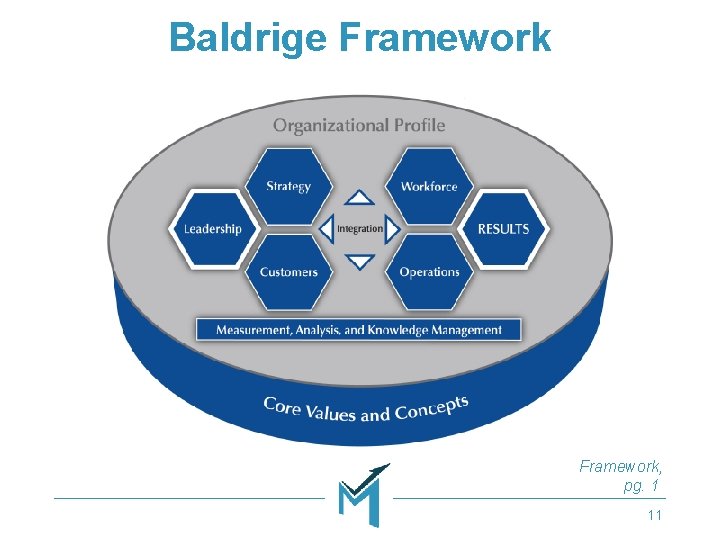
Systems Perspective § managing all the parts of your organization as a unified whole to achieve your mission. § ensuring that your plans, processes, measures, and actions are consistent. § ensuring that the individual parts of your organization’s management system work together in a fully interconnected, unified, and mutually beneficial manner. 10
Baldrige Framework, pg. 1 11
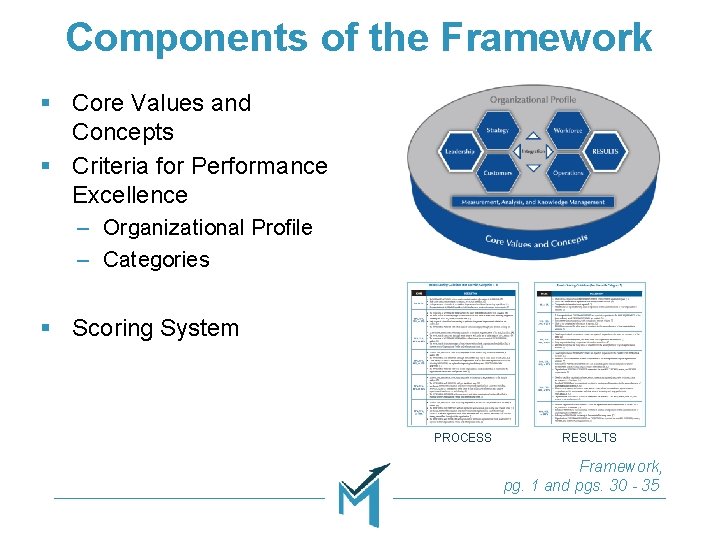
Components of the Framework § Core Values and Concepts § Criteria for Performance Excellence – Organizational Profile – Categories § Scoring System PROCESS RESULTS Framework, pg. 1 and pgs. 30 - 35
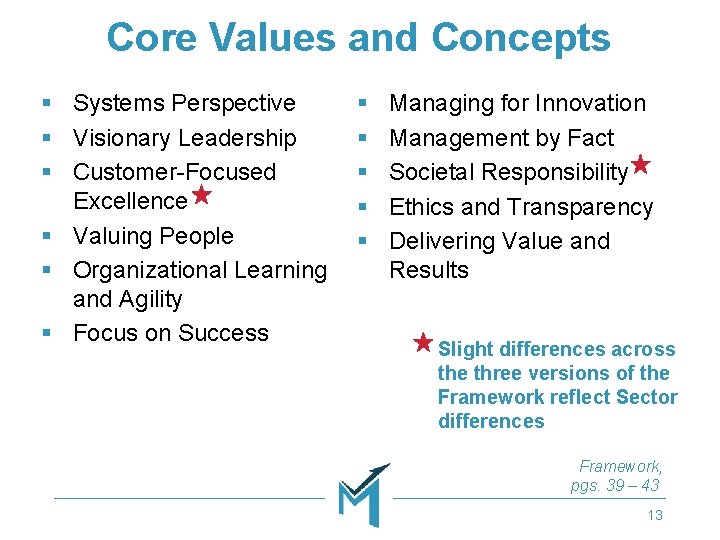
Core Values and Concepts § Systems Perspective § Visionary Leadership § Customer-Focused Excellence § Valuing People § Organizational Learning and Agility § Focus on Success § § § Managing for Innovation Management by Fact Societal Responsibility Ethics and Transparency Delivering Value and Results Slight differences across the three versions of the Framework reflect Sector differences Framework, pgs. 39 – 43 13
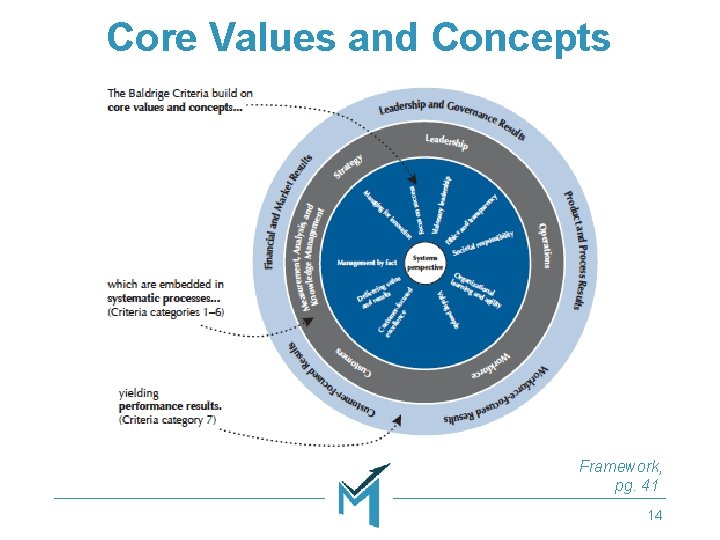
Core Values and Concepts Framework, pg. 41 14
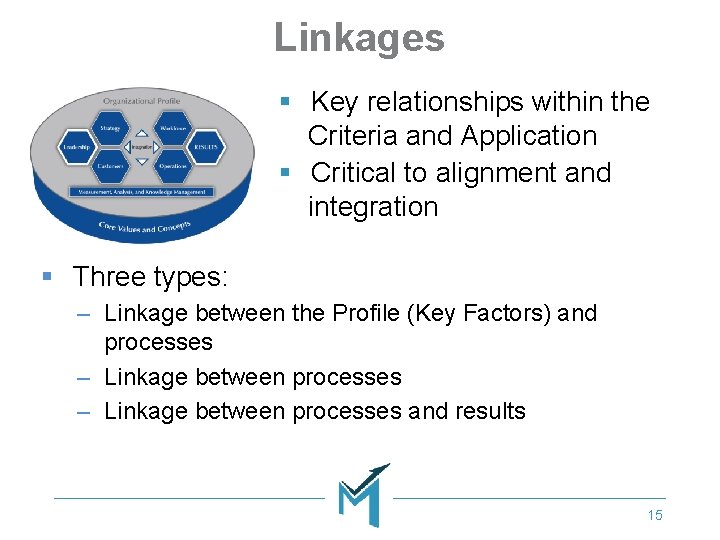
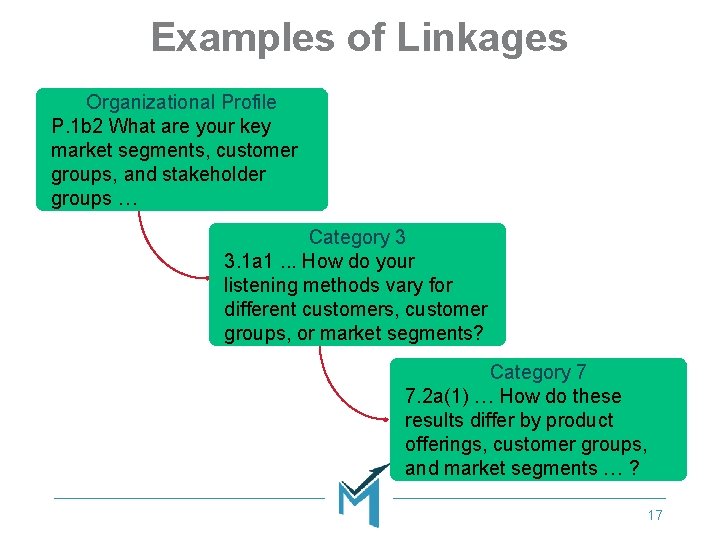
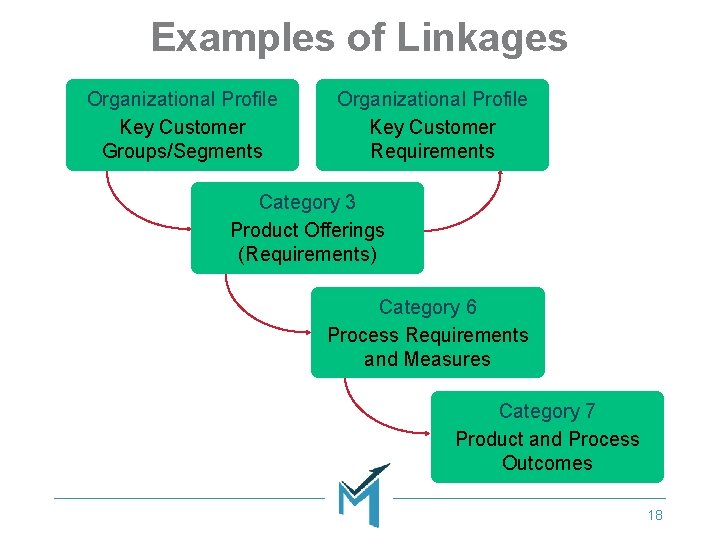
Linkages § Key relationships within the Criteria and Application § Critical to alignment and integration § Three types: – Linkage between the Profile (Key Factors) and processes – Linkage between processes and results 15
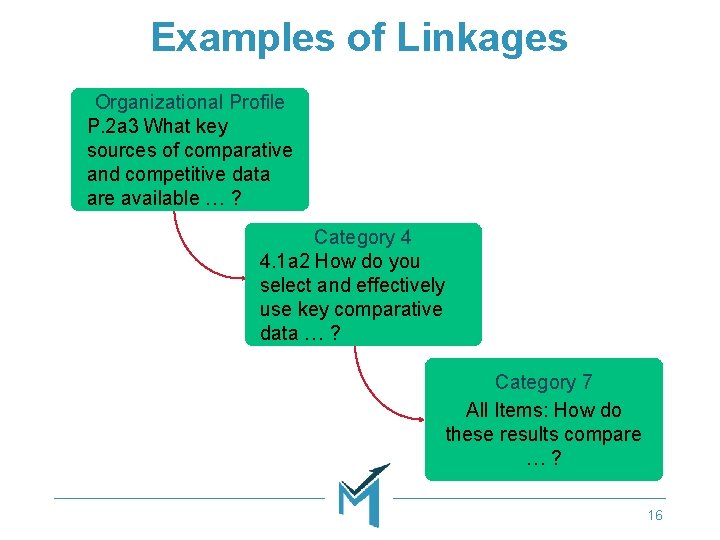
Examples of Linkages Organizational Profile P. 2 a 3 What key sources of comparative and competitive data are available … ? Category 4 4. 1 a 2 How do you select and effectively use key comparative data … ? Category 7 All Items: How do these results compare …? 16
Examples of Linkages Organizational Profile P. 1 b 2 What are your key market segments, customer groups, and stakeholder groups … Category 3 3. 1 a 1. . . How do your listening methods vary for different customers, customer groups, or market segments? Category 7 7. 2 a(1) … How do these results differ by product offerings, customer groups, and market segments … ? 17
Examples of Linkages Organizational Profile Key Customer Groups/Segments Organizational Profile Key Customer Requirements Category 3 Product Offerings (Requirements) Category 6 Process Requirements and Measures Category 7 Product and Process Outcomes 18
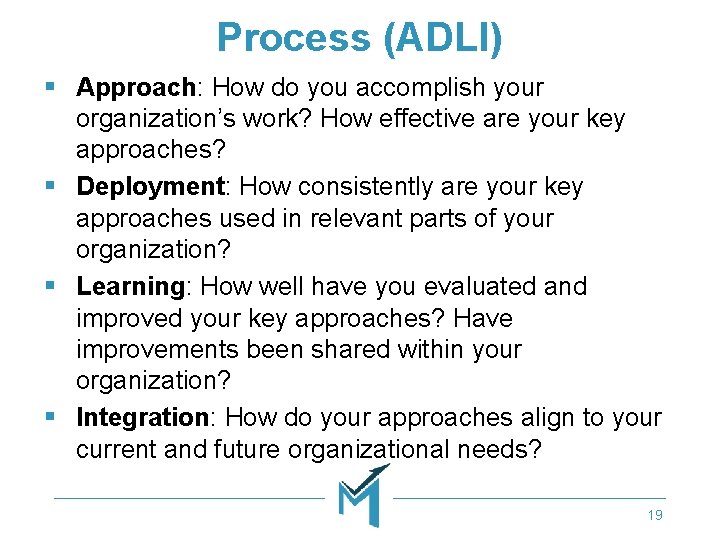
Process (ADLI) § Approach: How do you accomplish your organization’s work? How effective are your key approaches? § Deployment: How consistently are your key approaches used in relevant parts of your organization? § Learning: How well have you evaluated and improved your key approaches? Have improvements been shared within your organization? § Integration: How do your approaches align to your current and future organizational needs? 19
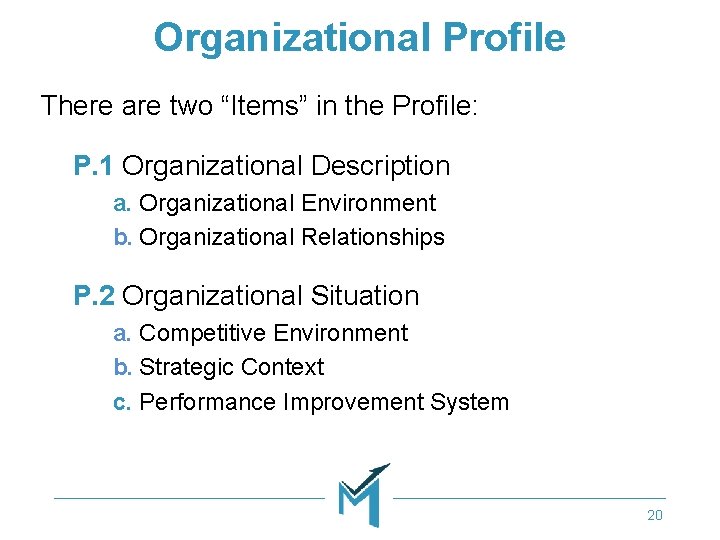
Organizational Profile There are two “Items” in the Profile: P. 1 Organizational Description a. Organizational Environment b. Organizational Relationships P. 2 Organizational Situation a. Competitive Environment b. Strategic Context c. Performance Improvement System 20
Basic Information § § § § § Product and service offerings Mission, Vision, and Values Workforce Profile Facilities, technologies & equipment Regulatory requirements Organizational Structure Customers and stakeholders Suppliers and partners Competitive environment Key strategic challenges and advantages 21
Criteria at a Glance § Leadership – How do your senior leaders lead the organization? – How do you govern your organization and fulfill your society responsibilities? § Strategy – How do you develop your strategy? – How do you implement your strategy? § Customers – How do you obtain information from your customers? – How do you engage customers by serving their needs and building relationships? 22
Criteria at a Glance § Measurement, Analysis and Knowledge Management – How do you measure, analyze and then improve organizational performance? – How do you manage your information and organizational knowledge assets? § Workforce – How do you build an effective and supportive workforce environment? – How do you engage your workforce to achieve a high -performance work environment? 23
Criteria at a Glance § Operations – How do you design, manage, and improve your key product and work processes? – How do you ensure effective management of your operations? 24
Outcomes (Le. TCI) § Levels: What is your current performance? § Trends: Are the results improving, staying the same, or getting worse? § Comparisons: How does your performance compare with that of other organizations and competitors, or with benchmarks? § Integration: Are you tracking results that are important to your organization? Are you using the results in decision making? 25
Criteria at a Glance § Results – What are your product performance and process effectiveness results? – What are your customer-focused performance results? – What are your workforce-focused performance results? – What are your senior leadership and governance results? – What are your results for financial viability? 26
Delaware’s One-Stop Partner Programs § What if: – Each partner completed the Org Profile and shared it across the system? – Shifted thinking from vertical to horizontal? – Identified work systems in addition to work processes? – Identified and leveraged “Best Practices” across the network? – Looked for alignment and integration opportunities across the network – Shared client and referral information as appropriate? 27
Questions 28