
Sustaining Biodiversity The Ecosystem Approach The major threats
Sustaining Biodiversity: The Ecosystem Approach

The major threats to forest ecosystems �Unsustainable logging is a major threat to forest ecosystems �Fire can threaten or benefit forest ecosystems �Deforestation

Unsustainable logging is a major threat to forest ecosystems �Methods of harvesting trees: Selective cutting. Clear-cut. Strip cutting.
Unsustainable logging is a major threat to forest ecosystems �The first step in harvesting trees is to build roads for access and timber removal, but they can cause the following problems: Increased erosion and sediment runoff into waterways. Habitat fragmentation. Loss of biodiversity. Forest exposure to invasion by nonnative pests, diseases, and wildlife species.
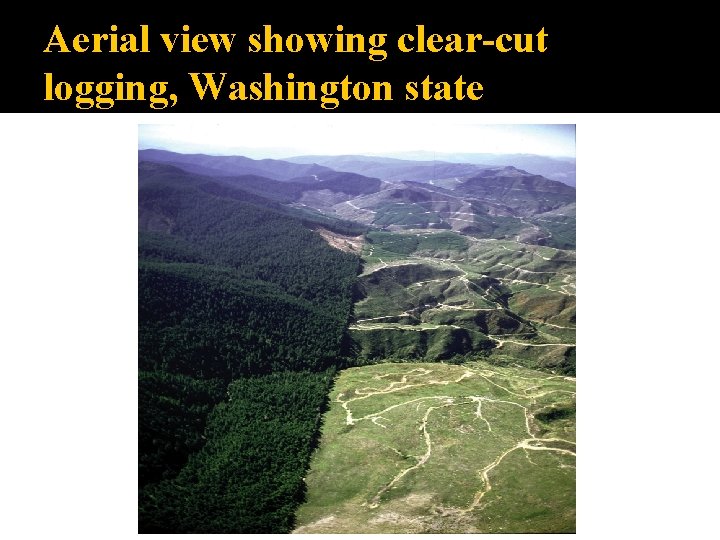
Aerial view showing clear-cut logging, Washington state
How about forest fires… are they good or bad? !? ! Fire can threaten or benefit forest ecosystems Benefit: � Ground fires (most of the time good) � Burns away flammable ground material and may help to prevent more destructive fires. � Frees valuable mineral nutrients tied up in slowly decomposing litter and undergrowth. � Stimulates the germination of certain tree seeds (e. g. giant sequoia and jack pine). � Helps to control tree diseases and insects. Threat: � Crown fires are extremely hot fires that leap from treetops, burning whole trees. Can destroy most vegetation, kill wildlife, increase soil erosion, and burn or damage human structures in their paths. � Kills seedlings and small trees
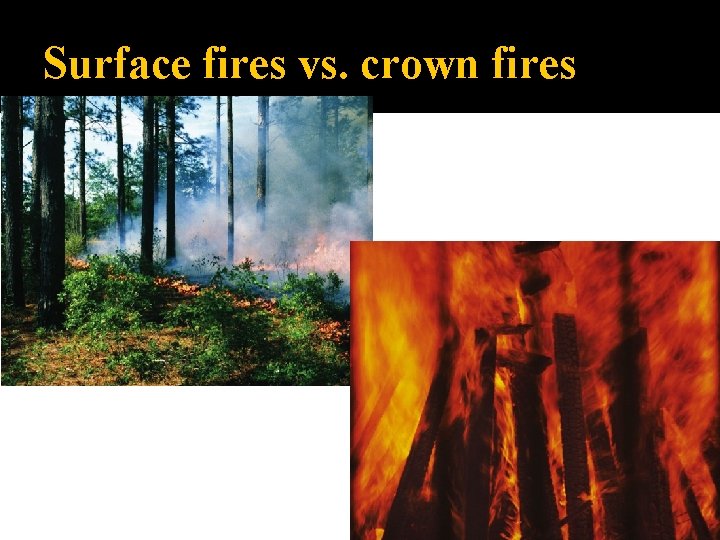
Surface fires vs. crown fires
Deforestation � Did you know? Almost half of the world’s forests have been cut down � Deforestation is the temporary or permanent removal of large expanses of forest for agriculture, settlements, or other uses. � Human activities have reduced the earth’s original forest cover by about 46%, with most of this loss occurring in the last 60 years.
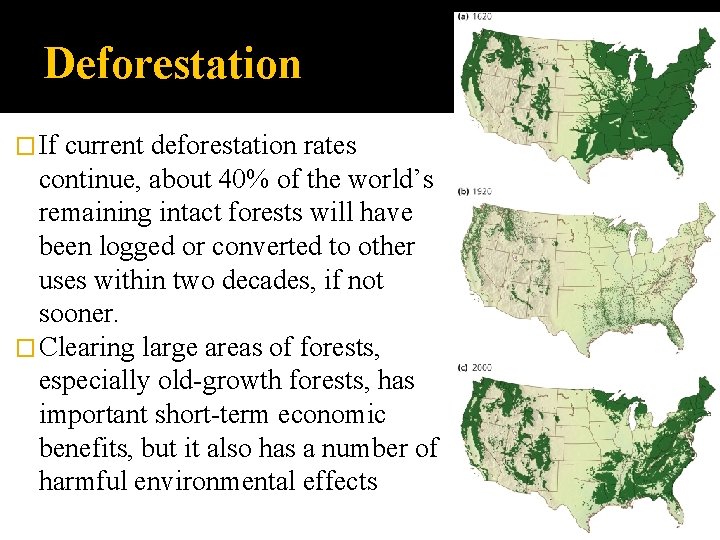
Deforestation � If current deforestation rates continue, about 40% of the world’s remaining intact forests will have been logged or converted to other uses within two decades, if not sooner. � Clearing large areas of forests, especially old-growth forests, has important short-term economic benefits, but it also has a number of harmful environmental effects
Harmful effects of deforestation �Decreased soil fertility from erosion �Runoff of eroded soil into aquatic systems �Premature extinction of species �Loss of habitat for native species �Climate change �Release of CO 2 into atmosphere �Acceleration of flooding
Forests vary in their age, make-up, and origins � Natural and planted forests occupy about 30% of the Earth’s “tree-friendly” land surface. � Two major types based on their age and structure: Old growth forest Second-growth forest
Tropical forests are disappearing rapidly � Tropical forests cover about 60% of the earth’s land area. � At least half of the world’s known species of terrestrial plants and animals live in tropical forests. � Brazil has more than 30% of the world’s remaining tropical rain forest in its vast Amazon basin. � At the current rate of global deforestation, 50% of the world’s remaining old-growth tropical forests will be gone or severely degraded by the end of this century.
Ways to grow and harvest trees more sustainably �Identify and protect forest areas high in biodiversity �Rely more on selective cutting and strip cutting �Stop logging in old-growth forests �Sharply reduce road building in uncut forest areas �Put tree plantations only on deforested and degraded land �Certify timber grown by sustainable methods �Include ecological services of forests in estimates of their economic value
Ways to protect tropical forests and use them more sustainably Prevention: Restoration: � Protect the most diverse � Encourage regrowth and endangered areas through secondary � Educate settlers about succession sustainable agriculture � Rehabilitate degraded and forestry areas � Protect forests through � Concentrate farming and debt-for-nature swaps ranching in alreadyand conservation cleared areas concessions � Certify sustainably grown timber � Reduce poverty � Slow population growth
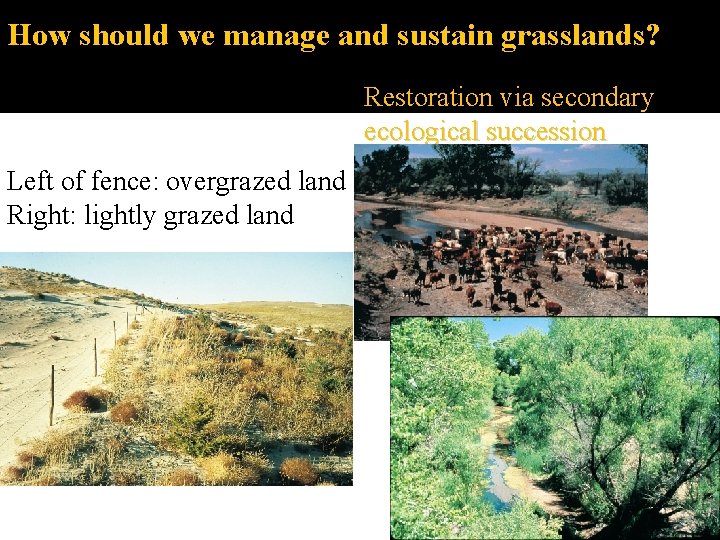
How should we manage and sustain grasslands? Restoration via secondary ecological succession Left of fence: overgrazed land Right: lightly grazed land
Biodiversity hotspots
Why protect Ecosystems? �Most biologists and wildlife conservationists believe that the best way to keep hastening the extinction of wild species through human activities is the ecosystems approach, which protects threatened habitats and ecosystem services.
Four ways to protect ecosystems �Four-point plan of the ecosystems approach: Map the world’s terrestrial and aquatic ecosystems and create and inventory of the species contained in each of them and the ecosystem services they provide. Locate and protect the most endangered ecosystems and species, with emphasis on protecting plant biodiversity and ecosystem services. Seek to restore as many degraded ecosystems as possible.
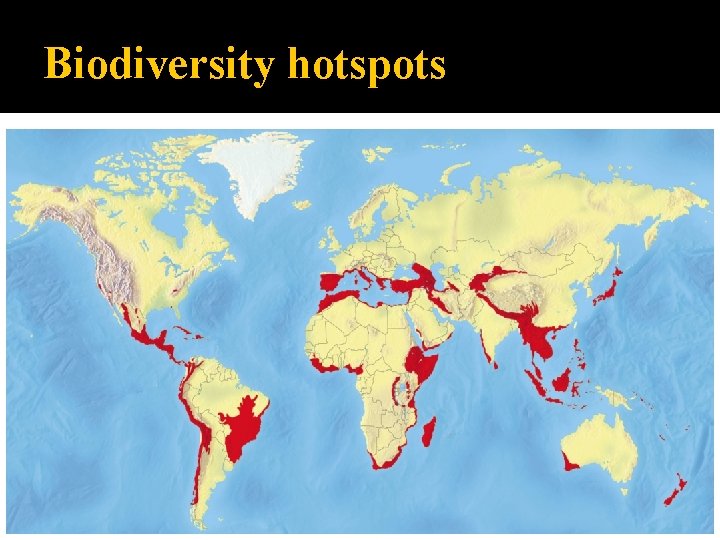
Why protecting global biodiversity hotspots is an urgent priority! � Some biodiversity scientists urge adoption of an emergency action strategy to identify and quickly protect biodiversity hotspots, areas especially rich in plant species that are found nowhere else and are in great danger of extinction. � These hotspots cover only a little more than 2% of earth’s land surface, they contain an estimated 50% of the world’s flowering plant species and 42% of all terrestrial species. � These hotspots are home for a large majority of the world’s endangered or critically endangered species, and one-fifth of the world’s population
We can rehabilitate and restore ecosystems that we have damaged �Almost every natural place on the earth has been affected or degraded to some degree by human activities. �We can at least partially reverse much of this harm through ecological restoration: the process of repairing damage caused by humans to the biodiversity and dynamics of natural ecosystems. �Examples of restoration Replanting forests include:
We can rehabilitate and restore ecosystems that we have damaged �Restoring grasslands �Restoring coral reefs �Restoring wetlands and stream banks �Reintroducing native species �Removing invasive species �Freeing river flows by removing dams
We can rehabilitate and restore ecosystems that we have damaged �Four steps to speed up repair operations include the following: Restoration Rehabilitation Replacement Creating artificial ecosystems
We can rehabilitate and restore ecosystems that we have damaged �Researchers have suggested a science-based, four-step strategy for carrying out most forms of ecological restoration and rehabilitation: Identify the causes of the degradation Stop the abuse by eliminating or sharply reducing these factors If necessary, reintroduce key species to help restore natural ecological processes Protect the area from further degradation and allow secondary ecological succession to occur.
Ways YOU can help sustain terrestrial biodiversity �Adopt a forest �Plant trees and take care of them �Recycle paper and buy recycled paper products �Buy sustainably produced wood and wood products �Choose wood substitutes such as bamboo furniture and recycled plastic outdoor furniture, decking and fencing �Help to restore a nearby degraded forest or grassland �Landscape your yard with a diversity of plants that are native to your area
- Slides: 24