
Sustaining Biodiversity The Ecosystem Approach Chapter 9 Key
Sustaining Biodiversity: The Ecosystem Approach Chapter 9
Key Questions ■ What are the major threats to forest ecosystems? How should we manage and sustain: ■ forests? ■ grasslands? ■ parks and nature reserves? ■ aquatic ecosystems? ■ ■ ■ Address this first--What is the ecosystem approach to sustaining biodiversity? How can humans help sustain the Earth’s biodiversity?
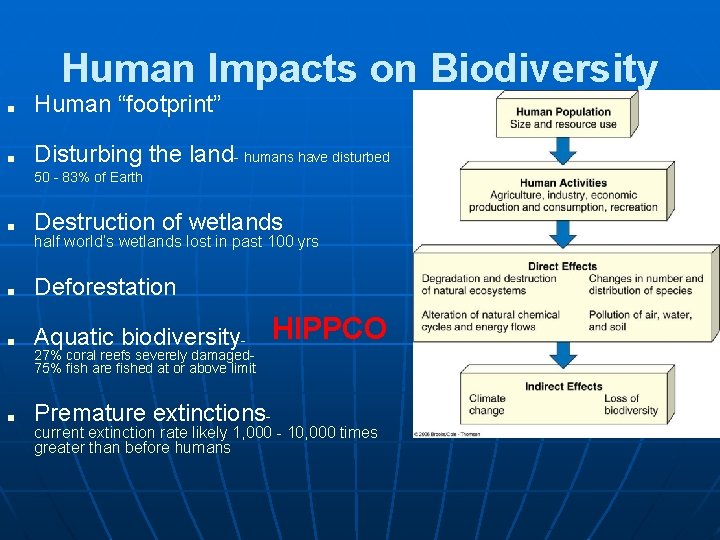
Human Impacts on Biodiversity ■ Human “footprint” ■ Disturbing the land- humans have disturbed 50 - 83% of Earth ■ Destruction of wetlands ■ Deforestation ■ Aquatic biodiversity- ■ Premature extinctions- half world’s wetlands lost in past 100 yrs HIPPCO 27% coral reefs severely damaged 75% fish are fished at or above limit current extinction rate likely 1, 000 - 10, 000 times greater than before humans
Section 9 -5 (Note re-oganization!) What is the ecosystem approach to sustaining biodiversity?
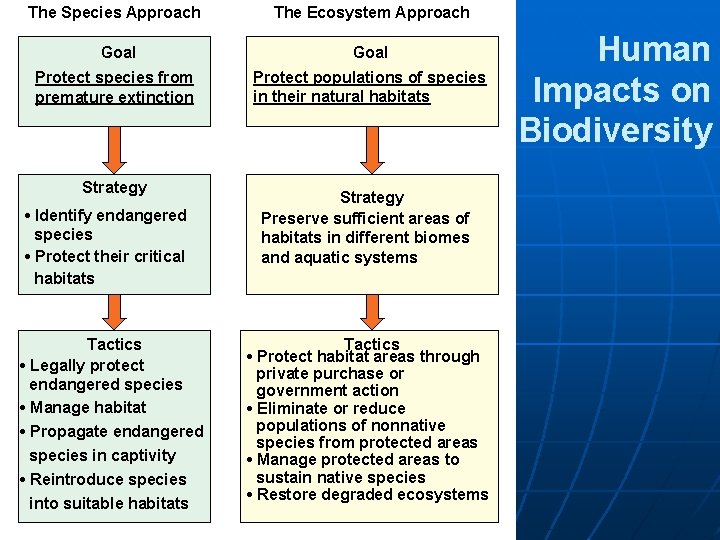
The Species Approach The Ecosystem Approach Goal Protect species from premature extinction Protect populations of species in their natural habitats Strategy • Identify endangered species • Protect their critical habitats Tactics • Legally protect endangered species • Manage habitat • Propagate endangered species in captivity • Reintroduce species into suitable habitats Strategy Preserve sufficient areas of habitats in different biomes and aquatic systems Tactics • Protect habitat areas through private purchase or government action • Eliminate or reduce populations of nonnative species from protected areas • Manage protected areas to sustain native species • Restore degraded ecosystems Human Impacts on Biodiversity
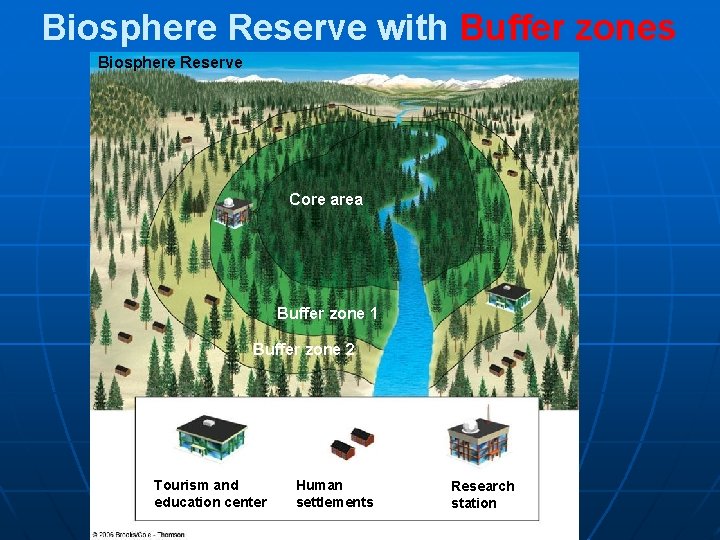
Biosphere Reserve with Buffer zones Biosphere Reserve Core area Buffer zone 1 Buffer zone 2 Tourism and education center Human settlements Research station
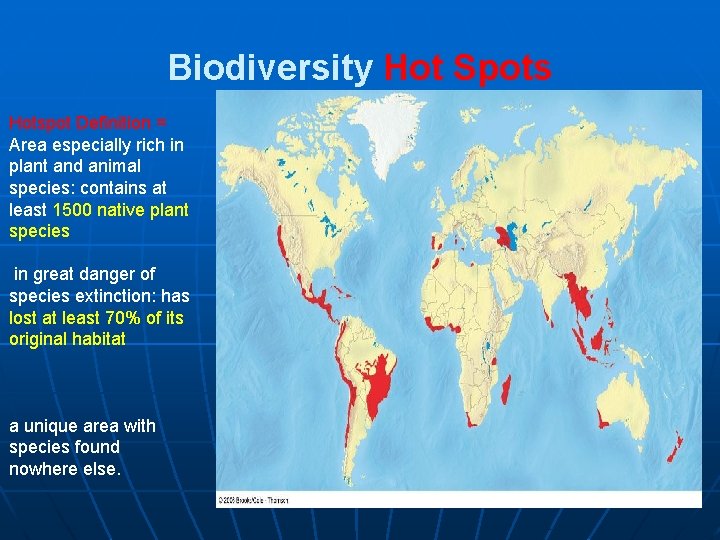
Biodiversity Hot Spots Hotspot Definition = Area especially rich in plant and animal species: contains at least 1500 native plant species in great danger of species extinction: has lost at least 70% of its original habitat a unique area with species found nowhere else.
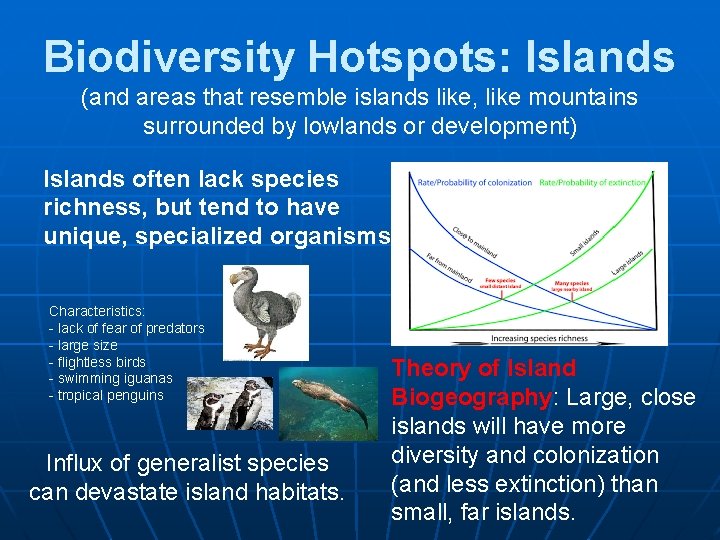
Biodiversity Hotspots: Islands (and areas that resemble islands like, like mountains surrounded by lowlands or development) Islands often lack species richness, but tend to have unique, specialized organisms. Characteristics: - lack of fear of predators - large size - flightless birds - swimming iguanas - tropical penguins Influx of generalist species can devastate island habitats. Theory of Island Biogeography: Large, close islands will have more diversity and colonization (and less extinction) than small, far islands.
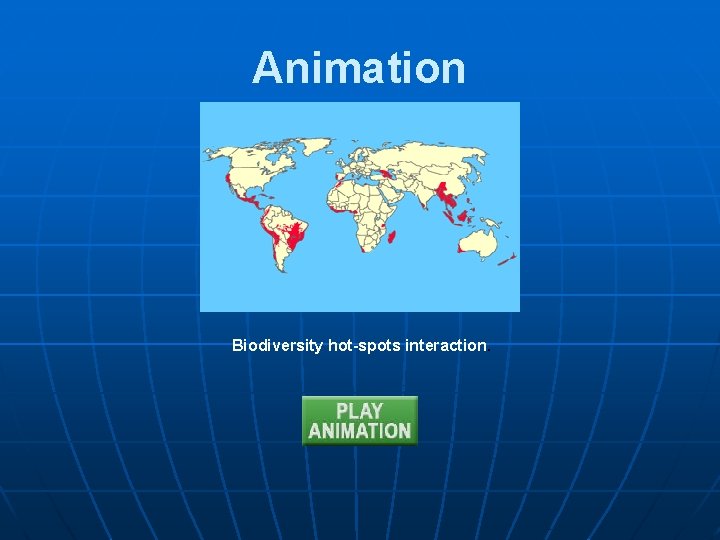
Animation Biodiversity hot-spots interaction.
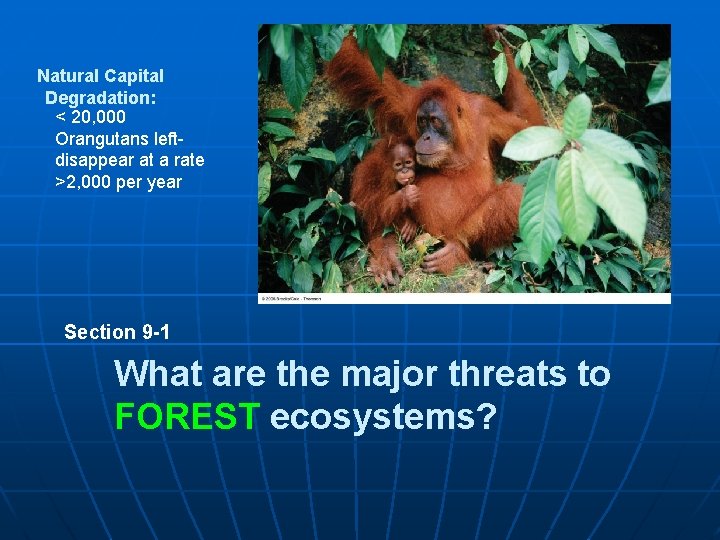
Natural Capital Degradation: < 20, 000 Orangutans leftdisappear at a rate >2, 000 per year Section 9 -1 What are the major threats to FOREST ecosystems?
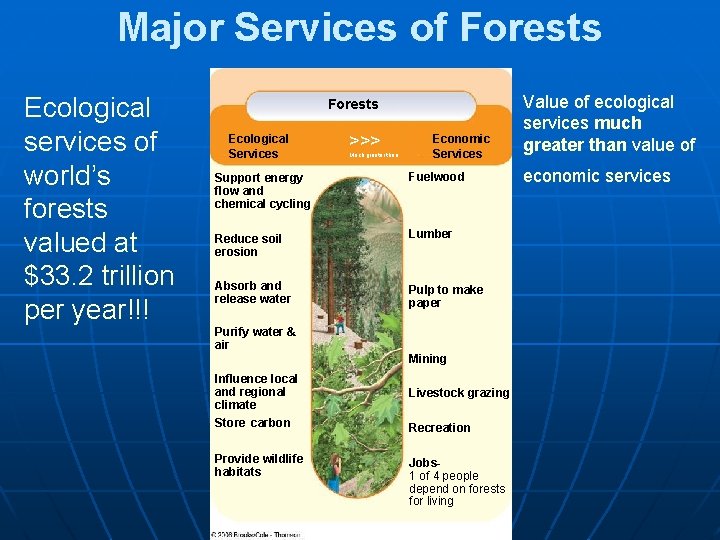
Major Services of Forests Ecological services of world’s forests valued at $33. 2 trillion per year!!! Forests Ecological Services >>> Much greater than Economic Services Support energy flow and chemical cycling Fuelwood Reduce soil erosion Lumber Absorb and release water Pulp to make paper Purify water & air Mining Influence local and regional climate Livestock grazing Store carbon Recreation Provide wildlife habitats Jobs 1 of 4 people depend on forests for living Value of ecological services much greater than value of economic services
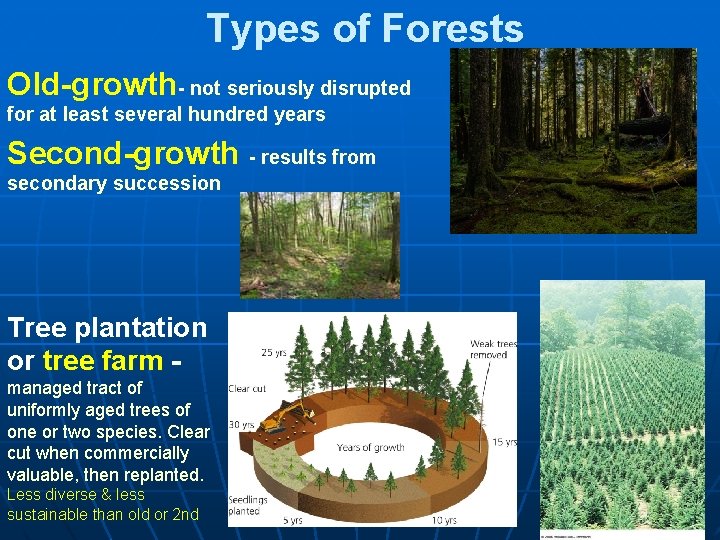
Types of Forests Old-growth- not seriously disrupted for at least several hundred years Second-growth - results from secondary succession Tree plantation or tree farm managed tract of uniformly aged trees of one or two species. Clear cut when commercially valuable, then replanted. Less diverse & less sustainable than old or 2 nd
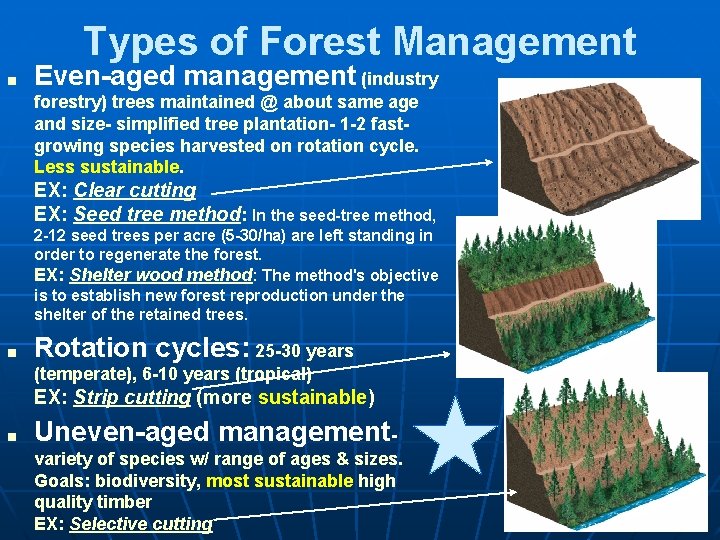
Types of Forest Management ■ Even-aged management (industry forestry) trees maintained @ about same age and size- simplified tree plantation- 1 -2 fastgrowing species harvested on rotation cycle. Less sustainable. EX: Clear cutting EX: Seed tree method: In the seed-tree method, 2 -12 seed trees per acre (5 -30/ha) are left standing in order to regenerate the forest. EX: Shelter wood method: The method's objective is to establish new forest reproduction under the shelter of the retained trees. ■ Rotation cycles: 25 -30 years (temperate), 6 -10 years (tropical) EX: Strip cutting (more sustainable) ■ Uneven-aged managementvariety of species w/ range of ages & sizes. Goals: biodiversity, most sustainable high quality timber EX: Selective cutting
Video Tutorial Forests and Rangelands https: //docs. google. com/presentation/d/1 8 BG 0 ZYq. Y 3 v. K 0 svg 5 n. Buv. TUGw. I_Vc 44 TWRWqhj. J vc 5 o/edit
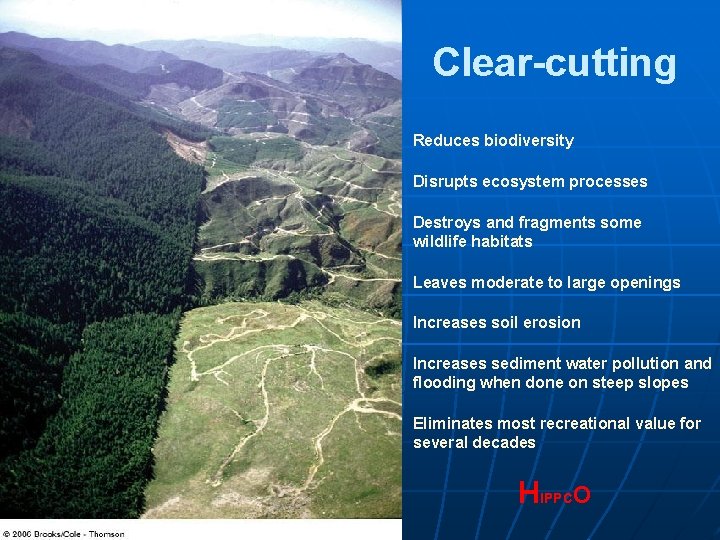
Clear-cutting Reduces biodiversity Disrupts ecosystem processes Destroys and fragments some wildlife habitats Leaves moderate to large openings Increases soil erosion Increases sediment water pollution and flooding when done on steep slopes Eliminates most recreational value for several decades HIPPCO
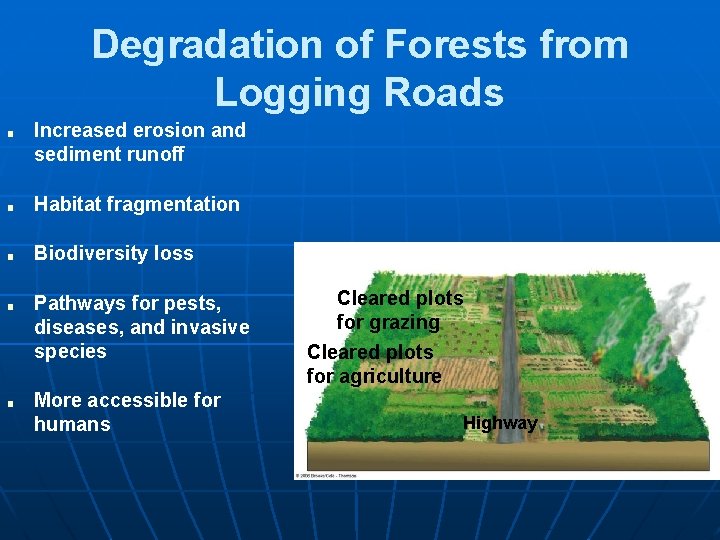
Degradation of Forests from Logging Roads ■ Increased erosion and sediment runoff ■ Habitat fragmentation ■ Biodiversity loss ■ ■ Pathways for pests, diseases, and invasive species More accessible for humans Cleared plots for grazing Cleared plots for agriculture Highway
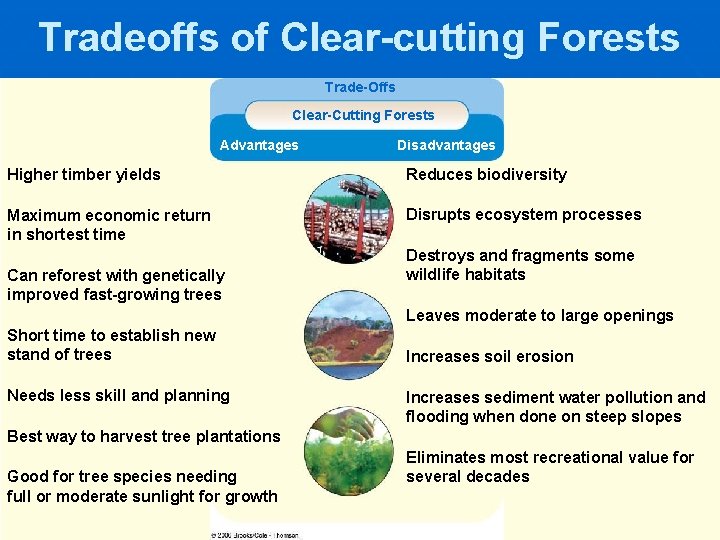
Tradeoffs of Clear-cutting Forests Trade-Offs Clear-Cutting Forests Advantages Disadvantages Higher timber yields Reduces biodiversity Maximum economic return in shortest time Disrupts ecosystem processes Can reforest with genetically improved fast-growing trees Destroys and fragments some wildlife habitats Leaves moderate to large openings Short time to establish new stand of trees Needs less skill and planning Increases soil erosion Increases sediment water pollution and flooding when done on steep slopes Best way to harvest tree plantations Good for tree species needing full or moderate sunlight for growth Eliminates most recreational value for several decades
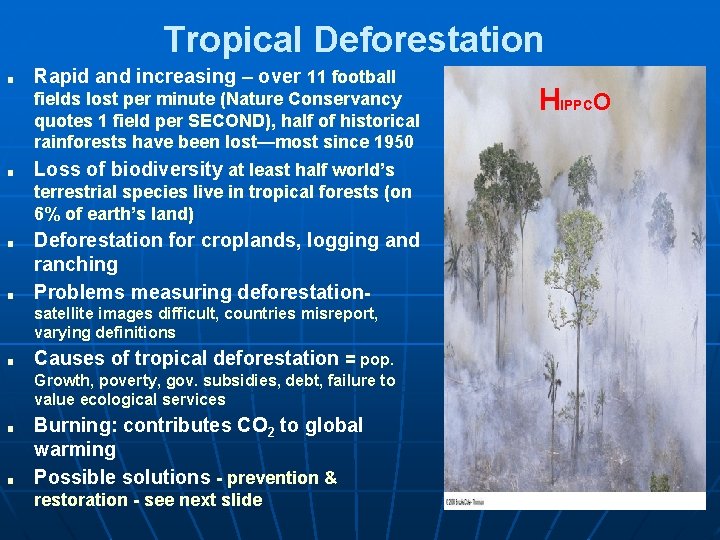
Tropical Deforestation ■ Rapid and increasing – over 11 football fields lost per minute (Nature Conservancy quotes 1 field per SECOND), half of historical rainforests have been lost—most since 1950 ■ Loss of biodiversity at least half world’s terrestrial species live in tropical forests (on 6% of earth’s land) ■ ■ Deforestation for croplands, logging and ranching Problems measuring deforestationsatellite images difficult, countries misreport, varying definitions ■ Causes of tropical deforestation = pop. Growth, poverty, gov. subsidies, debt, failure to value ecological services ■ ■ Burning: contributes CO 2 to global warming Possible solutions - prevention & restoration - see next slide HIPPCO
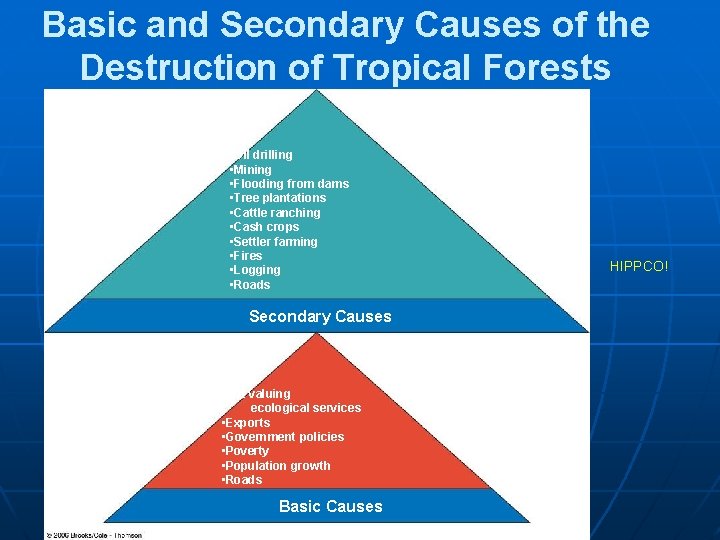
Basic and Secondary Causes of the Destruction of Tropical Forests • Oil drilling • Mining • Flooding from dams • Tree plantations • Cattle ranching • Cash crops • Settler farming • Fires • Logging • Roads Secondary Causes • Not valuing ecological services • Exports • Government policies • Poverty • Population growth • Roads Basic Causes HIPPCO!
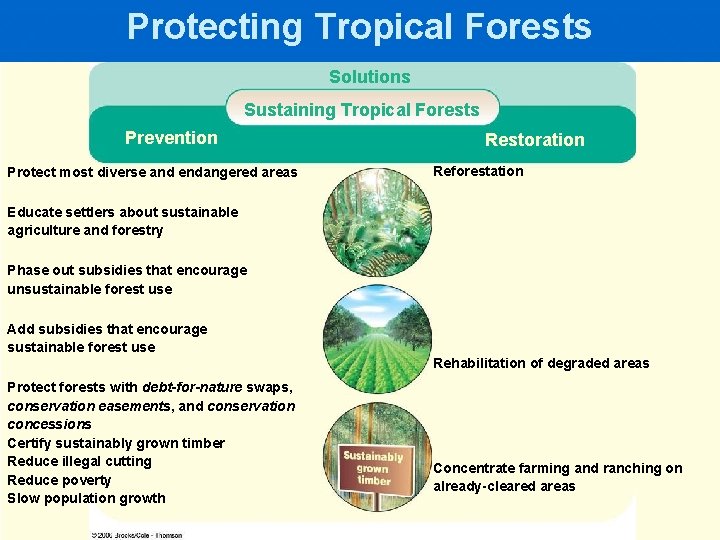
Protecting Tropical Forests Solutions Sustaining Tropical Forests Prevention Protect most diverse and endangered areas Restoration Reforestation Educate settlers about sustainable agriculture and forestry Phase out subsidies that encourage unsustainable forest use Add subsidies that encourage sustainable forest use Protect forests with debt-for-nature swaps, conservation easements, and conservation concessions Certify sustainably grown timber Reduce illegal cutting Reduce poverty Slow population growth Rehabilitation of degraded areas Concentrate farming and ranching on already-cleared areas
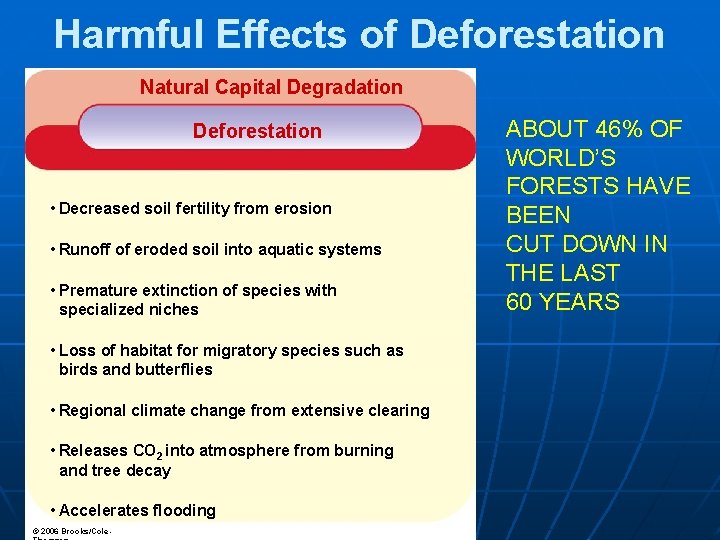
Harmful Effects of Deforestation Natural Capital Degradation Deforestation • Decreased soil fertility from erosion • Runoff of eroded soil into aquatic systems • Premature extinction of species with specialized niches • Loss of habitat for migratory species such as birds and butterflies • Regional climate change from extensive clearing • Releases CO 2 into atmosphere from burning and tree decay • Accelerates flooding © 2006 Brooks/Cole - ABOUT 46% OF WORLD’S FORESTS HAVE BEEN CUT DOWN IN THE LAST 60 YEARS
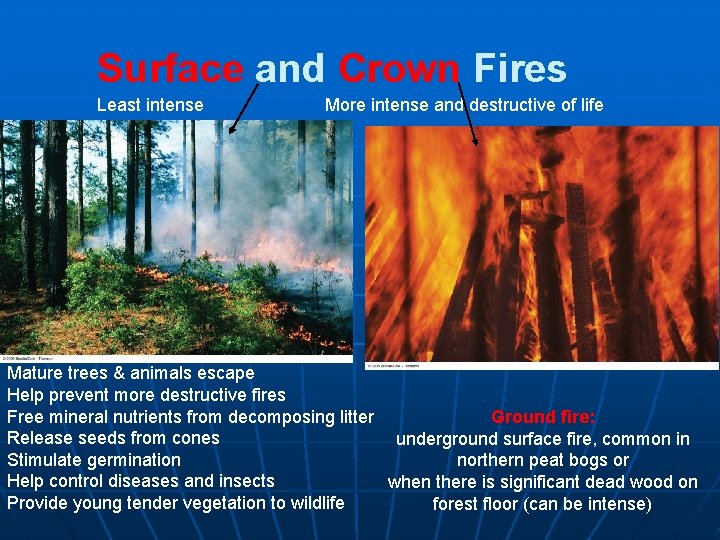
Surface and Crown Fires Least intense More intense and destructive of life Mature trees & animals escape Help prevent more destructive fires Free mineral nutrients from decomposing litter Ground fire: Release seeds from cones underground surface fire, common in Stimulate germination northern peat bogs or Help control diseases and insects when there is significant dead wood on Provide young tender vegetation to wildlife forest floor (can be intense)
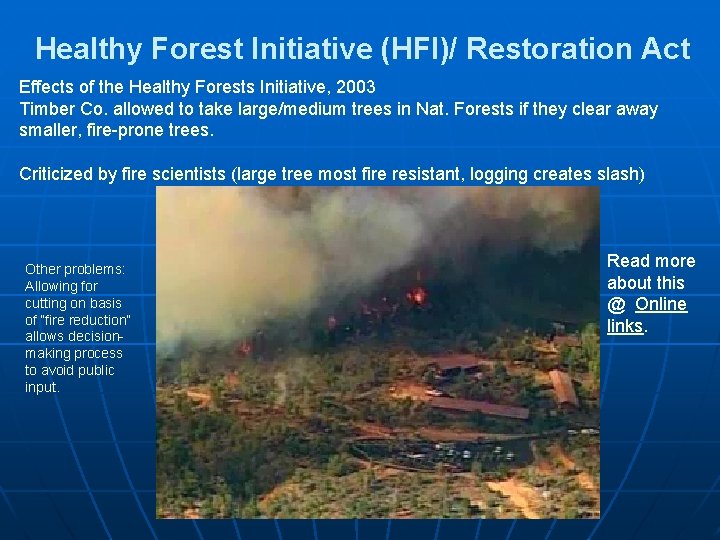
Healthy Forest Initiative (HFI)/ Restoration Act Effects of the Healthy Forests Initiative, 2003 Timber Co. allowed to take large/medium trees in Nat. Forests if they clear away smaller, fire-prone trees. Criticized by fire scientists (large tree most fire resistant, logging creates slash) Other problems: Allowing for cutting on basis of “fire reduction” allows decisionmaking process to avoid public input. Read more about this @ Online links.
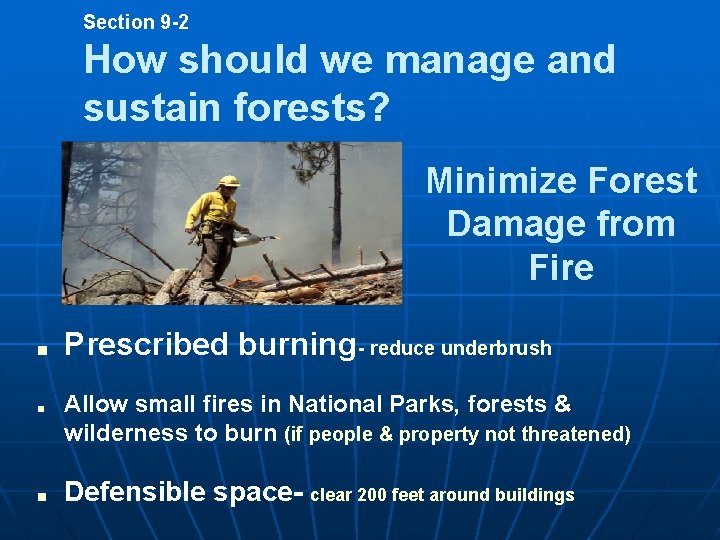
Section 9 -2 How should we manage and sustain forests? Minimize Forest Damage from Fire ■ ■ ■ Prescribed burning- reduce underbrush Allow small fires in National Parks, forests & wilderness to burn (if people & property not threatened) Defensible space- clear 200 feet around buildings
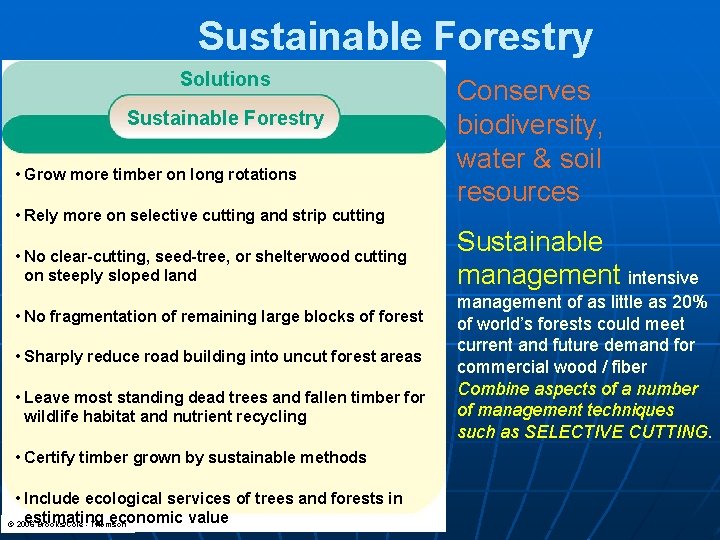
Sustainable Forestry Solutions Sustainable Forestry • Grow more timber on long rotations • Rely more on selective cutting and strip cutting • No clear-cutting, seed-tree, or shelterwood cutting on steeply sloped land • No fragmentation of remaining large blocks of forest • Sharply reduce road building into uncut forest areas • Leave most standing dead trees and fallen timber for wildlife habitat and nutrient recycling • Certify timber grown by sustainable methods • Include ecological services of trees and forests in estimating economic value © 2006 Brooks/Cole - Thomson Conserves biodiversity, water & soil resources Sustainable management intensive management of as little as 20% of world’s forests could meet current and future demand for commercial wood / fiber Combine aspects of a number of management techniques such as SELECTIVE CUTTING.
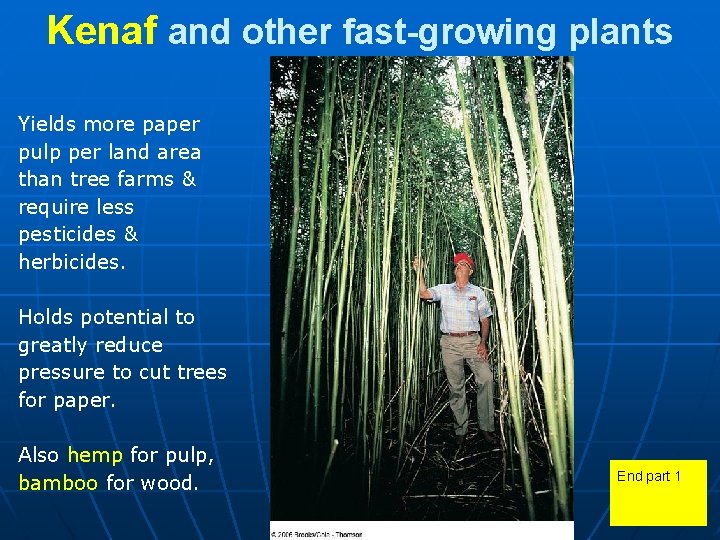
Kenaf and other fast-growing plants Yields more paper pulp per land area than tree farms & require less pesticides & herbicides. Holds potential to greatly reduce pressure to cut trees for paper. Also hemp for pulp, bamboo for wood. End part 1
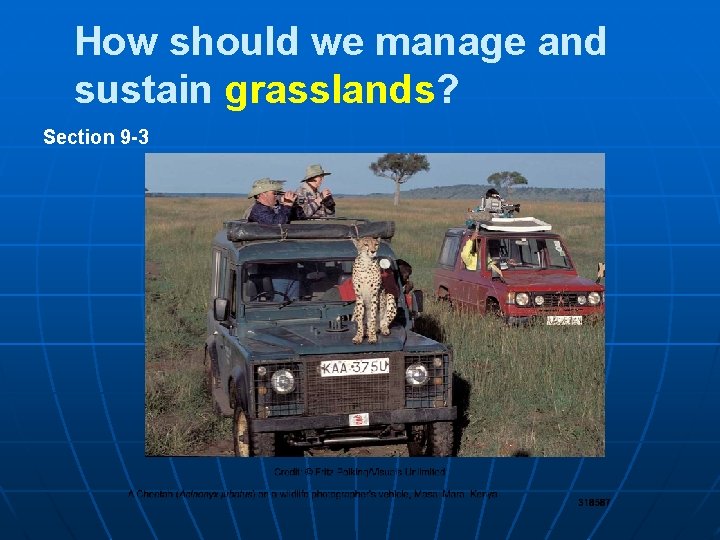
How should we manage and sustain grasslands? Section 9 -3
Rangelands & Overgrazing ■ ■ ■ Rangelands = unfenced supply vegetation, for grazing (grass-eating) and browsing (shrubeating) animals. Grasslands ecological services; soil formation, erosion control, nutrient cycling, storage of atmospheric carbon dioxide in biomass, and maintenance of biodiversity. Overgrazing: caused a loss in productivity in as much as 20% of the world’s rangeland.
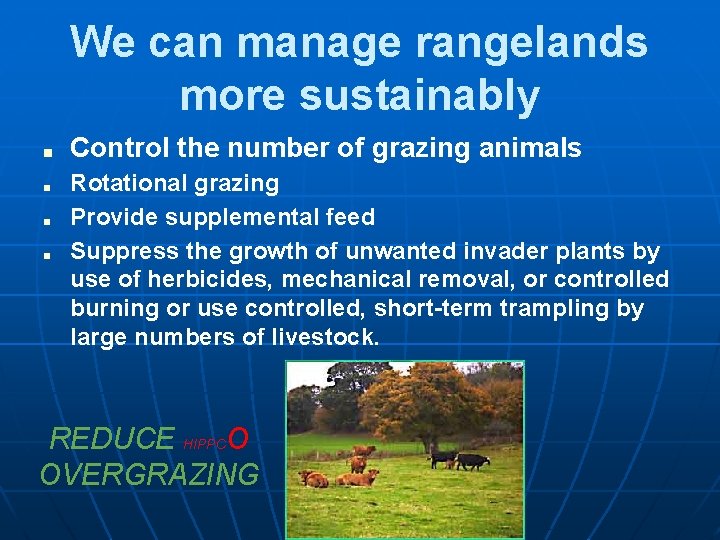
We can manage rangelands more sustainably ■ ■ Control the number of grazing animals Rotational grazing Provide supplemental feed Suppress the growth of unwanted invader plants by use of herbicides, mechanical removal, or controlled burning or use controlled, short-term trampling by large numbers of livestock. REDUCE HIPPCO OVERGRAZING
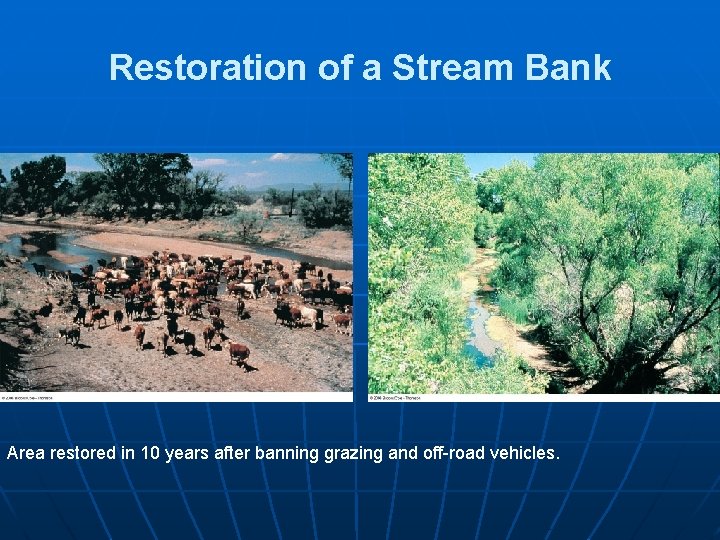
Restoration of a Stream Bank Area restored in 10 years after banning grazing and off-road vehicles.
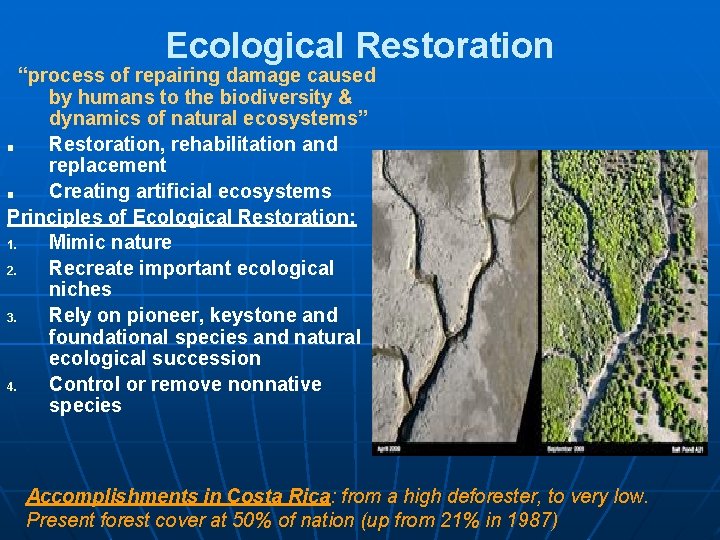
Ecological Restoration “process of repairing damage caused by humans to the biodiversity & dynamics of natural ecosystems” ■ Restoration, rehabilitation and replacement ■ Creating artificial ecosystems Principles of Ecological Restoration: 1. Mimic nature 2. Recreate important ecological niches 3. Rely on pioneer, keystone and foundational species and natural ecological succession 4. Control or remove nonnative species Accomplishments in Costa Rica: from a high deforester, to very low. Present forest cover at 50% of nation (up from 21% in 1987)
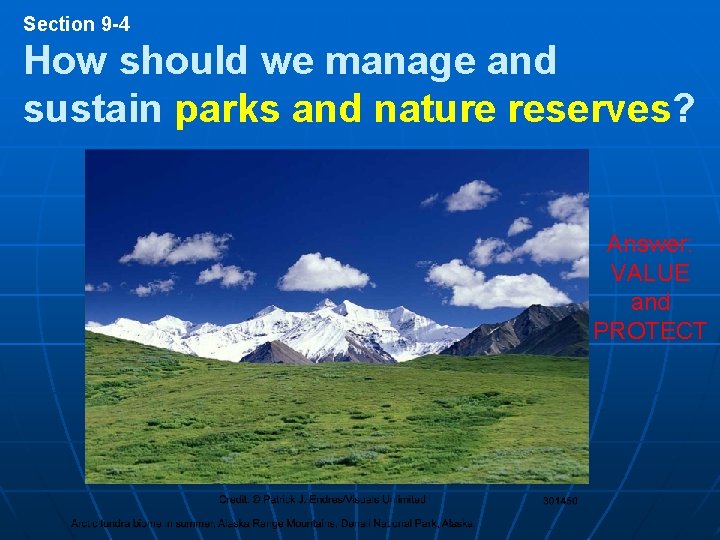
Section 9 -4 How should we manage and sustain parks and nature reserves? Answer: VALUE and PROTECT
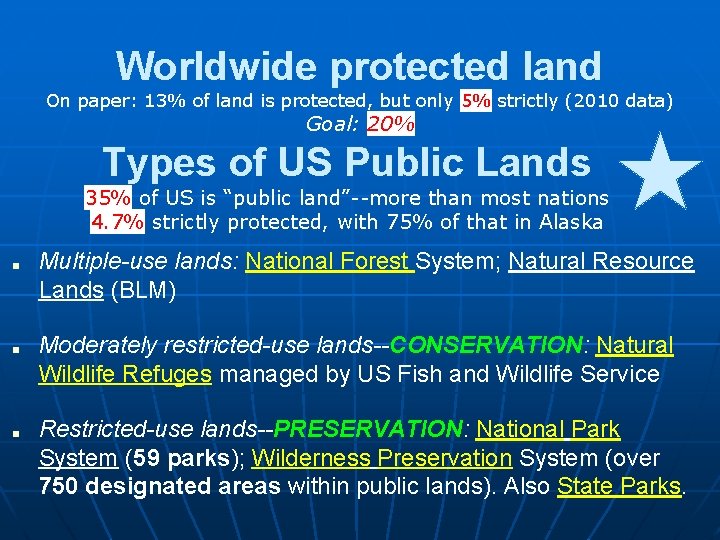
Worldwide protected land On paper: 13% of land is protected, but only 5% strictly (2010 data) Goal: 20% Types of US Public Lands 35% of US is “public land”--more than most nations 4. 7% strictly protected, with 75% of that in Alaska ■ ■ ■ Multiple-use lands: National Forest System; Natural Resource Lands (BLM) Moderately restricted-use lands--CONSERVATION: Natural Wildlife Refuges managed by US Fish and Wildlife Service Restricted-use lands--PRESERVATION: National Park System (59 parks); Wilderness Preservation System (over 750 designated areas within public lands). Also State Parks.
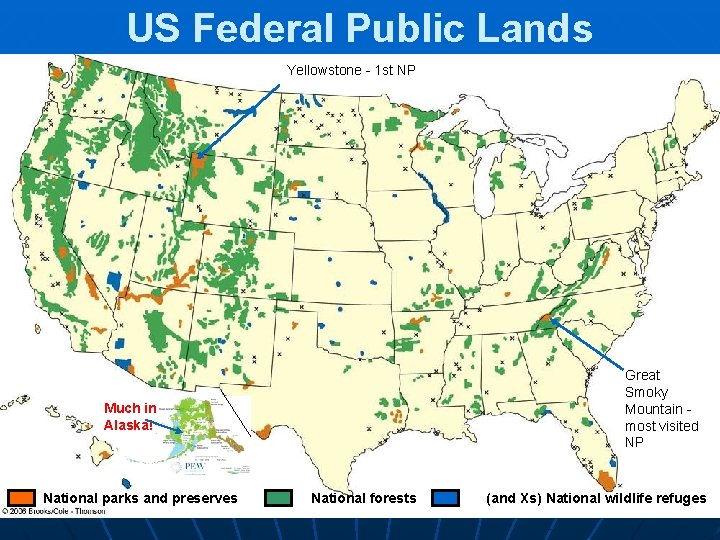
US Federal Public Lands Yellowstone - 1 st NP Great Smoky Mountain most visited NP Much in Alaska! National parks and preserves National forests (and Xs) National wildlife refuges
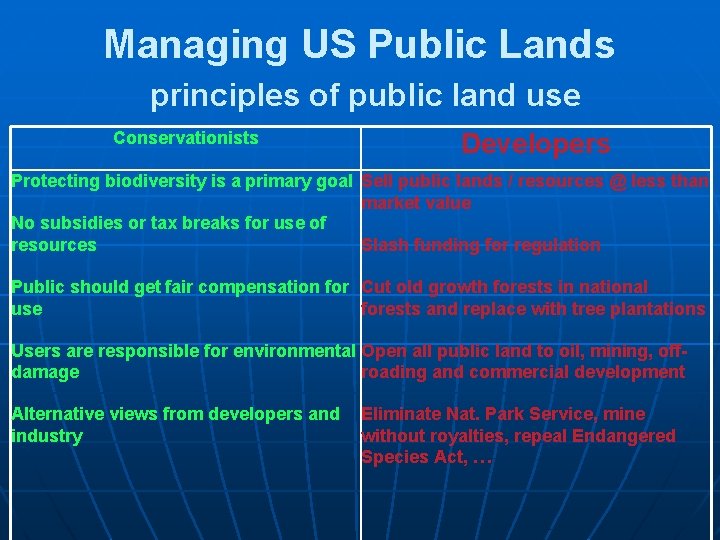
Managing US Public Lands principles of public land use Conservationists Developers Protecting biodiversity is a primary goal Sell public lands / resources @ less than market value No subsidies or tax breaks for use of resources Slash funding for regulation Public should get fair compensation for Cut old growth forests in national use forests and replace with tree plantations Users are responsible for environmental Open all public land to oil, mining, offdamage roading and commercial development Alternative views from developers and industry Eliminate Nat. Park Service, mine without royalties, repeal Endangered Species Act, …
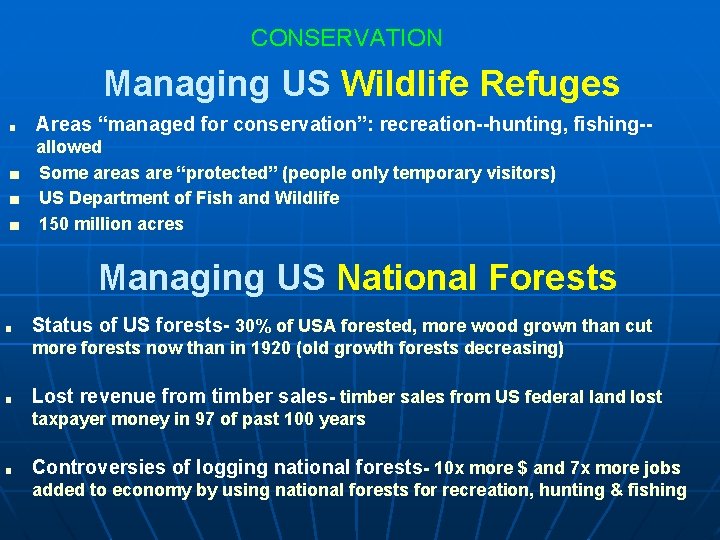
CONSERVATION Managing US Wildlife Refuges ■ Areas “managed for conservation”: recreation--hunting, fishing-- allowed ■ Some areas are “protected” (people only temporary visitors) ■ US Department of Fish and Wildlife ■ 150 million acres Managing US National Forests ■ Status of US forests- 30% of USA forested, more wood grown than cut more forests now than in 1920 (old growth forests decreasing) ■ Lost revenue from timber sales- timber sales from US federal land lost taxpayer money in 97 of past 100 years ■ Controversies of logging national forests- 10 x more $ and 7 x more jobs added to economy by using national forests for recreation, hunting & fishing
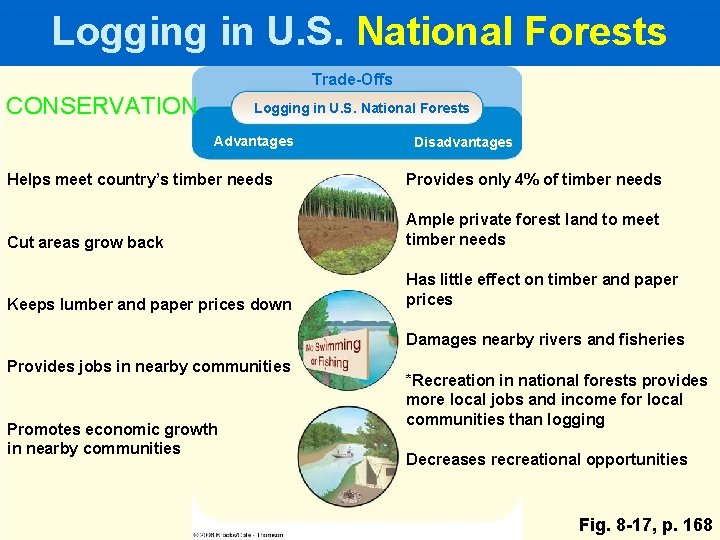
Logging in U. S. National Forests Trade-Offs CONSERVATION Logging in U. S. National Forests Advantages Disadvantages Helps meet country’s timber needs Provides only 4% of timber needs Cut areas grow back Ample private forest land to meet timber needs Keeps lumber and paper prices down Has little effect on timber and paper prices Damages nearby rivers and fisheries Provides jobs in nearby communities Promotes economic growth in nearby communities *Recreation in national forests provides more local jobs and income for local communities than logging Decreases recreational opportunities Fig. 8 -17, p. 168
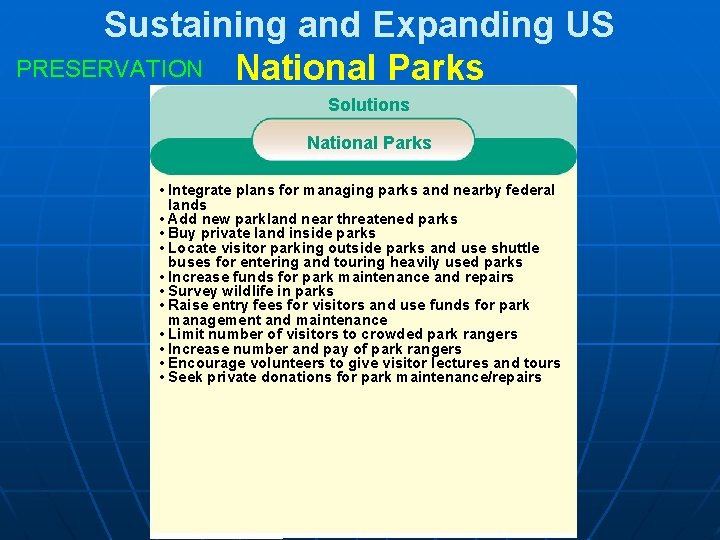
Sustaining and Expanding US PRESERVATION National Parks Solutions National Parks • Integrate plans for managing parks and nearby federal lands • Add new parkland near threatened parks • Buy private land inside parks • Locate visitor parking outside parks and use shuttle buses for entering and touring heavily used parks • Increase funds for park maintenance and repairs • Survey wildlife in parks • Raise entry fees for visitors and use funds for park management and maintenance • Limit number of visitors to crowded park rangers • Increase number and pay of park rangers • Encourage volunteers to give visitor lectures and tours • Seek private donations for park maintenance/repairs © 2006 Brooks/Cole - Thomson
Global Outlook: Threats to National Parks ■ Too little protection ■ Illegal wood collection, logging, poaching, and mining ■ Too little money to support the parks ■ Too small to sustain biodiversity ■ Invasions from nonnative species ■ Too many visitors to US national parks ■ Traffic jams and air pollution in US parks ■ Underpaid park officials ■ Harm from dirt bikes, dune buggies, and snowmobiles PRESERVATION
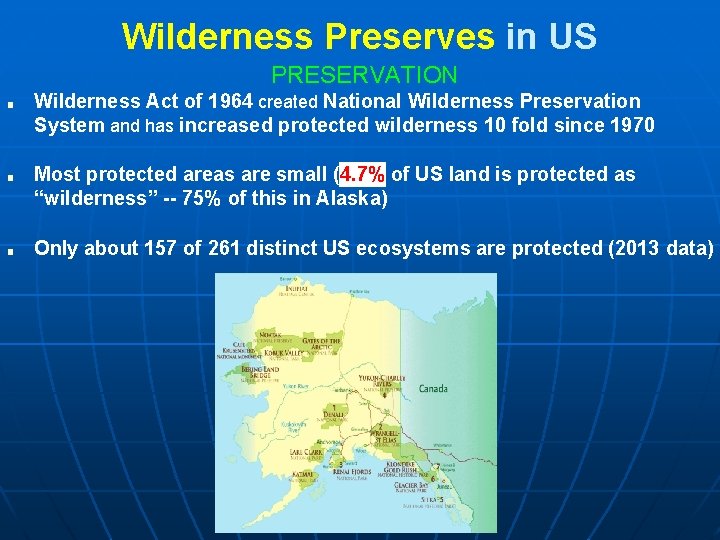
Wilderness Preserves in US PRESERVATION ■ ■ ■ Wilderness Act of 1964 created National Wilderness Preservation System and has increased protected wilderness 10 fold since 1970 Most protected areas are small (4. 7% of US land is protected as “wilderness” -- 75% of this in Alaska) Only about 157 of 261 distinct US ecosystems are protected (2013 data)
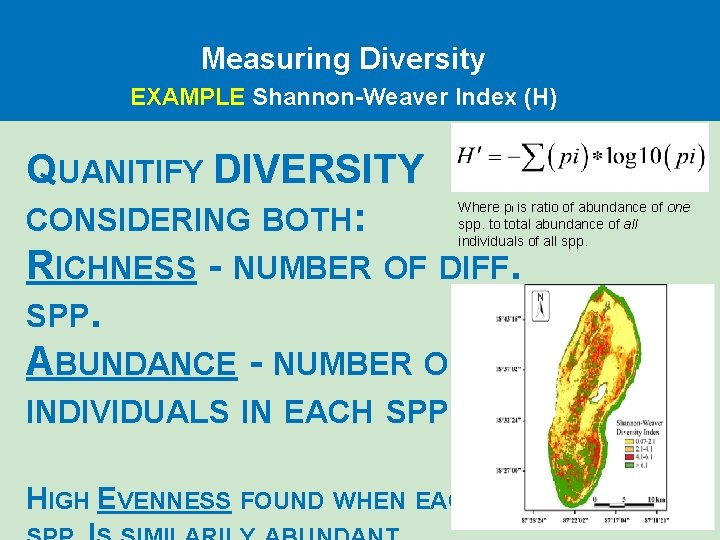
Measuring Diversity EXAMPLE Shannon-Weaver Index (H) QUANITIFY DIVERSITY CONSIDERING BOTH: RICHNESS - NUMBER OF DIFF. SPP. ABUNDANCE - NUMBER OF INDIVIDUALS IN EACH SPP. Where pi is ratio of abundance of one spp. to total abundance of all individuals of all spp. HIGH EVENNESS FOUND WHEN EACH
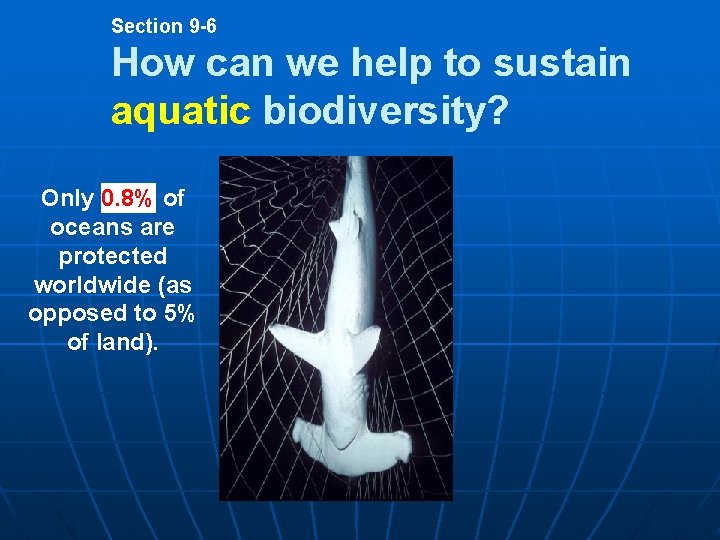
Section 9 -6 How can we help to sustain aquatic biodiversity? Only 0. 8% of oceans are protected worldwide (as opposed to 5% of land).
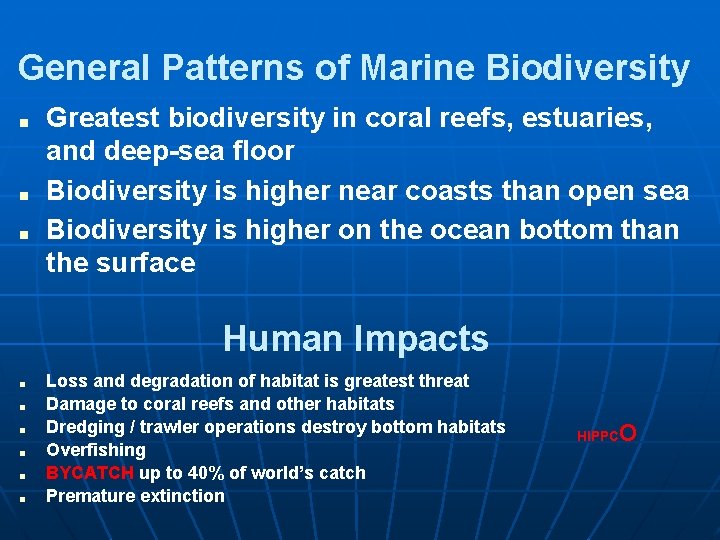
General Patterns of Marine Biodiversity ■ ■ ■ Greatest biodiversity in coral reefs, estuaries, and deep-sea floor Biodiversity is higher near coasts than open sea Biodiversity is higher on the ocean bottom than the surface Human Impacts ■ ■ ■ Loss and degradation of habitat is greatest threat Damage to coral reefs and other habitats Dredging / trawler operations destroy bottom habitats Overfishing BYCATCH up to 40% of world’s catch Premature extinction HIPPC O
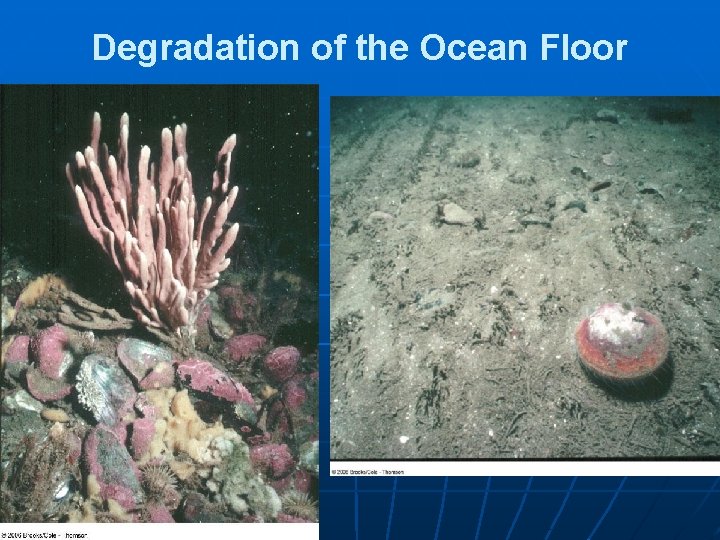
Degradation of the Ocean Floor
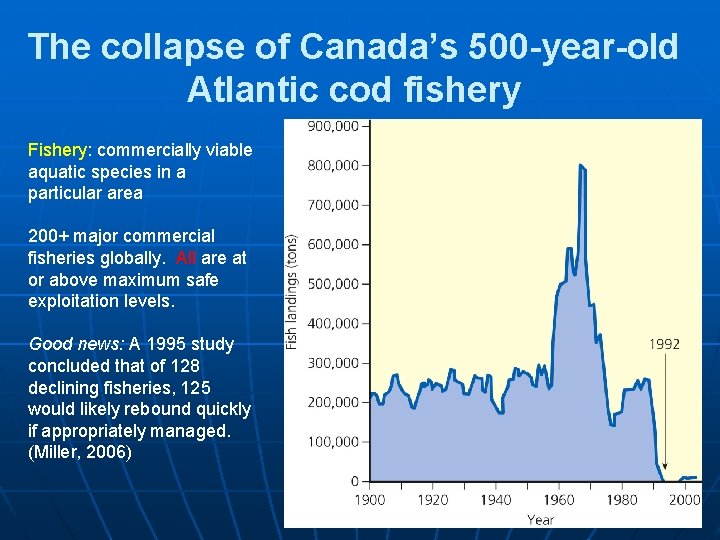
The collapse of Canada’s 500 -year-old Atlantic cod fishery Fishery: commercially viable aquatic species in a particular area 200+ major commercial fisheries globally. All are at or above maximum safe exploitation levels. Good news: A 1995 study concluded that of 128 declining fisheries, 125 would likely rebound quickly if appropriately managed. (Miller, 2006)
Why Is It Difficult to Protect Marine Biodiversity? ■ Coastal development ■ Unseen pollution ■ Lack of protection in international waters ■ “Tragedy of the Commons”
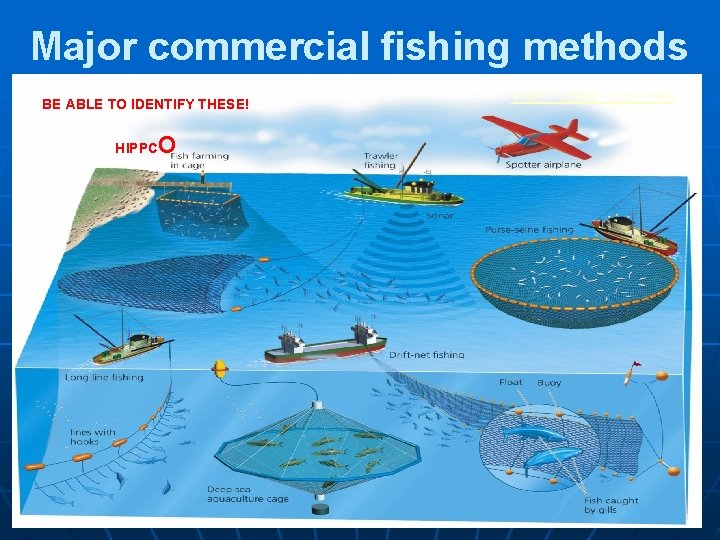
Major commercial fishing methods BE ABLE TO IDENTIFY THESE! HIPPC O Video Tutorial - Click Here
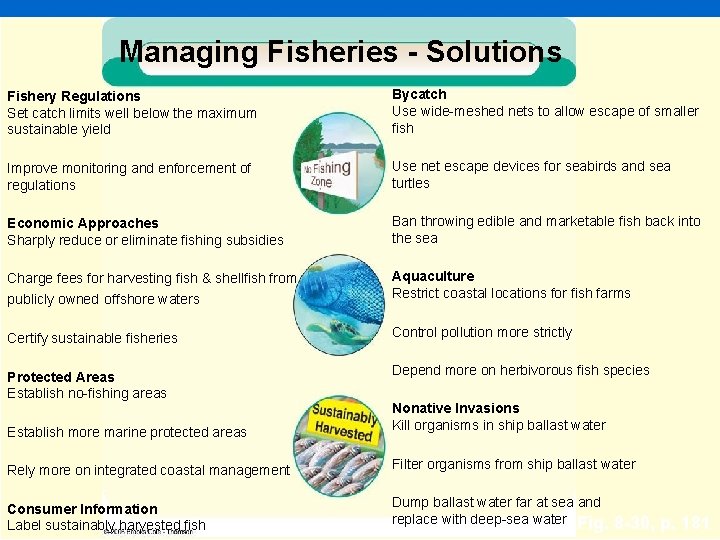
Managing Fisheries - Solutions Fishery Regulations Set catch limits well below the maximum sustainable yield Bycatch Use wide-meshed nets to allow escape of smaller fish Improve monitoring and enforcement of regulations Use net escape devices for seabirds and sea turtles Economic Approaches Sharply reduce or eliminate fishing subsidies Ban throwing edible and marketable fish back into the sea Charge fees for harvesting fish & shellfish from publicly owned offshore waters Aquaculture Restrict coastal locations for fish farms Certify sustainable fisheries Control pollution more strictly Protected Areas Establish no-fishing areas Depend more on herbivorous fish species Establish more marine protected areas Nonative Invasions Kill organisms in ship ballast water Rely more on integrated coastal management Filter organisms from ship ballast water Consumer Information Label sustainably harvested fish Dump ballast water far at sea and replace with deep-sea water Fig. 8 -30, p. 181
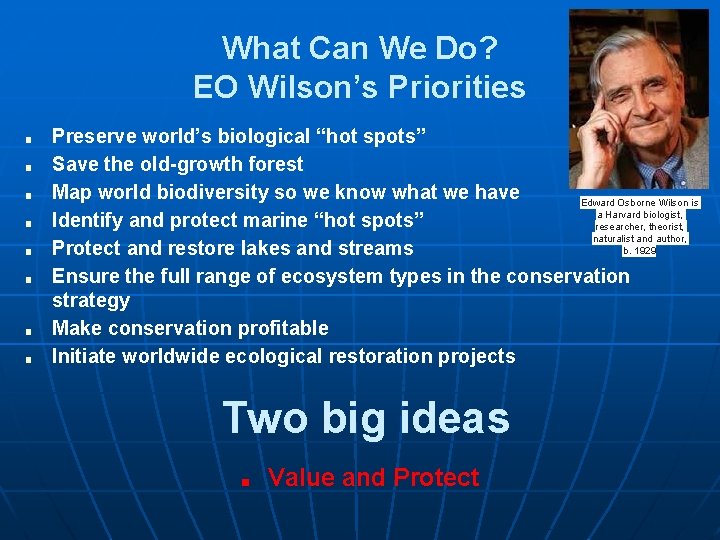
What Can We Do? EO Wilson’s Priorities ■ ■ ■ ■ Preserve world’s biological “hot spots” Save the old-growth forest Map world biodiversity so we know what we have Edward Osborne Wilson is a Harvard biologist, Identify and protect marine “hot spots” researcher, theorist, naturalist and author, b. 1929 Protect and restore lakes and streams Ensure the full range of ecosystem types in the conservation strategy Make conservation profitable Initiate worldwide ecological restoration projects Two big ideas ■ Value and Protect
- Slides: 49