
Sustainable Tourism A Visitor Experience Value Chain Approach
Sustainable Tourism A Visitor Experience Value Chain Approach Donald E. Hawkins Eisenhower Professor of Tourism Policy Milena Nikolova Research Assistant
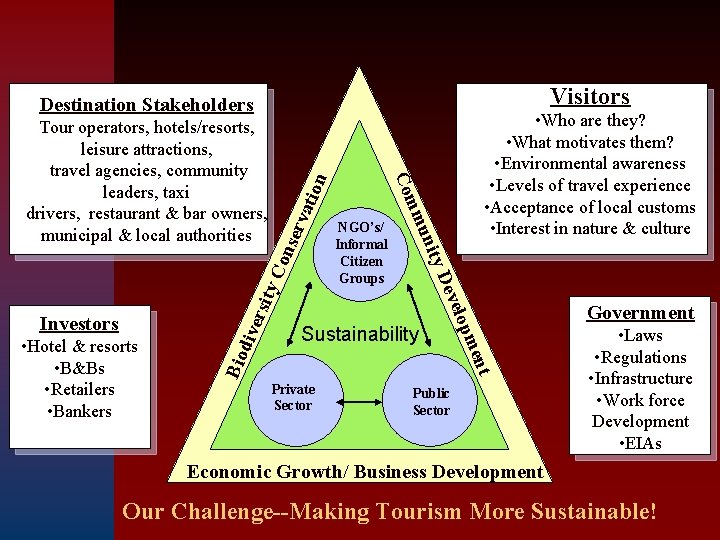
Visitors Destination Stakeholders n atio erv ons ity C ers Sustainability Bio ent m lop div eve ty D • Hotel & resorts • B&Bs • Retailers • Bankers NGO’s/ Informal Citizen Groups ni mu Investors • Who are they? • What motivates them? • Environmental awareness • Levels of travel experience • Acceptance of local customs • Interest in nature & culture Com Tour operators, hotels/resorts, leisure attractions, travel agencies, community leaders, taxi drivers, restaurant & bar owners, municipal & local authorities Private Sector Public Sector Government • Laws • Regulations • Infrastructure • Work force Development • EIAs Economic Growth/ Business Development Our Challenge--Making Tourism More Sustainable!
Visitor Experience Value Chain In order to take a demand-driven, customerfocused approach to sustainable tourism, the primary focus of our efforts should be on the visitor experience as the foundation of a value chain which links travelers to destinations committed to genuine hospitality, environmental quality, social inclusiveness, value for money, and benefit sharing
A key innovation in today’s business is experiences. In today’s environment of ever more sophisticated consumers, those who deliver memorable customer experiences consistently create superior value and competitive advantage. London School of Business People who are in the position to spend don’t just throw their money away. They don’t want “just a product”. They want an experience. They want knowledge. They want passion. Ed. F. Kelly, President & CEO, American Express Publishing

The Experience Economy n Focus on the experience with a product or service – the experience economy (Pine II & Gilmore, 1999) n The 4 Realms of Experience n Design guides: ü theme the experience ü harmonize positive cues ü eliminate negative cues ü mix in memorabilia ü engage all five senses Pine II & Gilmore (1999) “The Experience Economy”
And the tourism industry says that… n "Future tourism will be driven by the desire to learn, to experience new things and to add meaning to people's lives. " UNWTO White Paper (2005) n "Customers have more time and more money. They are more discerning, better educated and more knowledgeable, and they are looking for life-enriching experiences. And they want the best value for money they can find. " Rob Franklin, ETC's Executive Director n “The Experience business is driven by that memorable relationship. Take nothing for granted. Invest in all your Ambassadors, optimize their behaviors, create a standard of excellence, and become distinctive. ” John R. Hendrie is CEO, Hospitality Performance, Inc.

Visualize a Series of “Experience Points”

What is the role of a destination in the visitor experience value chain? The Two-step Visitor Experience-Oriented Destination Management Approach Promise a Visitor Experience Destination Brand Audit the Visitor Experience Value Chain Facilitate the Visitor Experience Targeted Intervention
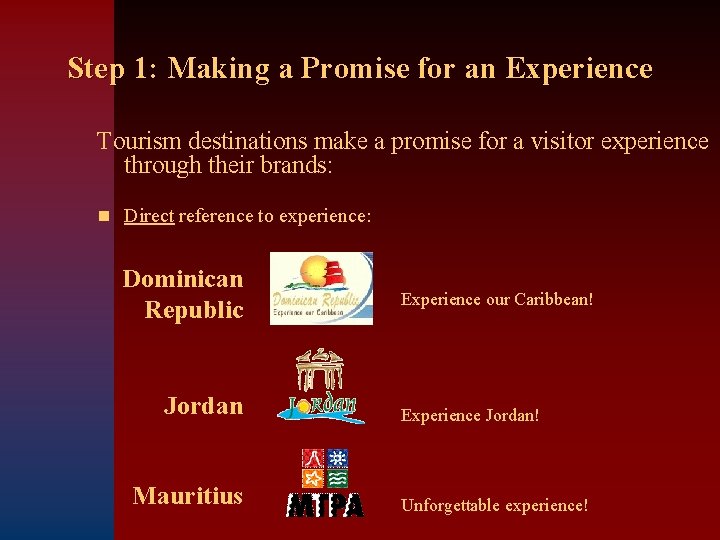
Step 1: Making a Promise for an Experience Tourism destinations make a promise for a visitor experience through their brands: n Direct reference to experience: Dominican Republic Jordan Mauritius Experience our Caribbean! Experience Jordan! Unforgettable experience!
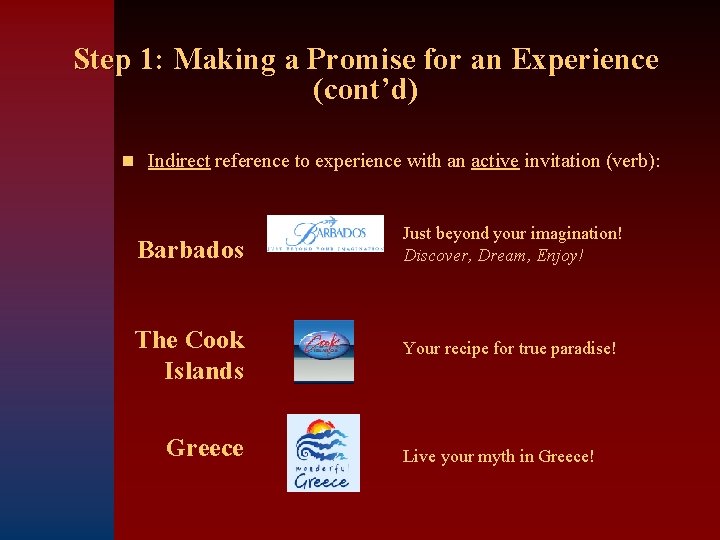
Step 1: Making a Promise for an Experience (cont’d) n Indirect reference to experience with an active invitation (verb): Barbados Just beyond your imagination! Discover, Dream, Enjoy! The Cook Islands Your recipe for true paradise! Greece Live your myth in Greece!
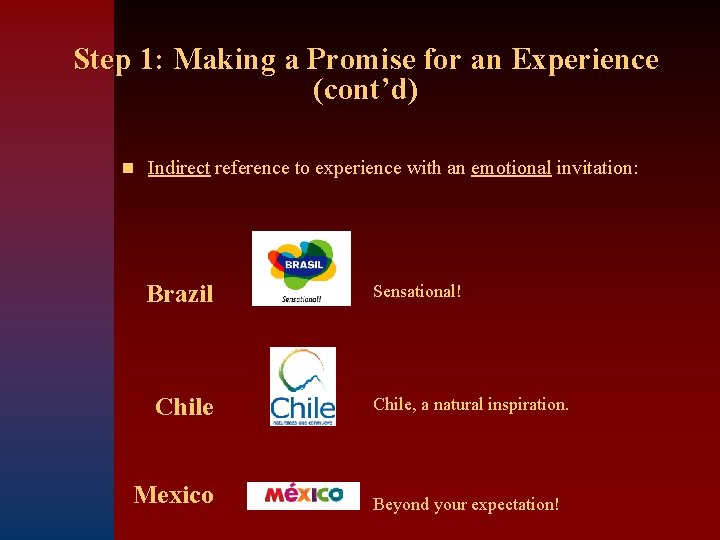
Step 1: Making a Promise for an Experience (cont’d) n Indirect reference to experience with an emotional invitation: Brazil Chile Mexico Sensational! Chile, a natural inspiration. Beyond your expectation!
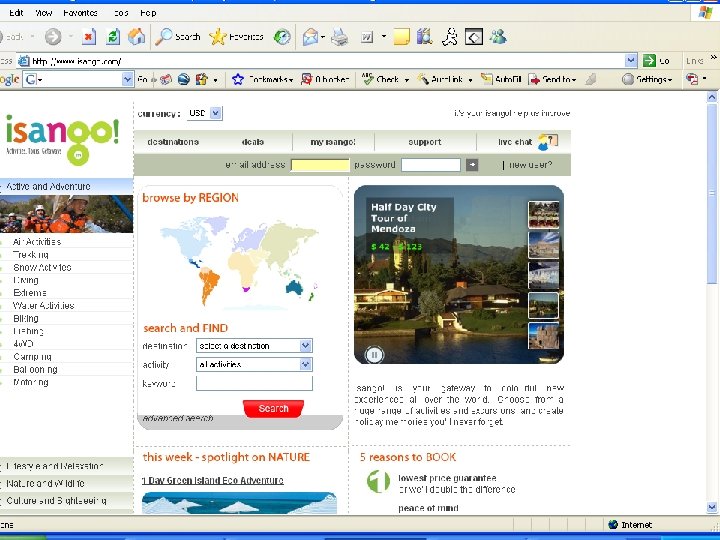
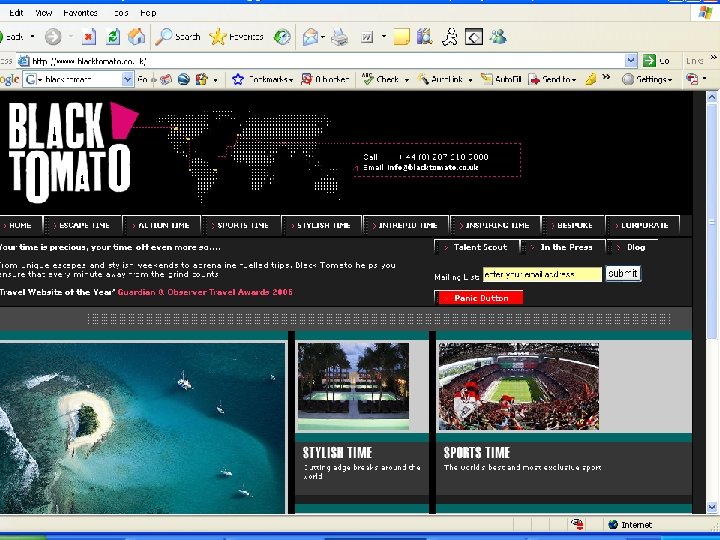
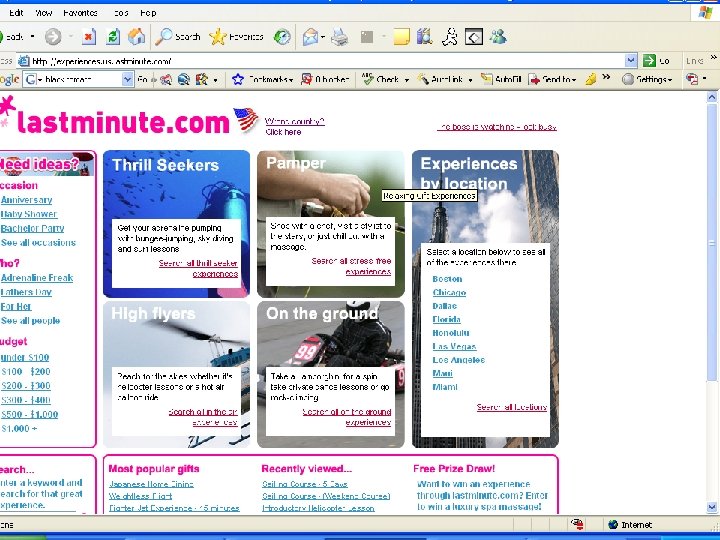
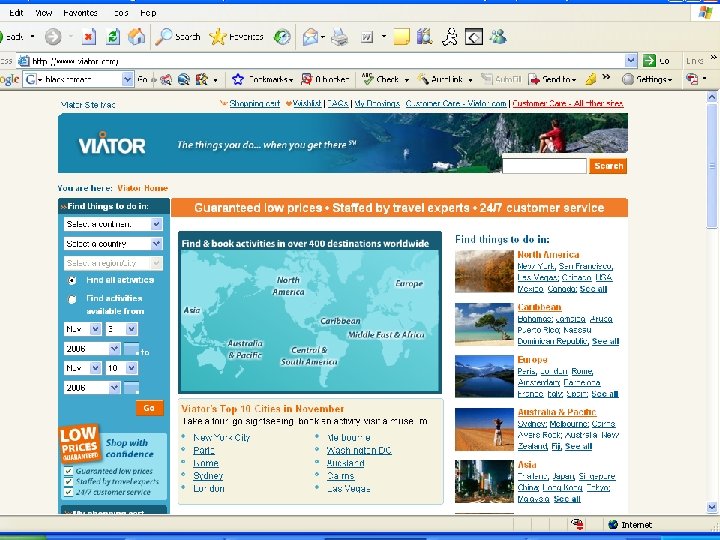
Web Sites Selling Experiences While the online travel giants tussle for their share of flight and hotel bookings, a host of new generation sites are looking to sell travelers their definitive overseas experiences before even leaving. The success of these sites will depend on how much people want to “itinerise” their trips. Rather ironically, the sort of travelers who are expected to book "travel experiences" through experience sites , are those who've shunned package breaks in favor of independent travel.
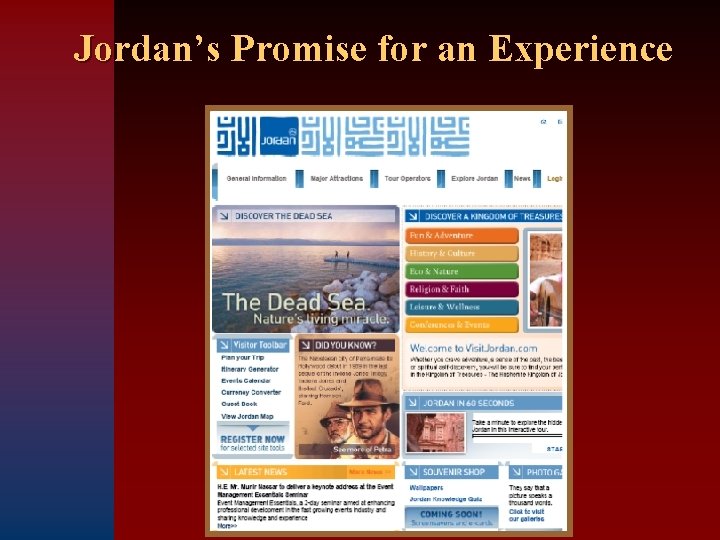
Jordan’s Promise for an Experience
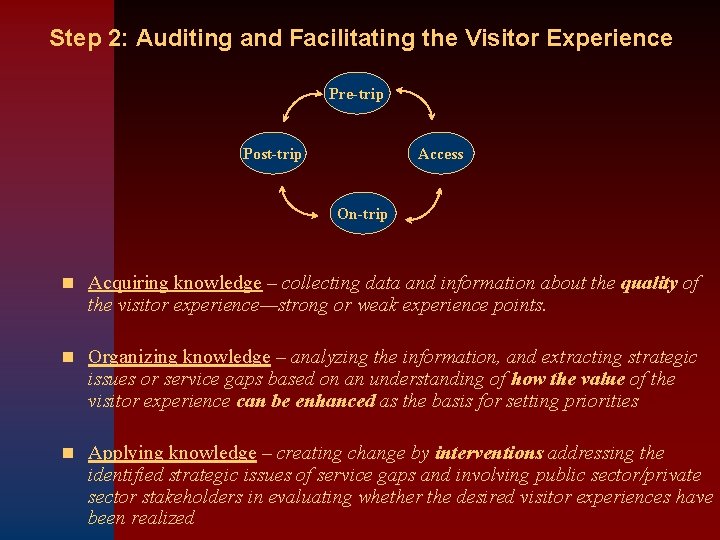
Step 2: Auditing and Facilitating the Visitor Experience Pre-trip Post-trip Access On-trip n Acquiring knowledge – collecting data and information about the quality of the visitor experience—strong or weak experience points. n Organizing knowledge – analyzing the information, and extracting strategic issues or service gaps based on an understanding of how the value of the visitor experience can be enhanced as the basis for setting priorities n Applying knowledge – creating change by interventions addressing the identified strategic issues of service gaps and involving public sector/private sector stakeholders in evaluating whether the desired visitor experiences have been realized

Benchmark: Tourism Montreal Indexperience DESTINATION VISITOR EXPECTED QUALITY OFFER Analysis of destination conformity visitor perception PERCEIVED QUALITY DELIVERED QUALITY Source: After Tourism Montreal Inexperience
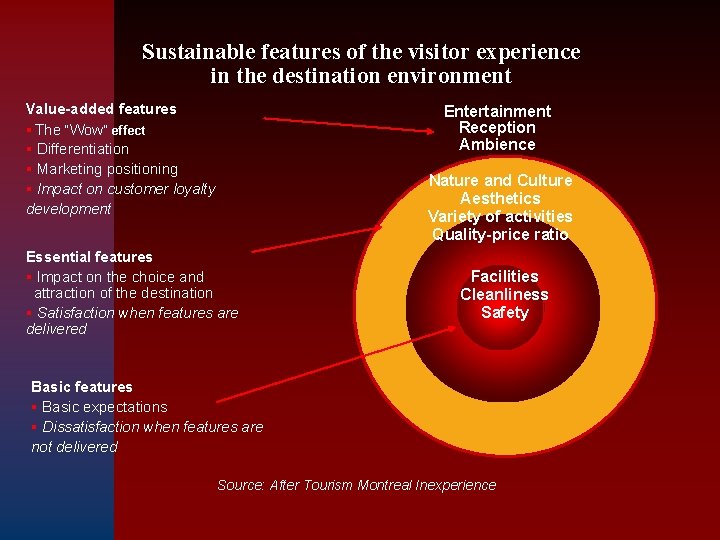
Sustainable features of the visitor experience in the destination environment Value-added features § The “Wow” effect § Differentiation § Marketing positioning § Impact on customer loyalty development Entertainment Reception Ambience Nature and Culture Aesthetics Variety of activities Quality-price ratio Essential features § Impact on the choice and attraction of the destination § Satisfaction when features are delivered Facilities Cleanliness Safety Basic features § Basic expectations § Dissatisfaction when features are not delivered Source: After Tourism Montreal Inexperience
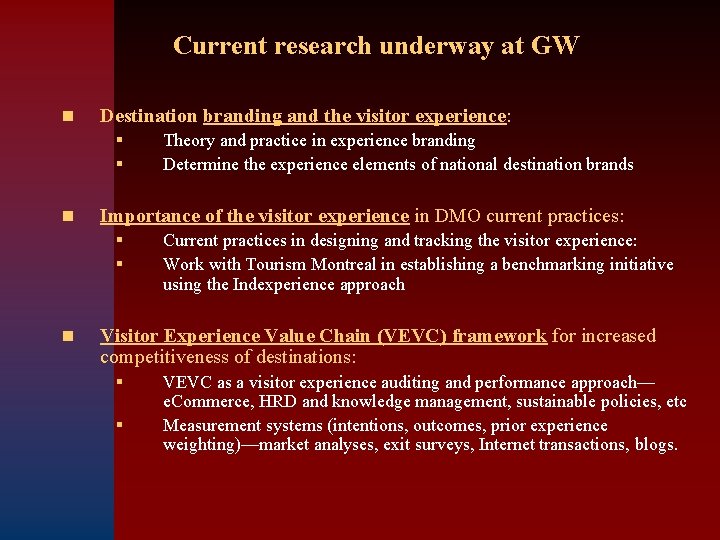
Current research underway at GW n Destination branding and the visitor experience: § § n Importance of the visitor experience in DMO current practices: § § n Theory and practice in experience branding Determine the experience elements of national destination brands Current practices in designing and tracking the visitor experience: Work with Tourism Montreal in establishing a benchmarking initiative using the Indexperience approach Visitor Experience Value Chain (VEVC) framework for increased competitiveness of destinations: § § VEVC as a visitor experience auditing and performance approach— e. Commerce, HRD and knowledge management, sustainable policies, etc Measurement systems (intentions, outcomes, prior experience weighting)—market analyses, exit surveys, Internet transactions, blogs.
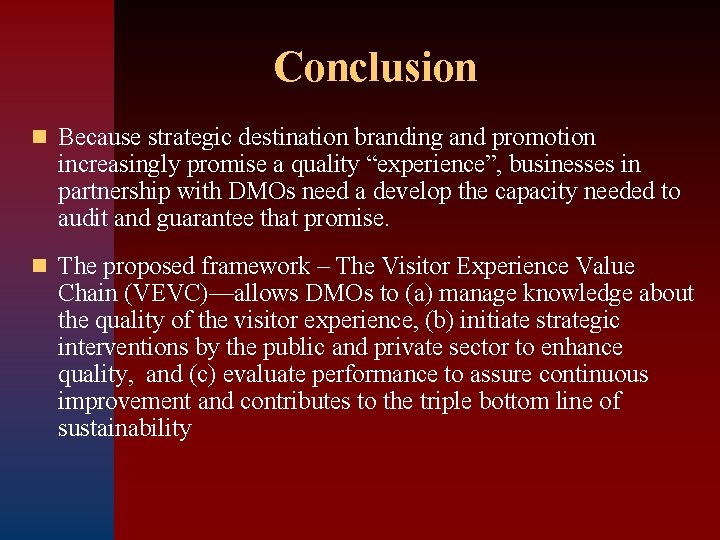
Conclusion n Because strategic destination branding and promotion increasingly promise a quality “experience”, businesses in partnership with DMOs need a develop the capacity needed to audit and guarantee that promise. n The proposed framework – The Visitor Experience Value Chain (VEVC)—allows DMOs to (a) manage knowledge about the quality of the visitor experience, (b) initiate strategic interventions by the public and private sector to enhance quality, and (c) evaluate performance to assure continuous improvement and contributes to the triple bottom line of sustainability
Discussion dhawk@gwu. edu http: //www. gwutourism. org/
- Slides: 23