
Sustainable Prosperity and Development Economic growth that does
Sustainable Prosperity and Development Economic growth that does not exhaust the natural resources needed by future generations
There alternative forms of energy that can be used to reduce dependence on environmentally harmful forms of energy Availability & level of technology affect development Development is a very complex issue – domestic/international Quality of life is increasingly affected by environmental issues on a global scale
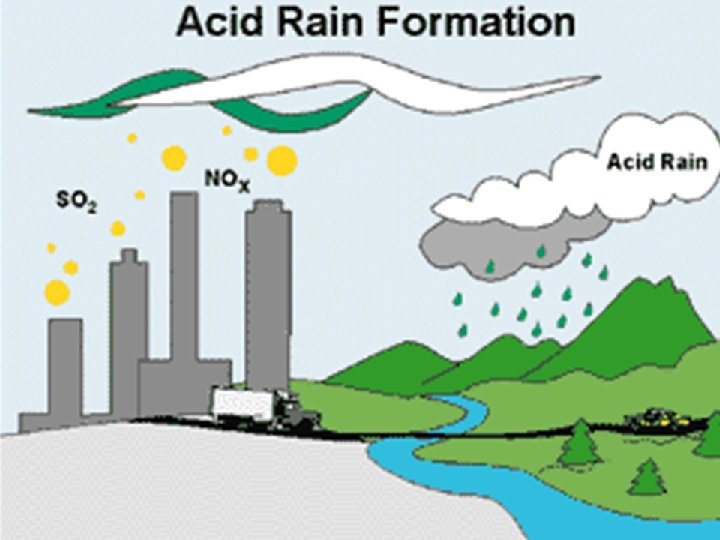
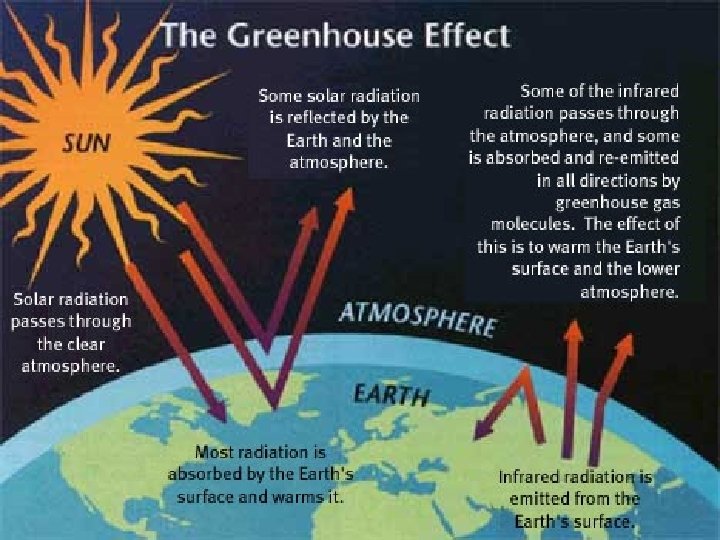
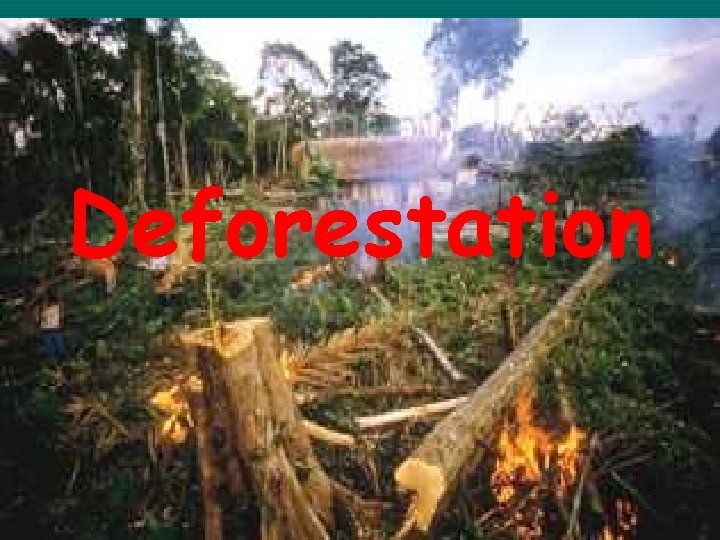
Deforestation
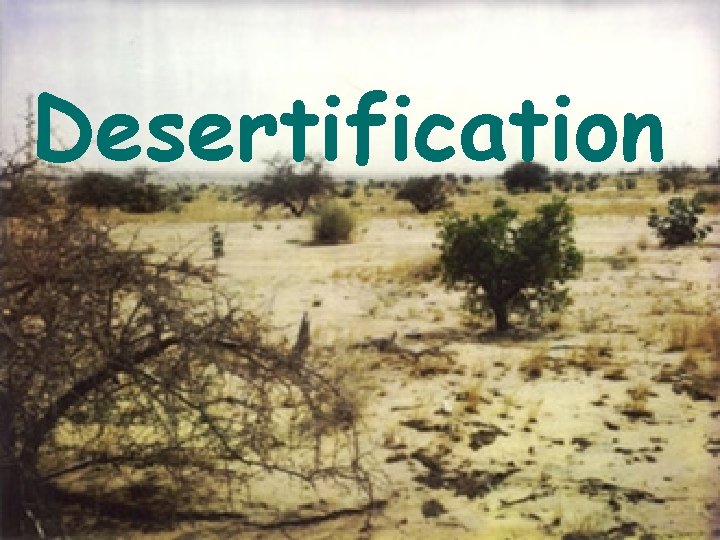
Desertification
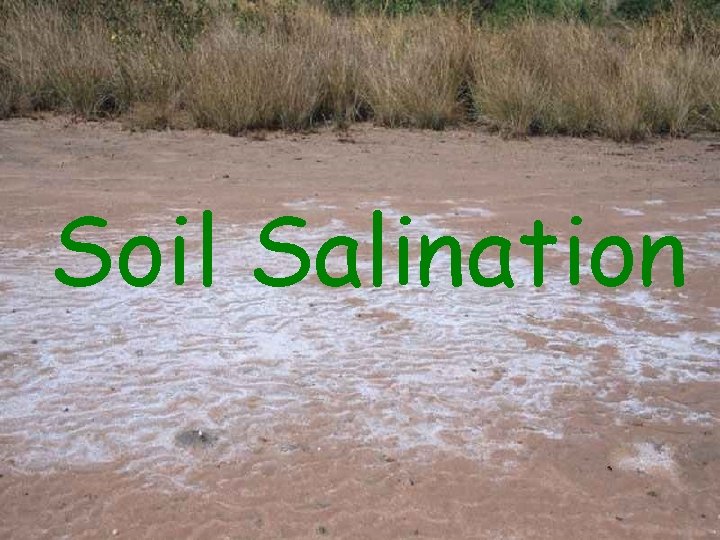
Soil Salination
Alternative Sources of Energy • • • Geothermal Wind Solar Hydro-electrical Hydrogen Nuclear
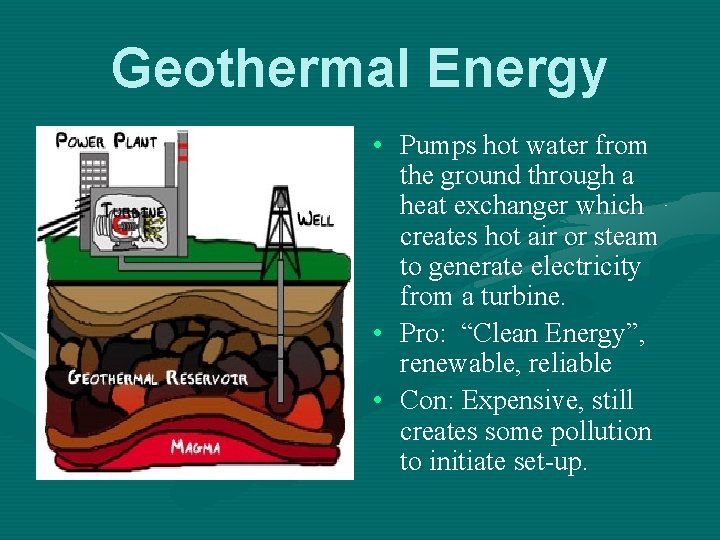
Geothermal Energy • Pumps hot water from the ground through a heat exchanger which creates hot air or steam to generate electricity from a turbine. • Pro: “Clean Energy”, renewable, reliable • Con: Expensive, still creates some pollution to initiate set-up.
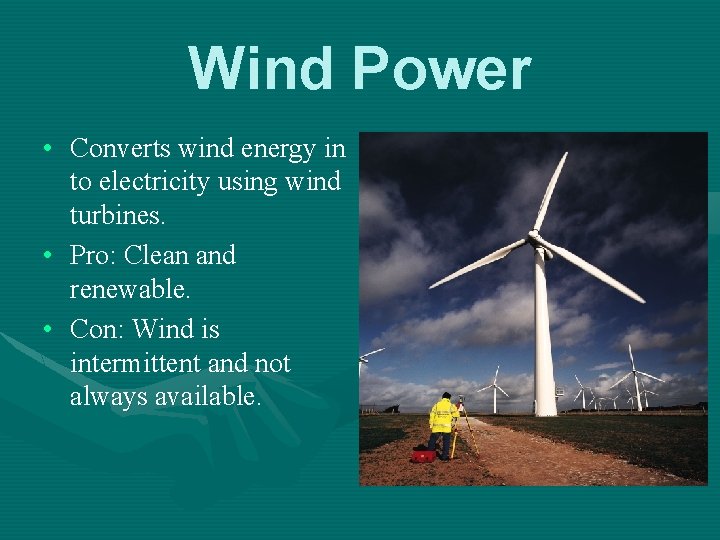
Wind Power • Converts wind energy in to electricity using wind turbines. • Pro: Clean and renewable. • Con: Wind is intermittent and not always available.
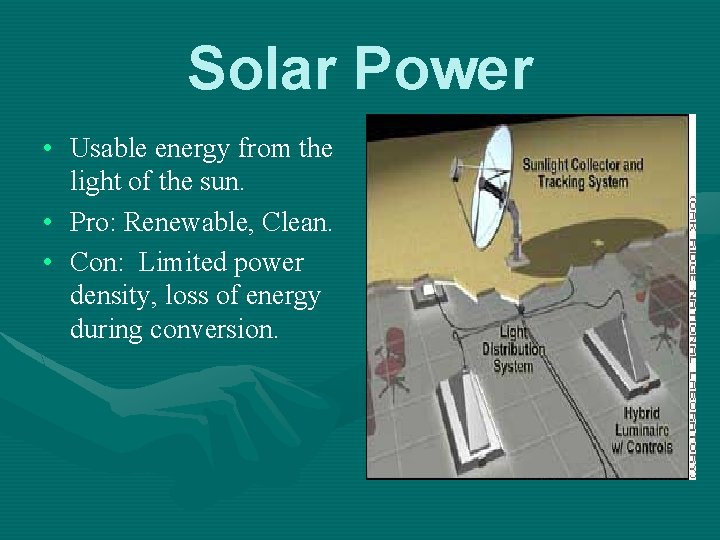
Solar Power • Usable energy from the light of the sun. • Pro: Renewable, Clean. • Con: Limited power density, loss of energy during conversion.
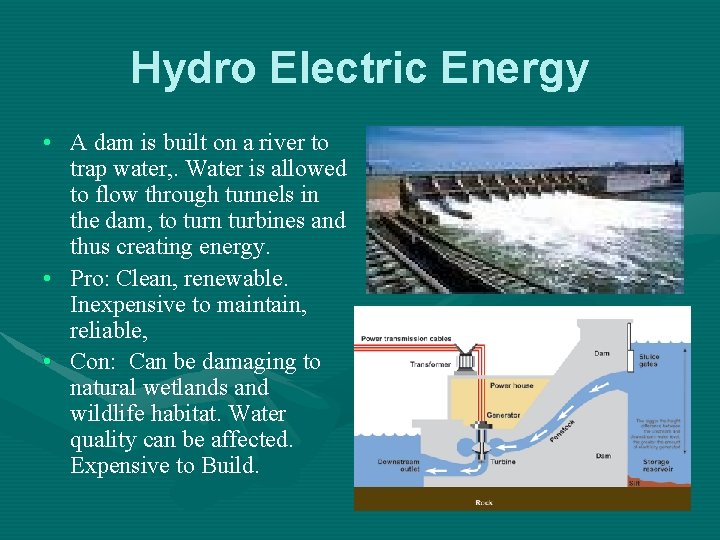
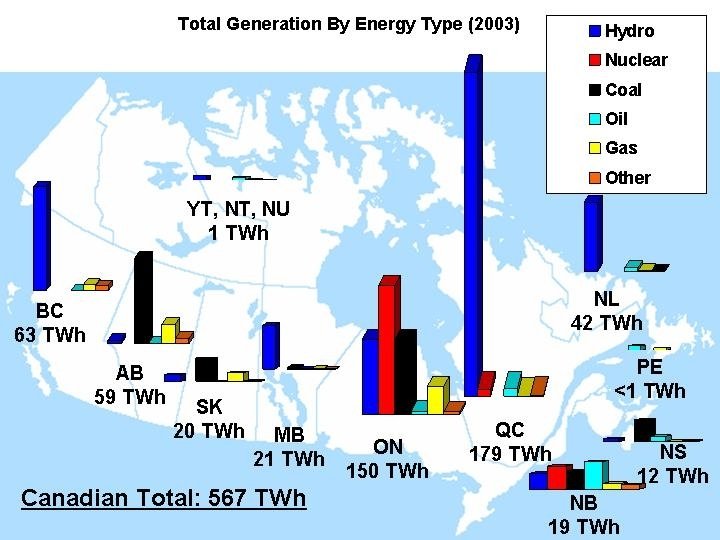
Hydro Electric Energy • A dam is built on a river to trap water, . Water is allowed to flow through tunnels in the dam, to turn turbines and thus creating energy. • Pro: Clean, renewable. Inexpensive to maintain, reliable, • Con: Can be damaging to natural wetlands and wildlife habitat. Water quality can be affected. Expensive to Build.
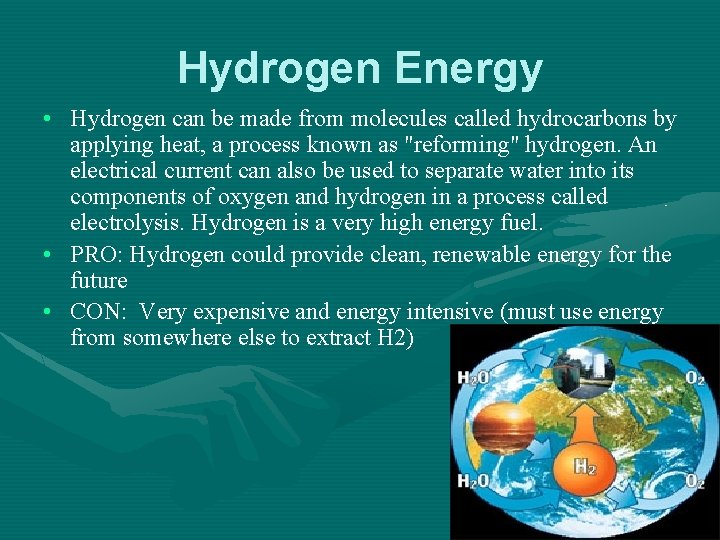
Hydrogen Energy • Hydrogen can be made from molecules called hydrocarbons by applying heat, a process known as "reforming" hydrogen. An electrical current can also be used to separate water into its components of oxygen and hydrogen in a process called electrolysis. Hydrogen is a very high energy fuel. • PRO: Hydrogen could provide clean, renewable energy for the future • CON: Very expensive and energy intensive (must use energy from somewhere else to extract H 2)
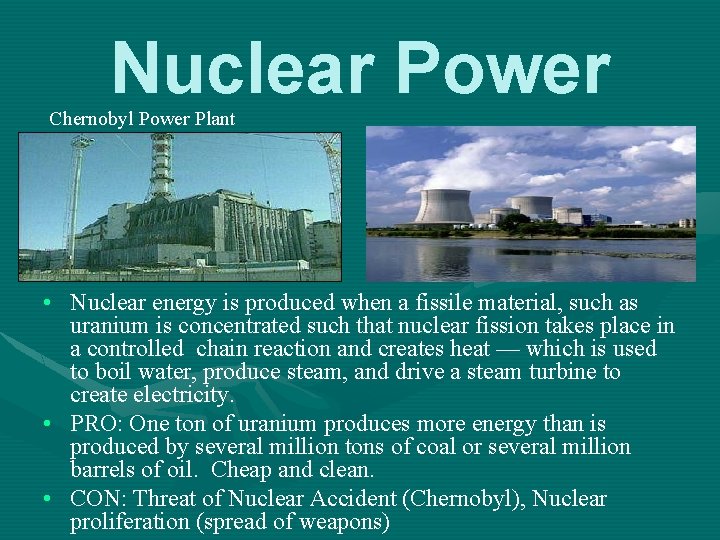
Nuclear Power Chernobyl Power Plant • Nuclear energy is produced when a fissile material, such as uranium is concentrated such that nuclear fission takes place in a controlled chain reaction and creates heat — which is used to boil water, produce steam, and drive a steam turbine to create electricity. • PRO: One ton of uranium produces more energy than is produced by several million tons of coal or several million barrels of oil. Cheap and clean. • CON: Threat of Nuclear Accident (Chernobyl), Nuclear proliferation (spread of weapons)
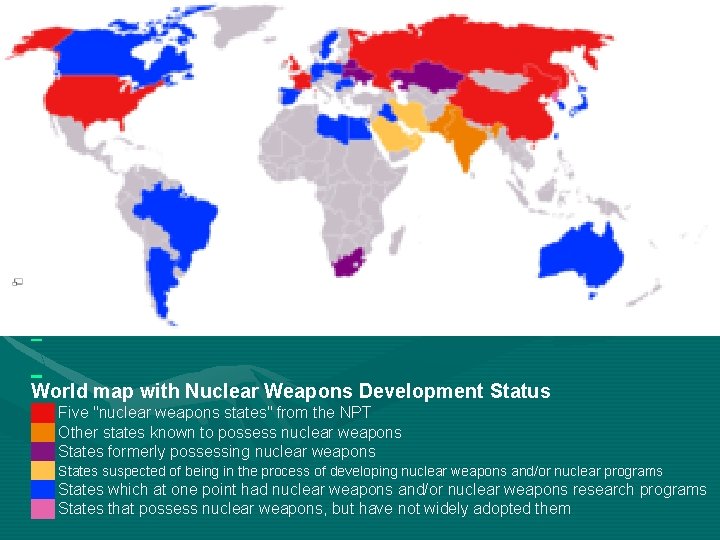
World map with Nuclear Weapons Development Status ██ Five "nuclear weapons states" from the NPT ██ Other states known to possess nuclear weapons ██ States formerly possessing nuclear weapons ██ States suspected of being in the process of developing nuclear weapons and/or nuclear programs ██ States which at one point had nuclear weapons and/or nuclear weapons research programs ██ States that possess nuclear weapons, but have not widely adopted them
- Slides: 17