
SUSTAINABLE PALM OIL COALITION FOR INDIA AN INTRODUCTION
SUSTAINABLE PALM OIL COALITION FOR INDIA AN INTRODUCTION

WHY PALM OIL? • Most commonly cultivated vegetable oil in the world • Is a key constituent of most daily consumable products • Over 13% of geographical area of Malaysia and 6% in Indonesia are under palm oil plantations 1 • Cultivation of palm oil is associated with significant environmental and social issues such as • Deforestation • Destruction of species habitat • Violation of human rights 2 Source: Malaysian Palm Oil Board; Indonesia Investments
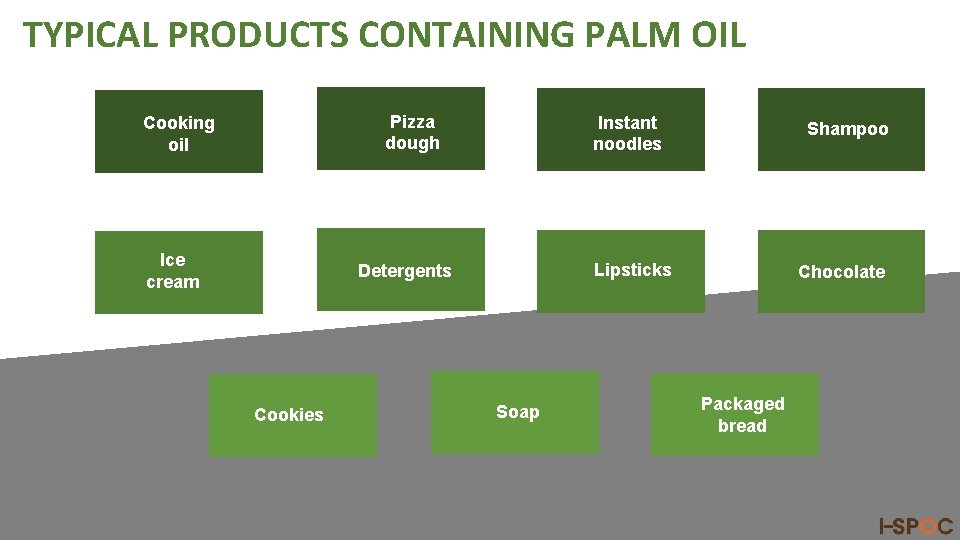
TYPICAL PRODUCTS CONTAINING PALM OIL Pizza dough Cooking oil Ice cream Instant noodles Lipsticks Detergents Cookies Shampoo Soap Chocolate Packaged bread
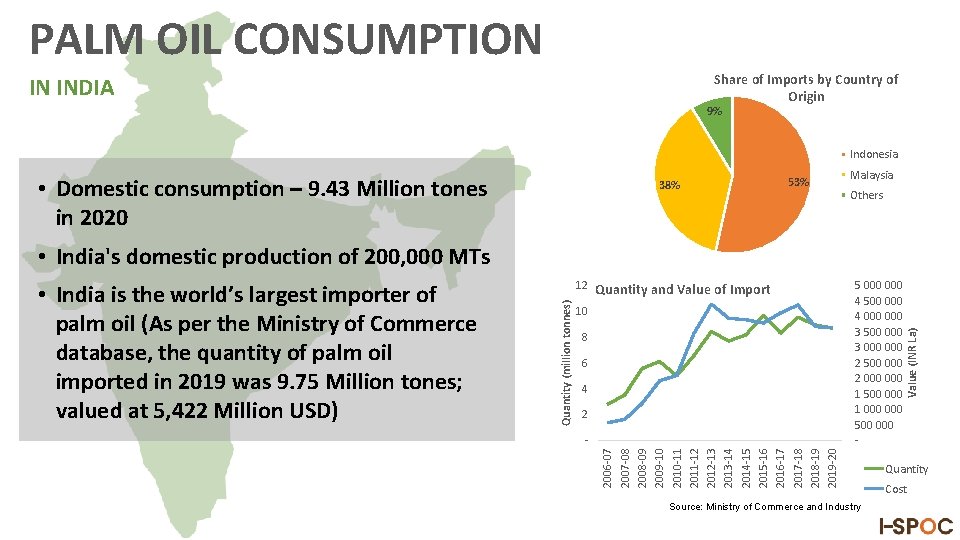
PALM OIL CONSUMPTION Share of Imports by Country of Origin IN INDIA 9% Indonesia • Domestic consumption – 9. 43 Million tones in 2020 38% 53% Malaysia Others 12 Quantity and Value of Import 10 8 6 4 2 - 5 000 4 500 000 4 000 3 500 000 3 000 2 500 000 2 000 1 500 000 1 000 500 000 - 2006 -07 2007 -08 2008 -09 2009 -10 2010 -11 2011 -12 2012 -13 2013 -14 2014 -15 2015 -16 2016 -17 2017 -18 2018 -19 2019 -20 Quantity (million tonnes) • India is the world’s largest importer of palm oil (As per the Ministry of Commerce database, the quantity of palm oil imported in 2019 was 9. 75 Million tones; valued at 5, 422 Million USD) Source: Ministry of Commerce and Industry Value (INR La) • India's domestic production of 200, 000 MTs Quantity Cost
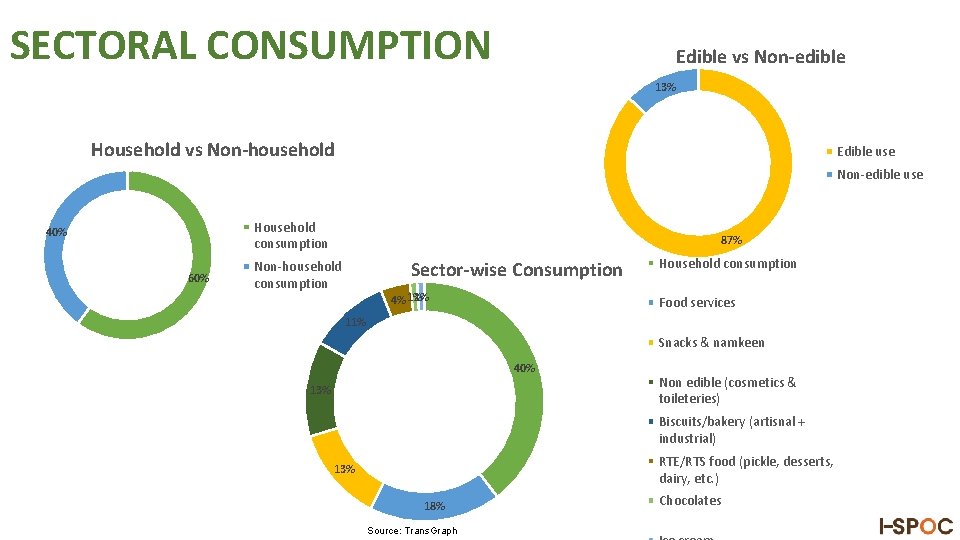
SECTORAL CONSUMPTION Edible vs Non-edible 13% Household vs Non-household Edible use Non-edible use Household consumption 40% 60% 87% Sector-wise Consumption Non-household consumption 1% 4% 1% Household consumption Food services 11% Snacks & namkeen 40% 13% Non edible (cosmetics & toileteries) Biscuits/bakery (artisnal + industrial) RTE/RTS food (pickle, desserts, dairy, etc. ) 13% 18% Source: Trans. Graph Chocolates
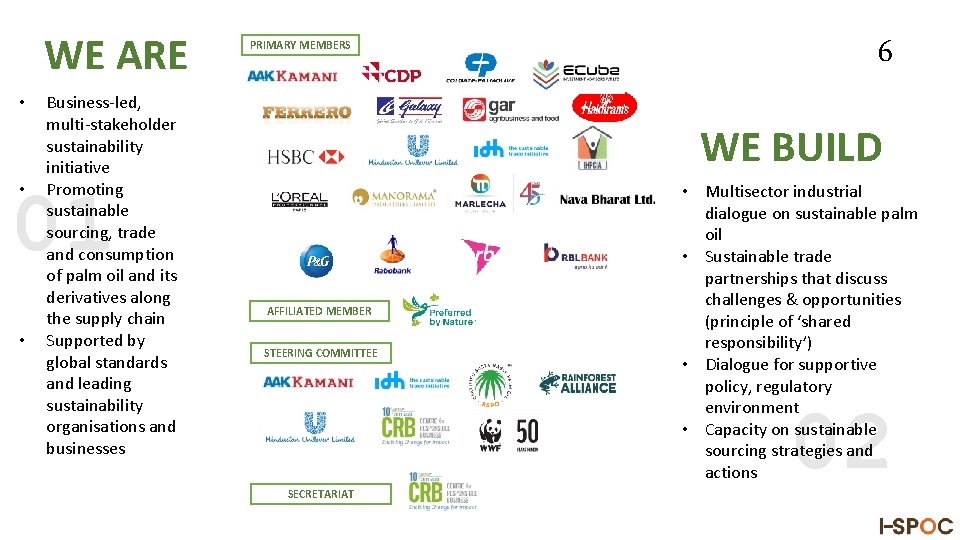
WE ARE • Business-led, multi-stakeholder sustainability initiative Promoting sustainable sourcing, trade and consumption of palm oil and its derivatives along the supply chain Supported by global standards and leading sustainability organisations and businesses PRIMARY MEMBERS WE BUILD 01 • • 6 AFFILIATED MEMBER STEERING COMMITTEE SECRETARIAT • Multisector industrial dialogue on sustainable palm oil • Sustainable trade partnerships that discuss challenges & opportunities (principle of ‘shared responsibility’) • Dialogue for supportive policy, regulatory environment • Capacity on sustainable sourcing strategies and actions 02
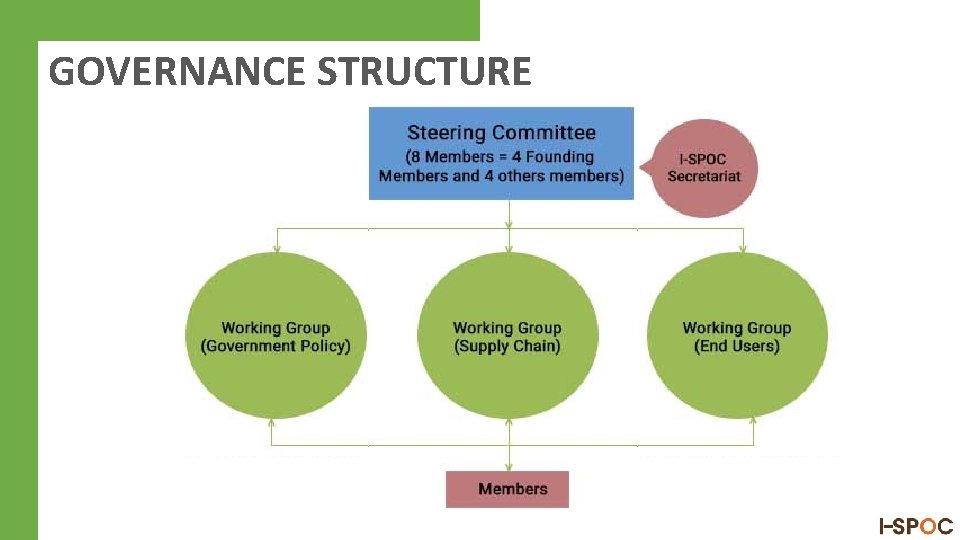
GOVERNANCE STRUCTURE
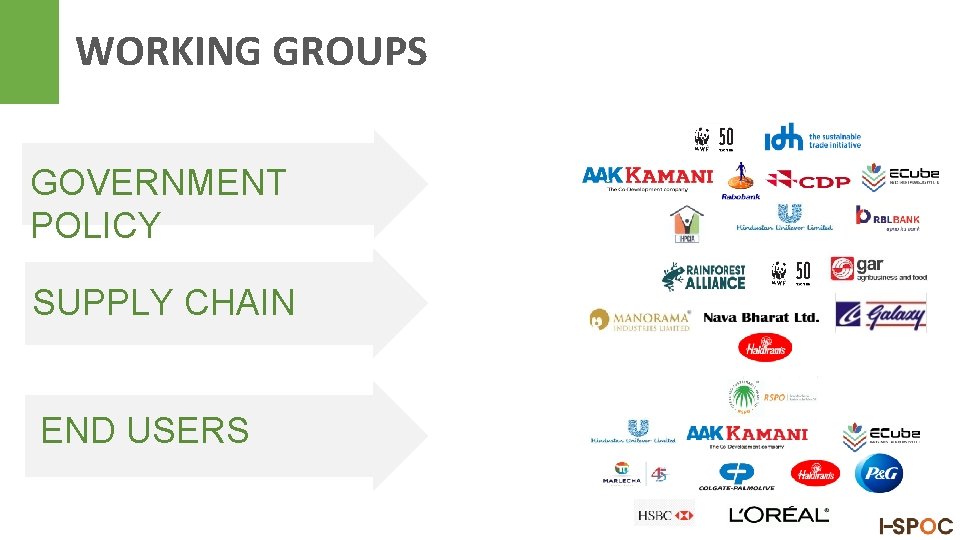
WORKING GROUPS GOVERNMENT POLICY SUPPLY CHAIN END USERS
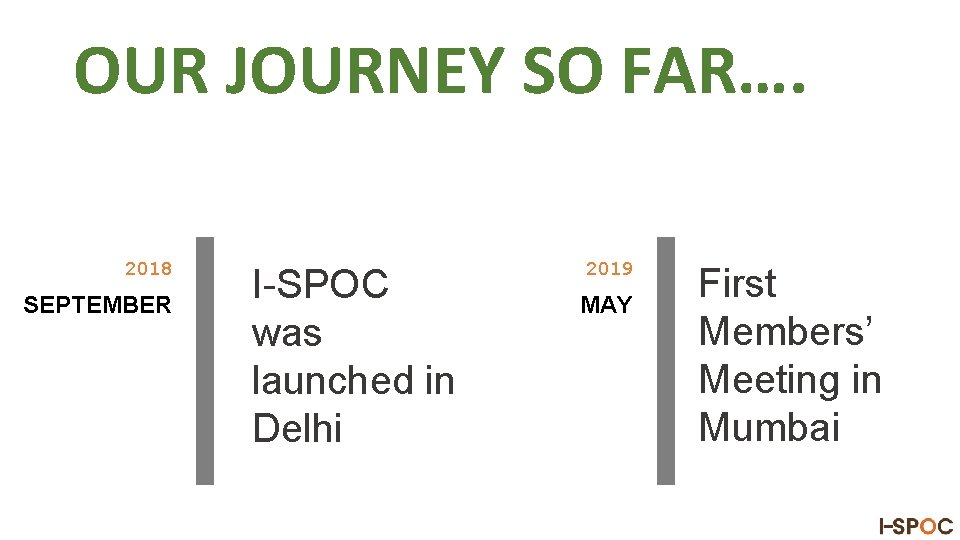
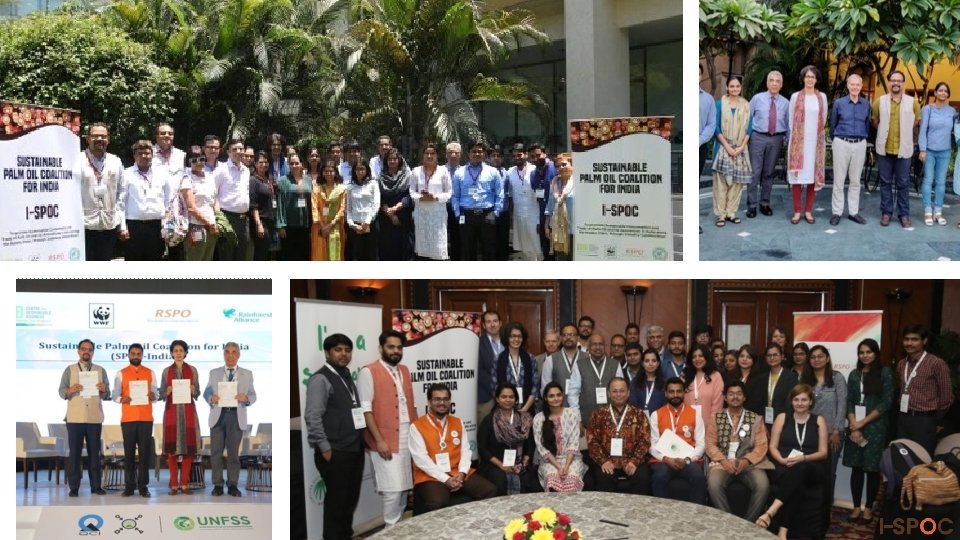
OUR JOURNEY SO FAR…. 2018 SEPTEMBER I-SPOC was launched in Delhi 2019 MAY First Members’ Meeting in Mumbai
OUR JOURNEY SO FAR…. 2019 SEPTEMBER I-SPOC completes one year 2019 NOVEMBER Second Members’ Meeting in Delhi
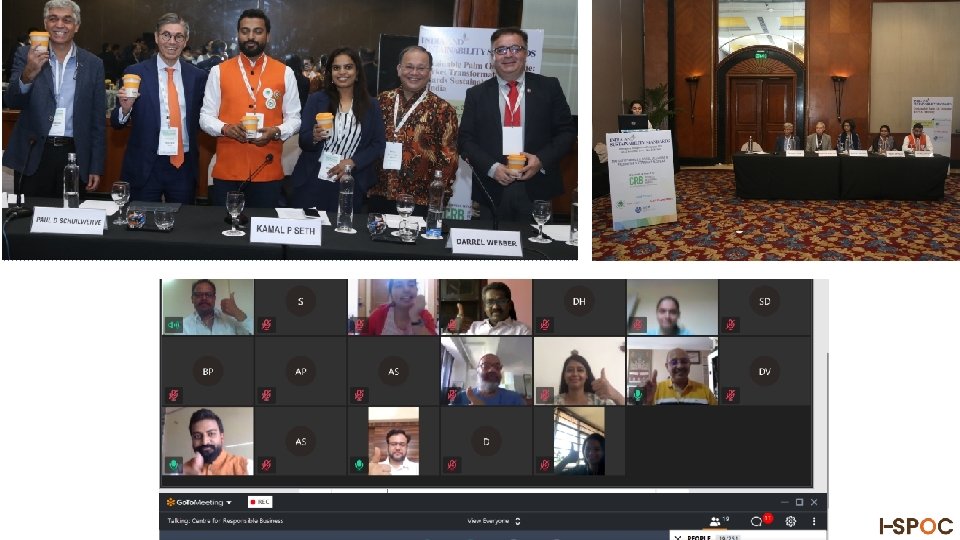
OUR JOURNEY SO FAR…. 2019 NOVEMBER CEOs Panel on Sustainable Palm Oil 2020 APRIL Third Members’ Meeting
OUR JOURNEY SO FAR…. 2020 SEPTEMBER I-SPOC Celebrated 2 Years
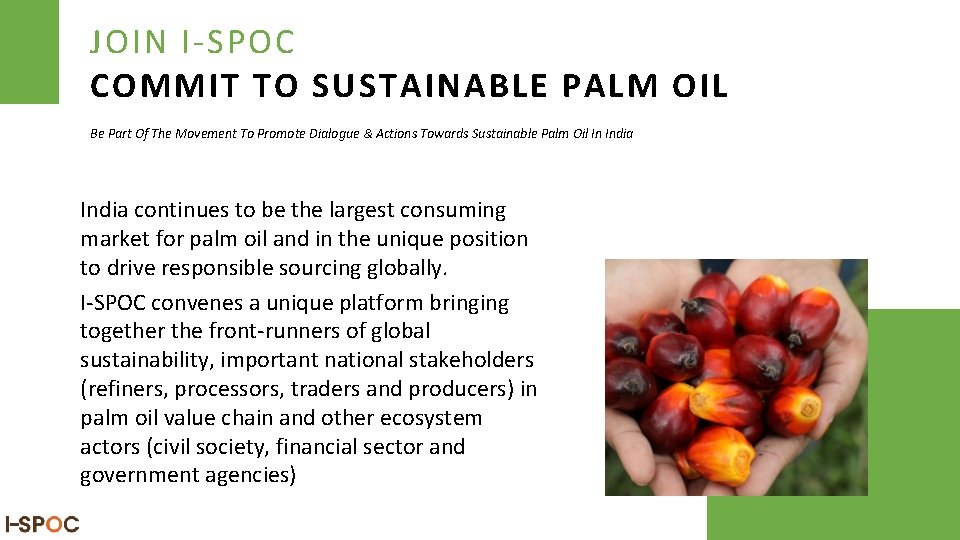
JOIN I-SPOC COMMIT TO SUSTAINABLE PALM OIL Be Part Of The Movement To Promote Dialogue & Actions Towards Sustainable Palm Oil In India continues to be the largest consuming market for palm oil and in the unique position to drive responsible sourcing globally. I-SPOC convenes a unique platform bringing together the front-runners of global sustainability, important national stakeholders (refiners, processors, traders and producers) in palm oil value chain and other ecosystem actors (civil society, financial sector and government agencies)
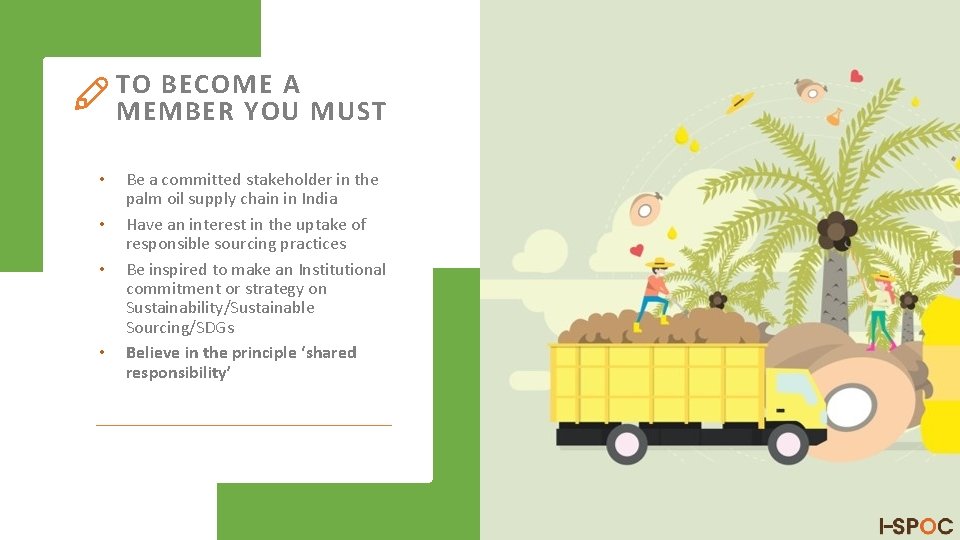
TO BECOME A MEMBER YOU MUST • • Be a committed stakeholder in the palm oil supply chain in India Have an interest in the uptake of responsible sourcing practices Be inspired to make an Institutional commitment or strategy on Sustainability/Sustainable Sourcing/SDGs Believe in the principle ‘shared responsibility’
For further information, please contact Bhavya Sharma, bhavya@c 4 rb. in
- Slides: 17