
Sustainable Management of Rural and Small Systems Workshop
![Sustainable Management of Rural and Small Systems Workshop Team Exercise Workshop [Workshop Date] |](https://slidetodoc.com/presentation_image_h2/12446f580216f287bf2e3443240b455b/image-1.jpg "Sustainable Management of Rural and Small Systems Workshop Team Exercise Workshop [Workshop Date] |")
Sustainable Management of Rural and Small Systems Workshop Team Exercise Workshop [Workshop Date] | [Workshop Location]
Welcome and Introductions Moderator: • Welcome • Purpose of Workshop • Introduction of Team Members • Participant Introductions –Name, Community, Role • Workshop Materials • Meeting Logistics • Meeting Agenda 2
Our Schedule • Welcome and Introductions • Workshop Objectives • Key Management Areas • Self Assessment Exercise • Lunch • Improving Outcomes • Practices, Tools, and Measures • Creating an Action Plan 3
Workshop Objectives • Learn about key utility management areas • Engage in a self-assessment process to understand your respective system’s, needs, wants, requirements, and options • Discuss tools, tips, and measures for performance improvement • Exchange insights and tips with other local utilities • Begin to create an action plan for moving forward 4
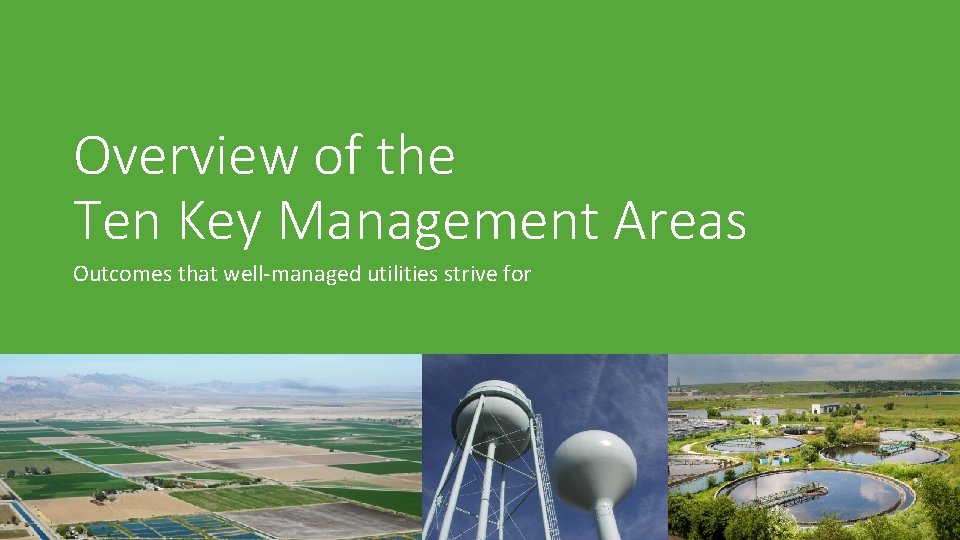
Overview of the Ten Key Management Areas Outcomes that well-managed utilities strive for
Common Challenges for Utility Managers • Aging infrastructure • Rate issues • Prioritize demands for utility expenditures • Long-term rate adequacy strategy • Customer satisfaction and confidence with services and rates 6
Common Challenges for Utility Managers • Operational issues • Labor and material costs • Regulatory compliance and new requirements • Workforce complexities • Attracting and keeping reliable and competent staff • Succession planning • Knowledgeable and engaged board members 7
The Well-Managed Utility • Ten Management Areas framed as outcomes • Building blocks for utility performance improvement: where to focus and what to strive for • Most water and wastewater utilities pay attention to these areas and likely perform well in at least some of them • Fit into, draw on, and support asset management, long-term business planning, continual improvement management systems 8
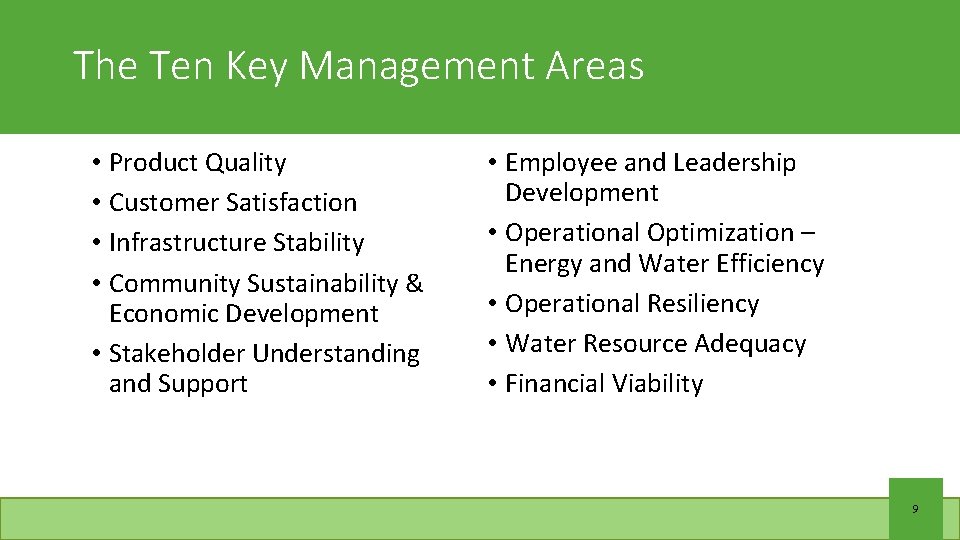
The Ten Key Management Areas • Product Quality • Customer Satisfaction • Infrastructure Stability • Community Sustainability & Economic Development • Stakeholder Understanding and Support • Employee and Leadership Development • Operational Optimization – Energy and Water Efficiency • Operational Resiliency • Water Resource Adequacy • Financial Viability 9
Product Quality • Clean and safe water • Produce potable water, treated effluent, and process residuals/recovered resources: • Full compliance with regulatory and reliability requirements • Consistent with customer, public health, and ecological needs • Consistent with local economic development and business needs and opportunities 10
Customer Satisfaction • Know what your customers expect in service, water quality, and rates • Set goals to meet these expectations • Help your customers understand the value of water • Develop a way to gather feedback from your customers, review the feedback, and then act on it 11
Employee & Leadership Development • Enable a workforce that is competent, motivated, adaptive, and safe working • Ensure employee institutional knowledge is retained and improved on over time • Create opportunities for professional and leadership development 12
Operational Optimization • Ensure ongoing, timely, cost-effective, and reliable performance improvements in all facets of operations (i. e. , continual improvement culture) • Minimize resource use, loss, and impacts from day-to-day operations (e. g. , energy and chemical use, water loss) • Maintain awareness of information and operational technology developments to anticipate and support timely adoption of improvements 13
Financial Viability • Ensure revenues adequate to recover costs, fund timely maintenance, repair, and replacement of assets, and provide for reserves • Establish predictable rates, consistent with community expectations and acceptability – discuss rate requirements with customers, board members, and other key stakeholders 14
Infrastructure Stability • Understand costs and condition for each system component • Understand operational performance factors (e. g. , pressure) • Plan for system component repair and replacement over the longterm at the lowest possible cost • Coordinate asset repair, rehabilitation, and replacement within the community to minimize disruptions and other negative consequences 15
Operational Resiliency • Identify threats to the system (legal, financial, non-compliance, environmental, safety, security, and natural disaster) – conduct all hazards vulnerability assessment • Establish acceptable risk levels that support system reliability goals • Identify how you will manage risks and plan response actions – prepare all-hazards emergency response plan 16
Community Sustainability & Economic Development • Be active in your community • Be aware of, or participate in, discussions of community and economic development • Get to know local business needs and be aware of opportunities for new residential or business customers • Align Utility Goals: to be attentive to the impacts utility decisions will have on current and future community and watershed health • Align Utility Goals: to promote community economic vitality and overall improvement 17
Water Resource Adequacy • Ensure water availability consistent with current and future customer needs: • Long-term resource supply and demand analysis • Conservation • Public education • Understand the system role in water availability • Manage operations to provide for long-term aquifer and surface water sustainability and replenishment 18
Stakeholder Understanding & Support • Create understanding and support from oversight bodies, community and watershed interests, and regulatory bodies: • • • Service levels Rate structures Operating budgets Capital improvement programs Risk management decisions • Actively engage with the community and customers: • Understand needs and interests • Promote the value of clean and safe water 19

The Self-Assessment Exercise Time to go to work!
Getting Started • Step 1: RATE your system’s level of achievement (practice and performance) for each management area • Step 2: RANK the importance of each area • Step 3: PLOT the results • Step 4: IMPROVE by exploring high achievement-related practices 21
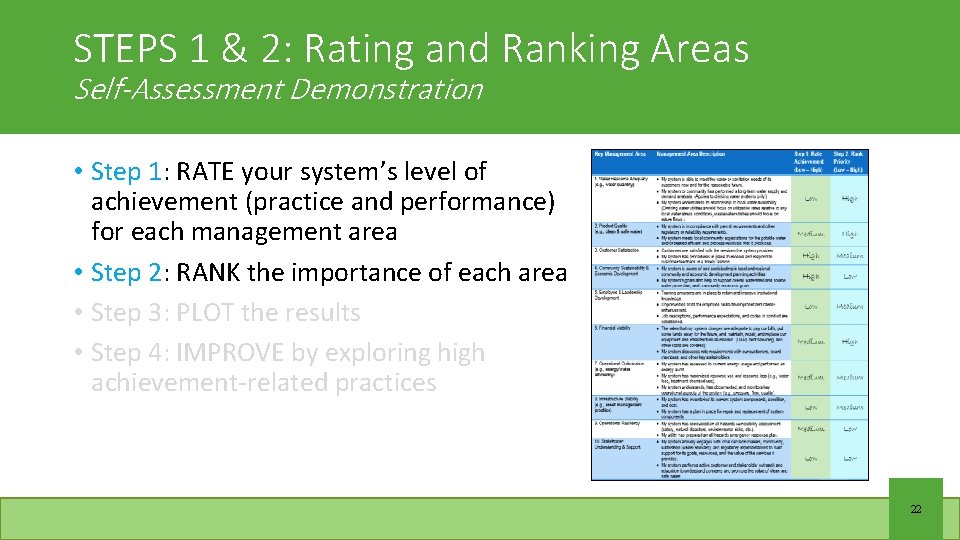
STEPS 1 & 2: Rating and Ranking Areas Self-Assessment Demonstration • Step 1: RATE your system’s level of achievement (practice and performance) for each management area • Step 2: RANK the importance of each area • Step 3: PLOT the results • Step 4: IMPROVE by exploring high achievement-related practices 22
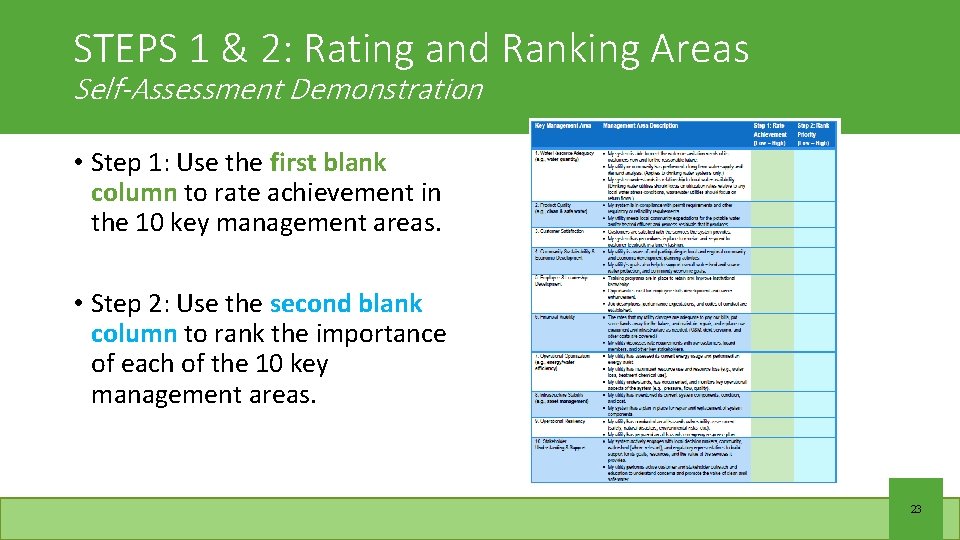
STEPS 1 & 2: Rating and Ranking Areas Self-Assessment Demonstration • Step 1: Use the first blank column to rate achievement in the 10 key management areas. • Step 2: Use the second blank column to rank the importance of each of the 10 key management areas. 23
STEP 1: Rating the Management Areas Scale from LOW to HIGH achievement • Select Low if your system has no workable practices in place for addressing this area – very low capacity and performance. • Select Medium if your system has some workable practices in place with moderate achievement, but you could improve – some capacity in place. • Select High if your system has effective, standardized, and accepted practices in place. It either usually or consistently achieves goals – capacity is high and in need of very little or no further development. 24
STEP 2: Ranking the Management Areas Scale from LOW to HIGH priority keeping in mind the following: • Current or expected challenges • Customer or stakeholder impact: reliability; quality; timeliness • Consequences of not improving: compliance; cost; credibility; health; safety • Urgency – near or long term need • Community priorities 25
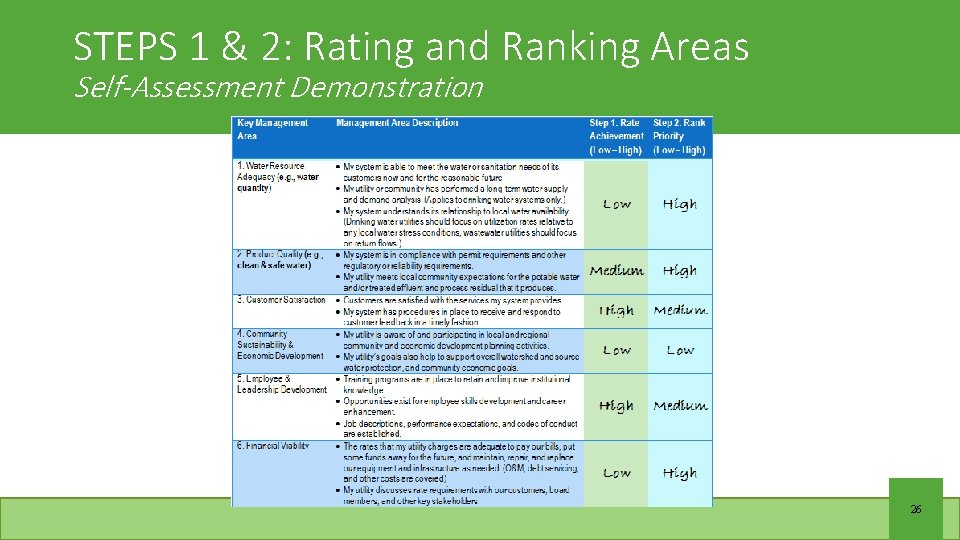
STEPS 1 & 2: Rating and Ranking Areas Self-Assessment Demonstration 26
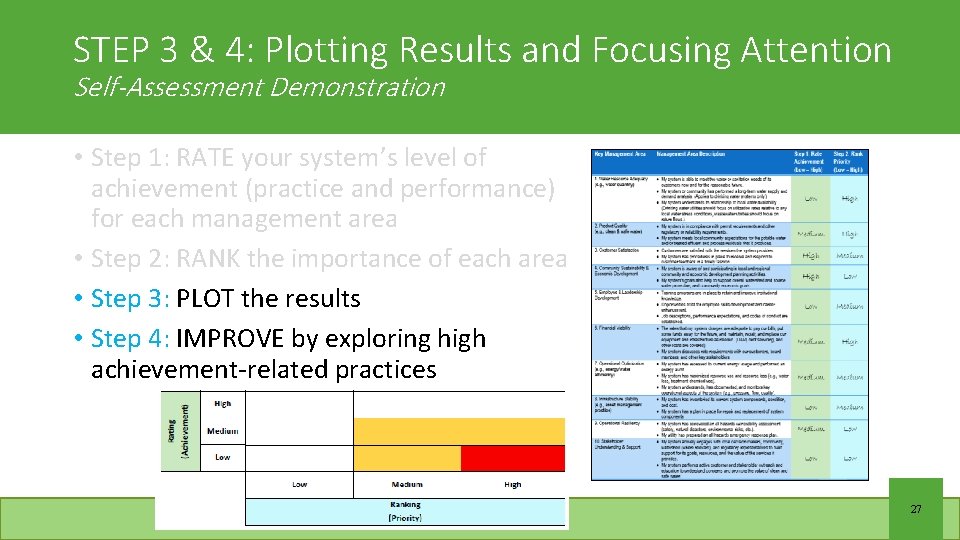
STEP 3 & 4: Plotting Results and Focusing Attention Self-Assessment Demonstration • Step 1: RATE your system’s level of achievement (practice and performance) for each management area • Step 2: RANK the importance of each area • Step 3: PLOT the results • Step 4: IMPROVE by exploring high achievement-related practices 27
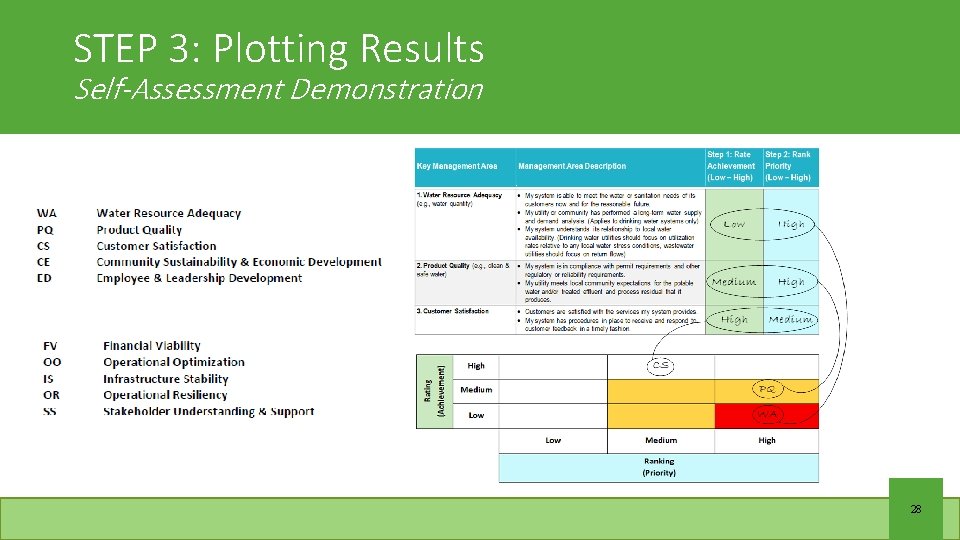
STEP 3: Plotting Results Self-Assessment Demonstration 28
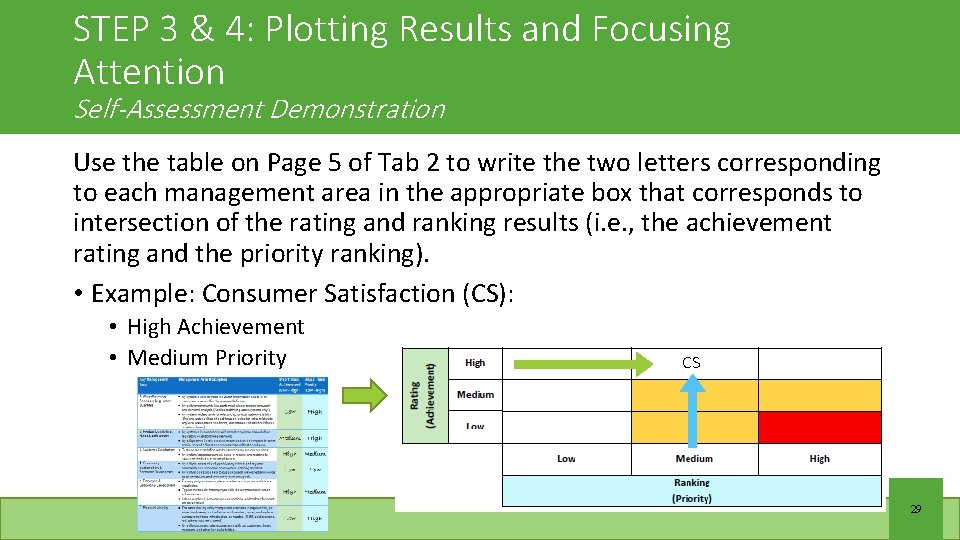
STEP 3 & 4: Plotting Results and Focusing Attention Self-Assessment Demonstration Use the table on Page 5 of Tab 2 to write the two letters corresponding to each management area in the appropriate box that corresponds to intersection of the rating and ranking results (i. e. , the achievement rating and the priority ranking). • Example: Consumer Satisfaction (CS): • High Achievement • Medium Priority CS 29
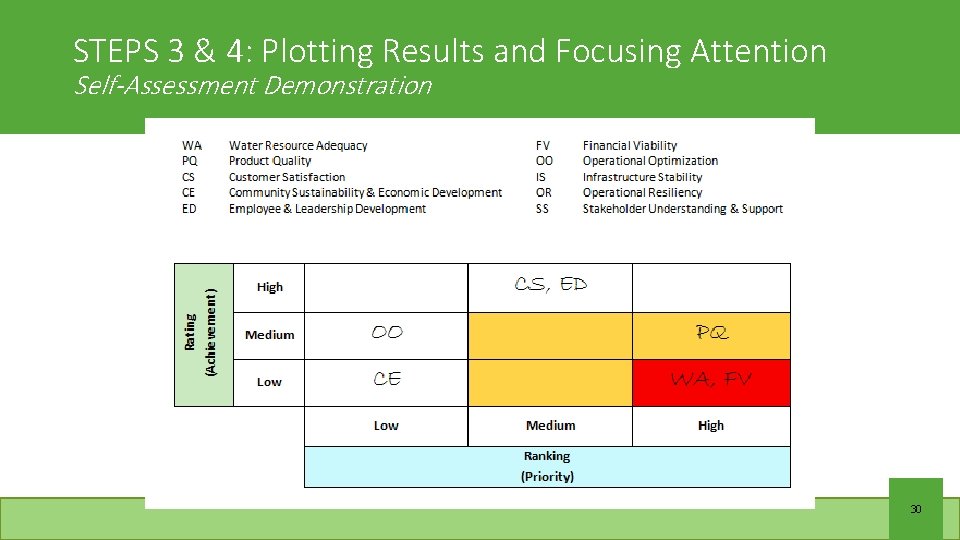
STEPS 3 & 4: Plotting Results and Focusing Attention Self-Assessment Demonstration 30
Self-Assessment Discussion Questions • Where is your utility strong? Why? • Where is there the most room for improvement? Why? • What are your areas of focus? • Why are they a priority? • Why is performance low? • Technical capacity? • Financial capacity? • Managerial capacity? • What are the commonalities and differences among table participants? 31

Improving Outcomes Creating a Plan, Taking Action, Measuring Results
Improving Outcomes 33
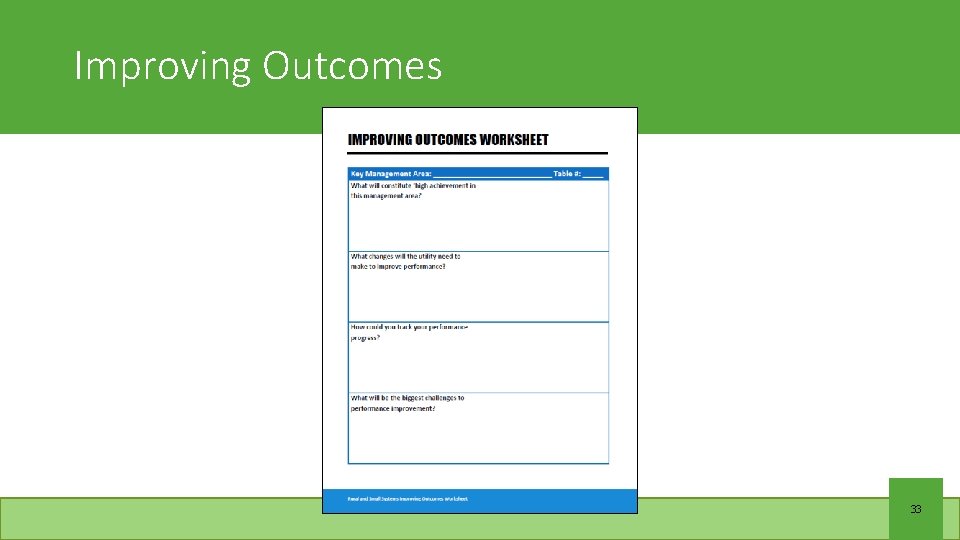
Table Activity • Each team group completes an improvement worksheet for one low achievement/high priority management area • Share perspectives on: • • What will constitute “high achievement” in this management area? What changes will the utility need to make to improve performance? How could you track your performance progress? What will be the biggest challenges to performance improvement? 34

Tools, Guides, and Other Resources Available for Your Use
Improving Outcomes: Additional Resources • Extensive Compilation of Tools and Resources • Excel Print Out in Your Packet • Electronically Available on EPA and USDA’s websites • Organized by Key Management Areas • Covers Resources from NRWA, USDA, EPA, RCAP, AWWA, WEF and others • Supplemental to Locally Available Technical Assistance and Resources 36
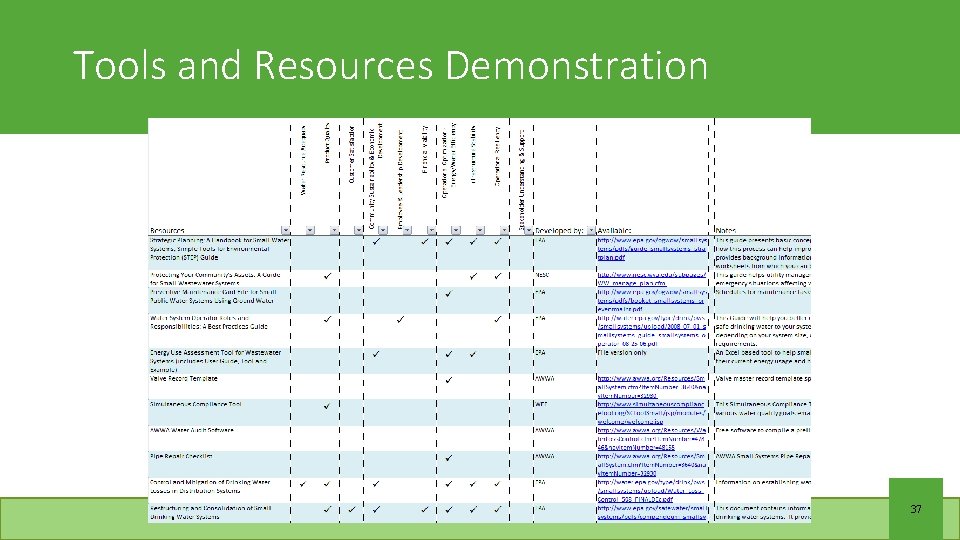
Tools and Resources Demonstration 37
Resource Highlights • Four (Typically High Priority) Management Areas • • Operational Optimization – Water/Energy Efficiency Financial Viability Stakeholder Understanding and Support Infrastructure Stability • Areas Typically of High Interest to Utility Managers and The Backbone of A Sustainably Managed System 38
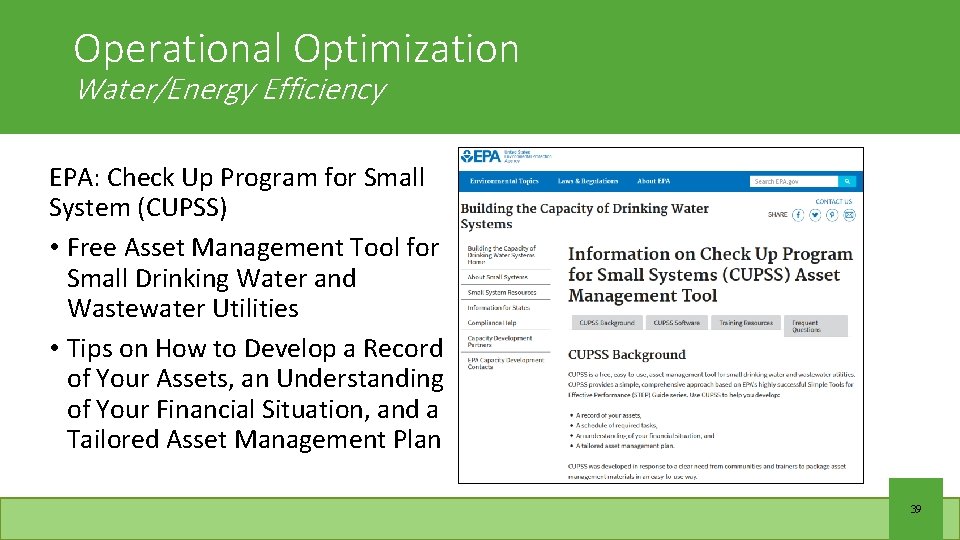
Operational Optimization Water/Energy Efficiency EPA: Check Up Program for Small System (CUPSS) • Free Asset Management Tool for Small Drinking Water and Wastewater Utilities • Tips on How to Develop a Record of Your Assets, an Understanding of Your Financial Situation, and a Tailored Asset Management Plan 39
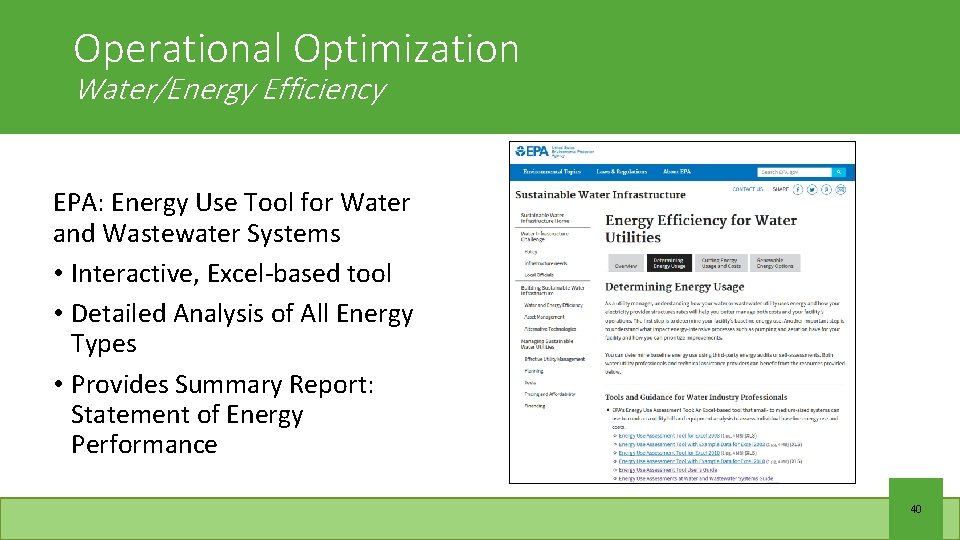
Operational Optimization Water/Energy Efficiency EPA: Energy Use Tool for Water and Wastewater Systems • Interactive, Excel-based tool • Detailed Analysis of All Energy Types • Provides Summary Report: Statement of Energy Performance 40
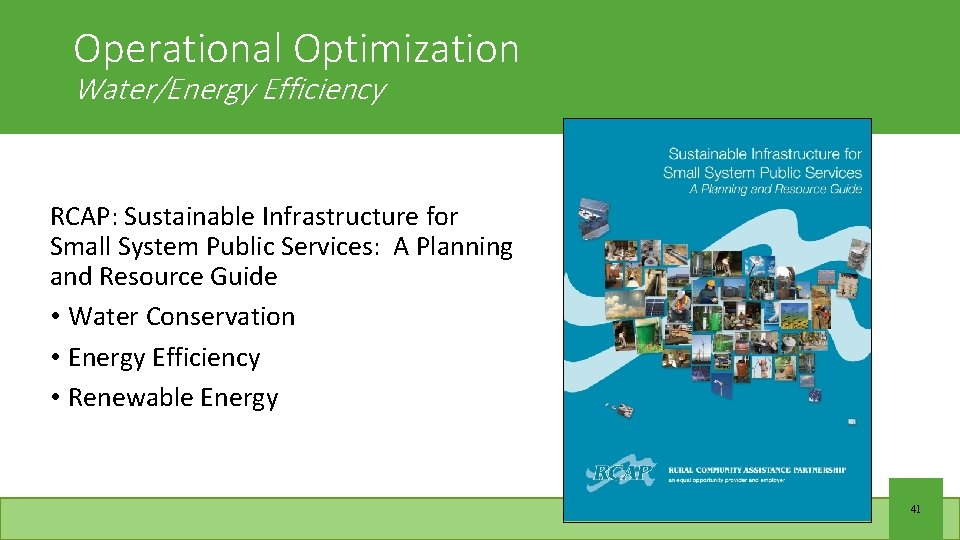
Operational Optimization Water/Energy Efficiency RCAP: Sustainable Infrastructure for Small System Public Services: A Planning and Resource Guide • Water Conservation • Energy Efficiency • Renewable Energy 41
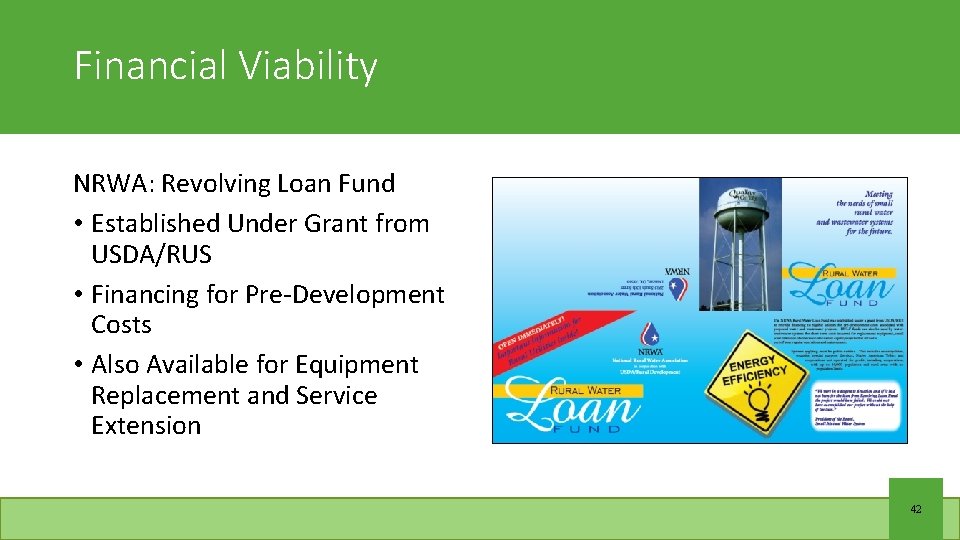
Financial Viability NRWA: Revolving Loan Fund • Established Under Grant from USDA/RUS • Financing for Pre-Development Costs • Also Available for Equipment Replacement and Service Extension 42
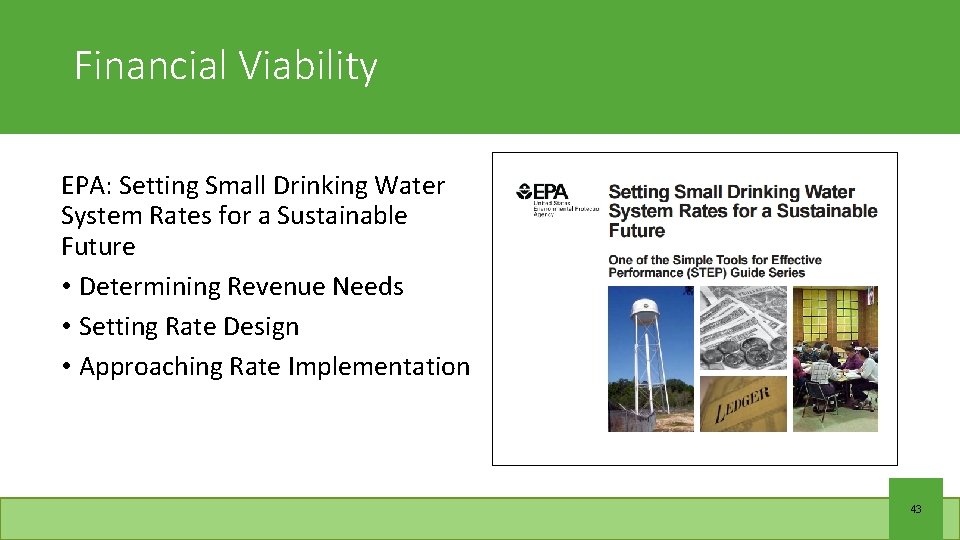
Financial Viability EPA: Setting Small Drinking Water System Rates for a Sustainable Future • Determining Revenue Needs • Setting Rate Design • Approaching Rate Implementation 43
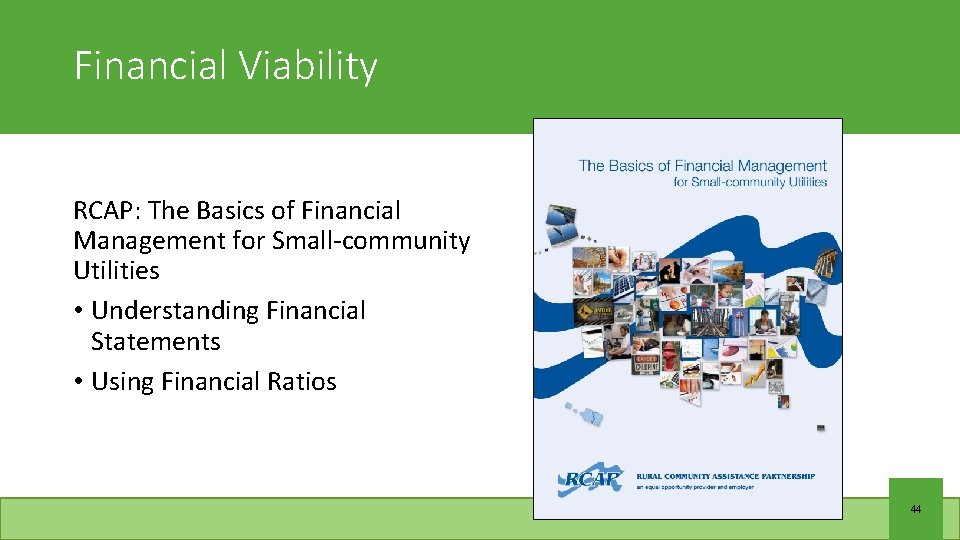
Financial Viability RCAP: The Basics of Financial Management for Small-community Utilities • Understanding Financial Statements • Using Financial Ratios 44
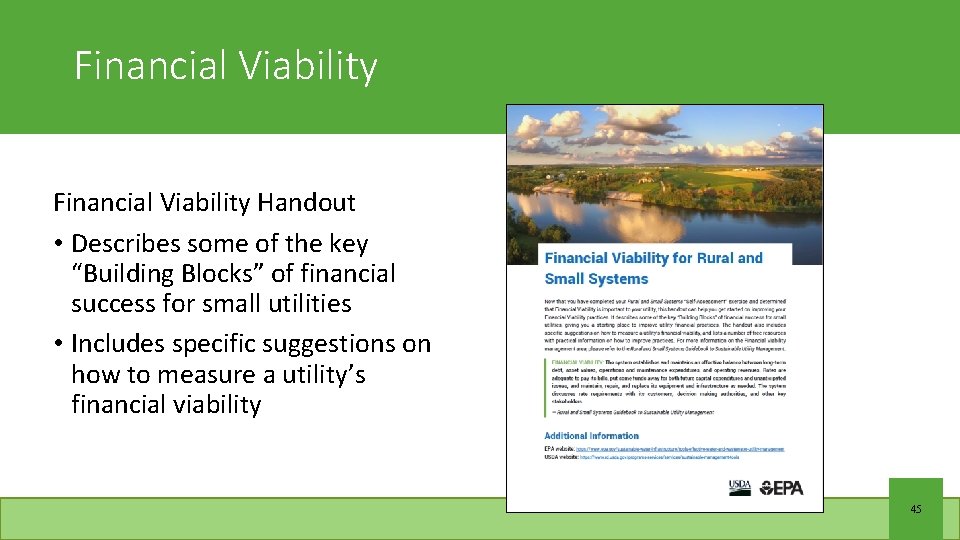
Financial Viability Handout • Describes some of the key “Building Blocks” of financial success for small utilities • Includes specific suggestions on how to measure a utility’s financial viability 45
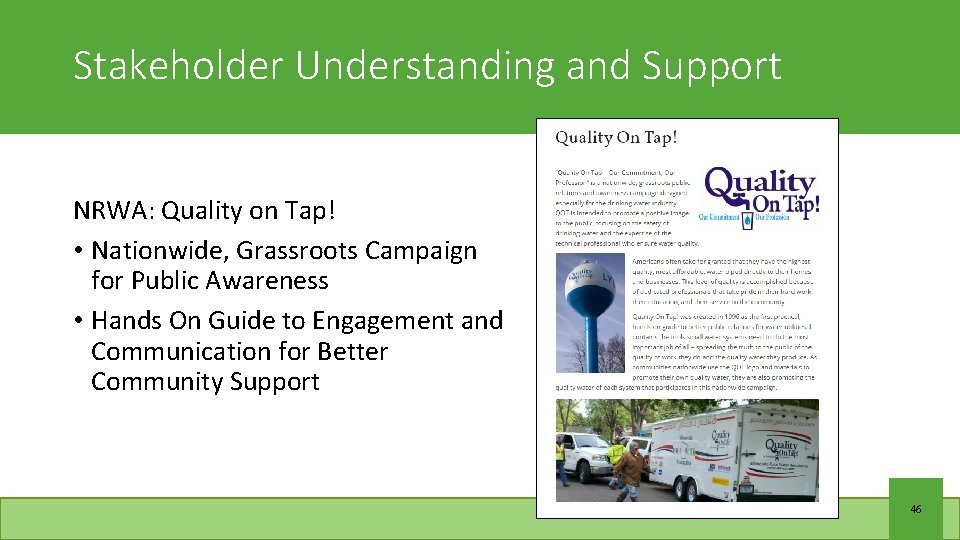
Stakeholder Understanding and Support NRWA: Quality on Tap! • Nationwide, Grassroots Campaign for Public Awareness • Hands On Guide to Engagement and Communication for Better Community Support 46
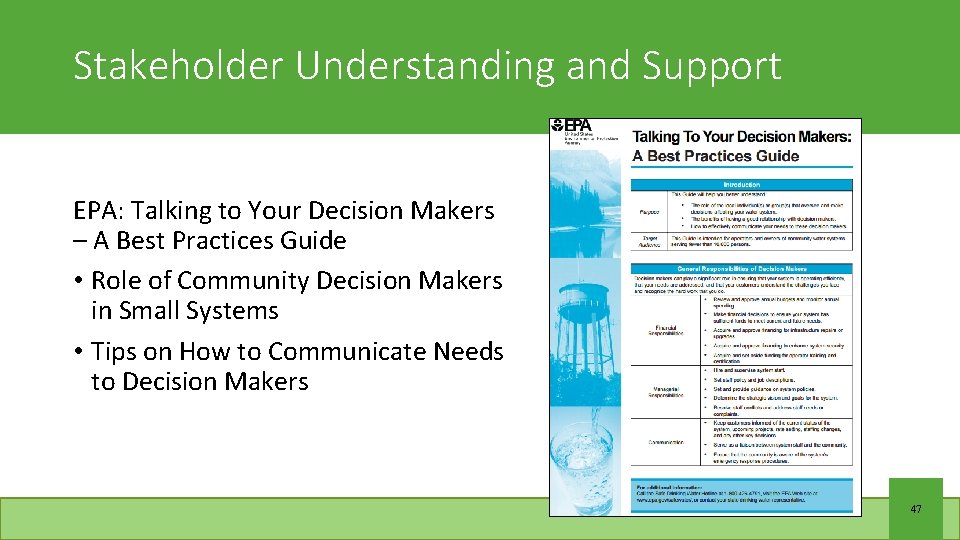
Stakeholder Understanding and Support EPA: Talking to Your Decision Makers – A Best Practices Guide • Role of Community Decision Makers in Small Systems • Tips on How to Communicate Needs to Decision Makers 47
Stakeholder Understanding and Support RCAP: The Big Guide for Small Systems: A Resource for Board Members • Water and Wastewater Treatment Basics • Regulatory Responsibilities • Board Business • Financial Duties and Responsibilities 48
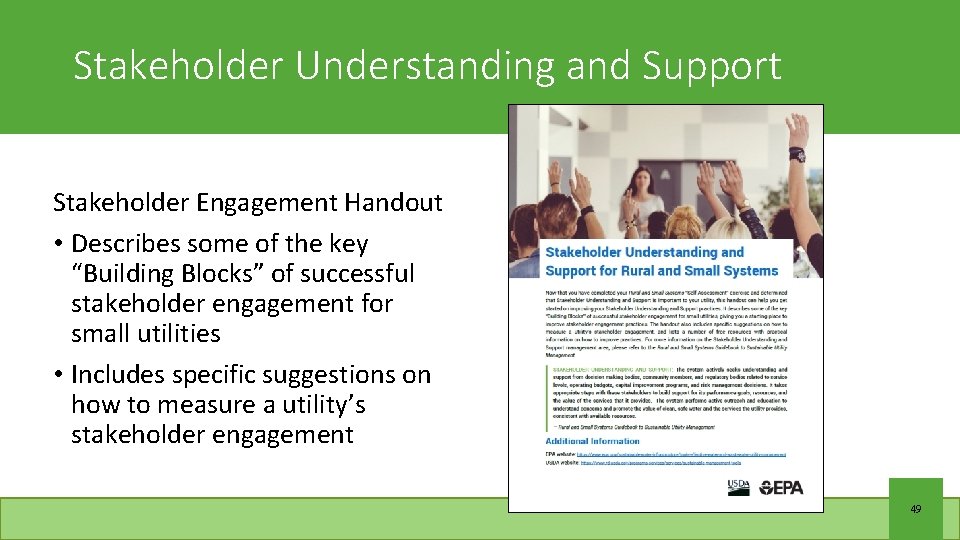
Stakeholder Understanding and Support Stakeholder Engagement Handout • Describes some of the key “Building Blocks” of successful stakeholder engagement for small utilities • Includes specific suggestions on how to measure a utility’s stakeholder engagement 49
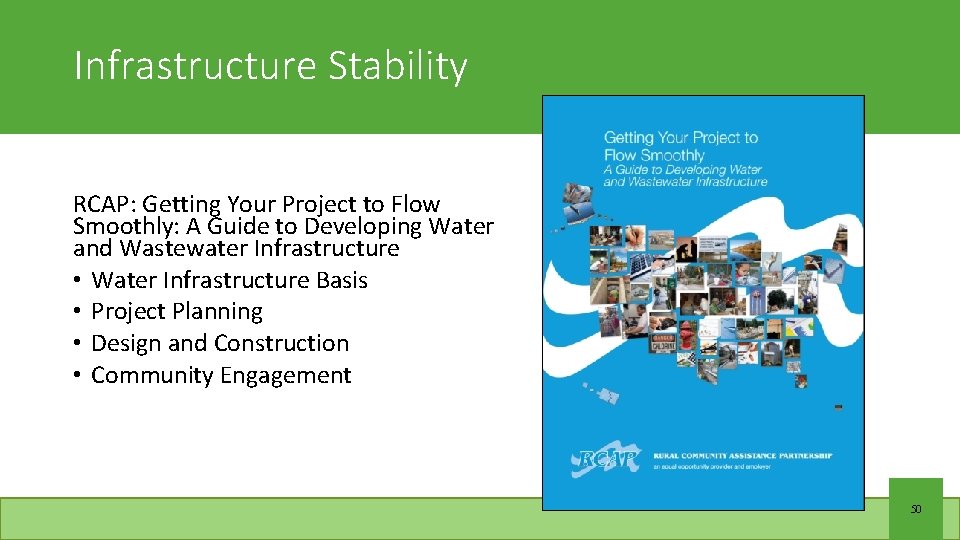
Infrastructure Stability RCAP: Getting Your Project to Flow Smoothly: A Guide to Developing Water and Wastewater Infrastructure • Water Infrastructure Basis • Project Planning • Design and Construction • Community Engagement 50
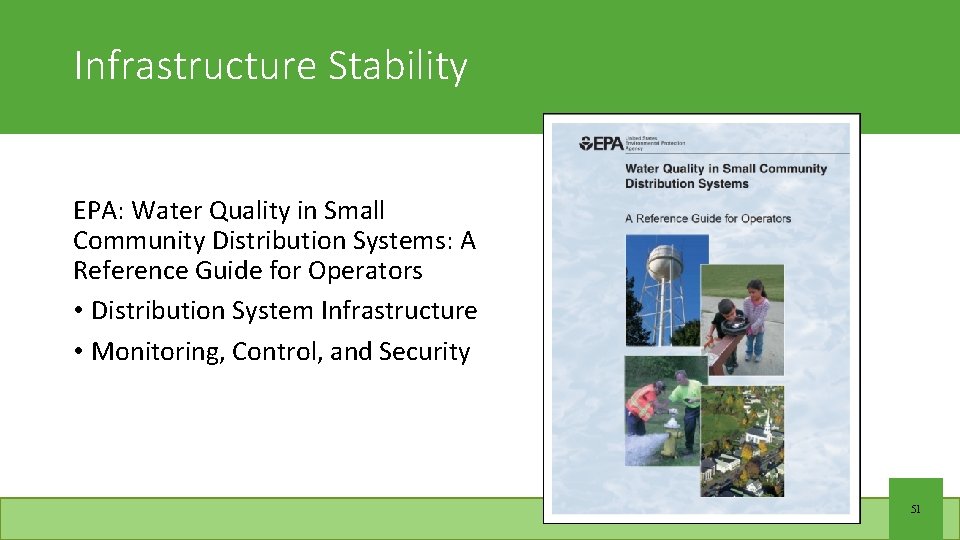
Infrastructure Stability EPA: Water Quality in Small Community Distribution Systems: A Reference Guide for Operators • Distribution System Infrastructure • Monitoring, Control, and Security 51
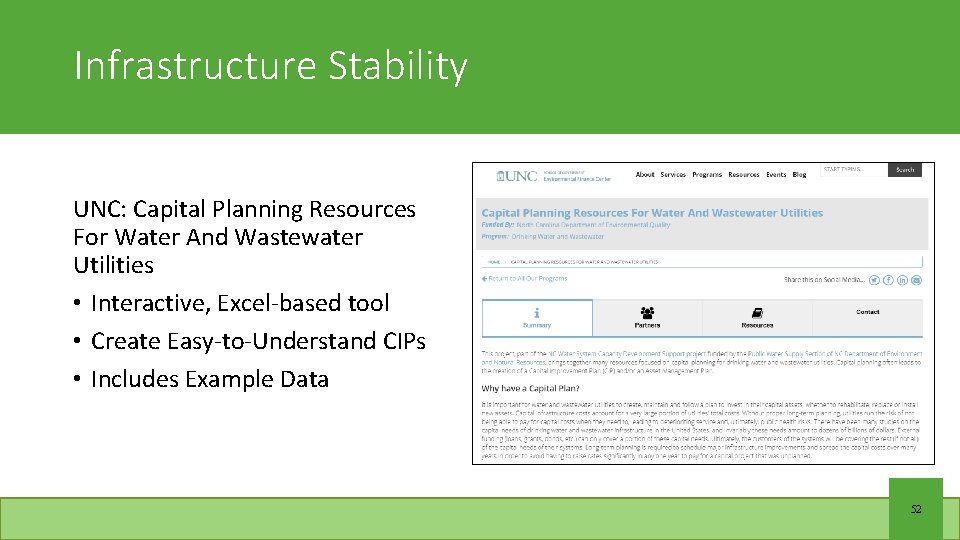
Infrastructure Stability UNC: Capital Planning Resources For Water And Wastewater Utilities • Interactive, Excel-based tool • Create Easy-to-Understand CIPs • Includes Example Data 52
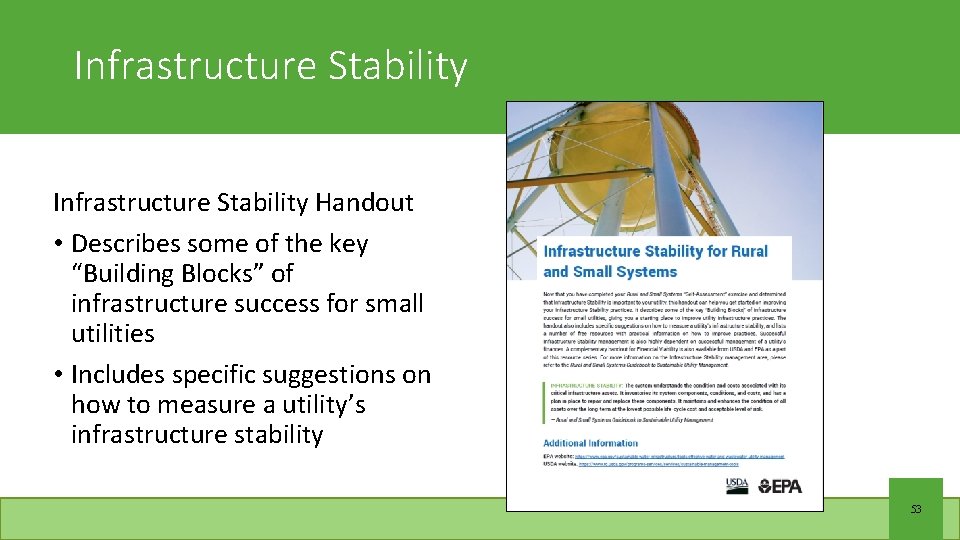
Infrastructure Stability Handout • Describes some of the key “Building Blocks” of infrastructure success for small utilities • Includes specific suggestions on how to measure a utility’s infrastructure stability 53
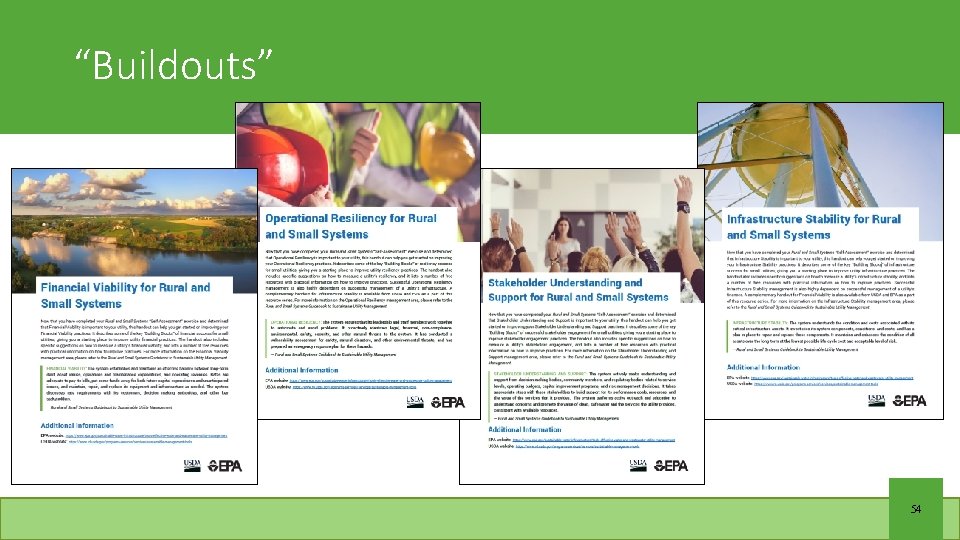
“Buildouts” 54
Tips from Previous Improving Outcomes Exercises • Key management areas selected and discussed at previous workshops: • • • Stakeholder Understanding and Support Infrastructure Stability Financial Viability Employee and Leadership Development Operational Resiliency 55
Stakeholder Understanding and Support • High Achievement: • Capital improvement plan or other document that summarizes utility priorities and can be shared with utility board • Establish standard operating procedures for utility staff that address communication • Changes Needed: • Educate stakeholders about utility needs • Create ongoing opportunities for stakeholders and utility to interact (e. g. , tours of facility) 56
Infrastructure Stability • High Achievement: • Capital improvement plan • Inventory of system components, location, installation date, and condition • Understanding of system operating parameters (e. g. , pressure) • Changes Needed: • Making time to support an incremental approach (e. g. , maintenance and repair driven) • Ability to do smaller projects and upgrades annually 57
Financial Viability • High Achievement: • Funds set aside for reserves • Asset management plans, short and long term plans, and quarterly budget reviews • Utility board is knowledgeable about financial issues and system maintenance and repairs • Changes Needed: • • Good practices in place for rates and shut-offs Better communication between elected officials, utility staff and consumer Independent rate study Document priorities for system improvements 58
Employee and Leadership Development • High Achievement: • Written job descriptions • Clear performance expectations • Staff are cross-trained • Changes Needed: • Develop neighboring system relationships for staff to learn from each other • Create merit-based initiatives to reward high performance (e. g. , additional leave days, recognition, monetary awards) 59
Operational Resiliency • High Achievement: • Emergency response plans, operations plans, shut-off checklists for equipment • Drill emergency response plan • Certify staff and board members • Changes Needed: • Ensure staff and board know where all emergency documentation is kept • Have contractor support lined up in case of emergency 60

Creating an Action Plan Where do we go from here?
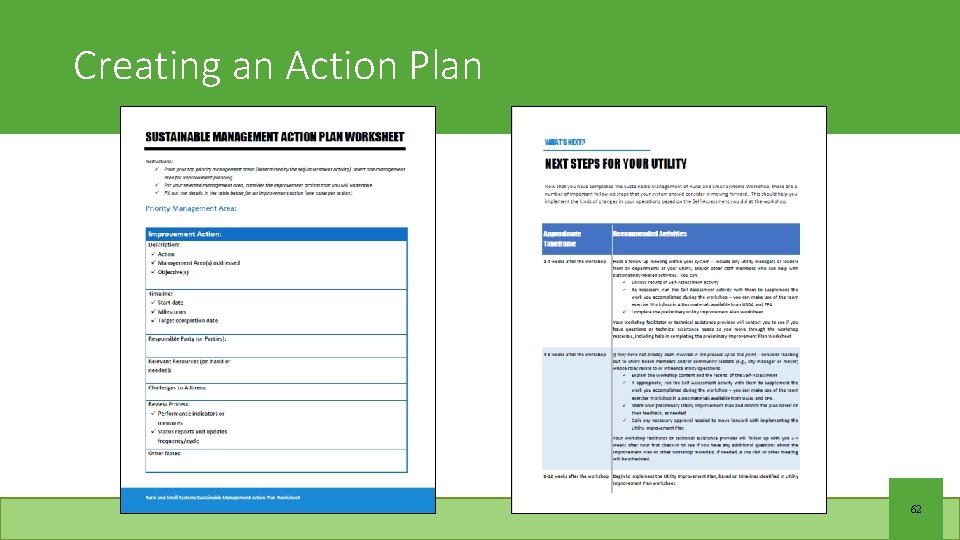
Creating an Action Plan 62
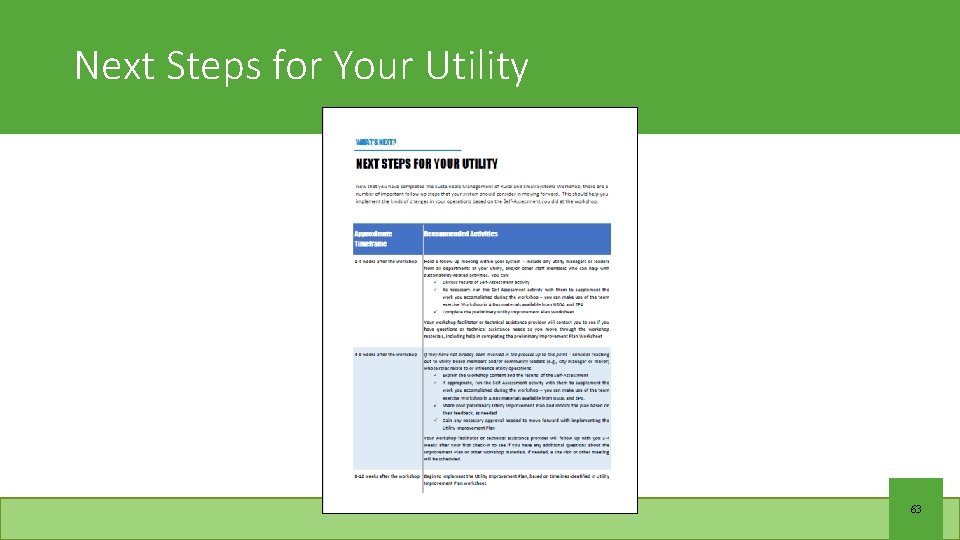
Next Steps for Your Utility 63
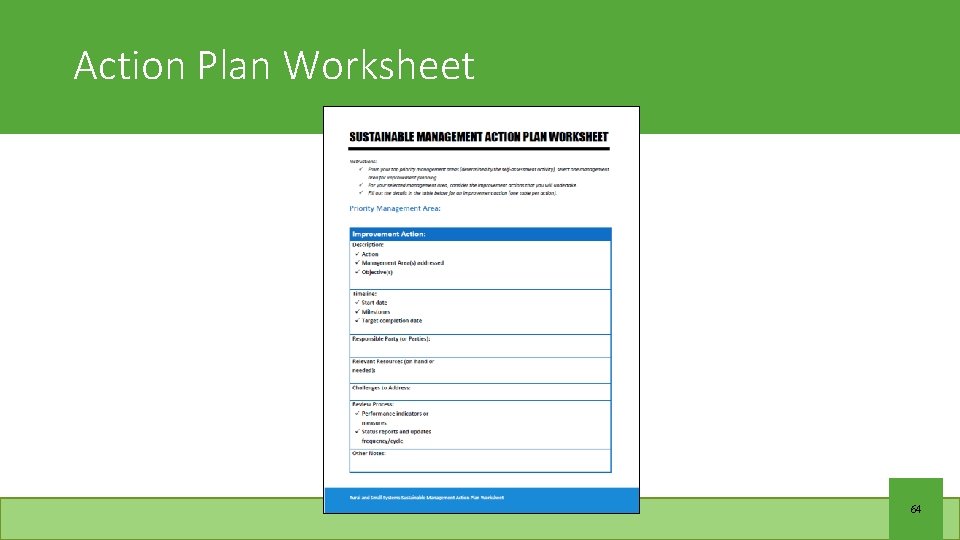
Action Plan Worksheet 64
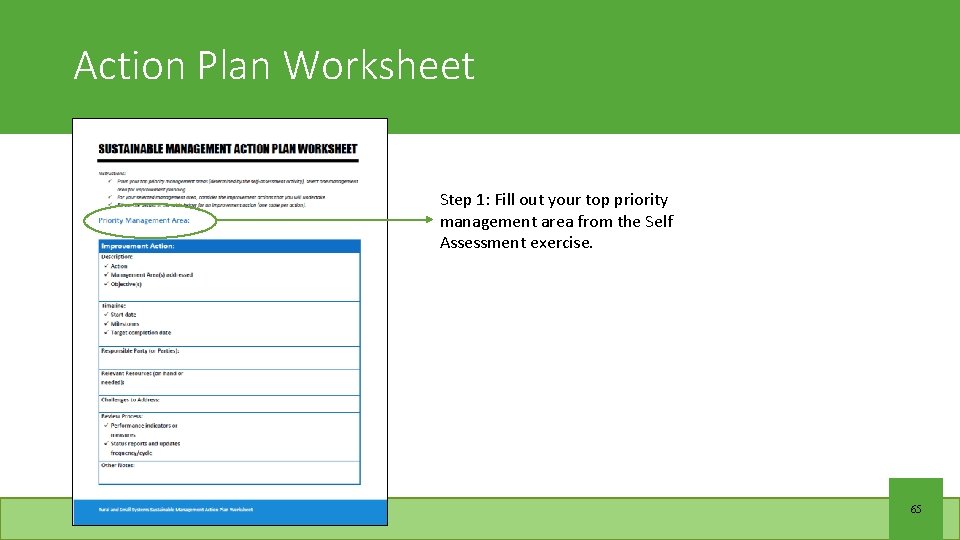
Action Plan Worksheet Step 1: Fill out your top priority management area from the Self Assessment exercise. 65
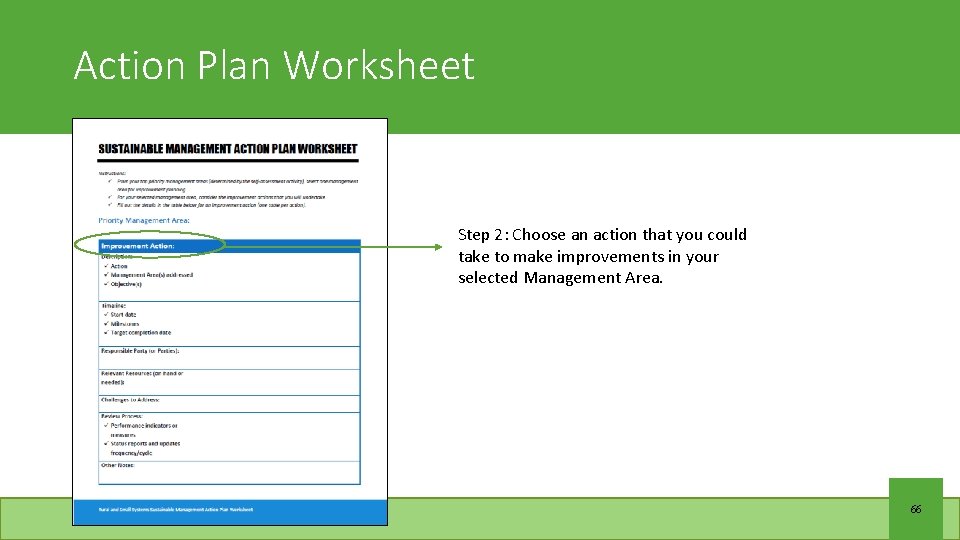
Action Plan Worksheet Step 2: Choose an action that you could take to make improvements in your selected Management Area. 66
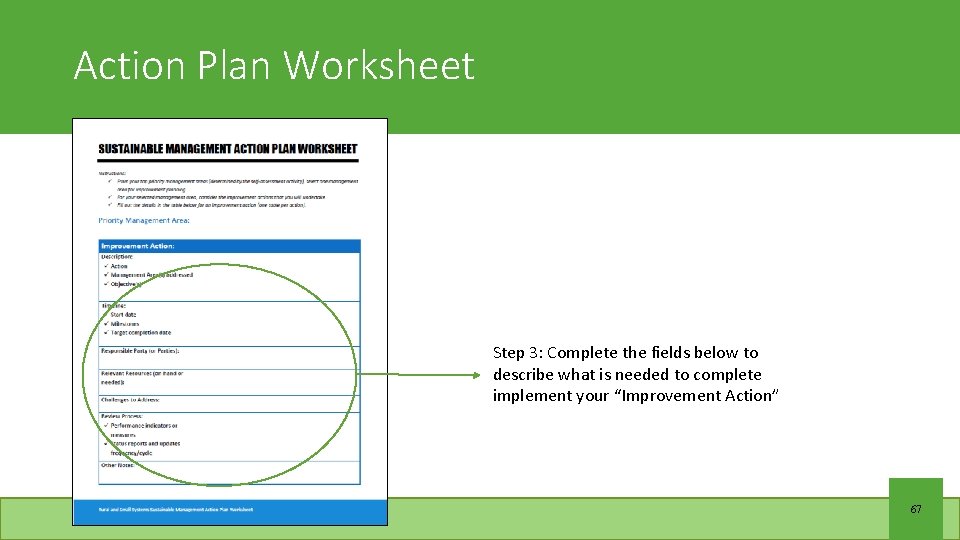
Action Plan Worksheet Step 3: Complete the fields below to describe what is needed to complete implement your “Improvement Action” 67
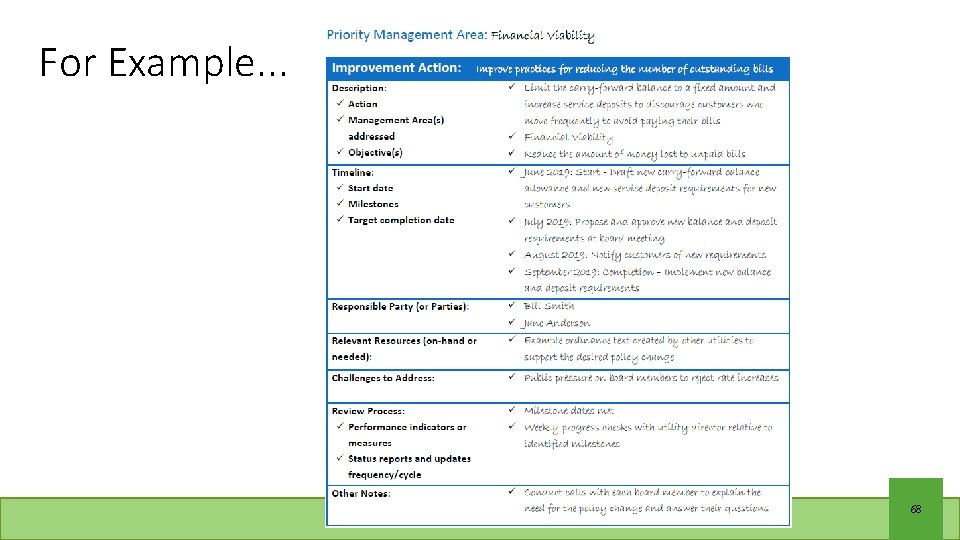
For Example. . . 68

Feedback Session Please complete your evaluation forms. Thank you!
- Slides: 69