
Sustainable Management of Human Water Cycle through Intelligent
Sustainable Management of Human Water Cycle through Intelligent Drainage System BRICKWIZARDS Akash, Arjun, Ashank, Palak, Simrah, Sohan, Tanisha

Introduction • Water is an essential building block of life, and is constantly moving in a cycle. • Water, food and energy are all dependent on each other and scientists and engineers are researching new, sustainable ways to meet out water needs. • Water is also constantly moving through the human water cycle. • We use water for: It is very important to sustainably and • Hydrating our bodies • Powering our home efficiently manage the human water • Watering crops cycle • Processing waste
What are we trying to do? Problem statement: • Improve existing ways to transport water in the human water cycle Solution: • Intelligent Drainage System (IDS) to sustainably manage storm‐water runoff
Problem • Lakes, rivers and groundwater are our leading sources of fresh water. • Storm-water runoff is recognized nationally as the leading cause of fresh water pollution today. When storm-water is managed like a waste product, it exacerbates flooding and becomes contaminated with pollutants. • Urbanization has fundamentally altered the way that water moves through the landscape. When rainwater can’t soak into the ground, it runs along streets and parking lots and picks up pollutants • According to the source (CIA. gov), North America is the most urbanized continent worldwide, with 82 percent of the population living in cities with 1% increase every year • 55% of all storm-water in urban areas runs off causing water pollution. Storm water runoffs from a variety of sources such as parking lots, highways, open land, rangeland, residential areas and commercial areas can enter waterways directly • 3. 5 M Americans get sick each year after swimming, boating, fishing or otherwise using water they thought was safe
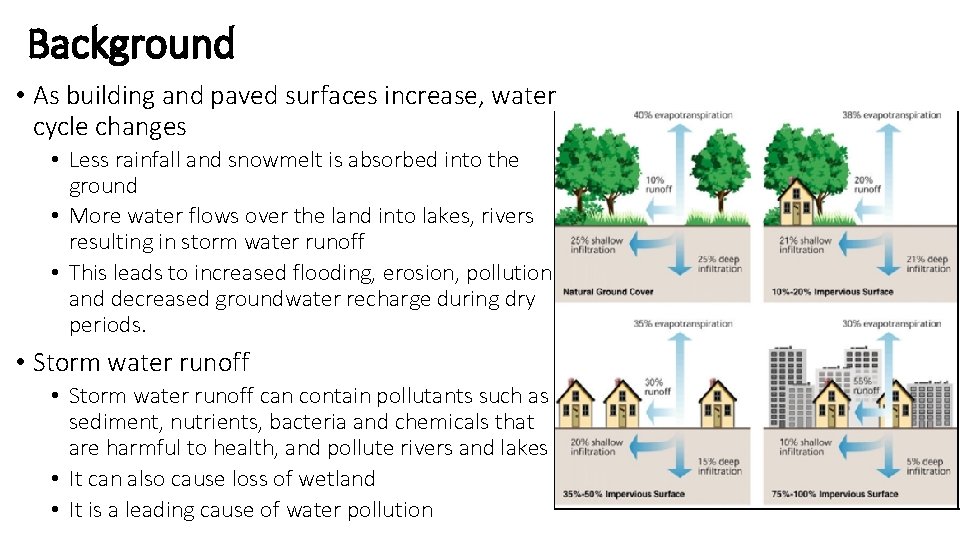
Background • As building and paved surfaces increase, water cycle changes • Less rainfall and snowmelt is absorbed into the ground • More water flows over the land into lakes, rivers resulting in storm water runoff • This leads to increased flooding, erosion, pollution and decreased groundwater recharge during dry periods. • Storm water runoff can contain pollutants such as sediment, nutrients, bacteria and chemicals that are harmful to health, and pollute rivers and lakes • It can also cause loss of wetland • It is a leading cause of water pollution
Today’s System – (More background data) • Historically, as urbanization occurred and storm drainage infrastructure systems were developed in this country, the primary concern was to limit nuisance and potentially damaging flooding due to the large volumes of storm water runoff that are generated • None of the systems were designed to be environmentally friendly • Storm water management traditionally was, and still is in many cases, a flood control rather than a quality control program. • Top concerns that governments are focused to improve Human water cycle: • Minimizing directly connected impervious surfaces • Providing storage and filtration systems • Reducing pollution • Manage costs • In fact, planting trees, restoring wetlands, and creating green roofs are often the most cost-effective ways to minimize storm-water runoff. • A single mature tree with a thirty-foot crown can keep 4, 600 gallons of water each year. For less than $300, 000, it’s possible to construct an artificial wetland that can intercept 3. 25 million gallons of storm-water
Our Solution: • Intelligent Drainage System consists of 3 main parts • Soil moisture sensors and a system of valves that sense the storm water • Eco‐friendly rooftop garden at the top the building to manage the storm water runoff • Filtration and storage systems to sustainably transport water for human use
IDS Prototype– HOW IT WORKS • To manage storm‐water runoff, we are building a sponge city, and using the properties of sponge in a eco‐friendly way. • We built a prototype building using wood, with a eco‐roof. • The eco‐roof has 2 inches of soil and plants. • Every foot of the root system holds 2 inches of storm‐water and so the prototype holds 1/3 of an inch of water • Rooftop garden has sponge like properties which helps to slow down the rate of storm water run ‐ 33% reduction in storm water runoff • We have mesh, gravel, sand saw dust to filter water as it flows slowly down through the rooftop garden • Top pollutants such as sediments, floatables and objects are naturally filtered • We also plan to compost and enrich the soil with fruit peels. This also helps in filtering as they absorb dyes, pesticides and some metal particles • Rooftop garden also regulates temperature of the building helping in energy conservation as part of the human water cycle
Prototype – Sensors & Storage • To manage the excess water we are using soil moisture sensors to detect if water is present and the measure degree of wetness. • We used a cheap Arduino system to build the prototype and our program looks for soil moisture values and opens or closes the valve based on the water threshold • The valve opens when water is detected, filtered and it is taken to a system of pipes to a reservoir in the city • We store the excess water in the main reservoir (around a park) and reduce the storm water runoff going into the streams and rivers • If the reservoir is full, the valve is closed to prevent water from back‐flowing • The water is stored in the reservoir for use in low rainfall season. It is pumped and filtered for human use (agriculture, toilets and maintaining the rooftop garden) • We added a filter to remove pollutants that are not removed by the rooftop garden before pumping the water back to people
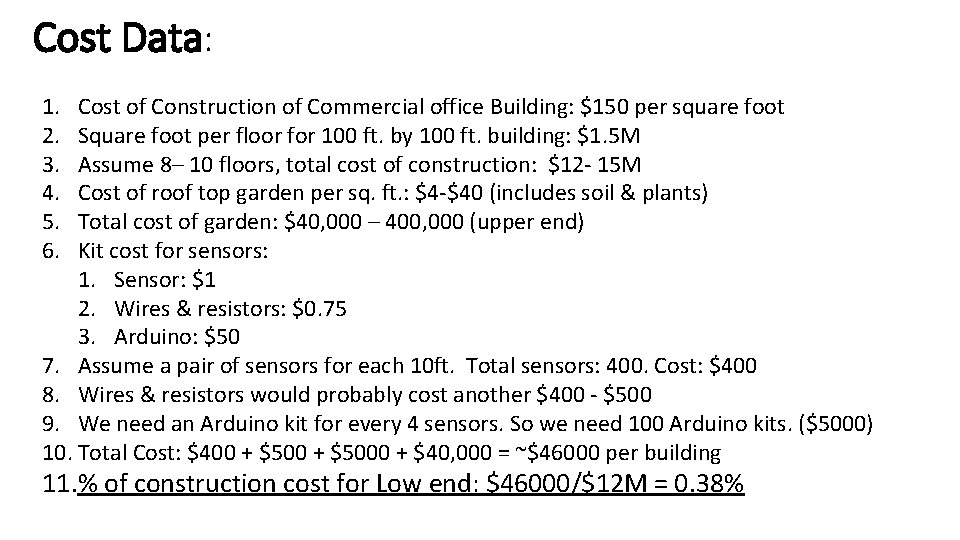
Cost Data: 1. 2. 3. 4. 5. 6. Cost of Construction of Commercial office Building: $150 per square foot Square foot per floor for 100 ft. by 100 ft. building: $1. 5 M Assume 8– 10 floors, total cost of construction: $12‐ 15 M Cost of roof top garden per sq. ft. : $4‐$40 (includes soil & plants) Total cost of garden: $40, 000 – 400, 000 (upper end) Kit cost for sensors: 1. Sensor: $1 2. Wires & resistors: $0. 75 3. Arduino: $50 7. Assume a pair of sensors for each 10 ft. Total sensors: 400. Cost: $400 8. Wires & resistors would probably cost another $400 ‐ $500 9. We need an Arduino kit for every 4 sensors. So we need 100 Arduino kits. ($5000) 10. Total Cost: $400 + $5000 + $40, 000 = ~$46000 per building 11. % of construction cost for Low end: $46000/$12 M = 0. 38%
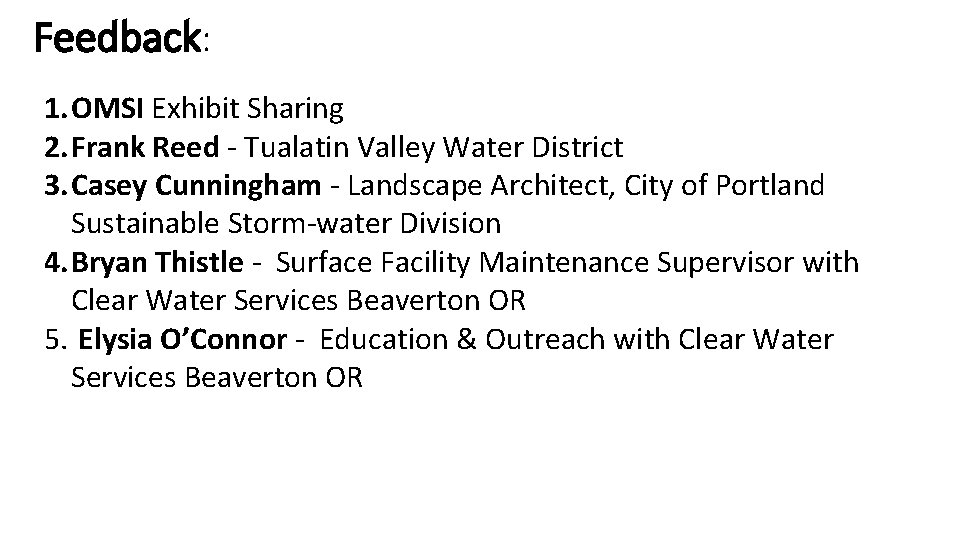
Feedback: 1. OMSI Exhibit Sharing 2. Frank Reed ‐ Tualatin Valley Water District 3. Casey Cunningham ‐ Landscape Architect, City of Portland Sustainable Storm‐water Division 4. Bryan Thistle ‐ Surface Facility Maintenance Supervisor with Clear Water Services Beaverton OR 5. Elysia O’Connor ‐ Education & Outreach with Clear Water Services Beaverton OR
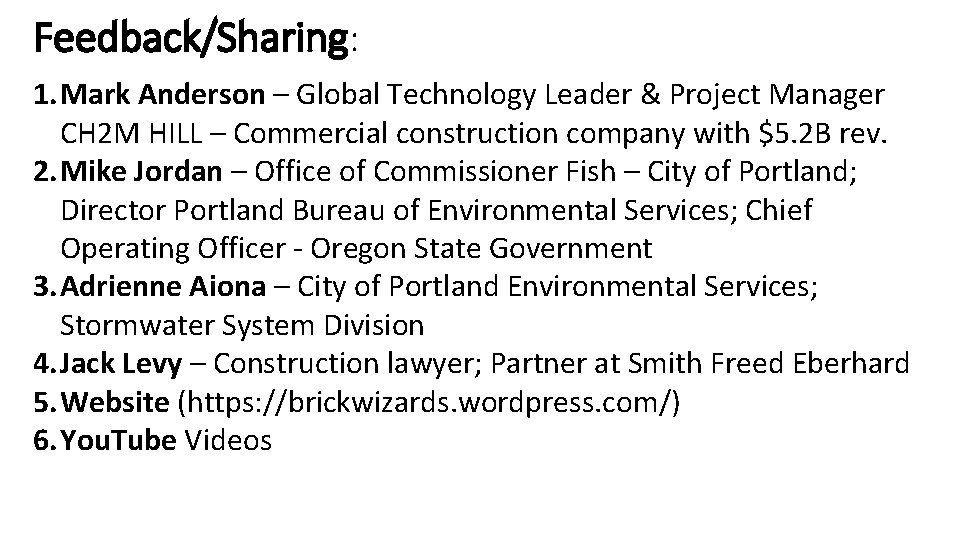
Feedback/Sharing: 1. Mark Anderson – Global Technology Leader & Project Manager CH 2 M HILL – Commercial construction company with $5. 2 B rev. 2. Mike Jordan – Office of Commissioner Fish – City of Portland; Director Portland Bureau of Environmental Services; Chief Operating Officer ‐ Oregon State Government 3. Adrienne Aiona – City of Portland Environmental Services; Stormwater System Division 4. Jack Levy – Construction lawyer; Partner at Smith Freed Eberhard 5. Website (https: //brickwizards. wordpress. com/) 6. You. Tube Videos
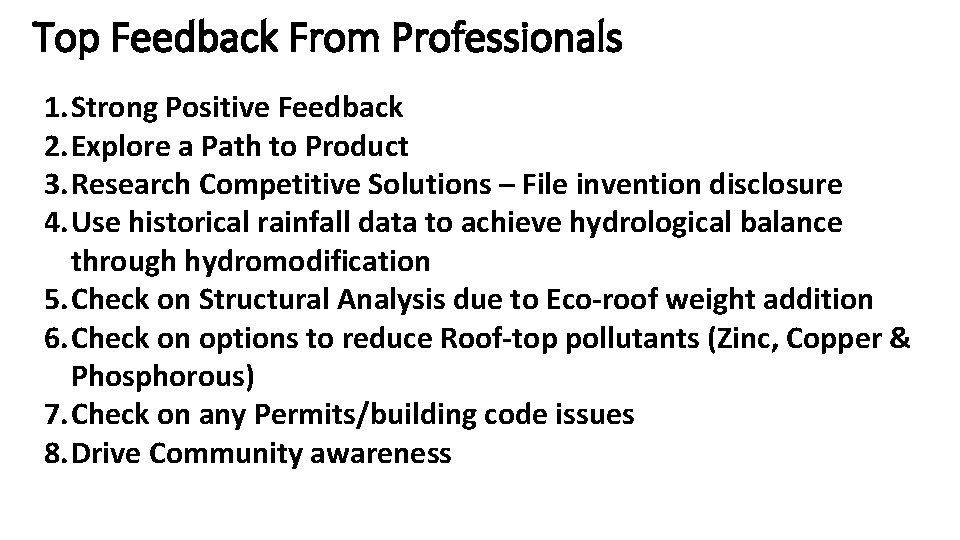
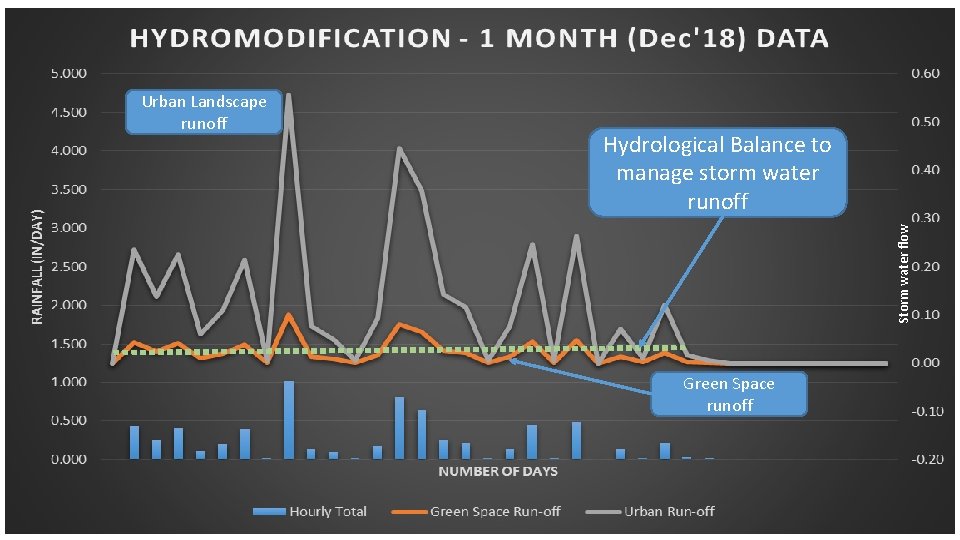
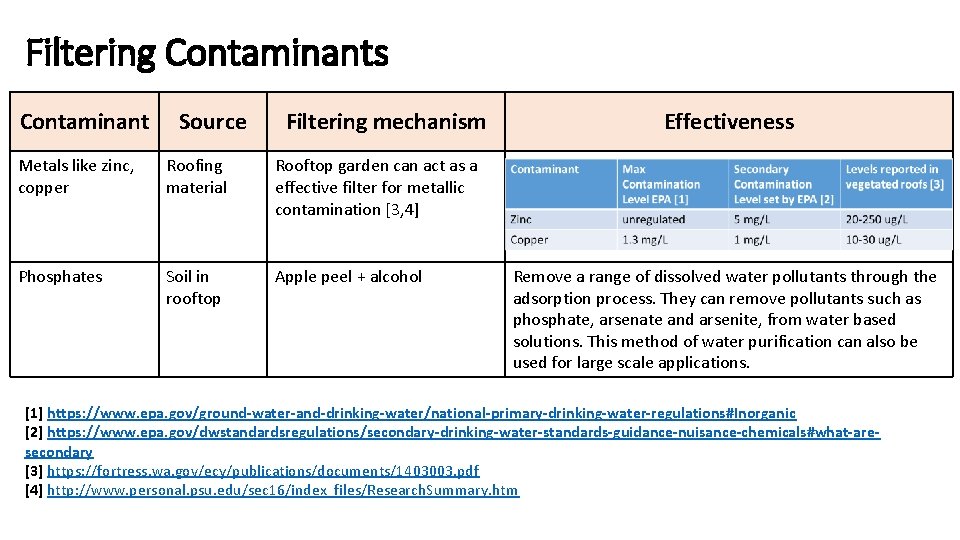
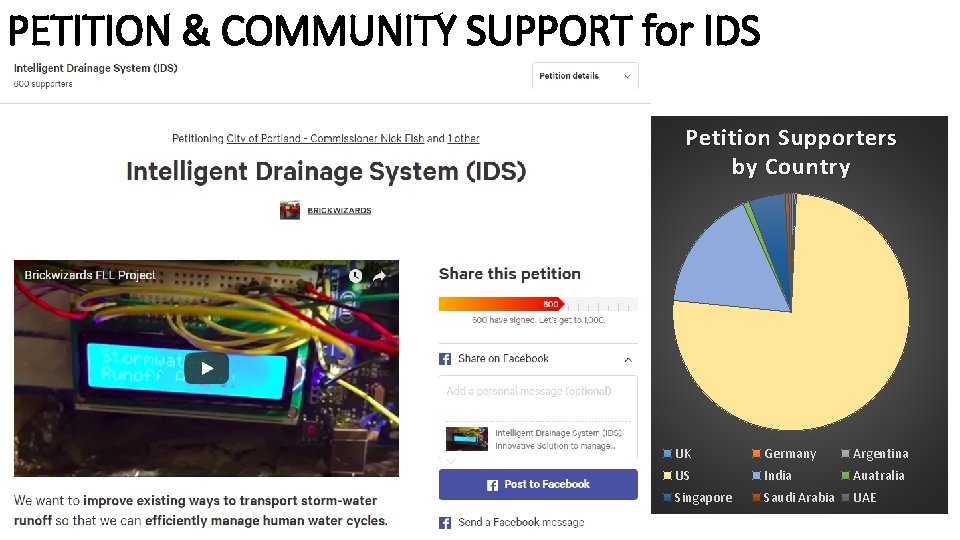
Top Feedback From Professionals 1. Strong Positive Feedback 2. Explore a Path to Product 3. Research Competitive Solutions – File invention disclosure 4. Use historical rainfall data to achieve hydrological balance through hydromodification 5. Check on Structural Analysis due to Eco-roof weight addition 6. Check on options to reduce Roof-top pollutants (Zinc, Copper & Phosphorous) 7. Check on any Permits/building code issues 8. Drive Community awareness
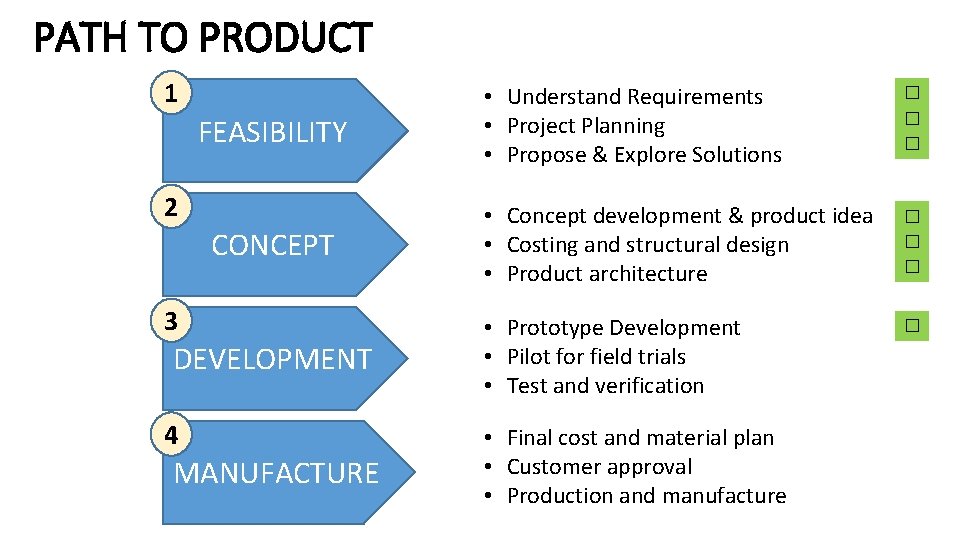
PATH TO PRODUCT 1 FEASIBILITY 2 CONCEPT 3 DEVELOPMENT 4 MANUFACTURE • Understand Requirements • Project Planning • Propose & Explore Solutions � � � • Concept development & product idea • Costing and structural design • Product architecture � � � • Prototype Development • Pilot for field trials • Test and verification � • Final cost and material plan • Customer approval • Production and manufacture
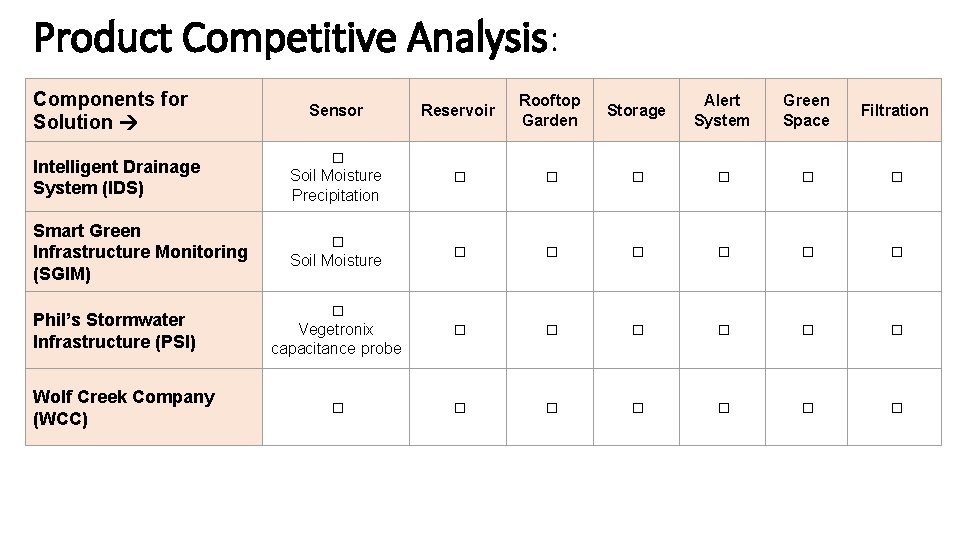
Product Competitive Analysis: Components for Solution Intelligent Drainage System (IDS) Smart Green Infrastructure Monitoring (SGIM) Phil’s Stormwater Infrastructure (PSI) Wolf Creek Company (WCC) Reservoir Rooftop Garden Storage Alert System Green Space Filtration � � � Vegetronix capacitance probe � � � � Sensor � Soil Moisture Precipitation � Soil Moisture �
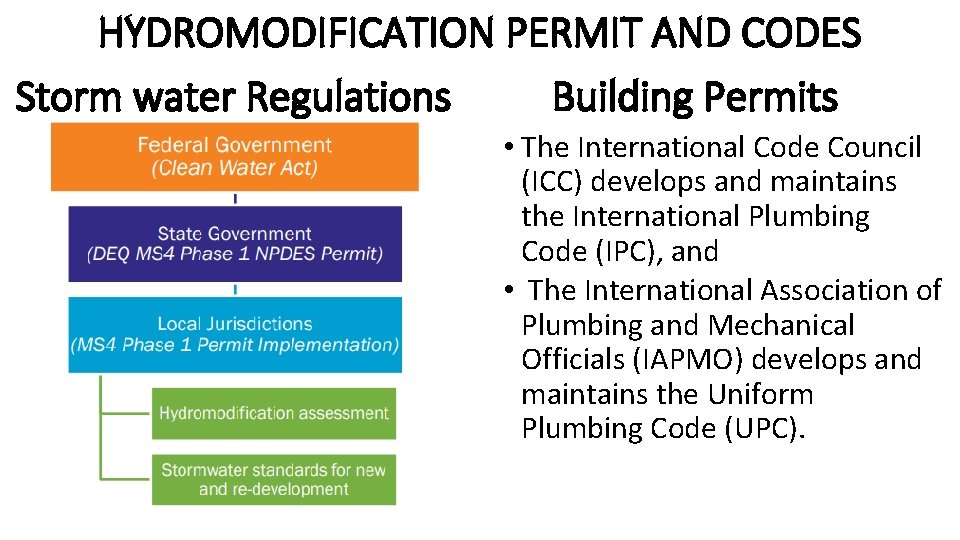
HYDROMODIFICATION PERMIT AND CODES Storm water Regulations Building Permits • The International Code Council (ICC) develops and maintains the International Plumbing Code (IPC), and • The International Association of Plumbing and Mechanical Officials (IAPMO) develops and maintains the Uniform Plumbing Code (UPC).
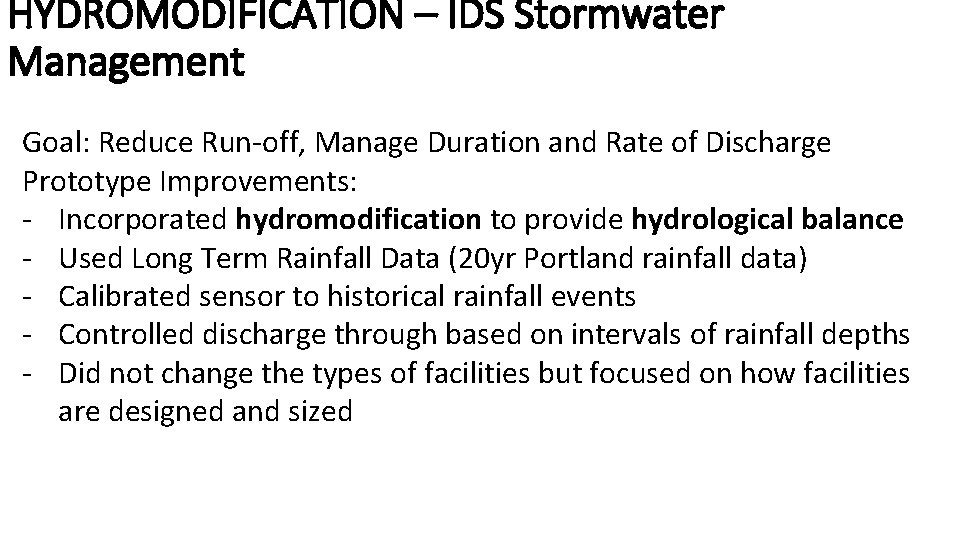
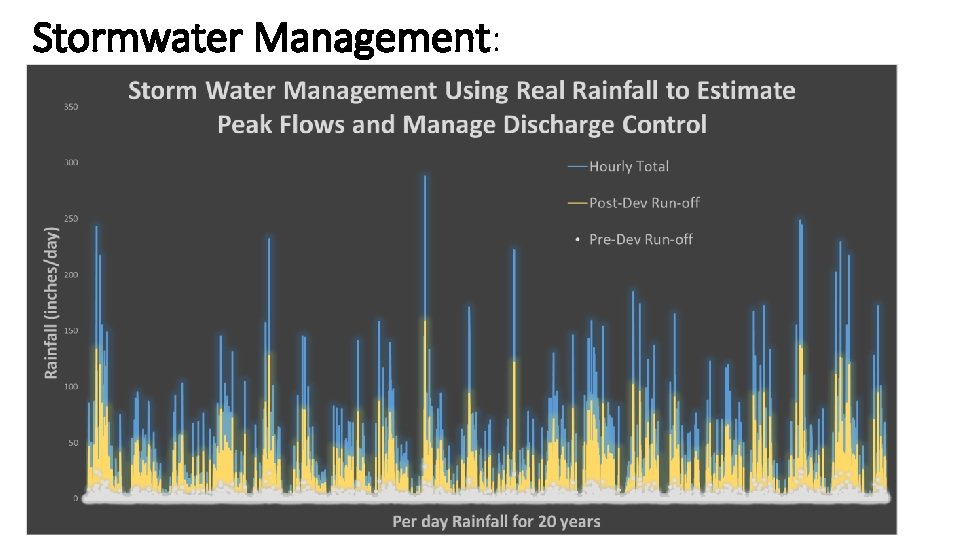
HYDROMODIFICATION – IDS Stormwater Management Goal: Reduce Run‐off, Manage Duration and Rate of Discharge Prototype Improvements: ‐ Incorporated hydromodification to provide hydrological balance ‐ Used Long Term Rainfall Data (20 yr Portland rainfall data) ‐ Calibrated sensor to historical rainfall events ‐ Controlled discharge through based on intervals of rainfall depths ‐ Did not change the types of facilities but focused on how facilities are designed and sized
Stormwater Management:
Hydrological Balance to manage storm water runoff Storm water flow Urban Landscape runoff Green Space runoff
Filtering Contaminants Contaminant Source Filtering mechanism Metals like zinc, copper Roofing material Rooftop garden can act as a effective filter for metallic contamination [3, 4] Phosphates Soil in rooftop Apple peel + alcohol Effectiveness Remove a range of dissolved water pollutants through the adsorption process. They can remove pollutants such as phosphate, arsenate and arsenite, from water based solutions. This method of water purification can also be used for large scale applications. [1] https: //www. epa. gov/ground-water-and-drinking-water/national-primary-drinking-water-regulations#Inorganic [2] https: //www. epa. gov/dwstandardsregulations/secondary-drinking-water-standards-guidance-nuisance-chemicals#what-aresecondary [3] https: //fortress. wa. gov/ecy/publications/documents/1403003. pdf [4] http: //www. personal. psu. edu/sec 16/index_files/Research. Summary. htm
PETITION & COMMUNITY SUPPORT for IDS Petition Supporters by Country UK Germany Argentina US India Auatralia Singapore Saudi Arabia UAE
Top References: • City of Portland Bureau of Environmental Services for Rainfall, pollution and Telemetry data • EPA: • https: //www 3. epa. gov/npdes/pubs/usw_b. pdf • https: //www. epa. gov/ground‐water‐and‐drinking‐water/national‐primary‐drinking‐water‐regulations#Inorganic • https: //www. epa. gov/dwstandardsregulations/secondary‐drinking‐water‐standards‐guidance‐nuisance‐chemicals#what‐are‐secondary • National University of Singapore: http: //www. science. nus. edu. sg/press‐releases/726‐nus‐researchers‐developed‐world‐s‐first‐water‐ treatment‐techniques‐using‐apple‐and‐tomato‐peels • State of Connecticut: http: //www. ct. gov/deep/lib/deep/watershed_management/wm_plans/lid/what_is_low_impact_development. pdf • Brown & Caldwell Consulting: http: //oregonewrg. org/wp‐content/uploads/2014/06/EWRG‐Krista‐Reininga‐May‐ 2014‐Hydromodification‐and‐ Facility‐Design. pdf • American Rivers Foundation: https: //www. americanrivers. org/threats‐solutions/clean‐water/sewage‐pollution/ • USDA Natural Resource Conservation Service: http: //www. ct. nrcs. usda. gov/eln‐educational_materials. html • State of Washington https: //fortress. wa. gov/ecy/publications/documents/1403003. pdf • Penn State University http: //www. personal. psu. edu/sec 16/index_files/Research. Summary. htm • Technical Guidance on Storm water: https: //www. epa. gov/sites/production/files/2015‐ 08/documents/epa_swm_guidance. pdf • University of Connecticut: www. nemo. uconn. edu
- Slides: 22