
SUSTAINABLE MANAGEMENT DEVELOPMENT PROGRAM PROCESS IMPROVEMENT FOR PUBLIC
SUSTAINABLE MANAGEMENT DEVELOPMENT PROGRAM PROCESS IMPROVEMENT FOR PUBLIC HEALTH PROFESSIONALS MANAGEMENT FOR INTERNATIONAL PUBLIC HEALTH COURSE
Learning Objectives This workshop will teach you how to improve work processes in your organization. When you complete this workshop you will: Define a process Measure process performance Analyze causes of variation Implement changes Study the results of changes Act according to the results of the study Apply at least three process improvement tools to achieve the above objectives
Schedule � Day 1 � Defining a process � Day 2 � Defining a process (continued) � Measuring process performance � Day 3 � Analyzing causes of variation � Generating and planning improvement � Implementing, studying, and acting accordingly
Process Improvement � � A systematic, data-based method for improving the quality of work processes. It uses team decision-making to improve processes that affect the quality of products and services for a customer.
Quality � Satisfying the customers’ wants and needs for products and services while at the same time � achieving the technical standards for public health practice
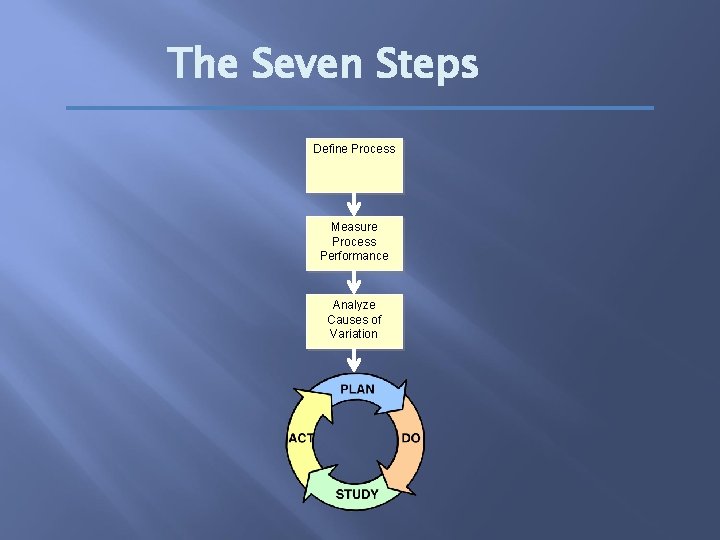
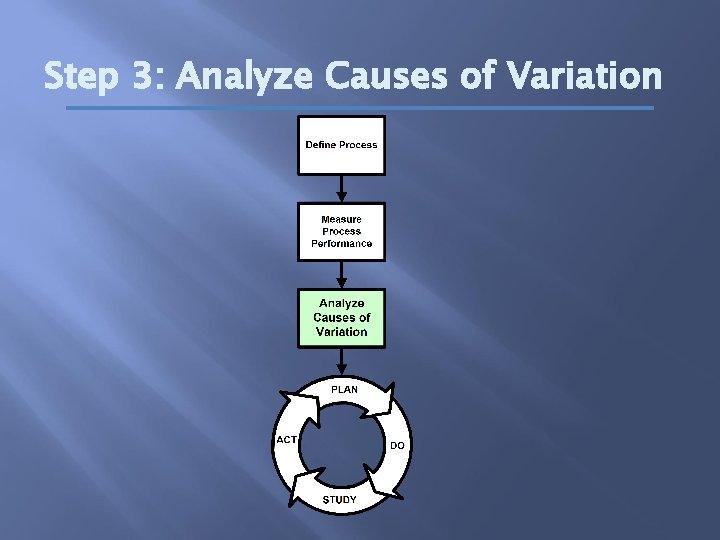
The Seven Steps Define Process Measure Process Performance Analyze Causes of Variation
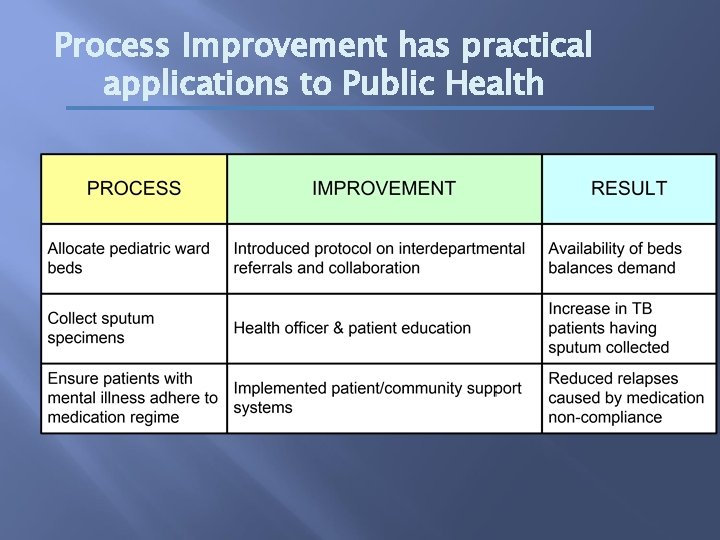
Process Improvement has practical applications to Public Health
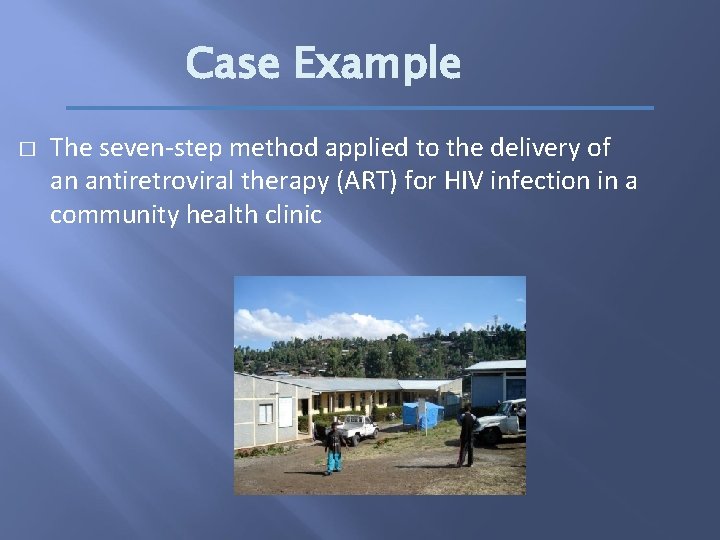
Case Example � The seven-step method applied to the delivery of an antiretroviral therapy (ART) for HIV infection in a community health clinic
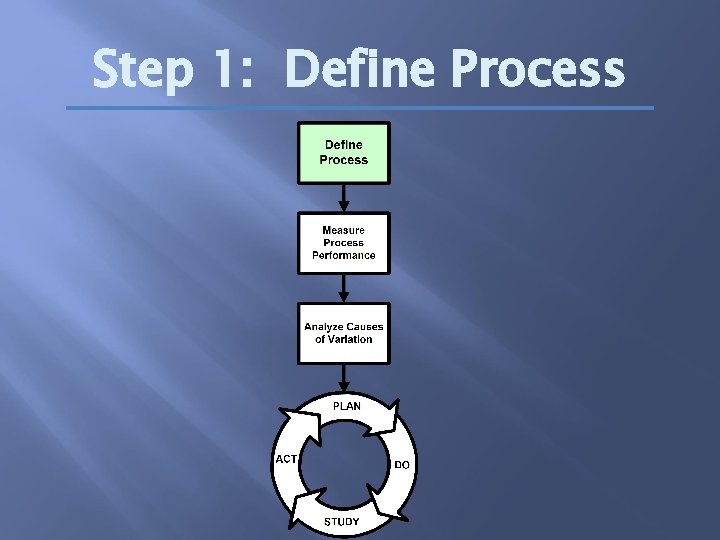
Step 1: Define Process
Exercise 1 The Tennis Ball Game
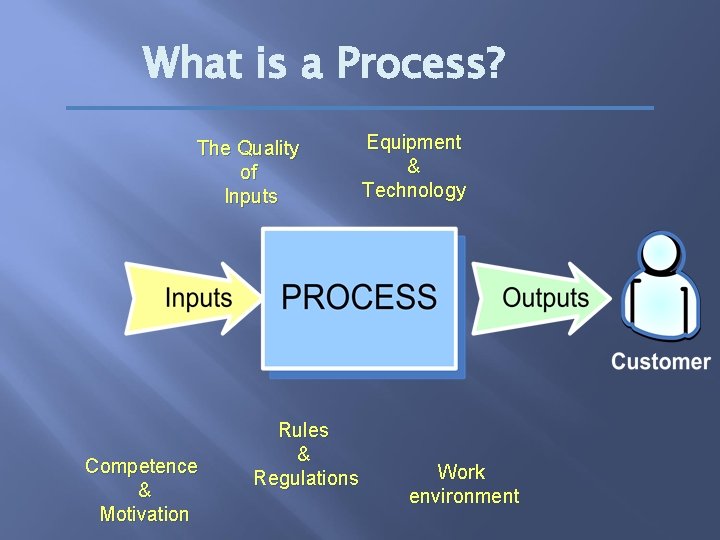
What is a Process? The Quality of Inputs Competence & Motivation Rules & Regulations Equipment & Technology Work environment
Definition – Process � � A process is a repetitive sequence of activities leading to desired outcomes for the benefit of customers. Inputs are transformed by the process to achieve products or services, the outputs.
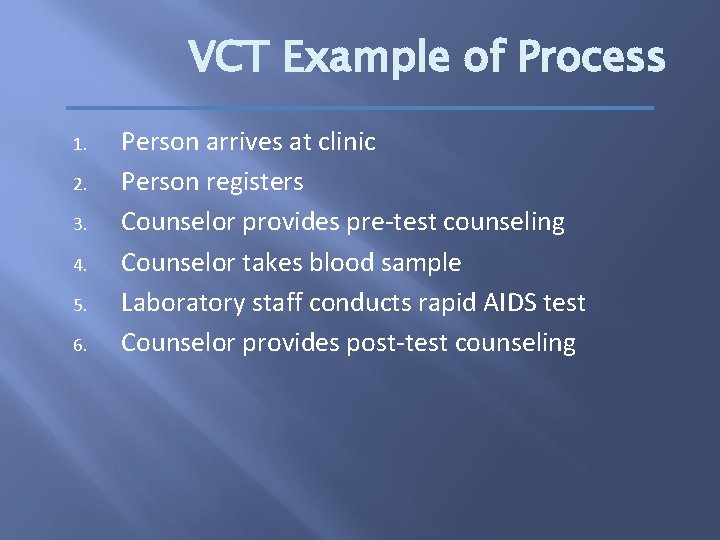
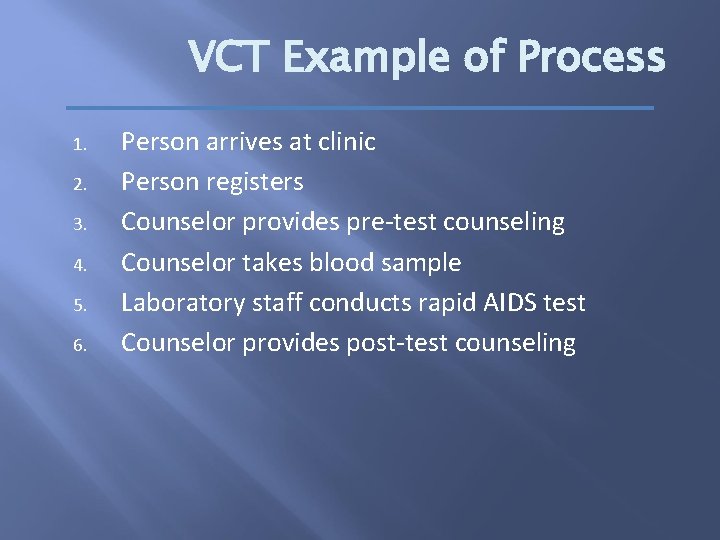
VCT Example of Process 1. 2. 3. 4. 5. 6. Person arrives at clinic Person registers Counselor provides pre-test counseling Counselor takes blood sample Laboratory staff conducts rapid AIDS test Counselor provides post-test counseling
What is Process Improvement? � � A systematic, data-based method for improving the quality of work processes. It uses team decision-making to improve processes that affect the quality of services or products for a customer.
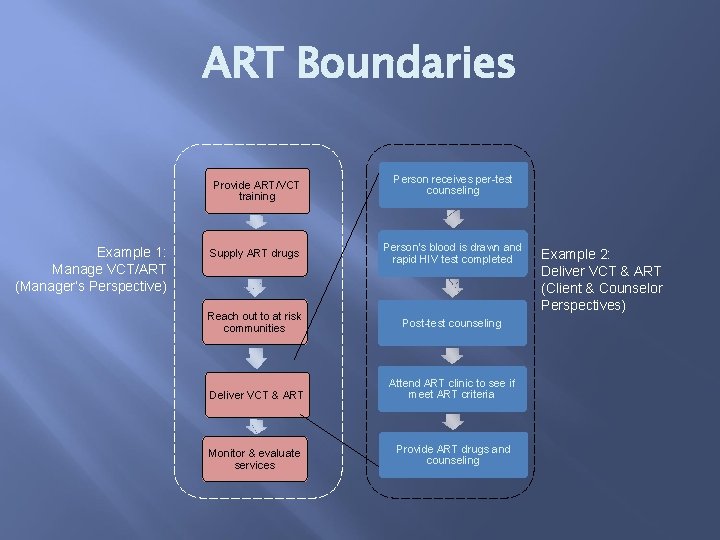
ART Boundaries Provide ART/VCT training Example 1: Manage VCT/ART (Manager’s Perspective) Person receives per-test counseling Supply ART drugs Person’s blood is drawn and rapid HIV test completed Reach out to at risk communities Post-test counseling Deliver VCT & ART Attend ART clinic to see if meet ART criteria Monitor & evaluate services Provide ART drugs and counseling Example 2: Deliver VCT & ART (Client & Counselor Perspectives)
Exercise 2 List Your Processes
Process Selection Criteria � If we improve this process what will be the impact on: � Customer satisfaction � Satisfaction of other stakeholders � Waste � Compliance with technical standards
Other Important Questions � � Does the team have the authority to make improvements? Are resources available to achieve improvement? Can significant improvements be achieved quickly and easily? Do the key stakeholders support the improvement activity?
Exercise 3 Select Process To Improve
Customers � � � A customer is any person or group who receives a product or service The term is used broadly—no financial transaction need occur Can be internal or external to organization
VCT Example of Process 1. 2. 3. 4. 5. 6. Person arrives at clinic Person registers Counselor provides pre-test counseling Counselor takes blood sample Laboratory staff conducts rapid AIDS test Counselor provides post-test counseling
Exercise 4 Defining Customers
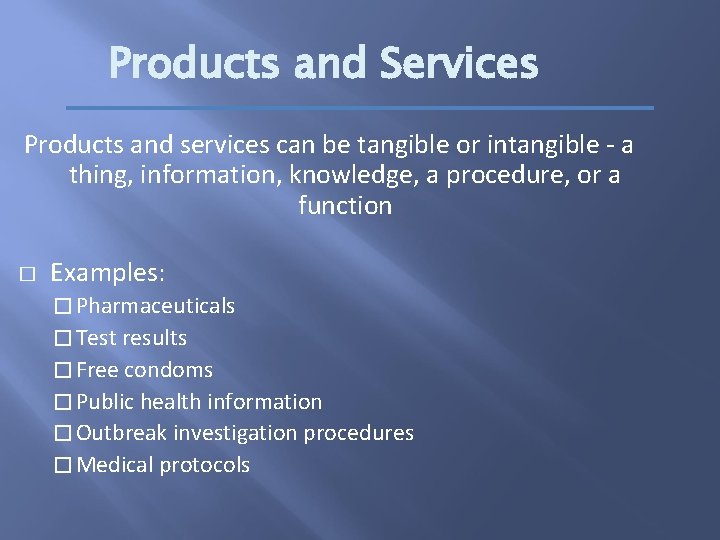
Products and Services Products and services can be tangible or intangible - a thing, information, knowledge, a procedure, or a function � Examples: � Pharmaceuticals � Test results � Free condoms � Public health information � Outbreak investigation procedures � Medical protocols
Exercise 5 Identifying Products and Services
Quality � Satisfying the customers’ wants and needs for products and services while at the same time � Achieving the technical standards for public health practice
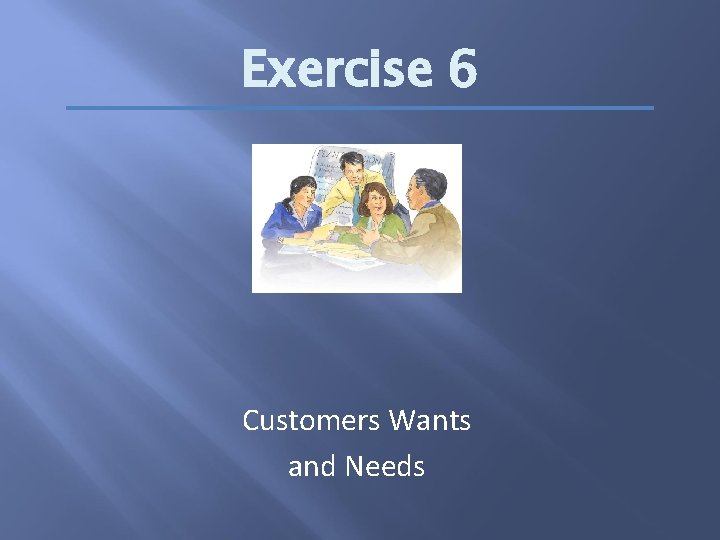
Exercise 6 Customers Wants and Needs
Stakeholders A stakeholder is one person, or group of persons, having an interest or concern in a particular process resulting from some direct or indirect involvement.
Stakeholders - Suppliers � � Suppliers provide goods, services, and information to the organization or process They do not carry out the work
Stakeholders - Providers � � Providers comprise key staff including professionals, managers, partners, and subcontractors. They carry out the process.
Stakeholders - Controllers � � � Controllers define, regulate, and influence the organization or process. Controllers include regulators, legislators, funding agencies, expert advisory committees, and trustees. Technical standards are often set by the “controllers”
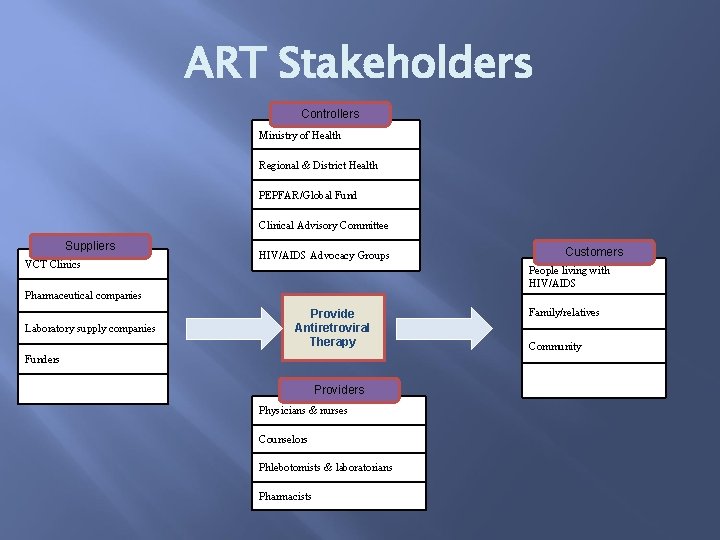
ART Stakeholders Controllers Ministry of Health Regional & District Health PEPFAR/Global Fund Clinical Advisory Committee Suppliers VCT Clinics HIV/AIDS Advocacy Groups Customers People living with HIV/AIDS Pharmaceutical companies Laboratory supply companies Provide Antiretroviral Therapy Funders Providers Physicians & nurses Counselors Phlebotomists & laboratorians Pharmacists Family/relatives Community
Involving Your Stakeholders � � � E-mail Surveys Questionnaires Observing stakeholders, especially customers Visits Experiencing the service as a customer
Exercise 7 Identifying Stakeholders
Homework � � Read the section on measuring good practices on page 28 of your workbooks. Use the notes section in your workbooks (page 29) to record any questions you have as a result of your reading.
End of Day 1
Process Improvement Day 2
Review of Day 1 � What were the main learning points from yesterday’s training? � What is the definition of quality? � What is the definition of process improvement?
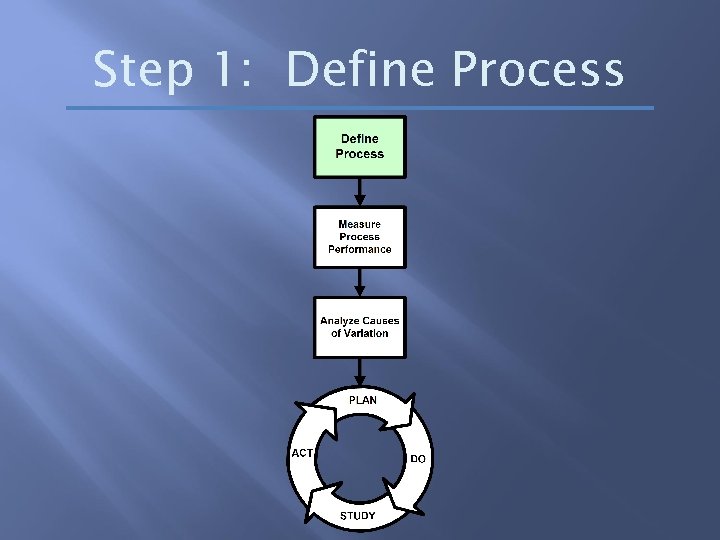
Step 1: Define Process
A Flowchart Diagrams a Process � A flowchart gives you: � An understanding of how a process works � The sequence of all the steps, including feedback paths � Clear data collection points � Ideas for improvement � A flowchart can show an existing process, a new process, or a change to a process.
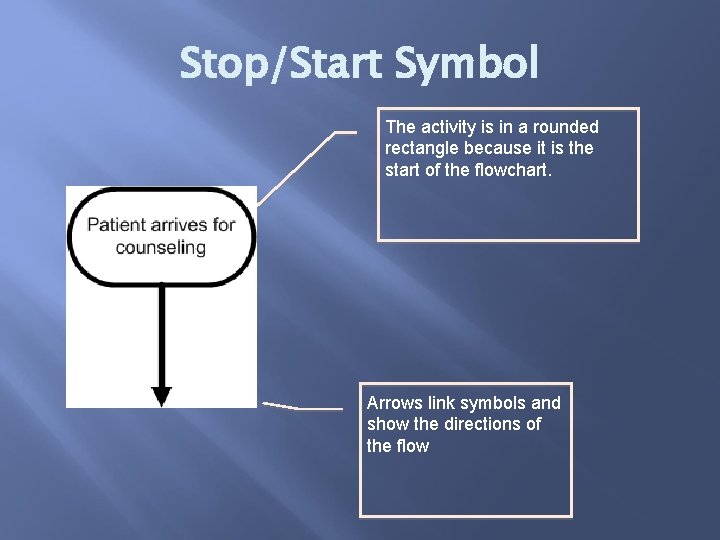
Stop/Start Symbol The activity is in a rounded rectangle because it is the start of the flowchart. Arrows link symbols and show the directions of the flow
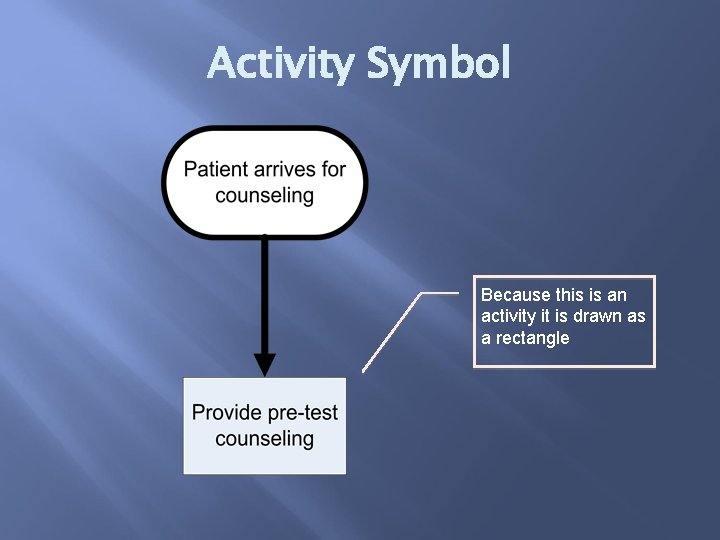
Activity Symbol Because this is an activity it is drawn as a rectangle
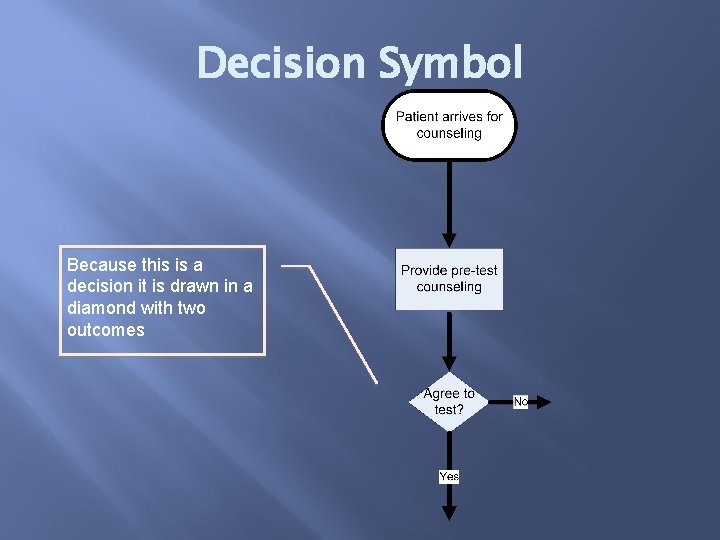
Decision Symbol Because this is a decision it is drawn in a diamond with two outcomes
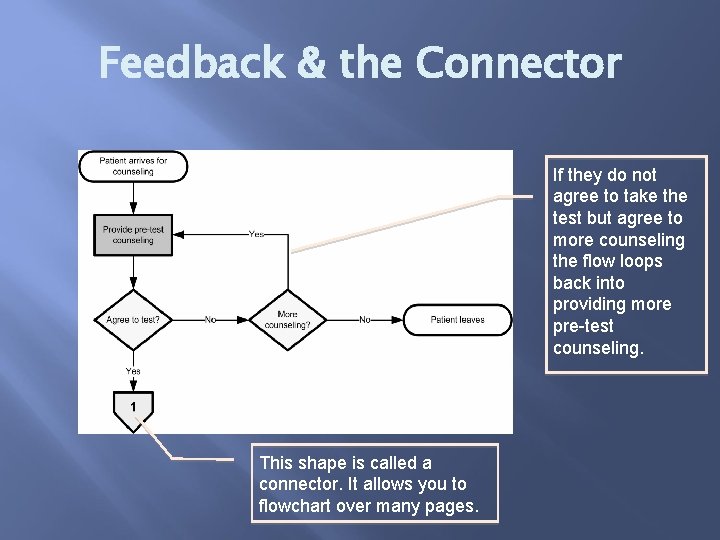
Feedback & the Connector If they do not agree to take the test but agree to more counseling the flow loops back into providing more pre-test counseling. This shape is called a connector. It allows you to flowchart over many pages.
Exercise 8 Flowchart your Process
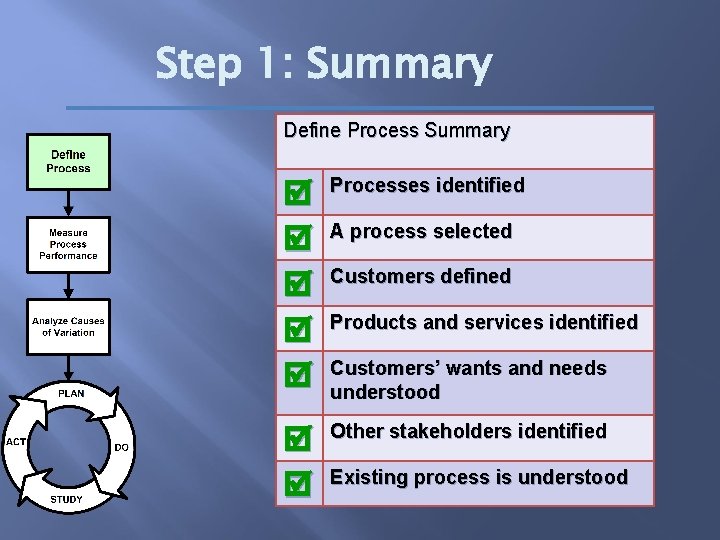
Step 1: Summary Define Process Summary Processes identified Other stakeholders identified A process selected Customers defined Products and services identified Customers’ wants and needs understood Existing process is understood
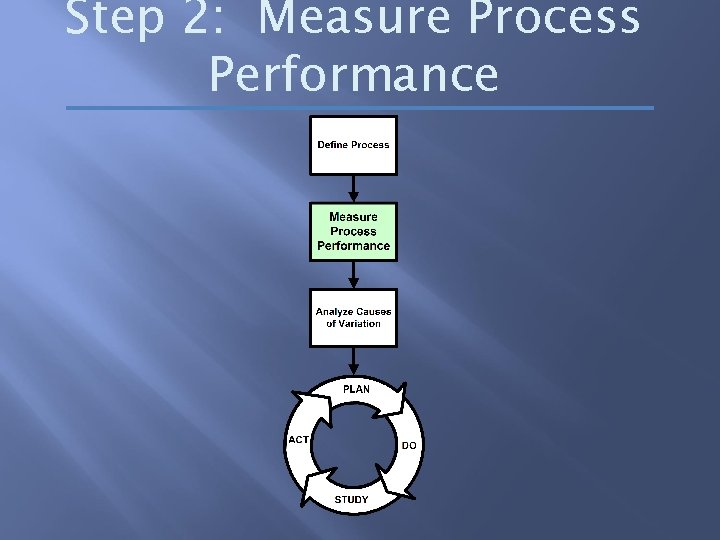
Step 2: Measure Process Performance
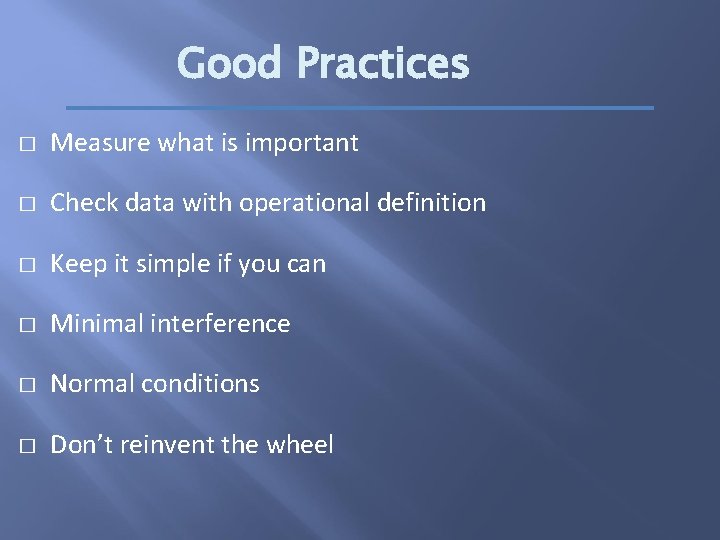
Good Practices � Measure what is important � Check data with operational definition � Keep it simple if you can � Minimal interference � Normal conditions � Don’t reinvent the wheel
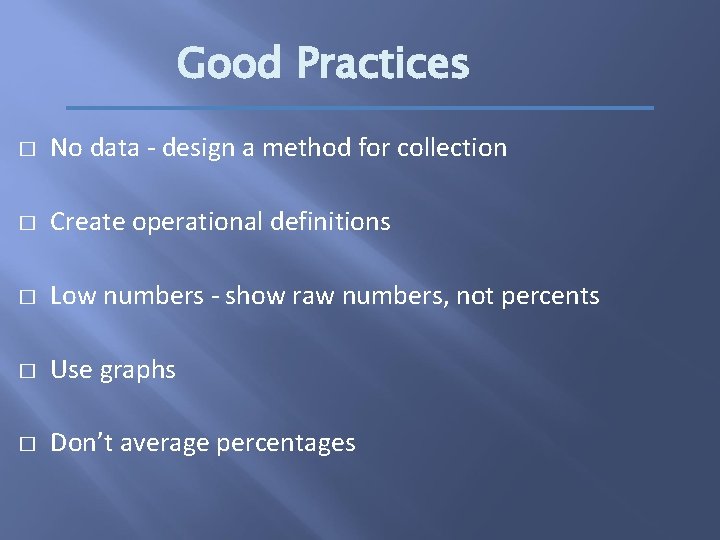
Good Practices � No data - design a method for collection � Create operational definitions � Low numbers - show raw numbers, not percents � Use graphs � Don’t average percentages
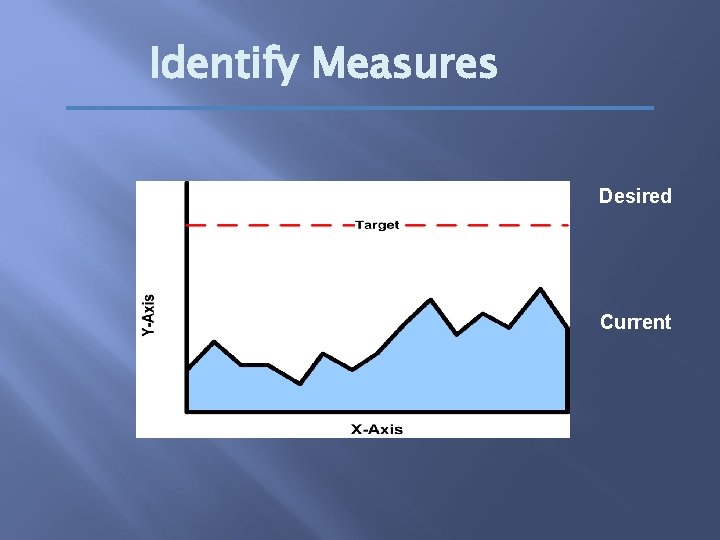
Identify Measures Desired Current
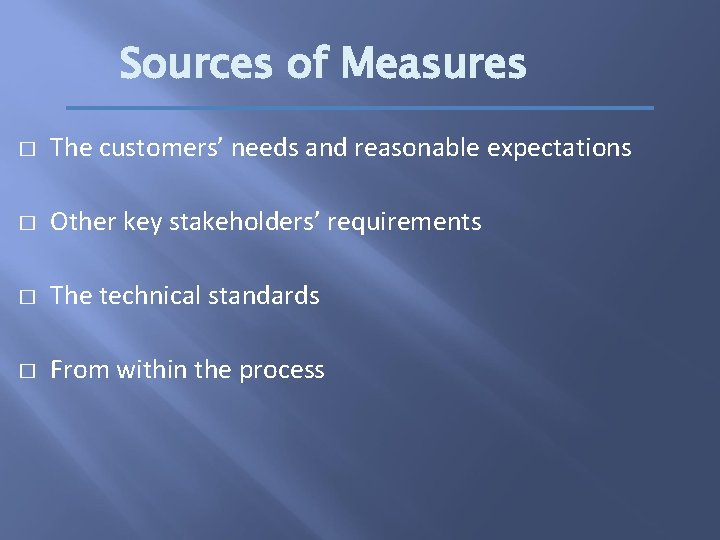
Sources of Measures � The customers’ needs and reasonable expectations � Other key stakeholders’ requirements � The technical standards � From within the process
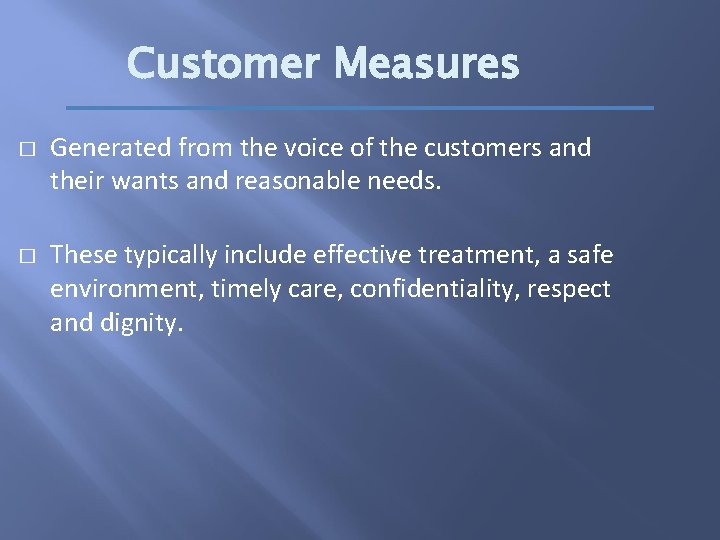
Customer Measures � � Generated from the voice of the customers and their wants and reasonable needs. These typically include effective treatment, a safe environment, timely care, confidentiality, respect and dignity.
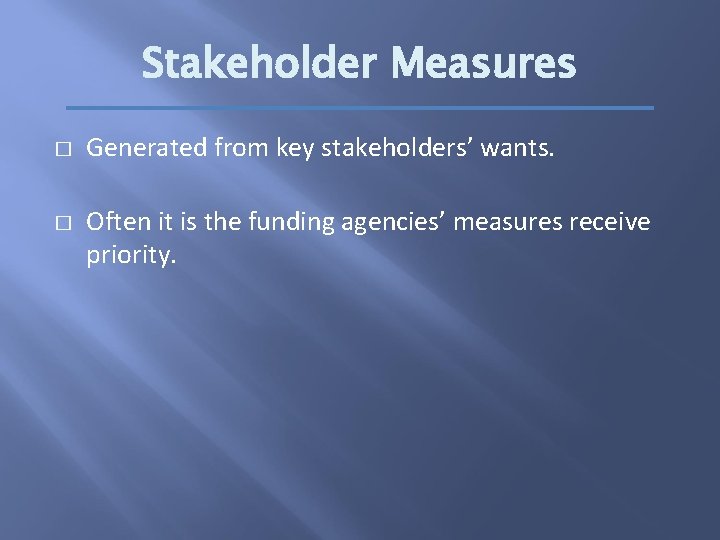
Stakeholder Measures � � Generated from key stakeholders’ wants. Often it is the funding agencies’ measures receive priority.
Technical Measures � � Generated from best practices as defined by scientific research. These measures are often disease-specific and based on medical protocols
Process Measures � � � Taken at key points in the process They are not usually of direct interest to customers and other stakeholders. They are selected because they have a significant impact on the process outcomes.
Exercise 9 Identify Measures
Factors in Selecting Measures 1. 2. 3. 4. 5. The difference between your actual and your desired performance. The feasibility of making a dramatic improvement. The importance set by customers, and other stakeholders, such as a funding agency. The impact that an improvement could have on the overall performance of the process. The feasibility of measurement. Is it possible? Do you have data? Will it take a lot of time?
Exercise 10 Select a Measure
Homework � � Read the sections on measurement tools (check sheet, stratification, Pareto) from pages 35 to 40 of your workbooks. Use the notes section in your workbooks to record any questions you have as a result of your reading.
Variation � � Common causes result from the process itself � They are inherent in the design, implementation, and operation of the process. � Common cause variation remains the same from day-to-day. Special causes come from sources outside the process. � They relate to some special event. � It is sensible to investigate the actual reason for the variation.
Run Charts � � � Monitor the process. Help distinguish between special and common causes of variation. Provide the evidence as to whether an implemented improvement idea has been successful or not.
Run Charts � � A “run” exists when a number of consecutive points lie on one side of the mean. If significant the “run” could indicate a special cause or the start of a common cause shift.
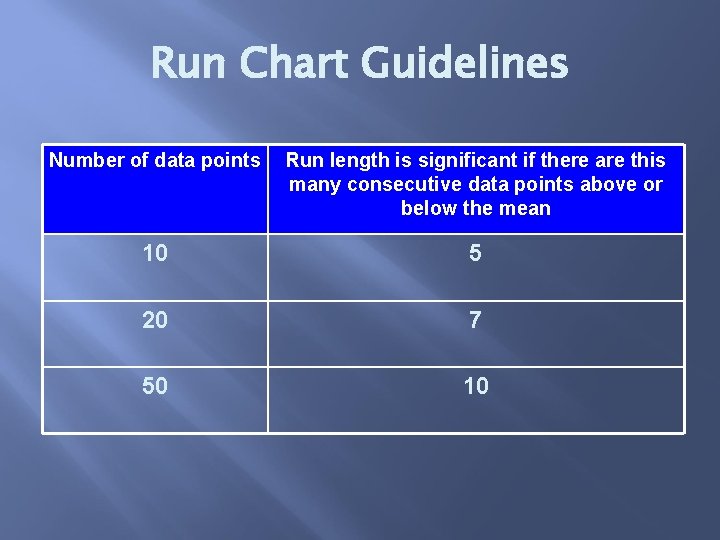
Run Chart Guidelines Number of data points Run length is significant if there are this many consecutive data points above or below the mean 10 5 20 7 50 10
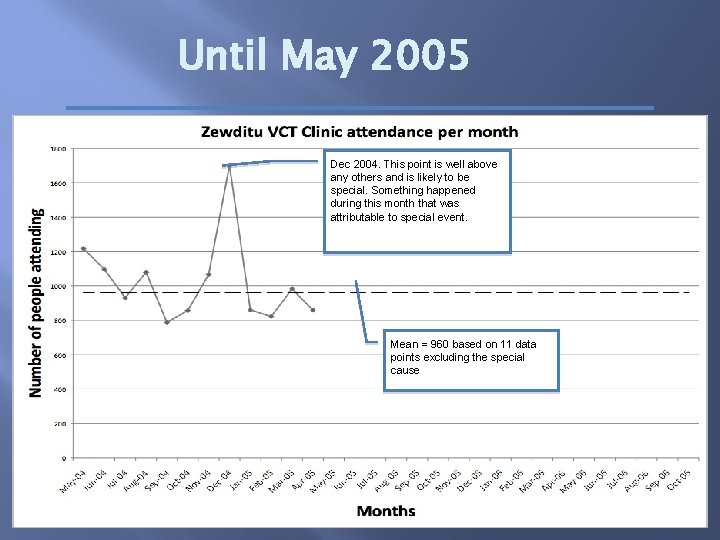
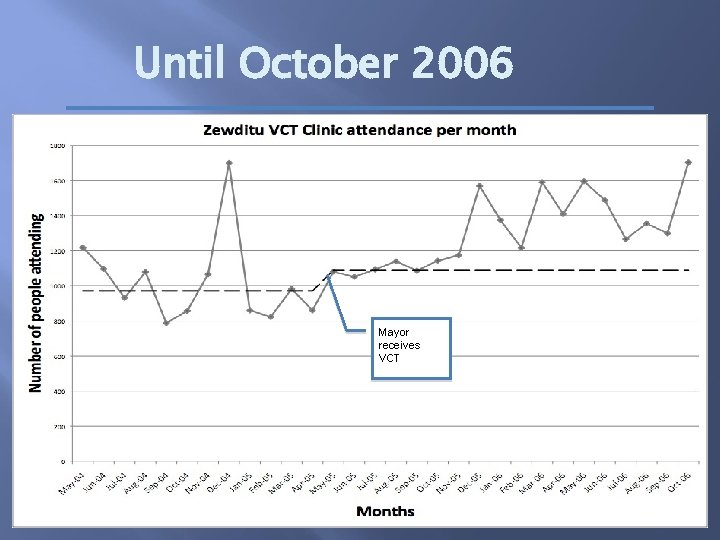
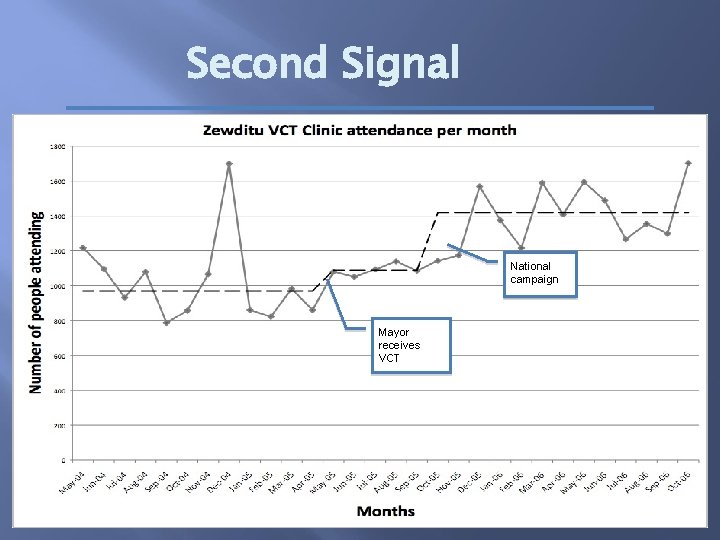
Until May 2005 Dec 2004. This point is well above any others and is likely to be special. Something happened during this month that was attributable to special event. Mean = 960 based on 11 data points excluding the special cause
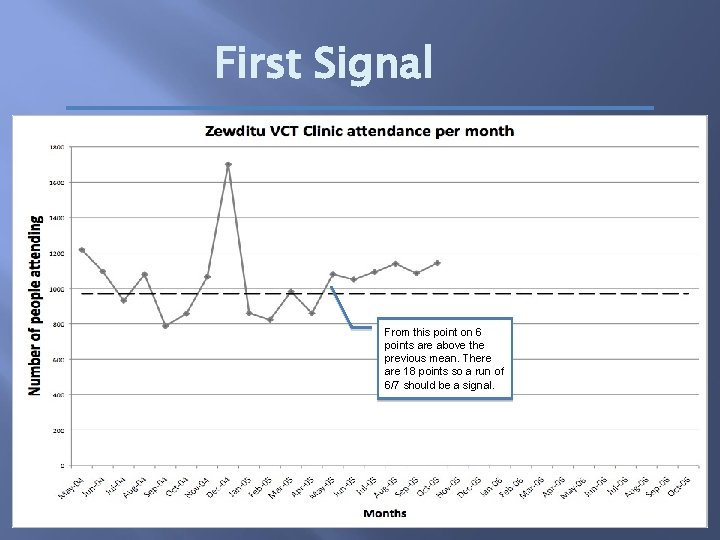
First Signal From this point on 6 points are above the previous mean. There are 18 points so a run of 6/7 should be a signal.
Until October 2006 Mayor receives VCT
Second Signal National campaign Mayor receives VCT
ART Adherence Run Chart Target Mean
Problem Statement
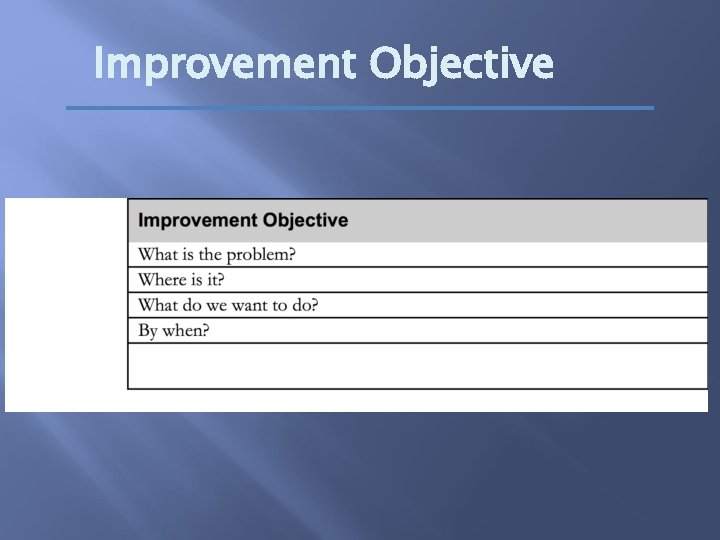
Improvement Objective
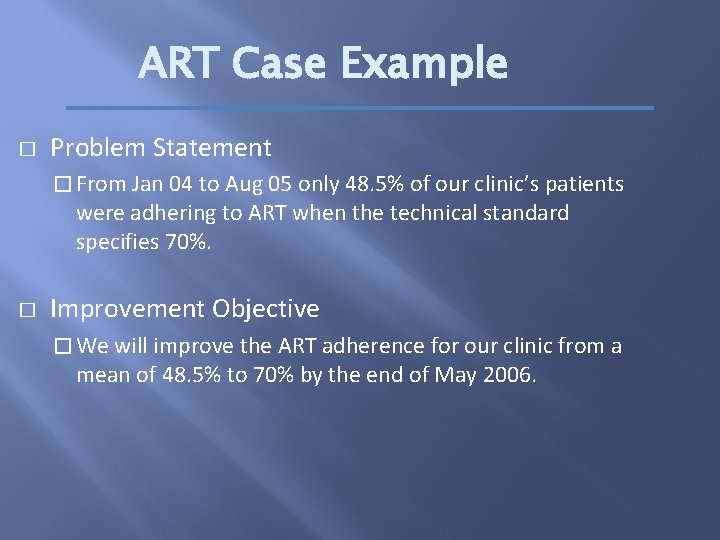
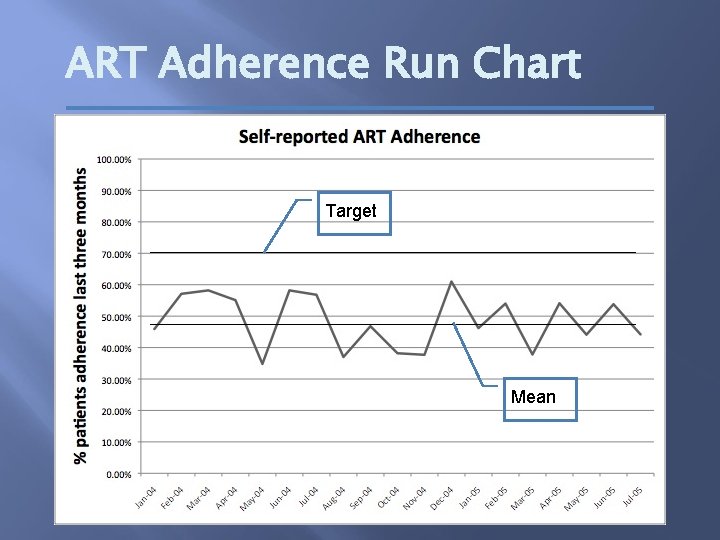
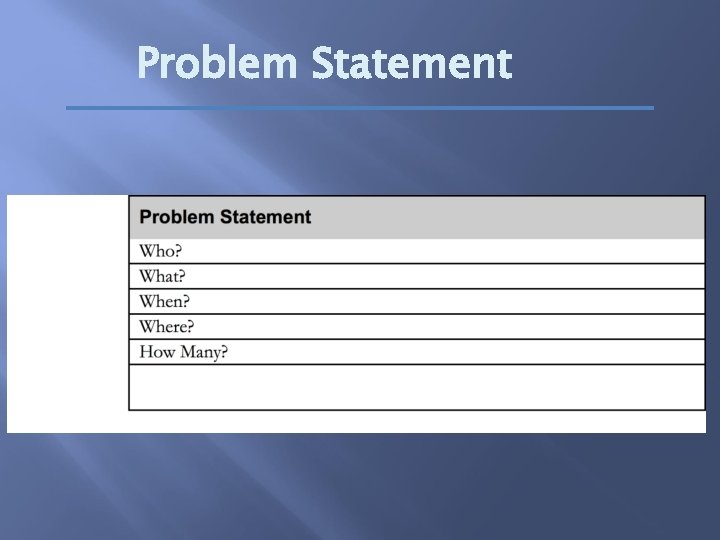
ART Case Example � Problem Statement � From Jan 04 to Aug 05 only 48. 5% of our clinic’s patients were adhering to ART when the technical standard specifies 70%. � Improvement Objective � We will improve the ART adherence for our clinic from a mean of 48. 5% to 70% by the end of May 2006.
Exercise 11 Prepare a Problem Statement and an Improvement Objective
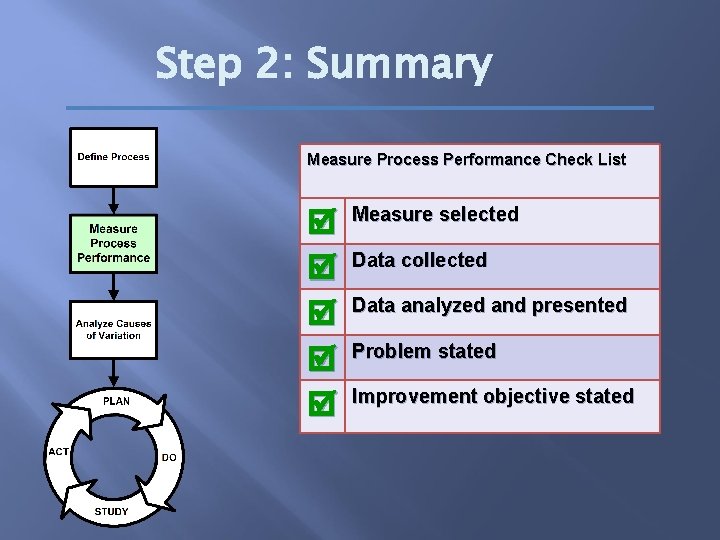
Step 2: Summary Measure Process Performance Check List Measure selected Data collected Data analyzed and presented Problem stated Improvement objective stated
End of Day 2
Process Improvement Day 3
Review of Day 2 � � � What were the main learning points from yesterday’s training? What kinds of information does a flowchart provide? What are the four sources of measures?
Step 3: Analyze Causes of Variation
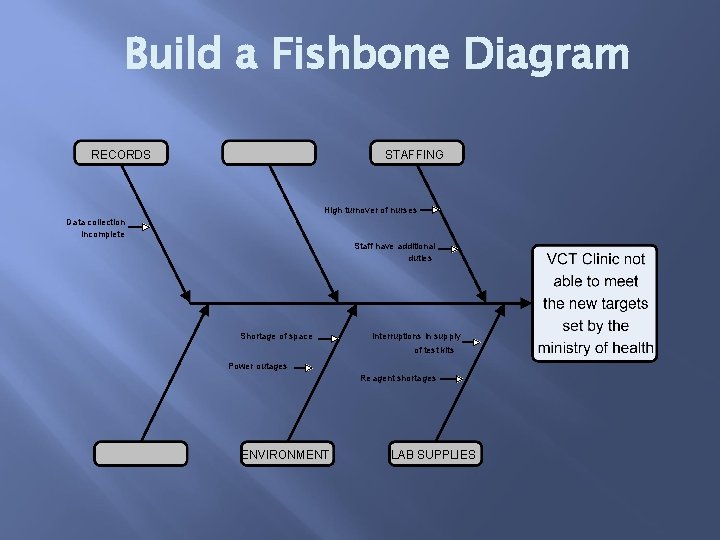
Build a Fishbone Diagram RECORDS STAFFING High turnover of nurses Data collection incomplete Staff have additional duties Shortage of space Interruptions in supply of test kits Power outages Reagent shortages ENVIRONMENT LAB SUPPLIES
Selection using TPN � T - totally within your control to improve � P - partially within your control � N - not in your control � Focus on T or P causes. � N’s can be assigned to other teams or individuals.
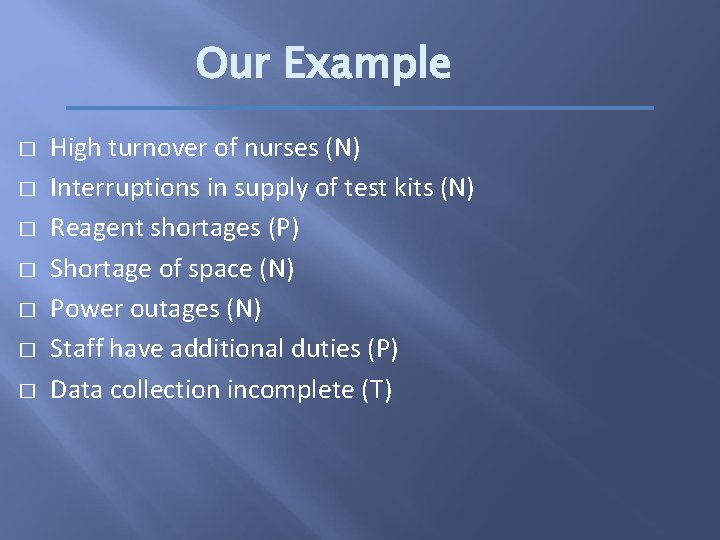
Our Example � � � � High turnover of nurses (N) Interruptions in supply of test kits (N) Reagent shortages (P) Shortage of space (N) Power outages (N) Staff have additional duties (P) Data collection incomplete (T)
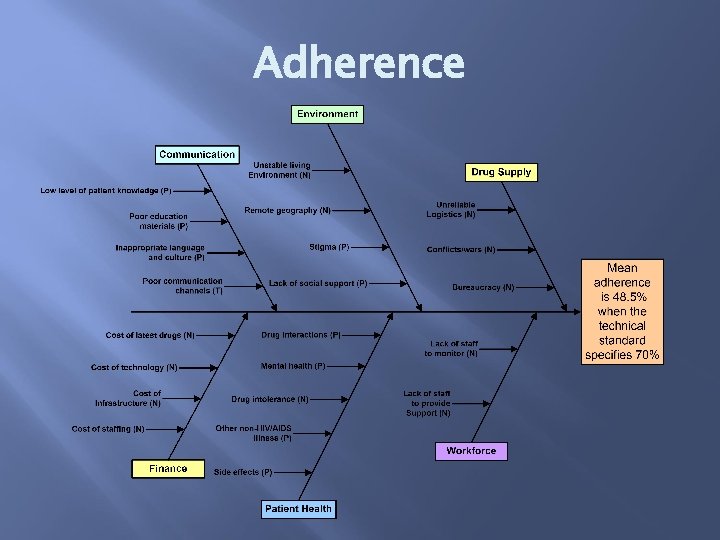
Adherence
Exercise 12 Explore the Causes
Multivotes 1. Record list for everyone to see. 2. Eliminate duplications. 3. Each member is allowed a number of votes equal to approximately 1/3 the number of causes. 4. Provide individuals with markers (i. e. , sticky notes, dots, etc. ). – 1 per vote. 5. Each individual uses their dots to select the items they consider important. All dots can be placed on one item or spread among many.
Exercise 13 Select a Critical Cause
Critical Cause � � Totally or partially under its control It will deliver an improvement which is expected to have the greatest impact on: � customers’ needs and reasonable expectations; and, � performance to technical standards.
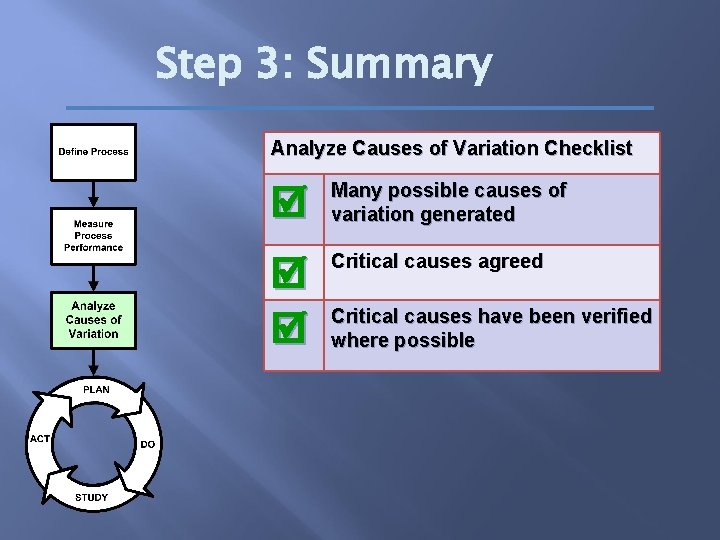
Step 3: Summary Analyze Causes of Variation Checklist Many possible causes of variation generated Critical causes agreed Critical causes have been verified where possible
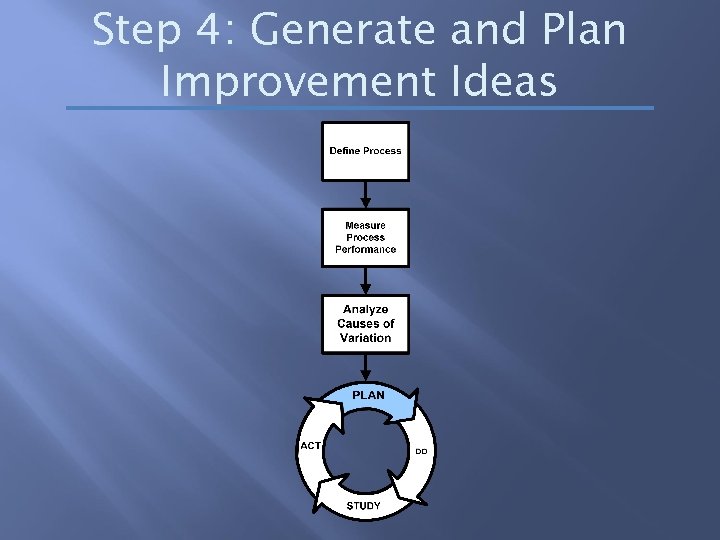
Step 4: Generate and Plan Improvement Ideas
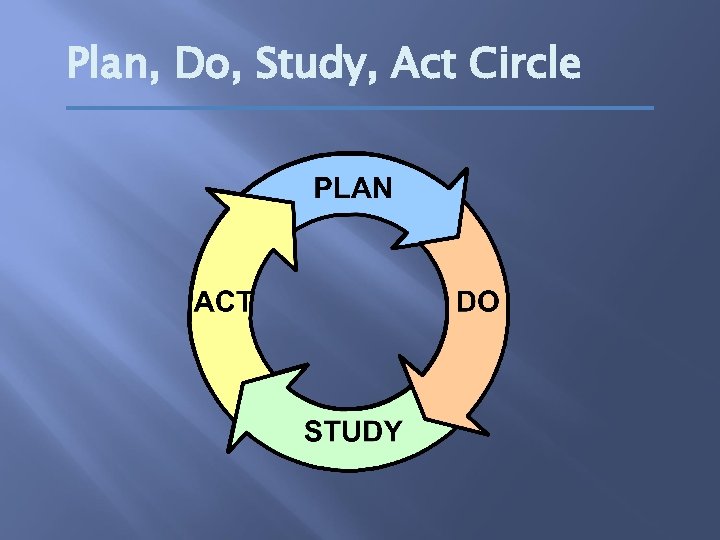
Plan, Do, Study, Act Circle
Exercise 14 Generate Improvement Ideas
Work Breakdown Structure (WBS) 1. 2. 3. 4. Start with the end in mind—List the project objective. Determine the resources required to complete it. Determine the tasks needed in order to complete the project. Continue to break tasks down in order to identify specific resource requirements.
Exercise 15 Plan Improvement Project
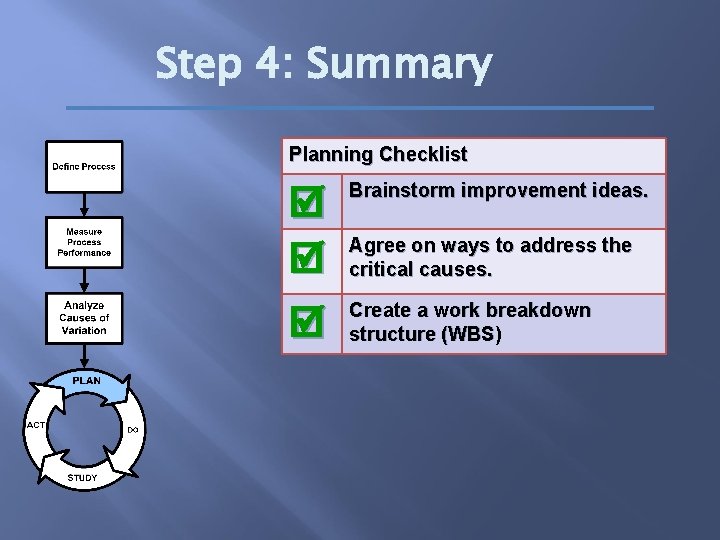
Step 4: Summary Planning Checklist Brainstorm improvement ideas. Create a work breakdown structure (WBS) Agree on ways to address the critical causes.
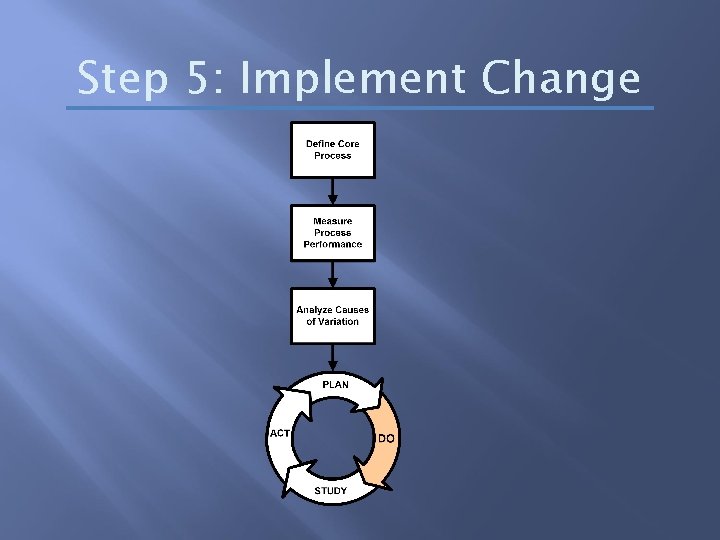
Step 5: Implement Change
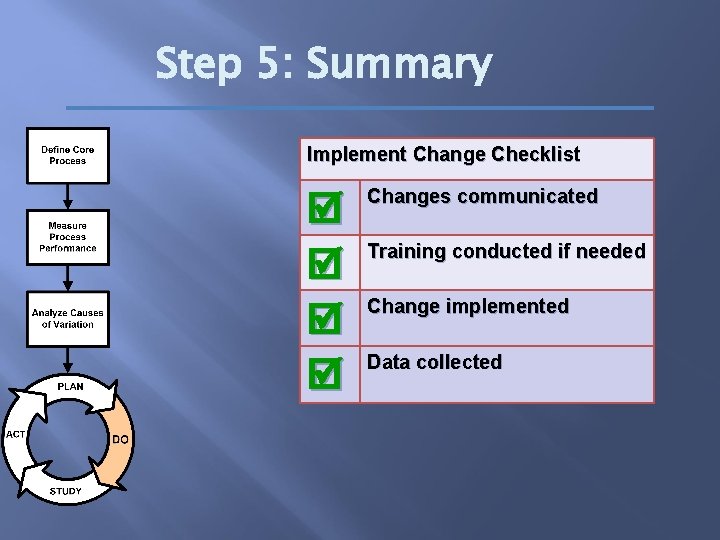
Step 5: Summary Implement Change Checklist Changes communicated Training conducted if needed Change implemented Data collected
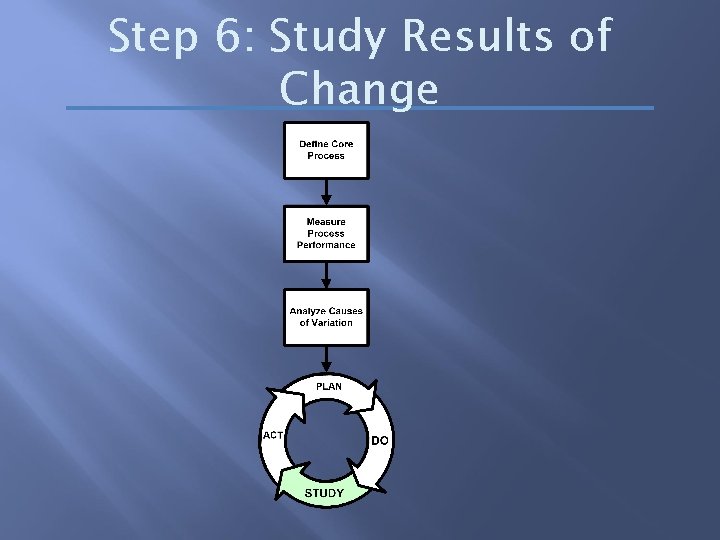
Step 6: Study Results of Change
Exercise 16 How Well Did You Do?
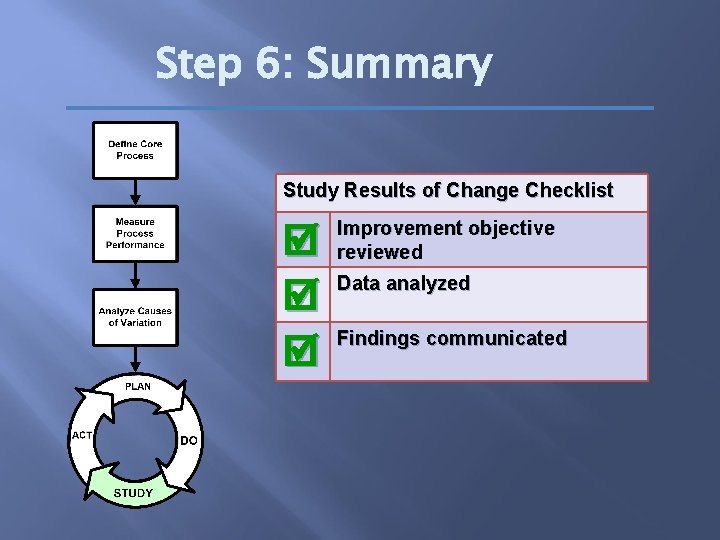
Step 6: Summary Study Results of Change Checklist Improvement objective reviewed Data analyzed Findings communicated
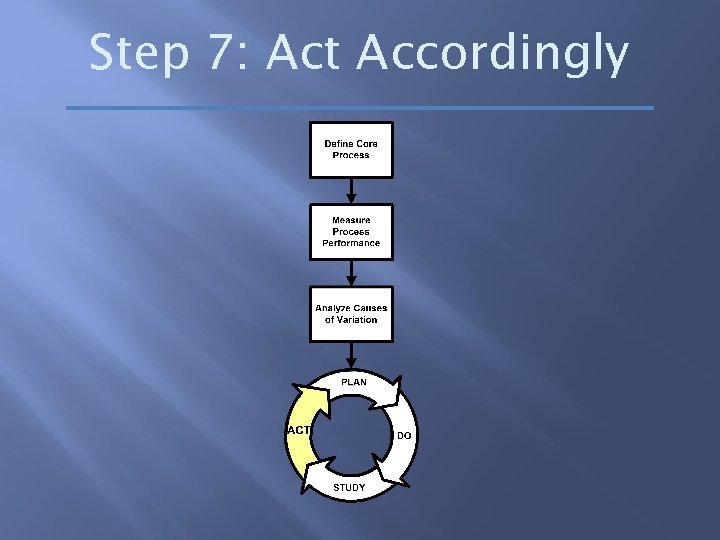
Step 7: Act Accordingly
Three Outcomes � One – Expected improvement outcome � Expand pilot � Communicate � Incorporate into Standard Operating Procedure � Two – Not quite expected outcome � Refine idea � Run through PDSA again � Three – No improvement � Okay � Refine theory � Or move onto another process
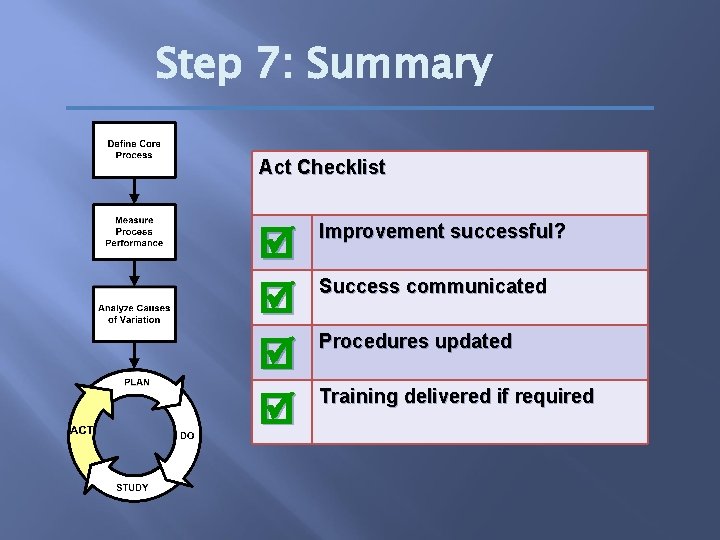
Step 7: Summary Act Checklist Improvement successful? Success communicated Procedures updated Training delivered if required
Exercise 17 Storyboard
End of the Day 3
Our Expectations of You � Training Others � Applied Projects
Process Improvement Next Steps 1. Return to country. 2. Adapt materials. 3. Arrange teachings of process improvement. 4. Teach process improvement to selected ‘in-country’ trainees. 5. Monitor trainee’s projects (x 2) at work site. 6. Use SMDP TA as required. 7. Evaluate trainee’s projects. 8. Graduate trainees.
- Slides: 103