
Sustainable Forest Management 2014 Why is the sustainability
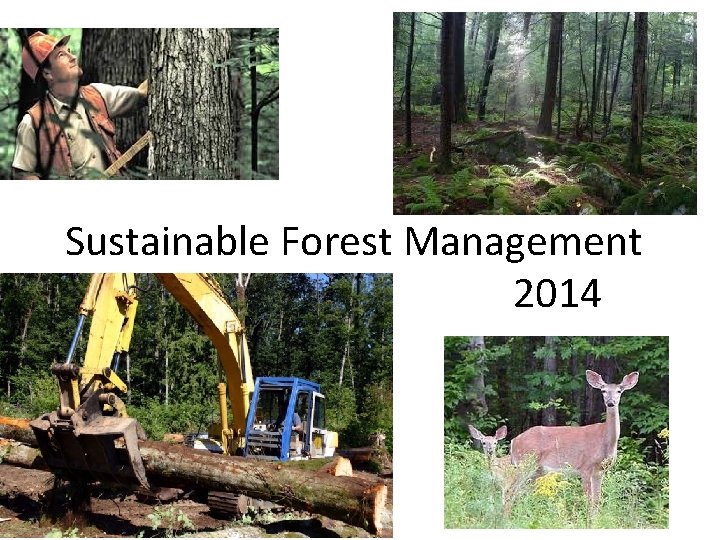
Sustainable Forest Management 2014
Why is the sustainability of forests so important? (Anthropocentric)
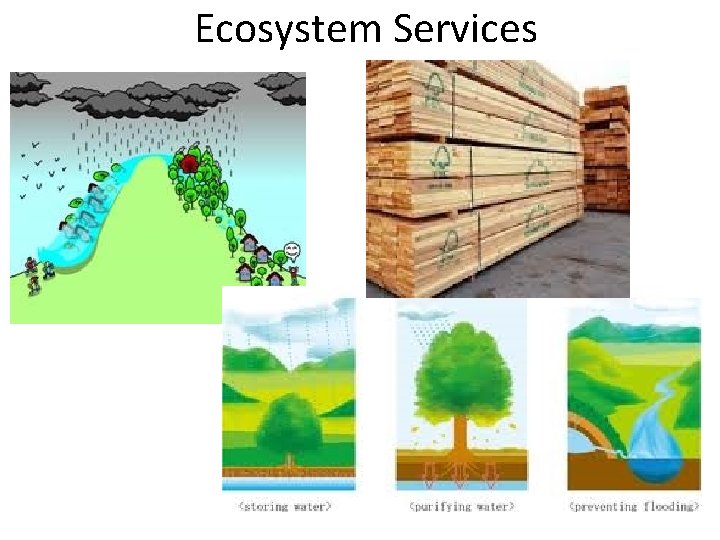
Ecosystem Services
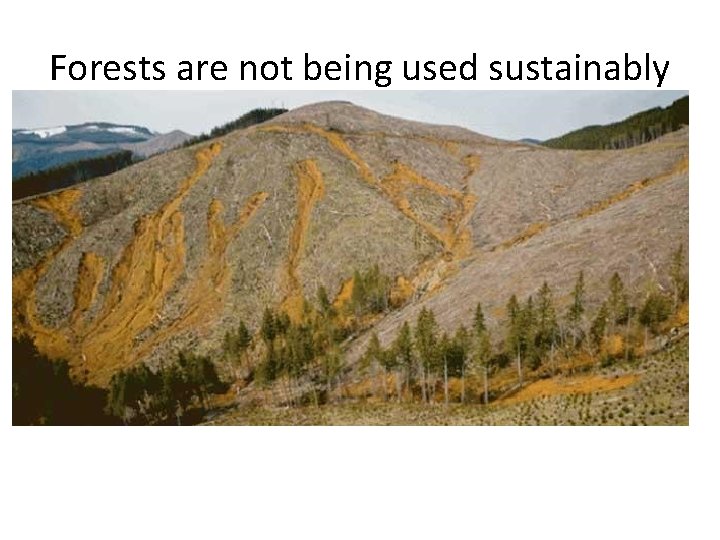
Forests are not being used sustainably
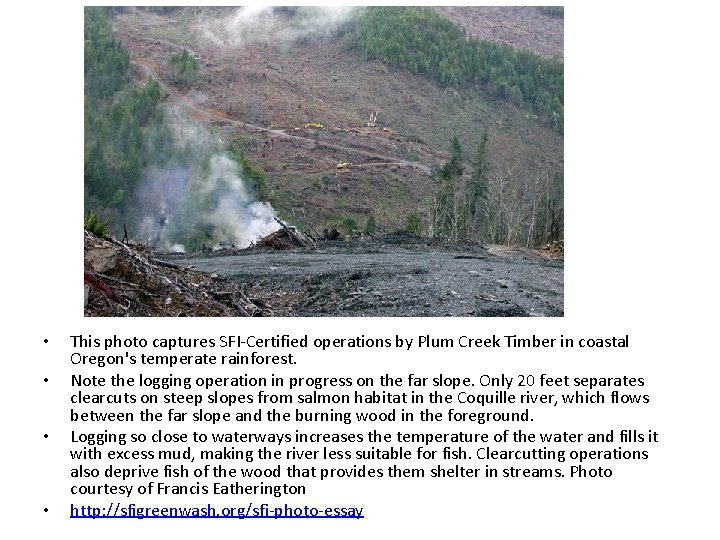
• • This photo captures SFI-Certified operations by Plum Creek Timber in coastal Oregon's temperate rainforest. Note the logging operation in progress on the far slope. Only 20 feet separates clearcuts on steep slopes from salmon habitat in the Coquille river, which flows between the far slope and the burning wood in the foreground. Logging so close to waterways increases the temperature of the water and fills it with excess mud, making the river less suitable for fish. Clearcutting operations also deprive fish of the wood that provides them shelter in streams. Photo courtesy of Francis Eatherington http: //sfigreenwash. org/sfi-photo-essay
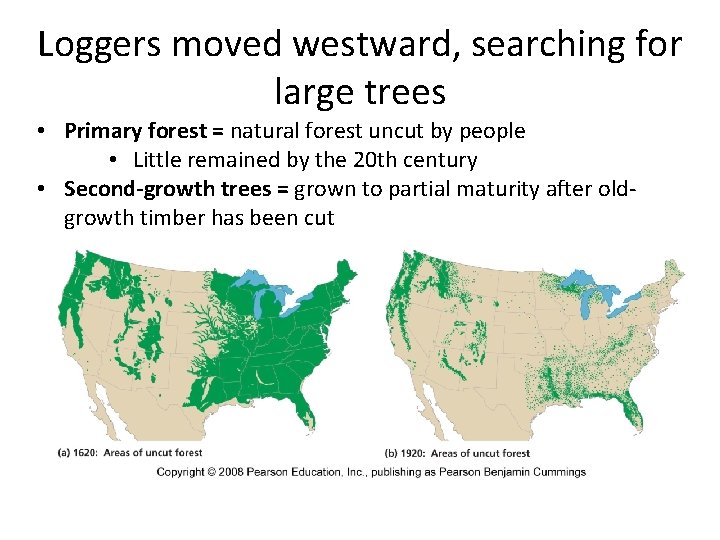
Loggers moved westward, searching for large trees • Primary forest = natural forest uncut by people • Little remained by the 20 th century • Second-growth trees = grown to partial maturity after oldgrowth timber has been cut
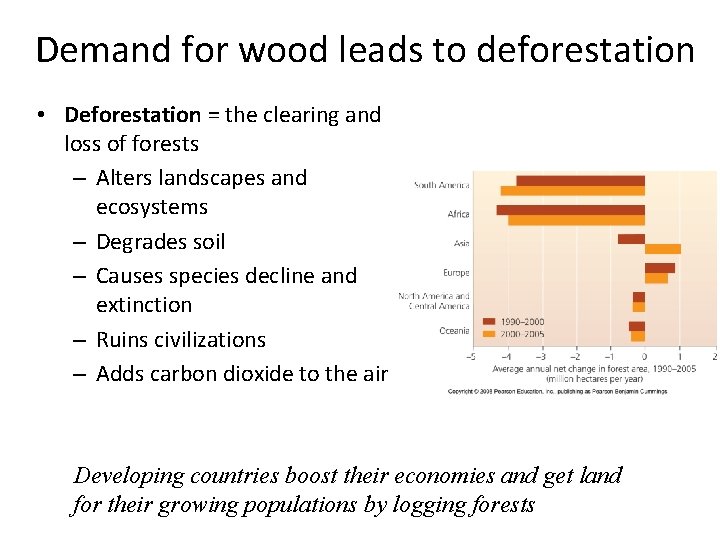
Demand for wood leads to deforestation • Deforestation = the clearing and loss of forests – Alters landscapes and ecosystems – Degrades soil – Causes species decline and extinction – Ruins civilizations – Adds carbon dioxide to the air Developing countries boost their economies and get land for their growing populations by logging forests
Monoculture
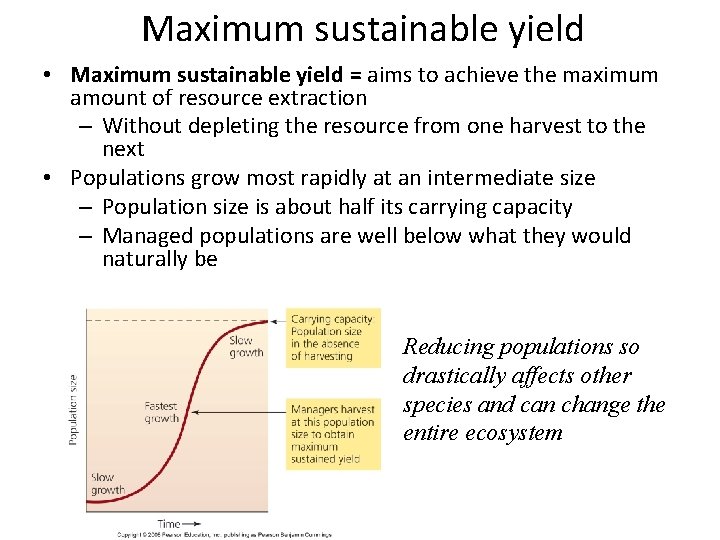
Maximum sustainable yield • Maximum sustainable yield = aims to achieve the maximum amount of resource extraction – Without depleting the resource from one harvest to the next • Populations grow most rapidly at an intermediate size – Population size is about half its carrying capacity – Managed populations are well below what they would naturally be Reducing populations so drastically affects other species and can change the entire ecosystem
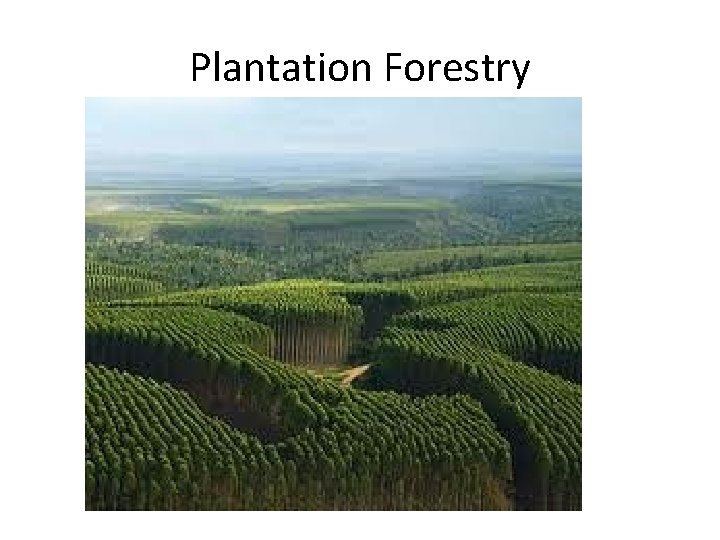
Plantation Forestry
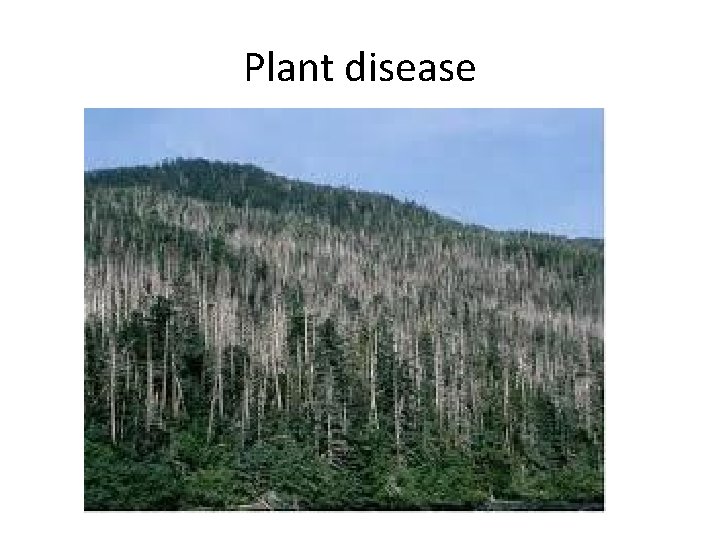
Plant disease
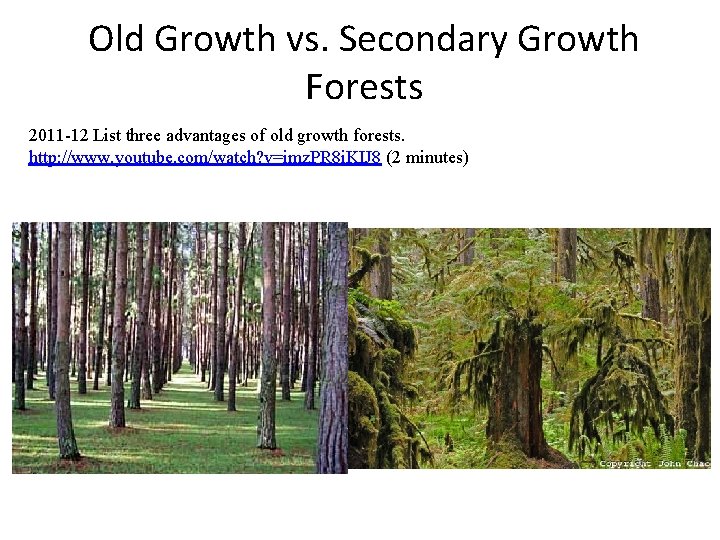
Old Growth vs. Secondary Growth Forests 2011 -12 List three advantages of old growth forests. http: //www. youtube. com/watch? v=imz. PR 8 i. KIJ 8 (2 minutes)
Timber Harvesting

Why Practice Plantation Forestry ? Ease of Harvest
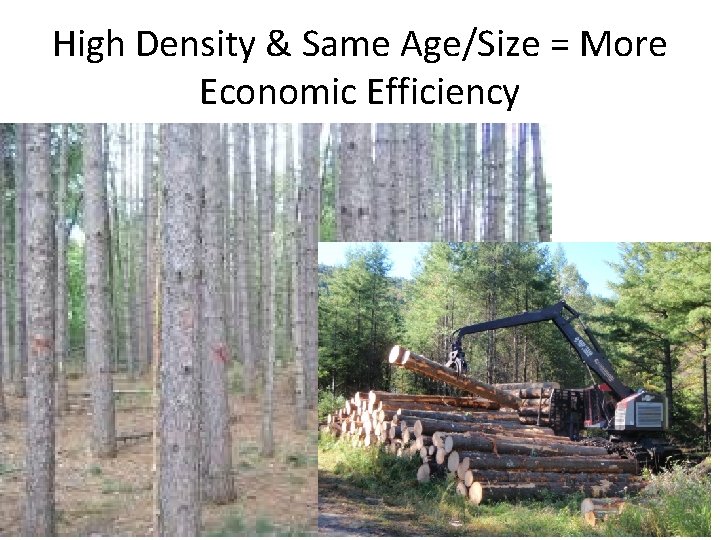
High Density & Same Age/Size = More Economic Efficiency

Harvesting timber: clear-cutting Canada Harvesting (Good Clear cutting) (5 min) http: //www. youtube. com/watch? v=Hk. D 1 esxa. K 8 U&s afe=active http: //www. youtube. com/watch? v=2 OA 7 FB 2 vr. Mo – All trees in the area are cut – Most cost-efficient – Greatest impact on forest ecosystems – May mimic some natural forms of disturbance – Destroy entire communities – Soil erosion – Public is outraged over this type of harvesting
Harvesting: other methods • Seed-tree cutting = a small number of seedproducing trees are left standing to reseed the area • Shelterwood cutting = a small number of trees are left to provide shelter for the seedlings • Selection systems = only select trees are cut – Single tree selection = widely spaced trees are cut – Group tree selection = small patches of trees are cut • All methods disturb habitat – Change forest structure and composition – Increase erosion, siltation, runoff, flooding, landslides
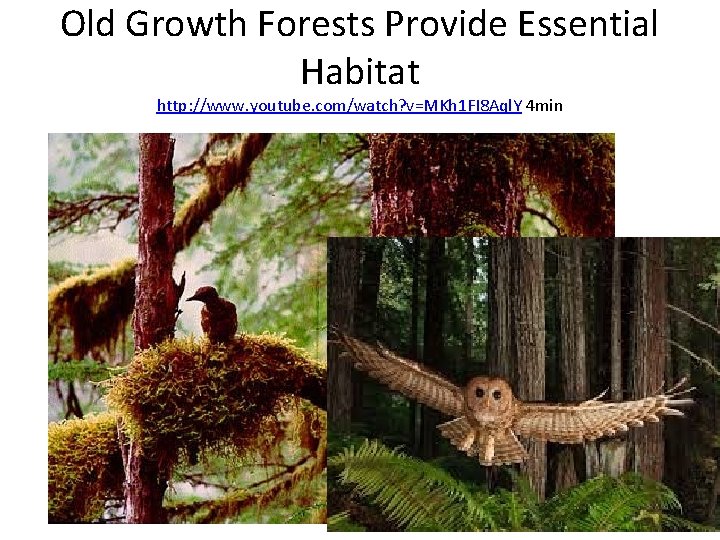
Old Growth Forests Provide Essential Habitat http: //www. youtube. com/watch? v=MKh 1 FI 8 Aql. Y 4 min
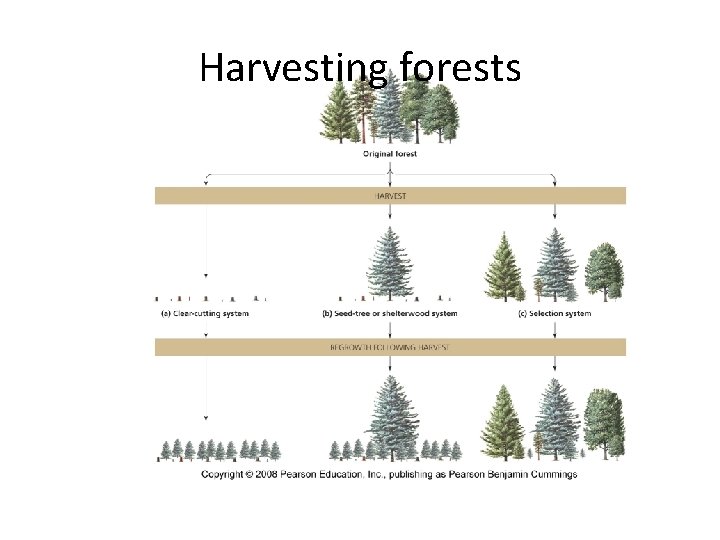
Harvesting forests

FSC

Sustainable forestry is gaining ground • Sustainable forestry certification = only products produced sustainably can be certified – International Organization for Standardization (ISO), Forest Stewardship Council (FSC) have different standards – Consumers look for logos to buy sustainably produced timber – Companies such as Home Depot sell sustainable wood • Encourages better logging practices

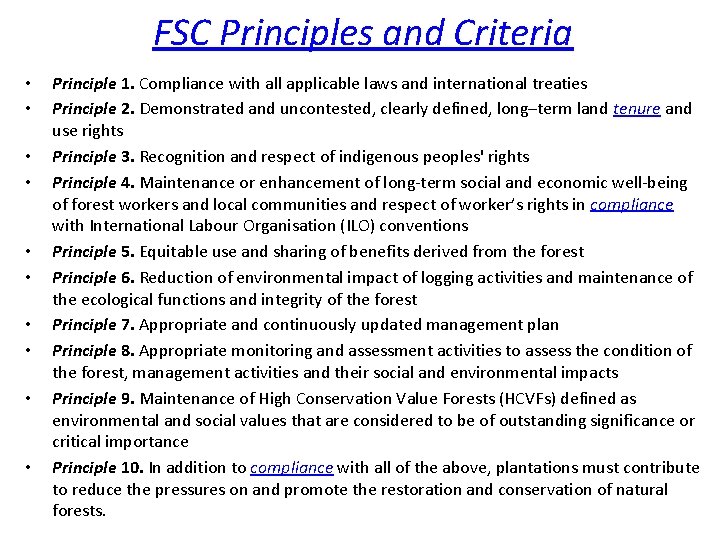
FSC Principles and Criteria • • • Principle 1. Compliance with all applicable laws and international treaties Principle 2. Demonstrated and uncontested, clearly defined, long–term land tenure and use rights Principle 3. Recognition and respect of indigenous peoples' rights Principle 4. Maintenance or enhancement of long-term social and economic well-being of forest workers and local communities and respect of worker’s rights in compliance with International Labour Organisation (ILO) conventions Principle 5. Equitable use and sharing of benefits derived from the forest Principle 6. Reduction of environmental impact of logging activities and maintenance of the ecological functions and integrity of the forest Principle 7. Appropriate and continuously updated management plan Principle 8. Appropriate monitoring and assessment activities to assess the condition of the forest, management activities and their social and environmental impacts Principle 9. Maintenance of High Conservation Value Forests (HCVFs) defined as environmental and social values that are considered to be of outstanding significance or critical importance Principle 10. In addition to compliance with all of the above, plantations must contribute to reduce the pressures on and promote the restoration and conservation of natural forests.
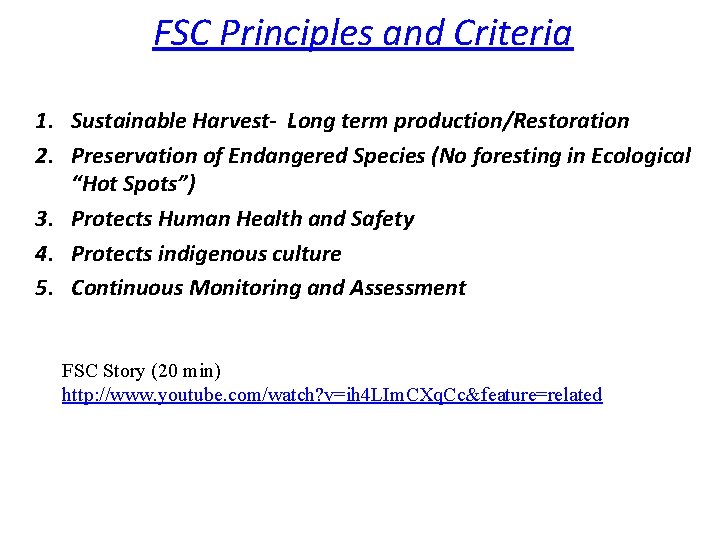
FSC Principles and Criteria 1. Sustainable Harvest- Long term production/Restoration 2. Preservation of Endangered Species (No foresting in Ecological “Hot Spots”) 3. Protects Human Health and Safety 4. Protects indigenous culture 5. Continuous Monitoring and Assessment FSC Story (20 min) http: //www. youtube. com/watch? v=ih 4 LIm. CXq. Cc&feature=related
Fire Suppression
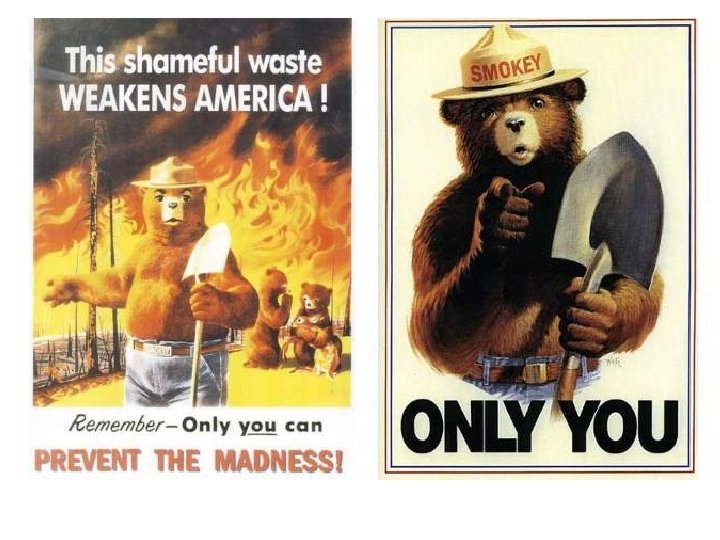
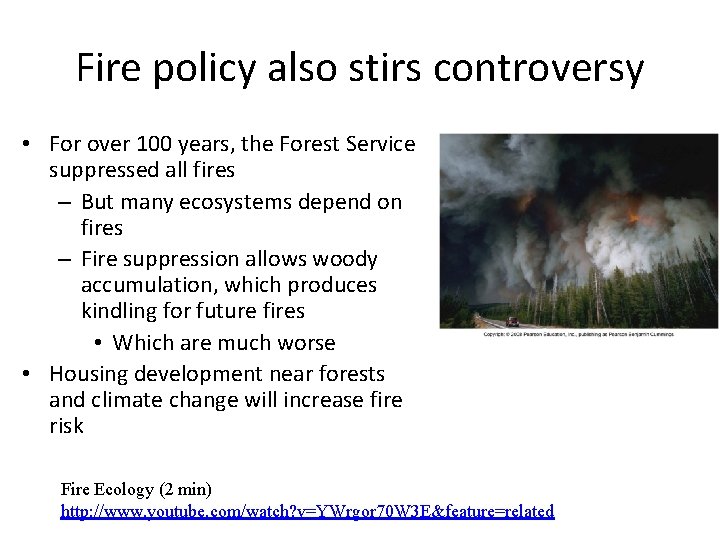
Fire policy also stirs controversy • For over 100 years, the Forest Service suppressed all fires – But many ecosystems depend on fires – Fire suppression allows woody accumulation, which produces kindling for future fires • Which are much worse • Housing development near forests and climate change will increase fire risk Fire Ecology (2 min) http: //www. youtube. com/watch? v=YWrgor 70 W 3 E&feature=related
Prescribed fires are misunderstood • Prescribed (controlled) burns = burning areas of forests under carefully controlled conditions – Effective – May get out of control – Impeded by public misunderstanding and political interference • Healthy Forests Restoration Act (2003) = promotes removal of small trees, underbrush and dead trees – Passed in response to forest fires
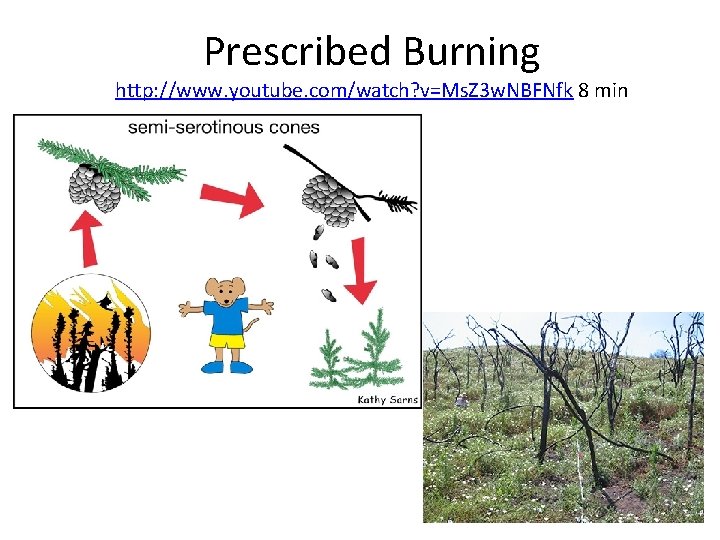
Prescribed Burning http: //www. youtube. com/watch? v=Ms. Z 3 w. NBFNfk 8 min

Forest Management Agencies

Federal agencies own land in the U. S.
Government Agencies that Manage Forests – US Forest Service – National Park Service – Bureau of Land Management (BLM) – Antiquities Act – Healthy Forest Restoration Act – US Fish and Wildlife Service
Wrap Up 1. List and describe the ecological problems related to Forestry 2. Describe best management practices to mitigate those problems

Forestry Problems • Loss of habitat caused by the removal of trees and plants – Nesting sites – Food resources (seeds, bark, grasses etc) – Shade • Erosion caused by the removal of trees and plants that hold the soil – Turbidity in streams, rivers and lakes that lower primary productivity and obstruct gills and vision of aquatic life. – Loss of top soil for crops and for ecological primary productivity
More Problems • Runoff caused by the removal of trees and plant that assist water infiltration – Aquifer depletion – Lower water table that lowers plant growth and causes wetlands to dry up • Loss of biodiversity caused by plantation or monocropping – Increased transmission of plant diseases resulting in loss of forest habitat and worsening of all problems listed above – Loss of habitat diversity provided by multi age and multi species forests
Management/Mitigation Practices • Select Cutting – Avoid Clear Cutting – Promote multi-age and multi species forests – Preserve old growth trees (habitat) • Replanting after harvest • Create artificial wetlands or other barriers to erosion and runoff

More Practices • Prescribed burns – To reduce underbrush fuel (reduce catastrophic fires) – To increase growth of grasses – To thin forests for habitat and animal movement – To allow plants to reproduce – To enrich the soil • Promote Consumer Awareness Certification Programs (Market-Based) – FSC
- Slides: 38