
Sustainable Energy Planning for Autonomous Power System of
Sustainable Energy Planning for Autonomous Power System of Crete BSEC - 2 nd ISC Energy & Climate Change 8 -9 Oct 09 Dr Emmanuel Karapidakis Laboratory of Renewable Energy Sources – TEIC Greece 1
Electric Energy Generally electricity consumption is an indicator of the development level of each country or region Nowadays, a higher per capita consumption does not necessarily indicate a superior level of development Energy efficiency and energy saving are crucial factors A most accurate indicator is energy consumption per GDP 2
Power System’s Structure An electric power system is comprised of the following parts: Consumers (customers), who require electricity; Sources of the electric energy, electric power plants of various types and sizes; Delivery system, by which the electric energy is moved from the generators to the consumers (electric loads). Electric Energy Storage Systems (optional) All the parts are electrically connected and operate in an electric balance. 3
Power System’s Requirements PS should meet the following basic requirements: Power Balance Supply and meet any power demand (k. W) Energy Balance Supply and meet required energy whenever needed (k. Wh) Power Quality Supply energy and power with specific characteristics: 1. Voltage (volt) 2. Frequency (Hz) 4
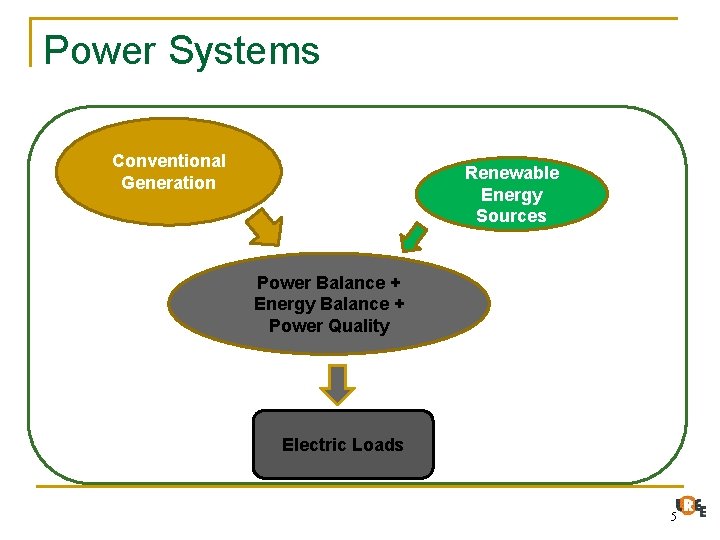
Power Systems Conventional Generation Renewable Energy Sources Power Balance + Energy Balance + Power Quality Electric Loads 5
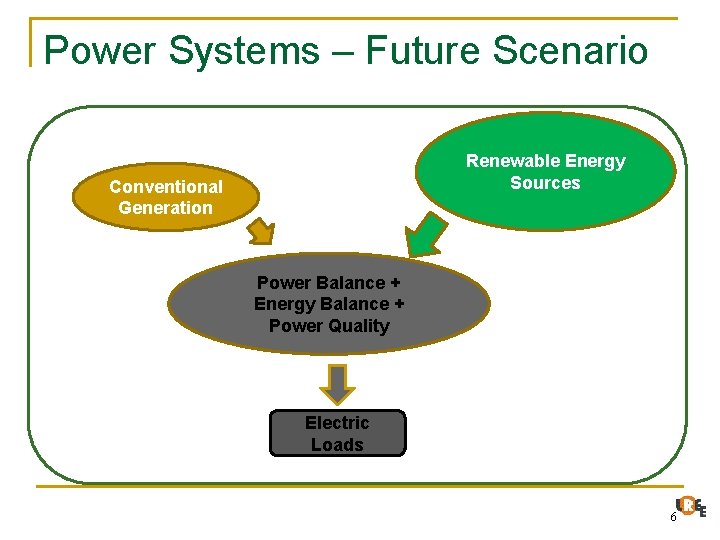
Power Systems – Future Scenario Renewable Energy Sources Conventional Generation Power Balance + Energy Balance + Power Quality Electric Loads 6
Power System Types n Two (2) main types of power systems: q q Interconnected power systems There is a potential of import and/or export of power/energy through the connection (high voltage transmission lines) Autonomous or island systems Both energy and power should be balanced by their own sources and infrastructures 7
Power System of Crete Grete is the largest Greek island with approximately 8, 500 km 2 and one of the largest in Mediterranean region. Its population is more than 600, 000 inhabitants that almost triple in summer period A representative autonomous power system (medium size) with annual energy consumption for 2008 more than 3 TWh. 8
Current Conditions & Future Prospects Autonomous Power System of Crete
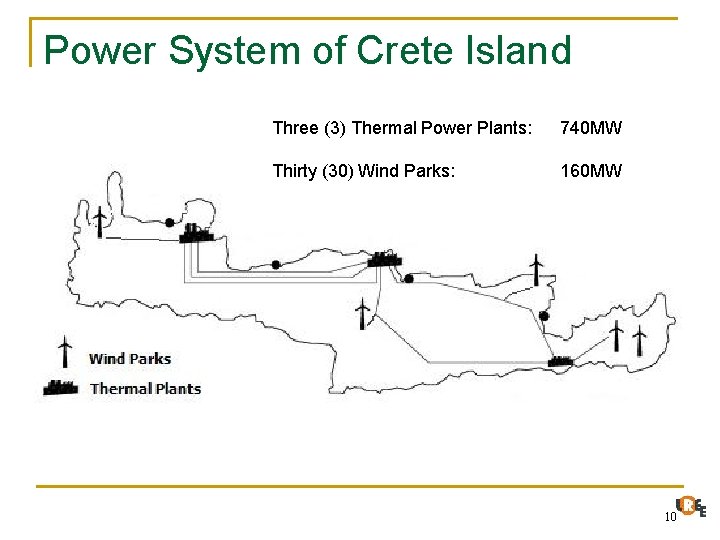
Power System of Crete Island Three (3) Thermal Power Plants: 740 MW Thirty (30) Wind Parks: 160 MW 10
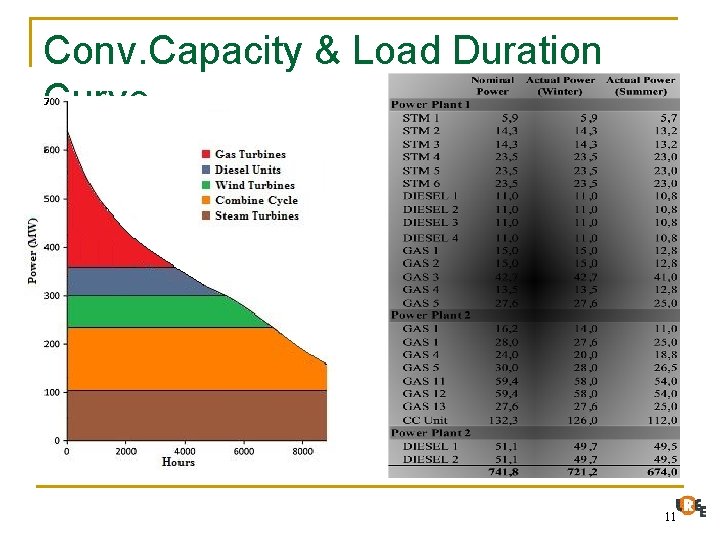
Conv. Capacity & Load Duration Curve 11
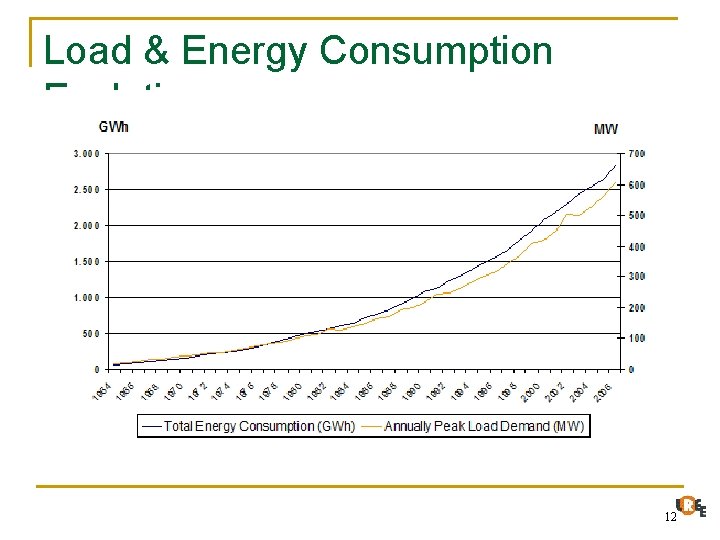
Load & Energy Consumption Evolution 12
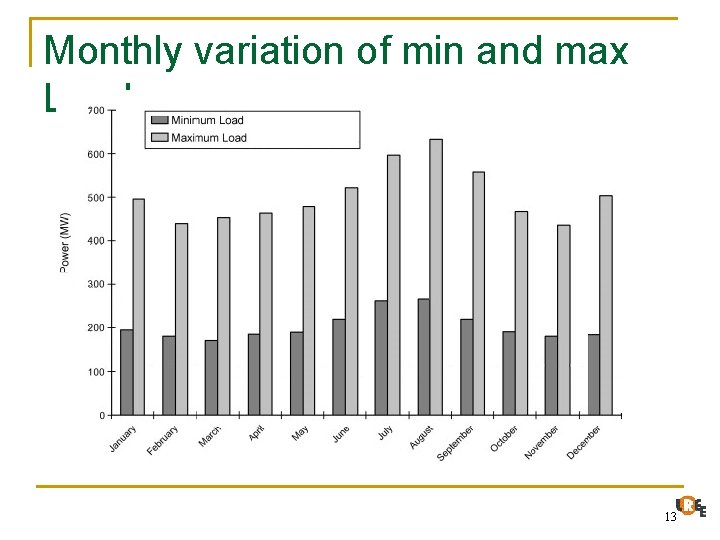
Monthly variation of min and max Load 13
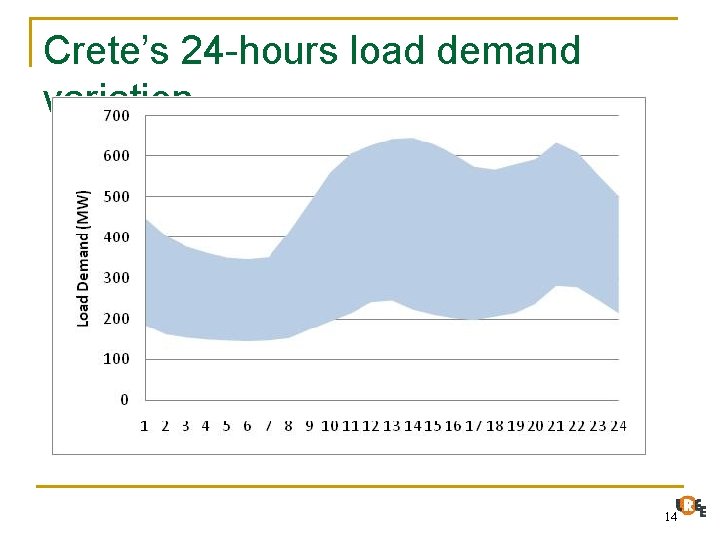
Crete’s 24 -hours load demand variation 14
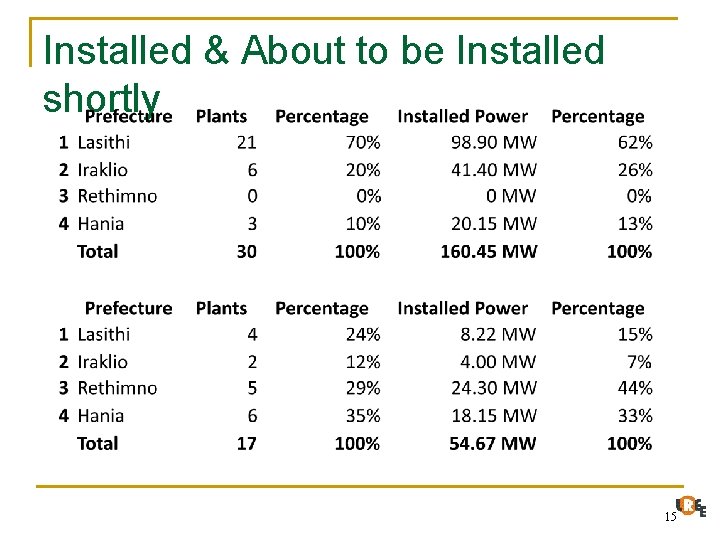
Installed & About to be Installed shortly 15
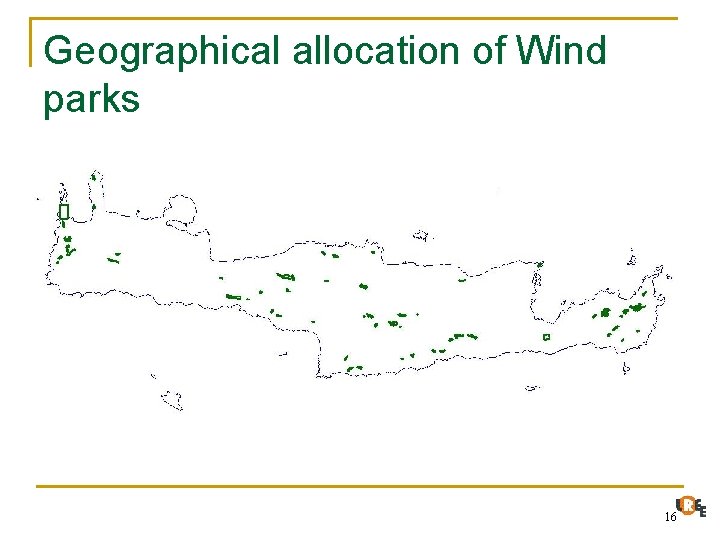
Geographical allocation of Wind parks 16
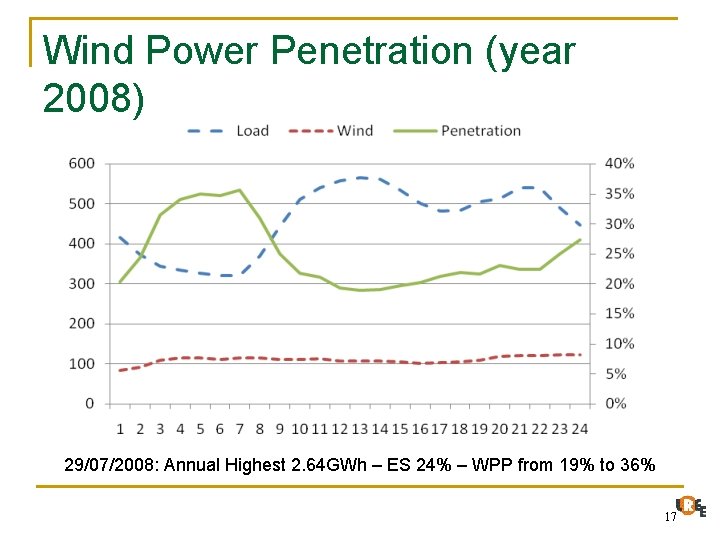
Wind Power Penetration (year 2008) 29/07/2008: Annual Highest 2. 64 GWh – ES 24% – WPP from 19% to 36% 17
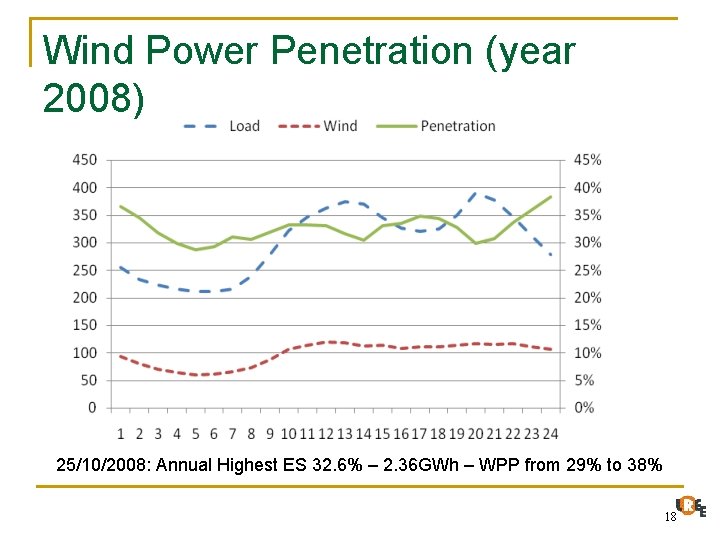
Wind Power Penetration (year 2008) 25/10/2008: Annual Highest ES 32. 6% – 2. 36 GWh – WPP from 29% to 38% 18
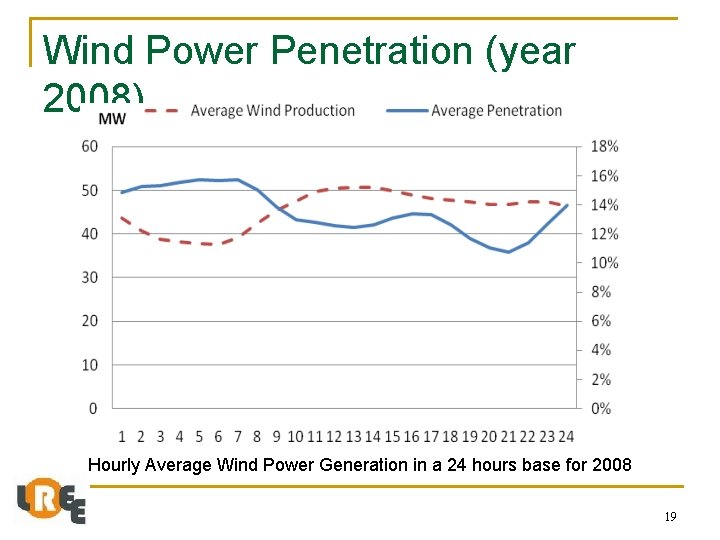
Wind Power Penetration (year 2008) Hourly Average Wind Power Generation in a 24 hours base for 2008 19
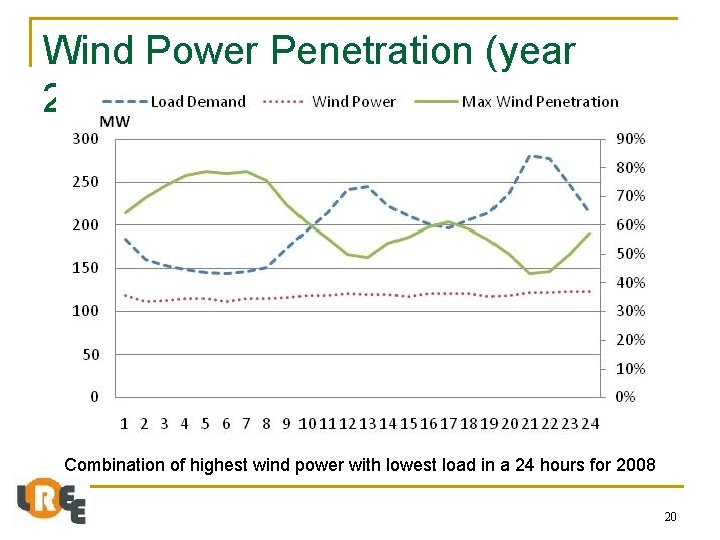
Wind Power Penetration (year 2008) Combination of highest wind power with lowest load in a 24 hours for 2008 20
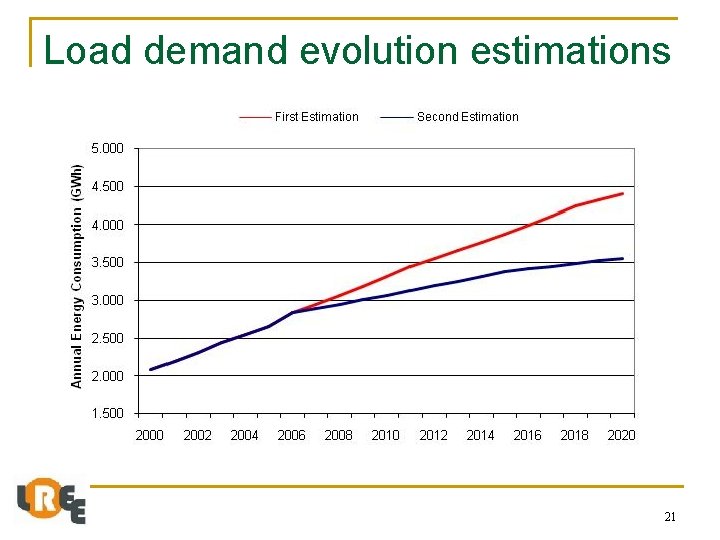
Load demand evolution estimations 21
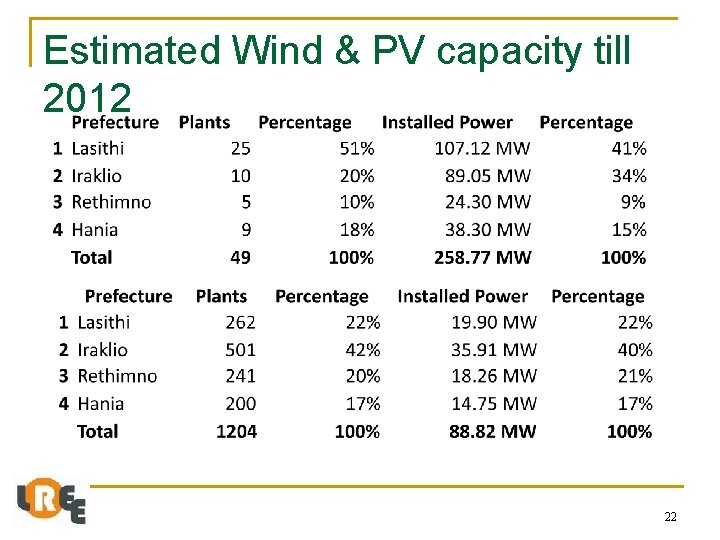
Estimated Wind & PV capacity till 2012 22
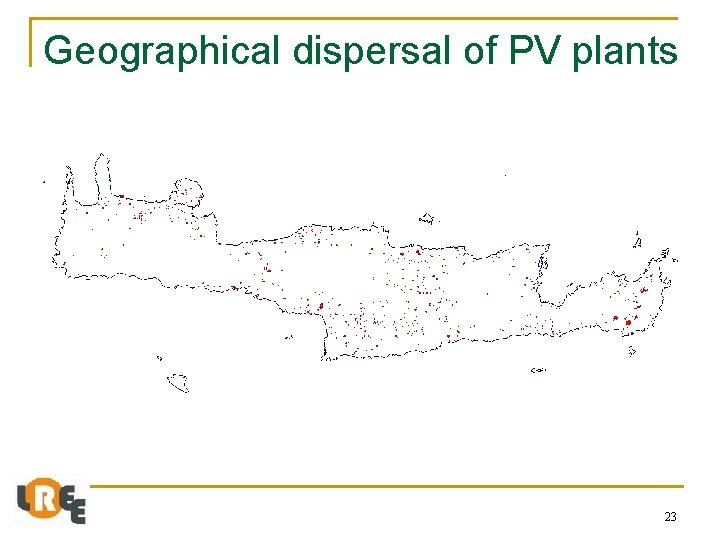
Geographical dispersal of PV plants 23
Energy Planning till 2020 Autonomous Power System of Crete
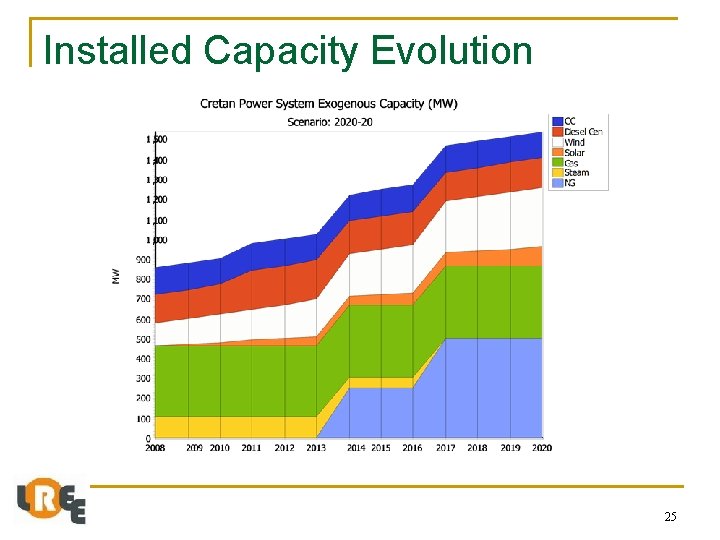
Installed Capacity Evolution 25
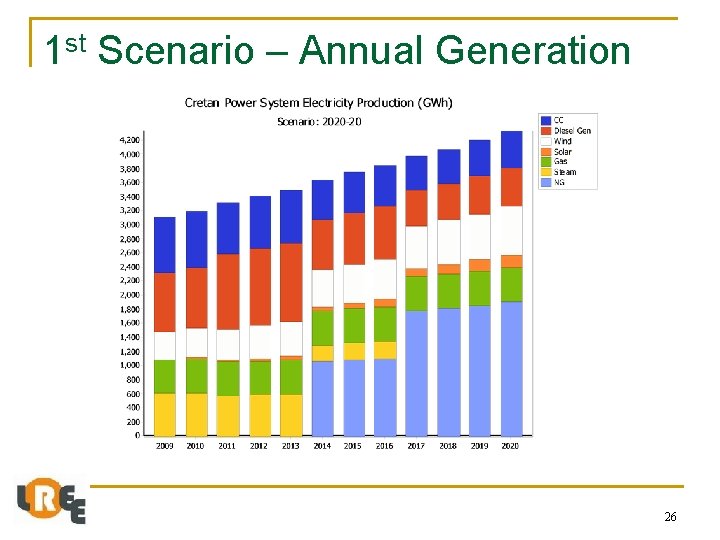
1 st Scenario – Annual Generation 26
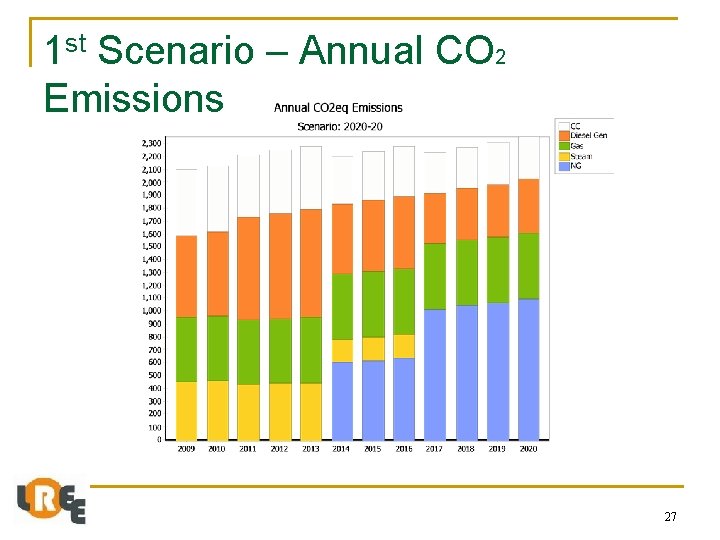
1 st Scenario – Annual CO 2 Emissions 27
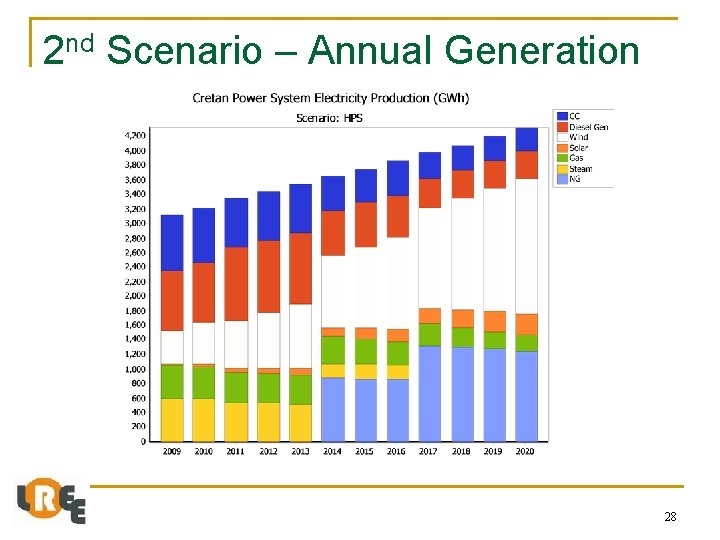
2 nd Scenario – Annual Generation 28
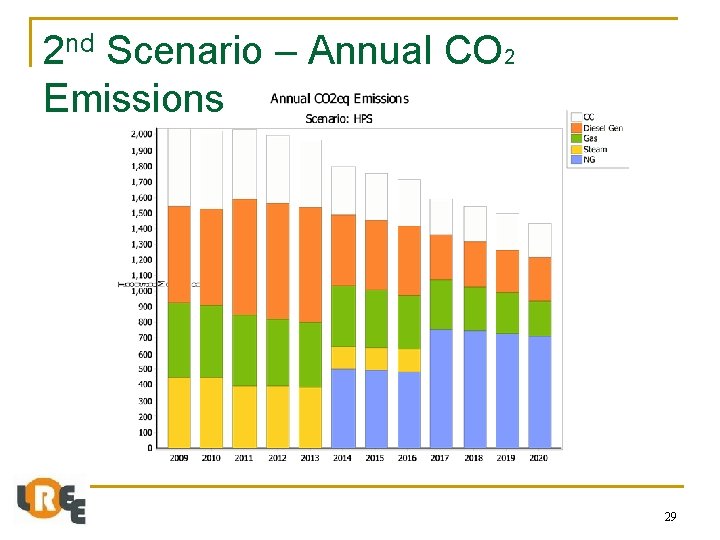
2 nd Scenario – Annual CO 2 Emissions 29
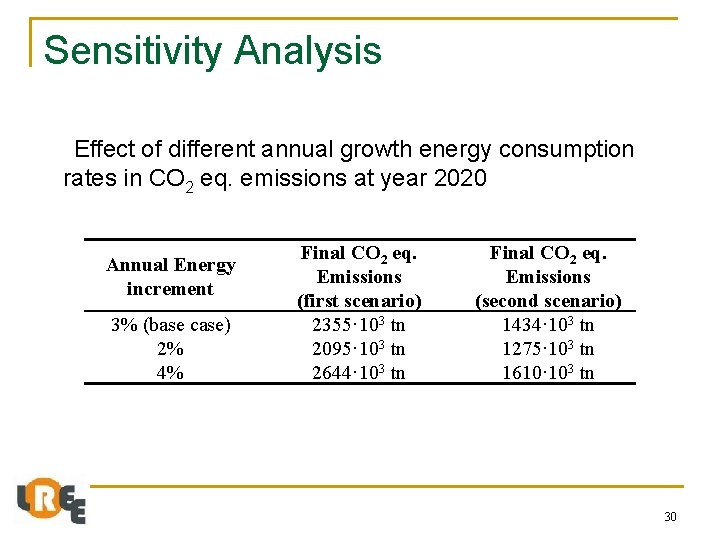
Sensitivity Analysis Effect of different annual growth energy consumption rates in CO 2 eq. emissions at year 2020 Annual Energy increment 3% (base case) 2% 4% Final CO 2 eq. Emissions (first scenario) 2355· 103 tn 2095· 103 tn 2644· 103 tn Final CO 2 eq. Emissions (second scenario) 1434· 103 tn 1275· 103 tn 1610· 103 tn 30
Conclusions Energy Planning till 2020
Assumptions The utilization of other renewable energy technologies and sources except wind turbines and photovoltaics didn’t considered. Therefore only to the wind parks and PV power plants evolution with or without the parallel construction of pump storage systems have been investigates. Finally, this study didn’t examine the possibility of Cretan power system interconnection with the continental power system of Greece. Dr Emmanuel Karapidakis Laboratory of Renewable Energy Sources – TEIC Greece 32
Conclusions I The obtained results showed that in the first considered scenario and in case of higher load demand annually increment, the improvement by renewable energy sources cannot overcome the presumed annual energy demand, resulting almost constant CO 2 eq. emissions for the whole examined period. On the other hand, in the second considered scenario, the high penetration of renewable energy technologies overcomes the increase in annual energy demand, so the final CO 2 eq. emissions almost 40% lower, compared to the first scenario. Dr Emmanuel Karapidakis Laboratory of Renewable Energy Sources – TEIC Greece 33
Conclusions II Comprehensive sustainable energy planning that successfully combines: - Grid enhancement and LNG introduction, - Advance control and intelligent operation, - Wind and solar further exploitation in collaboration with energy storage systems, - Energy saving policies, Could lead to a reliable and safe high RES share implementation project. Dr Emmanuel Karapidakis Laboratory of Renewable Energy Sources – TEIC Greece 34
- Slides: 34