
Sustainable Development in ASEAN Opportunities Challenges Dr Raman

Sustainable Development in ASEAN: Opportunities & Challenges Dr. Raman Letchumanan Environment Division, ASEAN Secretariat
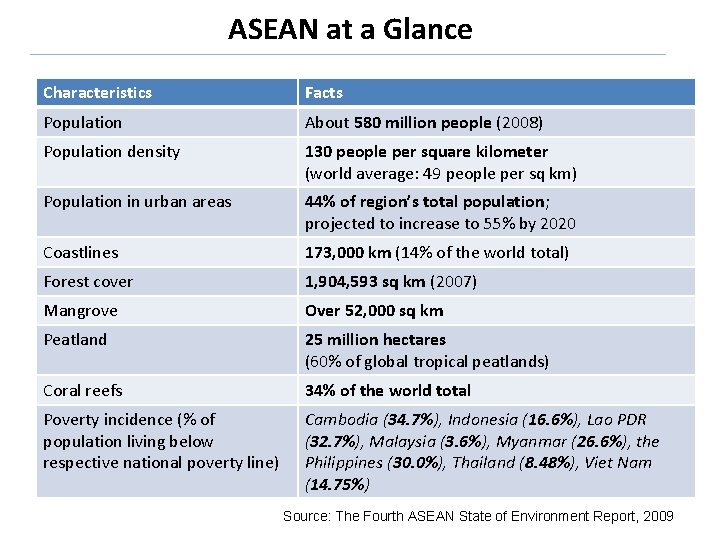
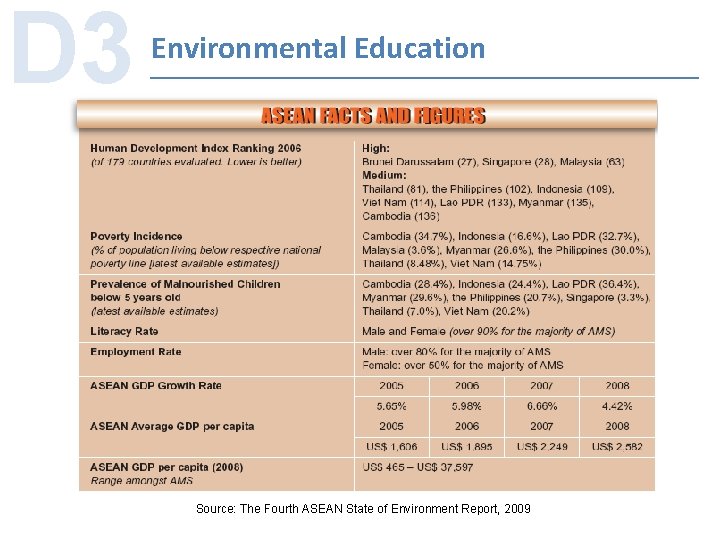
ASEAN at a Glance Characteristics Facts Population About 580 million people (2008) Population density 130 people per square kilometer (world average: 49 people per sq km) Population in urban areas 44% of region’s total population; projected to increase to 55% by 2020 Coastlines 173, 000 km (14% of the world total) Forest cover 1, 904, 593 sq km (2007) Mangrove Over 52, 000 sq km Peatland 25 million hectares (60% of global tropical peatlands) Coral reefs 34% of the world total Poverty incidence (% of population living below respective national poverty line) Cambodia (34. 7%), Indonesia (16. 6%), Lao PDR (32. 7%), Malaysia (3. 6%), Myanmar (26. 6%), the Philippines (30. 0%), Thailand (8. 48%), Viet Nam (14. 75%) Source: The Fourth ASEAN State of Environment Report, 2009

ASEAN Snapshot ASEAN Community (2015) ASEAN Economic Community ASEAN Socio. Cultural Community ASEAN Political Security Community Initiative for ASEAN Integration (IAI) AEC Blueprint (Nov 2007) ASCC Blueprint (March 2009) APSC Blueprint (March 2009) IAI Work Plan (2009 -2015) (March 2009) D 1. Global Environmental Issues A. Human Development B. Social Welfare & Protection C. Social Justice and Rights D. Environmental Sustainability E. ASEAN Identity F. Narrowing the Development Gap D 2. Transboundary Environmental Pollution D 3. Environmental Education D 4. Environmentally Sound Technology D 5. Environmentally Sustainable Cities D 6. Harmonisation of Environmental Policies & Databases D 7. Coastal & Marine Environment D 8. Natural Resources & Biodiversity D 9. Freshwater Resources D 10. Climate Change D 11. Forestry
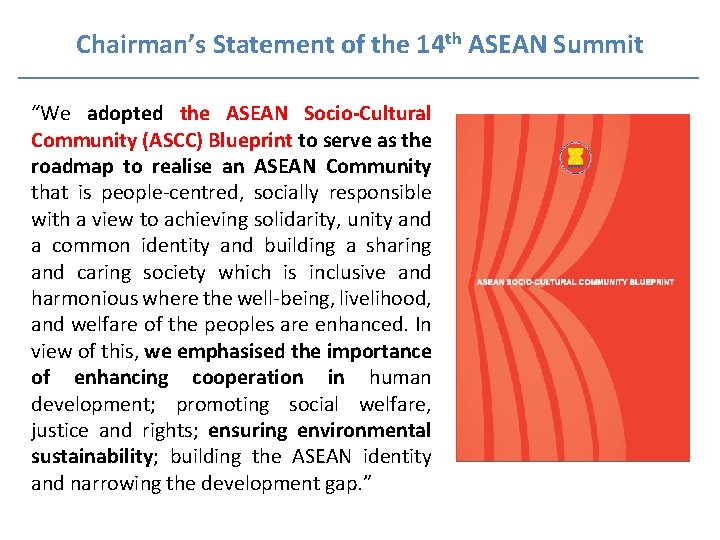
Chairman’s Statement of the 14 th ASEAN Summit “We adopted the ASEAN Socio-Cultural Community (ASCC) Blueprint to serve as the roadmap to realise an ASEAN Community that is people-centred, socially responsible with a view to achieving solidarity, unity and a common identity and building a sharing and caring society which is inclusive and harmonious where the well-being, livelihood, and welfare of the peoples are enhanced. In view of this, we emphasised the importance of enhancing cooperation in human development; promoting social welfare, justice and rights; ensuring environmental sustainability; building the ASEAN identity and narrowing the development gap. ”
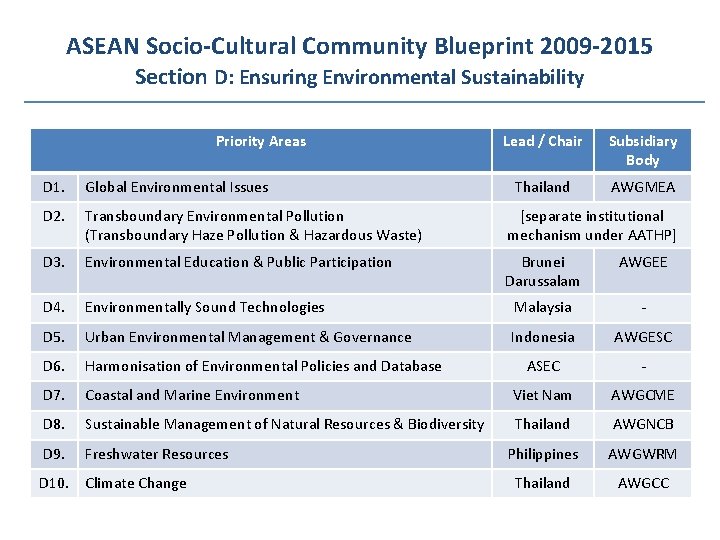
ASEAN Socio-Cultural Community Blueprint 2009 -2015 Section D: Ensuring Environmental Sustainability Priority Areas Lead / Chair Subsidiary Body Thailand AWGMEA D 1. Global Environmental Issues D 2. Transboundary Environmental Pollution (Transboundary Haze Pollution & Hazardous Waste) [separate institutional mechanism under AATHP] D 3. Environmental Education & Public Participation Brunei Darussalam AWGEE D 4. Environmentally Sound Technologies Malaysia - D 5. Urban Environmental Management & Governance Indonesia AWGESC D 6. Harmonisation of Environmental Policies and Database ASEC - D 7. Coastal and Marine Environment Viet Nam AWGCME D 8. Sustainable Management of Natural Resources & Biodiversity Thailand AWGNCB D 9. Freshwater Resources Philippines AWGWRM D 10. Climate Change Thailand AWGCC
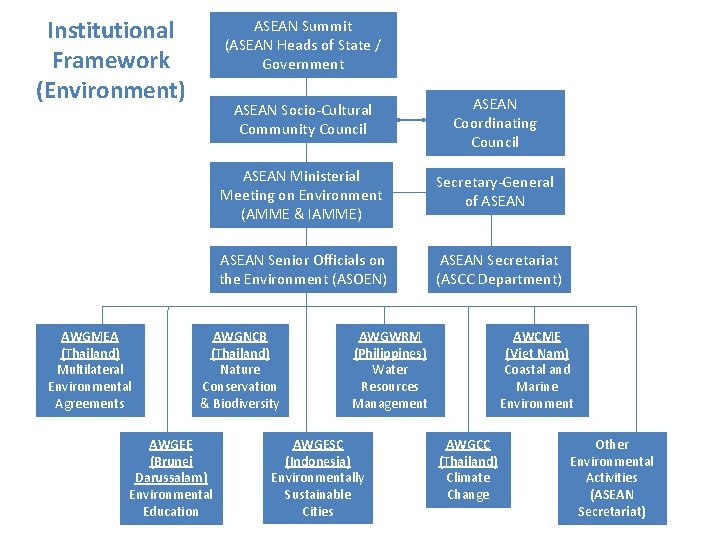
Institutional Framework (Environment) AWGMEA (Thailand) Multilateral Environmental Agreements ASEAN Summit (ASEAN Heads of State / Government ASEAN Socio-Cultural Community Council ASEAN Coordinating Council ASEAN Ministerial Meeting on Environment (AMME & IAMME) Secretary-General of ASEAN Senior Officials on the Environment (ASOEN) ASEAN Secretariat (ASCC Department) AWGNCB (Thailand) Nature Conservation & Biodiversity AWGEE (Brunei Darussalam) Environmental Education AWGWRM (Philippines) Water Resources Management AWGESC (Indonesia) Environmentally Sustainable Cities AWCME (Viet Nam) Coastal and Marine Environment AWGCC (Thailand) Climate Change Other Environmental Activities (ASEAN Secretariat)
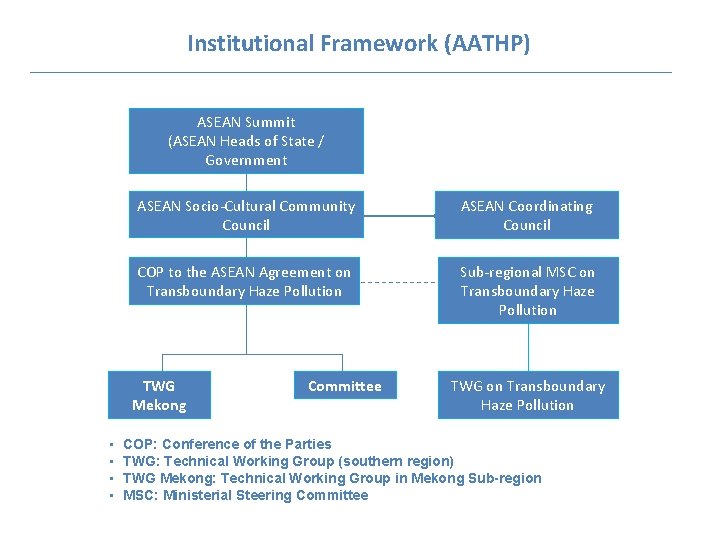
Institutional Framework (AATHP) ASEAN Summit (ASEAN Heads of State / Government ASEAN Socio-Cultural Community Council ASEAN Coordinating Council COP to the ASEAN Agreement on Transboundary Haze Pollution Sub-regional MSC on Transboundary Haze Pollution TWG Mekong • • Committee TWG on Transboundary Haze Pollution COP: Conference of the Parties TWG: Technical Working Group (southern region) TWG Mekong: Technical Working Group in Mekong Sub-region MSC: Ministerial Steering Committee
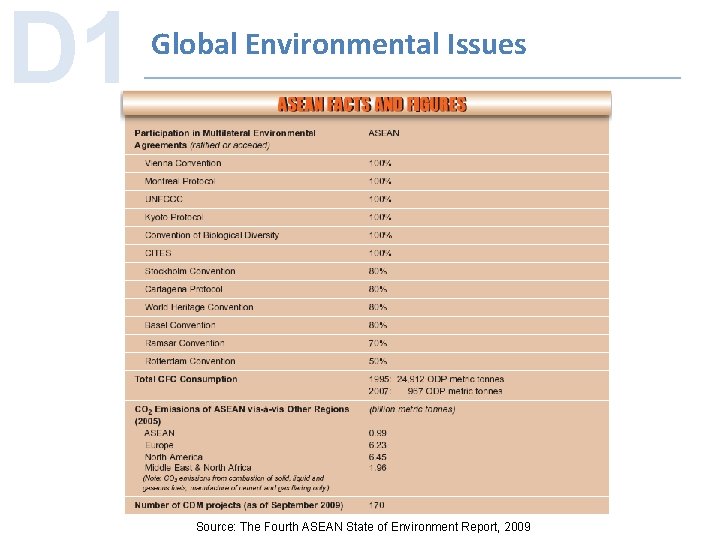
D 1 Global Environmental Issues Source: The Fourth ASEAN State of Environment Report, 2009
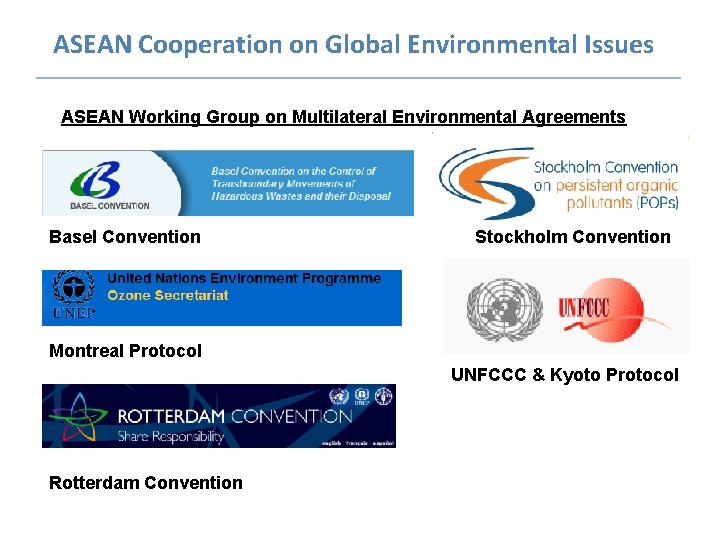
ASEAN Cooperation on Global Environmental Issues ASEAN Working Group on Multilateral Environmental Agreements Basel Convention Stockholm Convention Montreal Protocol UNFCCC & Kyoto Protocol Rotterdam Convention
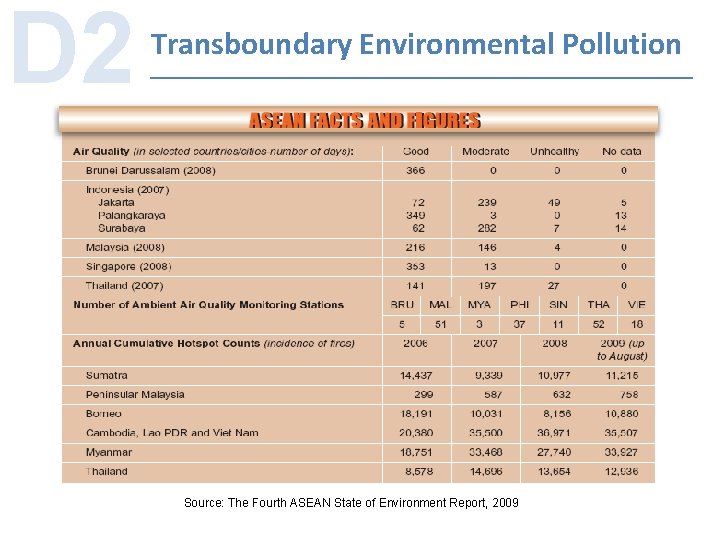
D 2 Transboundary Environmental Pollution Source: The Fourth ASEAN State of Environment Report, 2009
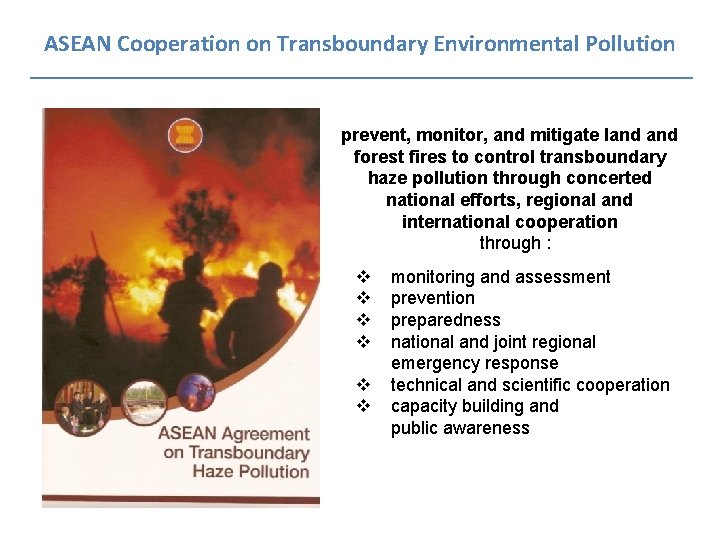
ASEAN Cooperation on Transboundary Environmental Pollution prevent, monitor, and mitigate land forest fires to control transboundary haze pollution through concerted national efforts, regional and international cooperation through : v v v monitoring and assessment prevention preparedness national and joint regional emergency response technical and scientific cooperation capacity building and public awareness
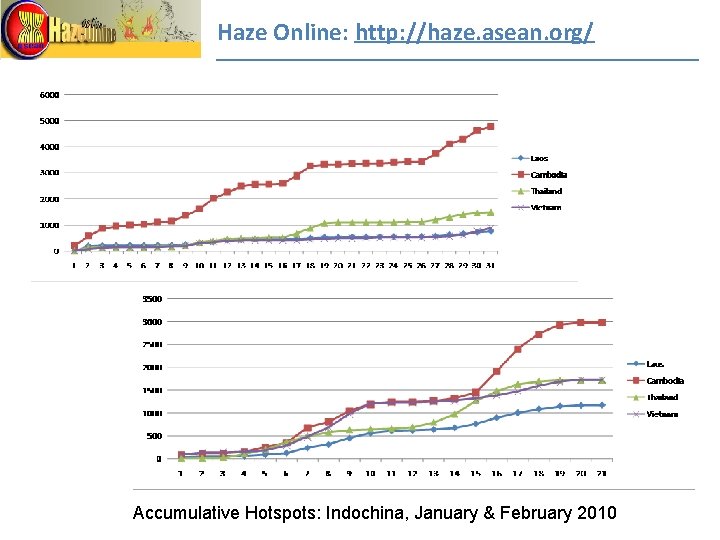
Haze Online: http: //haze. asean. org/ Accumulative Hotspots: Indochina, January & February 2010
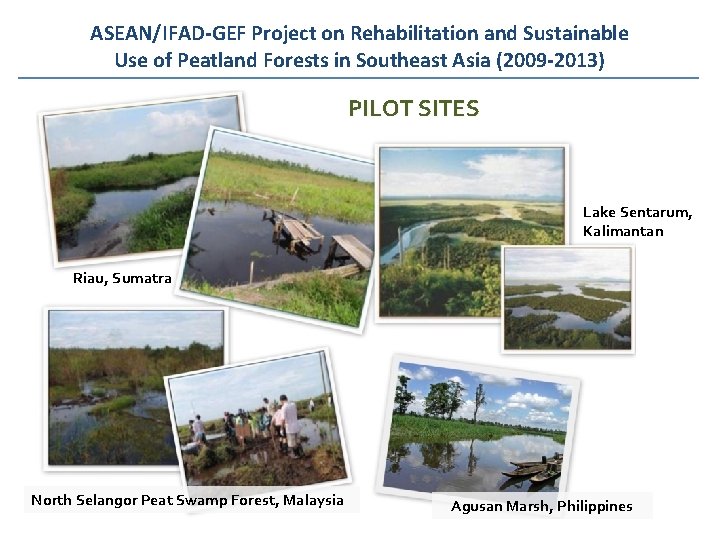
ASEAN/IFAD-GEF Project on Rehabilitation and Sustainable Use of Peatland Forests in Southeast Asia (2009 -2013) PILOT SITES Lake Sentarum, Kalimantan Riau, Sumatra North Selangor Peat Swamp Forest, Malaysia Agusan Marsh, Philippines
D 3 Environmental Education Source: The Fourth ASEAN State of Environment Report, 2009
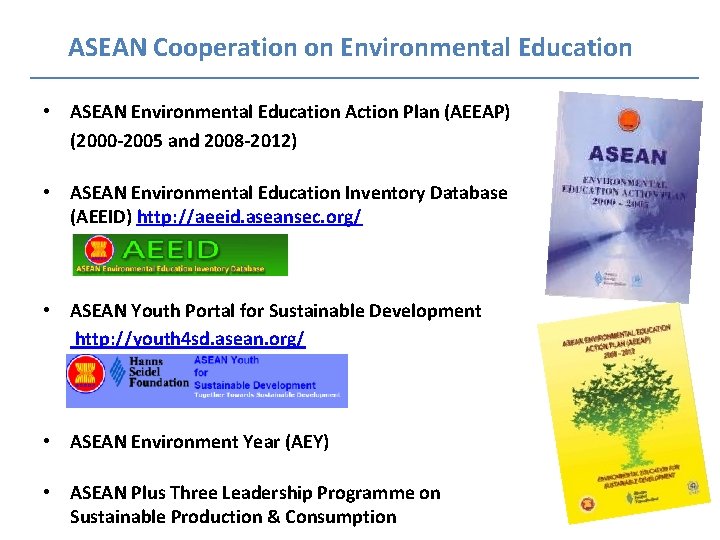
ASEAN Cooperation on Environmental Education • ASEAN Environmental Education Action Plan (AEEAP) (2000 -2005 and 2008 -2012) • ASEAN Environmental Education Inventory Database (AEEID) http: //aeeid. aseansec. org/ • ASEAN Youth Portal for Sustainable Development http: //youth 4 sd. asean. org/ • ASEAN Environment Year (AEY) • ASEAN Plus Three Leadership Programme on Sustainable Production & Consumption
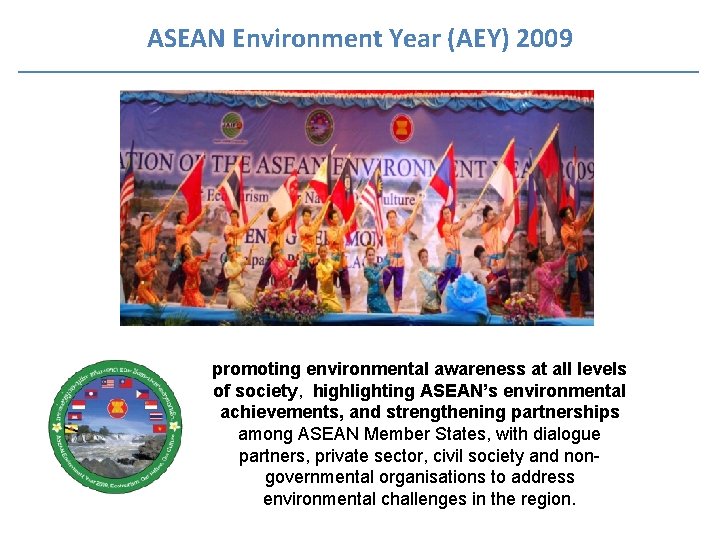
ASEAN Environment Year (AEY) 2009 promoting environmental awareness at all levels of society, highlighting ASEAN’s environmental achievements, and strengthening partnerships among ASEAN Member States, with dialogue partners, private sector, civil society and nongovernmental organisations to address environmental challenges in the region.
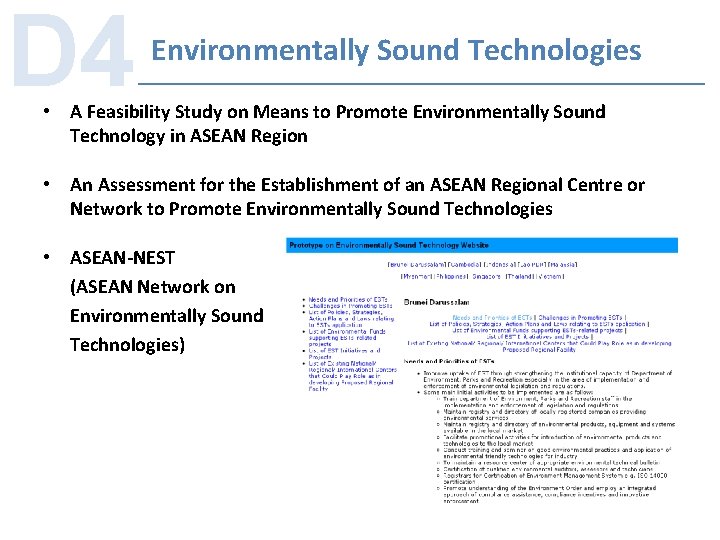
D 4 Environmentally Sound Technologies • A Feasibility Study on Means to Promote Environmentally Sound Technology in ASEAN Region • An Assessment for the Establishment of an ASEAN Regional Centre or Network to Promote Environmentally Sound Technologies • ASEAN-NEST (ASEAN Network on Environmentally Sound Technologies)
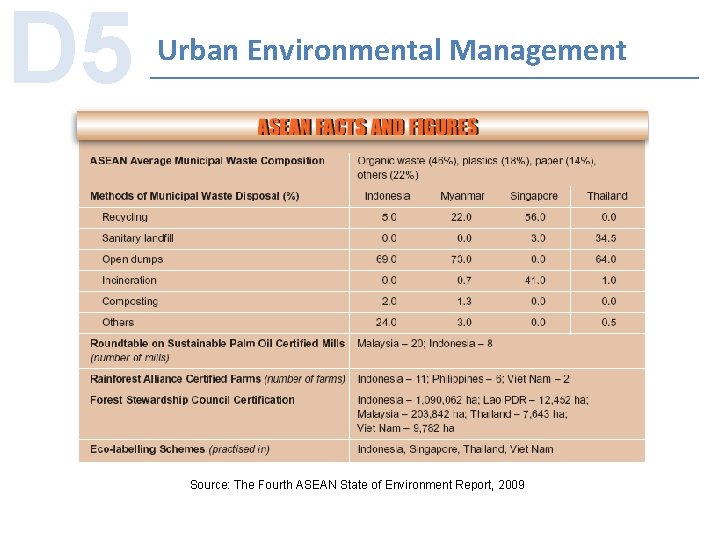
D 5 Urban Environmental Management Source: The Fourth ASEAN State of Environment Report, 2009

ASEAN Cooperation on Urban Environmental Management • ASEAN Initiative on Environmentally Sustainable Cities • Development of the List of Key Indicators for Clean Air, Clean Water, and Clean Land • Partnership with USAID for 6 Cities on Clean Air, Clean Water, Clean Land • Study Visit to Republic of Korea on Integrated Solid Waste Management • ASEAN Environmentally Sustainable City (ESC) Award Programme
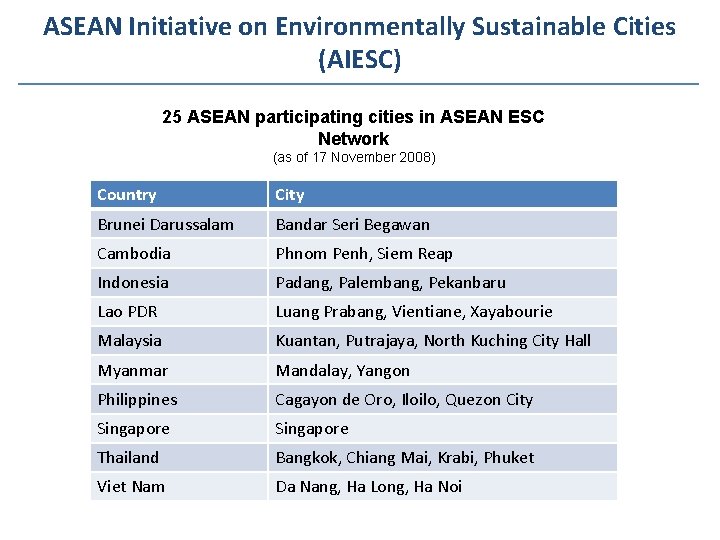
ASEAN Initiative on Environmentally Sustainable Cities (AIESC) 25 ASEAN participating cities in ASEAN ESC Network (as of 17 November 2008) Country City Brunei Darussalam Bandar Seri Begawan Cambodia Phnom Penh, Siem Reap Indonesia Padang, Palembang, Pekanbaru Lao PDR Luang Prabang, Vientiane, Xayabourie Malaysia Kuantan, Putrajaya, North Kuching City Hall Myanmar Mandalay, Yangon Philippines Cagayon de Oro, Iloilo, Quezon City Singapore Thailand Bangkok, Chiang Mai, Krabi, Phuket Viet Nam Da Nang, Ha Long, Ha Noi
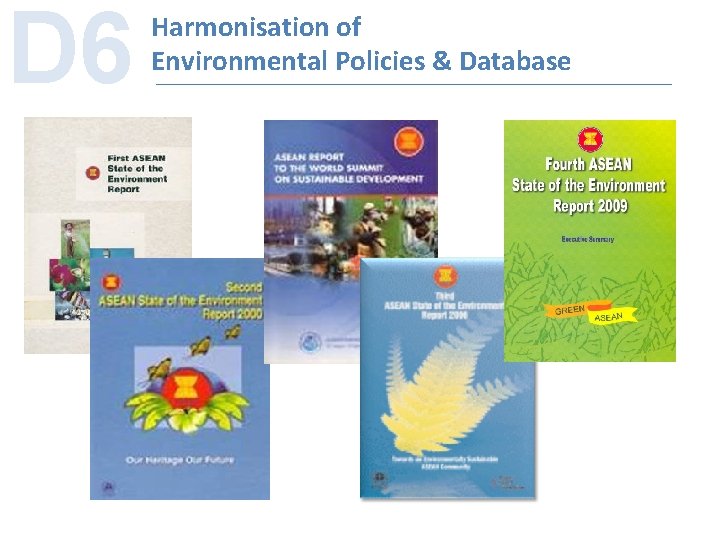
D 6 Harmonisation of Environmental Policies & Database
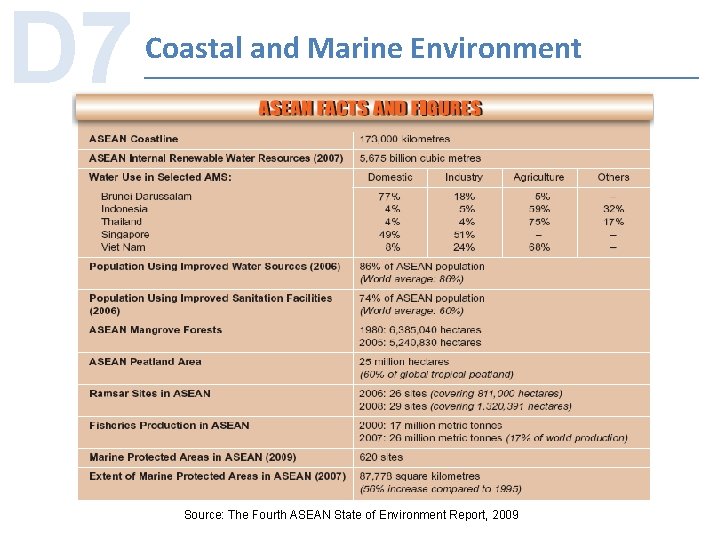
D 7 Coastal and Marine Environment Source: The Fourth ASEAN State of Environment Report, 2009
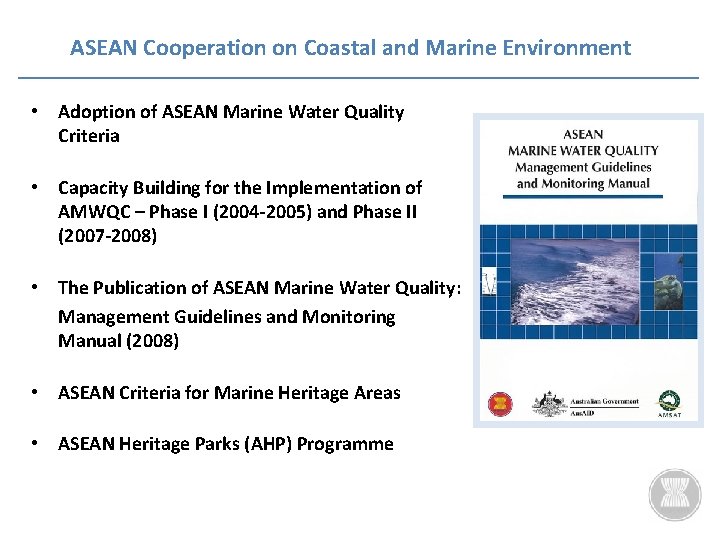
ASEAN Cooperation on Coastal and Marine Environment • Adoption of ASEAN Marine Water Quality Criteria • Capacity Building for the Implementation of AMWQC – Phase I (2004 -2005) and Phase II (2007 -2008) • The Publication of ASEAN Marine Water Quality: Management Guidelines and Monitoring Manual (2008) • ASEAN Criteria for Marine Heritage Areas • ASEAN Heritage Parks (AHP) Programme
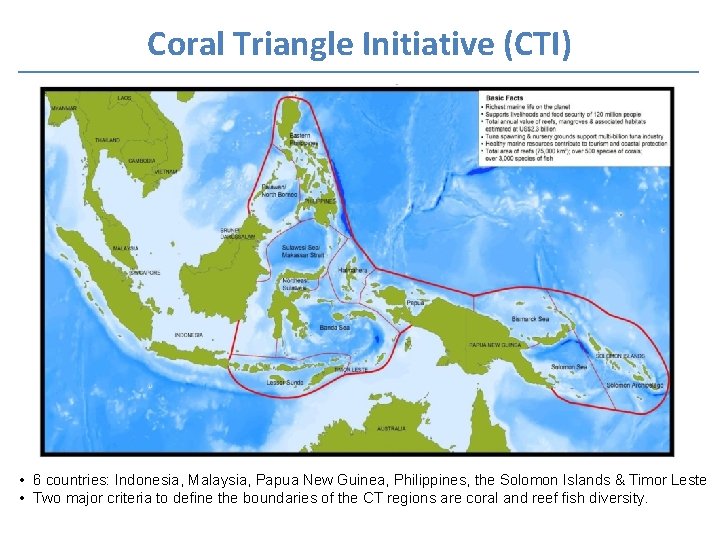
Coral Triangle Initiative (CTI) • 6 countries: Indonesia, Malaysia, Papua New Guinea, Philippines, the Solomon Islands & Timor Leste • Two major criteria to define the boundaries of the CT regions are coral and reef fish diversity.
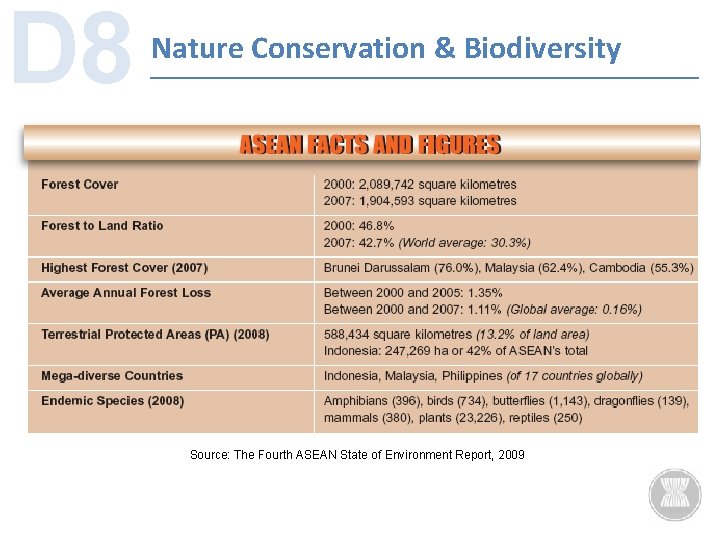
D 8 Nature Conservation & Biodiversity Source: The Fourth ASEAN State of Environment Report, 2009
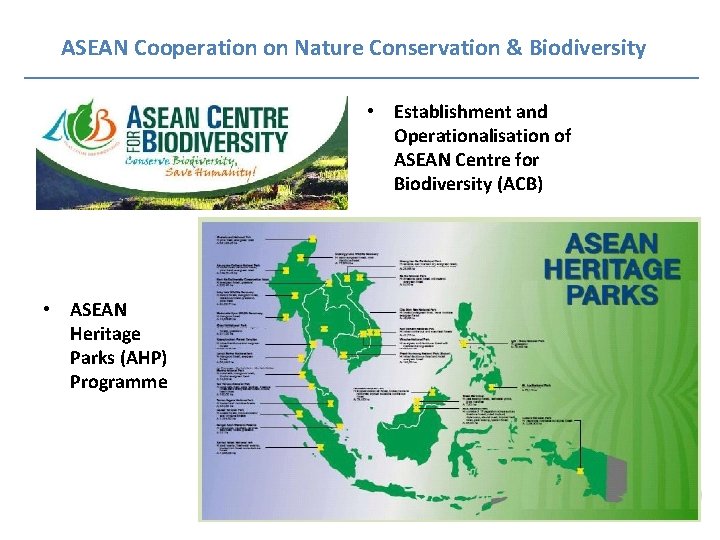
ASEAN Cooperation on Nature Conservation & Biodiversity • Establishment and Operationalisation of ASEAN Centre for Biodiversity (ACB) • ASEAN Heritage Parks (AHP) Programme
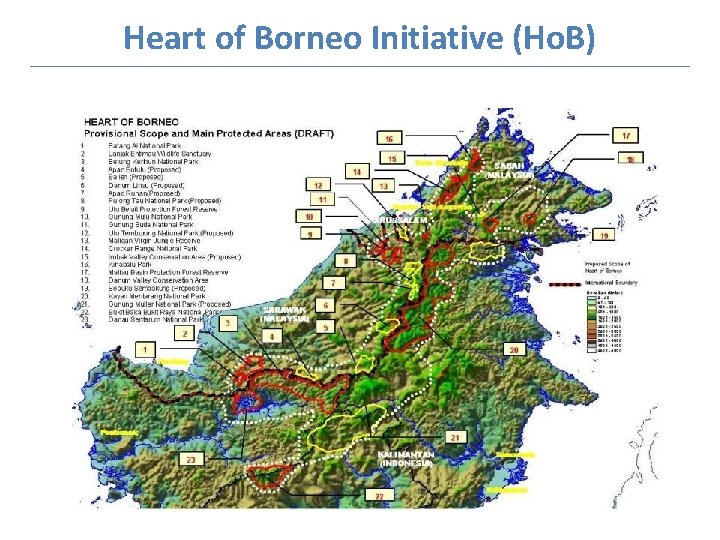
Heart of Borneo Initiative (Ho. B)
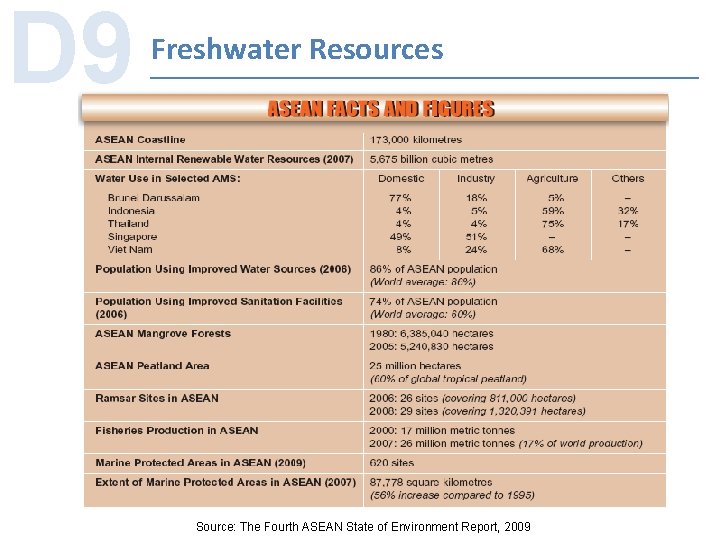
D 9 Freshwater Resources Source: The Fourth ASEAN State of Environment Report, 2009
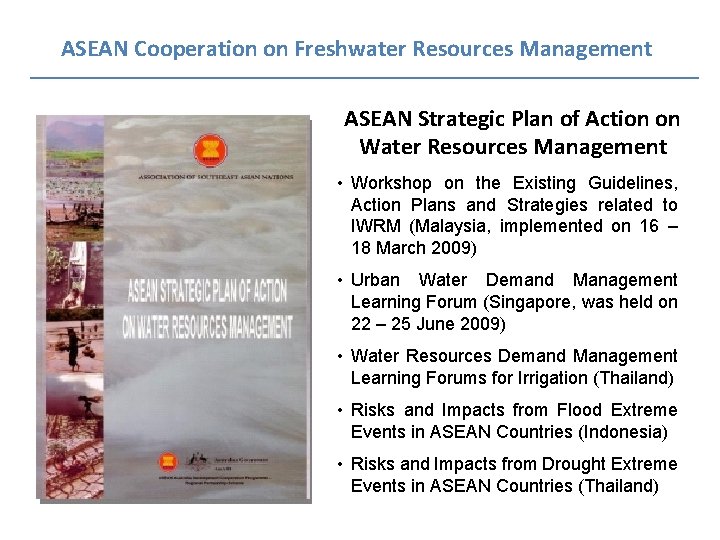
ASEAN Cooperation on Freshwater Resources Management ASEAN Strategic Plan of Action on Water Resources Management • Workshop on the Existing Guidelines, Action Plans and Strategies related to IWRM (Malaysia, implemented on 16 – 18 March 2009) • Urban Water Demand Management Learning Forum (Singapore, was held on 22 – 25 June 2009) • Water Resources Demand Management Learning Forums for Irrigation (Thailand) • Risks and Impacts from Flood Extreme Events in ASEAN Countries (Indonesia) • Risks and Impacts from Drought Extreme Events in ASEAN Countries (Thailand)
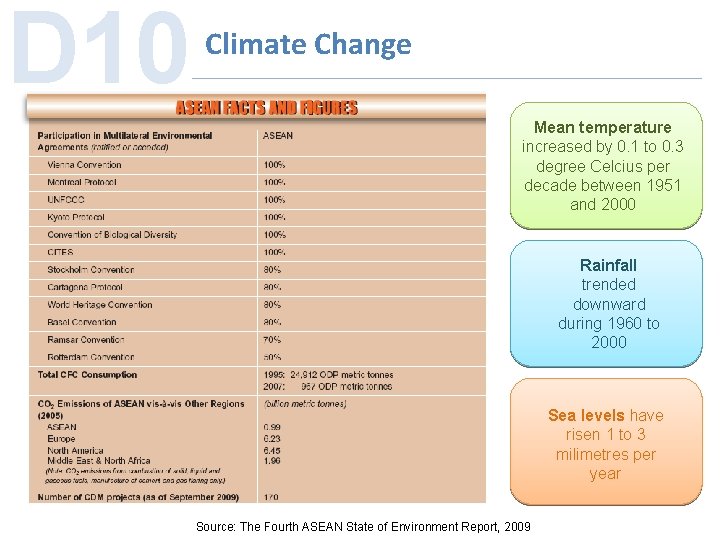
D 10 Climate Change Mean temperature increased by 0. 1 to 0. 3 degree Celcius per decade between 1951 and 2000 Rainfall trended downward during 1960 to 2000 Sea levels have risen 1 to 3 milimetres per year Source: The Fourth ASEAN State of Environment Report, 2009
Climate Change in Southeast Asia is one of the world’s most vulnerable regions to climate change impacts because: • Large proportion of population concentrated along the coastlines and economic activity is • The region is heavily reliant on agriculture for livelihoods • The region is highly dependent on natural resources and forestry • The level of poverty remains high making people more vulnerable to hazards Southeast Asia is one of the world’s most vulnerable regions to climate change impacts such as droughts, floods, typhoons, sea level rise, and heat waves.
Cross-Sectoral Nature of Climate Change • Environment all areas particularly conservation of biodiversity, water resources management, coastal and marine environment, public awareness and environmental education, forest fires and transboundary haze pollution etc • Agriculture and Forestry food security, forest degradation • Disaster Management more and severe weather related disasters such as floods, droughts, typhoons, etc • Science and Technology Weather monitoring and forecasting, research and development on climate related impacts and responses, vulnerability studies, etc • Health more and severe weather related diseases
Cross-Sectoral Nature of Climate Change • Human Development impact on poverty, sustainable livelihoods, social development, and generally on the achievement of the MDG goals • Economic Growth affects production and transaction costs through internalizing environmental costs, change in products, services and markets, drag on GDP growth, carbon taxes, allocation and trade of environmental rights, new market opportunities for environmental goods and services. • Energy, Transportation renewable energy, energy conservation, mass and efficient transportation, etc • Political and Human Security environmental security issues, political debate influenced more and more by environmental issues, in particular climate change
The Bali Road Map Adopted: • 2007 UN Climate Change Conference, Bali, Indonesia Highlights: • Bali Action Plan: charting the course for a new negotiating process designed to tackle climate change, with the aim of completing this by 2009.
Bali Action Plan Emissions Reduction • A shared vision for long-term cooperative action, including long-term global goal for emissions reductions Mitigation • Enhanced national / international action on climate change mitigation: Nationally Appropriate Mitigation Action for Developing Countries (NAMA) Technology Development & Transfer • Enhanced action on technology development and transfer to support action on mitigation and adaptation Finance & Investment • Enhanced action on the provision of financial resources and investment to support action on mitigation, adaptation and technology cooperation
Relevant Declarations / Statements • ASEAN Declaration on Environmental Sustainability (13 th ASEAN Summit, 2007) • ASEAN Declaration on COP-13 to the UNFCCC and CMP-3 to the Kyoto Protocol (13 th ASEAN Summit, 2007) • Singapore Declaration on Climate Change, Energy and the Environment (3 rd EAS Summit, 2007) • Joint Ministerial Statement of the First EAS Energy Ministers Meeting (2007) • Ministerial Statement of the Inaugural EAS Environment Ministers Meeting (2008) • ASEAN Joint Statement on Climate Change to COP-15 to the UNFCCC and CMP -5 to the Kyoto Protocol (15 th ASEAN Summit, 2009) • Singapore Resolution on Environmental Sustainability and Climate Change (11 th AMME, 2009) • ASEAN Leaders’ Statement on Joint Response to Climate Change (16 th ASEAN Summit, 2010)
SECTION D 10 OF THE BLUEPRINT FOR THE ASEAN SOCIO-CULTURAL COMMUNITY (2009 -2015) D 10. Responding to Climate Change and addressing its impacts Strategic Objective: Enhance regional and international cooperation to address the issue of climate change and its impacts on socio-economic development, health and the environment, in ASEAN Member States through implementation of mitigation and adaptation measures, based on the principles of equity, flexibility, effectiveness, common but differentiated responsibilities, respective capabilities, as well as reflecting on different social and economic conditions.
SECTION D 10 OF THE BLUEPRINT FOR THE ASEAN SOCIO-CULTURAL COMMUNITY (2009 -2015) Actions: i. Encourage ASEAN common understanding on climate change issues and where possible, engage in joint efforts and common positions in addressing these issues; ii. Encourage the efforts to develop an ASEAN Climate Change Initiative (ACCI); iii. Promote and facilitate exchange of information/knowledge on scientific research and development (R&D), deployment and transfer of technology and best practices on adaptation and mitigation measures, and enhance human resource development; iv. Encourage the international community to participate in and contribute to ASEAN’s efforts in afforestation and reforestation, as well as to reduce deforestation and forest degradation;
SECTION D 10 OF THE BLUEPRINT FOR THE ASEAN SOCIO-CULTURAL COMMUNITY (2009 -2015) Actions: v. Develop regional strategies to enhance capacity for adaptation, low carbon economy, and promote public awareness to address effects of climate change; vi. Enhance collaboration among ASEAN Member States and relevant partners to address climate related hazards, and scenarios for climate change; vii. Develop regional systematic observation system to monitor impact of climate change on vulnerable ecosystems in ASEAN; viii. Conduct regional policy, scientific and related studies, to facilitate the implementation of climate change convention and related conventions;
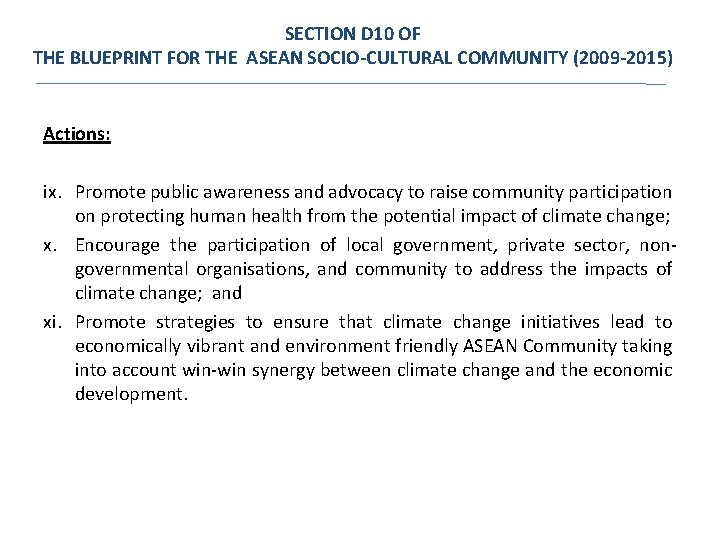
SECTION D 10 OF THE BLUEPRINT FOR THE ASEAN SOCIO-CULTURAL COMMUNITY (2009 -2015) Actions: ix. Promote public awareness and advocacy to raise community participation on protecting human health from the potential impact of climate change; x. Encourage the participation of local government, private sector, nongovernmental organisations, and community to address the impacts of climate change; and xi. Promote strategies to ensure that climate change initiatives lead to economically vibrant and environment friendly ASEAN Community taking into account win-win synergy between climate change and the economic development.
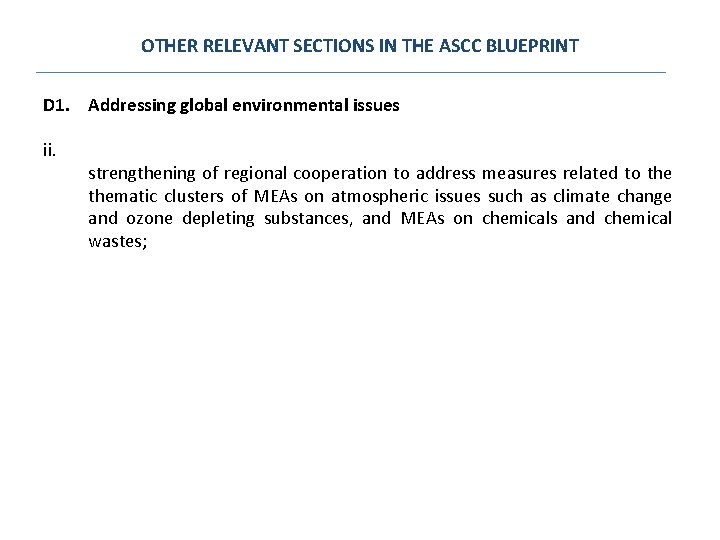
OTHER RELEVANT SECTIONS IN THE ASCC BLUEPRINT D 1. Addressing global environmental issues ii. strengthening of regional cooperation to address measures related to thematic clusters of MEAs on atmospheric issues such as climate change and ozone depleting substances, and MEAs on chemicals and chemical wastes;
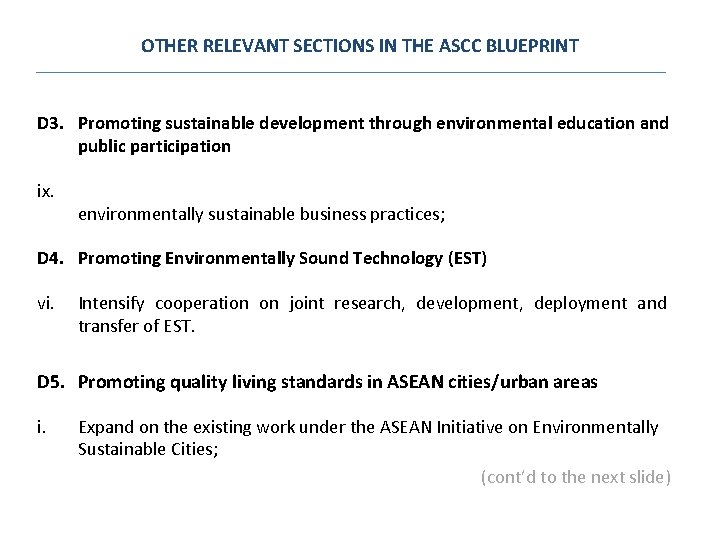
OTHER RELEVANT SECTIONS IN THE ASCC BLUEPRINT D 3. Promoting sustainable development through environmental education and public participation ix. environmentally sustainable business practices; D 4. Promoting Environmentally Sound Technology (EST) vi. Intensify cooperation on joint research, development, deployment and transfer of EST. D 5. Promoting quality living standards in ASEAN cities/urban areas i. Expand on the existing work under the ASEAN Initiative on Environmentally Sustainable Cities; (cont’d to the next slide)
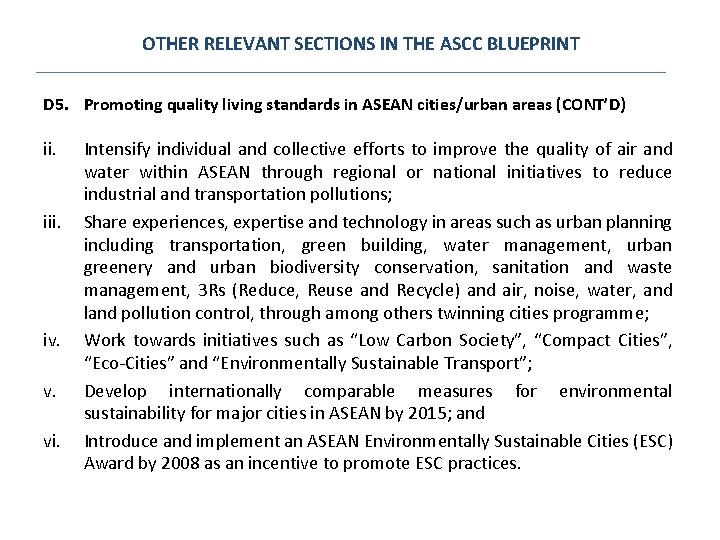
OTHER RELEVANT SECTIONS IN THE ASCC BLUEPRINT D 5. Promoting quality living standards in ASEAN cities/urban areas (CONT’D) ii. iv. v. vi. Intensify individual and collective efforts to improve the quality of air and water within ASEAN through regional or national initiatives to reduce industrial and transportation pollutions; Share experiences, expertise and technology in areas such as urban planning including transportation, green building, water management, urban greenery and urban biodiversity conservation, sanitation and waste management, 3 Rs (Reduce, Reuse and Recycle) and air, noise, water, and land pollution control, through among others twinning cities programme; Work towards initiatives such as “Low Carbon Society”, “Compact Cities”, “Eco-Cities” and “Environmentally Sustainable Transport”; Develop internationally comparable measures for environmental sustainability for major cities in ASEAN by 2015; and Introduce and implement an ASEAN Environmentally Sustainable Cities (ESC) Award by 2008 as an incentive to promote ESC practices.
te OTHER RELEVANT SECTIONS IN THE ASCC BLUEPRINT D 8. Promoting Sustainable Management of Natural Resources and Biodiversity x. xiii. such as sharing research and development experiences, exchange of experts, and training; degradation for sustainable land management to support sustainable agriculture and environment. D 9. Promoting the Sustainability of Freshwater Resources iii. vi. adequate and affordable water services by 2015; programmes as well as scientific and technological innovations in water quality improvement and supply.
OTHER RELEVANT SECTIONS IN THE ASCC BLUEPRINT D 11. Promoting Sustainable Forest Management (SFM) iv. deforestation and forest degradation, and to promote a reformed afforestation and reforestation under the Clean Development Mechanism (A/R-CDM) effort and to identify and avail appropriate international incentives and assistance;
ASEAN Climate Change Initiative (ACCI) Strategic Objective: • to enhance regional and international cooperation to address climate change and its impacts on socio-economic development, health and the environment, in AMS through implementation of mitigation and adaptation measures, based on the principles of equity, flexibility, effectiveness, common but differentiated responsibilities, respective capabilities, as well as reflecting on different social and economic conditions. Scope of Collaboration: • Policy and Strategy formulation • Information sharing • Capacity building • Technology Transfer
ASEAN Working Group on Climate Change AWGCC: to coordinate the development of the ASEAN Climate Change Initiative. • Membership: senior policy/technical officials • Chairmanship: expression of interest (3 -year tenure) • Frequency of Meetings: at least once a year • Financial Arrangements: self-financing basis • Reporting: to ASOEN
Good of Offices of the Secretary-General of ASEAN Proposed Tasks: • Facilitate international climate change negotiations • ASEAN Regional Strategy on Climate Change • Baseline Studies, Vulnerability & Impact Assessments • Cross Sectoral / Community Dialogue, Coordination, Implementation • Platform for Donor/Partner Coordination and Coordinated Program Development • Well resource platform for climate change actions
Cool ASEAN, Green Capitals Initiative Background • Proposed by Dr. Surin Pitsuwan, Secretary-General of ASEAN • supported by the ASEAN Environment Ministers Objective • To address climate change through environmentally friendly means in meeting the daily needs of cities such as transportation, waste management, energy conservation, etch through grass-roots actions and by the people Roles • Governor of Bangkok has agreed to take the lead on the implementation of the initiative • ASEAN Secretariat shall play an enabling and supporting role • World Bank has agreed to partner with ASEAN on this initiative
Climate Change: Other Sectors Forestry Agriculture Disaster Management Energy Transport • ASEAN Multi-Sectoral Framework on Climate Agriculture, Fisheries and Forestry towards Food Security (AFCC) Change: • Climate Change Adaption (CCA) in the Work Programme for the ASEAN Agreement on Disaster Management and Emergency Response (AADMER) 2010 -2015 • ASEAN Plan of Action for Energy Cooperation (APAEC) 2010 -2015 (i) Energy Efficiency and Conservation; (ii) Renewable Energy; and (iii) Coal and Clean Coal Technology. • ASEAN-Japan Action Plan on Environment Improvement in Transport Sector (AJ-APEIT) • Energy Efficiency and Climate Change Mitigation for the Land Transport Sector (ASEAN-German) • ASEAN Air Transport Integration Project (AATIP) (ASEAN-EC)
Thank You http: //environment. asean. org/
- Slides: 51