
Sustainable Development and Green Jobs an overview Research
Sustainable Development and Green Jobs: an overview Research Conference: ‘Green Jobs for Asia and the Pacific’ Niigata, Japan, 21 -23 April 2008 Peter Poschen International Labour Office (ILO) 1
Why green jobs? Asia-Pacific Region: • • • economic growth 2 x world average ~900 m poor 60% world population on 40% land lowest arable land/cap and water/cap loss of biodiversity and renewable resources • growing pollution water, air, soil 2
Enter climate change Short-medium term: • Increased variability weather: • Agriculture: ~350 m subsistance farmers • Storms and floods: • Asian mega-deltas and coasts • Pacific islands 3
Climate change Long-term: • Rising temperature and sea-level • Water shortages 1 bn people Asia by 2050 • Existence of small island states ‘Grow now, clean up later’ selfdefeating, unviable long-term 4

Exponential growth in a finite world? 5

Great transformation ‘Green growth’, ‘clean development’ • • Pollution control Fewer resources/output (eco-efficient) No pollution and degradation (eco-effective) Sustainable economies Profound impact on enterprises and workers = Social effectiveness and sustainability? 6
What are green jobs? • Reduce consumption of energy and raw materials (‘dematerialize economy’) • Avoid GHG emissions (‘decarbonize economy’) • Protect and restore ecosystems • Minimize waste and pollution 7
Green Jobs defined ‘Green jobs are decent work created in economic sectors and activities, which reduces their environmental impact, ultimately leading to environmentally, economically and socially sustainable enterprises and economies. ’ 8
High potential sectors • Energy efficiency: buildings, industry, transport • Renewable energy • Mobility: mass transportation • Recycling, waste management • Sustainable agriculture and forestry • Environmental services 9
Examples of actually or potentially Green Jobs • Renewable energy: 2. 3 m jobs • Environmental industries US: 5. 3 m jobs • Solar thermal China: 1, 000 manufacturers, 600, 000 jobs • Ethanol Brazil: 500, 000 jobs 10
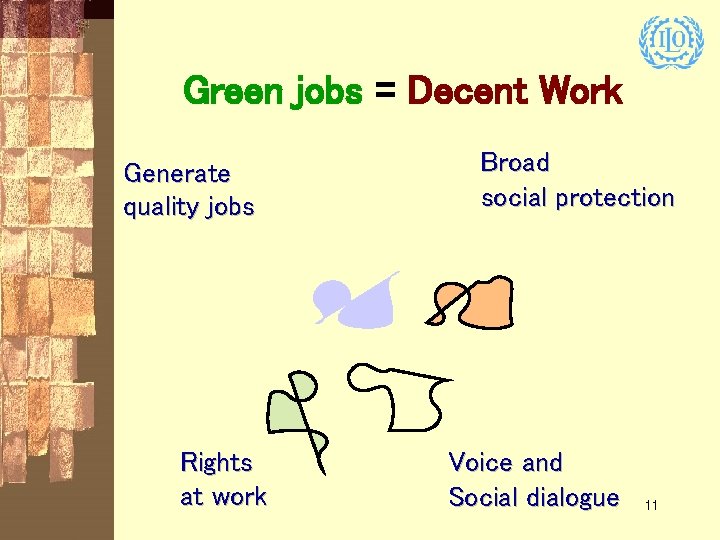
Green jobs = Decent Work Generate quality jobs Rights at work Broad social protection Voice and Social dialogue 11
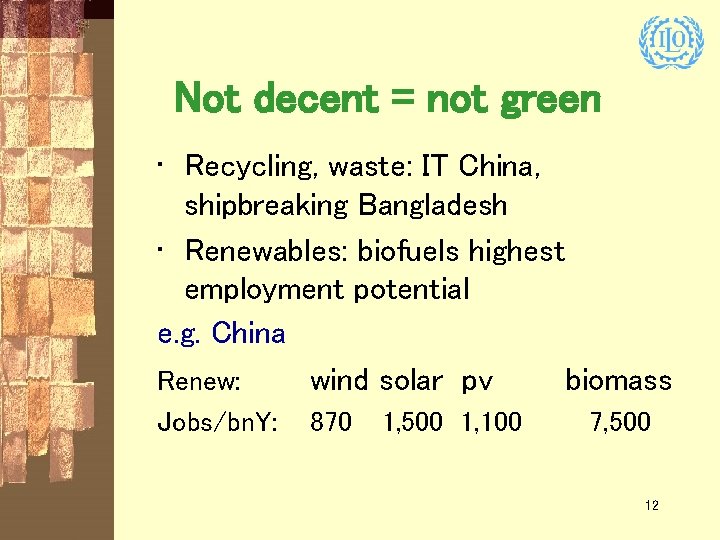
Not decent = not green • Recycling, waste: IT China, shipbreaking Bangladesh • Renewables: biofuels highest employment potential e. g. China Renew: wind solar pv biomass Jobs/bn. Y: 870 1, 500 1, 100 7, 500 12
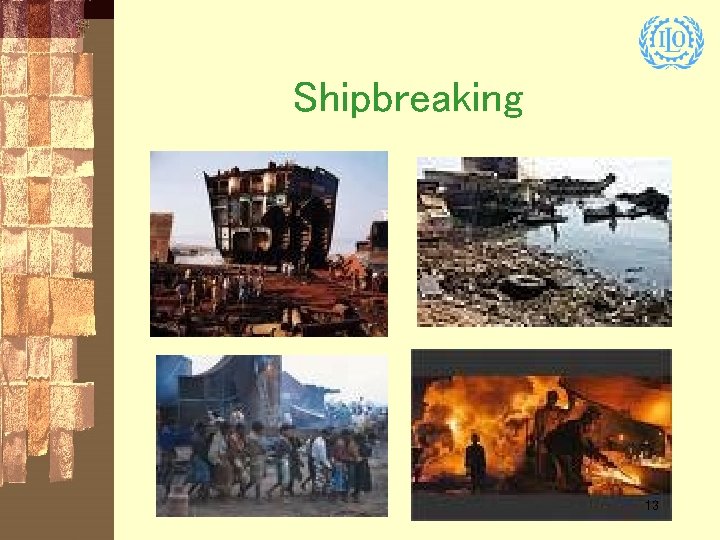
Shipbreaking 13
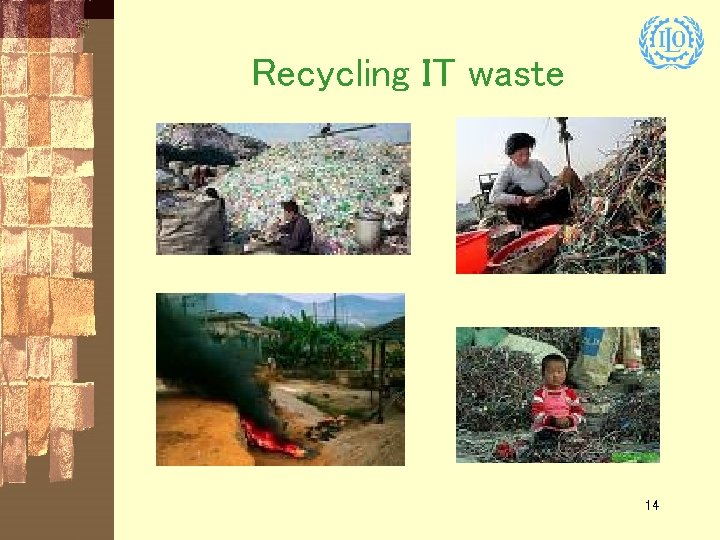
Recycling IT waste 14
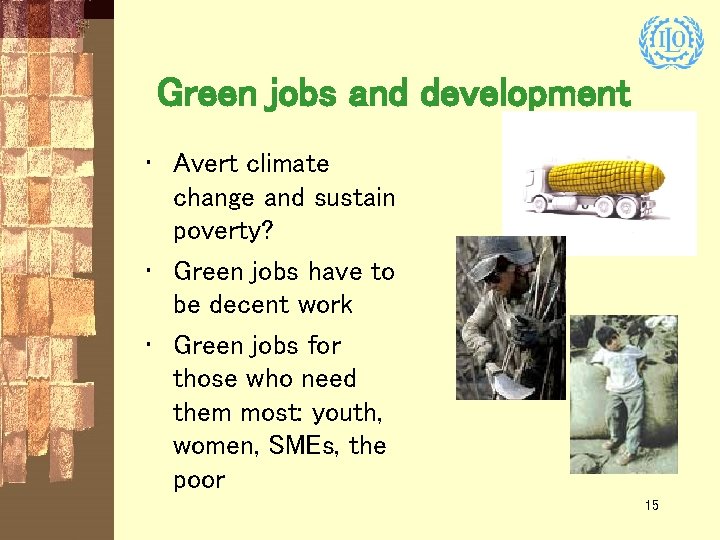
Green jobs and development • Avert climate change and sustain poverty? • Green jobs have to be decent work • Green jobs for those who need them most: youth, women, SMEs, the poor 15
Green jobs: more than meets the eye • In perspective: relatively small % of total employment (3%? ) • Forward linkage greening: clean energy, recycling (e. g. cars, IT) • Dynamics: creation, substitution, elimination, redefinition of jobs • Job creation: Direct green jobs < indirect << induced job creation • Poverty: Food and energy expenditure poor households Access to modern energy 16
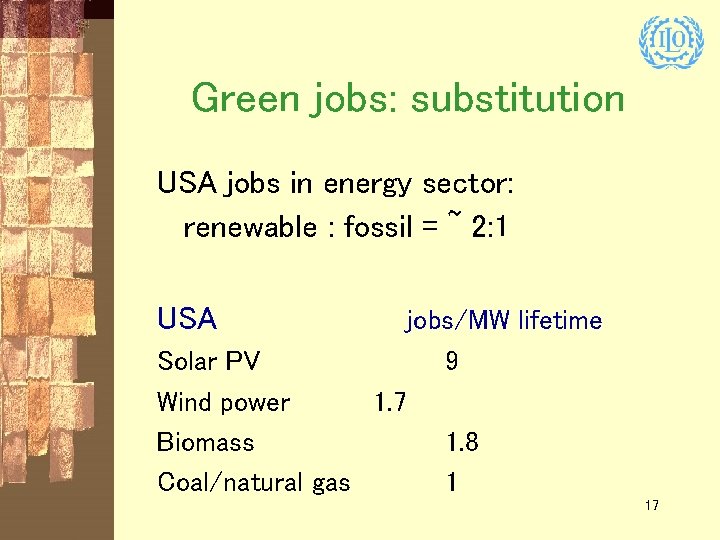
Green jobs: substitution USA jobs in energy sector: renewable : fossil = ~ 2: 1 USA Solar PV Wind power 1. 7 Biomass Coal/natural gas jobs/MW lifetime 9 1. 8 1 17
![Green jobs: direct vs. indirect and induced Ex 1: Venezuela [employment/1 tr Bs] Agriculture:](http://slidetodoc.com/presentation_image_h2/f49731751eb5f4402c4b7e2d1467ca46/image-18.jpg "Green jobs: direct vs. indirect and induced Ex 1: Venezuela [employment/1 tr Bs] Agriculture:")
Green jobs: direct vs. indirect and induced Ex 1: Venezuela [employment/1 tr Bs] Agriculture: Res. Constr. : Non-resid. C: Direct: Total: 126, 000 47, 000 41, 000 196, 000 130, 000 142, 000 18
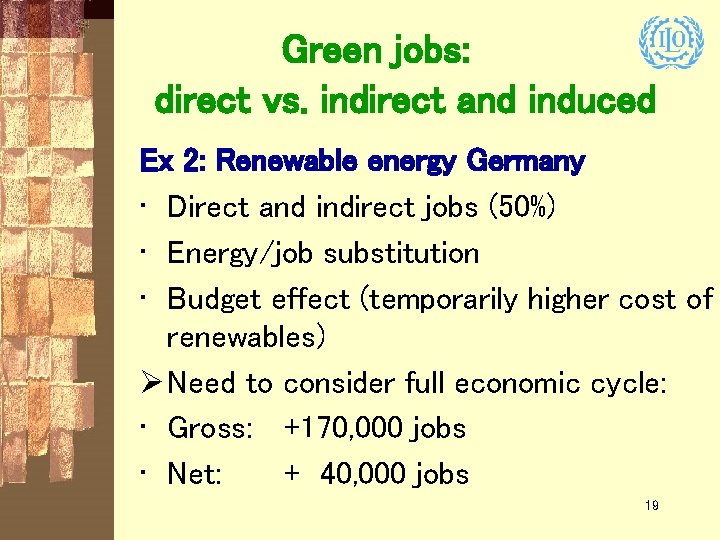
Green jobs: direct vs. indirect and induced Ex 2: Renewable energy Germany • Direct and indirect jobs (50%) • Energy/job substitution • Budget effect (temporarily higher cost of renewables) Ø Need to consider full economic cycle: • Gross: +170, 000 jobs • Net: + 40, 000 jobs 19
2 nd Great Transformation • On balance: net gains employment • Major gains and losses (typically within sectors) Just transitions for enterprises and workers • Pathways for development in Asia? • Contribution to poverty reduction? 20
Decent work in sustainable enterprises Policy instruments and programmes for development: • Skills • Small and medium enterprises, local development • Just transitions • Pro-poor: solar Bangladesh, India, urban upgrading South Africa 21
Policy coherence and good governance • Build green jobs into UNFCCC post 2012 + national strategies • Better and more stable policies through dialogue: involve stakeholders - employers and workers in national and international policy making and implementation 22
Thank you 23
- Slides: 23