
Sustainable Design Page 1 What is Sustainable Design
Sustainable Design Page 1

What is Sustainable Design? Safe guarding the world for ourselves and future generations by… • Using energy & other resources in a way that minimises their depletion. • Successful sustainable design reduces the environmental impact throughout the products entire life. Page 2
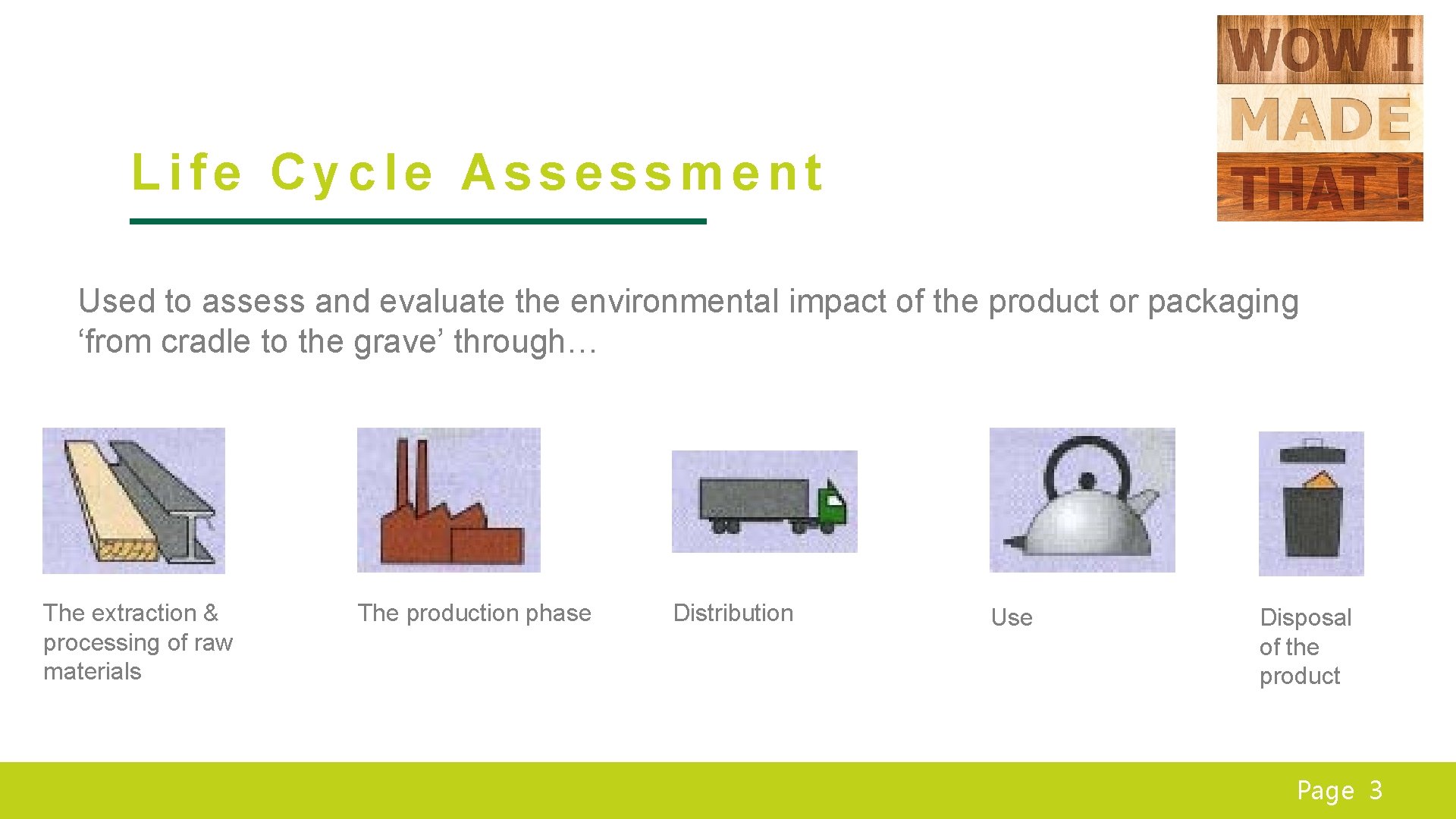
Life Cycle Assessment Used to assess and evaluate the environmental impact of the product or packaging ‘from cradle to the grave’ through… The extraction & processing of raw materials The production phase Distribution Use Disposal of the product Page 3
Life Cycle Inventory Determines which raw materials are used and what emissions will occur during the life of the product. Including: • Environmental inputs and outputs of raw materials & energy resources • Economic inputs and outputs of products Page 4
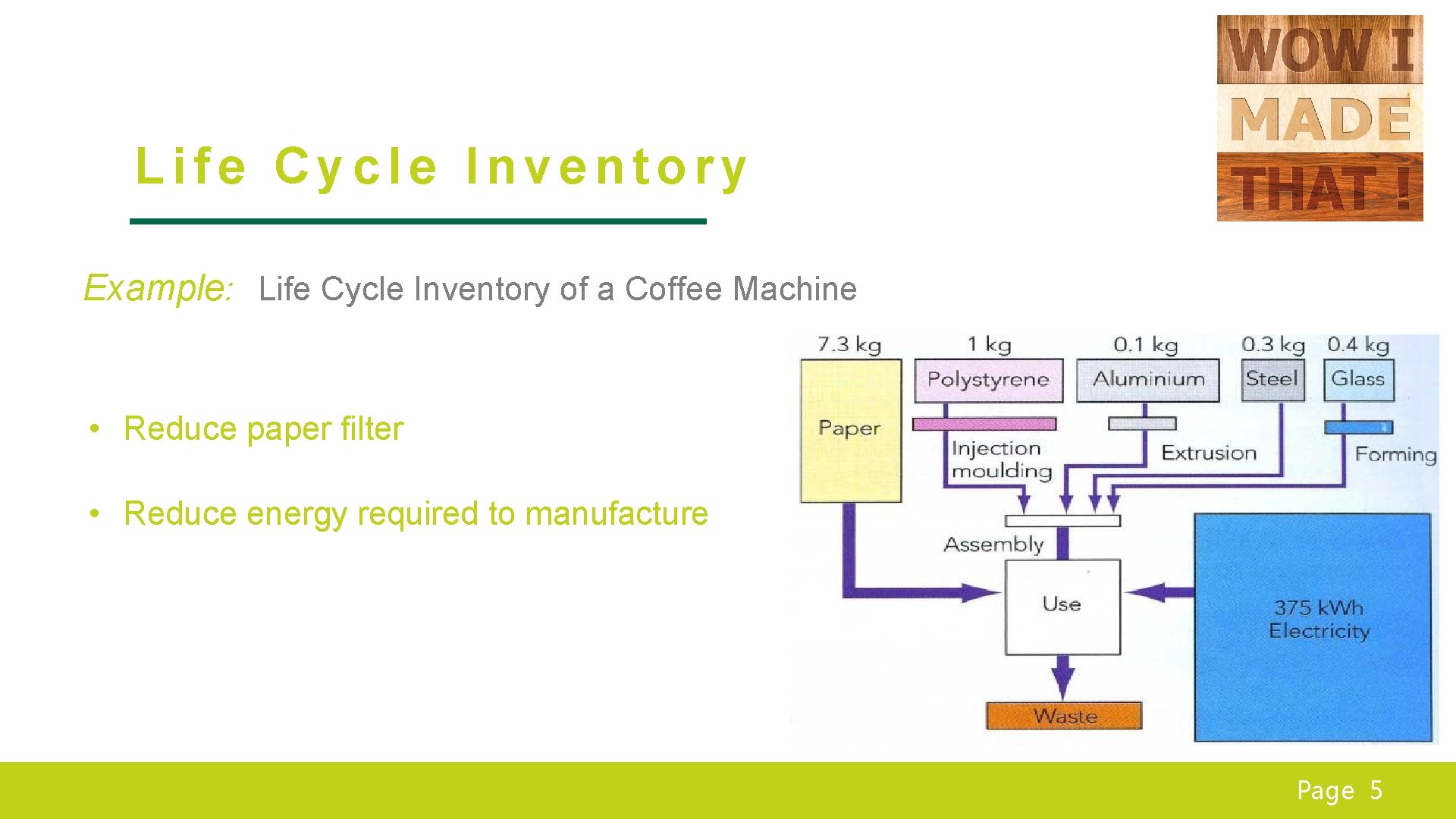
Life Cycle Inventory Example: Life Cycle Inventory of a Coffee Machine • Reduce paper filter • Reduce energy required to manufacture Page 5
Manufacture The analysis of existing manufacturing processes can identify areas that can be modified to achieve more efficient and cleaner processes. Designers can use processes with less environmental impact by: • Using processes that use less energy • Simplifying the product with fewer parts • Reducing waste • Using natural resources efficiently minimise emissions • Recycle waste material • Quality control - reduce number of faulty items Page 6
Distribution Congestion on our roads and motorways is increasing and road haulage companies are significantly adding to this. Other forms of transport such as trains (especially electric trains) or waterways are less polluting. Distribution can use processes with less environmental impact by: • Reducing or lightening packaging • Reducing mileage of transportation • Driving sensibly • Using ‘alternatives to fossil fuels’ Page 7
Use & Maintenance The designer’s responsibilities do not end after the product reaches the consumer. Many products are designed so it is virtually impossible to access the internal component if something goes wrong. This ‘built-in obsolescence’ means that the product cannot be repaired and therefore has to be discarded and replaced. Designers can reduce environmental impact by: • Increasing durability of product • Encouraging refill consumables • Promoting efficient use of product • Making component parts easy to replace • Extend life of product Page 8
Disposal There are six options to consider when deciding how to minimise waste production at the end of the life cycle stage. The six Rs are as follows: • Reduce • Reuse • Recycle • Rethink • Refuse • Repair The six Rs should be considered by the designer, the manufacturer and the customer. From a design perspective, to minimise waste and reduce the environmental impact, the designer can: • • Make products easy to disassemble for recycling Limit the use of toxic materials Use biodegradable materials where possible Arrange collection of materials Page 9
The 6 Rs - Reduce the amount of materials needed to package a product Cost savings and improved profit. Reduced environmental costs Under the UK Producer Responsibly Organisations (Packaging Waste) Regulations (1997), manufacturers are obliged to reduce packaging by: • Considering the materials and design • Examining the ways of eliminating packaging • Optimise packaging - match packaging to level of protection needed Page 10
The 6 Rs - Reuse of a product Minimises the extraction of raw materials and the energy and resources required for recycling • Companies have adopted returnable or refillable containers for some products. An example is the door step delivery of milk. However, whilst refillables appear to offer environmental benefits they can often require greater use of resources so they can withstand the rigours of reuse. • If reuse is viable then the costs of collection, washing and refilling should be less than producing a new container. Page 11
The 6 Rs - Recycle Recycling takes waste materials and products and reprocesses them to manufacture something new. Page 12
The 6 Rs - Rethink rethinking the way a product is manufactured and redesigned can have a positive impact on the amount and type of materials used. Page 13
The 6 Rs - Refusing to use certain types of materials with the design and manufacturing process and using a more sustainable material instead. Page 14
The 6 Rs - Repair When a product is broken, consider whether it can it be repaired rather than being discarded. Repair can help save on cost and minimise the use of nonrenewable materials and energy used in the manufacturing process. Page 15
- Slides: 15