
Sustainable Aviation Biofuels Workshop Georgia Tech H Milton
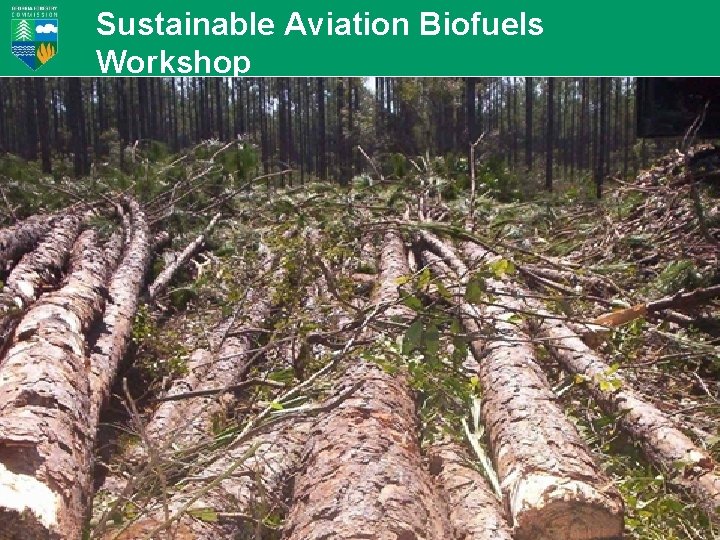
Sustainable Aviation Biofuels Workshop Georgia Tech: H. Milton Stewart School of Industrial Systems & Engineering, December 3, 2015
Overview of Georgia’s Forests & Industry Impact of Georgia’s Forest Industry: Ø Ø $28. 9 billion in total output One of the largest industries in the state $604 million in state tax revenue 135, 000 + jobs Source: GFC Forest Industry Economic Report, 2013 Georgia’s Forests: Ø Ø 24. 2 million acres of commercial timberland 91% of timberland privately owned Largest acreage of privately owned timberland in nation Timberland Acreage stable since the 1950’s Source: USFS Forest Service 2014 Forest Inventory and Analysis
Georgia’s Definition of Qualified Biomass Definition of “Qualified” Biomass Georgia’s O. C. G. A. 48 -8 -3 defines biomass in the following manner: (83) (A) The sale or use of biomass material, including pellets or other fuels derived from compressed, chipped, or shredded biomass material, utilized in the production of energy, including without limitation the production of electricity, steam, or the production of electricity and steam, which is subsequently sold. (83) (B) As used in this paragraph, the term "biomass material" means organic matter, excluding fossil fuels, including agricultural crops, plants, trees, wood wastes and residues, sawmill waste, sawdust, wood chips, bark chips, and forest thinning, harvesting, or clearing residues; wood waste from pallets or other wood demolition debris; peanut shells; pecan shells; cotton plants; corn stalks; and plant matter, including aquatic plants, grasses, stalks, vegetation, and residues, including hulls, shells, or cellulose containing fibers;
Types of Biomass 1) Mill Residues: 346 million cubic feet of wood and bark produced annually Source: USDA Forest Service FIA 2) Logging Residues, Land Clearing & Urban Wood Waste: 9 million + dry tons produced annually (branches, tops and limbs, understory saplings, ROW clearings, street & yard tree removals) Source: 2009 GFC study Ø Ø Ø Underutilized Relatively inexpensive fuel Unwanted material – landowners need to dispose Reduces wildfire risk Urban tree removal utilization – keeps material out of landfills 3) Standing Trees: Georgia averages over 40 % annual growth over removals Source: USDA Forest Service FIA Ø New markets for small diameter trees Ø “Keep working forests in forests” Ø Forest health – removal of disease and storm damage trees
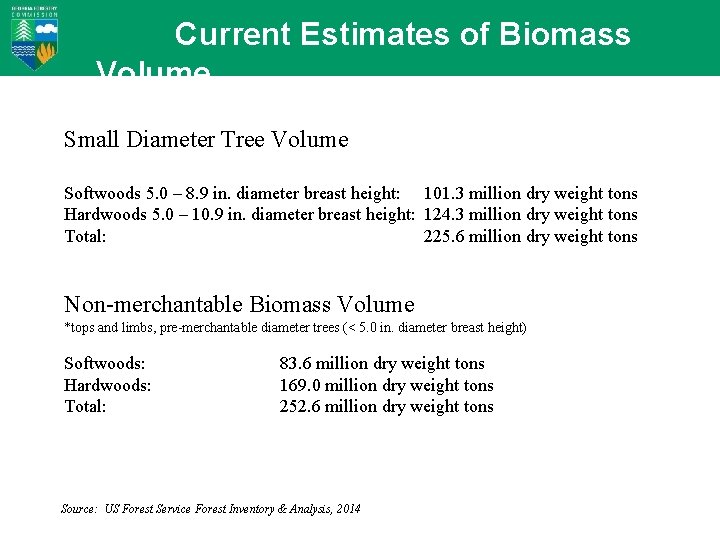
Current Estimates of Biomass Volume Small Diameter Tree Volume Softwoods 5. 0 – 8. 9 in. diameter breast height: 101. 3 million dry weight tons Hardwoods 5. 0 – 10. 9 in. diameter breast height: 124. 3 million dry weight tons Total: 225. 6 million dry weight tons Non-merchantable Biomass Volume *tops and limbs, pre-merchantable diameter trees (< 5. 0 in. diameter breast height) Softwoods: Hardwoods: Total: 83. 6 million dry weight tons 169. 0 million dry weight tons 252. 6 million dry weight tons Source: US Forest Service Forest Inventory & Analysis, 2014
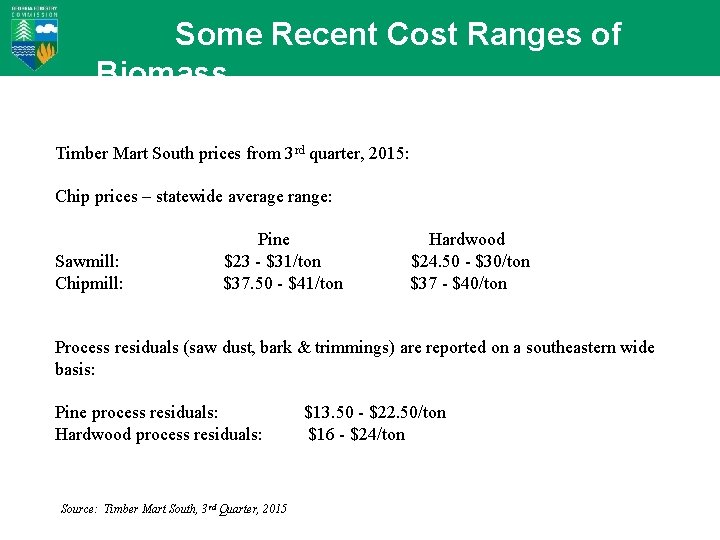
Some Recent Cost Ranges of Biomass Timber Mart South prices from 3 rd quarter, 2015: Chip prices – statewide average range: Pine Hardwood Sawmill: $23 - $31/ton $24. 50 - $30/ton Chipmill: $37. 50 - $41/ton $37 - $40/ton Process residuals (saw dust, bark & trimmings) are reported on a southeastern wide basis: Pine process residuals: $13. 50 - $22. 50/ton Hardwood process residuals: $16 - $24/ton Source: Timber Mart South, 3 rd Quarter, 2015
Thank You! Contact Information: Dru Preston Georgia Forestry Commission Utilization Department 478 -283 -5117 dpreston@gfc. state. ga. us
- Slides: 7