
Sustainable agriculture the way to stop climate change
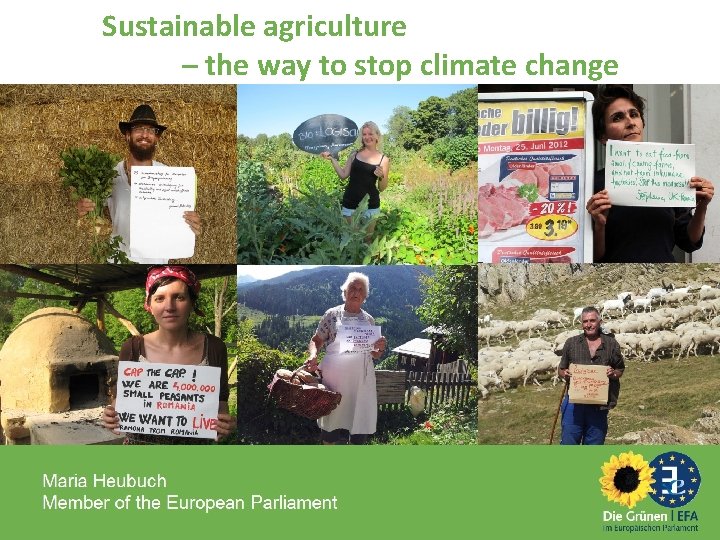
Sustainable agriculture – the way to stop climate change Umsetzung der GAP: Landwirtschaft jetzt bäuerlich und nachhaltig gestalten!
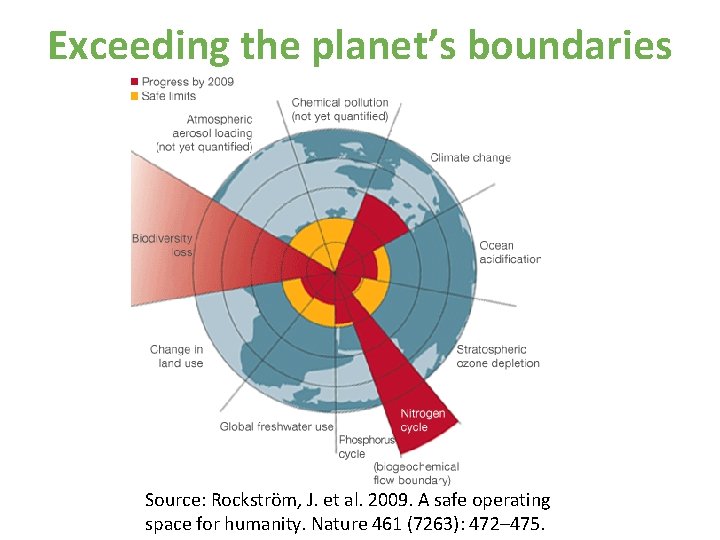
Exceeding the planet’s boundaries Source: Rockström, J. et al. 2009. A safe operating space for humanity. Nature 461 (7263): 472– 475.
Agriculture and its effect on planetary boundaries Climate: Agriculture is responsible for 30 % of greenhouses gases (through crop cultivation, fertilizer manufacture, livestock, and land use change), making it the single largest contributor to climate change (Vermeulen et al. , 2012). Biodiversity: Globally agriculture remains the largest driver of genetic erosion, species loss and conversion of natural habitats. According to one estimate, over 4000 species of plants and animals are threatened by agricultural intensification. Since the 1900 s, some 75 percent of plant genetic diversity has been lost as many farmers have switched to genetically uniform, high-yielding varieties (FAO, 1999). Nitrogen & phosphorus: Use of nitrogen and phosphorus fertilizers has caused significant eutrophication problems in both marine and freshwater systems.
Production increase between 1960 and 2000: • • Global cereal production Pesticides Irrigation Nitrogen fertilizer ca. + 250% ca. + 400 % ca. + 200% ca. + 700% Source: David Tilman et al. “Agricultural sustainability and intensive production practices”, In: Nature 2002; cf. IAASTD.
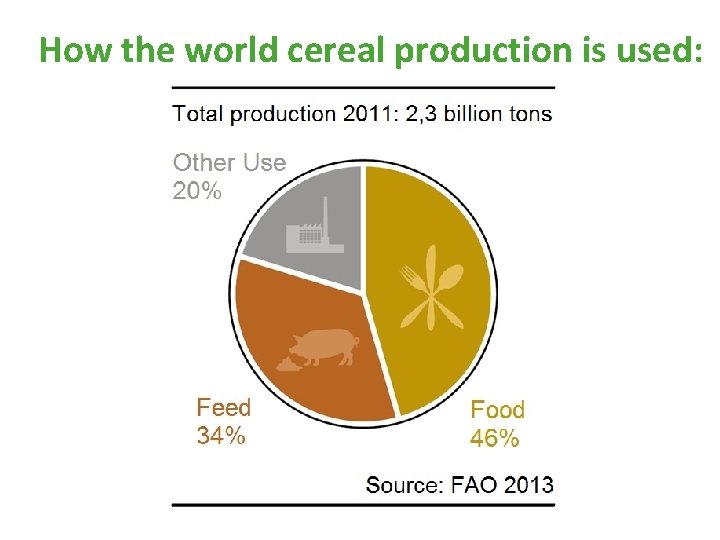
How the world cereal production is used:
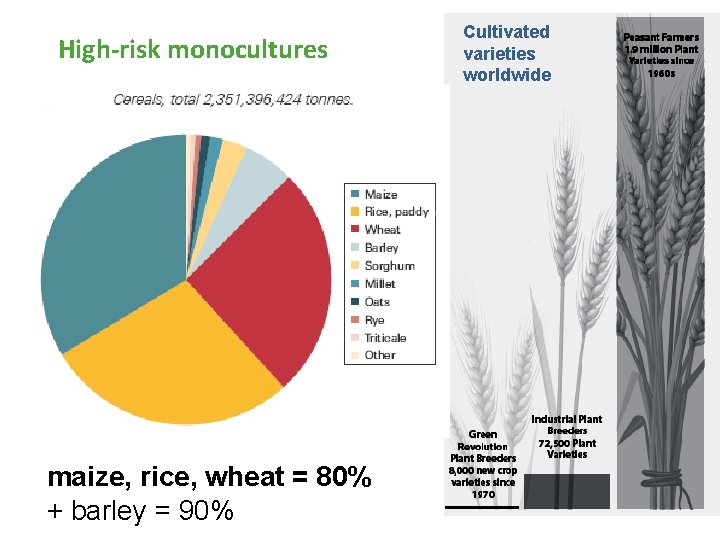
High-risk monocultures maize, rice, wheat = 80% + barley = 90% Cultivated varieties worldwide
„Business as usual is not an option“
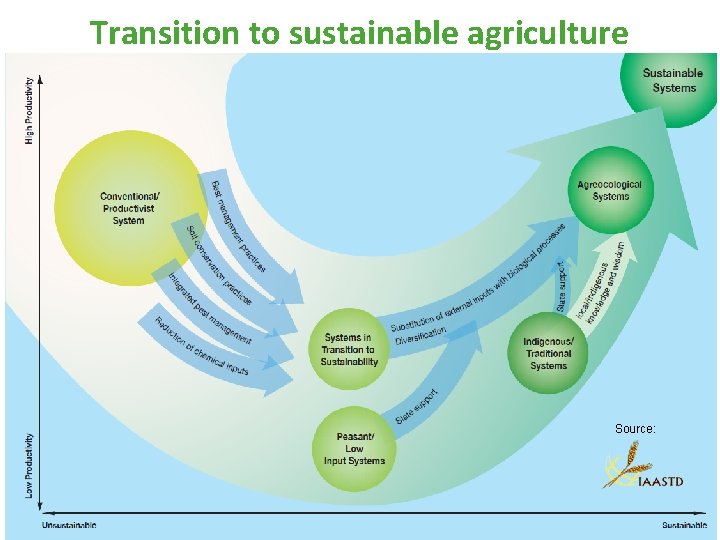
Transition to sustainable agriculture Source:
Definition of sustainable agriculture Sustainable agriculture integrates three main goals of environmental stewardship, farm profitability and prosperous farming communities. It refers to the ability of farms to produce food indefinitely, without damaging soils and ecosystems, or human and social capital. Sustainable agriculture uses a wide variety of practices and technologies and often blends farmers’ traditional and local experience with scientific knowledge and innovation. It aims at producing healthy and nutritious food while maintaining healthy soils and reducing reliance on external ‘inputs’ – such as fertilisers, pesticides and herbicides.
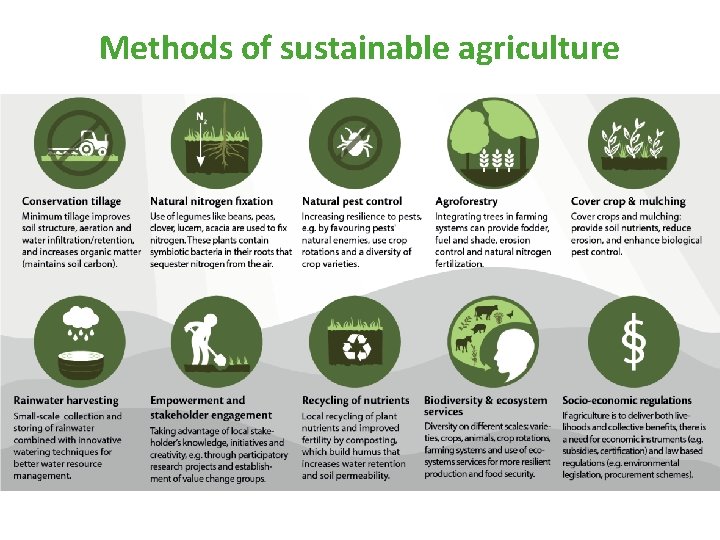
Methods of sustainable agriculture
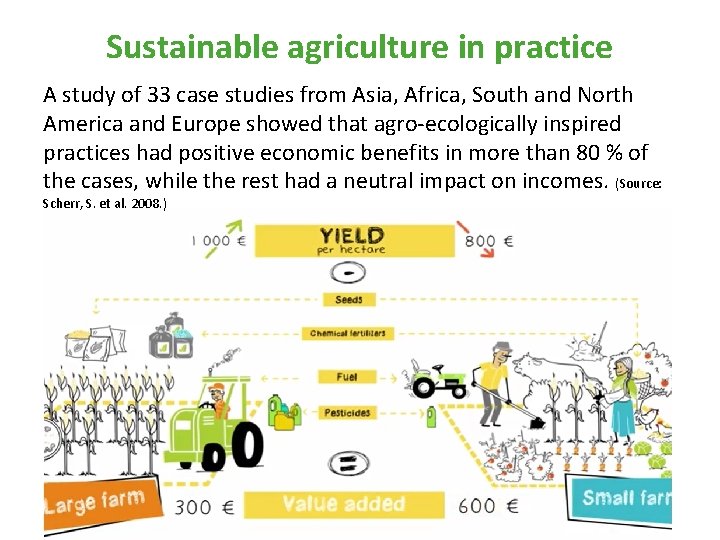
Sustainable agriculture in practice A study of 33 case studies from Asia, Africa, South and North America and Europe showed that agro-ecologically inspired practices had positive economic benefits in more than 80 % of the cases, while the rest had a neutral impact on incomes. (Source: Scherr, S. et al. 2008. )
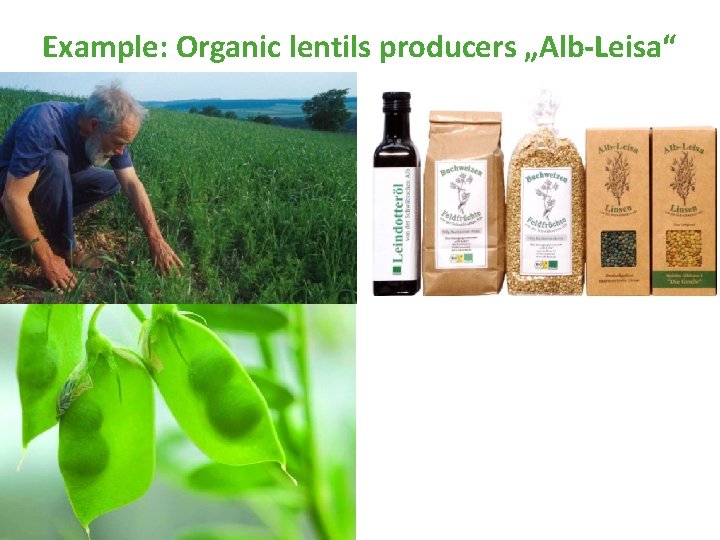
Example: Organic lentils producers „Alb-Leisa“
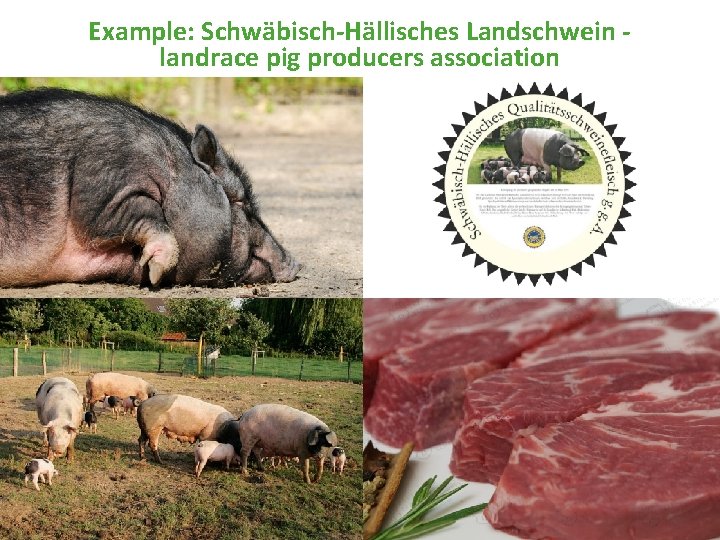
Example: Schwäbisch-Hällisches Landschwein landrace pig producers association
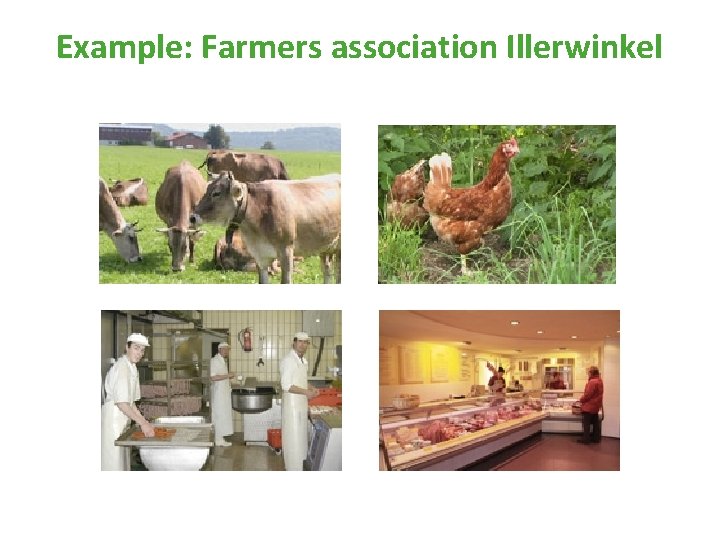
Example: Farmers association Illerwinkel
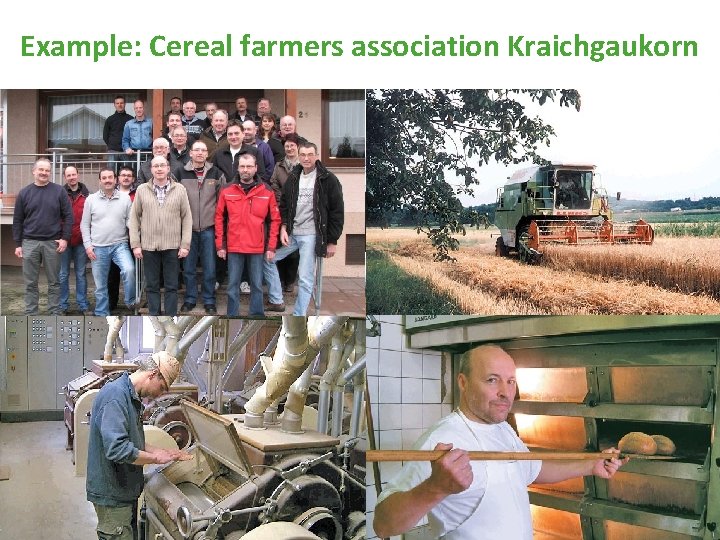
Example: Cereal farmers association Kraichgaukorn
Thank you for your attention! Contact: Maria Heubuch, MEP Greens/EFA European Parliament Rue Wiertz 60 – ASP 4 F 366 B-1047 Brussels Tel: +32 2 284 5335 maria. heubuch@ep. europa. eu www. maria-heubuch. de
- Slides: 16