
Sustainability the Built Environment parks open spaces buildings
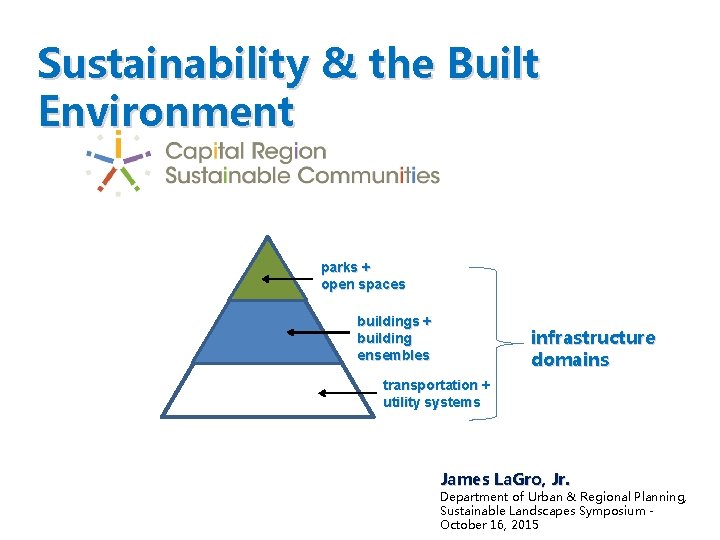
Sustainability & the Built Environment parks + open spaces buildings + building ensembles infrastructure domains transportation + utility systems James La. Gro, Jr. Department of Urban & Regional Planning, Sustainable Landscapes Symposium October 16, 2015

structure affects function Urban design matters Image source: Duany, Plater. Zyberk (DPZ) “driveable suburban” § § § v separated land uses low densities auto-oriented vehicle-miles traveled (VMT) v greenhouse gas emissions v commuting congestion “walkable urban” § mixed land uses § medium/high densities § transportation choices ü location-efficiency ü energy efficiency ü physical activity structure function

retrofitting the built environment location-efficiency …places that require less time, time money, money and driving Transit-Oriented Development (TOD Rosslyn-Ballston Metro Corridor (Arlingto “The future surrounds us… it’s just unevenly distributed. ” -- Urban Land Institute
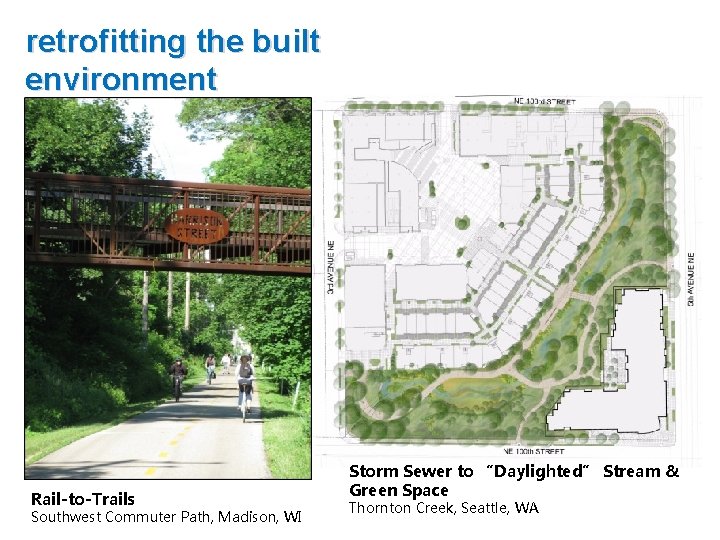
retrofitting the built environment Rail-to-Trails Southwest Commuter Path, Madison, WI Storm Sewer to “Daylighted” Stream & Green Space Thornton Creek, Seattle, WA
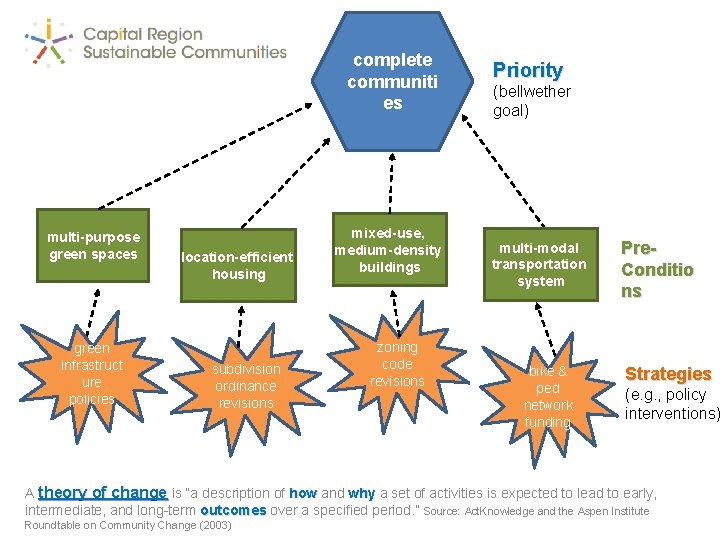
complete communiti es multi-purpose green spaces green infrastruct ure policies location-efficient housing subdivision ordinance revisions mixed-use, medium-density buildings zoning code revisions Priority (bellwether goal) multi-modal transportation system bike & ped network funding Pre. Conditio ns Strategies (e. g. , policy interventions) A theory of change is “a description of how and why a set of activities is expected to lead to early, intermediate, and long-term outcomes over a specified period. ” Source: Act. Knowledge and the Aspen Institute Roundtable on Community Change (2003)
- Slides: 5