
Sustainability Interdependance Key Area 6 d Primate Behaviour
Sustainability & Interdependance Key Area 6 d Primate Behaviour
Learning Intentions By the end of this topic you should be able to: Define primate behaviour – long period of parental care allows learning of complex social behaviour. Outline the behaviour methods of reducing unnecessary conflict, group behaviour (alliances to increase social status) Explain how the complexity of the social structure is related to ecological niche, resource distribution and taxonomic group.

Primates
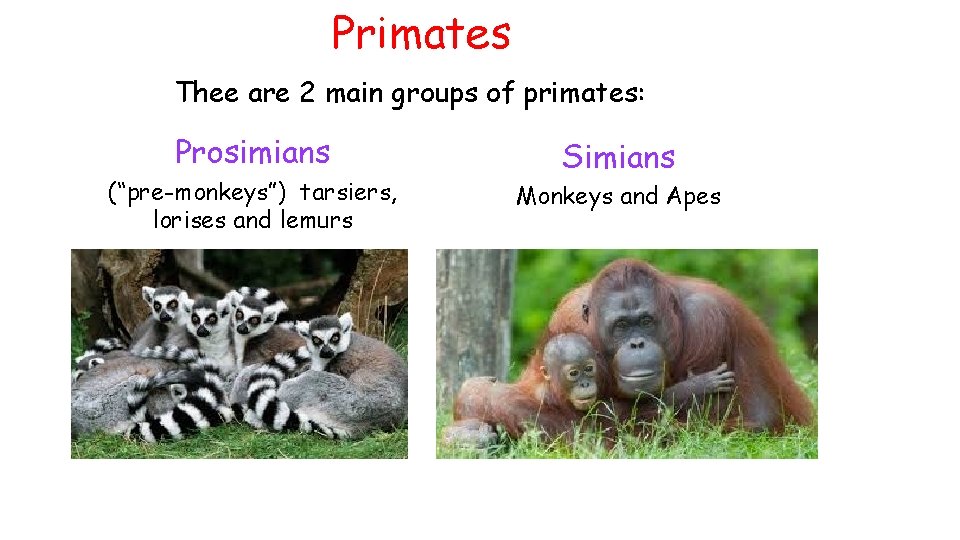
Primates Thee are 2 main groups of primates: Prosimians (“pre-monkeys”) tarsiers, lorises and lemurs Simians Monkeys and Apes
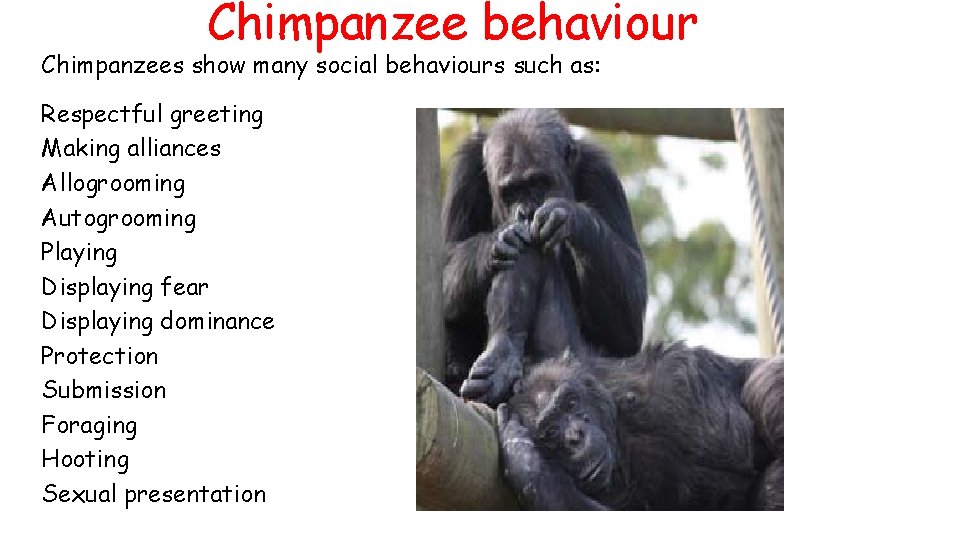
Chimpanzee behaviour Chimpanzees show many social behaviours such as: Respectful greeting Making alliances Allogrooming Autogrooming Playing Displaying fear Displaying dominance Protection Submission Foraging Hooting Sexual presentation
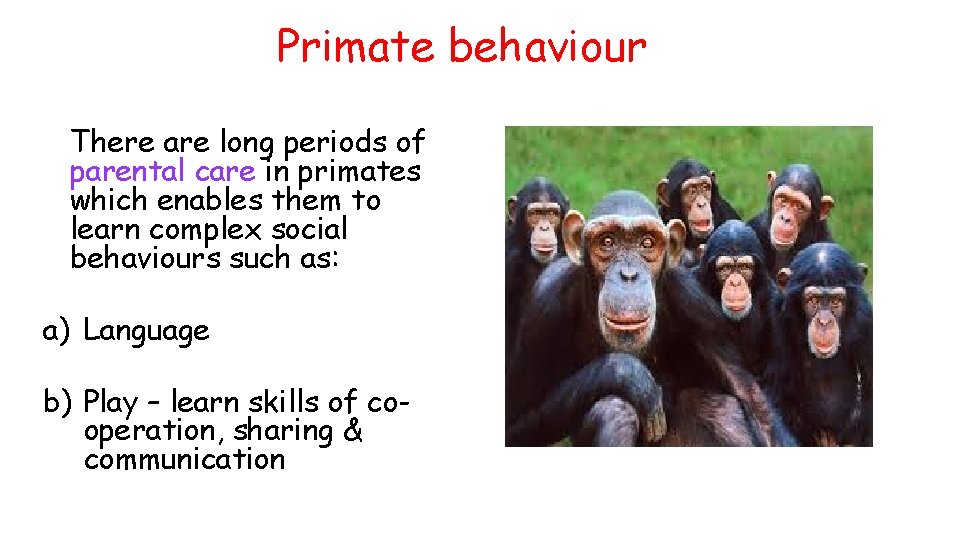
Primate behaviour There are long periods of parental care in primates which enables them to learn complex social behaviours such as: a) Language b) Play – learn skills of cooperation, sharing & communication
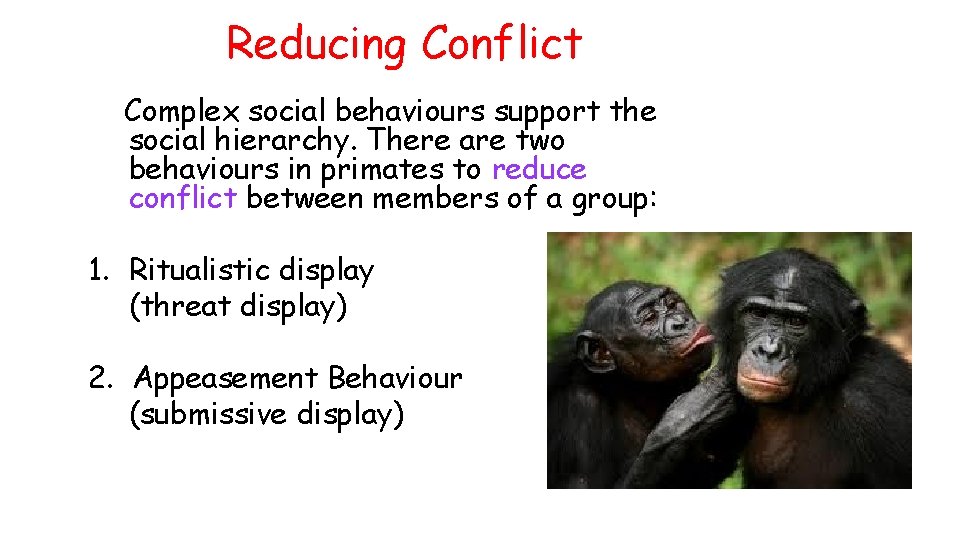
Reducing Conflict Complex social behaviours support the social hierarchy. There are two behaviours in primates to reduce conflict between members of a group: 1. Ritualistic display (threat display) 2. Appeasement Behaviour (submissive display)
Ritualistic Behaviour Threat displays are used to make them look larger & fiercer without actual aggression. The aim is to look more intimidating so that the other concedes defeat.
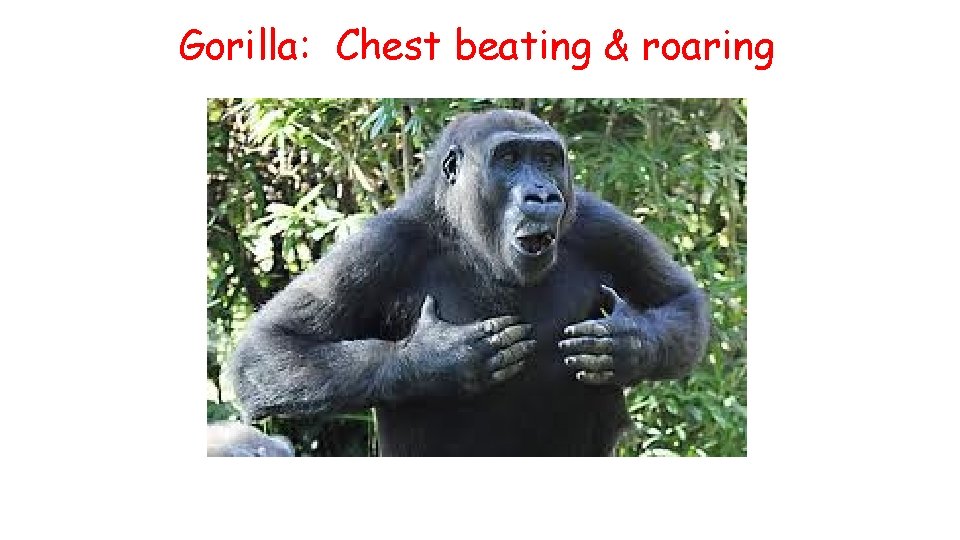
Gorilla: Chest beating & roaring
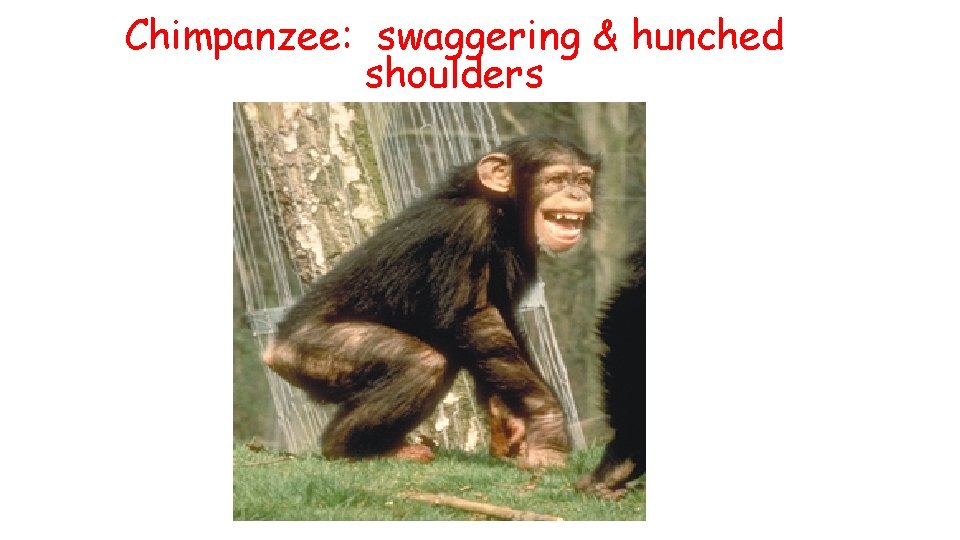
Chimpanzee: swaggering & hunched shoulders
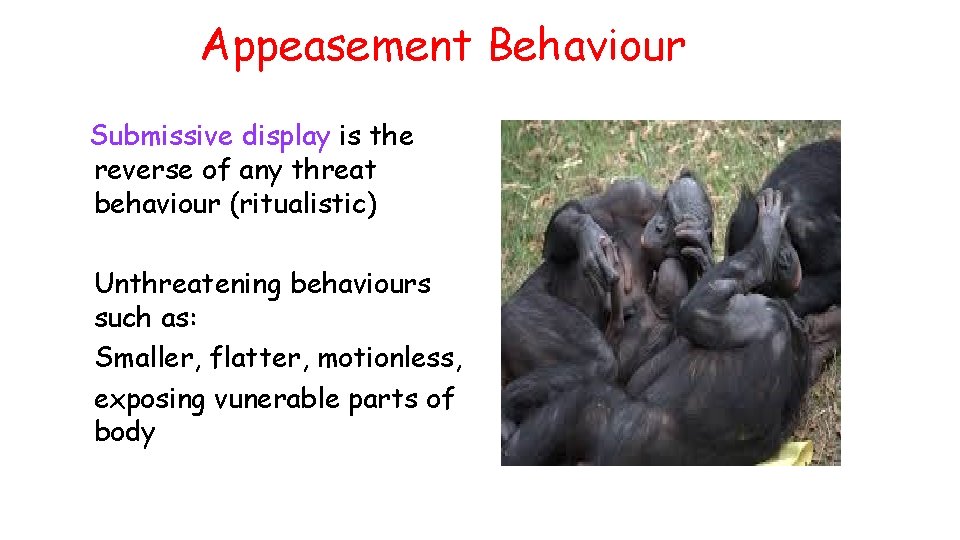
Appeasement Behaviour Submissive display is the reverse of any threat behaviour (ritualistic) Unthreatening behaviours such as: Smaller, flatter, motionless, exposing vunerable parts of body
Monkey Expressions Like us chimpanzees have different facial expressions for how they are feeling Look at the following slides of chimps and think what expression the chimp is showing
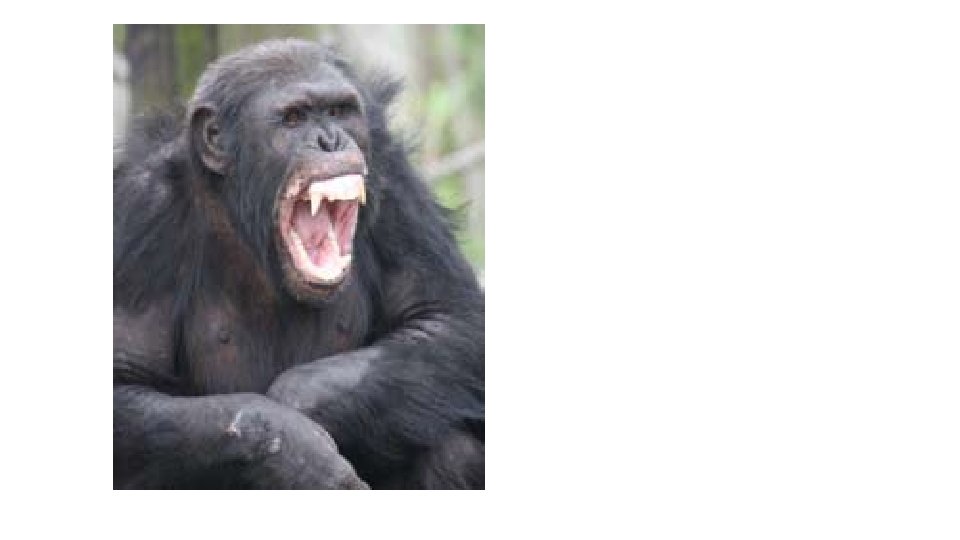
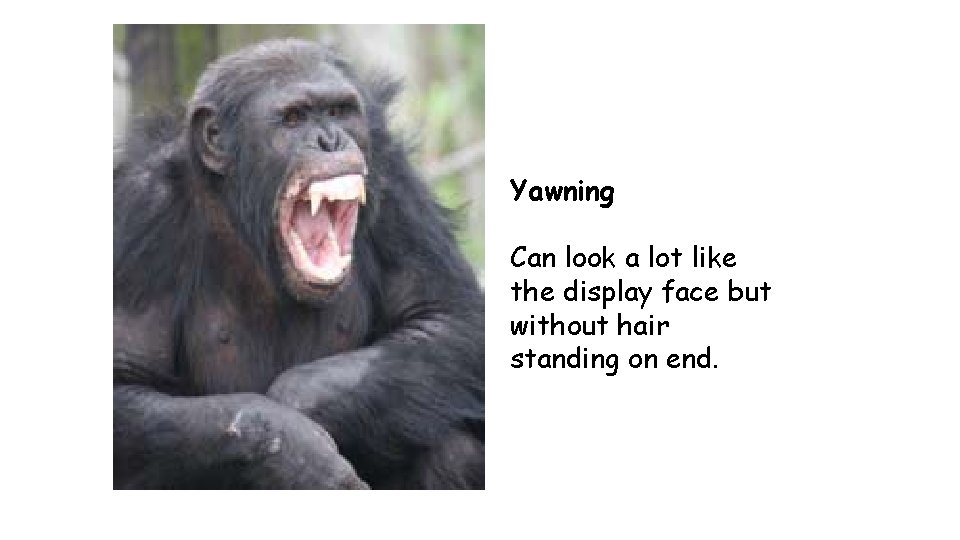
Yawning Can look a lot like the display face but without hair standing on end.

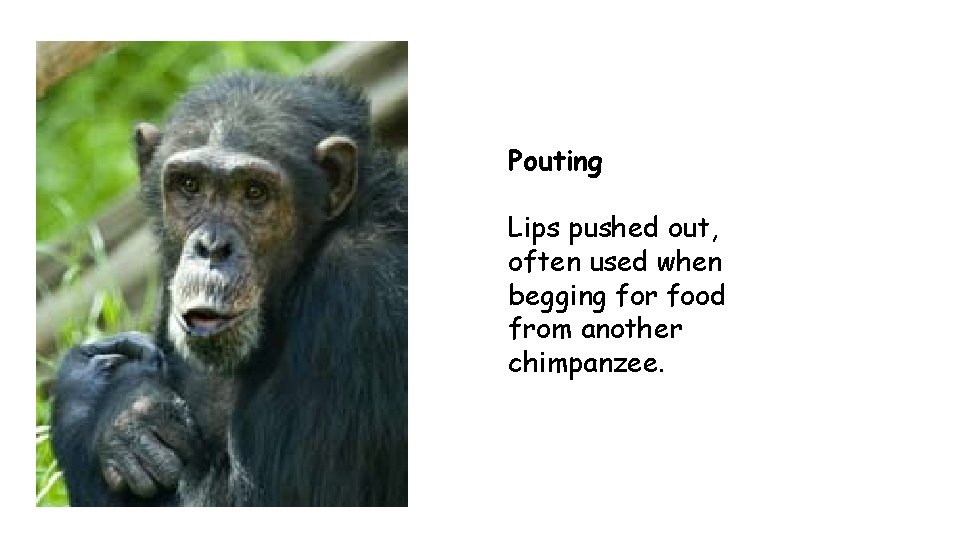
Pouting Lips pushed out, often used when begging for food from another chimpanzee.
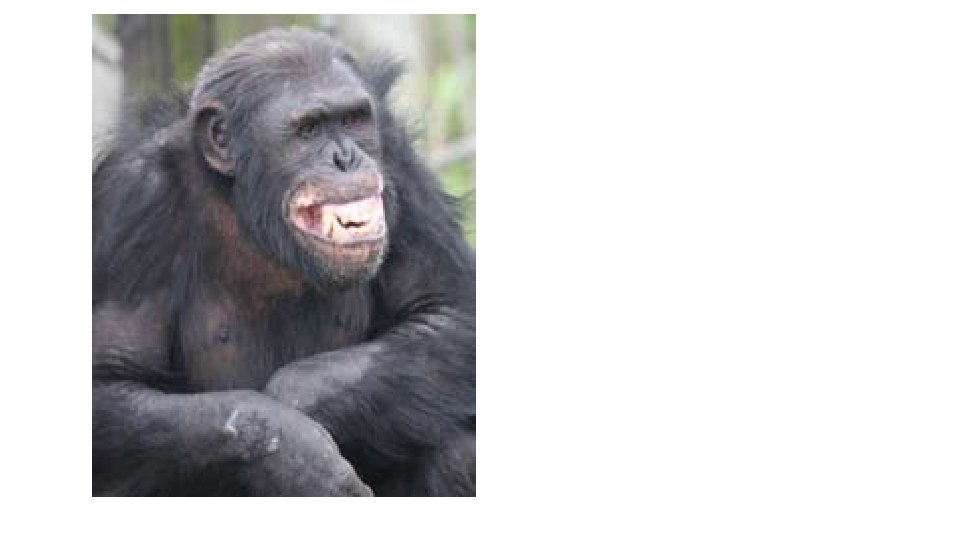
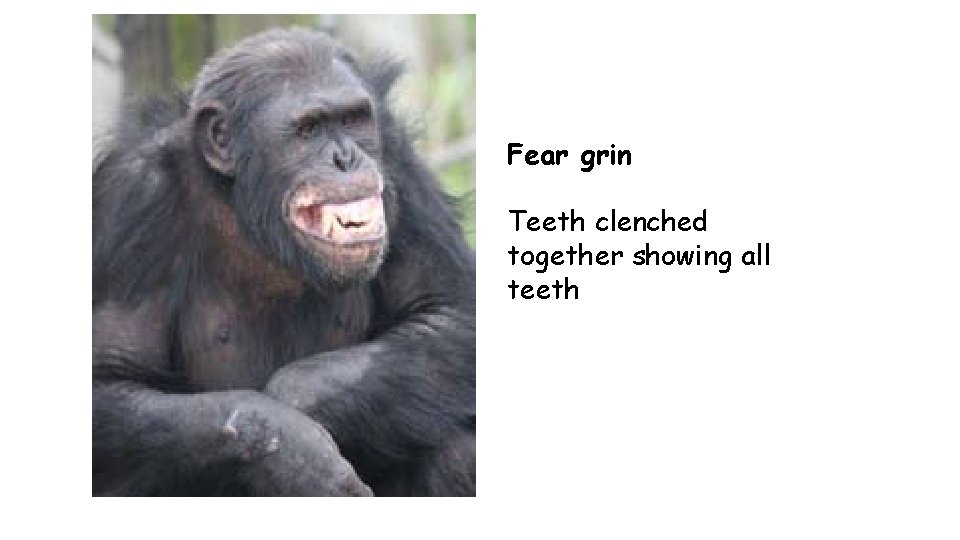
Fear grin Teeth clenched together showing all teeth
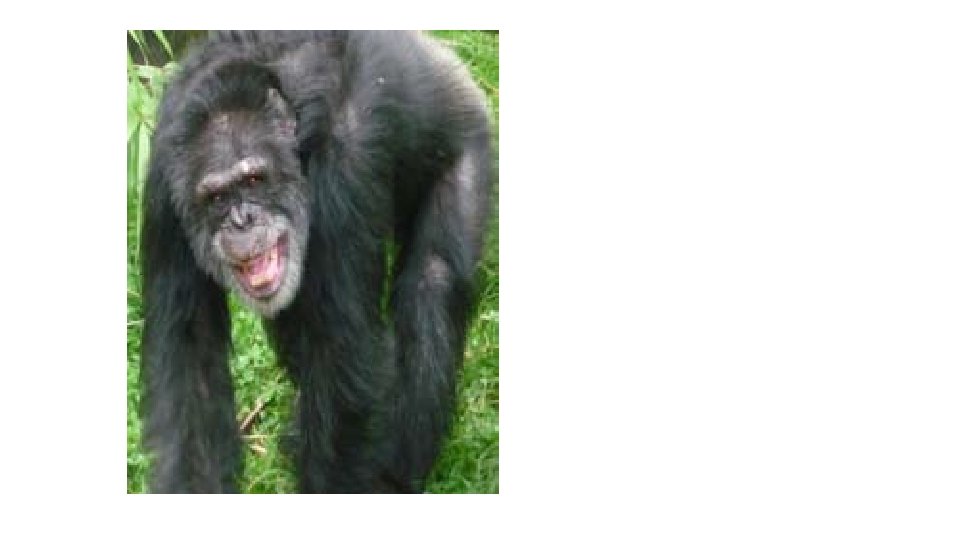
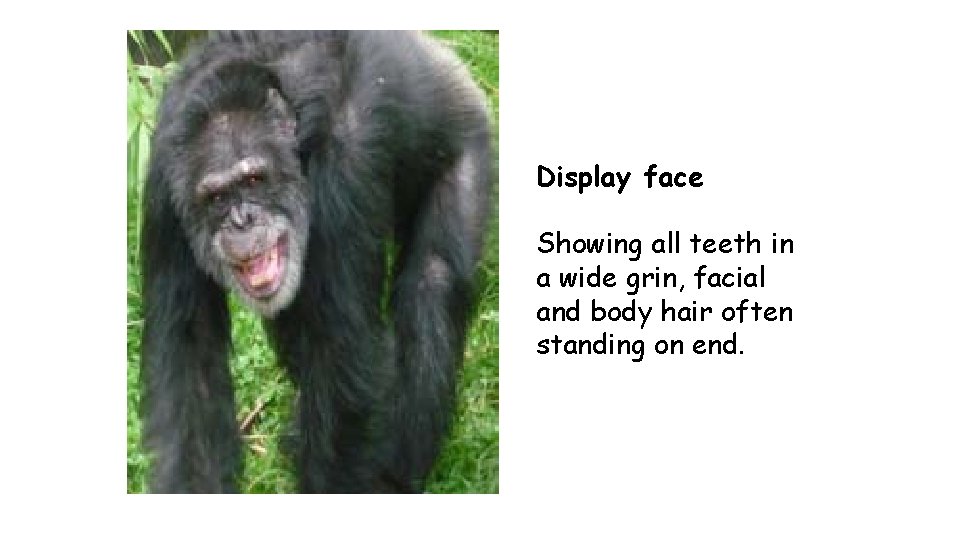
Display face Showing all teeth in a wide grin, facial and body hair often standing on end.
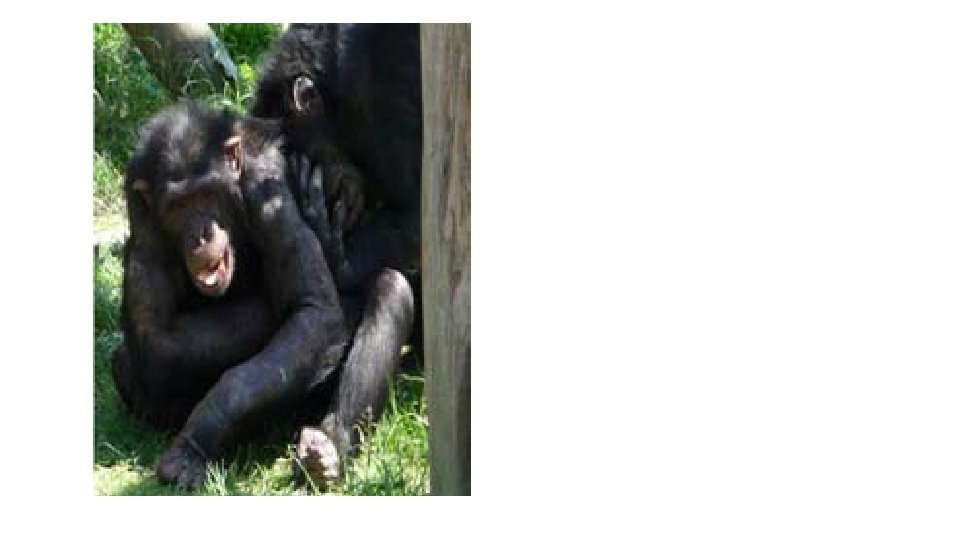
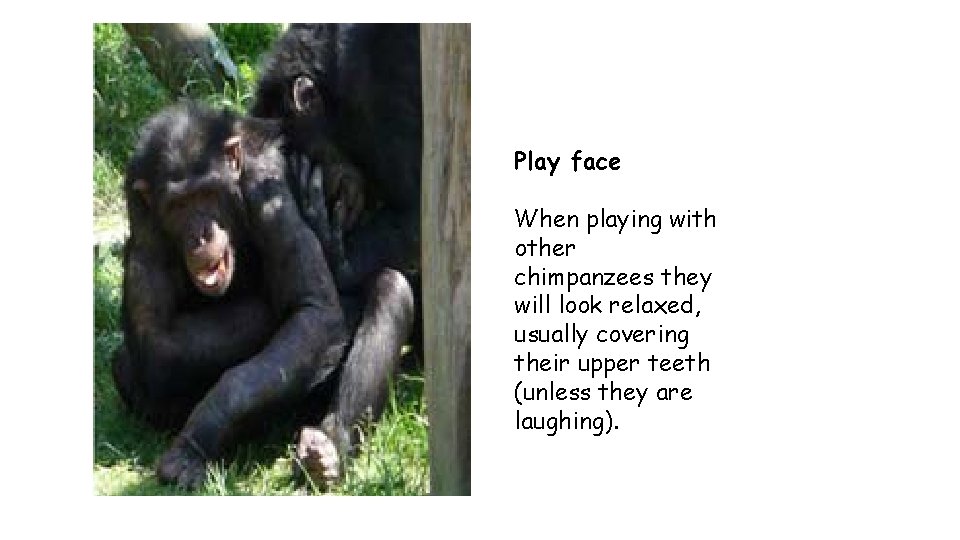
Play face When playing with other chimpanzees they will look relaxed, usually covering their upper teeth (unless they are laughing).
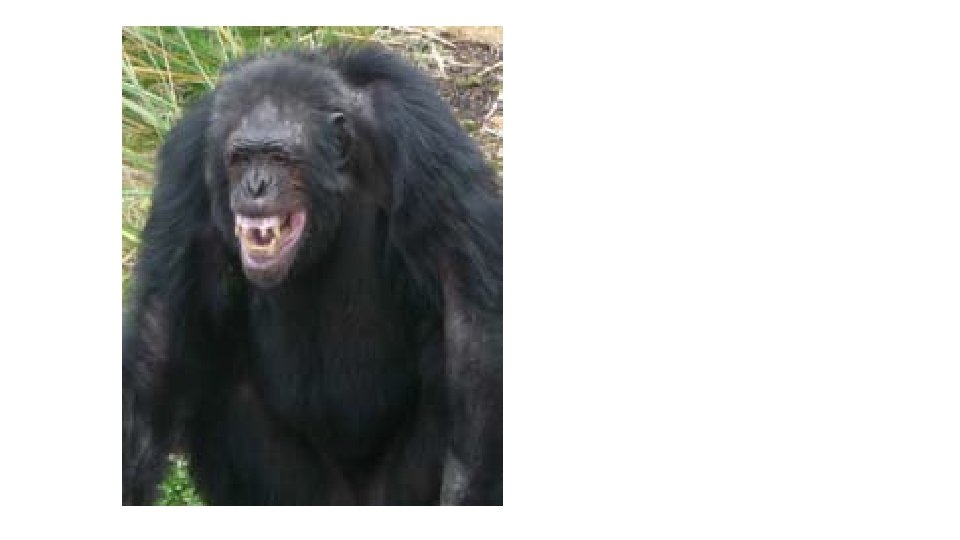
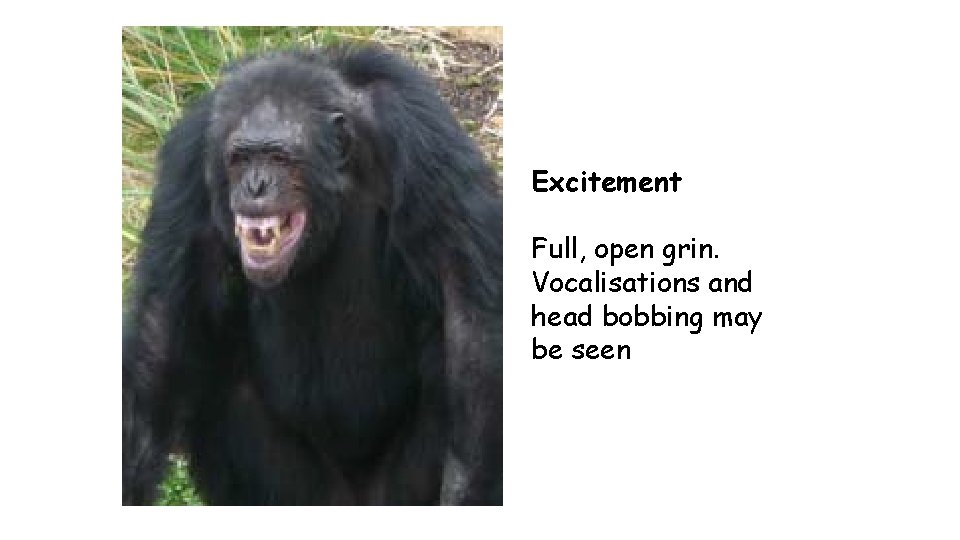
Excitement Full, open grin. Vocalisations and head bobbing may be seen

Primate Social Status & Alliance
Social Status & Alliance Hierarchy in primates is not linear, instead it is complex and constantly changing.
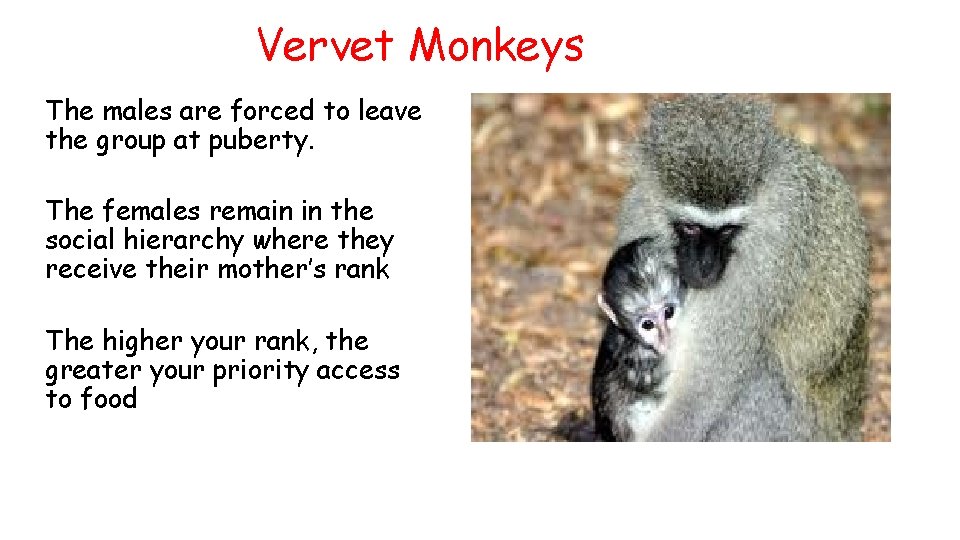
Vervet Monkeys The males are forced to leave the group at puberty. The females remain in the social hierarchy where they receive their mother’s rank The higher your rank, the greater your priority access to food

Grooming Behaviours
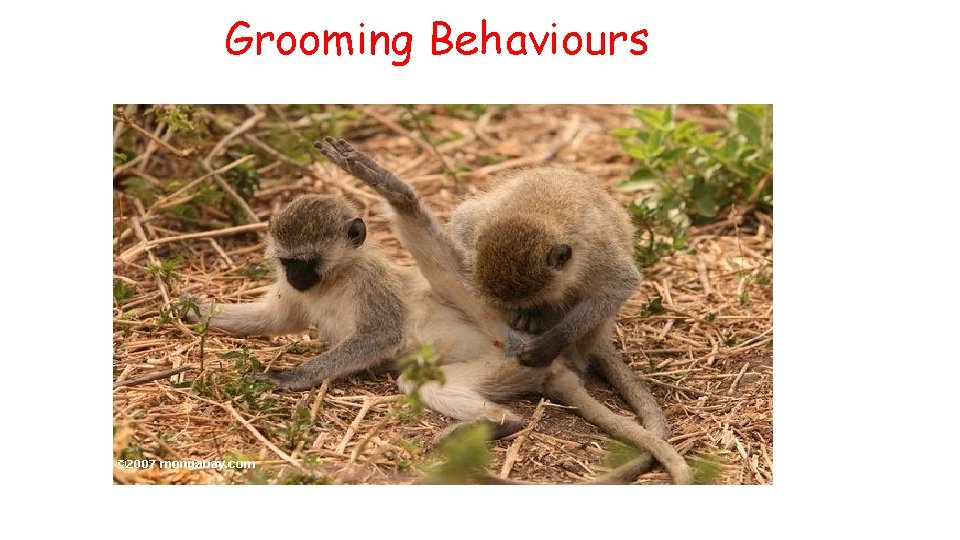
Grooming Behaviours
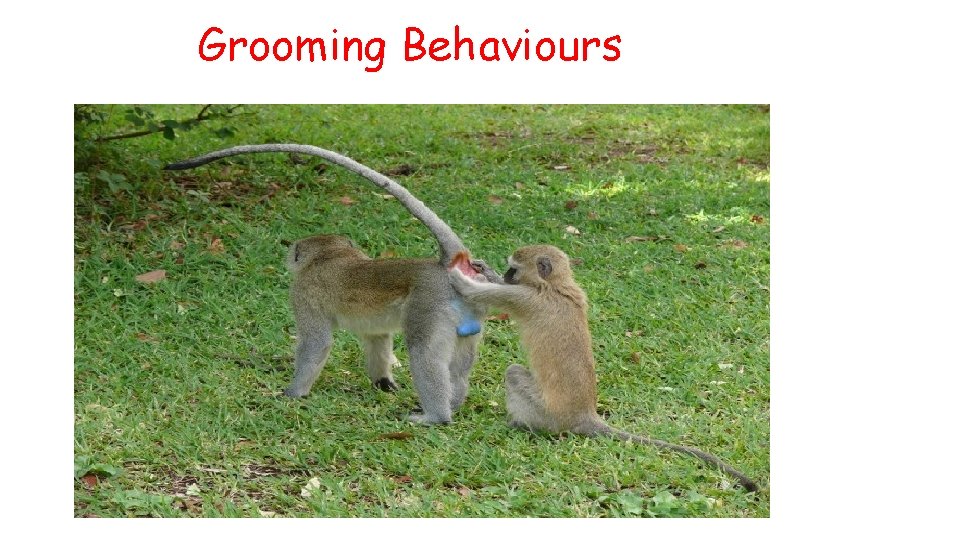
Grooming Behaviours
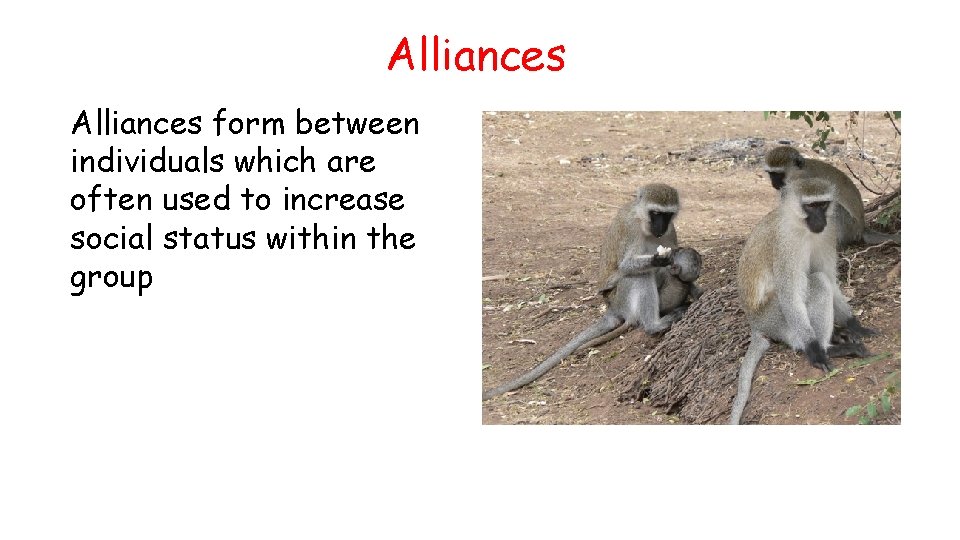
Alliances form between individuals which are often used to increase social status within the group
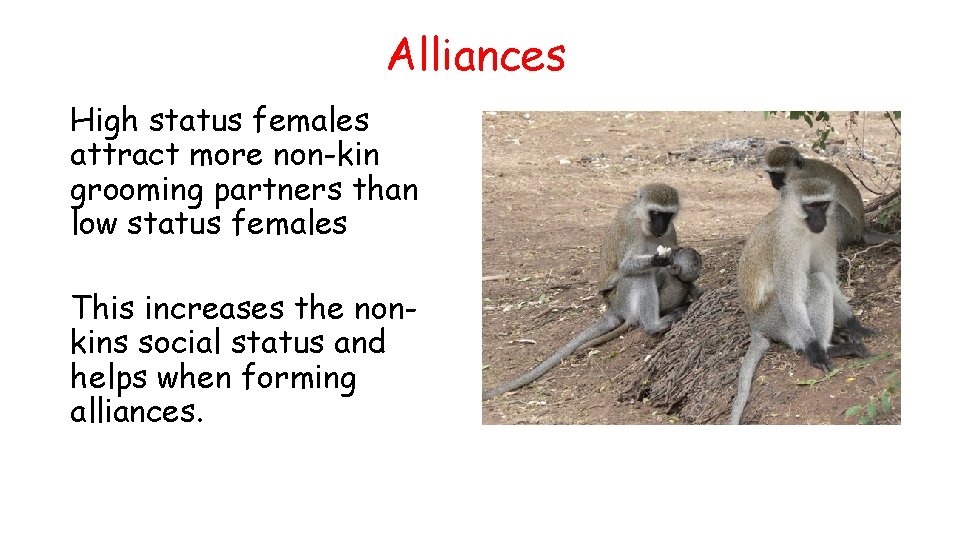
Alliances High status females attract more non-kin grooming partners than low status females This increases the nonkins social status and helps when forming alliances.
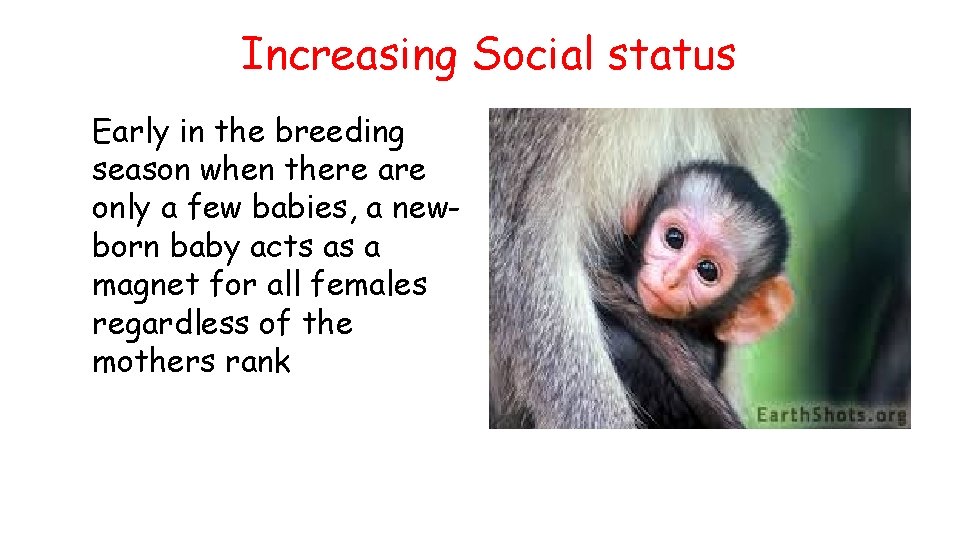
Increasing Social status Early in the breeding season when there are only a few babies, a newborn baby acts as a magnet for all females regardless of the mothers rank
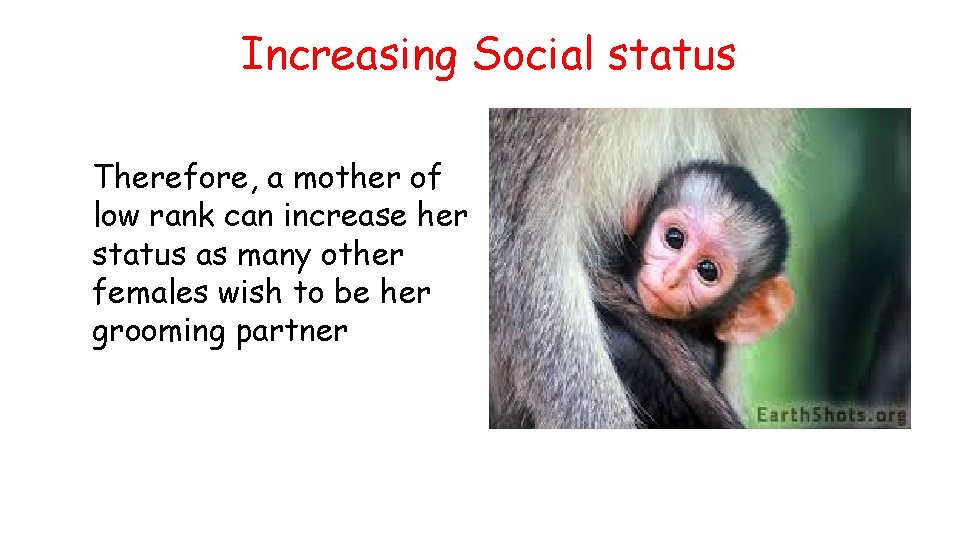
Increasing Social status Therefore, a mother of low rank can increase her status as many other females wish to be her grooming partner
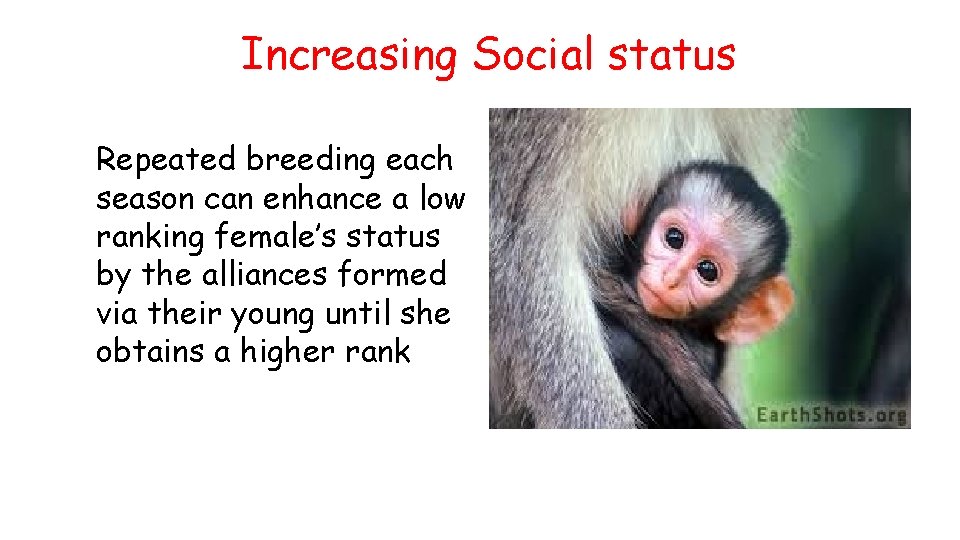
Increasing Social status Repeated breeding each season can enhance a low ranking female’s status by the alliances formed via their young until she obtains a higher rank

Complexity of Social Structure
Complexity of Social Structure The complex nature of different social structures is in part due to: 1. Ecological niche 2. Resource distribution 3. Taxonomic group
Ecological Niche The role an organism plays in its community. The success of ALL primates in their niche is due to formation of SOCIAL GROUPS
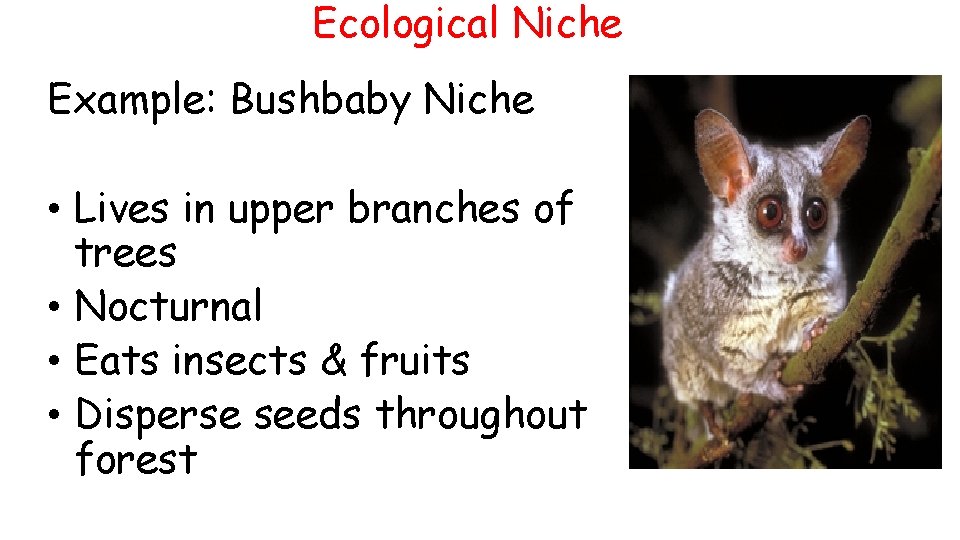
Ecological Niche Example: Bushbaby Niche • Lives in upper branches of trees • Nocturnal • Eats insects & fruits • Disperse seeds throughout forest
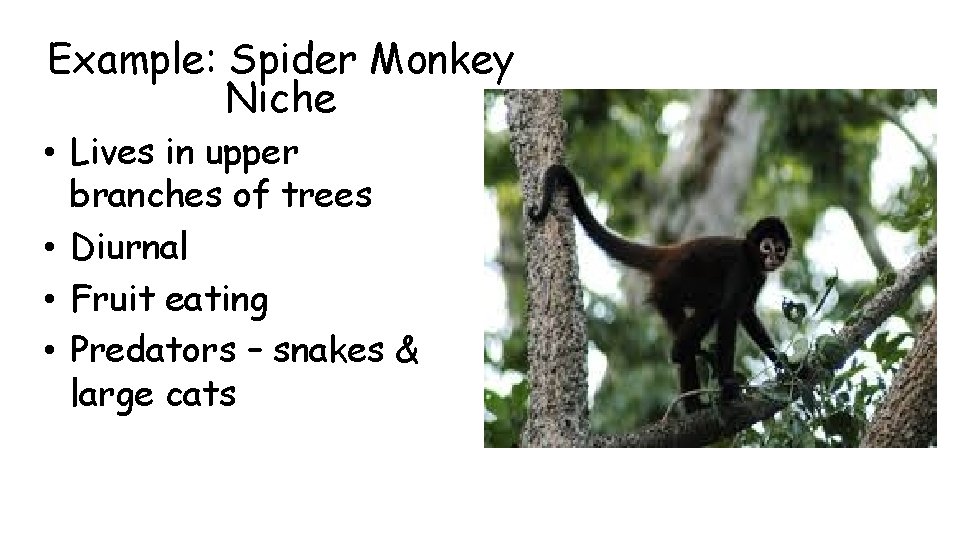
Example: Spider Monkey Niche • Lives in upper branches of trees • Diurnal • Fruit eating • Predators – snakes & large cats
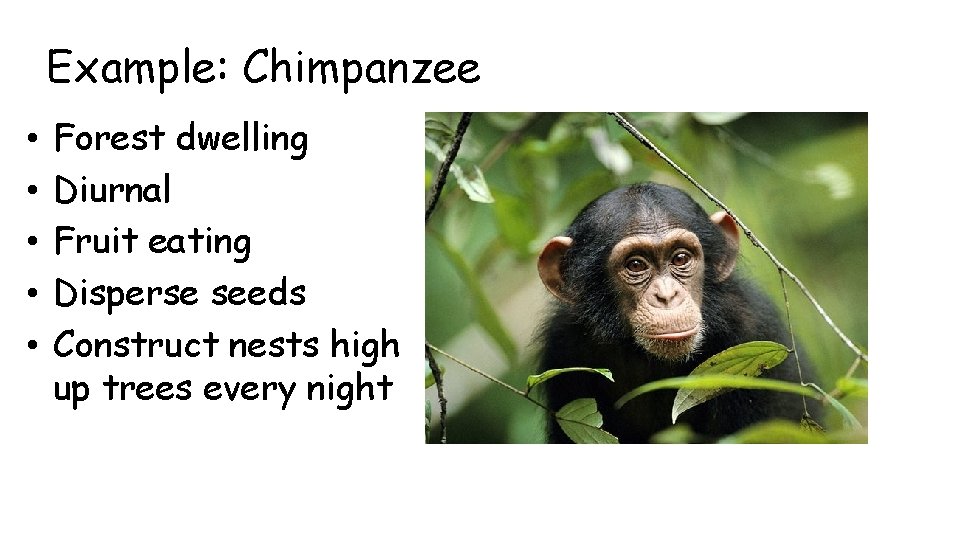
Example: Chimpanzee • • • Forest dwelling Diurnal Fruit eating Disperse seeds Construct nests high up trees every night
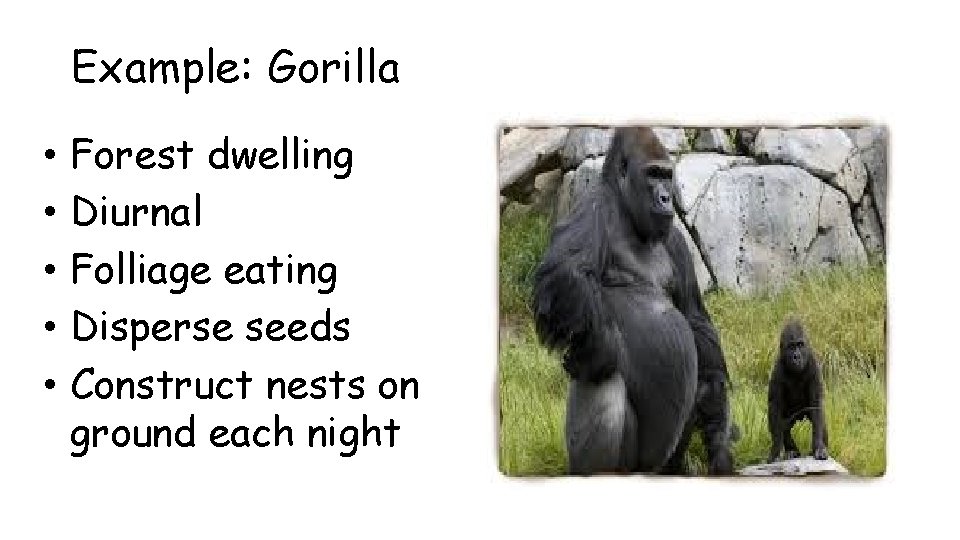
Example: Gorilla • • • Forest dwelling Diurnal Folliage eating Disperse seeds Construct nests on ground each night

Resource Distribution
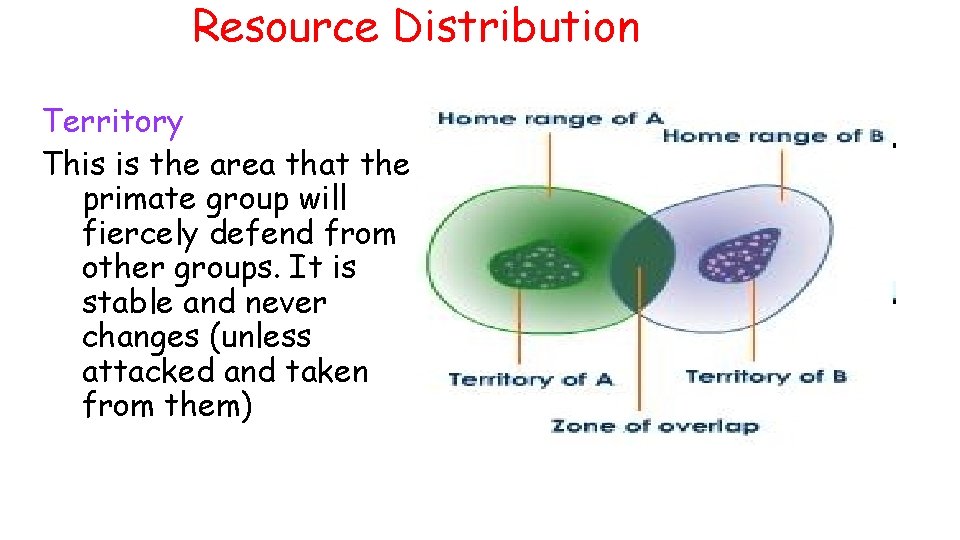
Resource Distribution Territory This is the area that the primate group will fiercely defend from other groups. It is stable and never changes (unless attacked and taken from them)
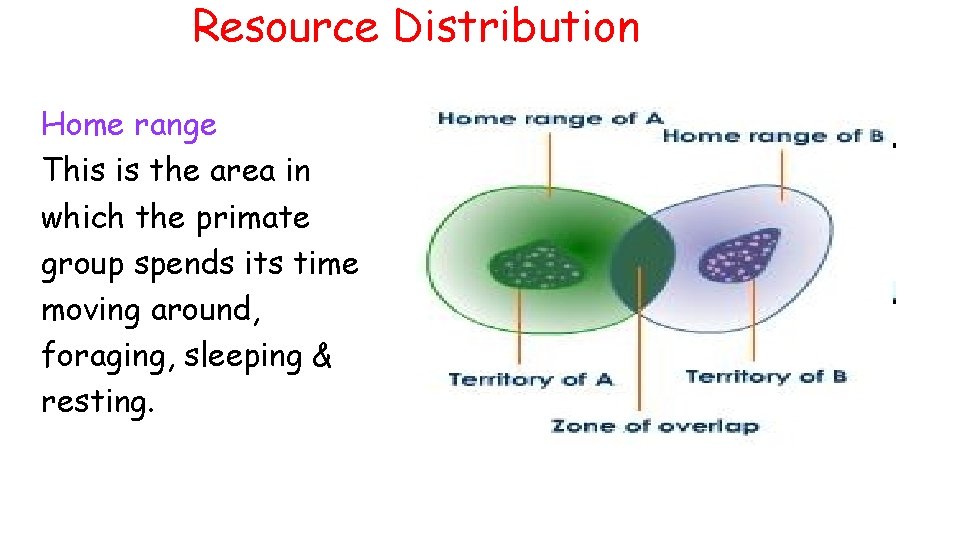
Resource Distribution Home range This is the area in which the primate group spends its time moving around, foraging, sleeping & resting.
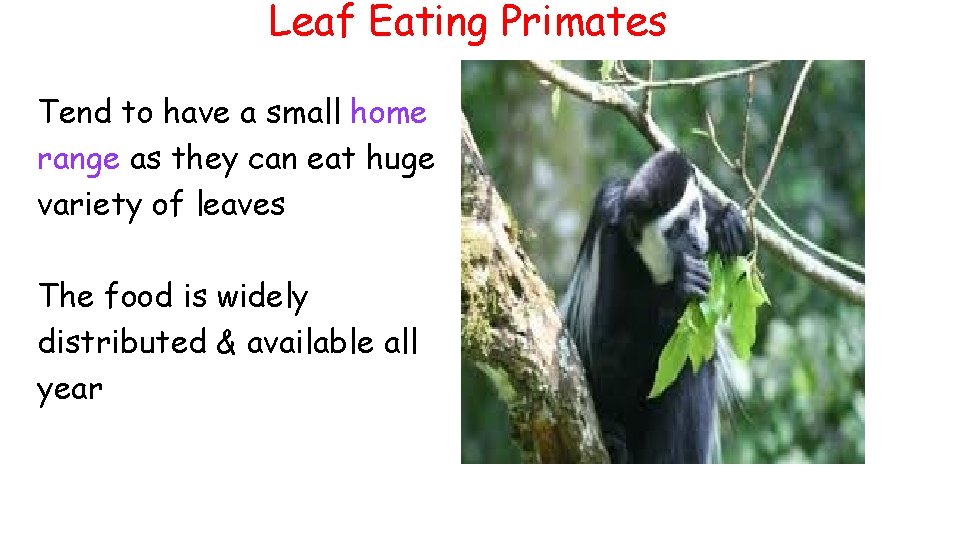
Leaf Eating Primates Tend to have a small home range as they can eat huge variety of leaves The food is widely distributed & available all year
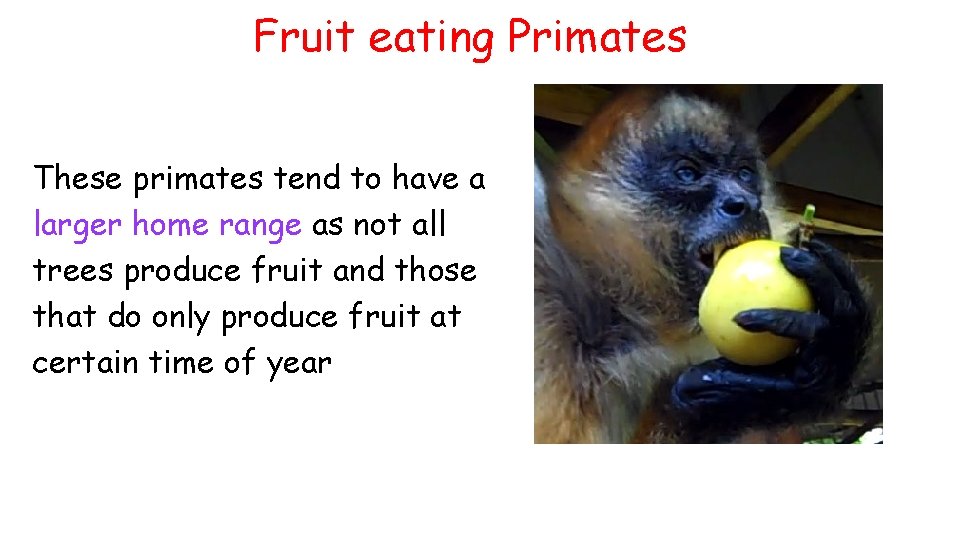
Fruit eating Primates These primates tend to have a larger home range as not all trees produce fruit and those that do only produce fruit at certain time of year

Fission-Fusion
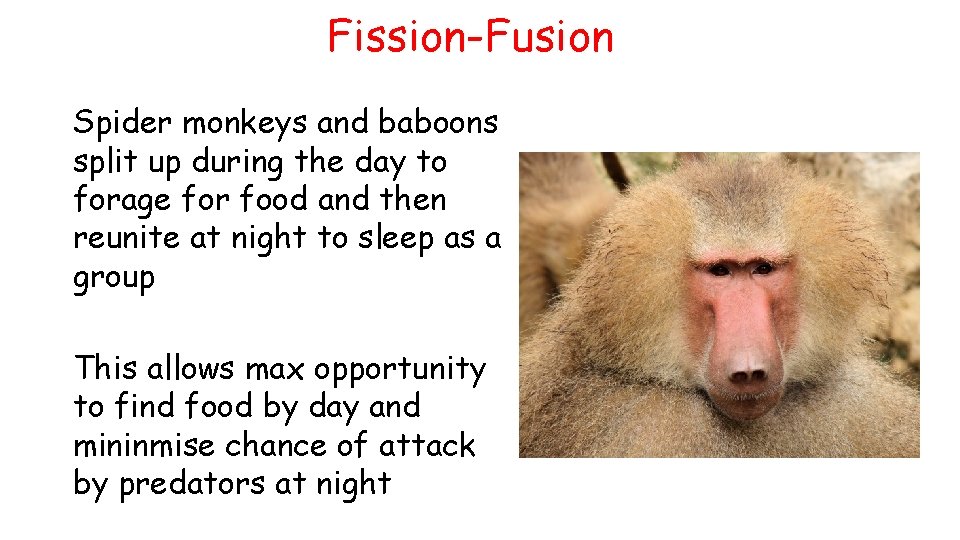
Fission-Fusion Spider monkeys and baboons split up during the day to forage for food and then reunite at night to sleep as a group This allows max opportunity to find food by day and mininmise chance of attack by predators at night

Taxonomic Group
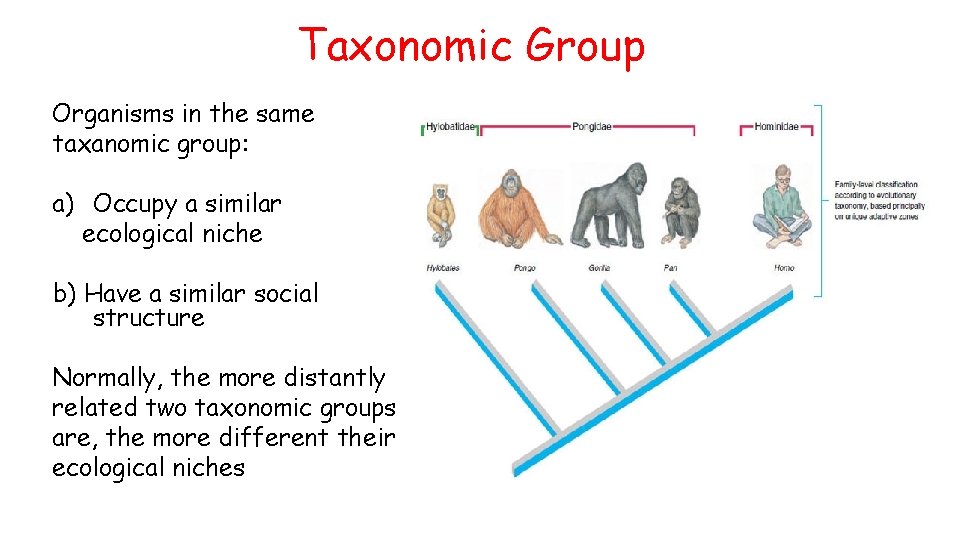
Taxonomic Group Organisms in the same taxanomic group: a) Occupy a similar ecological niche b) Have a similar social structure Normally, the more distantly related two taxonomic groups are, the more different their ecological niches

Bushbabies vs Gorilla Bushbaby Gorilla Niche: Small, nocturnal & tree dwelling insectivores Social structure: Large social groups Niche: Large, diurnal, semiterrestrial leaf eaters Social structure: Small social groups
Altruism - Prisoner’s Dilemma Two suspects are jointly charged with a crime they did commit. Police only have evidence for conviction of a minor offence. Police interview the 2 suspects separately
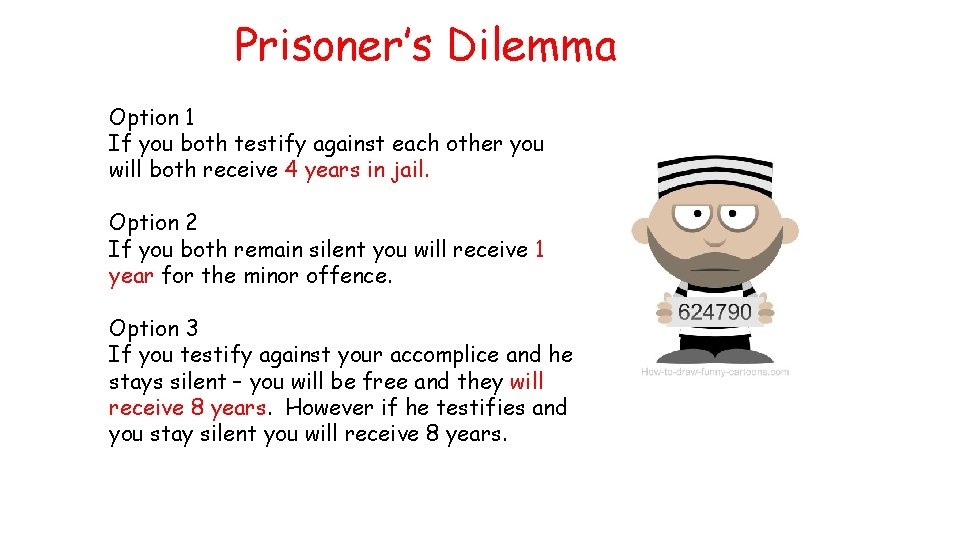
Prisoner’s Dilemma Option 1 If you both testify against each other you will both receive 4 years in jail. Option 2 If you both remain silent you will receive 1 year for the minor offence. Option 3 If you testify against your accomplice and he stays silent – you will be free and they will receive 8 years. However if he testifies and you stay silent you will receive 8 years.
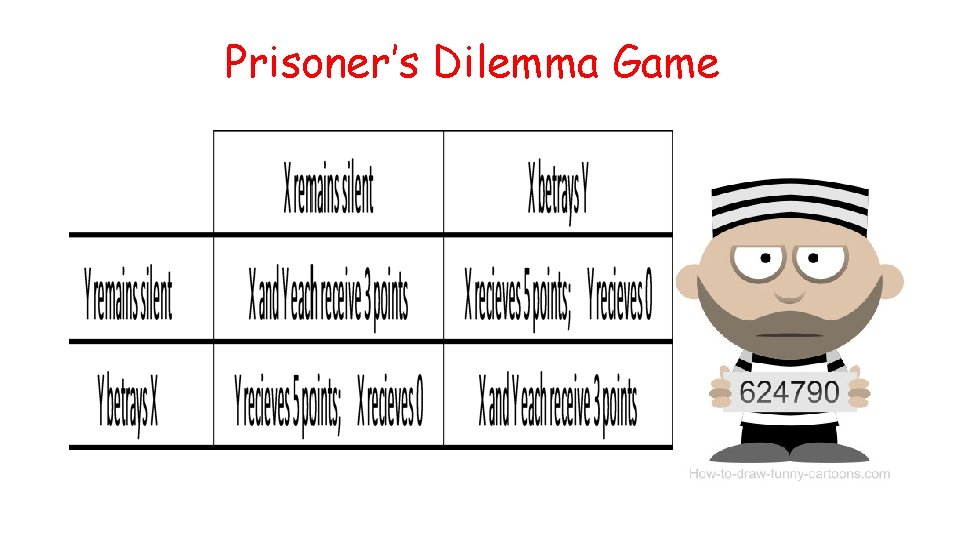
Prisoner’s Dilemma Game
- Slides: 55