
Sustainability Interdependance Key Area 6 a Social behaviour
Sustainability & Interdependance Key Area 6 a Social behaviour
Learning Intentions By the end of this topic you should be able to: State that many animals live in social groups and have behaviours that are adapted to group living such as social hierarchy or cooperative hunting and defence.
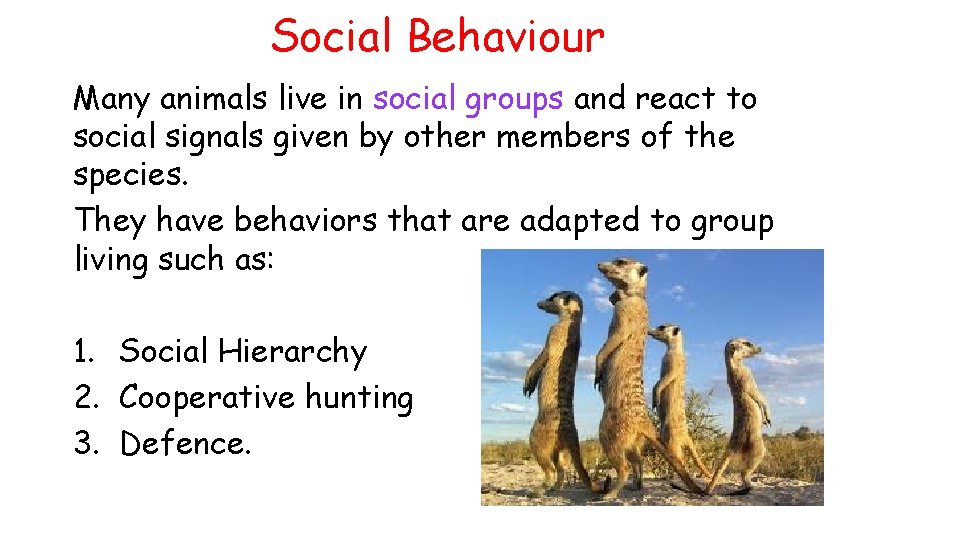
Social Behaviour Many animals live in social groups and react to social signals given by other members of the species. They have behaviors that are adapted to group living such as: 1. Social Hierarchy 2. Cooperative hunting 3. Defence.

Social Hierarchy
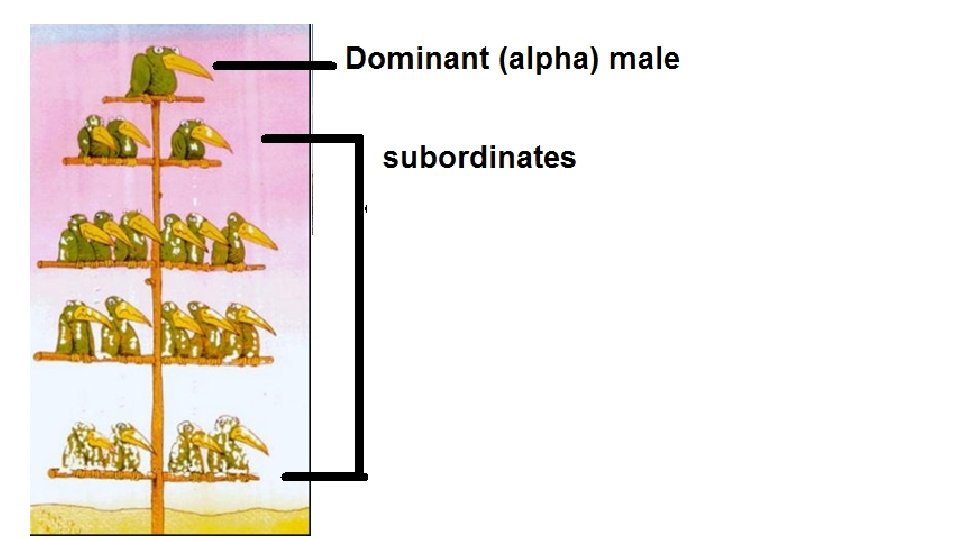
Social hierarchy This is a rank order within a group of animals consisting of a dominant and subordinate members. In a social hierarchy dominant individuals carry out ritualistic (threat) displays whilst subordinate animals carry out appeasement behaviour to reduce conflict

Dominance hierarchy It is usually higher animals that live in social groups • Pecking order – dominant animal • Rank order – rest of animals Dominant animal - 1 st choice of mates/food
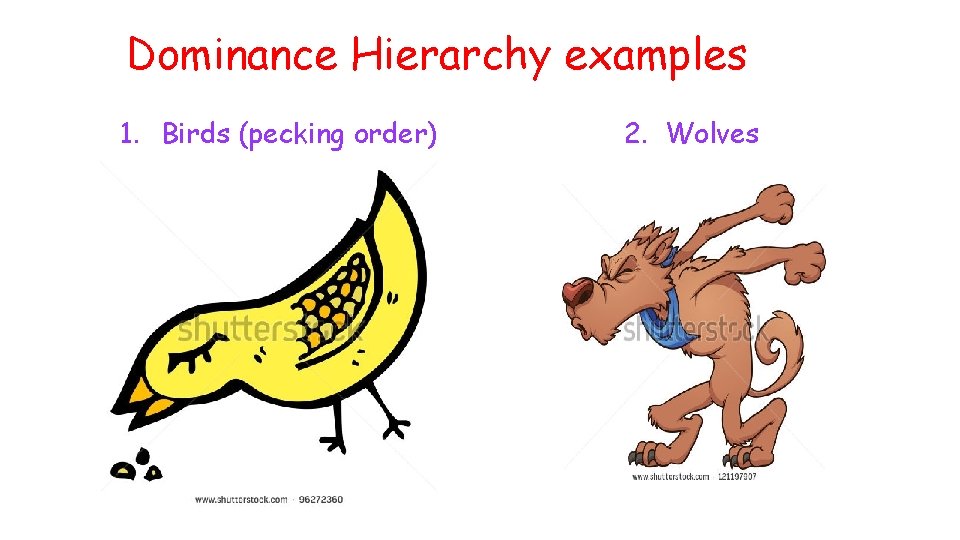
Dominance Hierarchy examples 1. Birds (pecking order) 2. Wolves
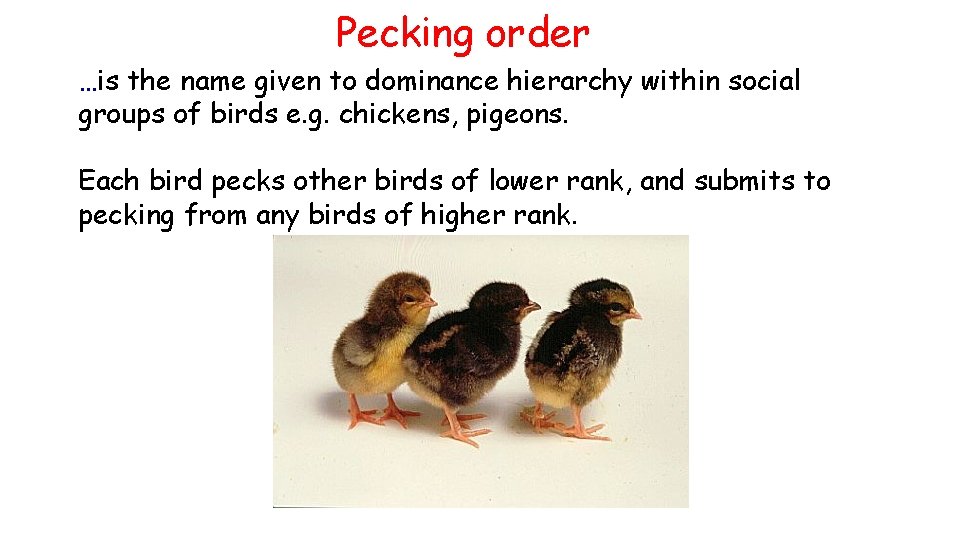
Pecking order …is the name given to dominance hierarchy within social groups of birds e. g. chickens, pigeons. Each bird pecks other birds of lower rank, and submits to pecking from any birds of higher rank.

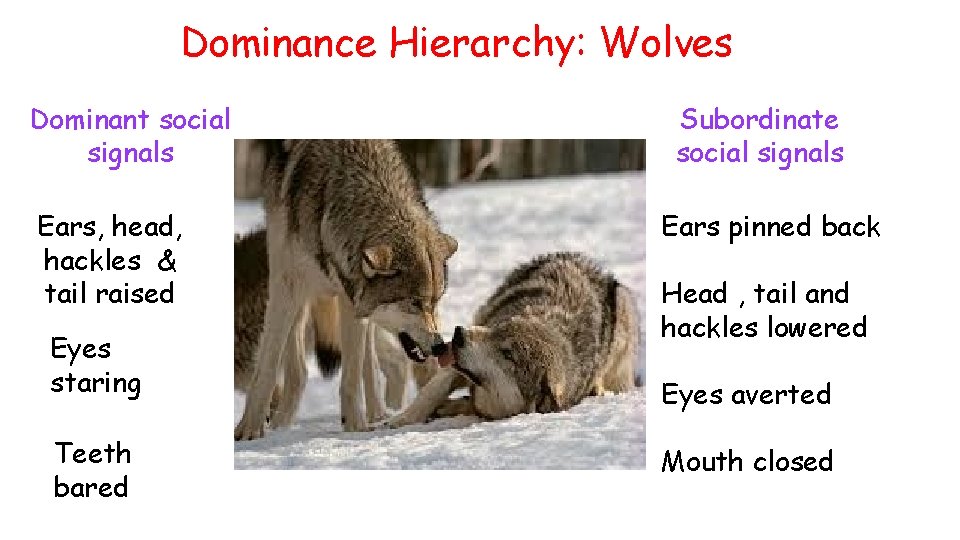
Dominance Hierarchy: Wolves Dominant social signals Ears, head, hackles & tail raised Eyes staring Teeth bared Subordinate social signals Ears pinned back Head , tail and hackles lowered Eyes averted Mouth closed
Dominance hierarchy advantages 1. Reduces energy spent fighting 2. Serious injury avoided/energy conserved 3. Strong, experienced leadership guaranteed 4. Increases chances of survival as strongest genes will be passed on as alpha male reproduces
Co-operative Hunting
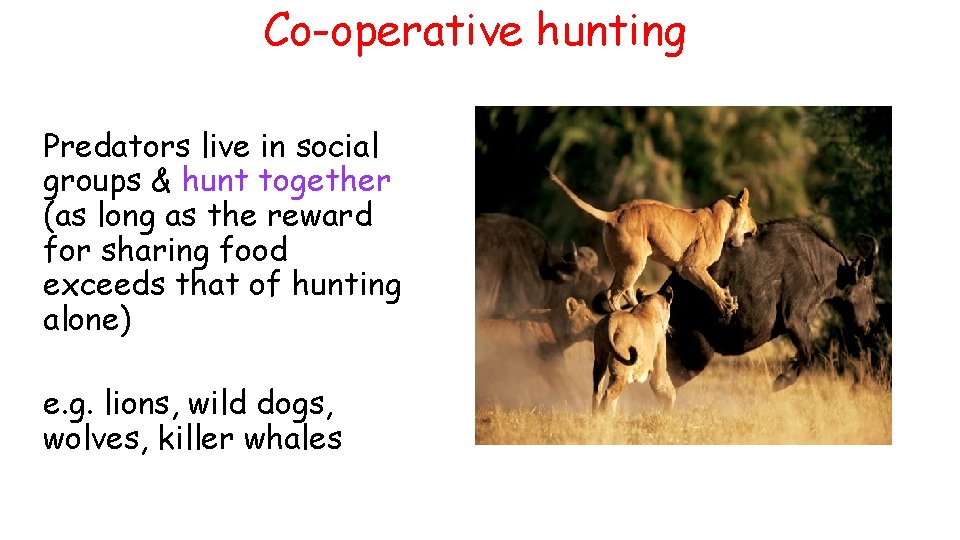
Co-operative hunting Predators live in social groups & hunt together (as long as the reward for sharing food exceeds that of hunting alone) e. g. lions, wild dogs, wolves, killer whales

“Ambush” Different animals employ different cooperative hunting techniques. The ambush strategy is used by lions and involves driving the prey towards other lions who remain hidden.
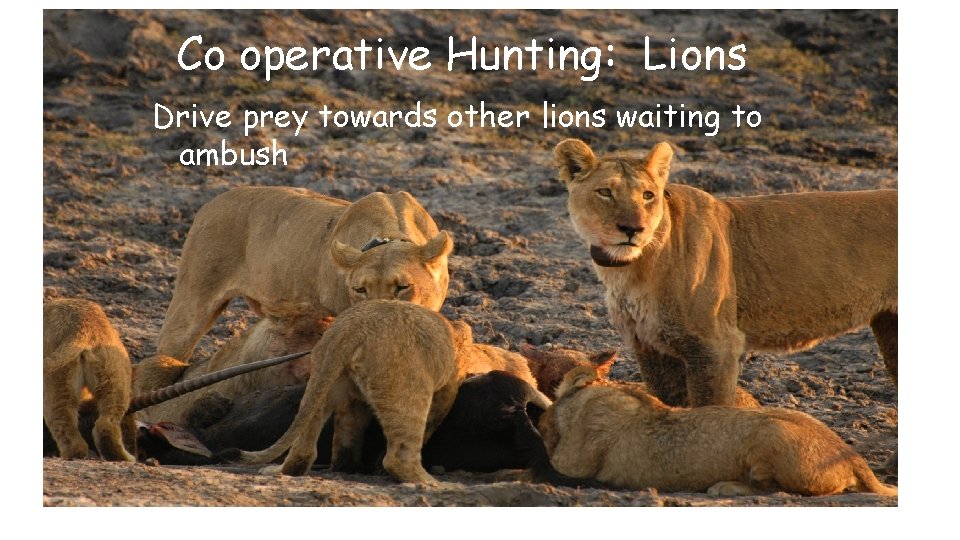
Co operative Hunting: Lions Drive prey towards other lions waiting to ambush
“running down” Running down involves each member taking their turn to run down a solitary prey to the point of exhaustion and then all attacking it
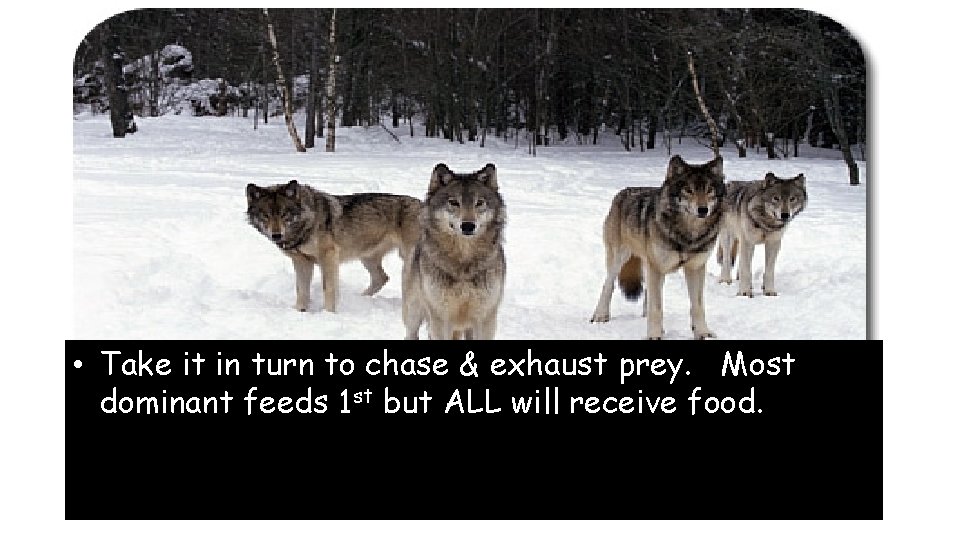
• Take it in turn to chase & exhaust prey. Most dominant feeds 1 st but ALL will receive food.
Co-operative hunting advantages 1. Groups can catch and kill larger prey that could not be caught by an individual 2. The chances of success are increased 3. Weaker (subordinate) individuals get a larger share of the food than hunting alone
Group Defence
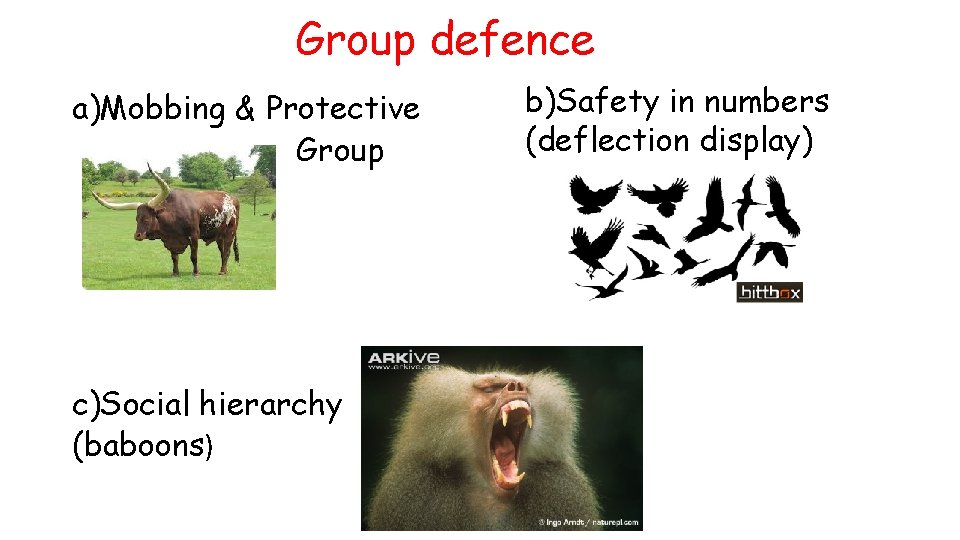
Group defence a)Mobbing & Protective Group c)Social hierarchy (baboons) b)Safety in numbers (deflection display)
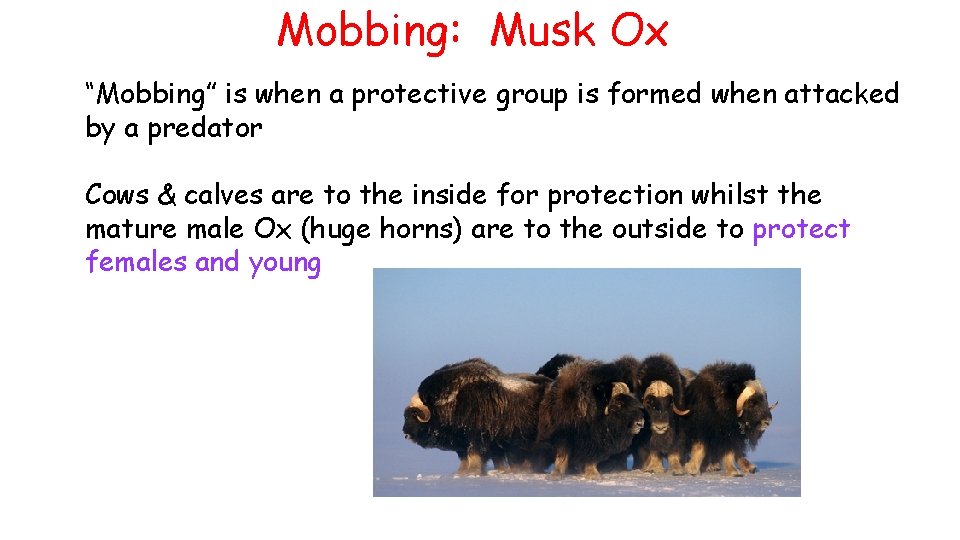
Mobbing: Musk Ox “Mobbing” is when a protective group is formed when attacked by a predator Cows & calves are to the inside for protection whilst the mature male Ox (huge horns) are to the outside to protect females and young
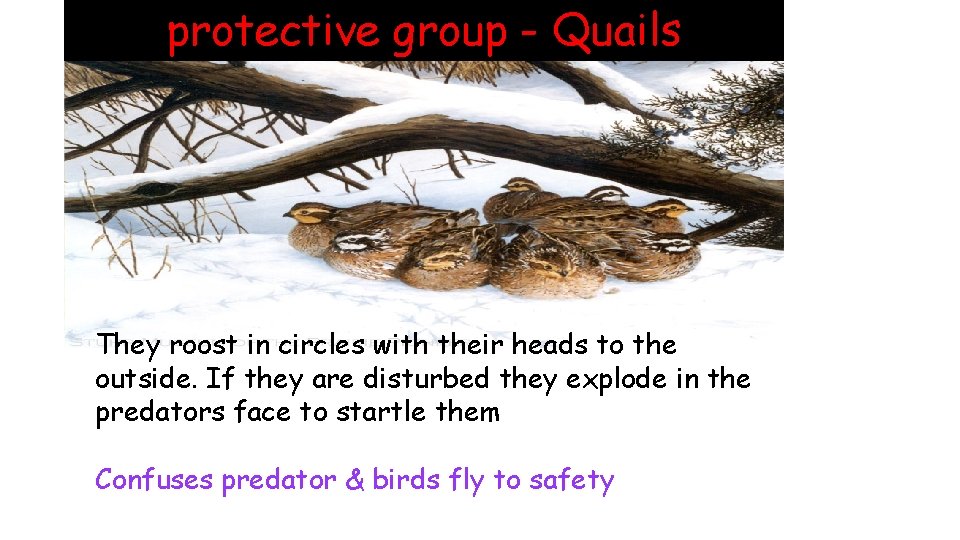
protective group - Quails They roost in circles with their heads to the outside. If they are disturbed they explode in the predators face to startle them Confuses predator & birds fly to safety
Deflection Display It is harder to capture animals when they are in a large, unpredictable crowd because: 1. many eyes on lookout for enemies 2. bunching & swirling confuses predators

Deflection Display
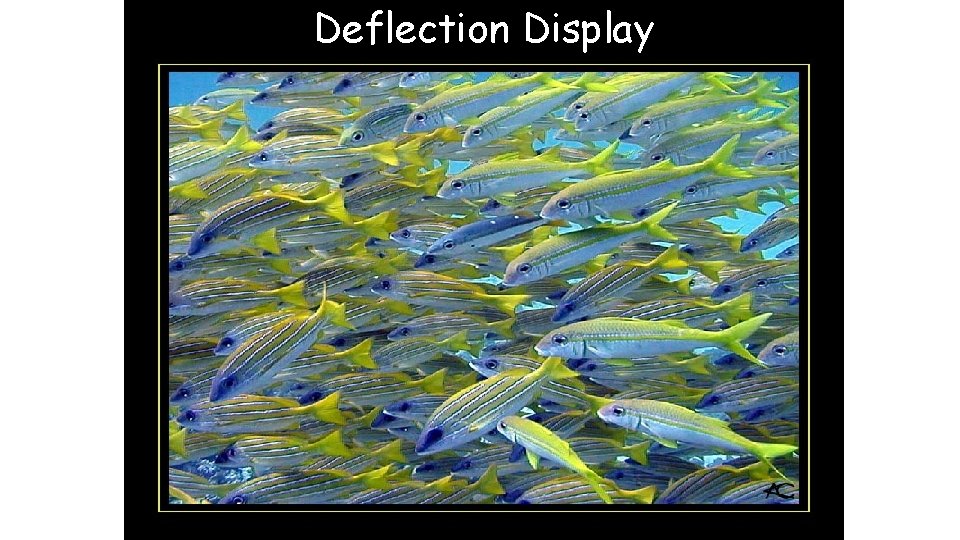
Deflection Display
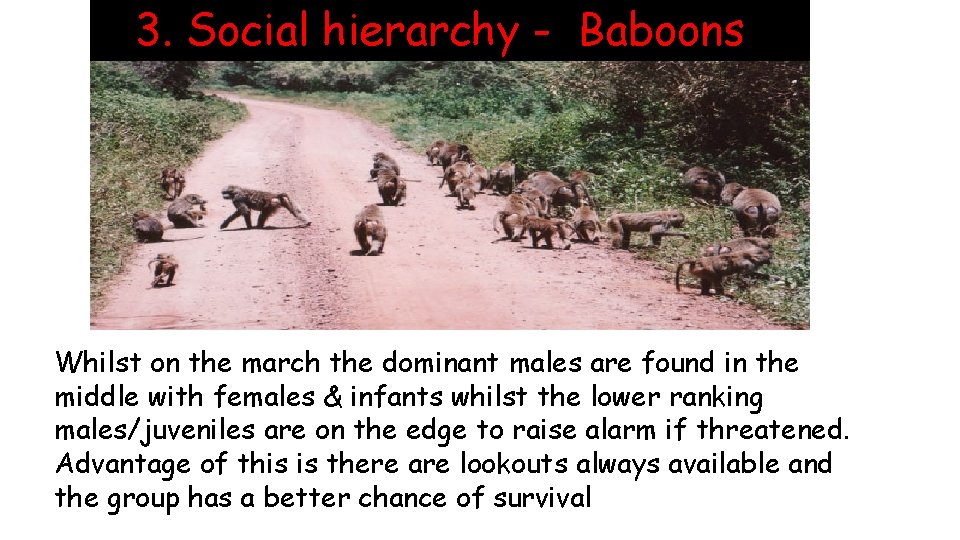
3. Social hierarchy - Baboons Whilst on the march the dominant males are found in the middle with females & infants whilst the lower ranking males/juveniles are on the edge to raise alarm if threatened. Advantage of this is there are lookouts always available and the group has a better chance of survival
- Slides: 27