
SUSTAINABILITY Do you believe in global warmingclimate change
SUSTAINABILITY
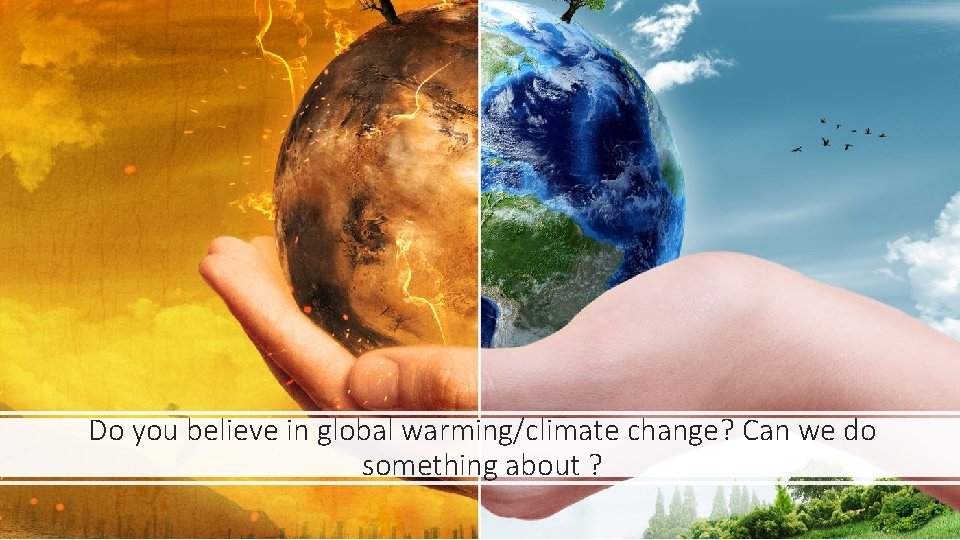
Do you believe in global warming/climate change? Can we do something about ?
What is ‘Sustainability’ • You. Tube: https: //www. youtube. com/watch? v=B 5 Ni. TN 0 chj 0 Watch the You. Tube clip and answer the following questions: 1. What are the definitions of sustainability developed by scientists in Sweden? 2. For each one explain why they are important to us? 3. What are three parts that are interconnected and make up the ‘earth system’? 4. How much water does it take to produce a single hamburger? 5. How many global hectares are required to support each person on the planer? 6. What the greenhouse gases that have grown exponentially? 7. What paradox has been created by the rise in greenhouse gases? 8. (Look up the meaning of the word paradox if necessary) 9. How can we change our habits to reduce our eco footprint?
Youtube WATCH: What is ‘Eco Footprint’ https: //www. youtube. com/watch? v=u. Ayb. ZOf. CN 6 g FIRST 100% ZERO WASTE STORE WORLDWIDE https: //www. youtube. com/watch? v=5 p. Azm. V 39 y. O Sainsbury's super green supermarket | Energy Live News https: //www. youtube. com/watch? v=Zi 0 Fvl 8 LTWw
Try the carbon footprint calculator (You will need your parents to help you with some of the questions) Activity Thinking about what you or your family could do to improve your carbon footprint. Make a poster or bookmark to remind you of the 5 most important actions you could take in your household.
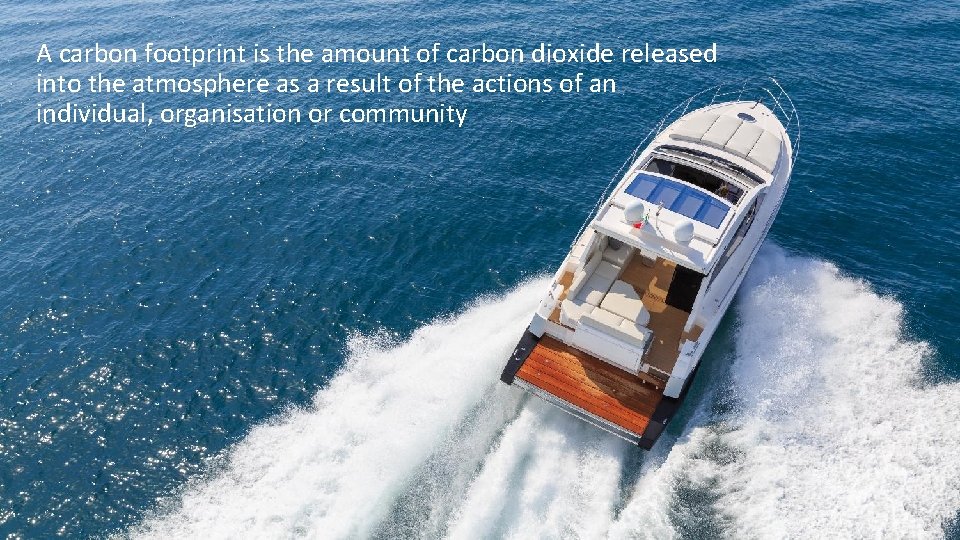
A carbon footprint is the amount of carbon dioxide released into the atmosphere as a result of the actions of an individual, organisation or community
TRUE OR FALSE: Education services in the UK throw away 250, 000 tonnes of waste every year. 78% is recyclable.
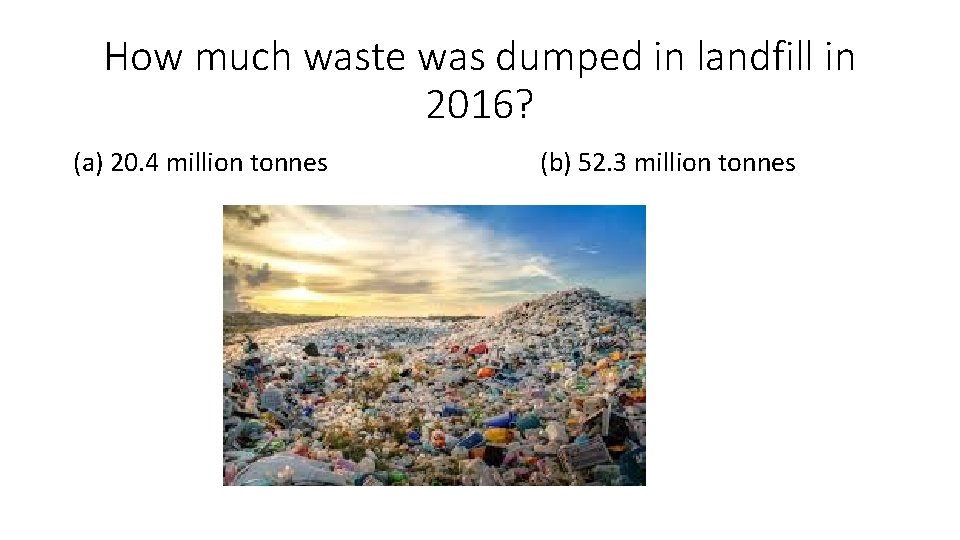
How much waste was dumped in landfill in 2016? (a) 20. 4 million tonnes (b) 52. 3 million tonnes
The Anthropocene https: //www. youtube. com/watch? v=fvg. G-pxlobk
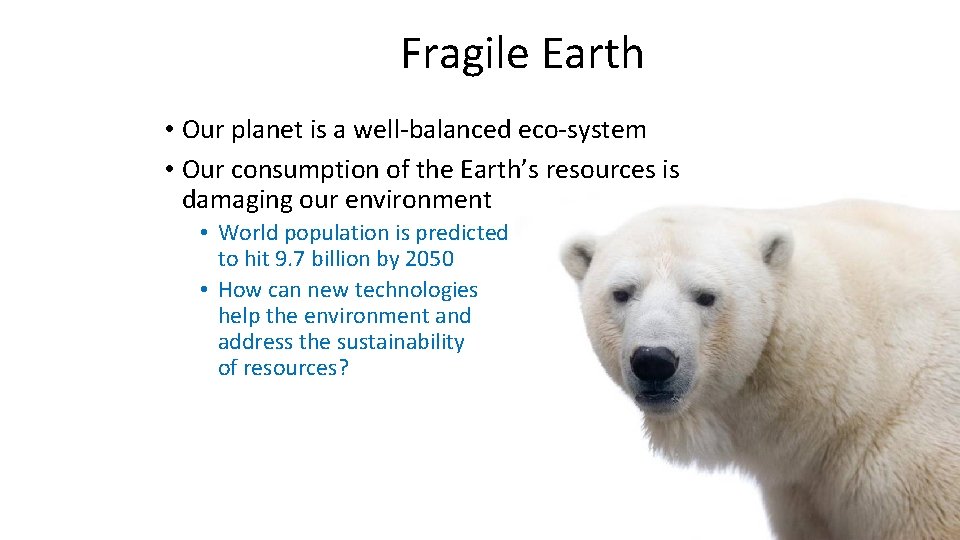
Fragile Earth • Our planet is a well-balanced eco-system • Our consumption of the Earth’s resources is damaging our environment • World population is predicted to hit 9. 7 billion by 2050 • How can new technologies help the environment and address the sustainability of resources?
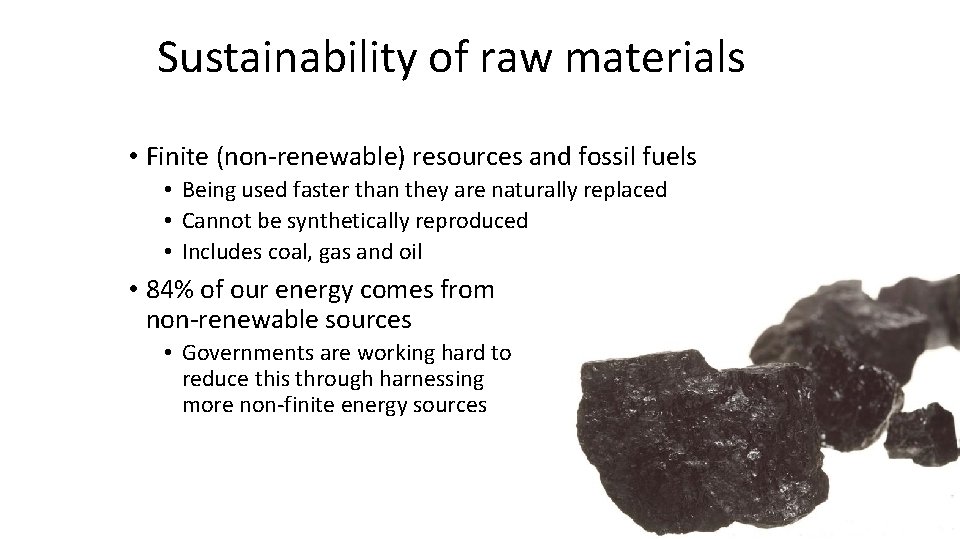
Sustainability of raw materials • Finite (non-renewable) resources and fossil fuels • Being used faster than they are naturally replaced • Cannot be synthetically reproduced • Includes coal, gas and oil • 84% of our energy comes from non-renewable sources • Governments are working hard to reduce this through harnessing more non-finite energy sources

Non-finite materials • Non-finite resources include those that are unlikely to be exhausted, or those that are replaced faster than we can use them • These include: • • Oxygen Fresh water Timber Leather • Is paper a renewable resource?
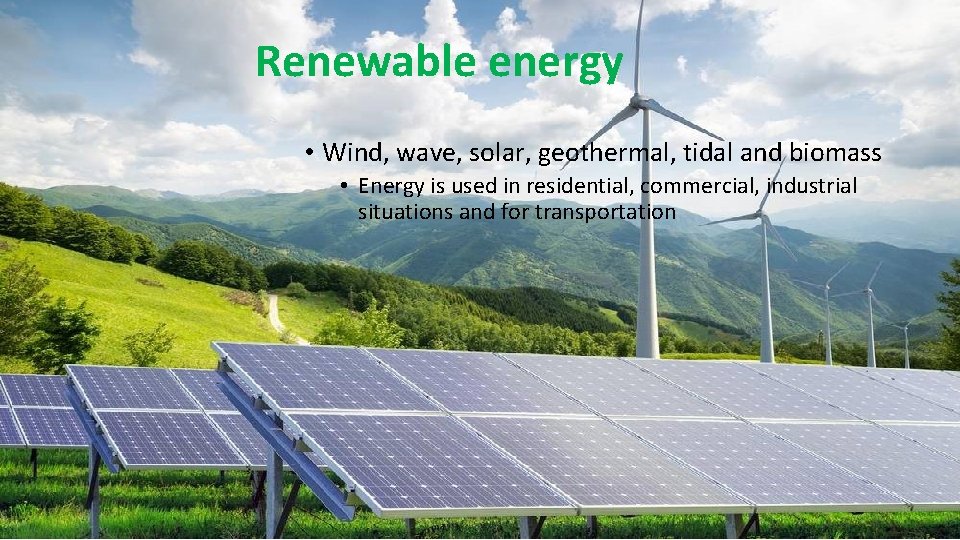
Renewable energy • Wind, wave, solar, geothermal, tidal and biomass • Energy is used in residential, commercial, industrial situations and for transportation
Ecological and social footprint • All materials leave a footprint in terms of the impact their production and consumption has on the planet • How does each of the following stages of product manufacture and it use affect us? 1. 2. 3. 4. 5. Obtaining raw materials Manufacture and processing Shipping / transportation / distribution Battery or fuel power / consumption / wear and tear End of life
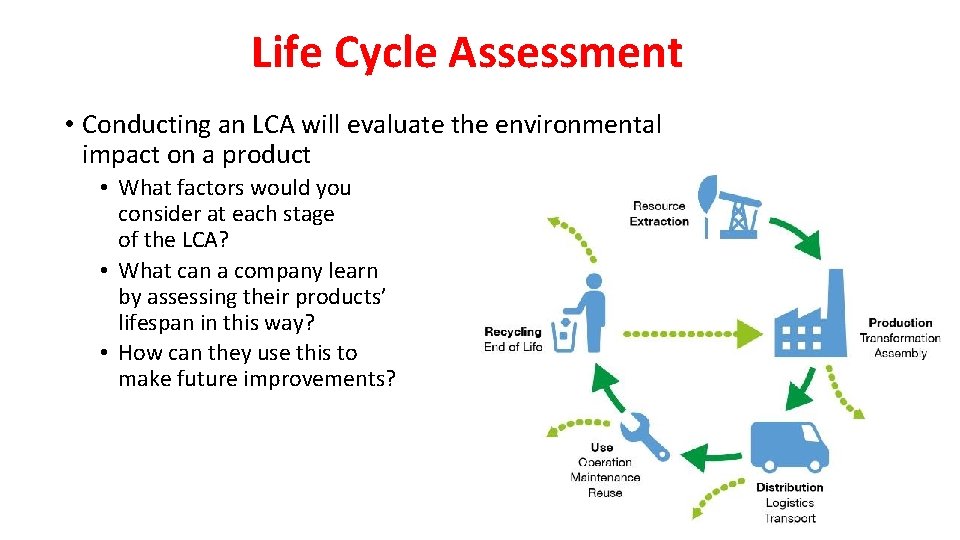
Life Cycle Assessment • Conducting an LCA will evaluate the environmental impact on a product • What factors would you consider at each stage of the LCA? • What can a company learn by assessing their products’ lifespan in this way? • How can they use this to make future improvements?
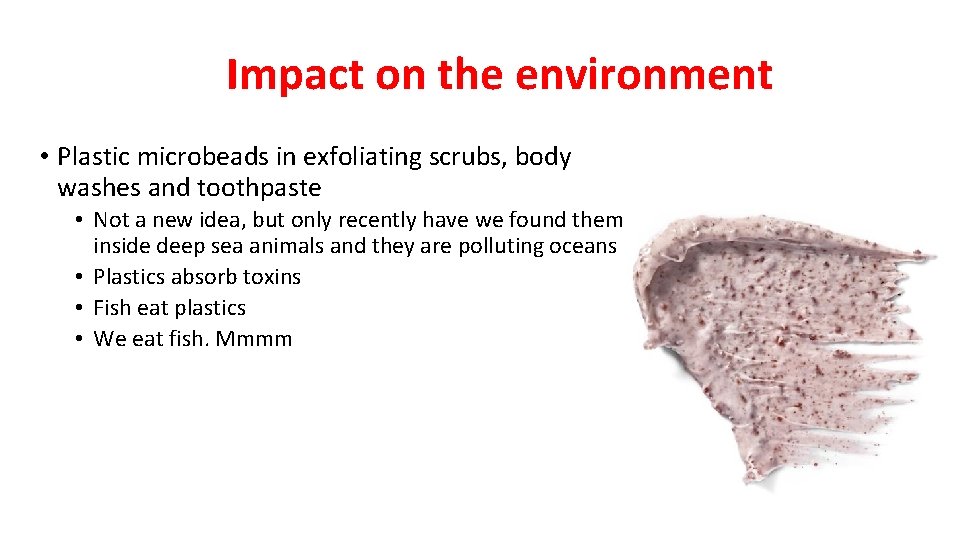
Impact on the environment • Plastic microbeads in exfoliating scrubs, body washes and toothpaste • Not a new idea, but only recently have we found them inside deep sea animals and they are polluting oceans • Plastics absorb toxins • Fish eat plastics • We eat fish. Mmmm
A day in the life…. . • http: //www. bing. com/videos/search? q=a+day+in+the+life+of+a+plas tic+bag+mockumentary&&view=detail&mid=35 A 4 B 2 DB 05929 EC 4 F 6 E A 35 A 4 B 2 DB 05929 EC 4 F 6 EA&FORM=VRDGAR
Global warming • Primarily caused by an excess of CO 2 in the atmosphere that traps heat, warming the planet • Burning fossil fuels releases CO 2 from the earth • What are some of the effects of global warming? • What are some of the techniques, policies and products being created to reduce or reverse these effects?
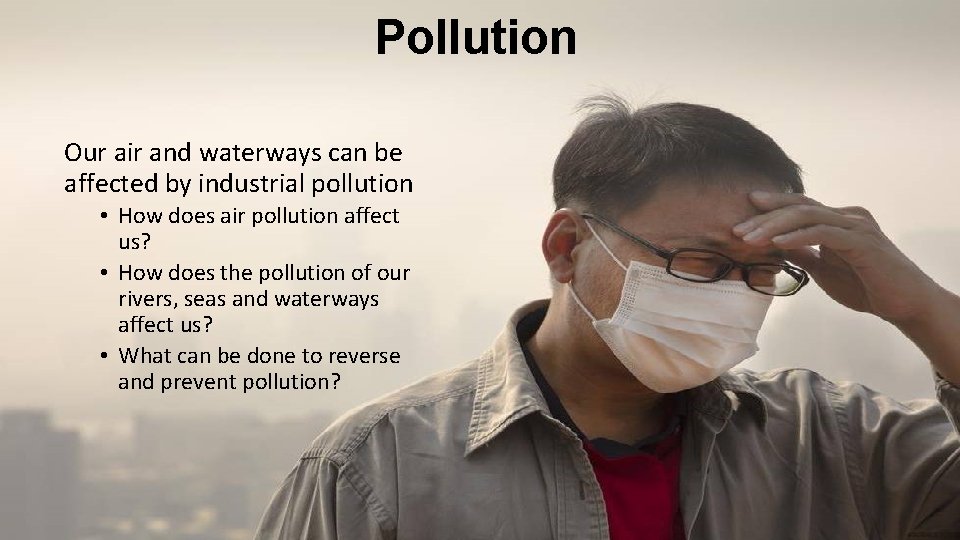
Pollution • Pollution Our air and waterways can be affected by industrial pollution • How does air pollution affect us? • How does the pollution of our rivers, seas and waterways affect us? • What can be done to reverse and prevent pollution?
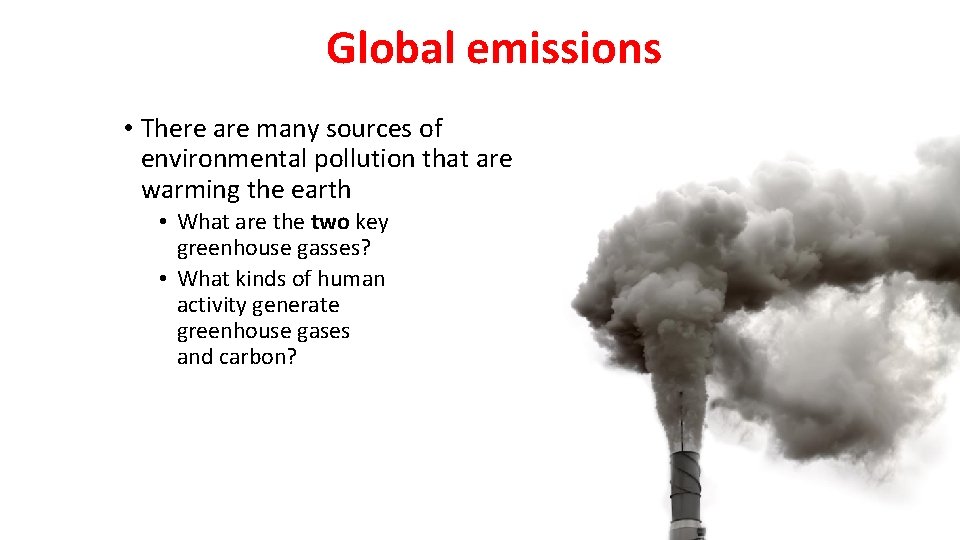
Global emissions • There are many sources of environmental pollution that are warming the earth • What are the two key greenhouse gasses? • What kinds of human activity generate greenhouse gases and carbon?
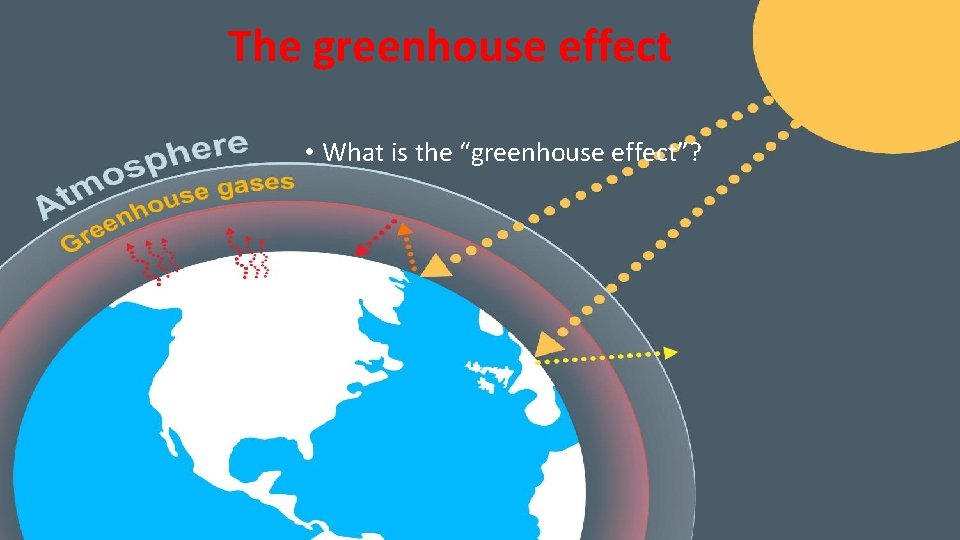
The greenhouse effect • What is the “greenhouse effect”?
How does nature help? • How do plants affect the carbon content in our atmosphere? • How could human activity help to reduce the greenhouse effect?
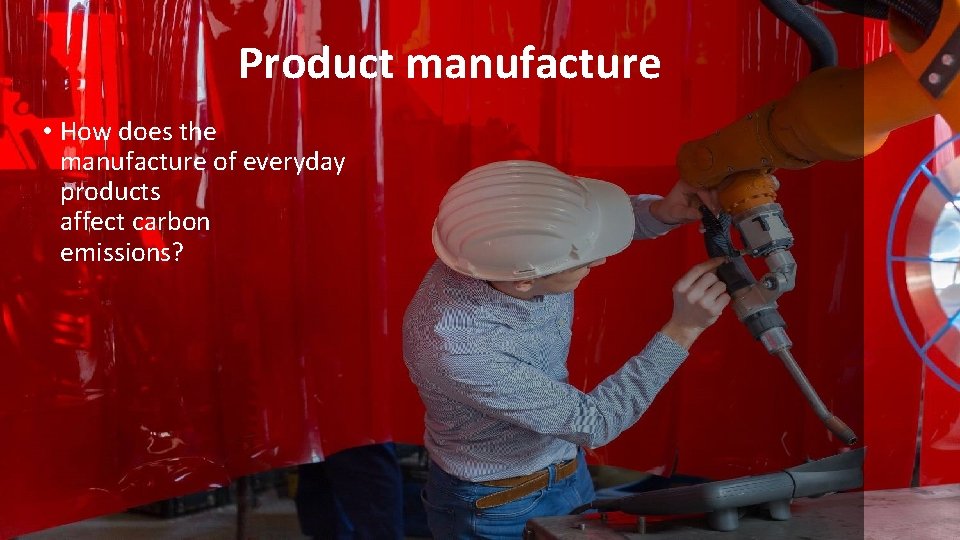
Product manufacture • How does the manufacture of everyday products affect carbon emissions?
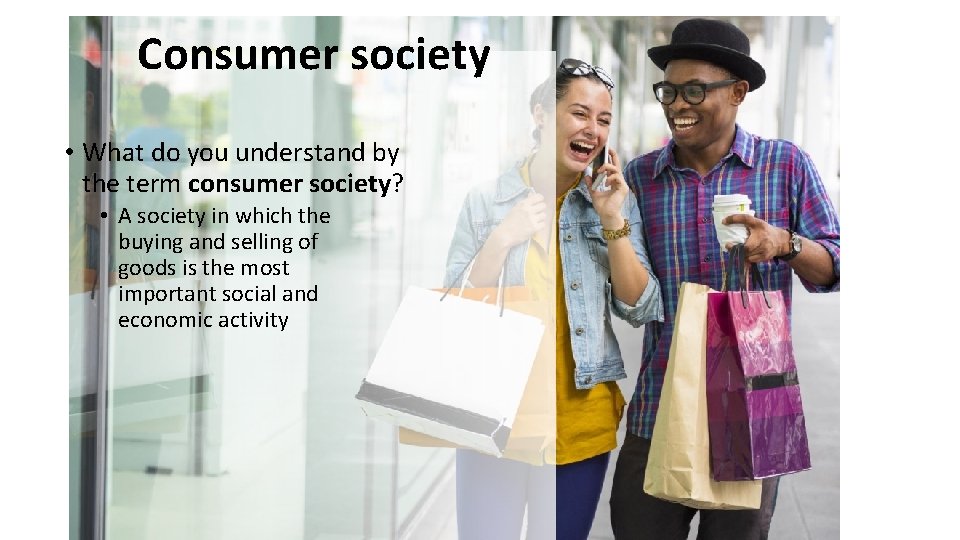
Consumer society • What do you understand by the term consumer society? • A society in which the buying and selling of goods is the most important social and economic activity
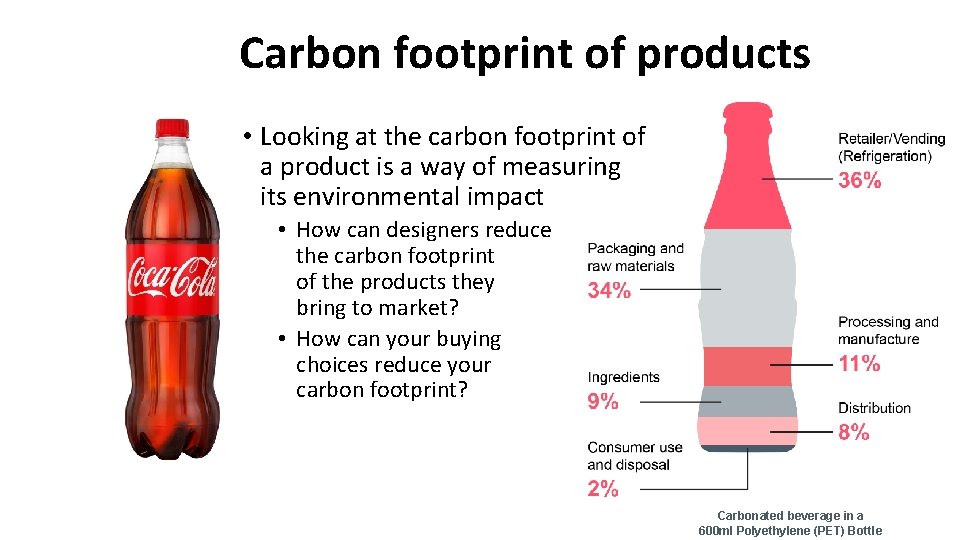
Carbon footprint of products • Looking at the carbon footprint of a product is a way of measuring its environmental impact • How can designers reduce the carbon footprint of the products they bring to market? • How can your buying choices reduce your carbon footprint? Carbonated beverage in a 600 ml Polyethylene (PET) Bottle
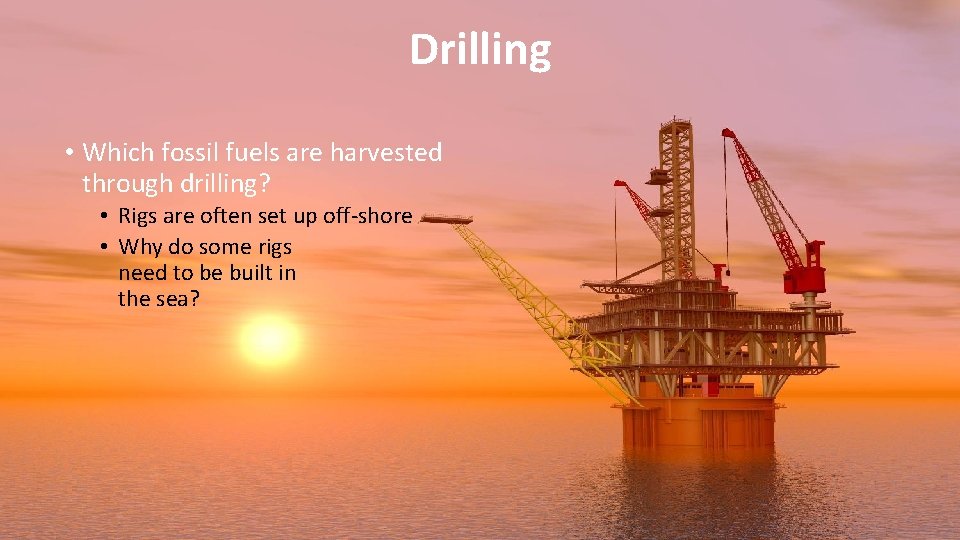
Drilling • Which fossil fuels are harvested through drilling? • Rigs are often set up off-shore • Why do some rigs need to be built in the sea?
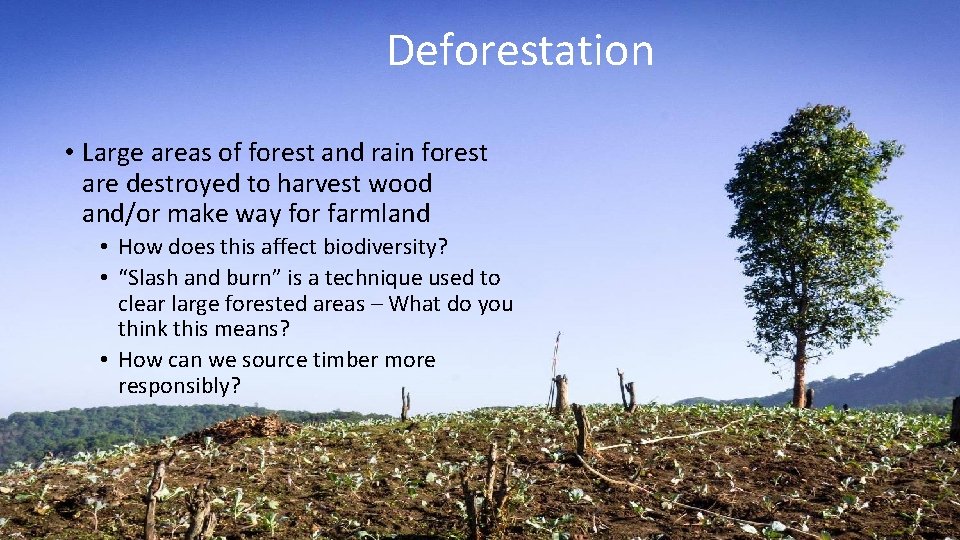
Deforestation • Large areas of forest and rain forest are destroyed to harvest wood and/or make way for farmland • How does this affect biodiversity? • “Slash and burn” is a technique used to clear large forested areas – What do you think this means? • How can we source timber more responsibly?
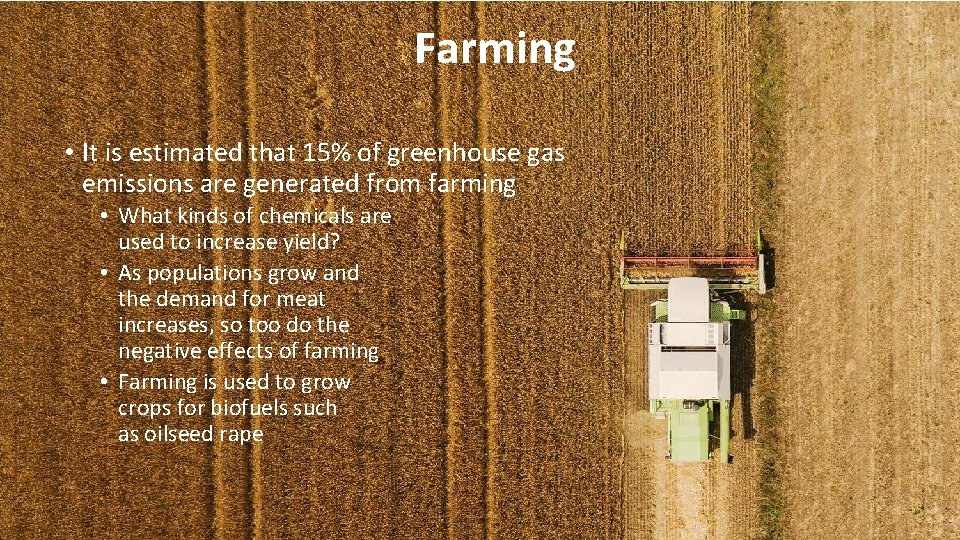
Farming • It is estimated that 15% of greenhouse gas emissions are generated from farming • What kinds of chemicals are used to increase yield? • As populations grow and the demand for meat increases, so too do the negative effects of farming • Farming is used to grow crops for biofuels such as oilseed rape
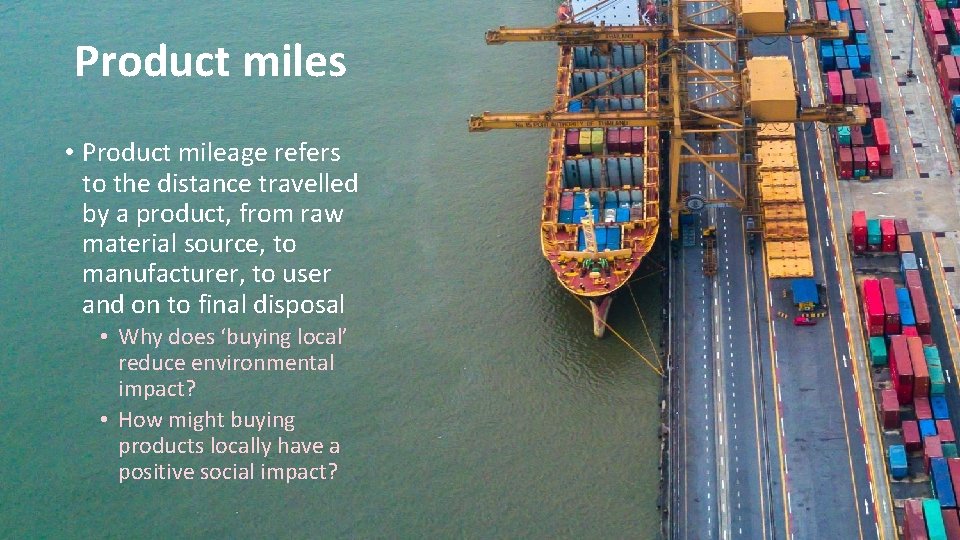
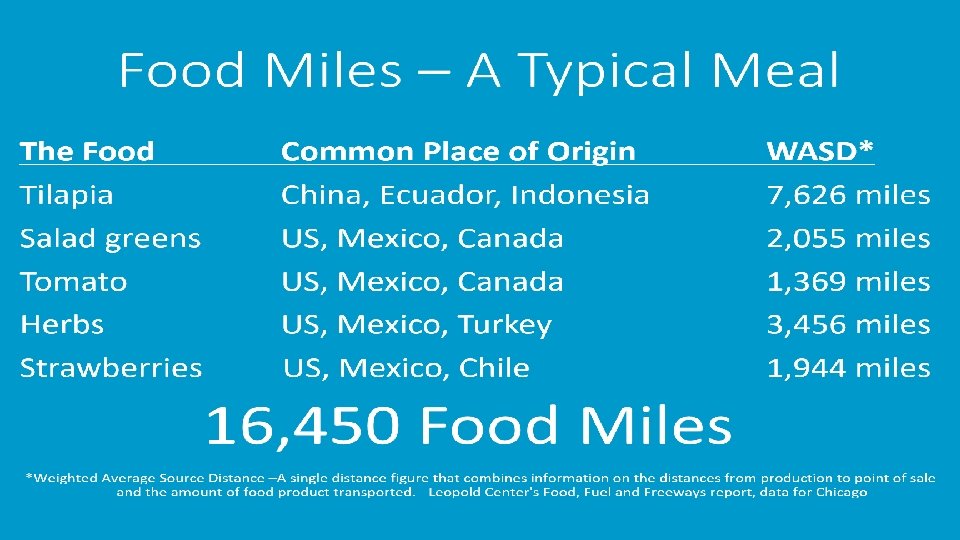
Product miles • Product mileage refers to the distance travelled by a product, from raw material source, to manufacturer, to user and on to final disposal • Why does ‘buying local’ reduce environmental impact? • How might buying products locally have a positive social impact?
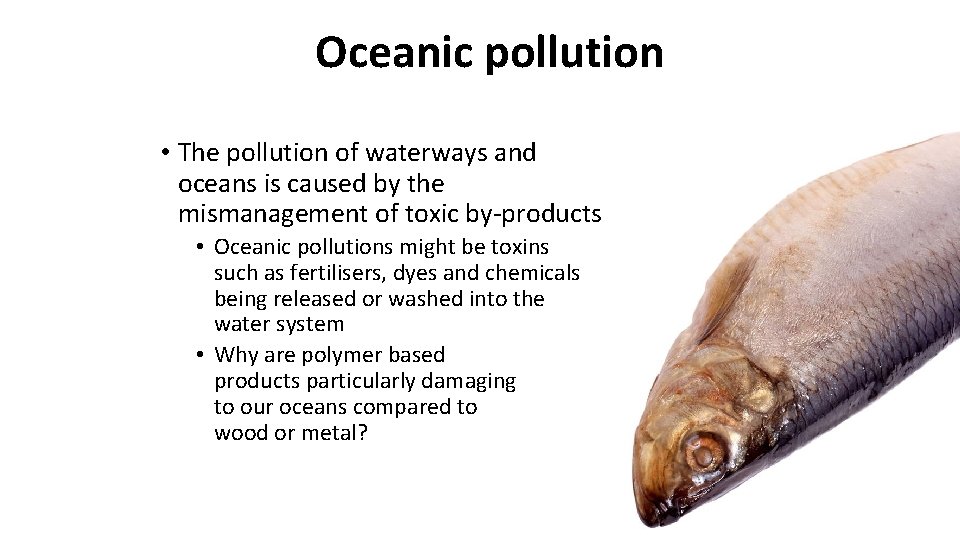
Oceanic pollution • The pollution of waterways and oceans is caused by the mismanagement of toxic by-products • Oceanic pollutions might be toxins such as fertilisers, dyes and chemicals being released or washed into the water system • Why are polymer based products particularly damaging to our oceans compared to wood or metal?
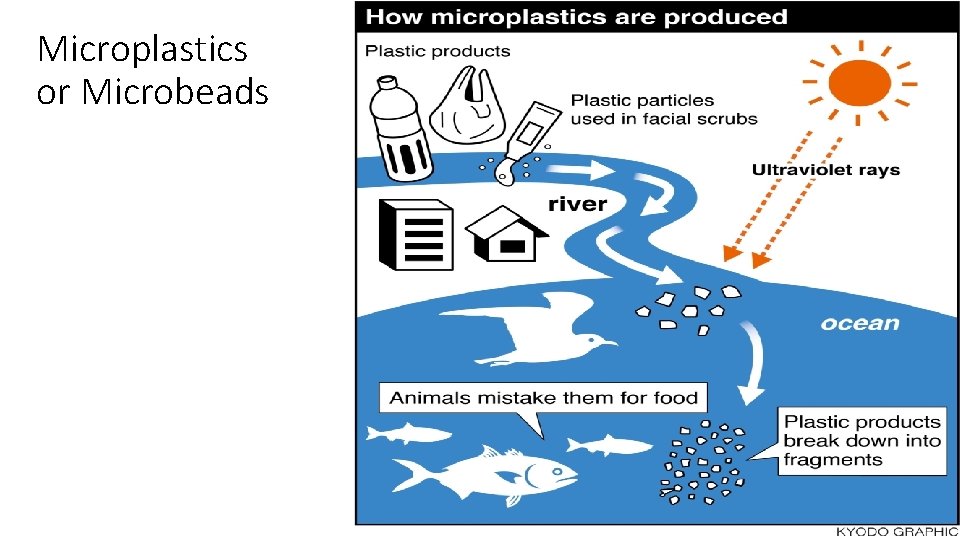
Microplastics or Microbeads
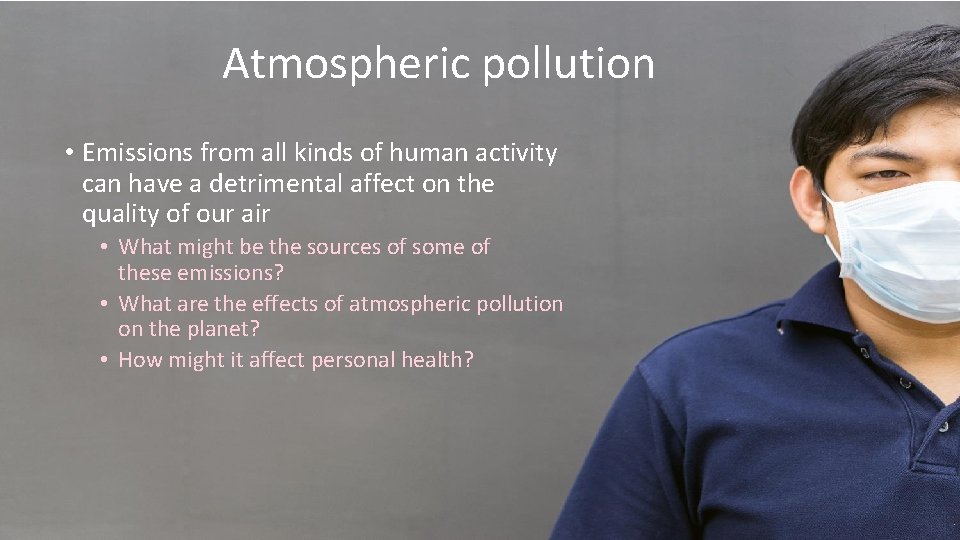
Atmospheric pollution • Emissions from all kinds of human activity can have a detrimental affect on the quality of our air • What might be the sources of some of these emissions? • What are the effects of atmospheric pollution on the planet? • How might it affect personal health?
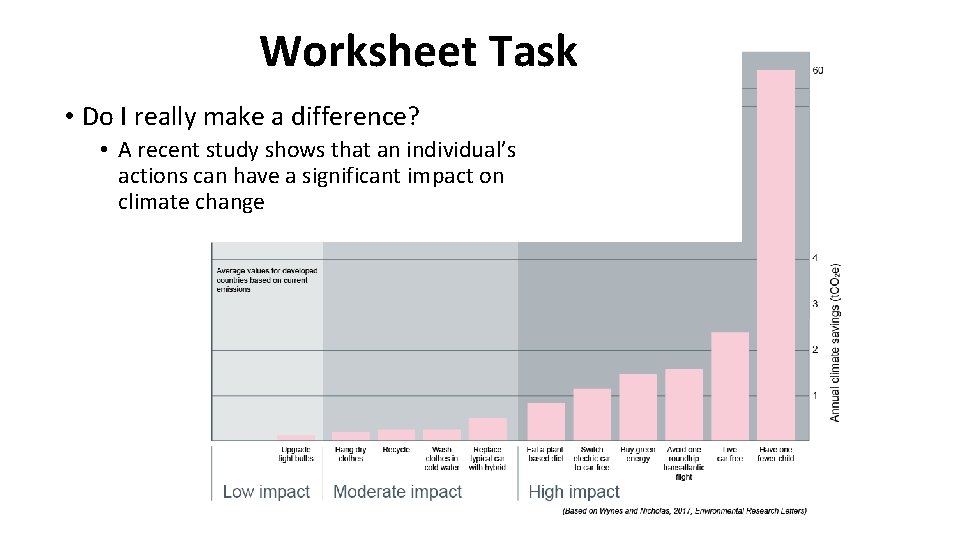
Worksheet Task • Do I really make a difference? • A recent study shows that an individual’s actions can have a significant impact on climate change
The six Rs • The six Rs are a set of strategies used to help make more sustainable decisions as a consumer and as a designer: 1. 2. 3. 4. 5. 6. Refuse Rethink Reduce Reuse Repair Recycle
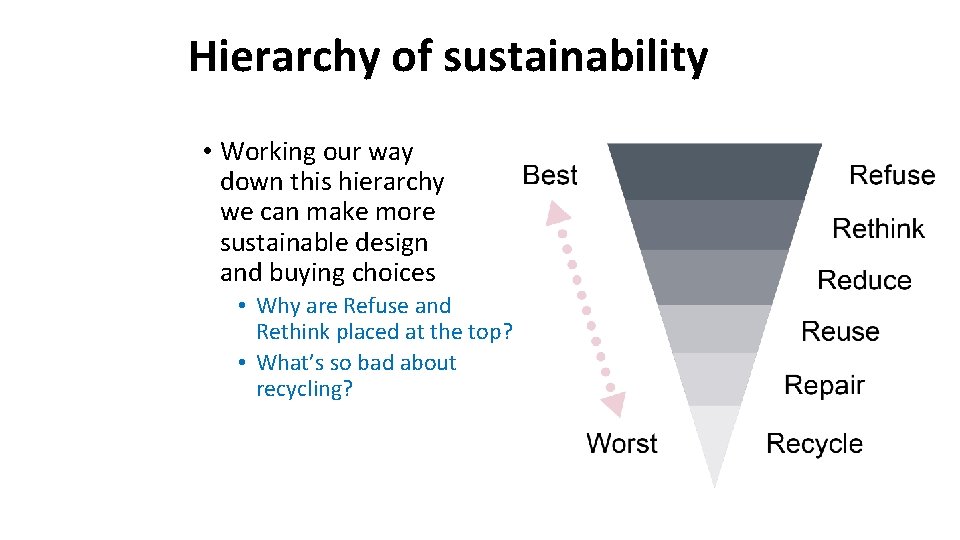
Hierarchy of sustainability • Working our way down this hierarchy we can make more sustainable design and buying choices • Why are Refuse and Rethink placed at the top? • What’s so bad about recycling?
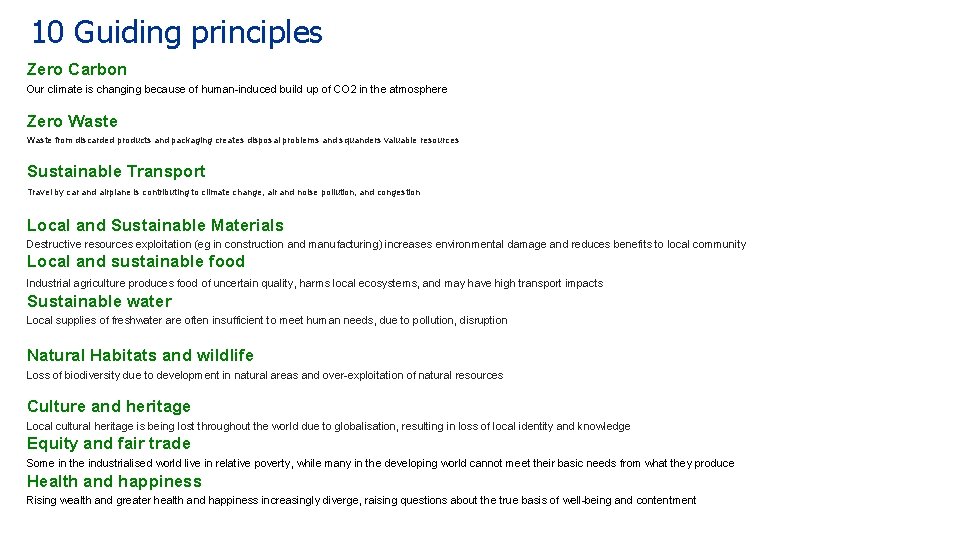
10 Guiding principles Zero Carbon Our climate is changing because of human-induced build up of CO 2 in the atmosphere Zero Waste from discarded products and packaging creates disposal problems and squanders valuable resources Sustainable Transport Travel by car and airplane is contributing to climate change, air and noise pollution, and congestion Local and Sustainable Materials Destructive resources exploitation (eg in construction and manufacturing) increases environmental damage and reduces benefits to local community Local and sustainable food Industrial agriculture produces food of uncertain quality, harms local ecosystems, and may have high transport impacts Sustainable water Local supplies of freshwater are often insufficient to meet human needs, due to pollution, disruption Natural Habitats and wildlife Loss of biodiversity due to development in natural areas and over-exploitation of natural resources Culture and heritage Local cultural heritage is being lost throughout the world due to globalisation, resulting in loss of local identity and knowledge Equity and fair trade Some in the industrialised world live in relative poverty, while many in the developing world cannot meet their basic needs from what they produce or sell Health and happiness Rising wealth and greater health and happiness increasingly diverge, raising questions about the true basis of well-being and contentment
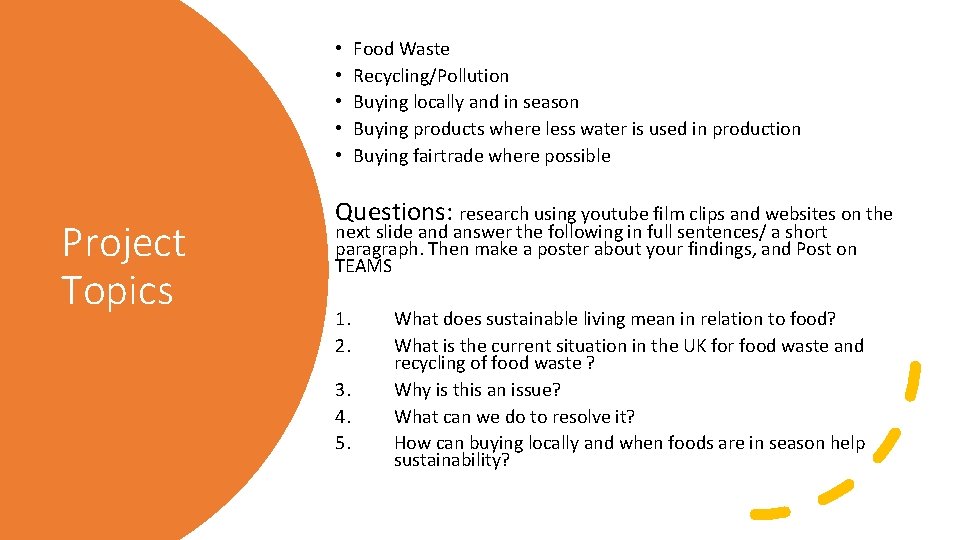
• • • Project Topics Food Waste Recycling/Pollution Buying locally and in season Buying products where less water is used in production Buying fairtrade where possible Questions: research using youtube film clips and websites on the next slide and answer the following in full sentences/ a short paragraph. Then make a poster about your findings, and Post on TEAMS 1. 2. 3. 4. 5. What does sustainable living mean in relation to food? What is the current situation in the UK for food waste and recycling of food waste ? Why is this an issue? What can we do to resolve it? How can buying locally and when foods are in season help sustainability?
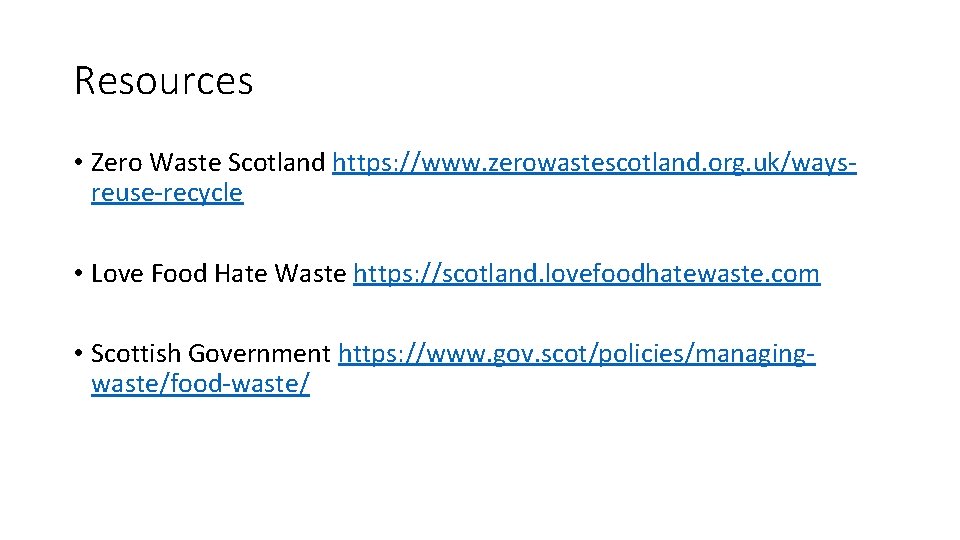
Resources • Zero Waste Scotland https: //www. zerowastescotland. org. uk/waysreuse-recycle • Love Food Hate Waste https: //scotland. lovefoodhatewaste. com • Scottish Government https: //www. gov. scot/policies/managingwaste/food-waste/
- Slides: 40