
Sustainability Considerations in the Design of Big Dams
Sustainability Considerations in the Design of Big Dams: Merowe, Nile Basin Mentor: Prof. El Fatih Eltahir Group: Anthony Paris, Teresa Yamana, Suzanne Young
Outline Ø Introduction and motivation Ø Nile hydrology Ø The model Ø Climate Ø Sedimentation Ø Public health Ø Future Work
Goals and Motivation Simulate the role of environmental engineers in large scale projects Ø Analyze the effect the Dam will have on the environment and local population, and make recommendations to mitigate effects Ø Assess whether long-term effects will significantly decrease Dam’s lifetime and plan accordingly Ø
Introduction Ø Sudan needs Energy l l Ø Merowe Dam l l Ø 19 -year old Civil War Frequent power blackouts Utilizing hydropower Creating hope Dam Design Details l l l Ten turbines – 1, 250 MW Capacity Long in relation to height Active reservoir storage 8. 3 bcm
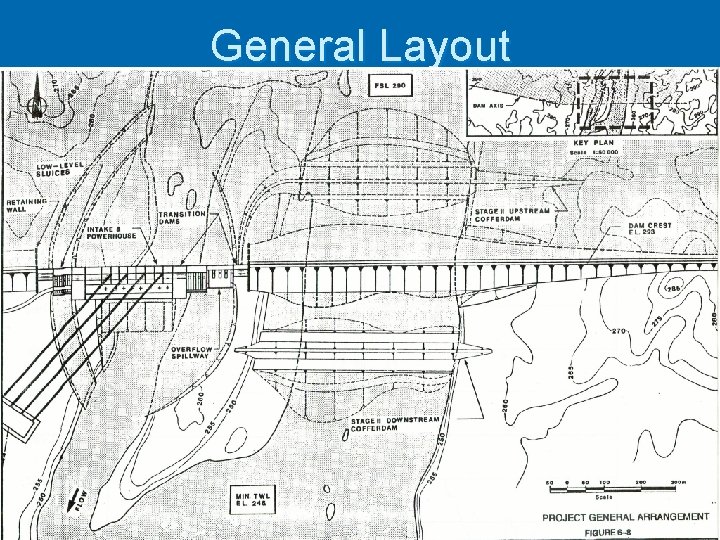
General Layout
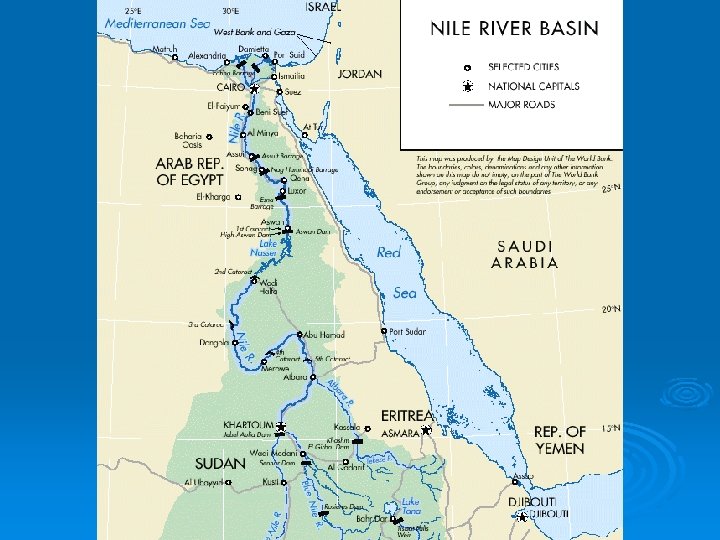
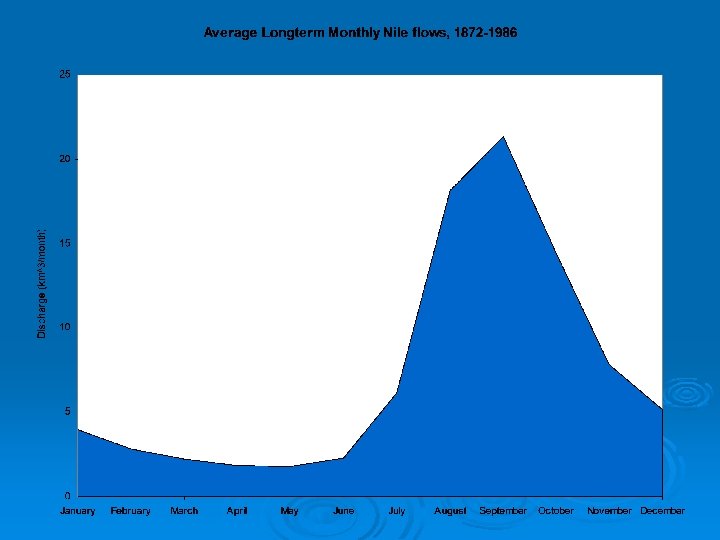

The New Model “The Model”
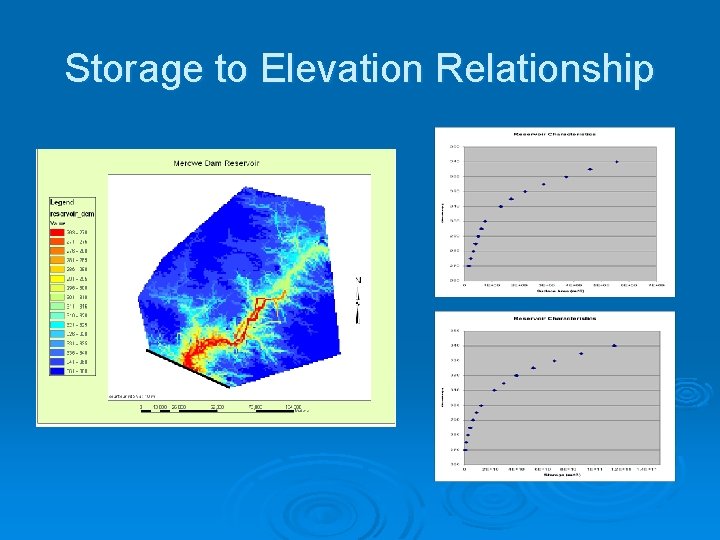
Storage to Elevation Relationship
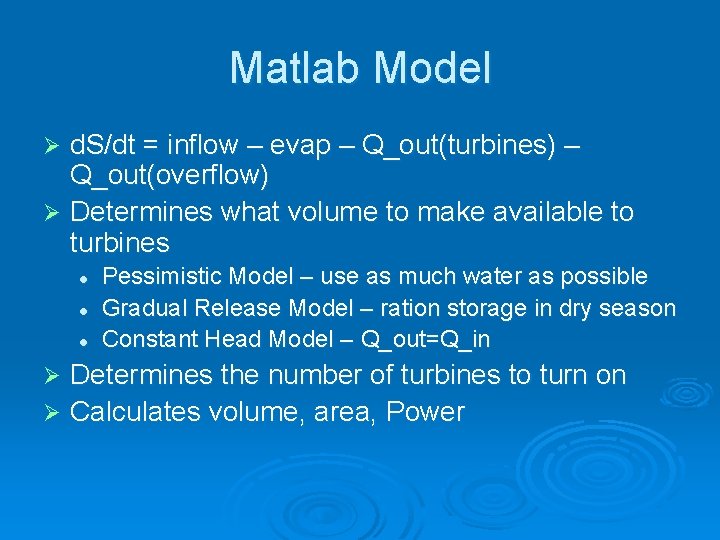
Matlab Model d. S/dt = inflow – evap – Q_out(turbines) – Q_out(overflow) Ø Determines what volume to make available to turbines Ø l l l Pessimistic Model – use as much water as possible Gradual Release Model – ration storage in dry season Constant Head Model – Q_out=Q_in Determines the number of turbines to turn on Ø Calculates volume, area, Power Ø
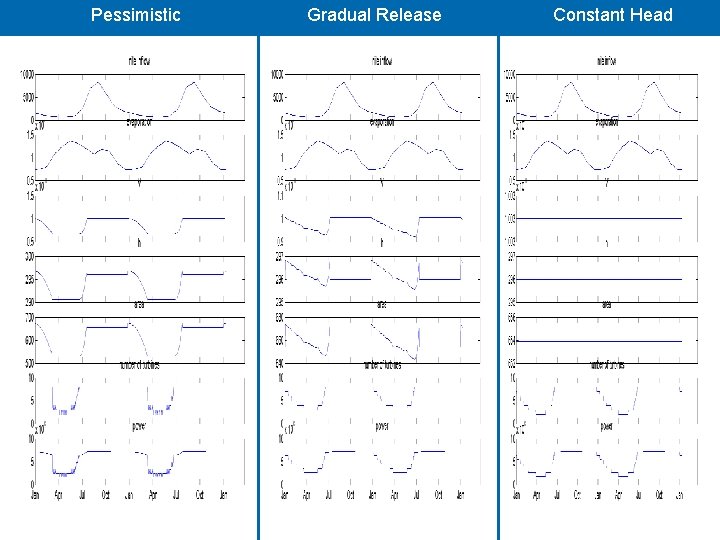
Pessimistic Gradual Release Constant Head

The Effect of Climate Change on Dam Performance Suzanne Young
Climate change Ø Changes in chemical composition of atmosphere global warming Ø Temperatures increase, precipitation? Ø Literature review: Predictions of Nile flows confounded by different simulations giving conflicting results
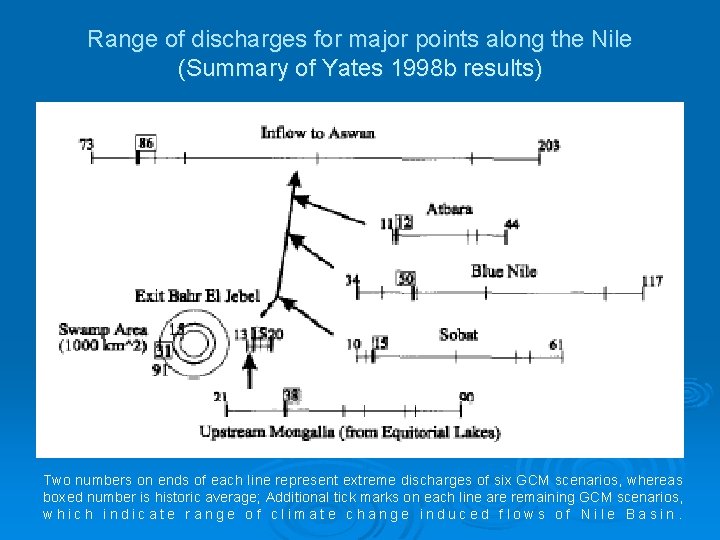
Range of discharges for major points along the Nile (Summary of Yates 1998 b results) Two numbers on ends of each line represent extreme discharges of six GCM scenarios, whereas boxed number is historic average; Additional tick marks on each line are remaining GCM scenarios, which indicate range of climate change induced flows of Nile Basin.
![Climate scenarios Climate scenario Years Average flow Deviation from long term [km 3/yr] average](http://slidetodoc.com/presentation_image/28de04518c10eaf3a3aea891ce433e25/image-15.jpg "Climate scenarios Climate scenario Years Average flow Deviation from long term [km 3/yr] average")
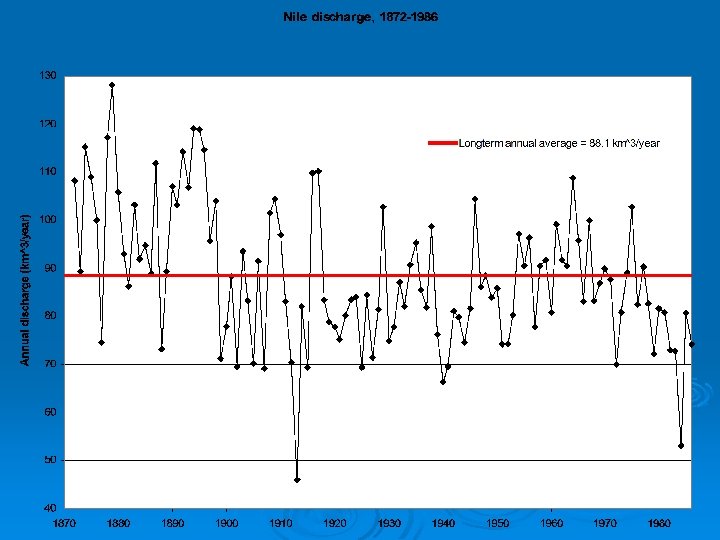
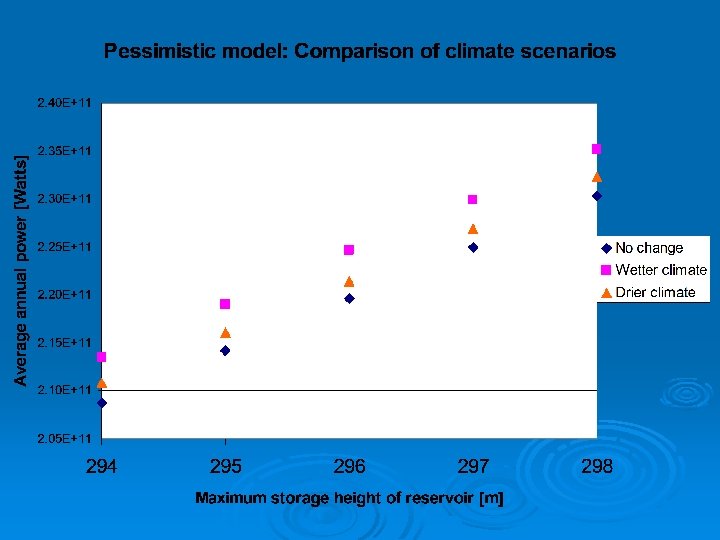
Climate scenarios Climate scenario Years Average flow Deviation from long term [km 3/yr] average 88 km 3/yr No change 1943 -1969 88 -- Wetter climate 1872 -1898 102 +15% Drier climate 1979 -1986 74 -15% Also varied maximum storage height of reservoir from 294 m to 298 m
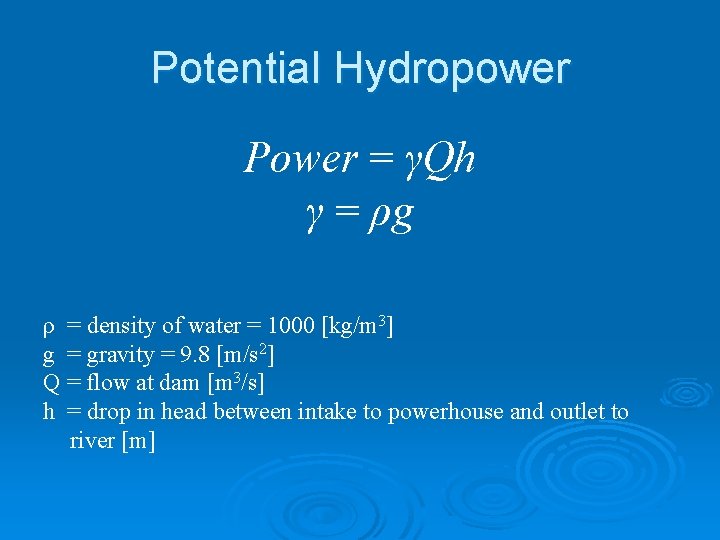
Potential Hydropower Power = γQh γ = ρg ρ = density of water = 1000 [kg/m 3] g = gravity = 9. 8 [m/s 2] Q = flow at dam [m 3/s] h = drop in head between intake to powerhouse and outlet to river [m]
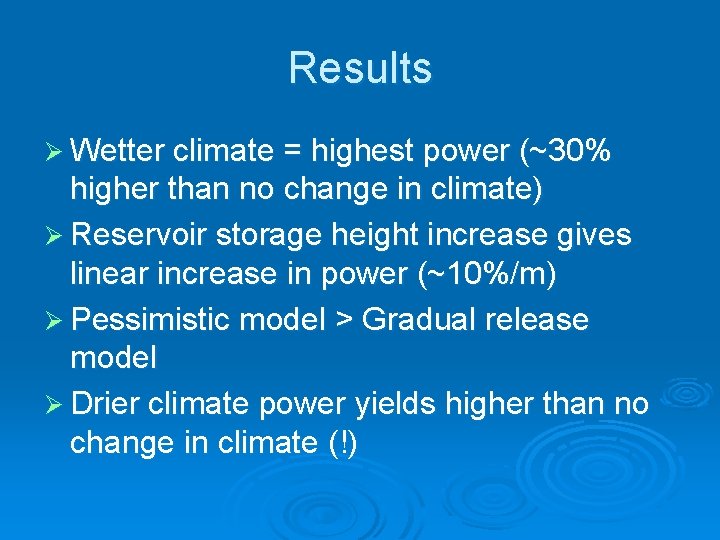
Results Ø Wetter climate = highest power (~30% higher than no change in climate) Ø Reservoir storage height increase gives linear increase in power (~10%/m) Ø Pessimistic model > Gradual release model Ø Drier climate power yields higher than no change in climate (!)
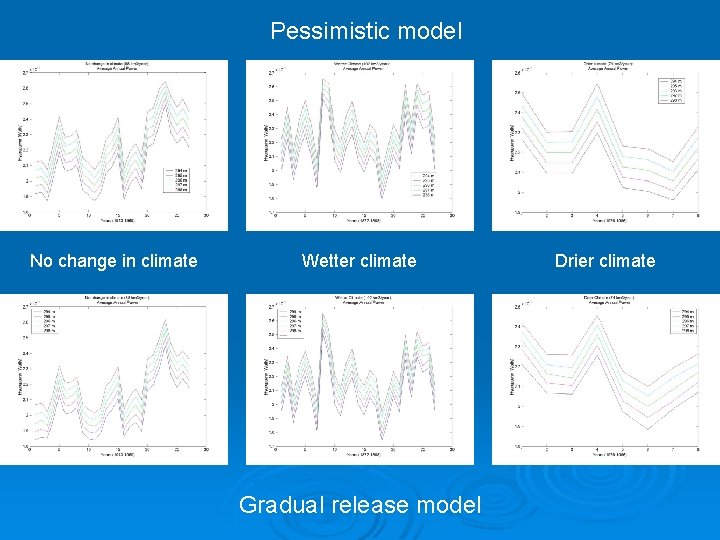
Pessimistic model No change in climate Wetter climate Gradual release model Drier climate
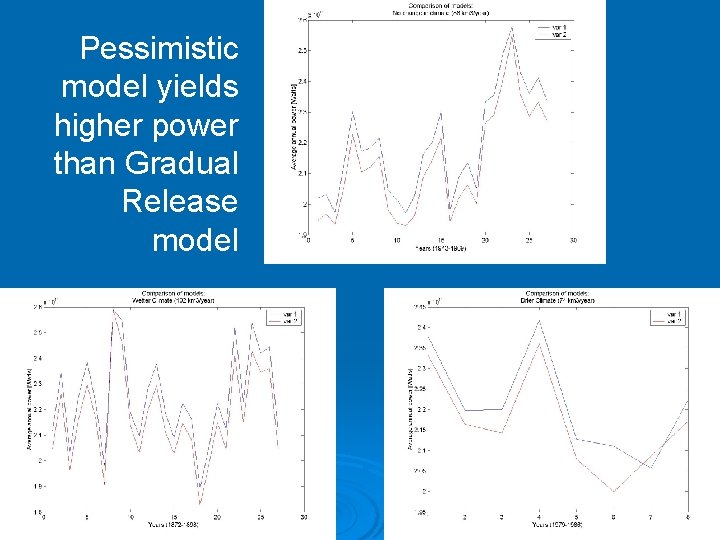
Pessimistic model yields higher power than Gradual Release model
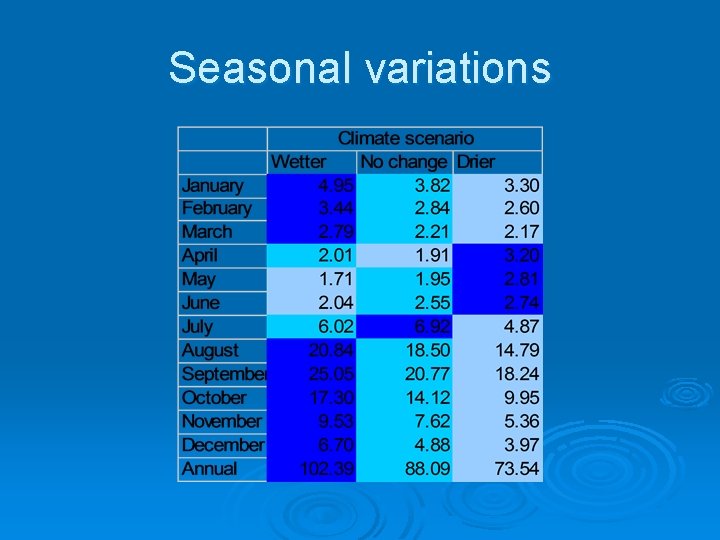
Seasonal variations
Recommendations Ø Use pessimistic model as basis for operating parameters Ø Increase height of maximum reservoir storage pending economic analysis
Sedimentation into the Reservoir Anthony Paris
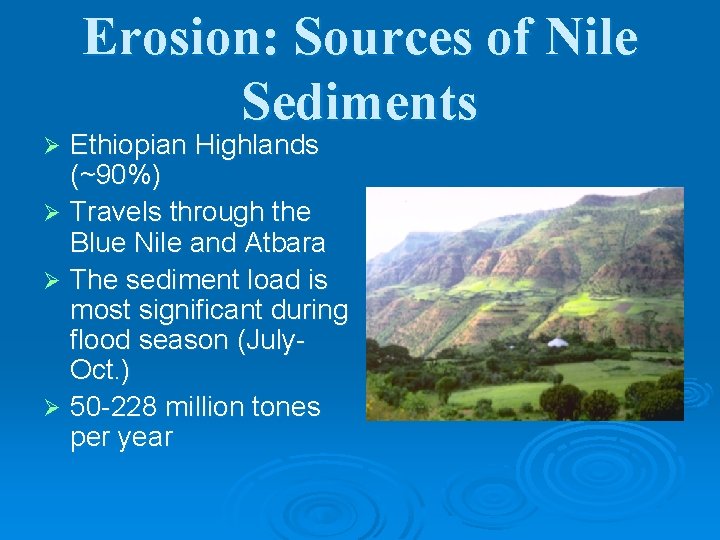
Erosion: Sources of Nile Sediments Ethiopian Highlands (~90%) Ø Travels through the Blue Nile and Atbara Ø The sediment load is most significant during flood season (July. Oct. ) Ø 50 -228 million tones per year Ø
Sedimentation Analysis Ø 1) How much sediment will settle in the reservoir? Ø 2) Where will the sediment settle? Ø 3) How long is the economic life of the project? Ø 4) What things can be done to improve the situation?
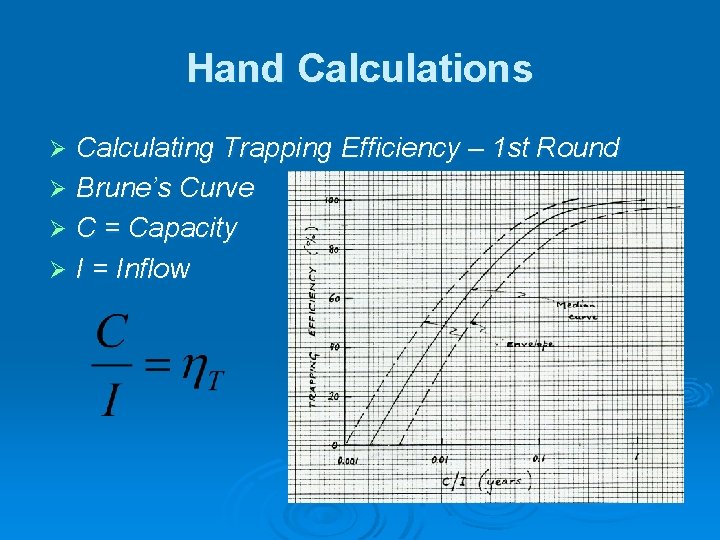
Hand Calculations Calculating Trapping Efficiency – 1 st Round Ø Brune’s Curve Ø C = Capacity Ø I = Inflow Ø
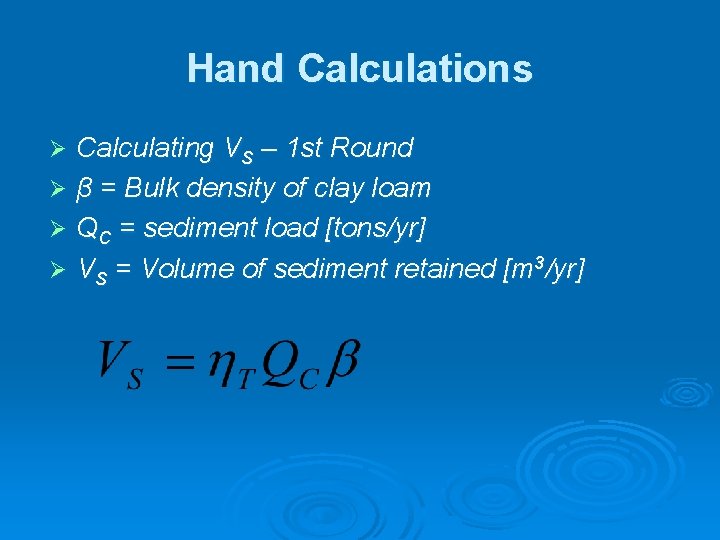
Hand Calculations Calculating VS – 1 st Round Ø β = Bulk density of clay loam Ø QC = sediment load [tons/yr] Ø VS = Volume of sediment retained [m 3/yr] Ø
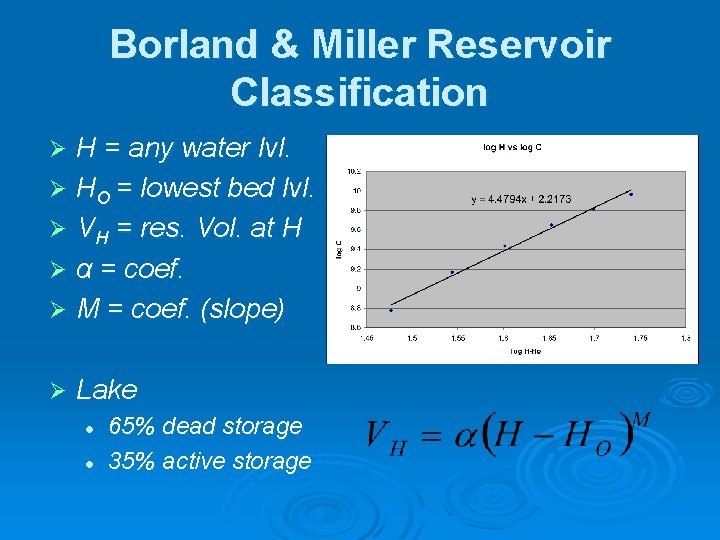
Borland & Miller Reservoir Classification H = any water lvl. Ø HO = lowest bed lvl. Ø VH = res. Vol. at H Ø α = coef. Ø M = coef. (slope) Ø Ø Lake l l 65% dead storage 35% active storage
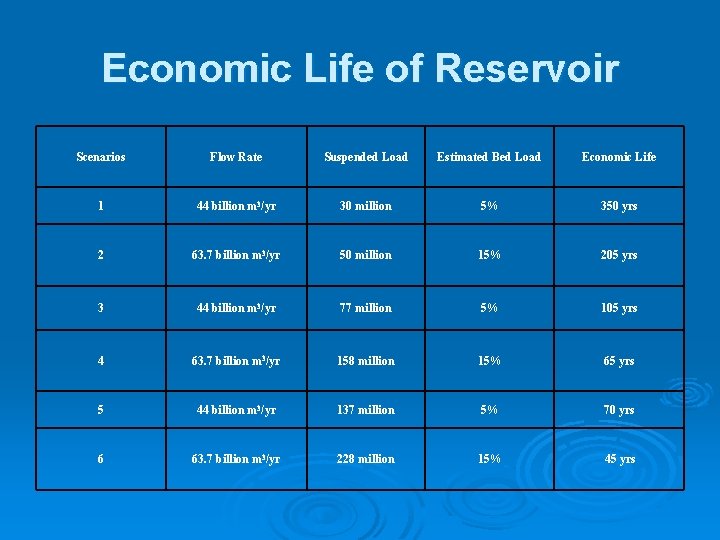
Economic Life of Reservoir Scenarios Flow Rate Suspended Load Estimated Bed Load Economic Life 1 44 billion m 3/yr 30 million 5% 350 yrs 2 63. 7 billion m 3/yr 50 million 15% 205 yrs 3 44 billion m 3/yr 77 million 5% 105 yrs 4 63. 7 billion m 3/yr 158 million 15% 65 yrs 5 44 billion m 3/yr 137 million 5% 70 yrs 6 63. 7 billion m 3/yr 228 million 15% 45 yrs
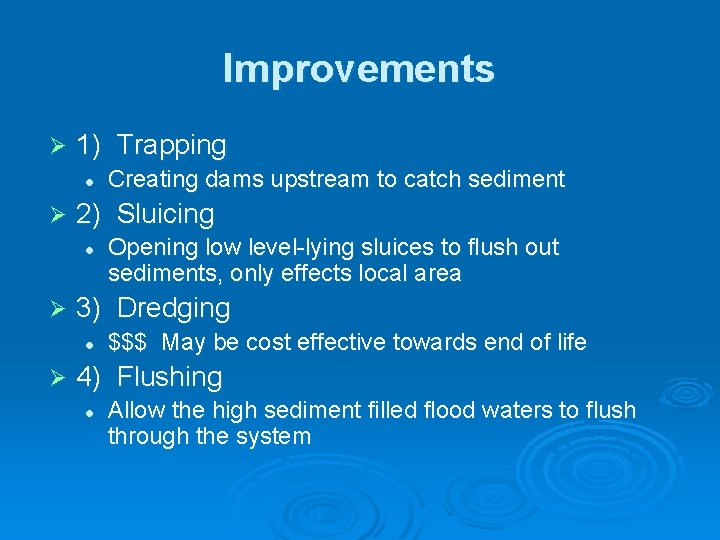
Improvements Ø 1) Trapping l Ø 2) Sluicing l Ø Opening low level-lying sluices to flush out sediments, only effects local area 3) Dredging l Ø Creating dams upstream to catch sediment $$$ May be cost effective towards end of life 4) Flushing l Allow the high sediment filled flood waters to flush through the system

The Effect of the Dam on Public Health Teresa Yamana
Dams’ Threat to Public Health Ø As a development project, obligation to protect public health Ø Merowe Dam expected to increase incidence of Malaria, Schistosomiasis, River Blindness and Rift Valley Fever Ø Stagnant water in reservoirs and irrigation ditches provide habitat for vectors Ø Constant supply of water - Dry season no longer limits vectors
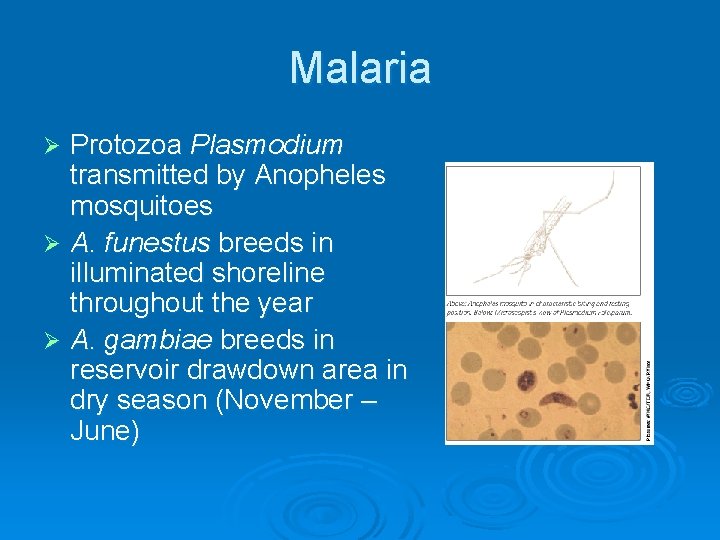
Malaria Protozoa Plasmodium transmitted by Anopheles mosquitoes Ø A. funestus breeds in illuminated shoreline throughout the year Ø A. gambiae breeds in reservoir drawdown area in dry season (November – June) Ø
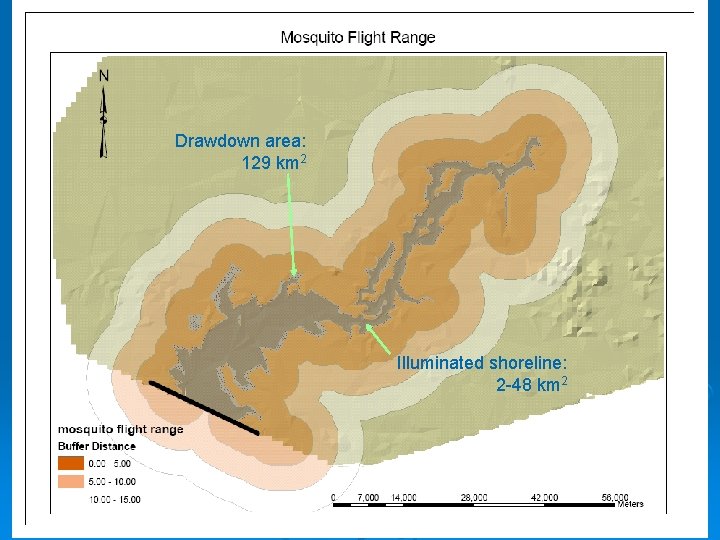
Drawdown area: 129 km 2 Illuminated shoreline: 2 -48 km 2
Malaria Control Strategies Ø Reduce Mosquito habitat through operating parameters Ø Chemical or biological control strategies Ø Reduce bites by using window screens, bednets Ø Provide vaccination and treatment for at risk or infected population
Schistosomiasis Ø Parasite carried by snails living in illuminated shore line Ø Reduce human contact to water – piped water supply Ø Provide sanitation services – break link in life cycle Ø Control snail population
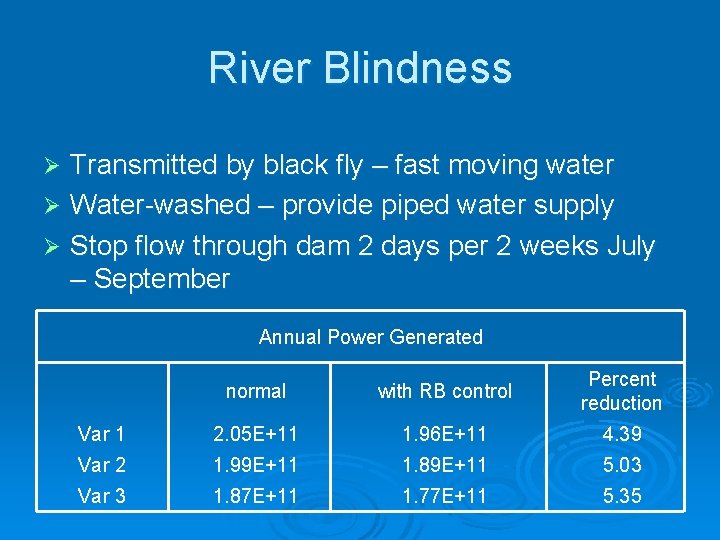
River Blindness Transmitted by black fly – fast moving water Ø Water-washed – provide piped water supply Ø Stop flow through dam 2 days per 2 weeks July – September Ø Annual Power Generated normal with RB control Percent reduction Var 1 2. 05 E+11 1. 96 E+11 4. 39 Var 2 1. 99 E+11 1. 89 E+11 5. 03 Var 3 1. 87 E+11 1. 77 E+11 5. 35
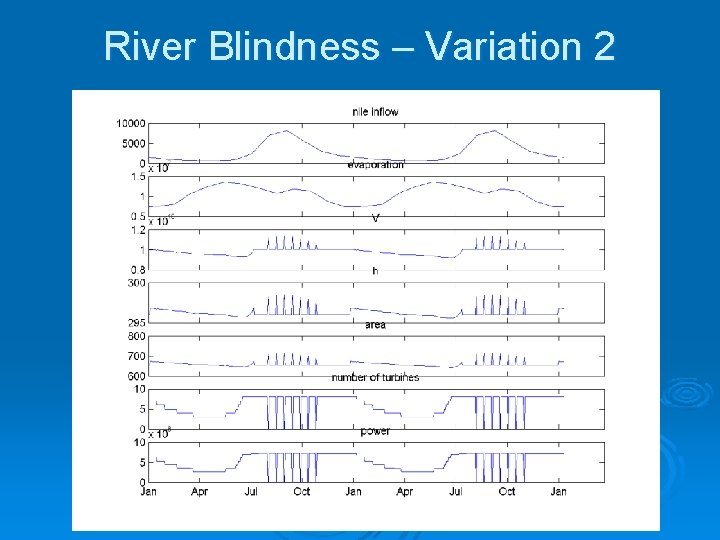
River Blindness – Variation 2
Rift Valley Fever Ø Transmitted from livestock to humans via mosquitoes Ø Occurs when reservoirs are filled Ø Vaccinate or remove livestock Ø Quarantine contaminated livestock and meat Ø Warn livestock and meat workers Ø Control mosquito habitat
Model Preferences A. gambiae – Variation 3 Ø A. funestus and Schistosomiasis snails – Variation 1 Ø River Blindness blackfly – add control Ø Which is Most Important? Ø l l l Ø Need more data! What diseases will cause the most problems? Formulate strategy based on regional priority GOAL – no increase in disease caused by dam
Future Work Integrate 3 Climate, Sedimentology and Public Health concerns Ø Thorough cost-benefit analysis Ø Climate Ø l Ø Sedimentation l Ø More experimentation with various climate scenarios 2 -D and 3 -D models to predict delta formations and identify problem spots Public Health l Prioritize between diseases to find optimal operating parameters

THANK YOU!! Ø Prof. El Fatih Eltahir Ø Prof. Dennis Mc. Laughlin & Sheila Frankel Ø Profs. Ole Madsen & Dara Entekhabi Ø Dr. Sadeqi of the Kuwait Fund Ø Valeri Ivanov Ø 1 E seniors!

- Slides: 44