
Suspense I will be able to choose appropriate
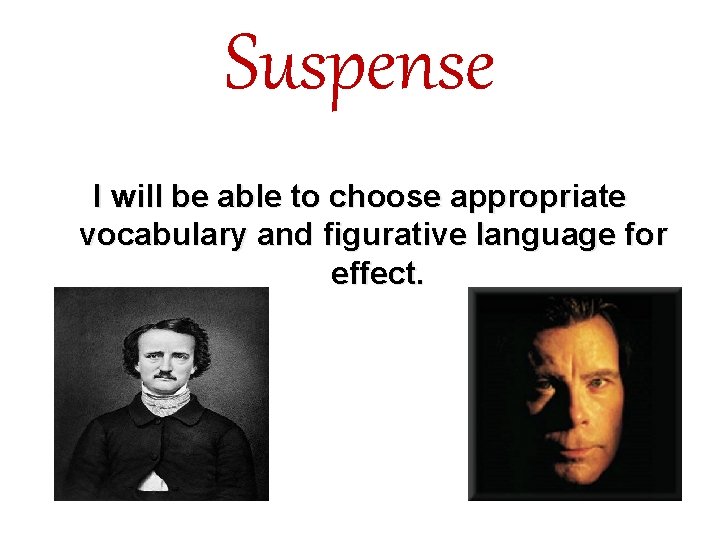
Suspense I will be able to choose appropriate vocabulary and figurative language for effect.
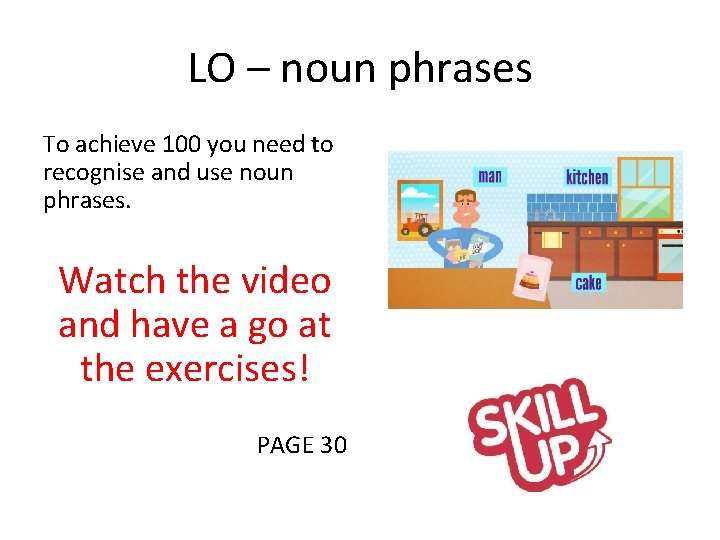
LO – noun phrases To achieve 100 you need to recognise and use noun phrases. Watch the video and have a go at the exercises! PAGE 30
LO – expanded noun phrases …expanded noun phrases are where two or more adjectives are used in a sentence to give more information about the noun. Can you think of other words for: • Scary • Dark Use a thesaurus to help you! 1. What type of person might be scary? – Write a sentence with an expanded noun phrase in it to describe this scary person. 2. What place might be dark? – Write a sentence with an expanded noun phrase in it to describe this scary place.
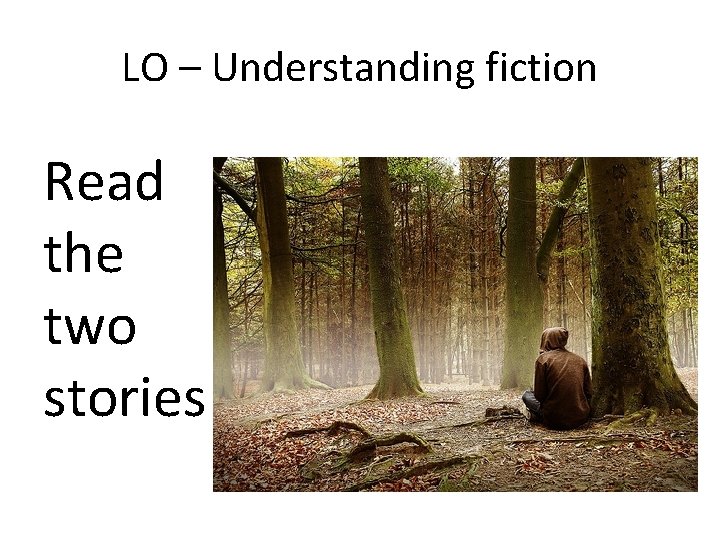
LO – Understanding fiction Read the two stories
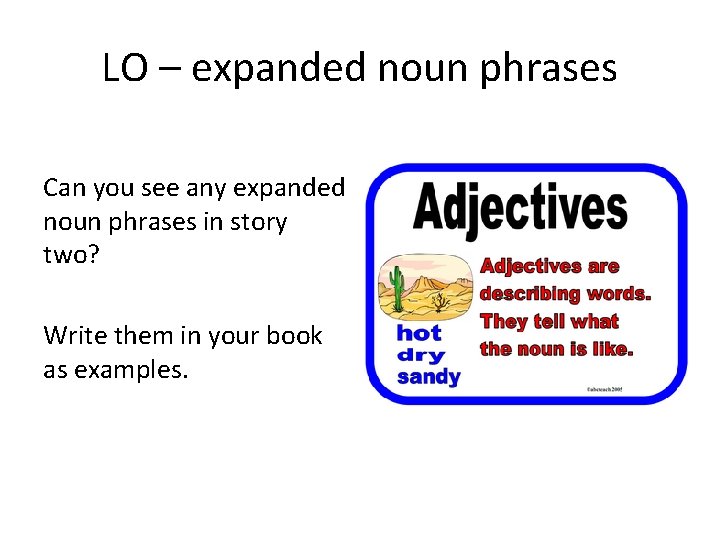
LO – expanded noun phrases Can you see any expanded noun phrases in story two? Write them in your book as examples.
LO – making comparisons To achieve 100 you need to make comparisons in a text Have a go at the exercises! PAGE 55 -57
LO – making comparisons • Both stories are the same because … • Story 1 is different from story 2 because … • Story 2 is different from story 1 because …
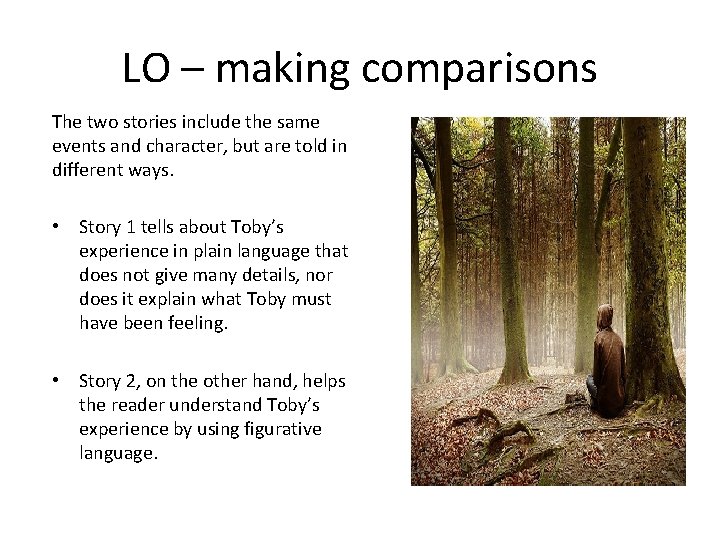
LO – making comparisons The two stories include the same events and character, but are told in different ways. • Story 1 tells about Toby’s experience in plain language that does not give many details, nor does it explain what Toby must have been feeling. • Story 2, on the other hand, helps the reader understand Toby’s experience by using figurative language.
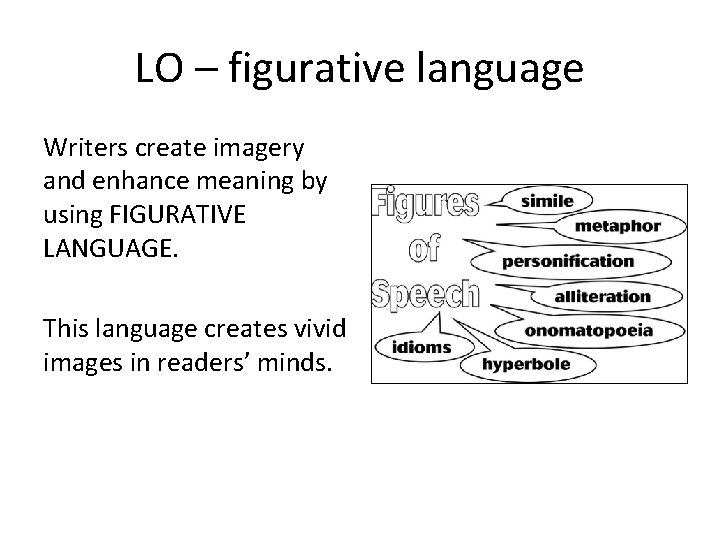
LO – figurative language Writers create imagery and enhance meaning by using FIGURATIVE LANGUAGE. This language creates vivid images in readers’ minds.
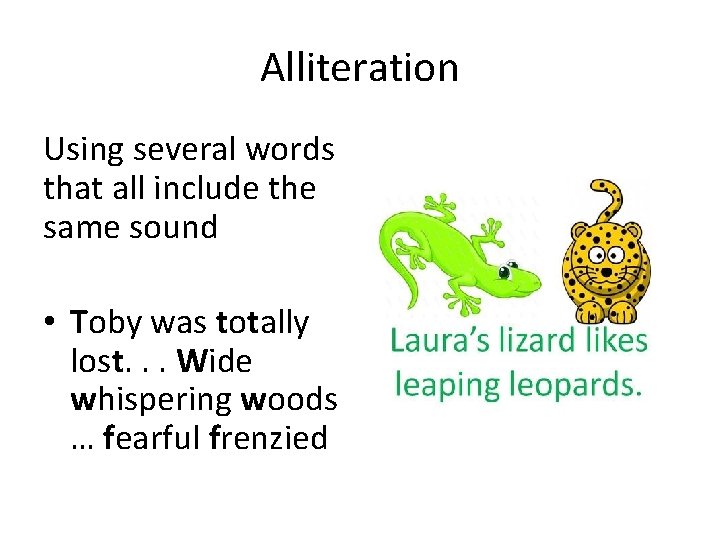
Alliteration Using several words that all include the same sound • Toby was totally lost. . . Wide whispering woods … fearful frenzied
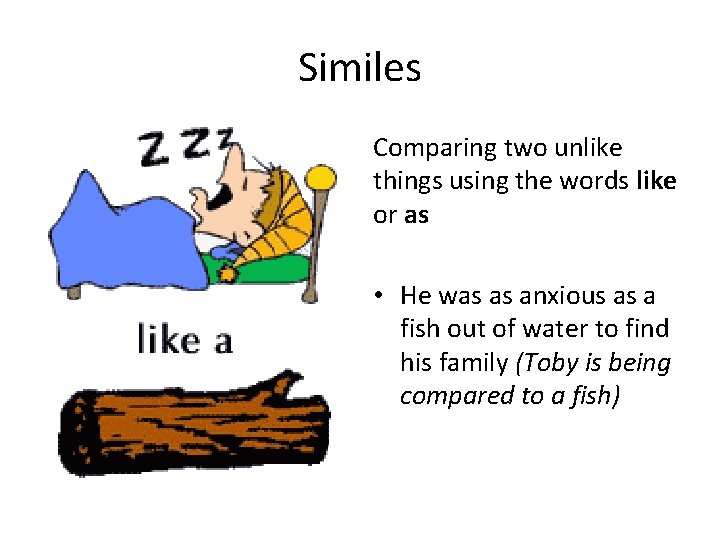
Similes Comparing two unlike things using the words like or as • He was as anxious as a fish out of water to find his family (Toby is being compared to a fish)
Spooky Similes • • Spooky like a Glowing like a As creepy as As dark as As white as a Screaming like a Black as
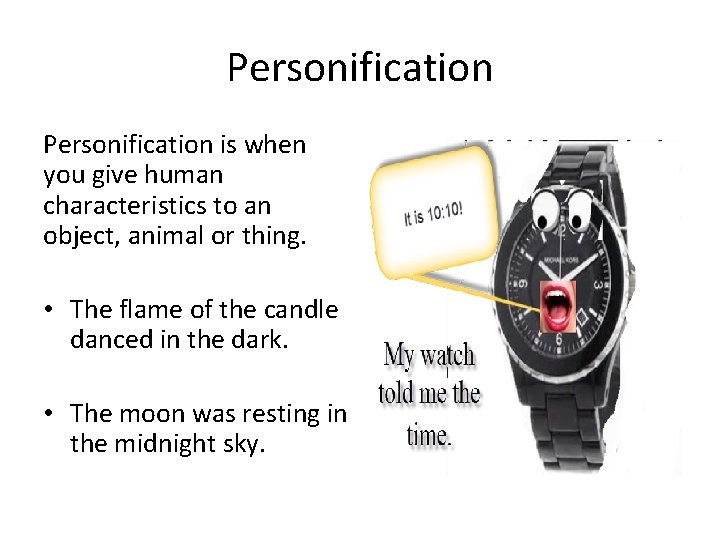
Personification is when you give human characteristics to an object, animal or thing. • The flame of the candle danced in the dark. • The moon was resting in the midnight sky.
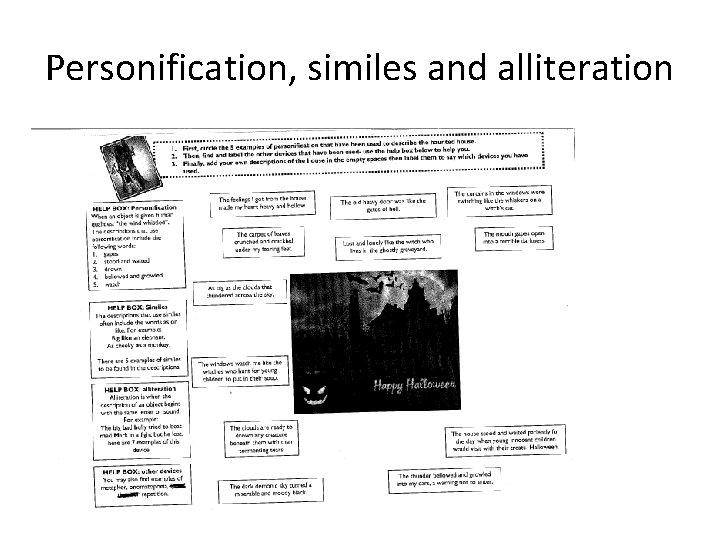
Personification, similes and alliteration
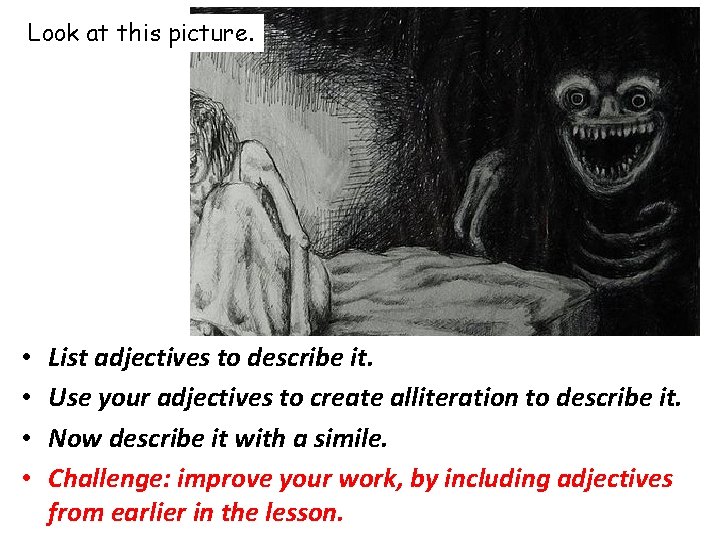
Look at this picture. • • List adjectives to describe it. Use your adjectives to create alliteration to describe it. Now describe it with a simile. Challenge: improve your work, by including adjectives from earlier in the lesson.
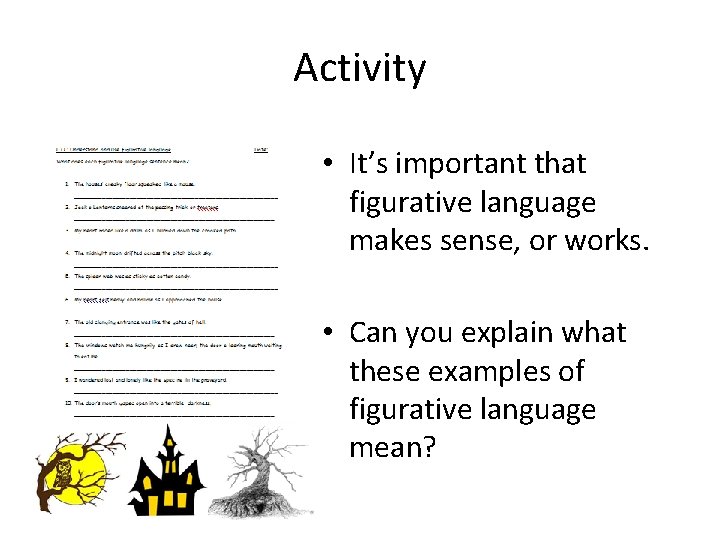
Activity • It’s important that figurative language makes sense, or works. • Can you explain what these examples of figurative language mean?
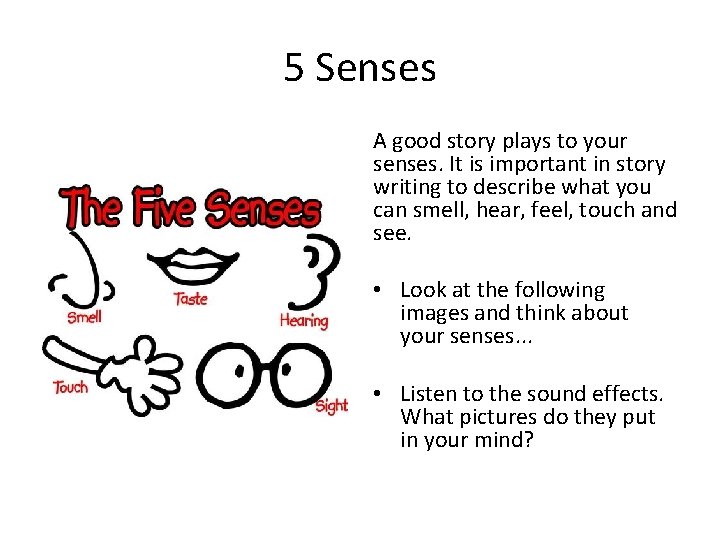
5 Senses A good story plays to your senses. It is important in story writing to describe what you can smell, hear, feel, touch and see. • Look at the following images and think about your senses. . . • Listen to the sound effects. What pictures do they put in your mind?
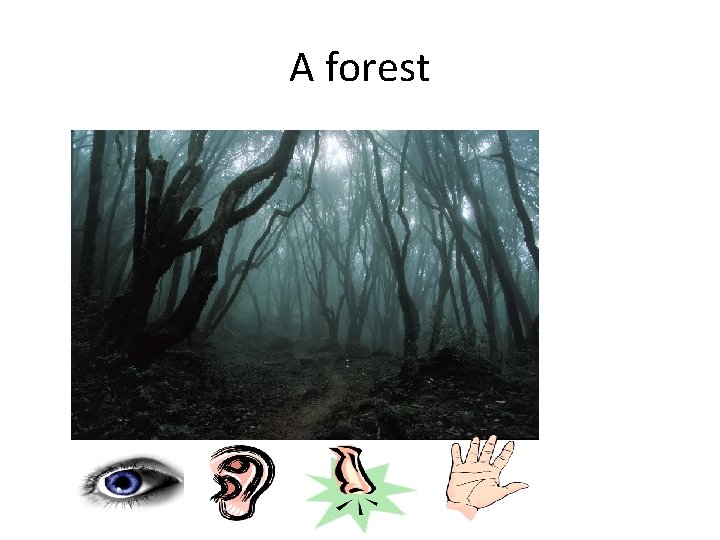
A forest
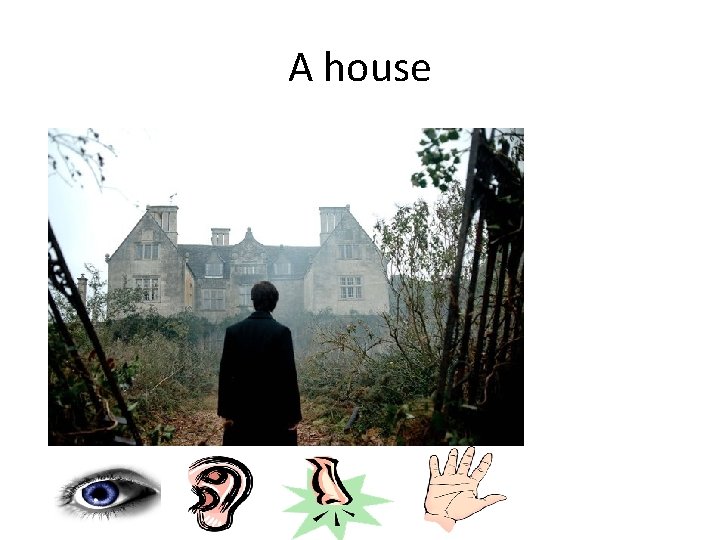
A house
Sensory board • Add any good words/examples of figurative language to the magpie board or your book!
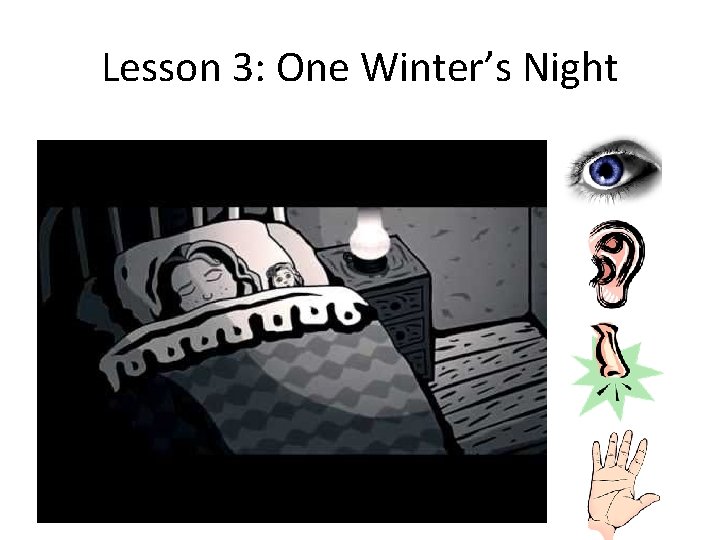
Lesson 3: One Winter’s Night
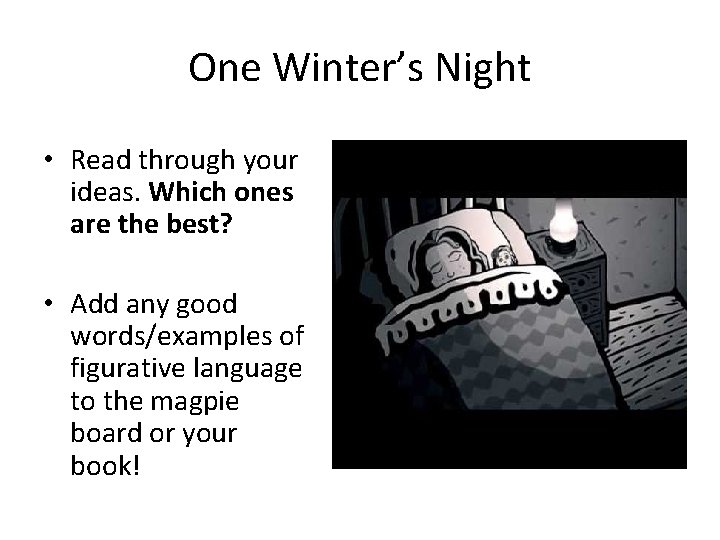
One Winter’s Night • Read through your ideas. Which ones are the best? • Add any good words/examples of figurative language to the magpie board or your book!
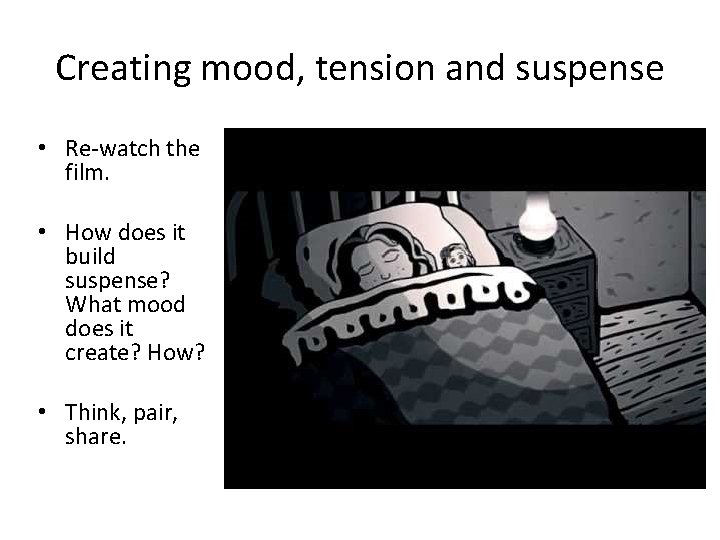
Creating mood, tension and suspense • Re-watch the film. • How does it build suspense? What mood does it create? How? • Think, pair, share.
LO – adverbials An adverbial phrase tells us more about the verb. It tells us how, why, when or where an action is done. It is ALWAYS separated from the rest of the sentence by a comma. It can be placed at the beginning, middle or end of a sentence.
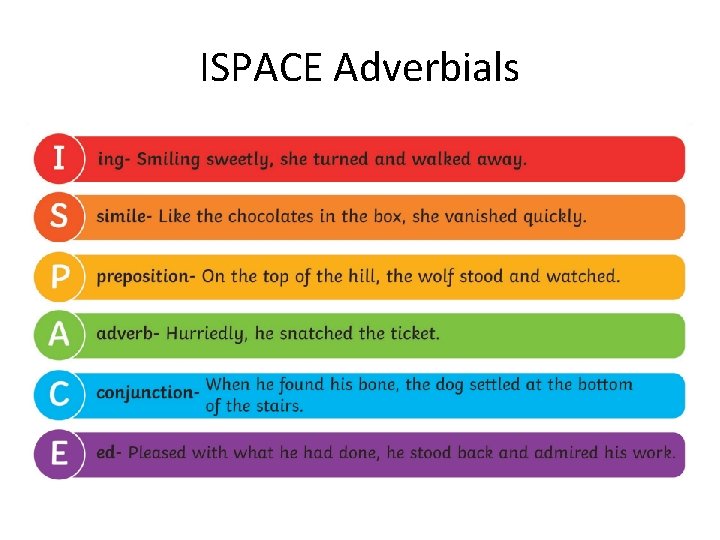
ISPACE Adverbials
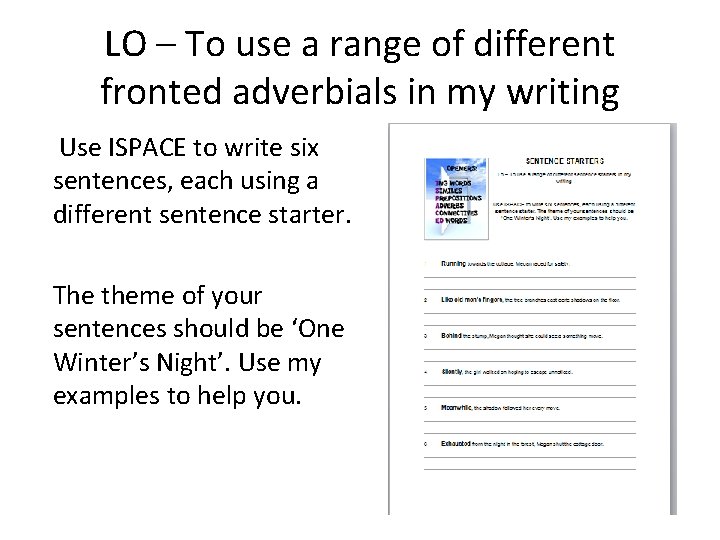
LO – To use a range of different fronted adverbials in my writing Use ISPACE to write six sentences, each using a different sentence starter. The theme of your sentences should be ‘One Winter’s Night’. Use my examples to help you.
LO – using speech In your stories you will need to “integrate dialogue to convey character”. Work through the Punctuating Speech powerpoint now to explore the difference between direct speech and reported speech. Try using contractions in direct speech to show the informal nature of conversation.
LO – punctuating speech Click on the image to watch the video ….
LO – inverted commas To achieve 100 you need to use inverted commas to show speech. Have a go at the exercises! PAGE 48
LO – the apostrophe song
LO – apostrophes To achieve 100 you need to use apostrophes correctly Have a go at the exercises! PAGE 50
LO - Creating mood, tension and suspense In your classbook, write your own “One Winter’s Night”. • Set the scene in paragraph 1 - The best horror creates a sense of unease, so you sit on the edge of your seat, unsure of what will happen next. Use the ISPACE sentences from last lesson. • Introduce an uneasy situation in paragraph 2 - You don’t need monsters, vampires, hockey-masked killers or Slender Man to scare your audience. • Come to an ending or a cliff –hanger in paragraph 3 - No blood, no guts, no gore, no “Aaahhhhhh!”
LO – main and subordinate clause To achieve 100 you need to recognise and use main and subordinate clause Have a go at the exercises! PAGE 26 -27
LO - Creating mood, tension and suspense In your classbook, write your own “One Winter’s Night”. Set the scene in paragraph 1 - The best horror creates a sense of unease, so you sit on the edge of your seat, unsure of what will happen next. Use the ISPACE sentences and figurative language you have learnt from previous lesson.
LO – active and passive voice Task 1 Task 2
LO – Passive and active voices To achieve 100 you need to recognise the active and passive voices Have a go at the exercises! PAGE 38
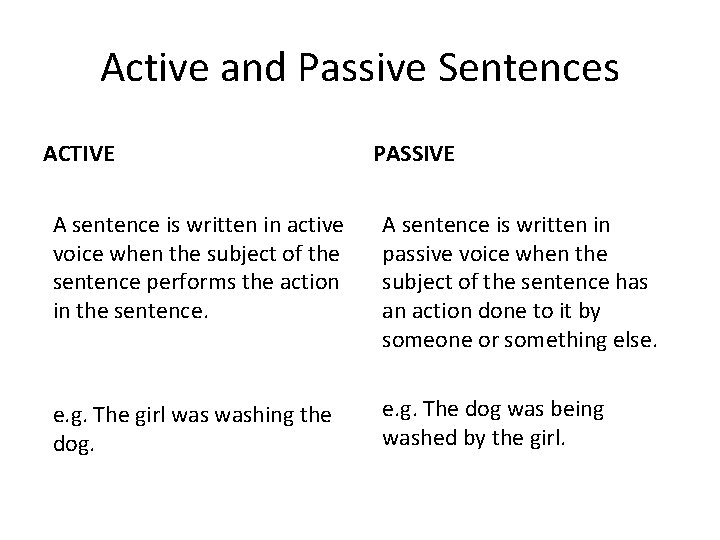
Active and Passive Sentences ACTIVE PASSIVE A sentence is written in active voice when the subject of the sentence performs the action in the sentence. A sentence is written in passive voice when the subject of the sentence has an action done to it by someone or something else. e. g. The girl washing the dog. e. g. The dog was being washed by the girl.
LO - Creating mood, tension and suspense Introduce an uneasy situation in paragraph 2 You don’t need monsters, vampires, hockey-masked killers or Slender Man to scare your audience. Use passive voice to create mystery and suspense.
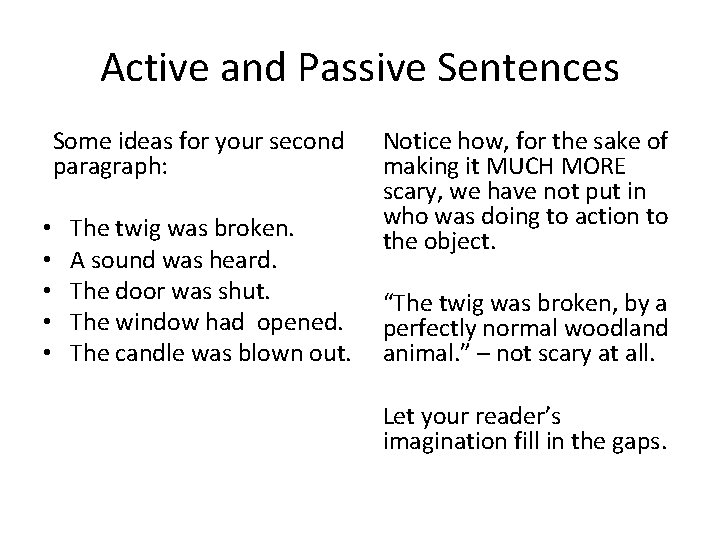
Active and Passive Sentences Some ideas for your second paragraph: • • • The twig was broken. A sound was heard. The door was shut. The window had opened. The candle was blown out. Notice how, for the sake of making it MUCH MORE scary, we have not put in who was doing to action to the object. “The twig was broken, by a perfectly normal woodland animal. ” – not scary at all. Let your reader’s imagination fill in the gaps.
Improving from our last assessment To improve you need to: Look at the ‘feed forward’ comment from your last writing assessment. Make sure you follow this instruction in this writing assessment.
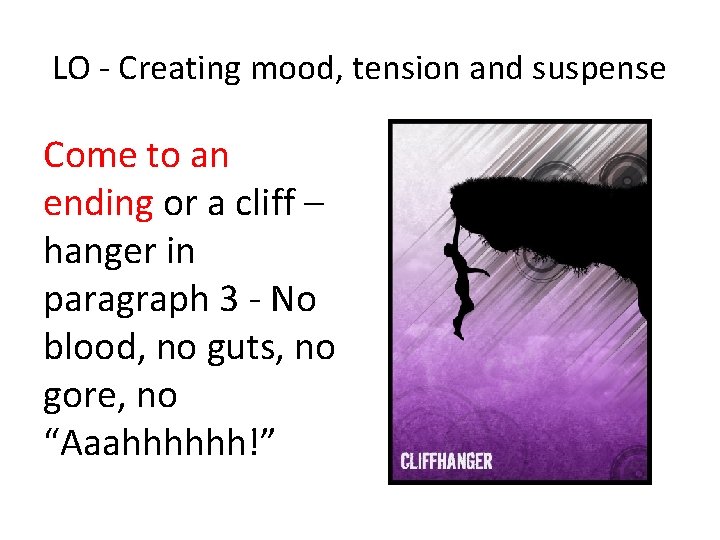
LO - Creating mood, tension and suspense Come to an ending or a cliff – hanger in paragraph 3 - No blood, no guts, no gore, no “Aaahhhhhh!”
LO – Proof reading your own writing Then check and correct your work – this is called PROOF READING
LO – Peer assess using a marking ladder • In pairs, read a your partner’s ghost story. • Using pink and green highlighters, act as the teacher and mark their work against the marking ladder.
LO – Giving feed forward comments On the marking ladder, give your partner some ‘feed forward’ comments. • This example is good because… • I could be improved by…
LO – edit and correct your writing Correct all of your mistakes in green pen – check carefully for: Capital letters. Full stops. Commas. Spelling.
LO – Write up your story into your Perfect Piece books One Winter’s Night. A Short Story
- Slides: 46