
Susan Kaspari Central Washington University Geological Sci Goal
- Slides: 17
Susan Kaspari, Central Washington University, Geological Sci. Goal: a 4°C temperature increase is abstract to most students. Students gain a more concrete understanding of how projected climate change will affect something of interest to them. Research Project: Choose a location (where you are from, a place that is of interest to you) and investigate how projected changes in climate will affect that area. What are the expected changes in temperature, precipitation, storms, droughts, sea level, seasonality, etc? How will this affect the habitat of the area (for humans, animals, and plants)? How will this affect the local economy? What actions can the people that live in this area take to lessen the impacts of changing climate?
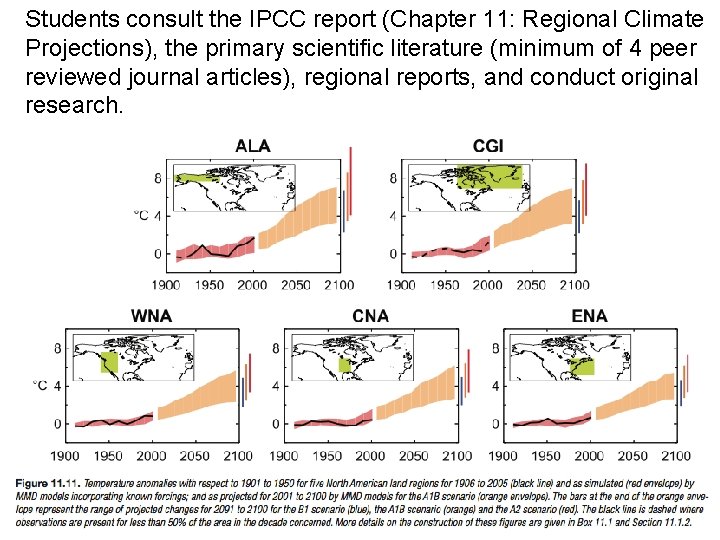
Students consult the IPCC report (Chapter 11: Regional Climate Projections), the primary scientific literature (minimum of 4 peer reviewed journal articles), regional reports, and conduct original research.
Example Topics from Prior Students Effects of climate change on: • Potential reactivation of sand dunes, Sand Hills, Nebraska • Reduction in the natural snow reservoir of the Cascade Mountains • Salmonid species in Alaska • Caribbean coral reefs • Habitat change of the Black Howler monkey in Belize • The Vermont Maple Industry • Water sources in the Great Basin • Glaciers and water resources in the Himalaya
The Effects of Climate Change on Water Sources in the Great Basin: A Look Forward to 2100 Caitlin Orem Central Washington University
Research Goal • The goal was to understand the effects of climate change on drinking water sources in the Great Basin. • Surface water response • Drinking Water Sources of Reno, Las Vegas, and Salt Lake City • Modern Analog for climate in 2100 of the Great Basin and Cities Caitlin Orem
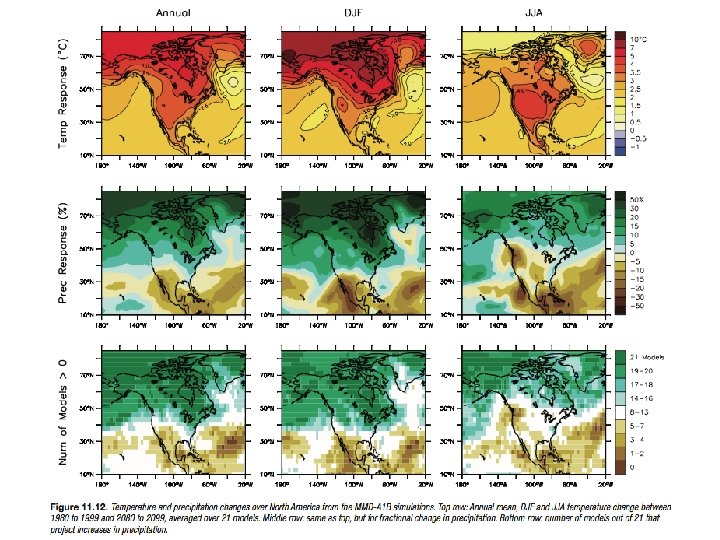
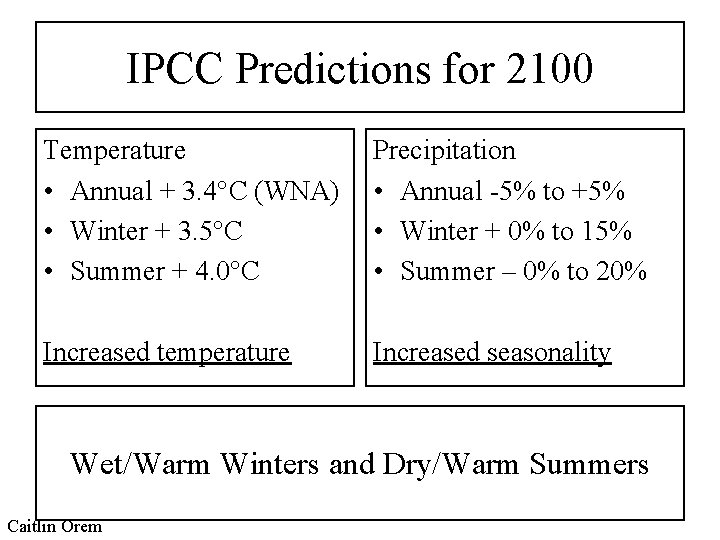
IPCC Predictions for 2100 Temperature • Annual + 3. 4°C (WNA) • Winter + 3. 5°C • Summer + 4. 0°C Precipitation • Annual -5% to +5% • Winter + 0% to 15% • Summer – 0% to 20% Increased temperature Increased seasonality Wet/Warm Winters and Dry/Warm Summers Caitlin Orem
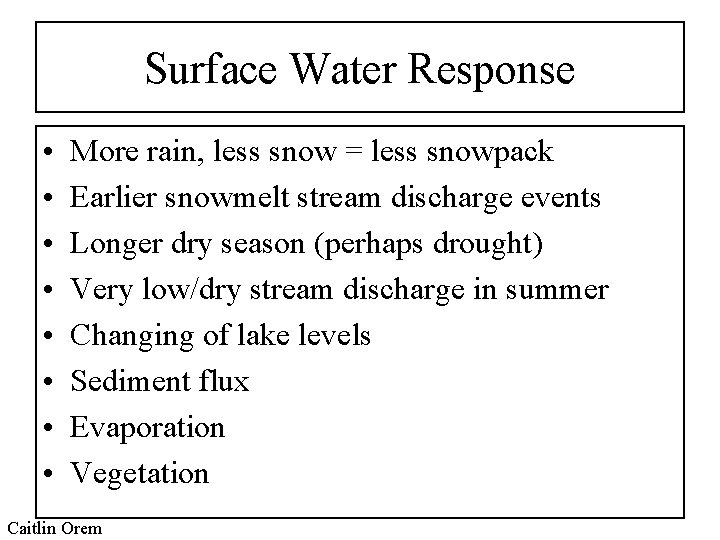
Surface Water Response • • More rain, less snow = less snowpack Earlier snowmelt stream discharge events Longer dry season (perhaps drought) Very low/dry stream discharge in summer Changing of lake levels Sediment flux Evaporation Vegetation Caitlin Orem
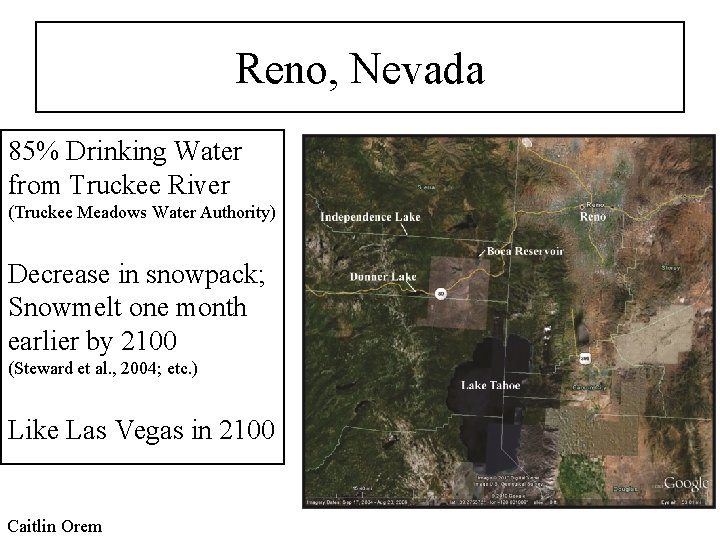
Reno, Nevada 85% Drinking Water from Truckee River (Truckee Meadows Water Authority) Decrease in snowpack; Snowmelt one month earlier by 2100 (Steward et al. , 2004; etc. ) Like Las Vegas in 2100 Caitlin Orem
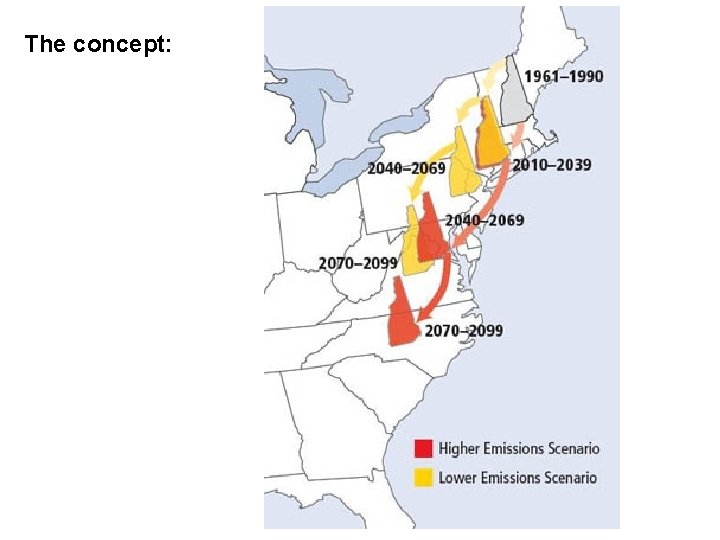
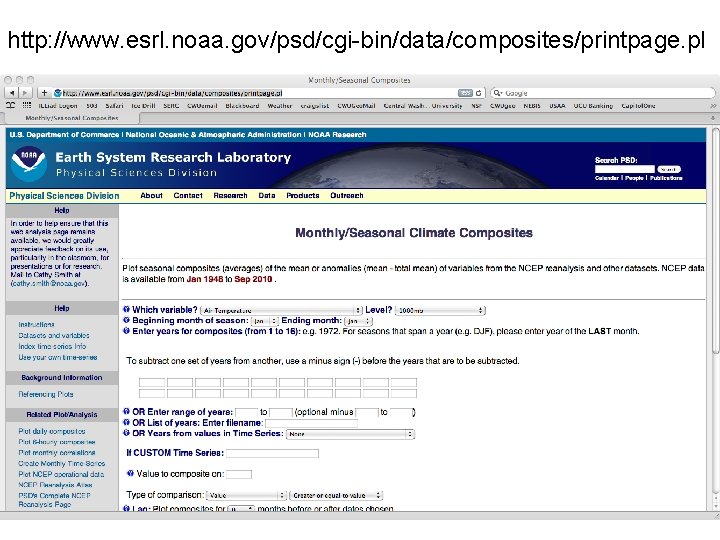
The concept:
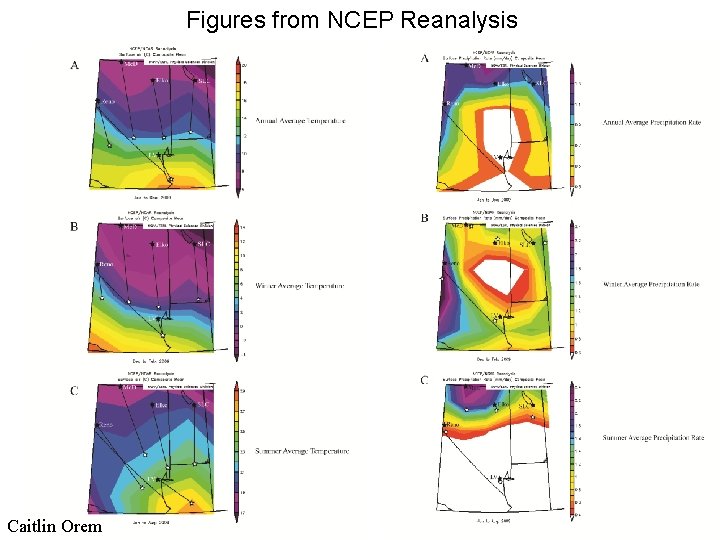
Figures from NCEP Reanalysis Caitlin Orem
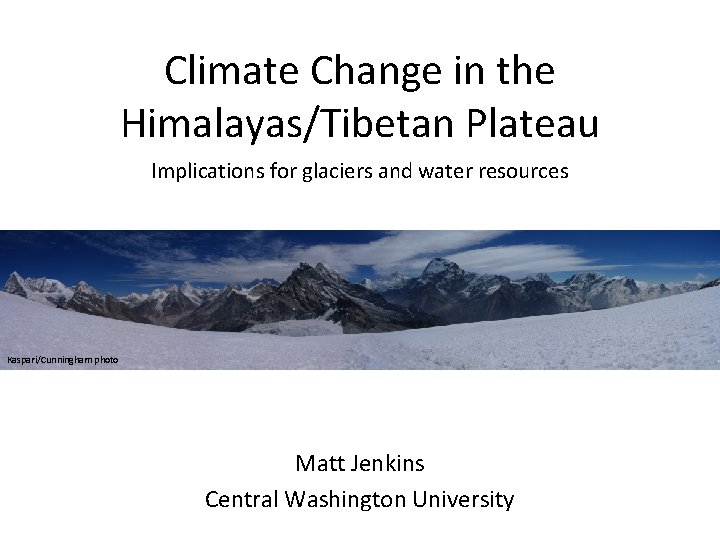
Climate Change in the Himalayas/Tibetan Plateau Implications for glaciers and water resources Kaspari/Cunningham photo Matt Jenkins Central Washington University
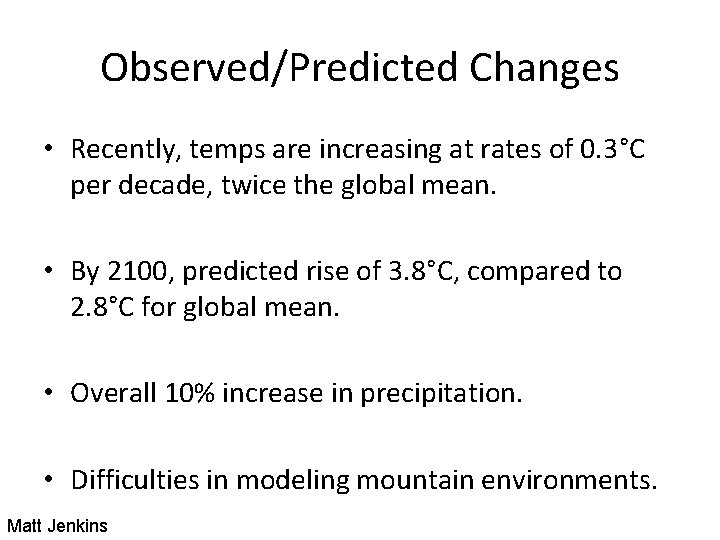
Observed/Predicted Changes • Recently, temps are increasing at rates of 0. 3°C per decade, twice the global mean. • By 2100, predicted rise of 3. 8°C, compared to 2. 8°C for global mean. • Overall 10% increase in precipitation. • Difficulties in modeling mountain environments. Matt Jenkins
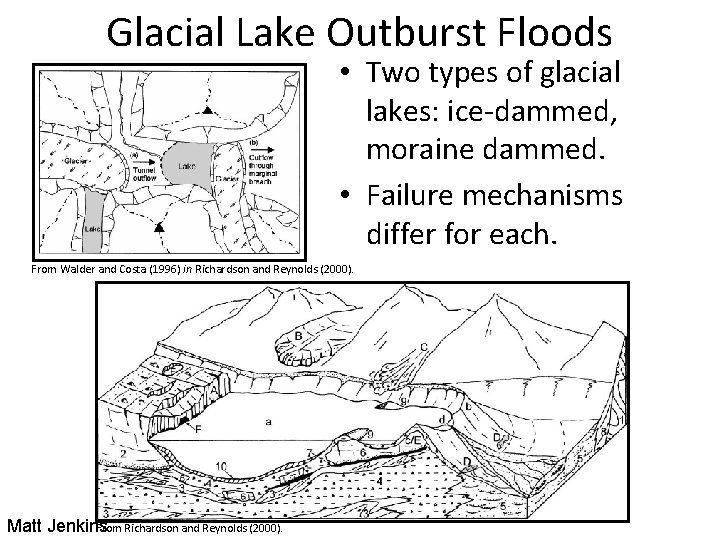
Glacial Lake Outburst Floods • Two types of glacial lakes: ice-dammed, moraine dammed. • Failure mechanisms differ for each. From Walder and Costa (1996) in Richardson and Reynolds (2000). Matt Jenkins From Richardson and Reynolds (2000).
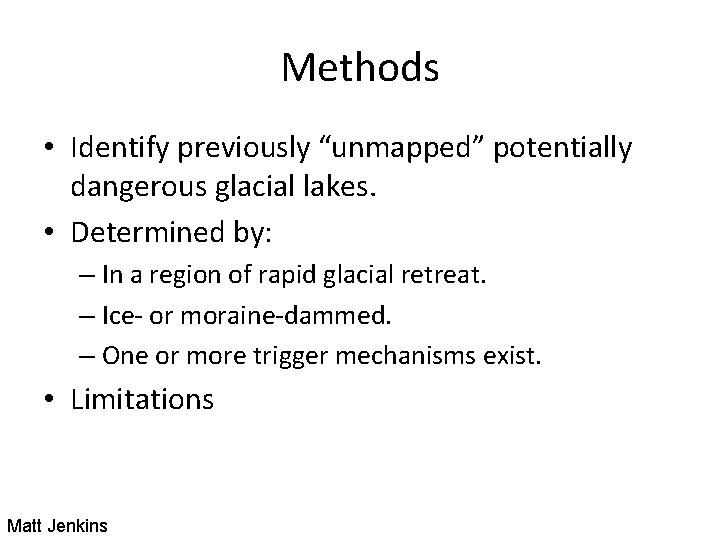
Methods • Identify previously “unmapped” potentially dangerous glacial lakes. • Determined by: – In a region of rapid glacial retreat. – Ice- or moraine-dammed. – One or more trigger mechanisms exist. • Limitations Matt Jenkins
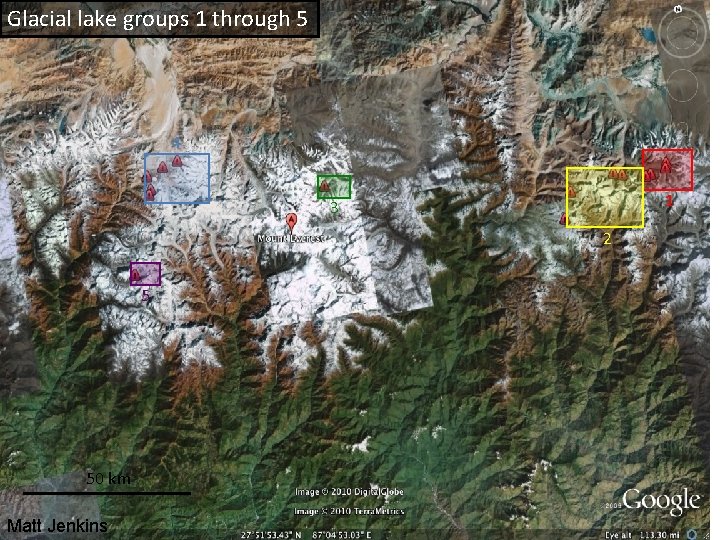
Glacial lake groups 1 through 5 4 1 3 2 5 50 km Matt Jenkins
http: //www. esrl. noaa. gov/psd/cgi-bin/data/composites/printpage. pl