
Survivors Siegfried Sassoon 1886 1967 Survivors NO doubt
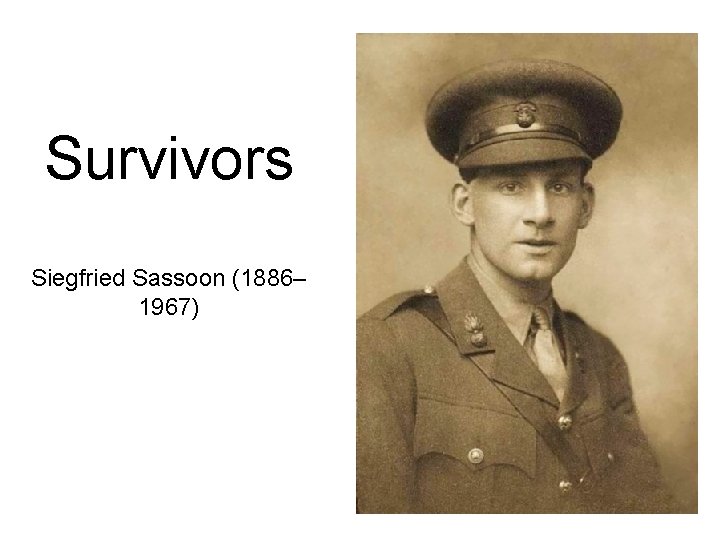
Survivors Siegfried Sassoon (1886– 1967)
Survivors NO doubt they’ll soon get well; the shock and strain Have caused their stammering, disconnected talk. Of course they’re ‘longing to go out again, ’— These boys with old, scared faces, learning to walk. They’ll soon forget their haunted nights; their cowed Subjection to the ghosts of friends who died, — Their dreams that drip with murder; and they’ll be proud Of glorious war that shatter’d all their pride. . . Men who went out to battle, grim and glad; Children, with eyes that hate you, broken and mad. - Craiglockart. October, 1917.

Survivors
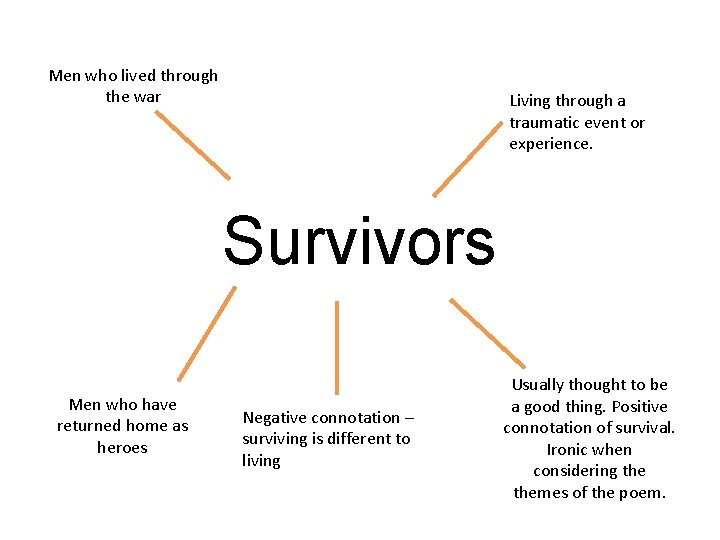
Men who lived through the war Living through a traumatic event or experience. Survivors Men who have returned home as heroes Negative connotation – surviving is different to living Usually thought to be a good thing. Positive connotation of survival. Ironic when considering themes of the poem.
NO doubt they’ll soon get well; the shock and strain Have caused their stammering, disconnected talk.
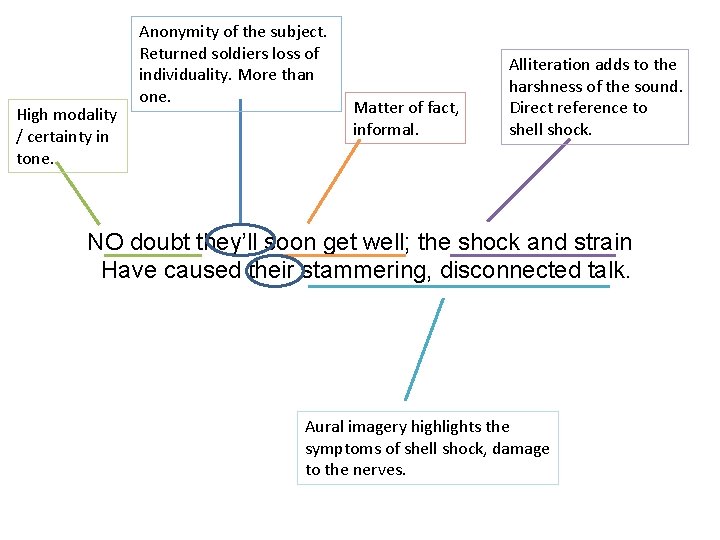
High modality / certainty in tone. Anonymity of the subject. Returned soldiers loss of individuality. More than one. Matter of fact, informal. Alliteration adds to the harshness of the sound. Direct reference to shell shock. NO doubt they’ll soon get well; the shock and strain Have caused their stammering, disconnected talk. Aural imagery highlights the symptoms of shell shock, damage to the nerves.
Of course they’re ‘longing to go out again, ’— These boys with old, scared faces, learning to walk.
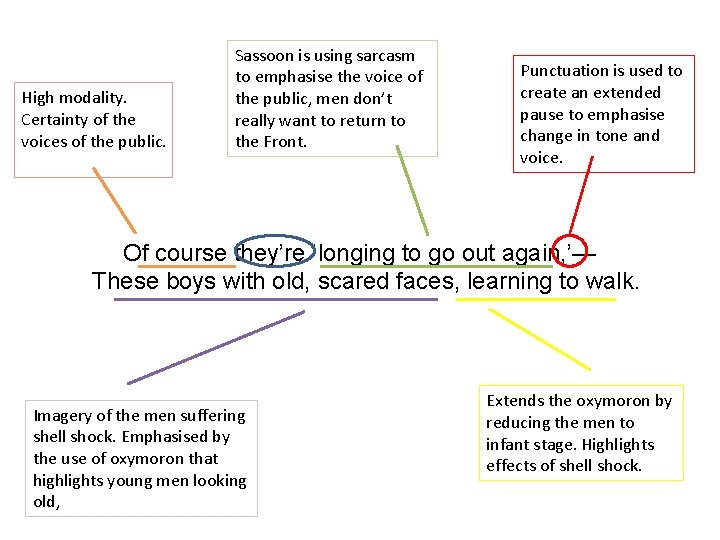
High modality. Certainty of the voices of the public. Sassoon is using sarcasm to emphasise the voice of the public, men don’t really want to return to the Front. Punctuation is used to create an extended pause to emphasise change in tone and voice. Of course they’re ‘longing to go out again, ’— These boys with old, scared faces, learning to walk. Imagery of the men suffering shell shock. Emphasised by the use of oxymoron that highlights young men looking old, Extends the oxymoron by reducing the men to infant stage. Highlights effects of shell shock.
They’ll soon forget their haunted nights; their cowed Subjection to the ghosts of friends who died, —
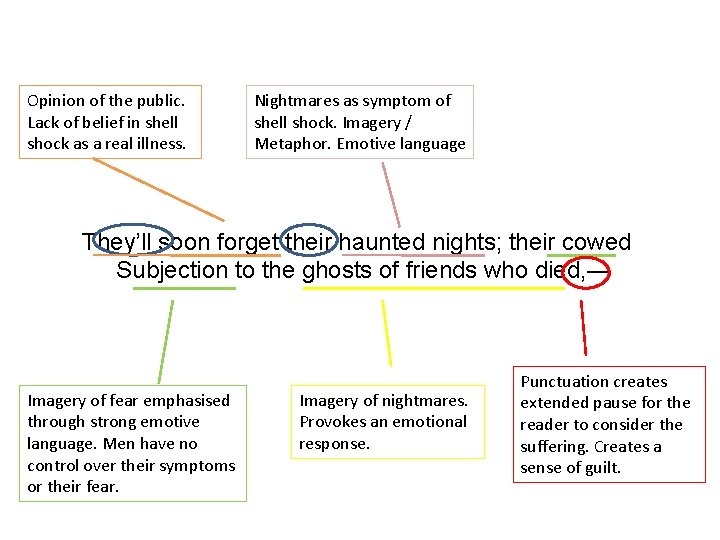
Opinion of the public. Lack of belief in shell shock as a real illness. Nightmares as symptom of shell shock. Imagery / Metaphor. Emotive language They’ll soon forget their haunted nights; their cowed Subjection to the ghosts of friends who died, — Imagery of fear emphasised through strong emotive language. Men have no control over their symptoms or their fear. Imagery of nightmares. Provokes an emotional response. Punctuation creates extended pause for the reader to consider the suffering. Creates a sense of guilt.
Their dreams that drip with murder; and they’ll be proud Of glorious war that shatter’d all their pride. . .
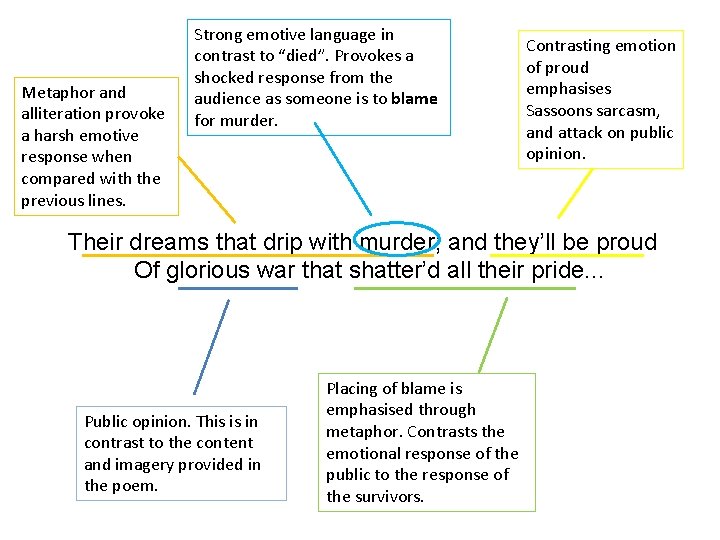
Metaphor and alliteration provoke a harsh emotive response when compared with the previous lines. Strong emotive language in contrast to “died”. Provokes a shocked response from the audience as someone is to blame for murder. Contrasting emotion of proud emphasises Sassoons sarcasm, and attack on public opinion. Their dreams that drip with murder; and they’ll be proud Of glorious war that shatter’d all their pride. . . Public opinion. This is in contrast to the content and imagery provided in the poem. Placing of blame is emphasised through metaphor. Contrasts the emotional response of the public to the response of the survivors.
Men who went out to battle, grim and glad; Children, with eyes that hate you, broken and mad.
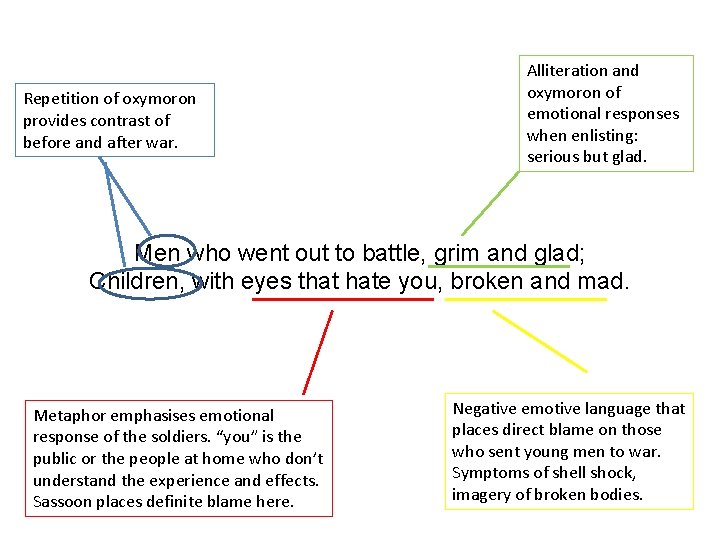
Repetition of oxymoron provides contrast of before and after war. Alliteration and oxymoron of emotional responses when enlisting: serious but glad. Men who went out to battle, grim and glad; Children, with eyes that hate you, broken and mad. Metaphor emphasises emotional response of the soldiers. “you” is the public or the people at home who don’t understand the experience and effects. Sassoon places definite blame here. Negative emotive language that places direct blame on those who sent young men to war. Symptoms of shell shock, imagery of broken bodies.
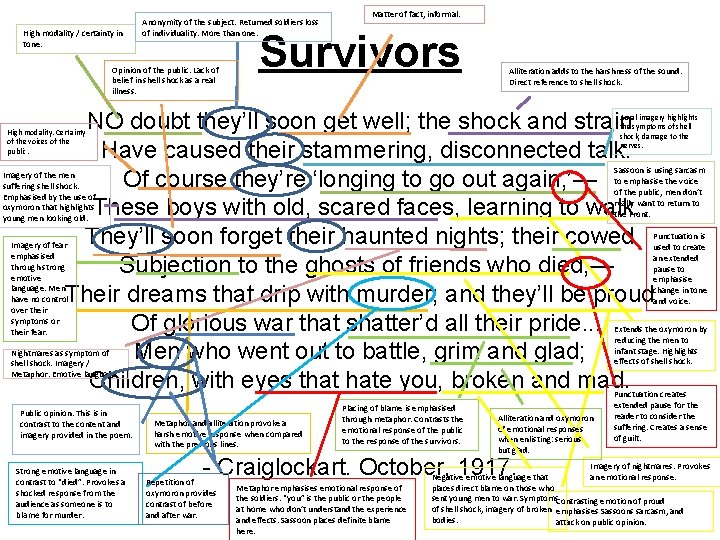
High modality / certainty in tone. Anonymity of the subject. Returned soldiers loss of individuality. More than one. Opinion of the public. Lack of belief in shell shock as a real illness. Matter of fact, informal. Survivors Alliteration adds to the harshness of the sound. Direct reference to shell shock. NO doubt they’ll soon get well; the shock and strain Have caused their stammering, disconnected talk. Of course they’re ‘longing to go out again, ’— These boys with old, scared faces, learning to walk. They’ll soon forget their haunted nights; their cowed Subjection to the ghosts of friends who died, — Their dreams that drip with murder; and they’ll be proud Of glorious war that shatter’d all their pride. . . Men who went out to battle, grim and glad; Children, with eyes that hate you, broken and mad. Aural imagery highlights the symptoms of shell shock, damage to the nerves. High modality. Certainty of the voices of the public. Sassoon is using sarcasm to emphasise the voice of the public, men don’t really want to return to the Front. Imagery of the men suffering shell shock. Emphasised by the use of oxymoron that highlights young men looking old. Punctuation is used to create an extended pause to emphasise change in tone and voice. Imagery of fear emphasised through strong emotive language. Men have no control over their symptoms or their fear. Extends the oxymoron by reducing the men to infant stage. Highlights effects of shell shock. Nightmares as symptom of shell shock. Imagery / Metaphor. Emotive language Public opinion. This is in contrast to the content and imagery provided in the poem. Strong emotive language in contrast to “died”. Provokes a shocked response from the audience as someone is to blame for murder. Metaphor and alliteration provoke a harsh emotive response when compared with the previous lines. Placing of blame is emphasised through metaphor. Contrasts the emotional response of the public to the response of the survivors. Alliteration and oxymoron of emotional responses when enlisting: serious but glad. - Craiglockart. October, 1917. Repetition of oxymoron provides contrast of before and after war. Metaphor emphasises emotional response of the soldiers. “you” is the public or the people at home who don’t understand the experience and effects. Sassoon places definite blame here. Punctuation creates extended pause for the reader to consider the suffering. Creates a sense of guilt. Imagery of nightmares. Provokes Negative emotive language that an emotional response. places direct blame on those who sent young men to war. Symptoms. Contrasting emotion of proud of shell shock, imagery of broken emphasises Sassoons sarcasm, and bodies. attack on public opinion.
Survivors EXPLAIN About Themes Emotions / Mood Audience Form / Style Poetic Devices EXAMPLE
- Slides: 16