
Survival Skills for Supervisors Safety Leadership and Building

Survival Skills for Supervisors Safety Leadership and Building a Safe Community Presenter: Mark Linsenbigler Environmental Health and Safety msl 200@psu. edu May 1, 2015
Safety Leadership and Building a Safe Community Goals • Identify key components of safety leadership • Describe the supervisor’s roles and responsibilities • Provide resources to enhance safety leadership
Safety Leadership and Building a Safe Community Objective What can I do at Penn State to be most effective in preventing my employees from getting injured while at work? What resources are available to help me?
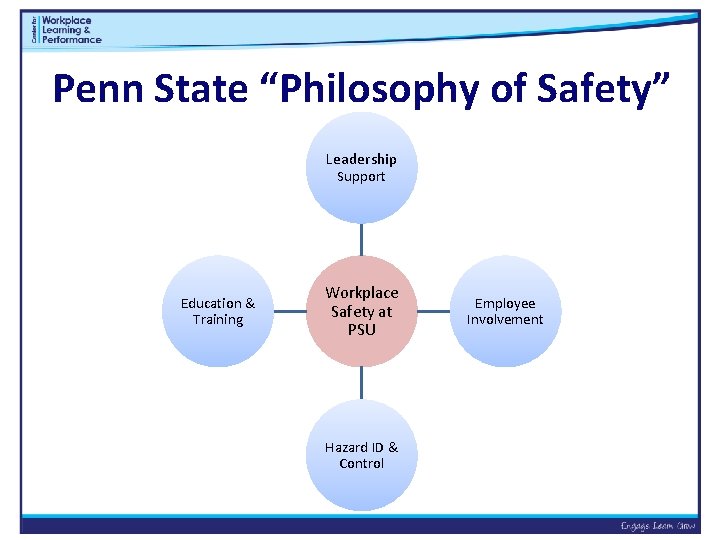
Penn State “Philosophy of Safety” Leadership Support Education & Training Workplace Safety at PSU Hazard ID & Control Employee Involvement
Safety Leadership and Building a Safe Community Safety is a Value • • Employees support safety cultures when they see visual commitments to safety • Role of supervisor Safety Commitment reflects • Concern for employees • Regulatory compliance • Ethical obligations • Concern for costs • Direct impact on employee performance
Safety Leadership and Building a Safe Community Safety Responsibilities • Everyone at Penn State has a role in ensuring a safe community – BUT… o Supervisors play the pivotal role ü As supervisor ü As employee ü As “connector” to others in your work unit ü Ensure employees are provided a safe work environment § Safety supervision – can I do it?
Safety Leadership and Building a Safe Community Responsibilities of the Supervisor • • • Know rules/policies and enforce them Maximize worker involvement in recognizing/controlling hazards Ensure employees understand their safety responsibilities and are held accountable for safety Ensure employees are provided with appropriate training and/or equipment to perform their jobs safely Be familiar with GURU Safety Policies Know resources to assist in safety program implementations Update unit leadership about safety on a regular basis Complete the electronic accident report (FROI) as soon as possible Conduct an investigation of work-related injuries and illnesses
Safety Leadership and Building a Safe Community Responsibilities of the Supervisor • Day to Day Activities to Support Safety o Lead by Example o Talk about safety within your work unit ü Agenda item for staff meetings ü Address specific safety issues as needed and discuss them o Be proactive in planning for safety needs o Know who your College/Unit Safety officer is o If something does not look safe, question it
Safety Leadership and Building a Safe Community Responsibilities of the Employee • Follow safety policies and procedures o Know hazards associated with work activities o Attend required training • Report unsafe conditions and hazards • Report injuries or accidents to you • Keep you informed of upcoming operations and new equipment • Stop operations posing imminent danger
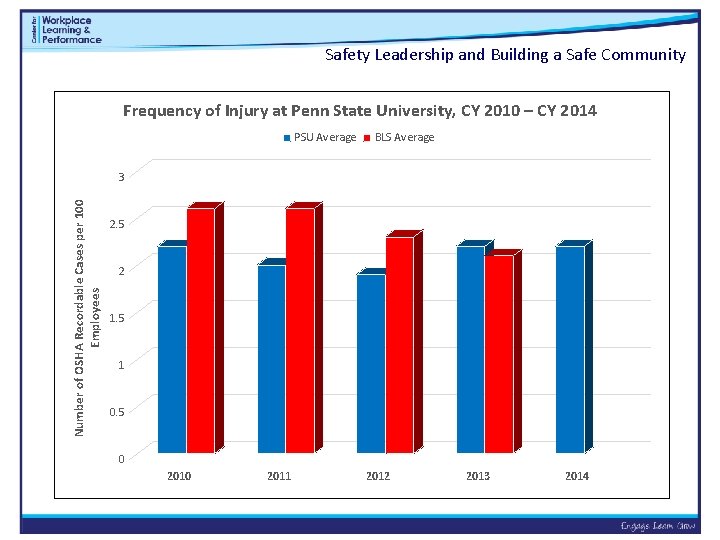
Safety Leadership and Building a Safe Community Frequency of Injury at Penn State University, CY 2010 – CY 2014 PSU Average BLS Average Number of OSHA Recordable Cases per 100 Employees 3 2. 5 2 1. 5 1 0. 5 0 2011 2012 2013 2014
Safety Leadership and Building a Safe Community What is a Hazard? How can I tell if something is unsafe? What do I do when I identify a safety issue?
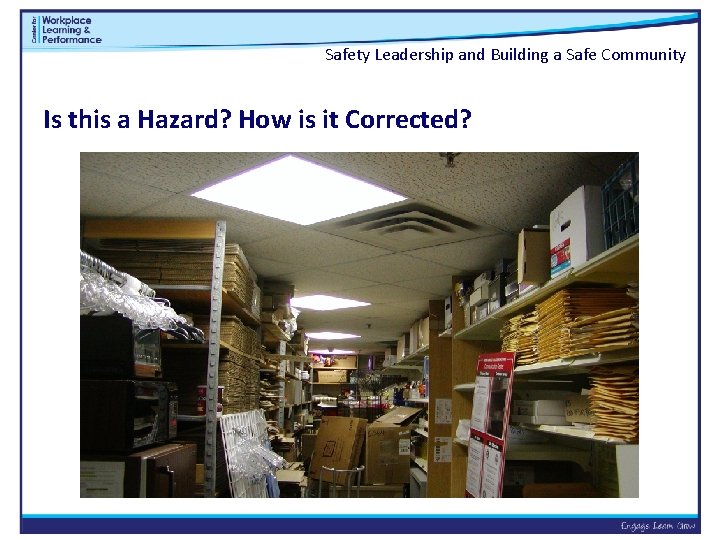
Safety Leadership and Building a Safe Community Is this a Hazard? How is it Corrected?
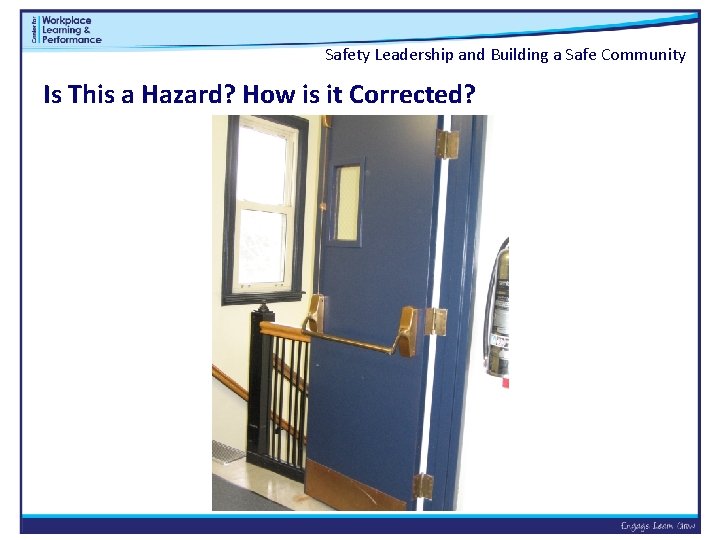
Safety Leadership and Building a Safe Community Is This a Hazard? How is it Corrected?
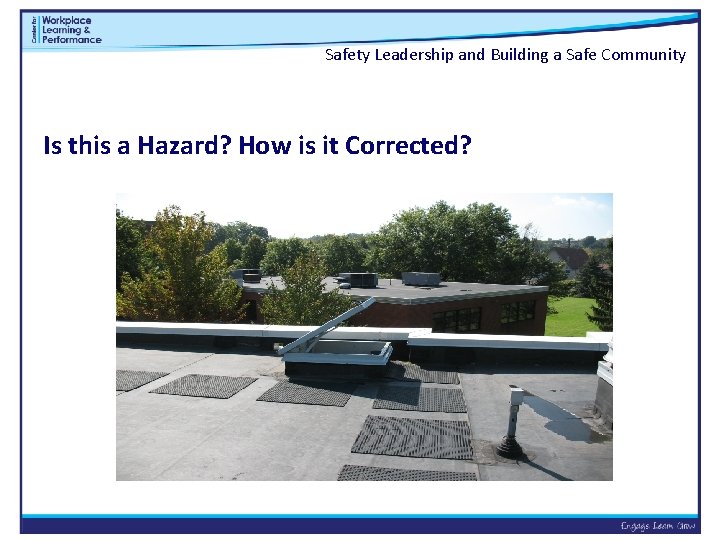
Safety Leadership and Building a Safe Community Is this a Hazard? How is it Corrected?
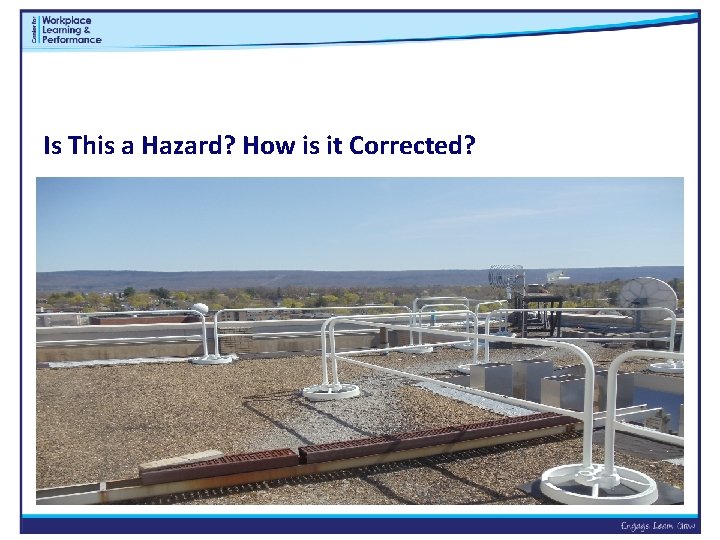
Is This a Hazard? How is it Corrected?
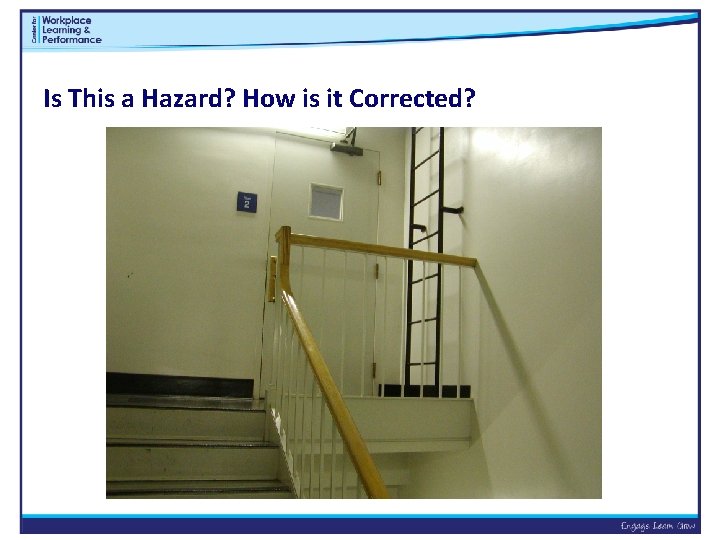
Is This a Hazard? How is it Corrected?
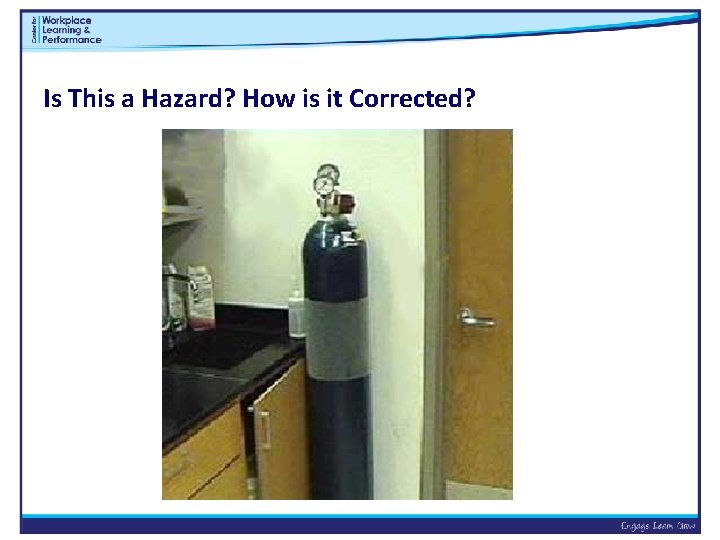
Is This a Hazard? How is it Corrected?
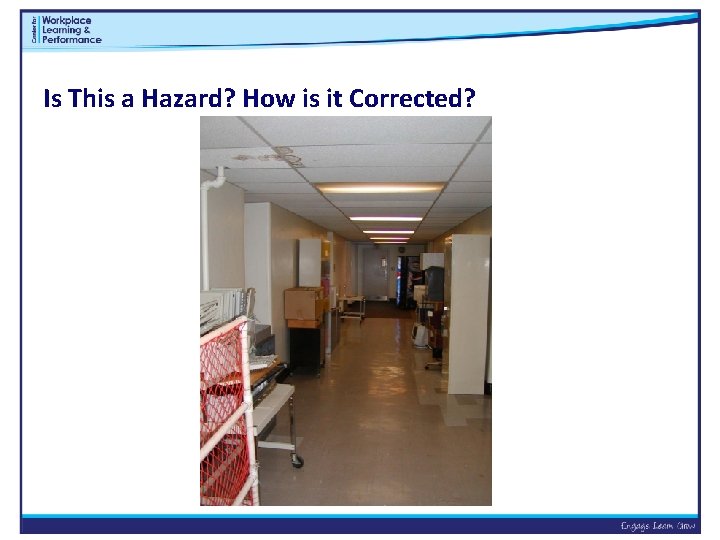
Is This a Hazard? How is it Corrected?
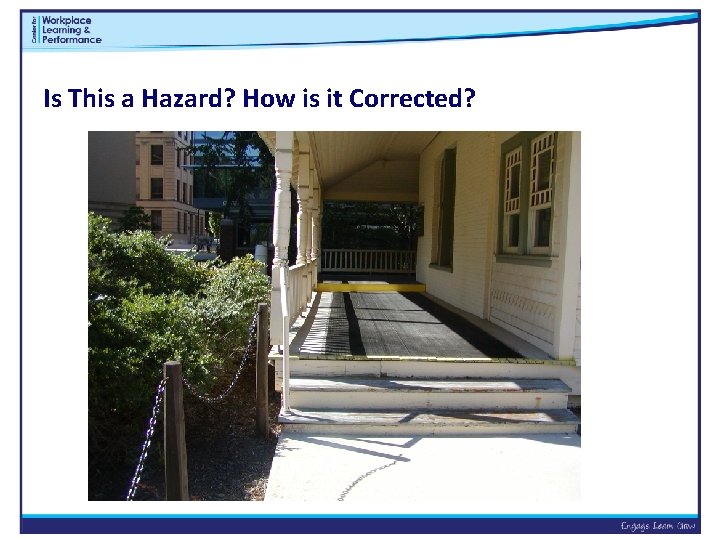
Is This a Hazard? How is it Corrected?
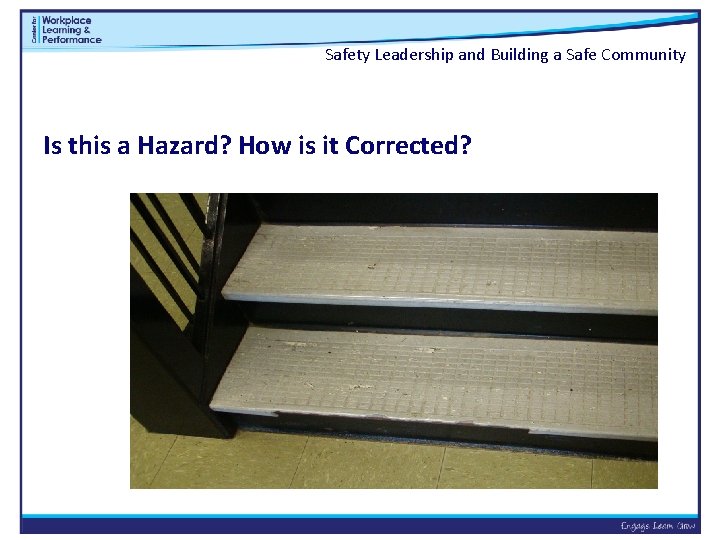
Safety Leadership and Building a Safe Community Is this a Hazard? How is it Corrected?
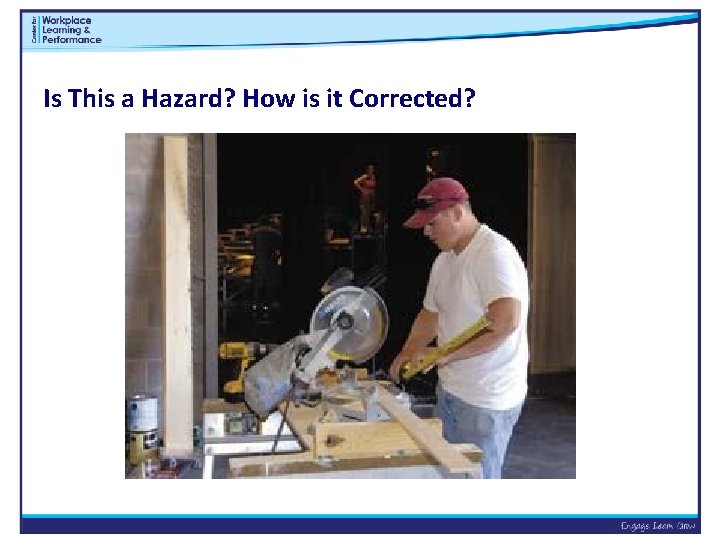
Is This a Hazard? How is it Corrected?
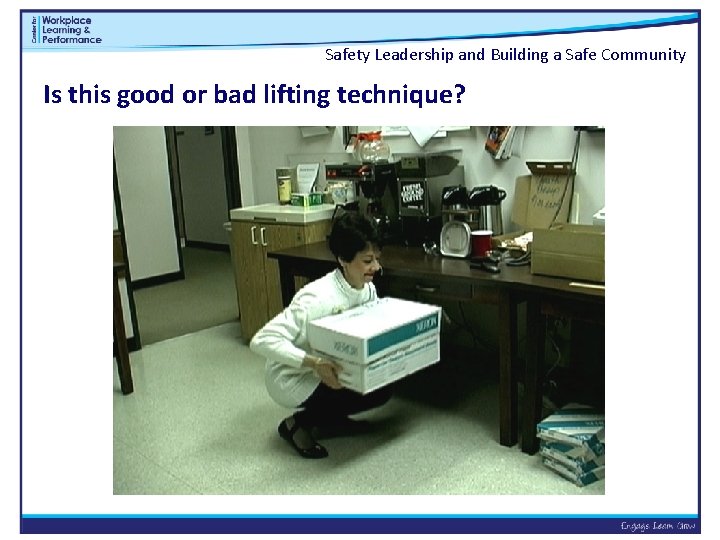
Safety Leadership and Building a Safe Community Is this good or bad lifting technique?
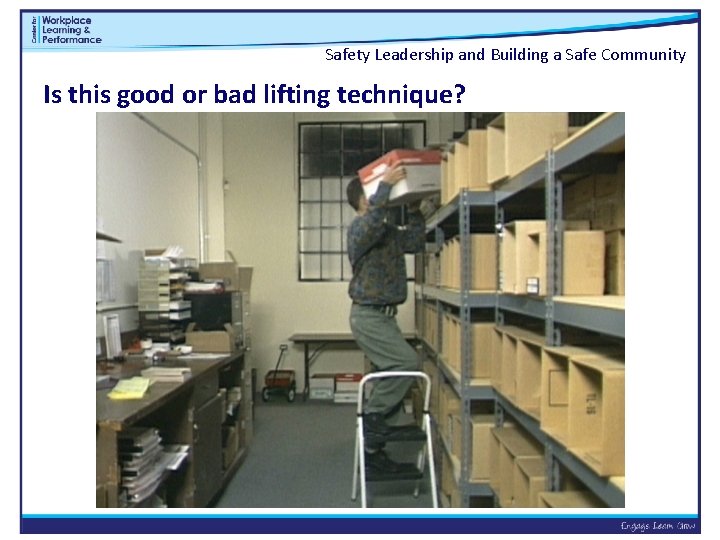
Safety Leadership and Building a Safe Community Is this good or bad lifting technique?
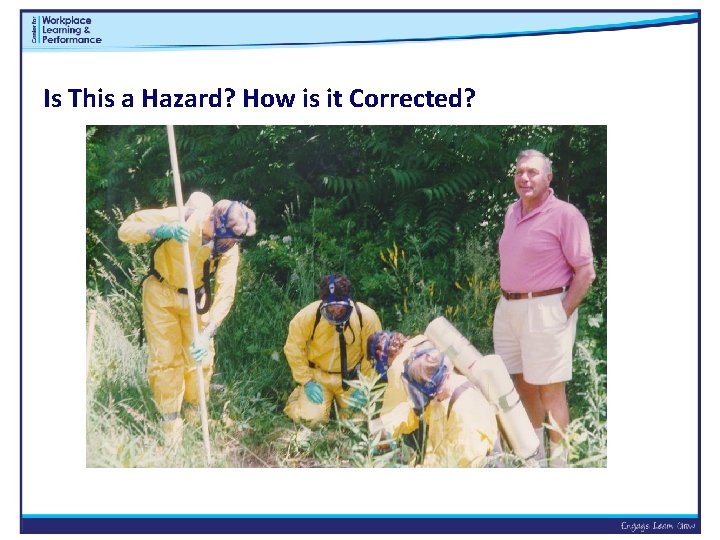
Is This a Hazard? How is it Corrected?
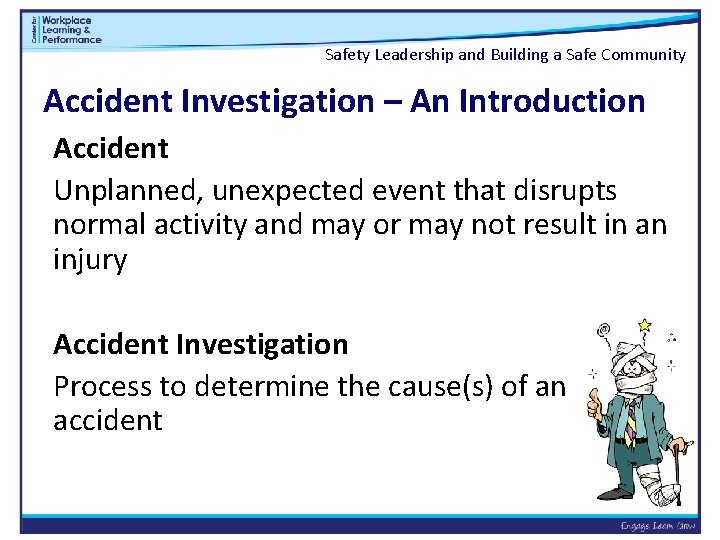
Safety Leadership and Building a Safe Community Accident Investigation – An Introduction Accident Unplanned, unexpected event that disrupts normal activity and may or may not result in an injury Accident Investigation Process to determine the cause(s) of an accident
Safety Leadership and Building a Safe Community Why Investigate Accidents? • • • Determine the cause of the accident Create safety awareness Demonstrate concern for employees Document facts Improve work processes Reduce costs
Safety Leadership and Building a Safe Community Investigation Basics Who should investigate? • Immediate supervisor o Familiar with job & can take immediate action o Assistance from others as needed ü Unit safety officer, EHS, management What should be investigated? • Every accident that happens at work or is work-related should be investigated
Safety Leadership and Building a Safe Community Investigation Basics (continued) When should investigation take place? • As soon as possible • Initial focus on treatment of injured Where should investigation take place? • At the site of the incident whenever possible
Safety Leadership and Building a Safe Community Investigation Basics (continued) How are results documented? • First Report of Injury (FROI) http: //ohr. psu. edu/hr-professional/policies-guidelines/workrelated-injuries/workers-compensation • Supplemental investigation form available on EHS website http: //www. ehs. psu. edu/occhealth/supervisors_accident_inve stigation_report. pdf
Safety Leadership and Building a Safe Community Accident Investigation Scenario
Safety Leadership and Building a Safe Community Lessons Learned in Managing Safety • Most employees do not come to work with the plan of getting hurt – they need guidance on being safe • Establish effective two-way communications o Timely, frequently, and honestly o Share reports/results with employees • Ensure employees know their safety responsibilities • By the time you hear of a health and safety concern, assume employees have been talking about it • Office activities can have health and safety considerations • Utilize resources for assistance if needed • Empower your employees to identify, report and correct hazards
Safety Leadership and Building a Safe Community Health and Safety Resources • Guru Safety Policies (SY Section of PSU Policies) • Environmental Health and Safety (24/7/365) o 6 Eisenhower Parking Deck o 814 -865 -6391 o Staff contact names and email addresses o EHS Website (www. ehs. psu. edu) ü Lessons learned ü “Snapshots” ü Requirements ü Links ü Resources
Safety Leadership and Building a Safe Community Health and Safety Resources (continued) • College/Unit/Departmental Safety Officer • Departmental Safety Committee • Colleagues
Safety Leadership and Building a Safe Community What can EHS do for you? • Provide safety training/identify training needs • Provide resources to assist you/your work unit enhancing safety • Conduct regulatory compliance audits • Provide safety material for staff meetings • Evaluate potential hazards • Dispose of your hazardous waste • Needles, rechargeable batteries, chemicals • Assist in identifying how to correct hazards
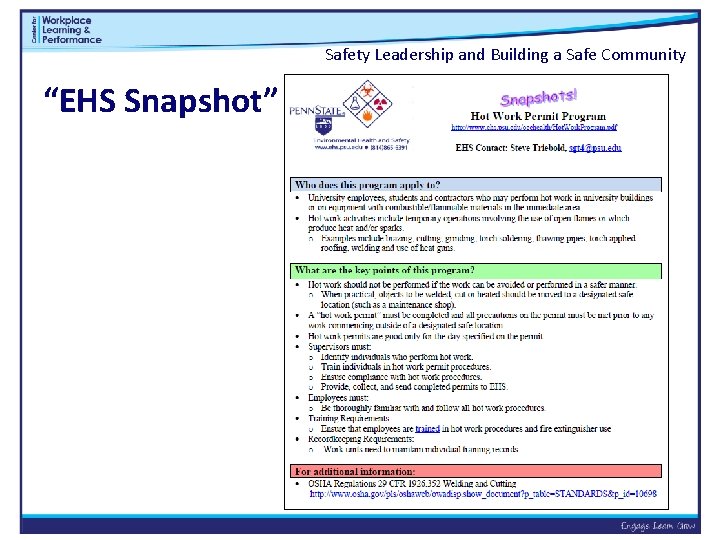
Safety Leadership and Building a Safe Community “EHS Snapshot”
Safety Leadership and Building a Safe Community Other Health and Safety Resources Worker’s Compensation 4 th Floor James M. Elliott Building 814 -865 -0424 ohr. psu. edu/workers-compensation Occupational Medicine 301 Centre Medical Sciences Building 814 -863 -8492 ohr. psu. edu/occupational-medicine
Safety Leadership and Building a Safe Community Other Health and Safety Resources (cont. ) University Police and Public Safety Eisenhower Parking Deck 814 -863 -1111 www. police. psu. edu Risk Management 227 West Beaver Ave. , 103 Rider Building 814 -865 -6307 www. controller. psu. edu/Divisions/Risk. Management
- Slides: 38