
Surveys and Photogrammetry PRESENTS Where is the Monument






- Slides: 35
Surveys and Photogrammetry PRESENTS
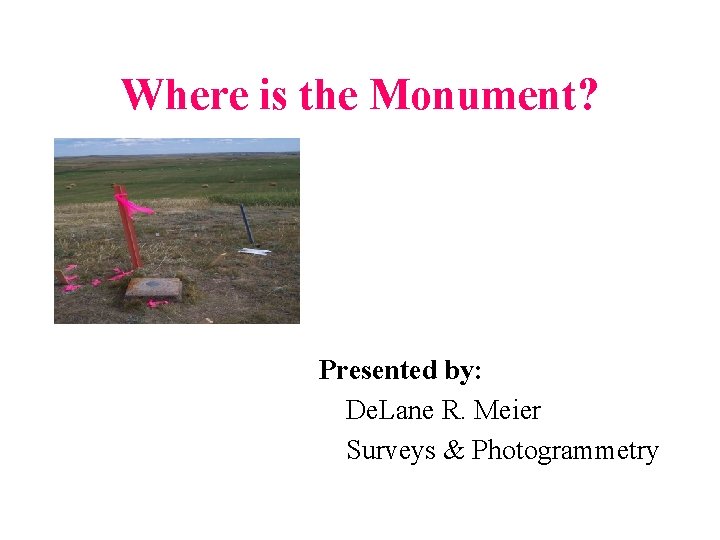
Where is the Monument? Presented by: De. Lane R. Meier Surveys & Photogrammetry
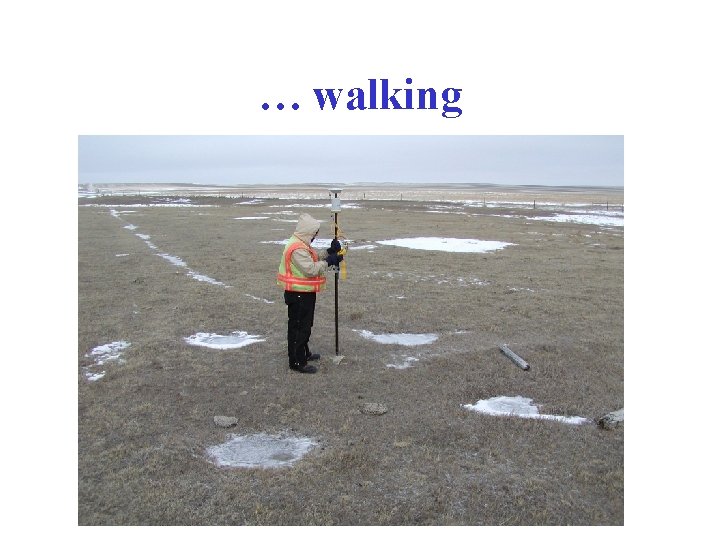
We survey in all types of weather, riding on an ATV … or
… walking
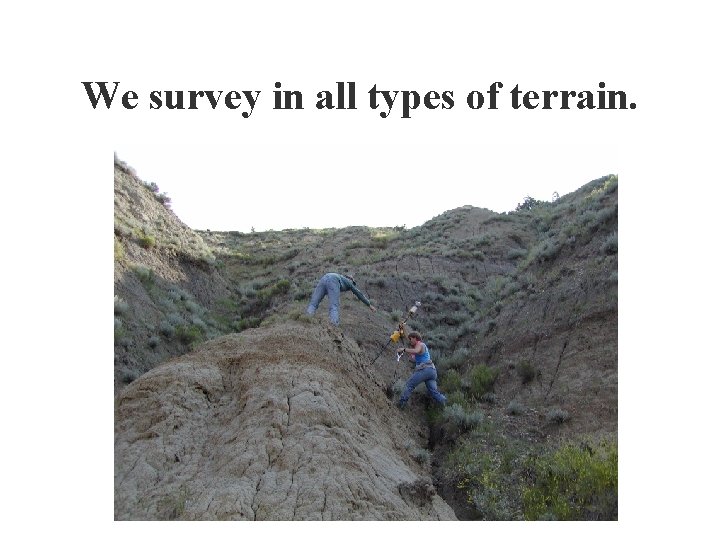
We survey in all types of terrain.
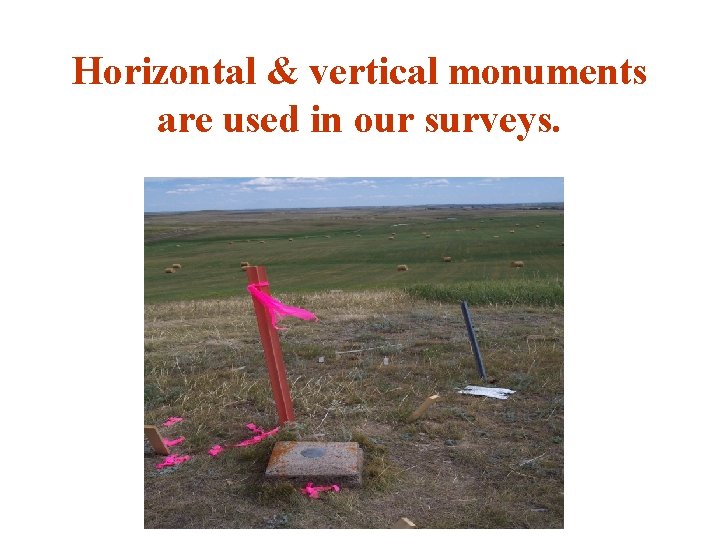
Horizontal & vertical monuments are used in our surveys.
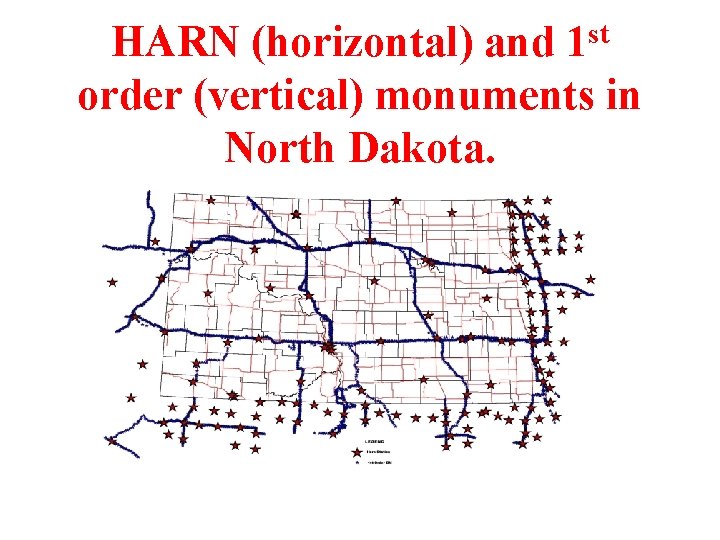
st 1 HARN (horizontal) and order (vertical) monuments in North Dakota.
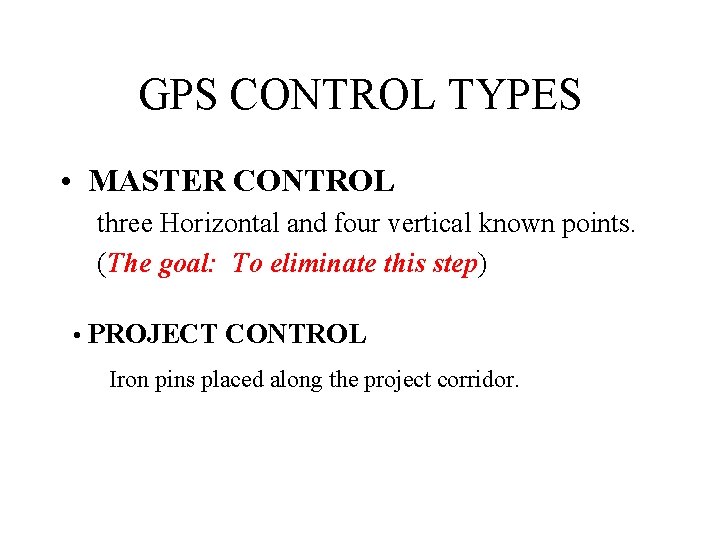
GPS CONTROL TYPES • MASTER CONTROL three Horizontal and four vertical known points. (The goal: To eliminate this step) • PROJECT CONTROL Iron pins placed along the project corridor.
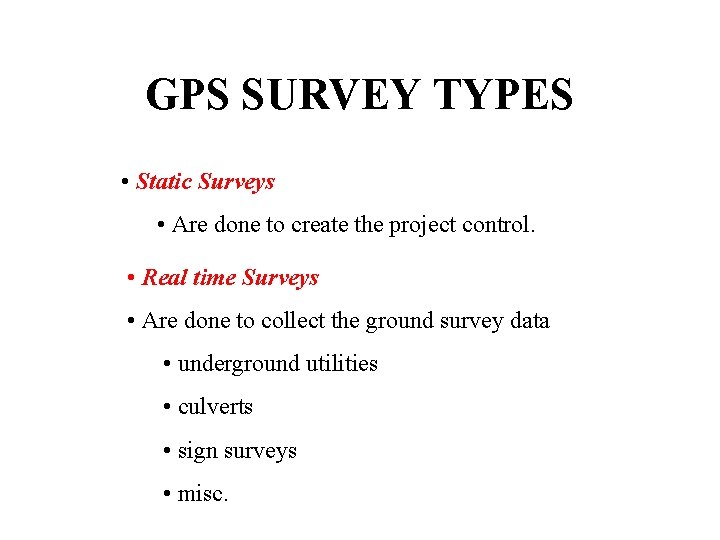
GPS SURVEY TYPES • Static Surveys • Are done to create the project control. • Real time Surveys • Are done to collect the ground survey data • underground utilities • culverts • sign surveys • misc.
THE OLD WAY (Static Survey)
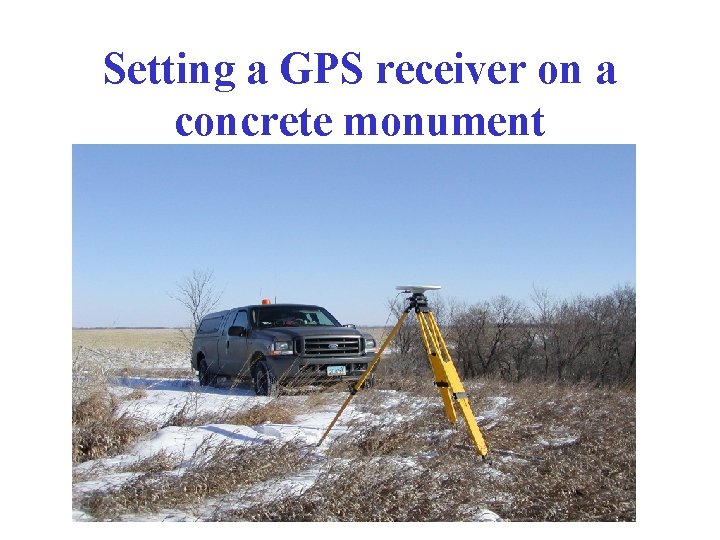
Setting a GPS receiver on a concrete monument
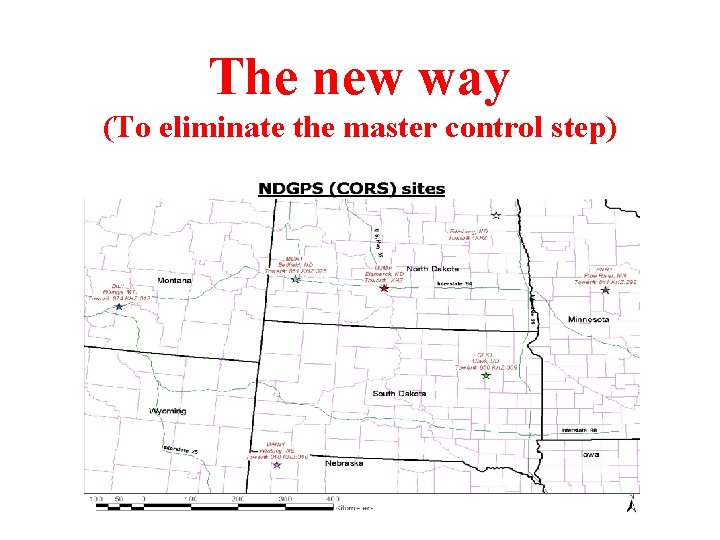
The new way (To eliminate the master control step)
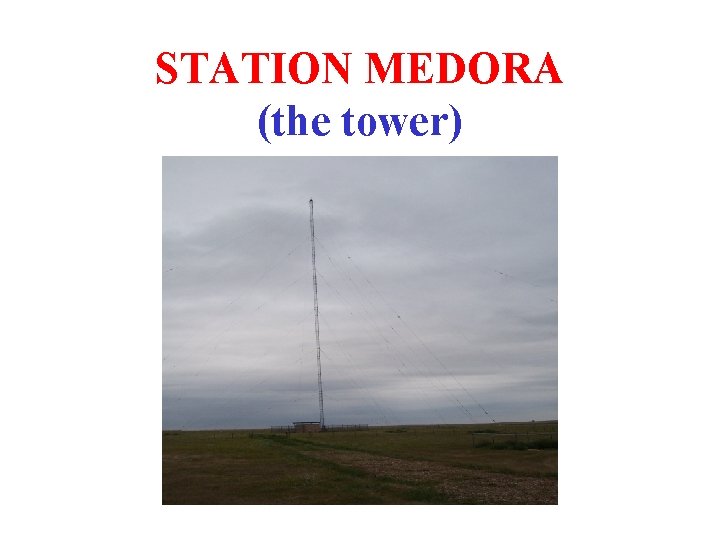
STATION MEDORA (the tower)
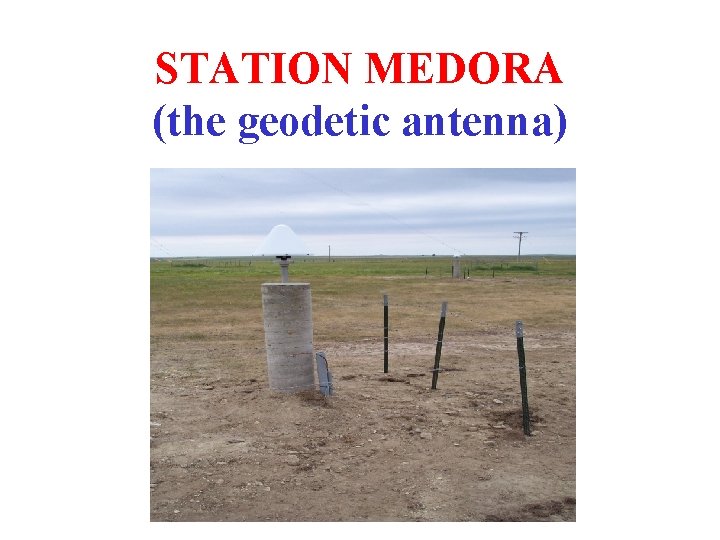
STATION MEDORA (the geodetic antenna)
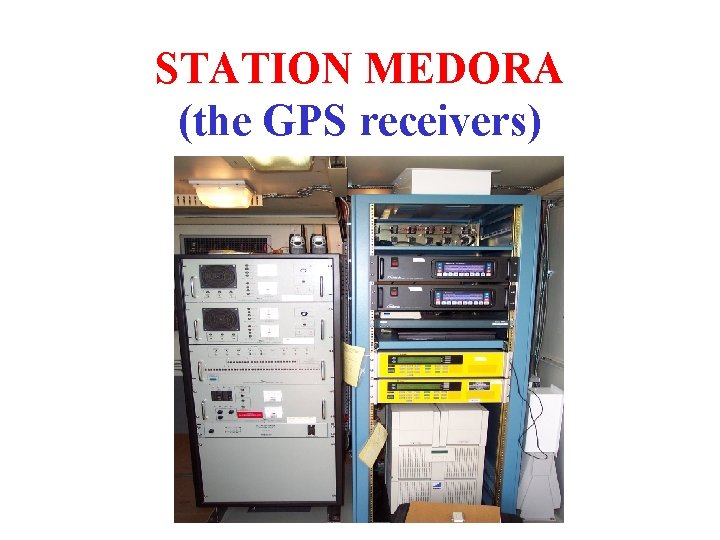
STATION MEDORA (the GPS receivers)
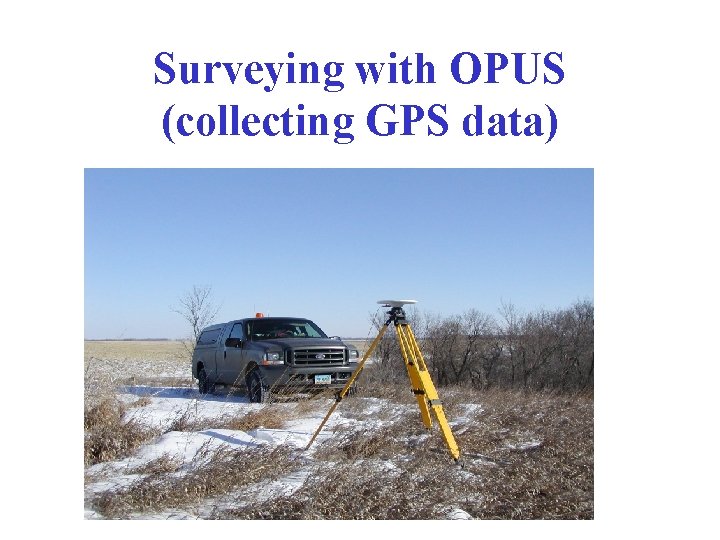
Surveying with OPUS (collecting GPS data)
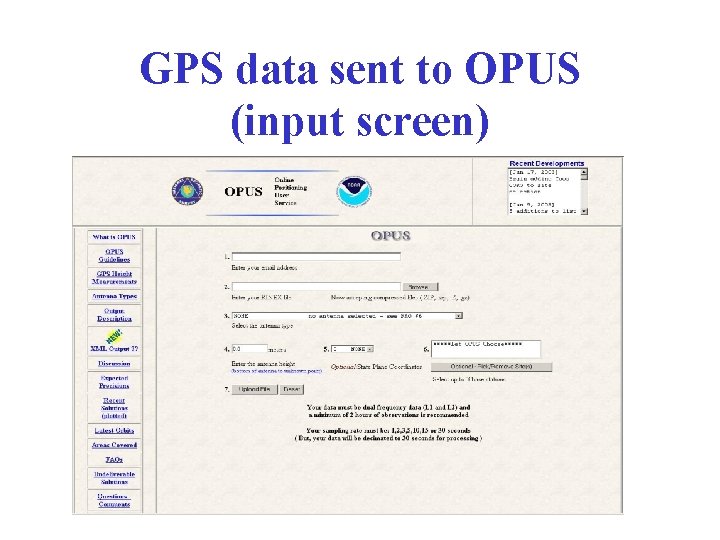
GPS data sent to OPUS (input screen)
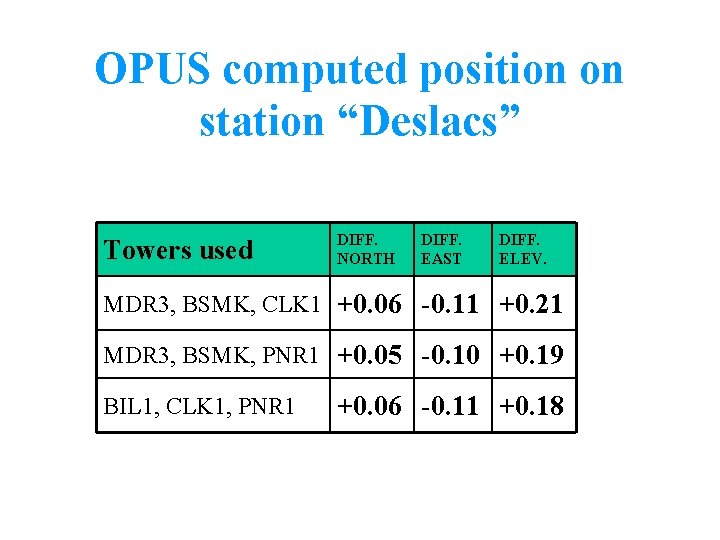
OPUS computed position on station “Deslacs” Towers used DIFF. NORTH DIFF. EAST DIFF. ELEV. MDR 3, BSMK, CLK 1 +0. 06 -0. 11 +0. 21 MDR 3, BSMK, PNR 1 +0. 05 -0. 10 +0. 19 BIL 1, CLK 1, PNR 1 +0. 06 -0. 11 +0. 18
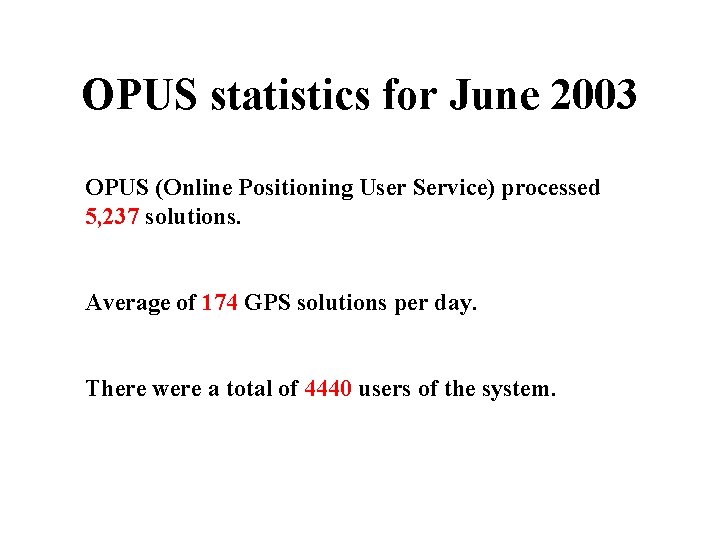
OPUS statistics for June 2003 OPUS (Online Positioning User Service) processed 5, 237 solutions. Average of 174 GPS solutions per day. There were a total of 4440 users of the system.
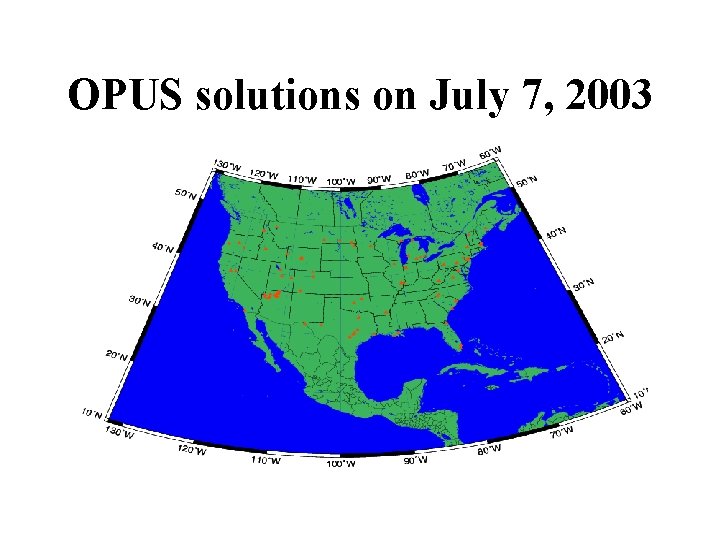
OPUS solutions on July 7, 2003
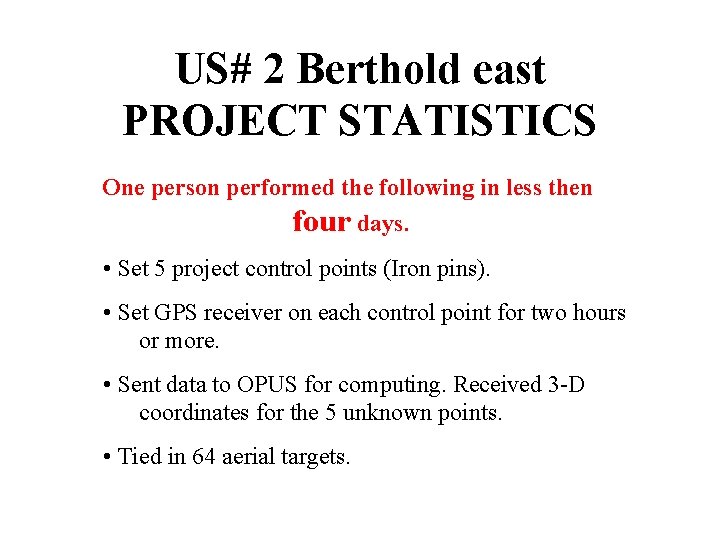
US# 2 Berthold east PROJECT STATISTICS One person performed the following in less then four days. • Set 5 project control points (Iron pins). • Set GPS receiver on each control point for two hours or more. • Sent data to OPUS for computing. Received 3 -D coordinates for the 5 unknown points. • Tied in 64 aerial targets.
We ELIMINATED this step
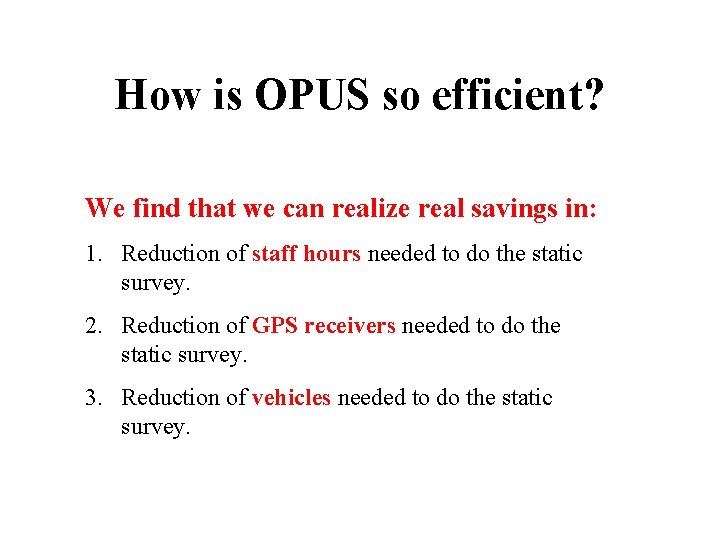
How is OPUS so efficient? We find that we can realize real savings in: 1. Reduction of staff hours needed to do the static survey. 2. Reduction of GPS receivers needed to do the static survey. 3. Reduction of vehicles needed to do the static survey.
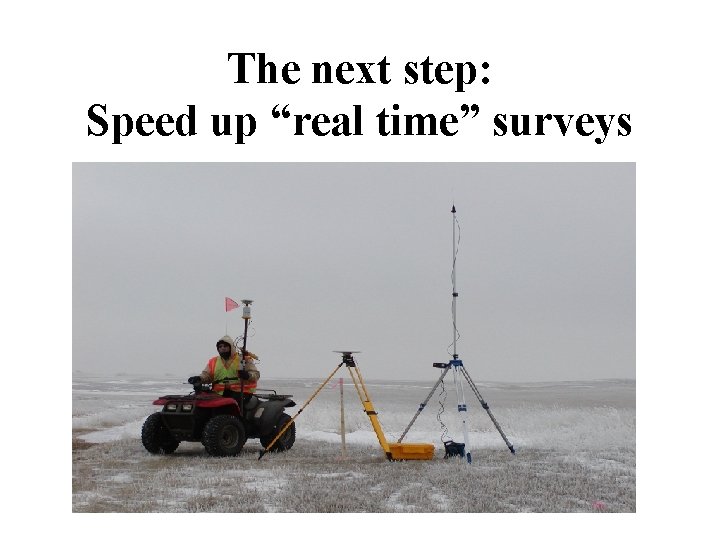
The next step: Speed up “real time” surveys
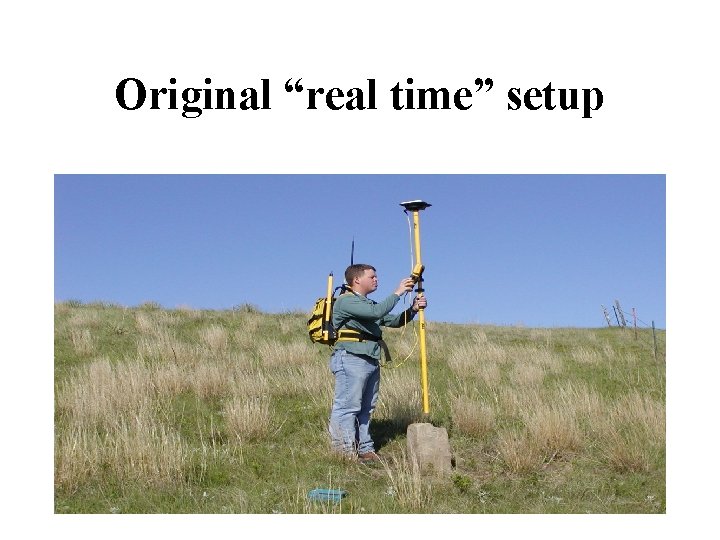
Original “real time” setup
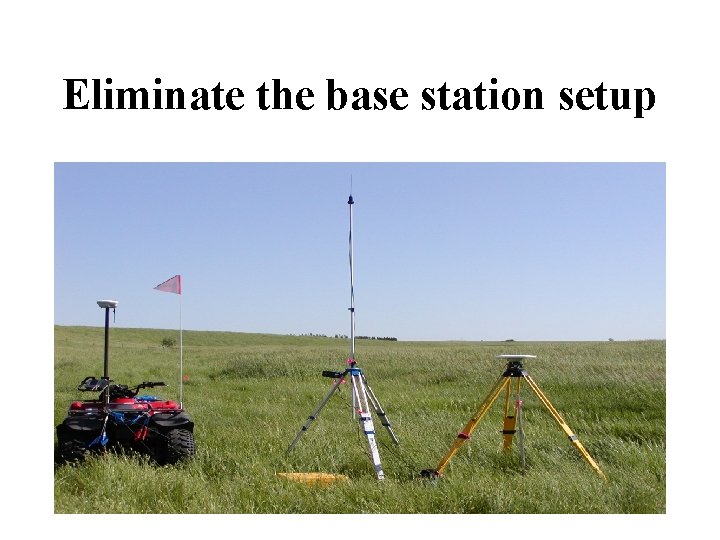
Eliminate the base station setup
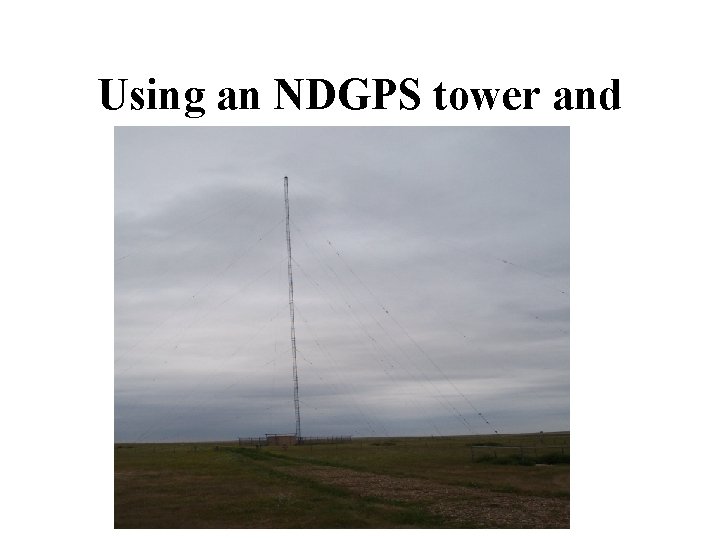
Using an NDGPS tower and
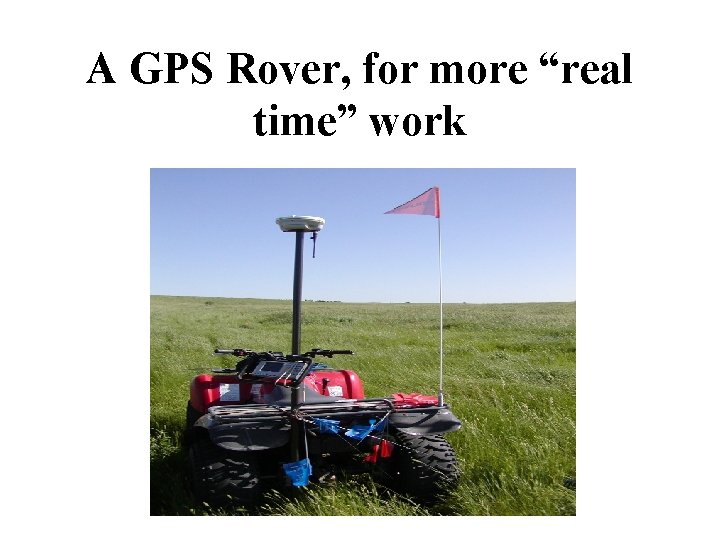
A GPS Rover, for more “real time” work
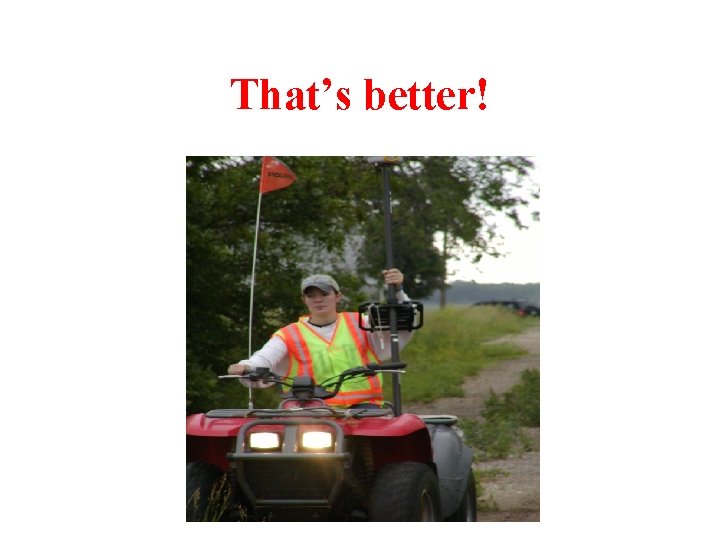
That’s better!
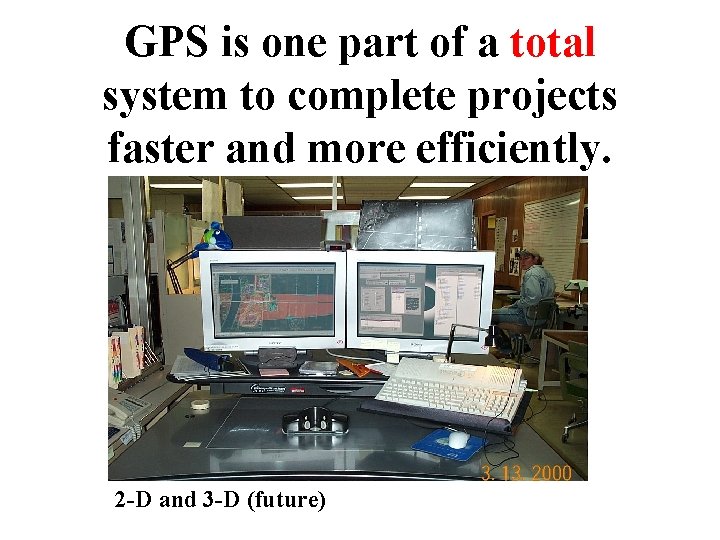
GPS is one part of a total system to complete projects faster and more efficiently. 2 -D and 3 -D (future)
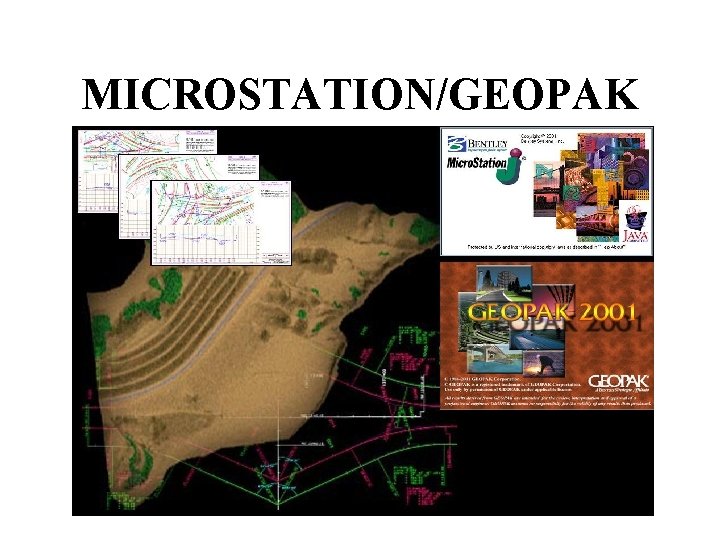
MICROSTATION/GEOPAK
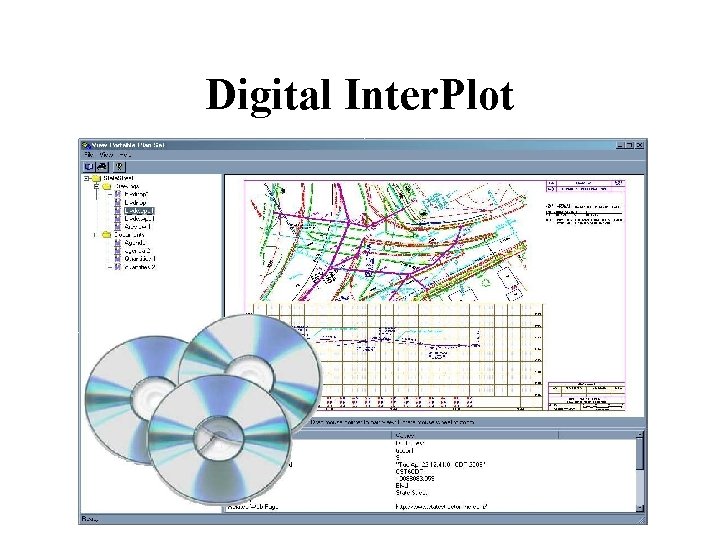
Digital Inter. Plot
and File. Net Some advantages of using File. Net 1. Ability to find documents, plans, and drawings on the users’ computers. 2. Ability to safely store electronic data in one place. 3. Ability to work with intelligent documents. 4. Eliminate static microfilming and microfiche plans.
The most significant resource in surveying …
THE END