
Surveying I Lecture 3 Outline The theodolite and
- Slides: 26
Surveying I. Lecture 3.
Outline The theodolite and its structure Telescope Reading device Bubble tubes Vertical circle
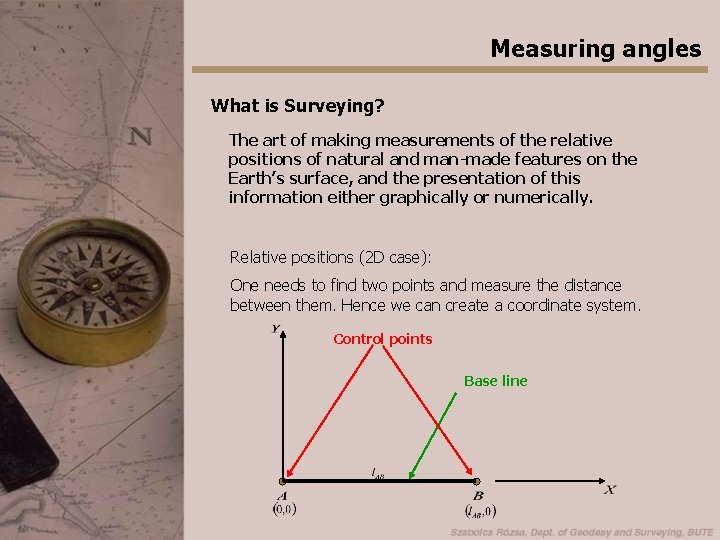
Measuring angles What is Surveying? The art of making measurements of the relative positions of natural and man-made features on the Earth’s surface, and the presentation of this information either graphically or numerically. Relative positions (2 D case): One needs to find two points and measure the distance between them. Hence we can create a coordinate system. Control points Base line
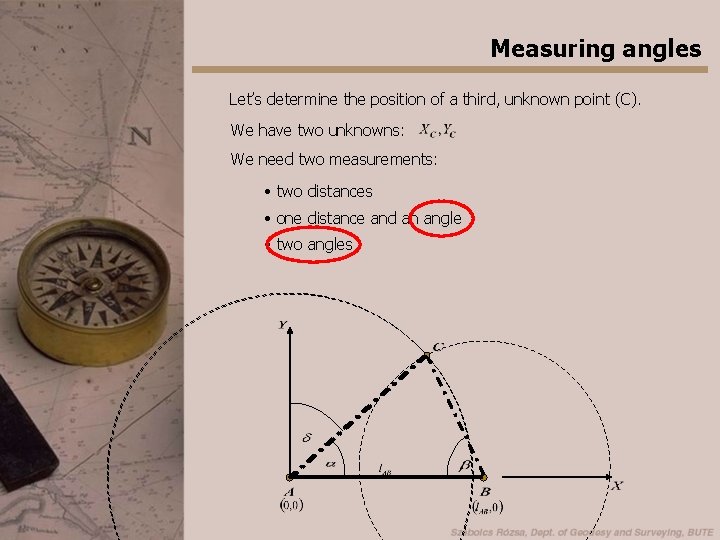
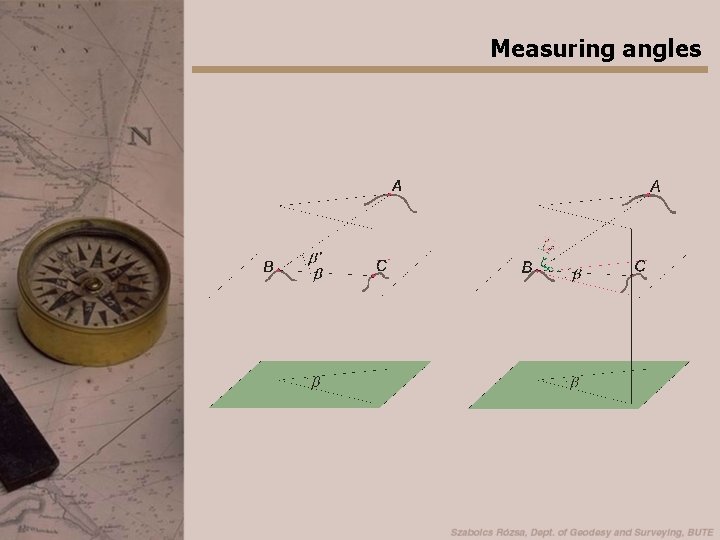
Measuring angles Let’s determine the position of a third, unknown point (C). We have two unknowns: We need two measurements: • two distances • one distance and an angle • two angles
Measuring angles
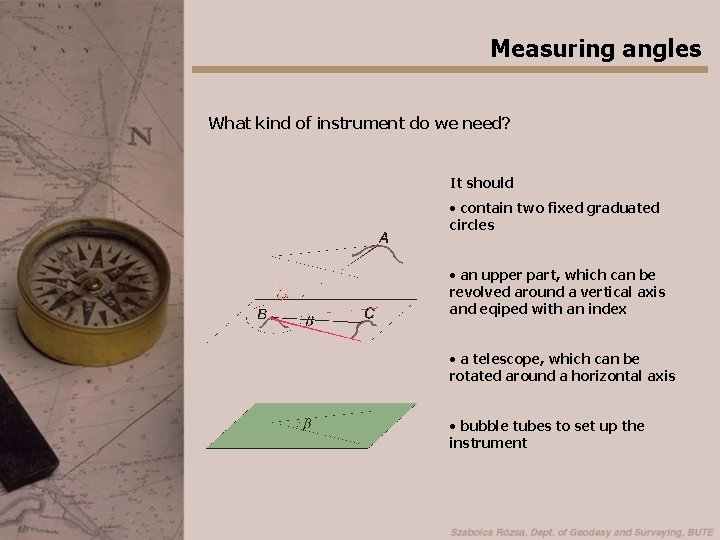
Measuring angles What kind of instrument do we need? It should • contain two fixed graduated circles • an upper part, which can be revolved around a vertical axis and eqiped with an index • a telescope, which can be rotated around a horizontal axis • bubble tubes to set up the instrument
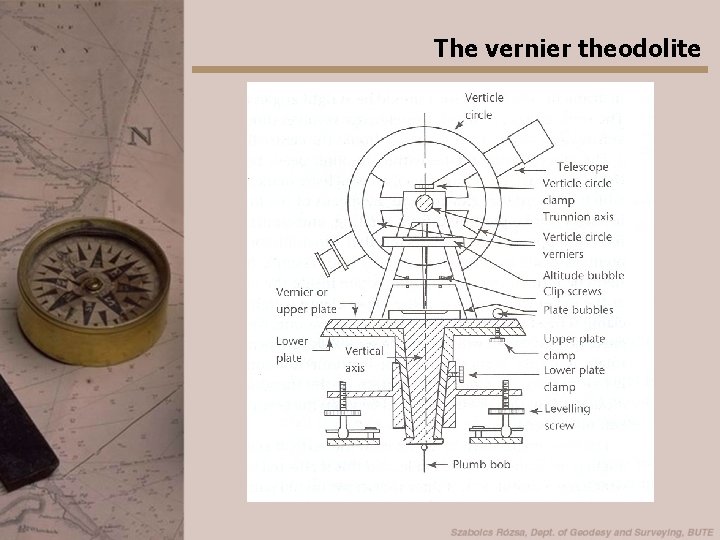
The vernier theodolite
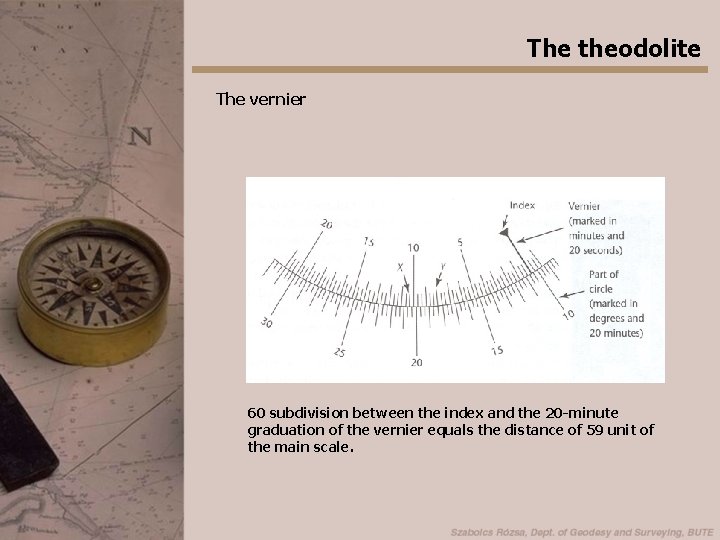
The theodolite The vernier 60 subdivision between the index and the 20 -minute graduation of the vernier equals the distance of 59 unit of the main scale.
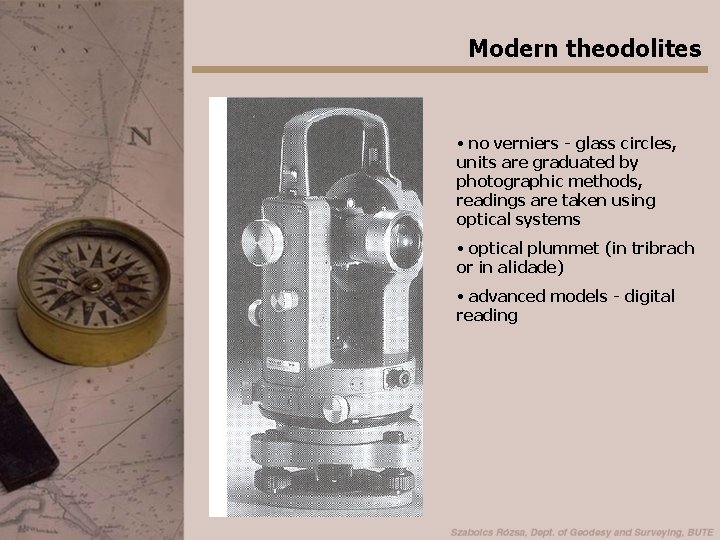
Modern theodolites • no verniers - glass circles, units are graduated by photographic methods, readings are taken using optical systems • optical plummet (in tribrach or in alidade) • advanced models - digital reading
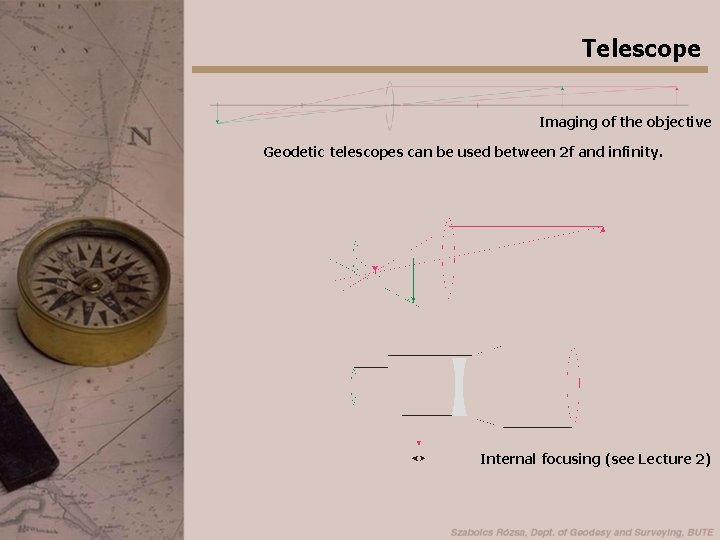
Telescope Imaging of the objective Geodetic telescopes can be used between 2 f and infinity. Internal focusing (see Lecture 2)
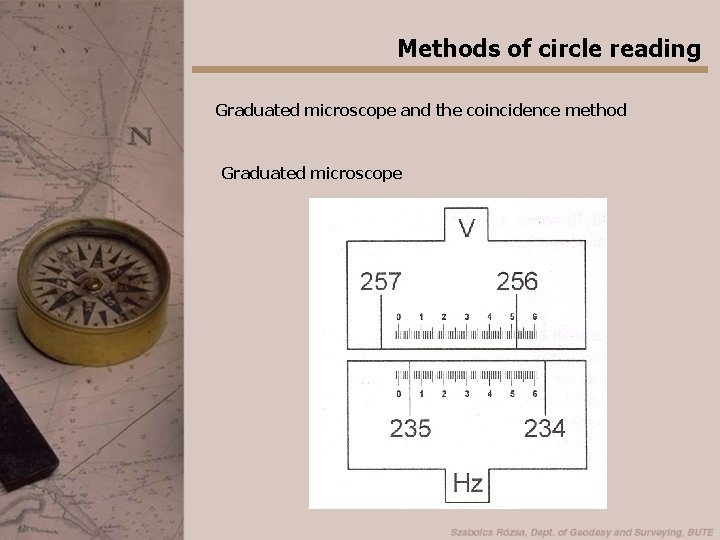
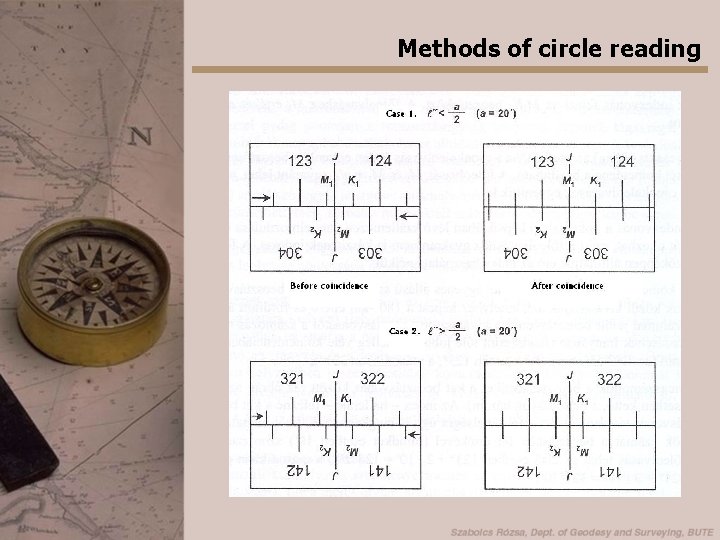
Methods of circle reading Graduated microscope and the coincidence method Graduated microscope
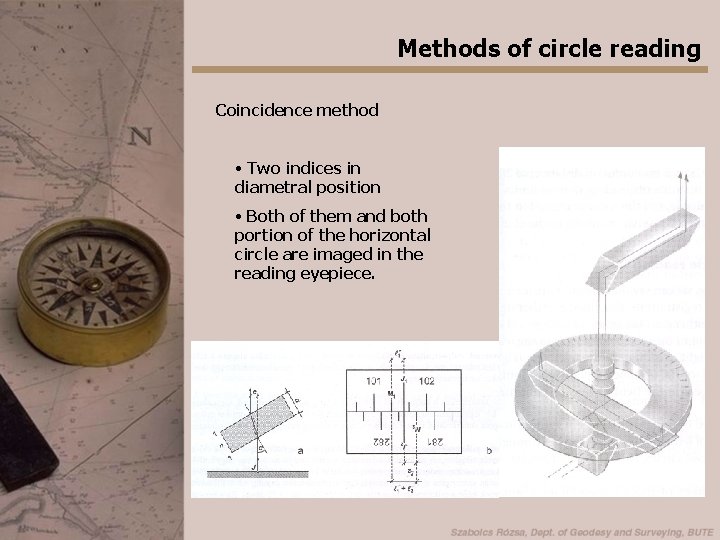
Methods of circle reading Coincidence method • Two indices in diametral position • Both of them and both portion of the horizontal circle are imaged in the reading eyepiece.
Methods of circle reading
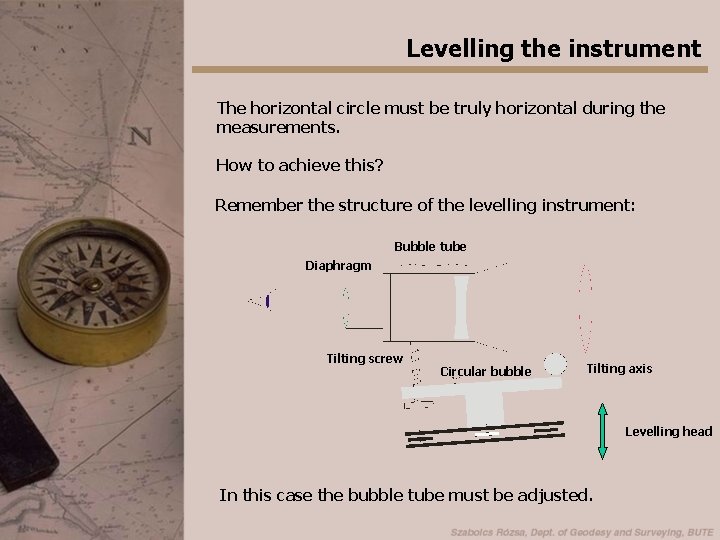
Levelling the instrument The horizontal circle must be truly horizontal during the measurements. How to achieve this? Remember the structure of the levelling instrument: Bubble tube Diaphragm Tilting screw Circular bubble Tilting axis Levelling head In this case the bubble tube must be adjusted.
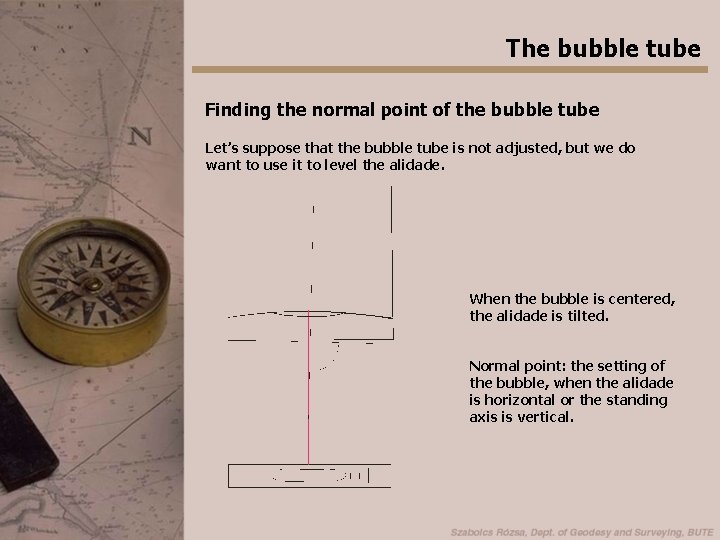
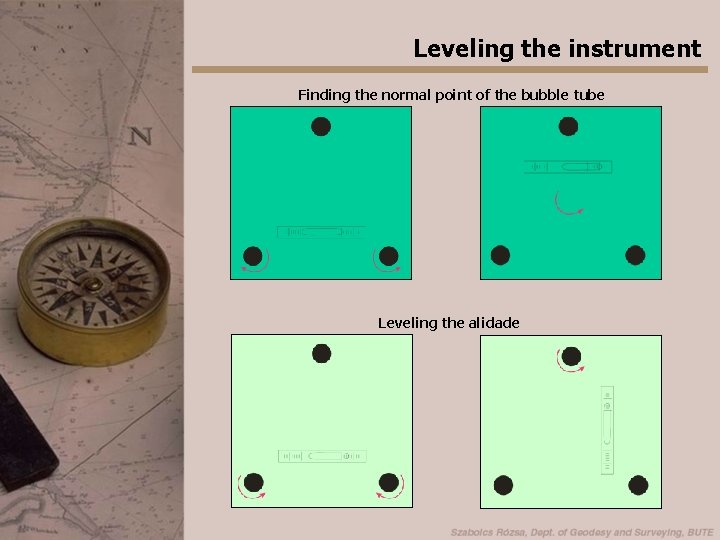
The bubble tube Finding the normal point of the bubble tube Let’s suppose that the bubble tube is not adjusted, but we do want to use it to level the alidade. When the bubble is centered, the alidade is tilted. Normal point: the setting of the bubble, when the alidade is horizontal or the standing axis is vertical.
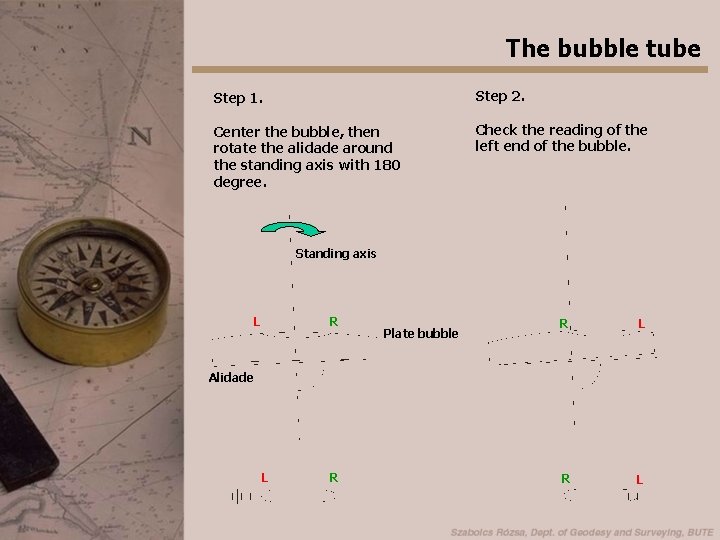
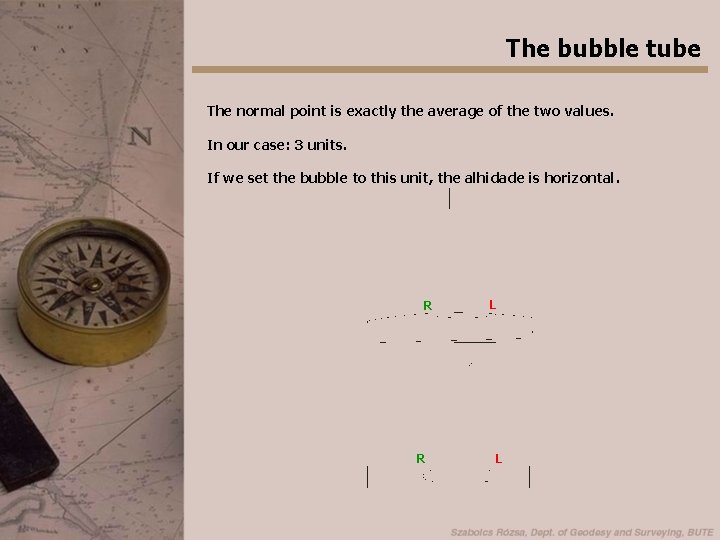
The bubble tube Step 1. Step 2. Center the bubble, then rotate the alidade around the standing axis with 180 degree. Check the reading of the left end of the bubble. Standing axis L R Plate bubble R L Alidade L R
The bubble tube The normal point is exactly the average of the two values. In our case: 3 units. If we set the bubble to this unit, the alhidade is horizontal. R R L L
Leveling the instrument Finding the normal point of the bubble tube Leveling the alidade
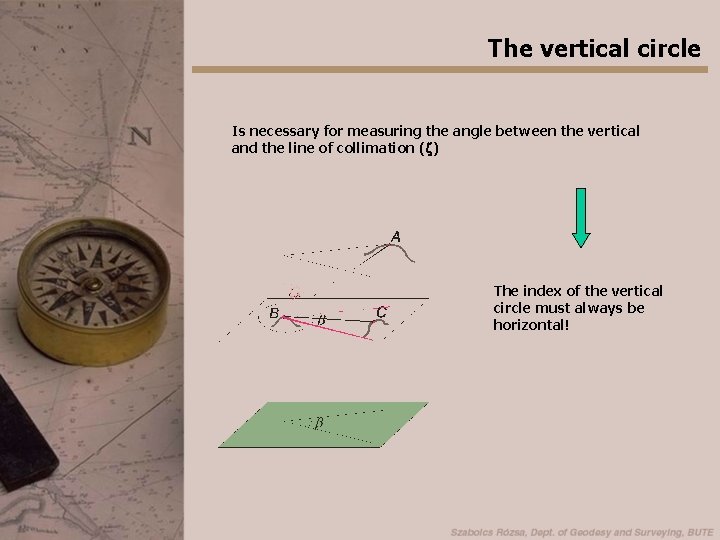
The vertical circle Is necessary for measuring the angle between the vertical and the line of collimation (z) The index of the vertical circle must always be horizontal!
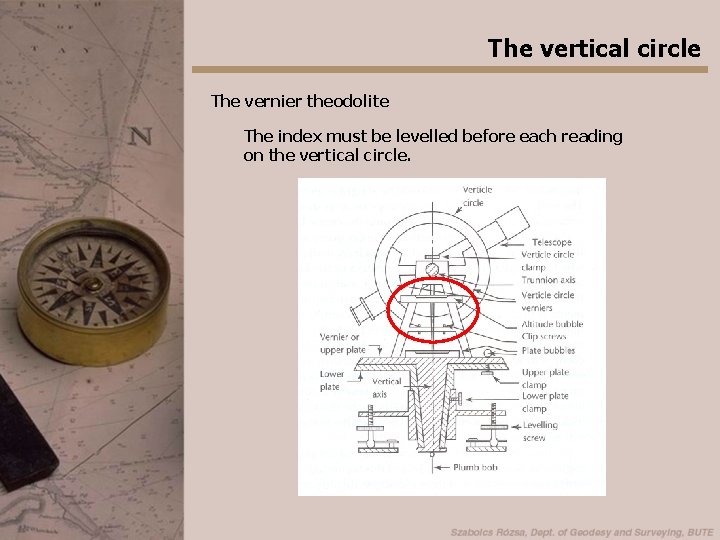
The vertical circle The vernier theodolite The index must be levelled before each reading on the vertical circle.
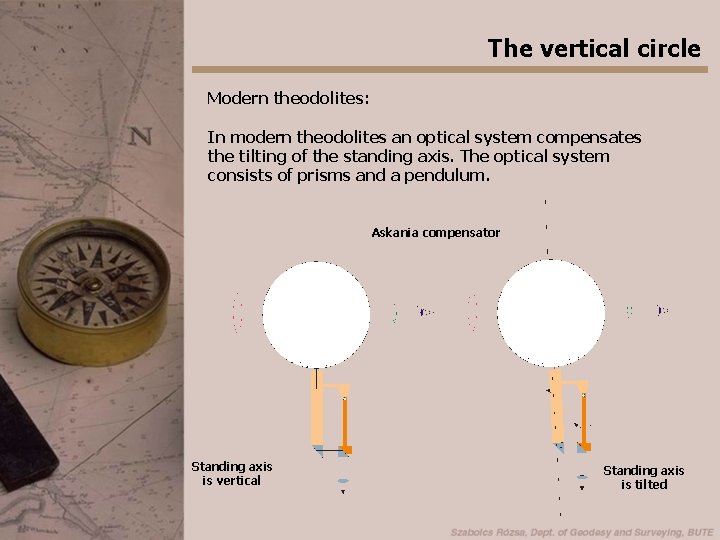
The vertical circle Modern theodolites: In modern theodolites an optical system compensates the tilting of the standing axis. The optical system consists of prisms and a pendulum. Askania compensator Standing axis is vertical Standing axis is tilted
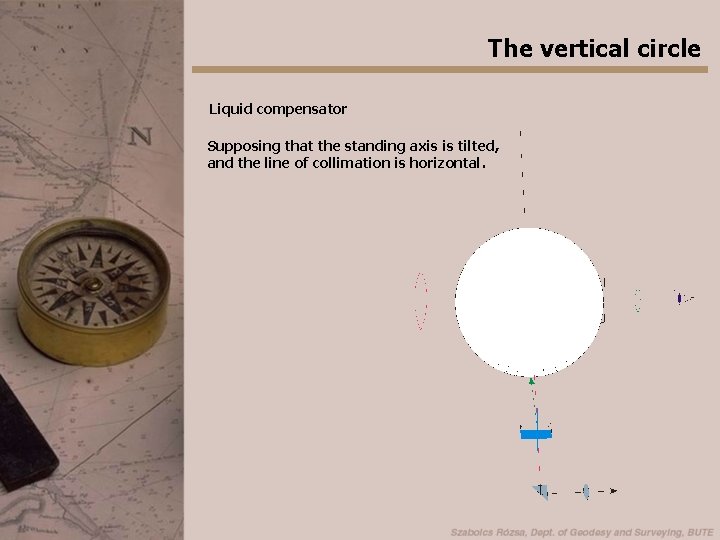
The vertical circle Liquid compensator Supposing that the standing axis is tilted, and the line of collimation is horizontal.
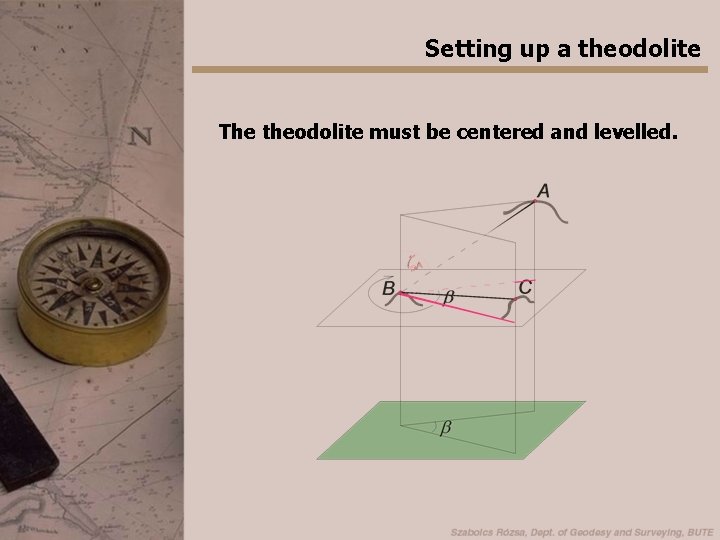
Setting up a theodolite The theodolite must be centered and levelled.
Setting up a theodolite 1. Setting up the tripod (the head of the tripod should be approximately horizontal) above the control point 2. Fix the instrument on the tripod. 3. Sight the control point in the optical plummet using the footscrews of the instrument. 4. Level the instrument by adjusting the length of the legs of the tripod using the circular bubble. 5. Find the normal point of the bubble tube.
Setting up a theodolite 6. Level the instrument accurately using the bubble tube and the three levelling screws. 7. Finally loosen the instrument on the tripod, and slide it above the control point on the head of the tripod. 8. Fix the instrument on the tripod.
Thank You for Your Attention!