
Survey Plot Find the exact area of the



- Slides: 32
Survey Plot
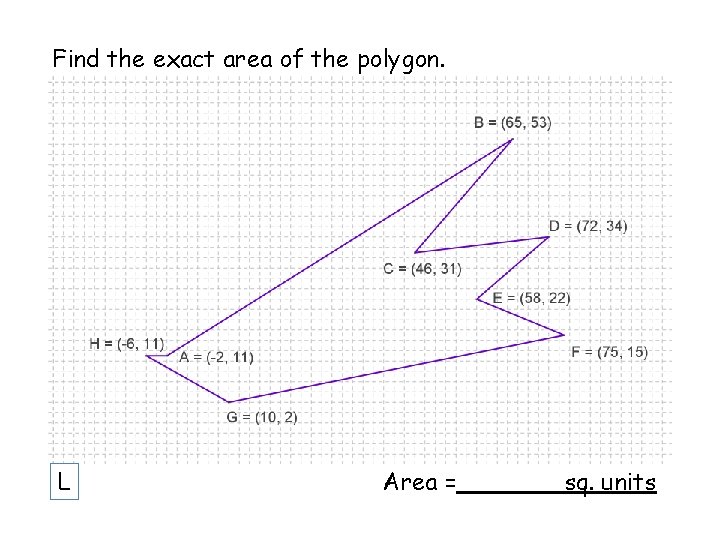
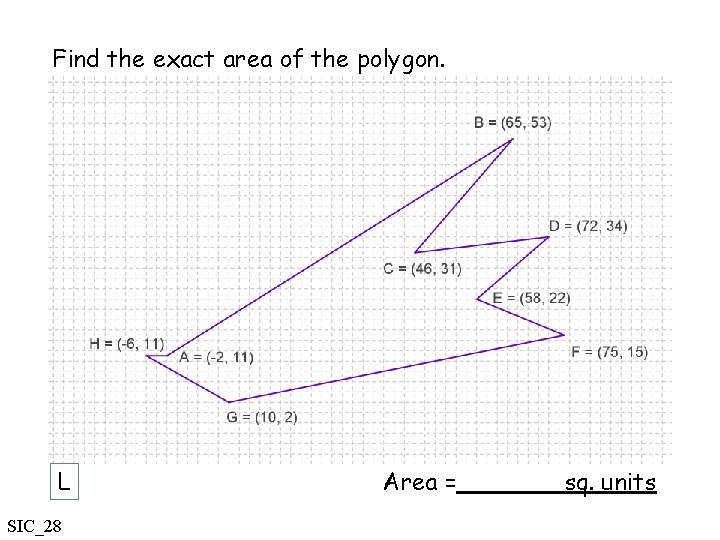
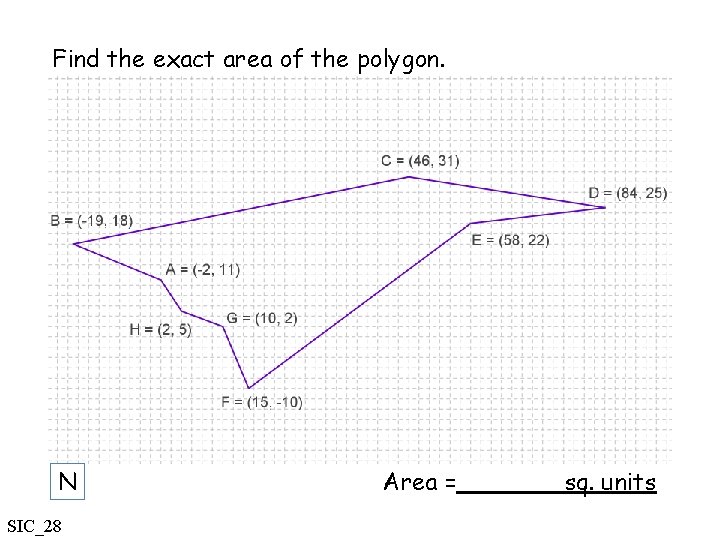
Find the exact area of the polygon. L Area = sq. units
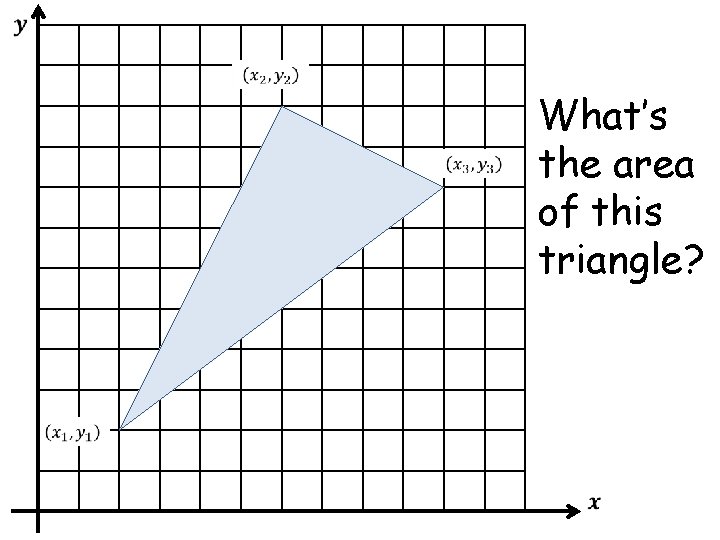
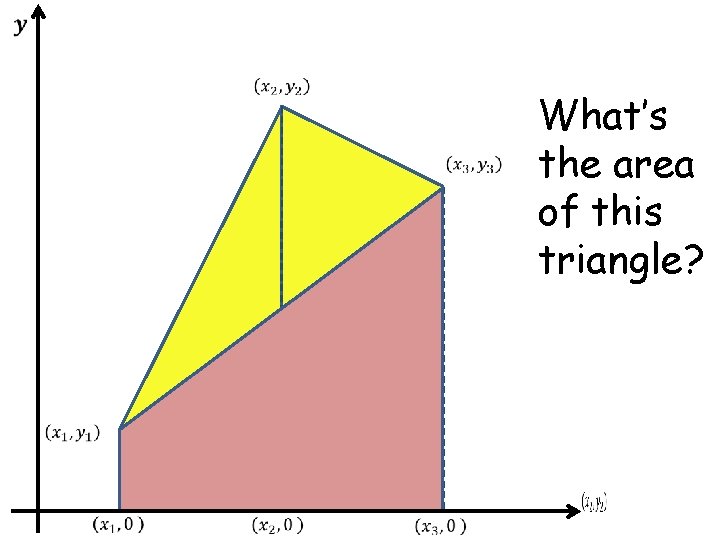
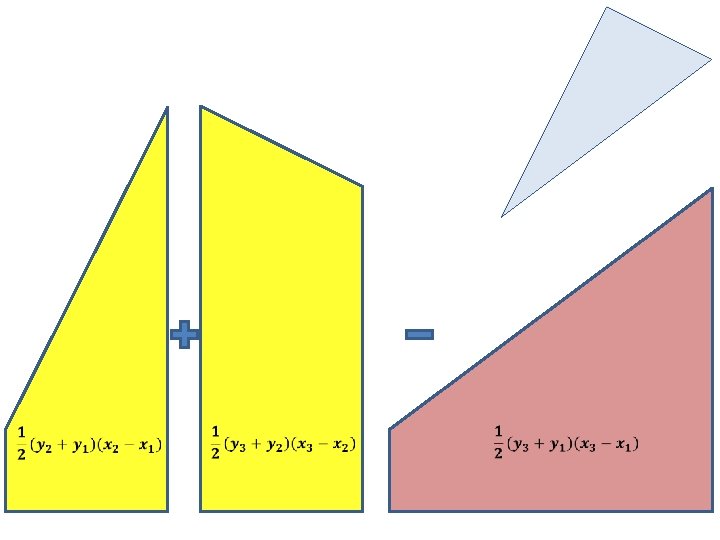
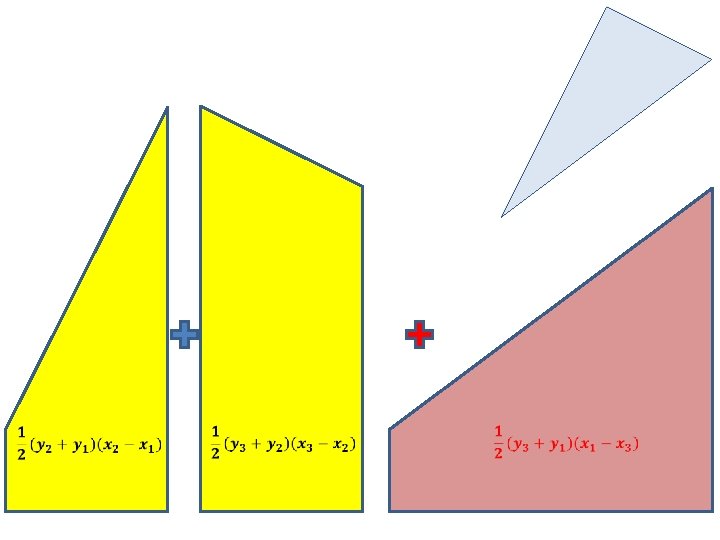
What’s the area of this triangle?
What’s the area of this triangle?
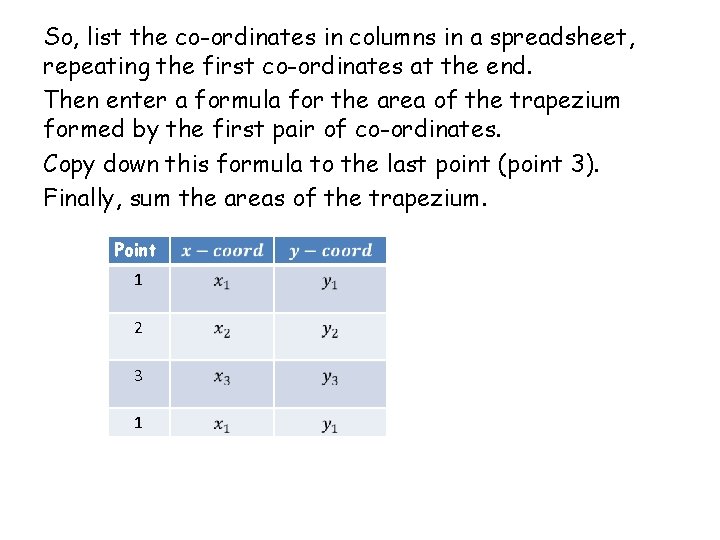
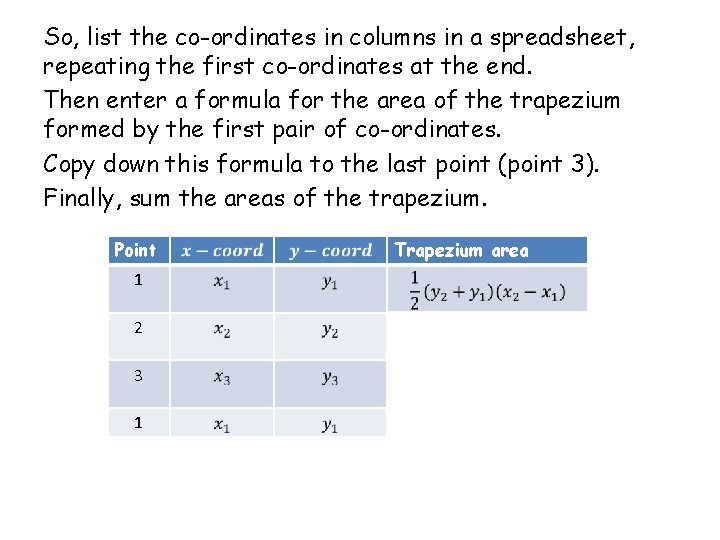
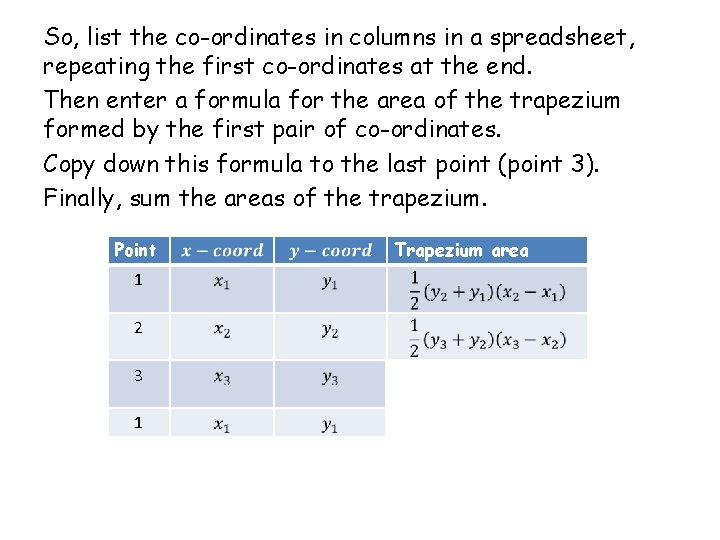
So, list the co-ordinates in columns in a spreadsheet, repeating the first co-ordinates at the end. Then enter a formula for the area of the trapezium formed by the first pair of co-ordinates. Copy down this formula to the last point (point 3). Finally, sum the areas of the trapezium. Point Trapezium area 1 2 3 1 Total
So, list the co-ordinates in columns in a spreadsheet, repeating the first co-ordinates at the end. Then enter a formula for the area of the trapezium formed by the first pair of co-ordinates. Copy down this formula to the last point (point 3). Finally, sum the areas of the trapezium. Point Trapezium area 1 2 3 1 Total
So, list the co-ordinates in columns in a spreadsheet, repeating the first co-ordinates at the end. Then enter a formula for the area of the trapezium formed by the first pair of co-ordinates. Copy down this formula to the last point (point 3). Finally, sum the areas of the trapezium. Point Trapezium area 1 2 3 1 Total
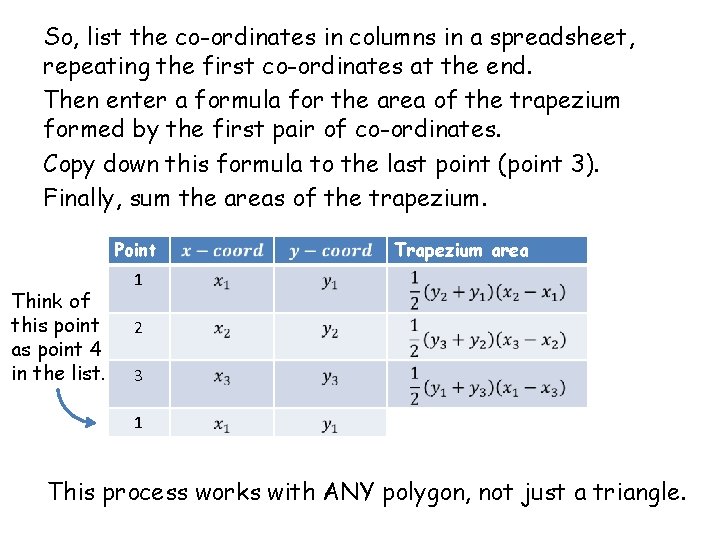
So, list the co-ordinates in columns in a spreadsheet, repeating the first co-ordinates at the end. Then enter a formula for the area of the trapezium formed by the first pair of co-ordinates. Copy down this formula to the last point (point 3). Finally, sum the areas of the trapezium. Point Think of this point as point 4 in the list. Trapezium area 1 2 3 1 Total This process works with ANY polygon, not just a triangle.
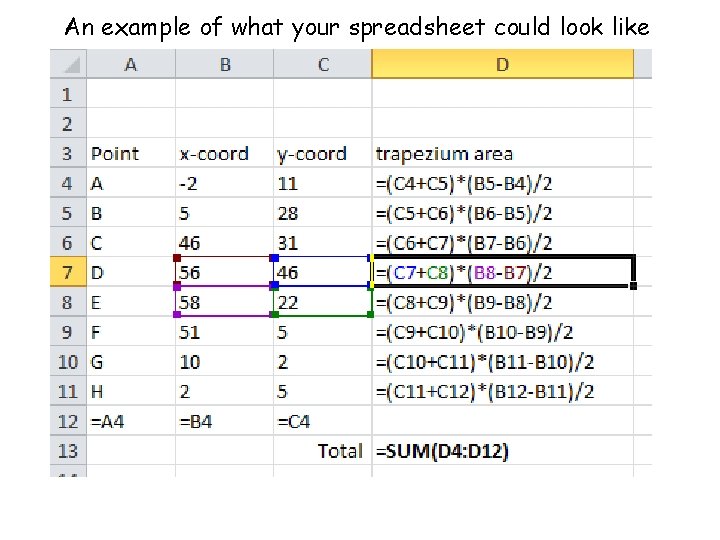
An example of what your spreadsheet could look like
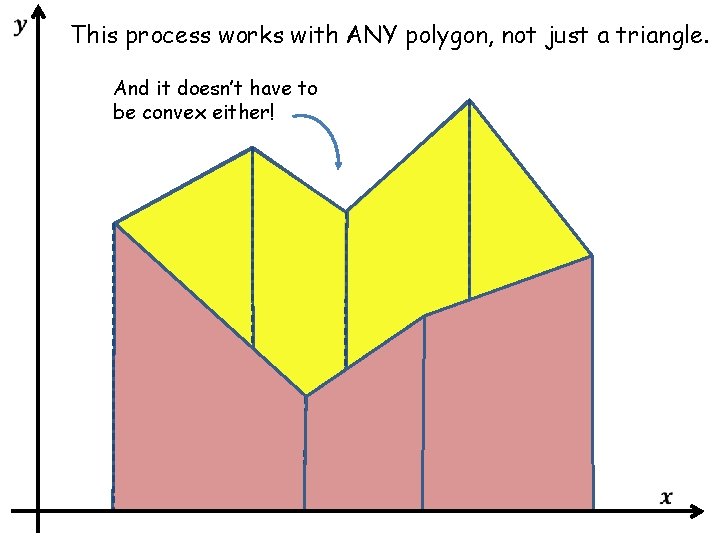
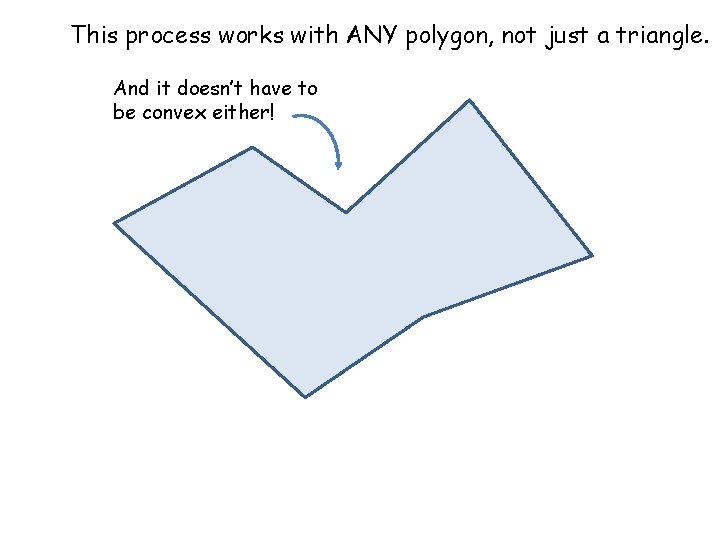
This process works with ANY polygon, not just a triangle. And it doesn’t have to be convex either!
This process works with ANY polygon, not just a triangle. And it doesn’t have to be convex either!
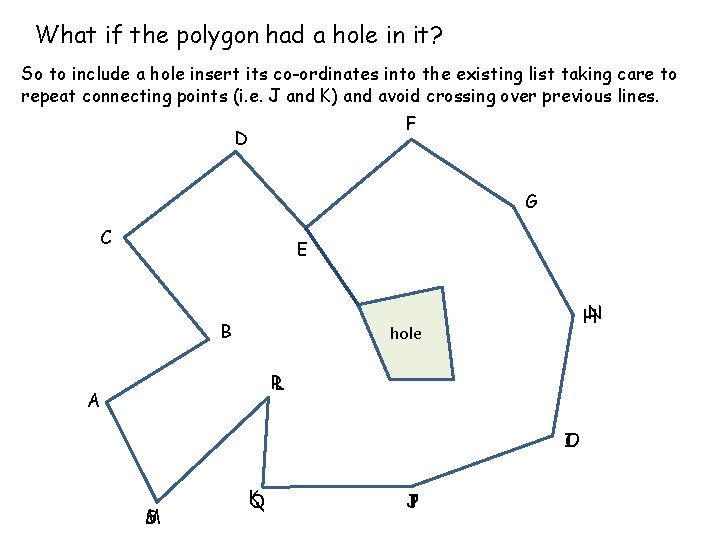
What if the polygon had a hole in it? So to include a hole insert its co-ordinates into the existing list taking care to repeat connecting points (i. e. J and K) and avoid crossing over previous lines. F D G C E B HN hole RL A IO M S K Q J P
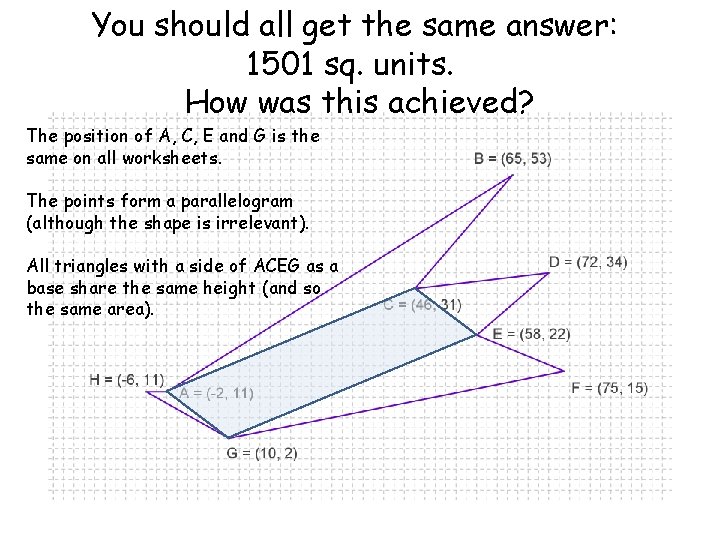
You should all get the same answer: 1501 sq. units. How was this achieved? The position of A, C, E and G is the same on all worksheets. The points form a parallelogram (although the shape is irrelevant). All triangles with a side of ACEG as a base share the same height (and so the same area).
Note to Teacher • It is useful to get the pupils to insert a chart of their survey plot. – Just highlight the coordinates – Insert scatter chart (with points joined by straight lines) – They should now see a representation of their worksheeet.
RESOURCES
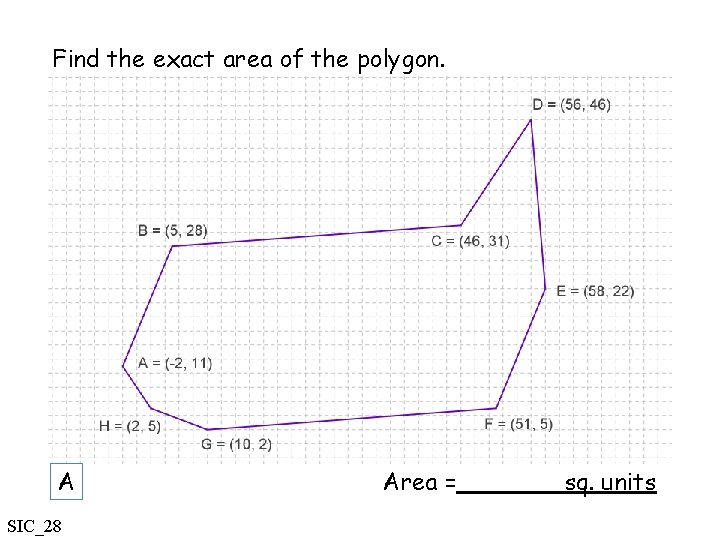
Find the exact area of the polygon. A SIC_28 Area = sq. units
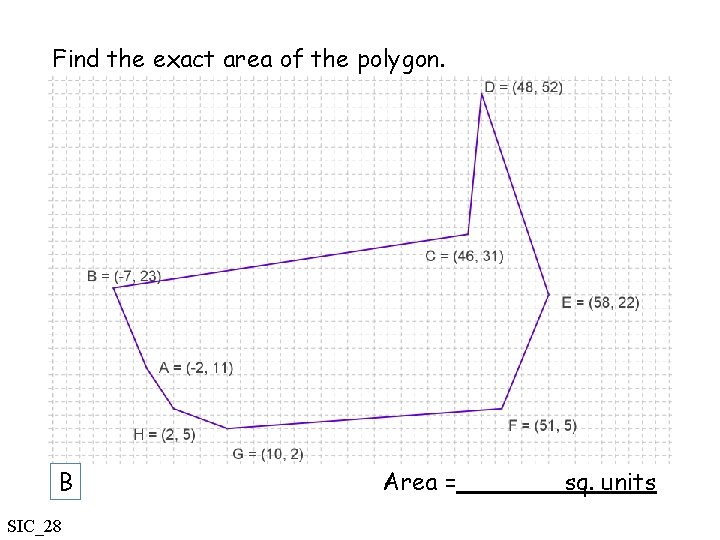
Find the exact area of the polygon. B SIC_28 Area = sq. units
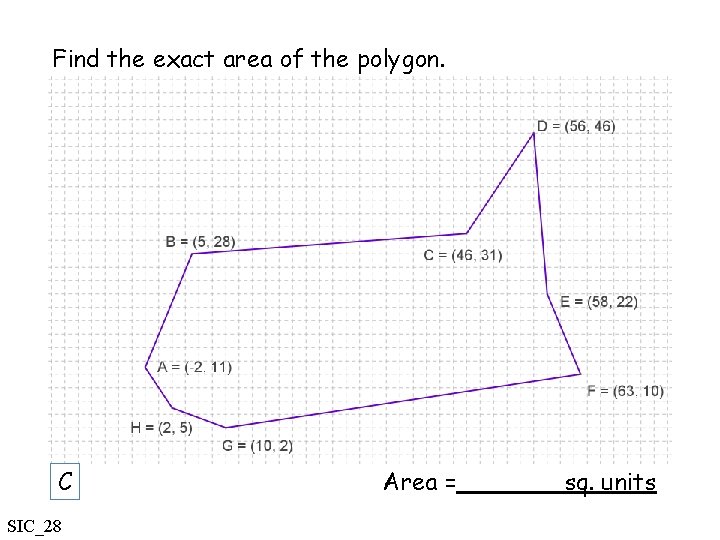
Find the exact area of the polygon. C SIC_28 Area = sq. units
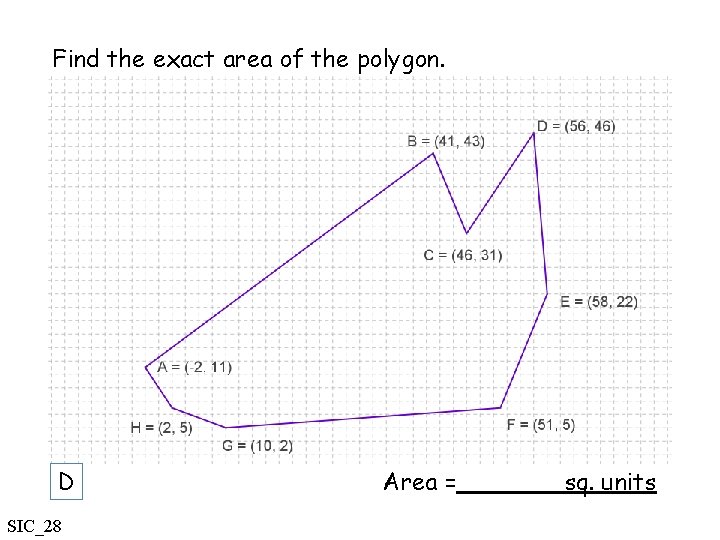
Find the exact area of the polygon. D SIC_28 Area = sq. units
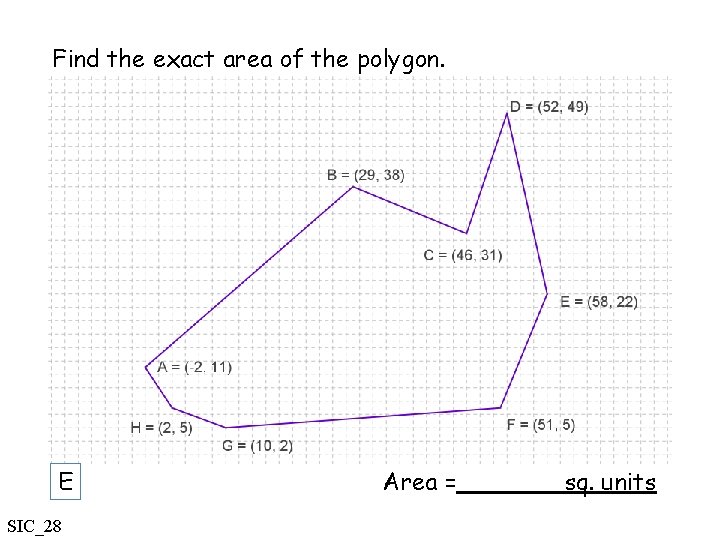
Find the exact area of the polygon. E SIC_28 Area = sq. units
Find the exact area of the polygon. F SIC_28 Area = sq. units
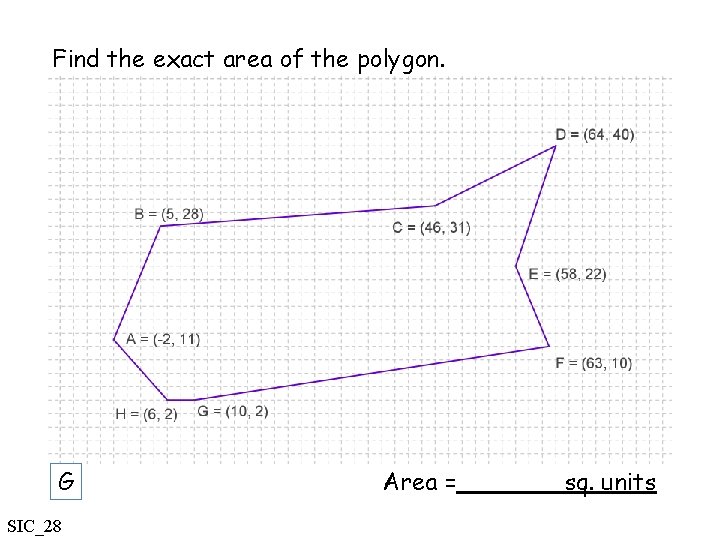
Find the exact area of the polygon. G SIC_28 Area = sq. units
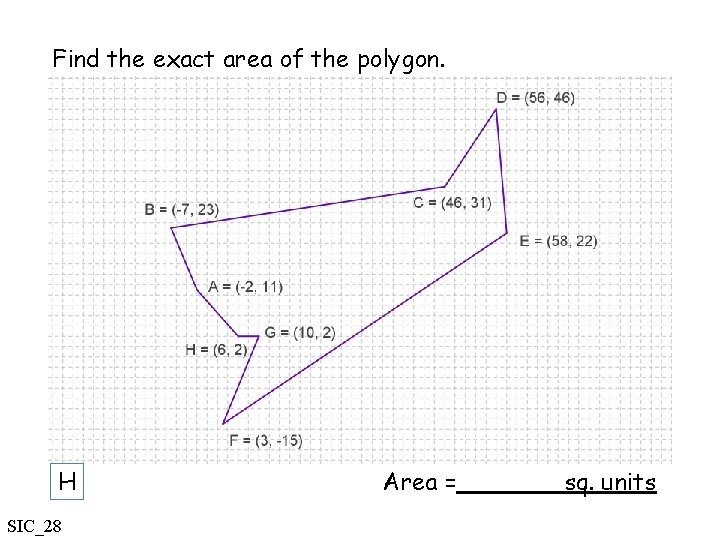
Find the exact area of the polygon. H SIC_28 Area = sq. units
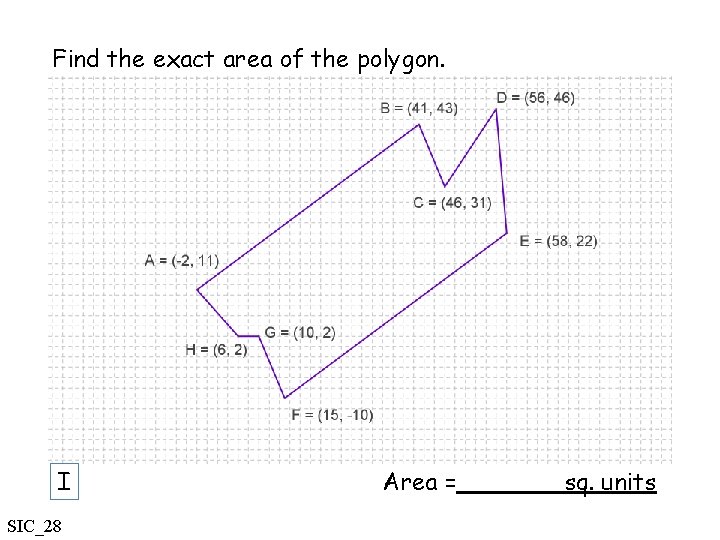
Find the exact area of the polygon. I SIC_28 Area = sq. units
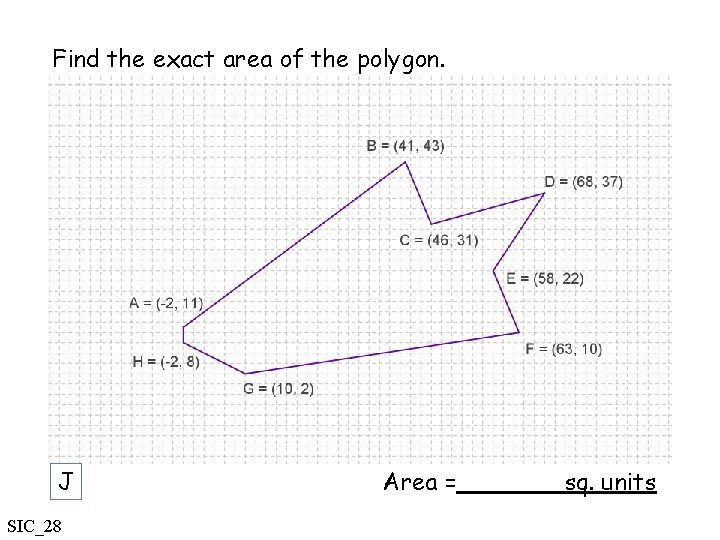
Find the exact area of the polygon. J SIC_28 Area = sq. units
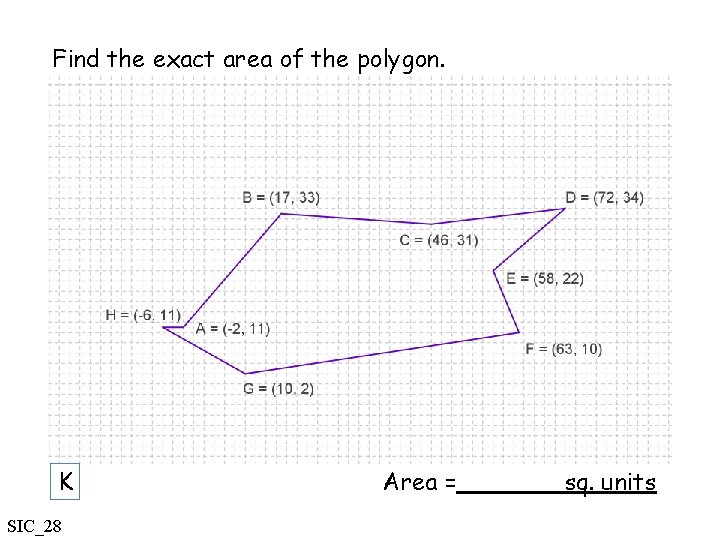
Find the exact area of the polygon. K SIC_28 Area = sq. units
Find the exact area of the polygon. L SIC_28 Area = sq. units
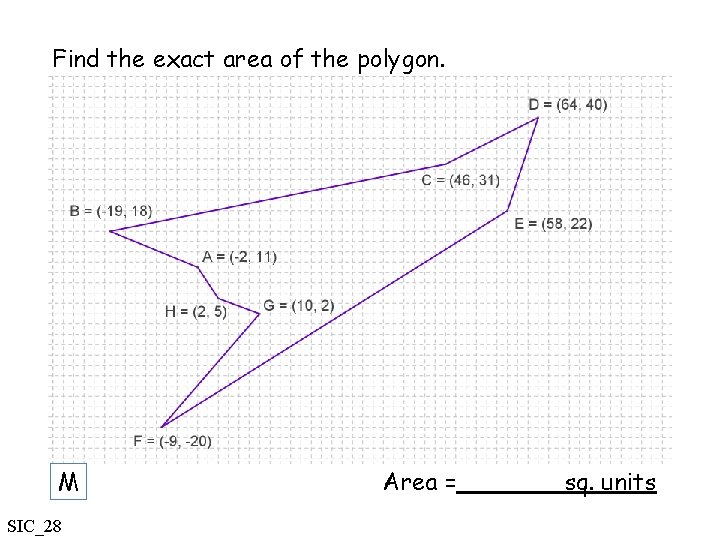
Find the exact area of the polygon. M SIC_28 Area = sq. units
Find the exact area of the polygon. N SIC_28 Area = sq. units