
Survey of available testing methods for low dose
Survey of available testing methods for low dose toxicity, including new in-vivo and in vitro methods John R. Bucher, Ph. D. , DABT National Institute of Environmental Health Sciences (NIEHS) National Institutes of Health U California, Berkeley November 4, 2016
outline • National Toxicology Program (NTP) • Traditional toxicity assays • Response to data poor toxicology emergency • The low dose conundrum- BPA • BPA alternatives- an approach 2
The US National Toxicology Program • Interagency program – Established in 1978 – Headquartered at NIEHS • Research on “nominations” – Thousands of agents evaluated in comprehensive toxicology studies – Results communicated through technical reports, scientific publications, and the web • Analysis activities US Department of Health and Human Services (DHHS) NIH CDC FDA NIEHS NIOSH NCTR – Report on Carcinogens – Office of Health Assessment & Translation – NTP Interagency Center for the Evaluation of Alternative Toxicological Methods http: //ntp. niehs. nih. gov 3
Diverse data for public health decisions • Epidemiology • Traditional animal and genetic toxicology studies • Structure Activity Relationships (SAR) • Tox 21 high throughput screening • Alternative models (zebrafish, C. elegans) • Toxicogenomics • Read across • Systematic review methods to evaluate and integrate findings 4
Standard NTP toxicology assays • Prechronic (14 and 90 -day toxicology screens) rats, mice, both sexes • Two-year rodent cancer studies • Genetic toxicology (Salmonella mutation assay, blood and bone marrow micronucleus, pig-A assay, comet assay) • Reproductive assessment by continuous breeding in rats • Modified one-generation reproductive study • Developmental assessments (follows FDA segment 2 guidelines) • Immunotoxicity in mice (immune cell counts, functional responses, in vivo challenge assays, hypersensitivity assays) • Absorption, Distribution, Metabolism, Excretion studies • Toxicokinetic studies • Toxicogenomic studies 5
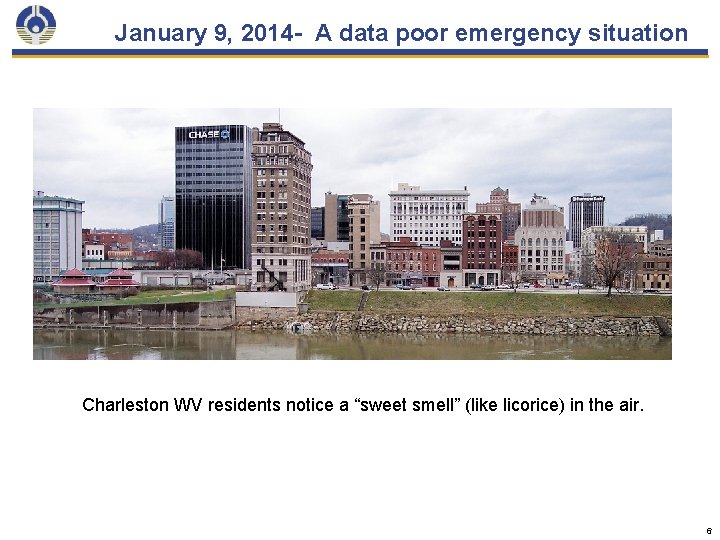
January 9, 2014 - A data poor emergency situation Charleston WV residents notice a “sweet smell” (like licorice) in the air. 6
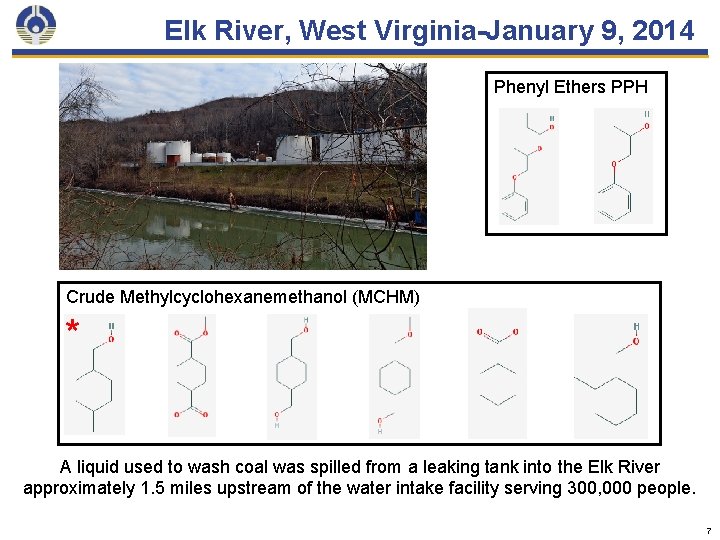
Elk River, West Virginia-January 9, 2014 Phenyl Ethers PPH Crude Methylcyclohexanemethanol (MCHM) * A liquid used to wash coal was spilled from a leaking tank into the Elk River approximately 1. 5 miles upstream of the water intake facility serving 300, 000 people. 7
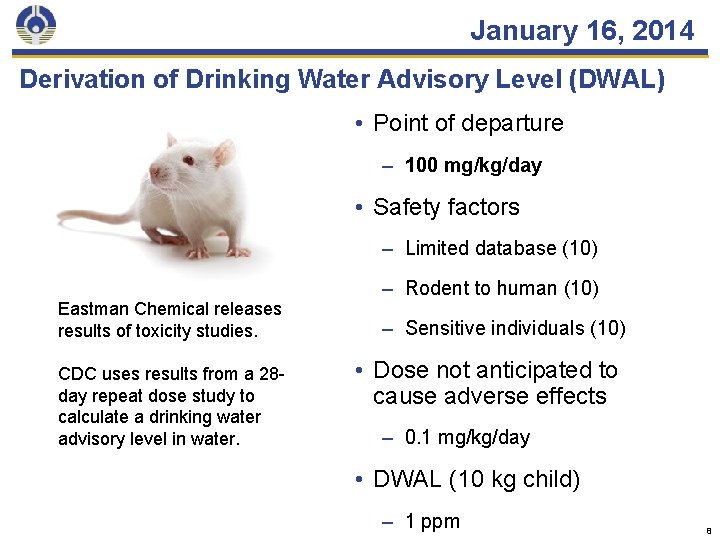
January 16, 2014 Derivation of Drinking Water Advisory Level (DWAL) • Point of departure – 100 mg/kg/day • Safety factors – Limited database (10) Eastman Chemical releases results of toxicity studies. CDC uses results from a 28 day repeat dose study to calculate a drinking water advisory level in water. – Rodent to human (10) – Sensitive individuals (10) • Dose not anticipated to cause adverse effects – 0. 1 mg/kg/day • DWAL (10 kg child) – 1 ppm 8
Elk River chemical toxicology data Uncertainties • Few toxicology studies to support the MCHM DWAL • No studies of MCHM in developing animals • Very limited data on the minor components of the spill 9
Types of studies selected Rapid predictive screens • Structure Activity Relationships – commercial databases of known toxicology information for chemicals of similar structure • High throughput screens (Tox 21) – human cells for gene expression changes in pathways of toxicological concern • C. elegans (roundworm) toxicity – expose nematodes for effects on reproduction, growth, and behavior • Zebrafish embryo toxicity – expose embryos to monitor effects on structural and functional development • Genetic toxicity – Ames test 10
Types of studies selected Studies using rodents • 5 -Day toxicogenomic study – chemicals given to rats for 5 days, liver and kidney assayed for evidence of changes in the expression of genes known to be associated with responses to toxic chemicals • Mouse dermal irritation and hypersensitivity studies – apply to mouse skin to assess potential to cause irritation and allergic responses • Rat prenatal toxicity studies –determine effects on offspring of pregnant rats 11
5 -Day toxicogenomics Description • Chemical orally administered to rats for 5 days- (0. 1 to 500 mg/kg; 6 dose levels) • Global gene expression measured (liver, kidney) • Determine the most sensitive Molecular Biological Process (group of genes that function together to control a cellular process) • Run Bench Mark Dose software • Identify a biological “no effect level”, which typically occurs at a dose within a factor of 10 below that required for overt toxicity 12
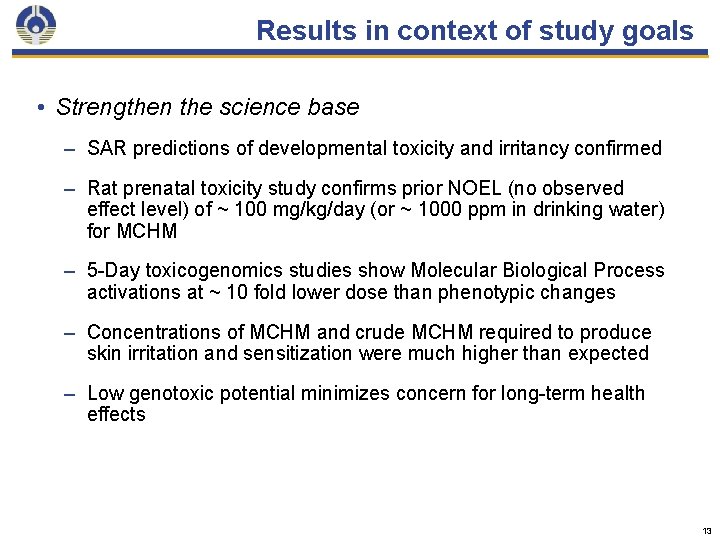
Results in context of study goals • Strengthen the science base – SAR predictions of developmental toxicity and irritancy confirmed – Rat prenatal toxicity study confirms prior NOEL (no observed effect level) of ~ 100 mg/kg/day (or ~ 1000 ppm in drinking water) for MCHM – 5 -Day toxicogenomics studies show Molecular Biological Process activations at ~ 10 fold lower dose than phenotypic changes – Concentrations of MCHM and crude MCHM required to produce skin irritation and sensitization were much higher than expected – Low genotoxic potential minimizes concern for long-term health effects 13
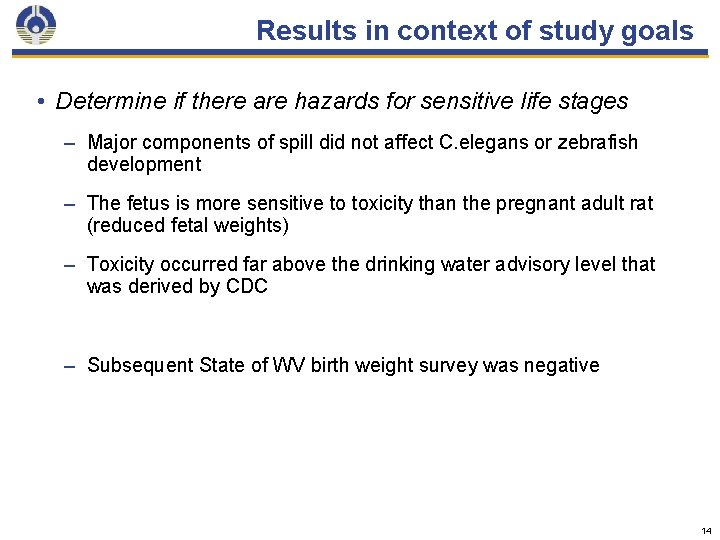
Results in context of study goals • Determine if there are hazards for sensitive life stages – Major components of spill did not affect C. elegans or zebrafish development – The fetus is more sensitive to toxicity than the pregnant adult rat (reduced fetal weights) – Toxicity occurred far above the drinking water advisory level that was derived by CDC – Subsequent State of WV birth weight survey was negative 14
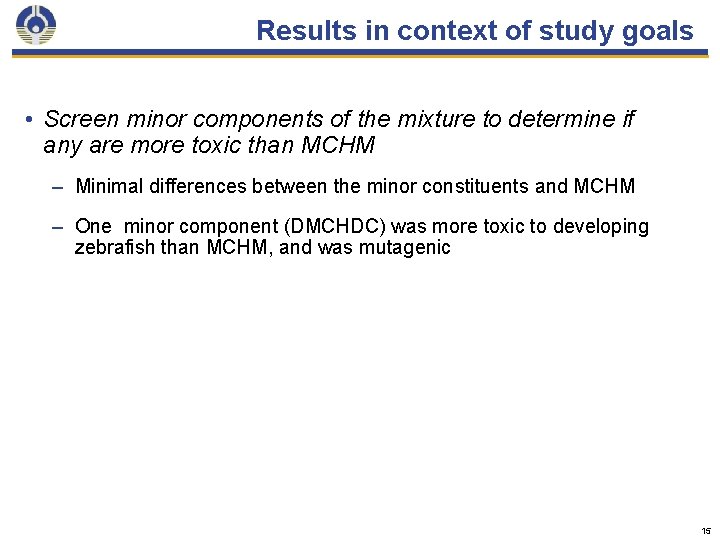
Results in context of study goals • Screen minor components of the mixture to determine if any are more toxic than MCHM – Minimal differences between the minor constituents and MCHM – One minor component (DMCHDC) was more toxic to developing zebrafish than MCHM, and was mutagenic 15
The collected findings supported the adequacy of the drinking water advisory level established at the time of the spill
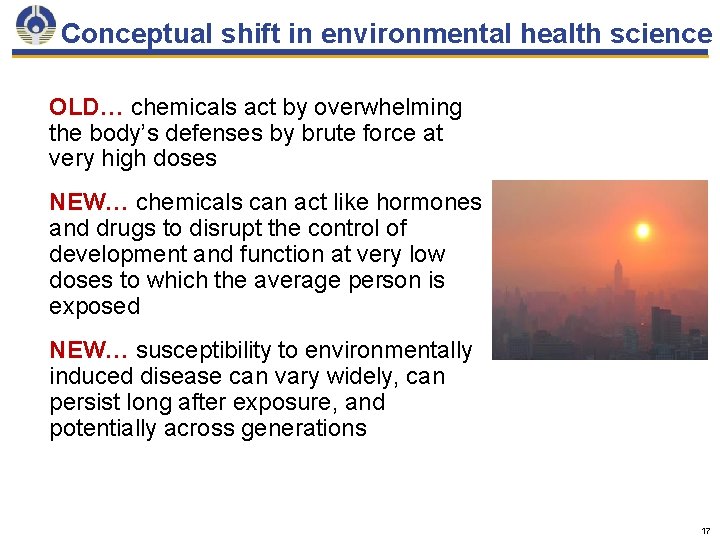
Conceptual shift in environmental health science OLD… chemicals act by overwhelming the body’s defenses by brute force at very high doses NEW… chemicals can act like hormones and drugs to disrupt the control of development and function at very low doses to which the average person is exposed NEW… susceptibility to environmentally induced disease can vary widely, can persist long after exposure, and potentially across generations 17
NTP Bisphenol A studies • Comprehensive GLP perinatal, 2 -year, 7 days per week, 5 -dose level gavage study in SD rats • 2. 5 to 25, 000 μg/kg bw/day • Control for litter effects, BPA in caging, water, feed, etc. • Concurrent “positive” control • Core protocol for interim (1 year) and 2 -year animals – Vaginal cytology starting at 4 months to evaluate onset of aberrant cycles – Clinical chemistry, sperm analysis, organ weights, and target organ histopathology on interim sacrifice animals – At 2 years, complete necropsy with selected target organ histopathology • Subset of animals for behavior testing • All other animals for NIEHS-funded grantee studies; tissues from the same animals shared when feasible 18
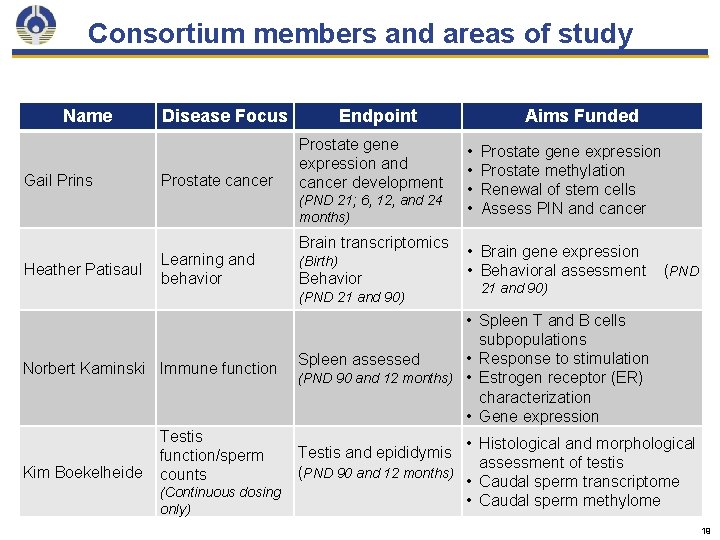
Consortium members and areas of study Name Gail Prins Disease Focus Prostate cancer Endpoint Prostate gene expression and cancer development (PND 21; 6, 12, and 24 months) Heather Patisaul Learning and behavior Brain transcriptomics (Birth) Behavior (PND 21 and 90) Norbert Kaminski Immune function Kim Boekelheide Testis function/sperm counts (Continuous dosing only) Aims Funded • • Prostate gene expression Prostate methylation Renewal of stem cells Assess PIN and cancer • Brain gene expression • Behavioral assessment (PND 21 and 90) • Spleen T and B cells subpopulations • Response to stimulation Spleen assessed (PND 90 and 12 months) • Estrogen receptor (ER) characterization • Gene expression Testis and epididymis (PND 90 and 12 months) • Histological and morphological assessment of testis • Caudal sperm transcriptome • Caudal sperm methylome 19
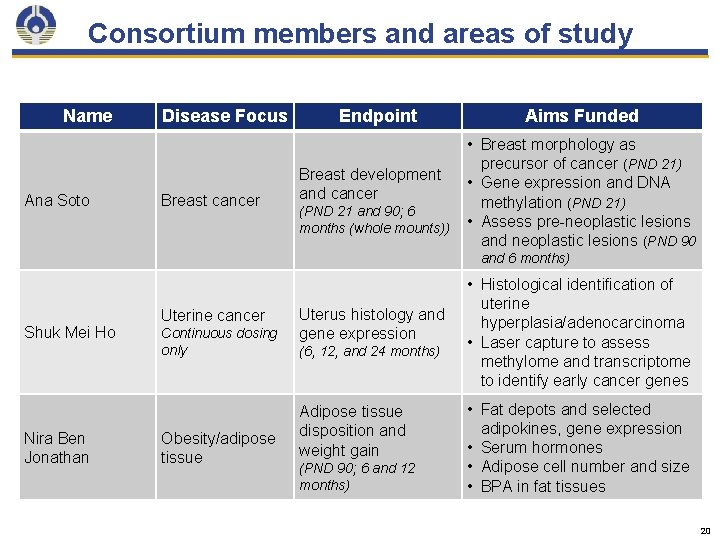
Consortium members and areas of study Name Ana Soto Disease Focus Breast cancer Endpoint Breast development and cancer (PND 21 and 90; 6 months (whole mounts)) Aims Funded • Breast morphology as precursor of cancer (PND 21) • Gene expression and DNA methylation (PND 21) • Assess pre-neoplastic lesions and neoplastic lesions (PND 90 and 6 months) Shuk Mei Ho Nira Ben Jonathan Uterine cancer Continuous dosing only Obesity/adipose tissue Uterus histology and gene expression (6, 12, and 24 months) Adipose tissue disposition and weight gain (PND 90; 6 and 12 months) • Histological identification of uterine hyperplasia/adenocarcinoma • Laser capture to assess methylome and transcriptome to identify early cancer genes • Fat depots and selected adipokines, gene expression • Serum hormones • Adipose cell number and size • BPA in fat tissues 20
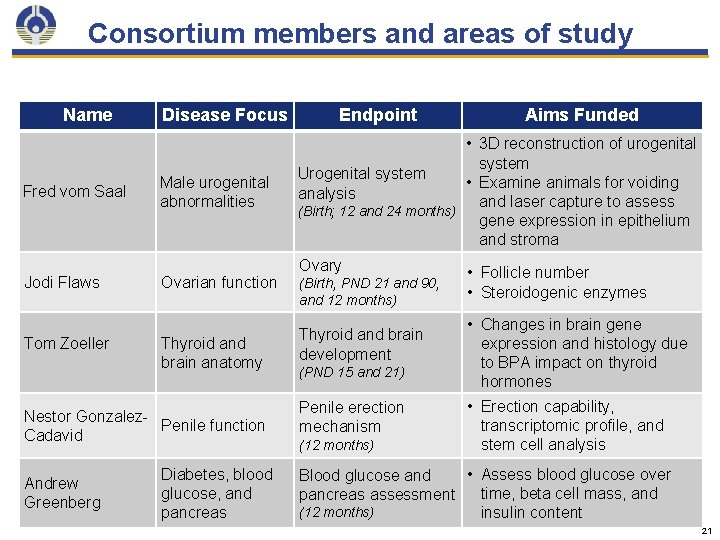
Consortium members and areas of study Name Fred vom Saal Jodi Flaws Tom Zoeller Disease Focus Male urogenital abnormalities Ovarian function Thyroid and brain anatomy Nestor Gonzalez. Penile function Cadavid Andrew Greenberg Diabetes, blood glucose, and pancreas Endpoint Aims Funded • 3 D reconstruction of urogenital system Urogenital system • Examine animals for voiding analysis and laser capture to assess (Birth; 12 and 24 months) gene expression in epithelium and stroma Ovary (Birth, PND 21 and 90, and 12 months) Thyroid and brain development (PND 15 and 21) Penile erection mechanism (12 months) • Follicle number • Steroidogenic enzymes • Changes in brain gene expression and histology due to BPA impact on thyroid hormones • Erection capability, transcriptomic profile, and stem cell analysis • Assess blood glucose over Blood glucose and time, beta cell mass, and pancreas assessment (12 months) insulin content 21

What is the biological activity of BPA analogues of emerging public health concern? 22
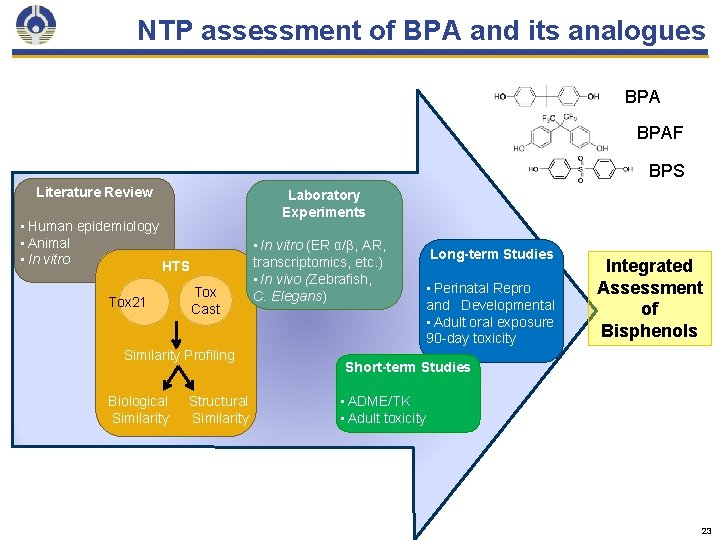
NTP assessment of BPA and its analogues BPAF BPS Literature Review Laboratory Experiments • Human epidemiology • Animal • In vitro HTS Tox 21 Tox Cast Similarity Profiling Biological Similarity Structural Similarity • In vitro (ER α/β, AR, transcriptomics, etc. ) • In vivo (Zebrafish, C. Elegans) Long-term Studies • Perinatal Repro and Developmental • Adult oral exposure 90 -day toxicity Integrated Assessment of Bisphenols Short-term Studies • ADME/TK • Adult toxicity 23
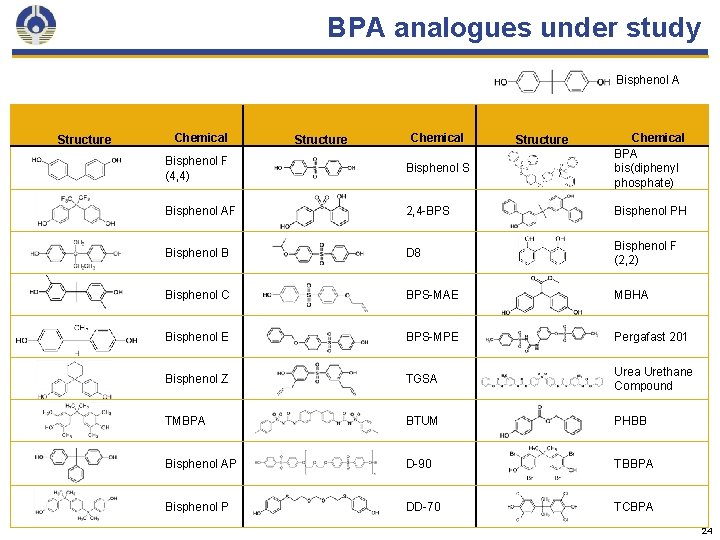
BPA analogues under study Bisphenol A Structure Chemical BPA bis(diphenyl phosphate) Bisphenol F (4, 4) Bisphenol S Bisphenol AF 2, 4 -BPS Bisphenol PH Bisphenol B D 8 Bisphenol F (2, 2) Bisphenol C BPS-MAE MBHA Bisphenol E BPS-MPE Pergafast 201 Bisphenol Z TGSA Urea Urethane Compound TMBPA BTUM PHBB Bisphenol AP D-90 TBBPA Bisphenol P DD-70 TCBPA 24
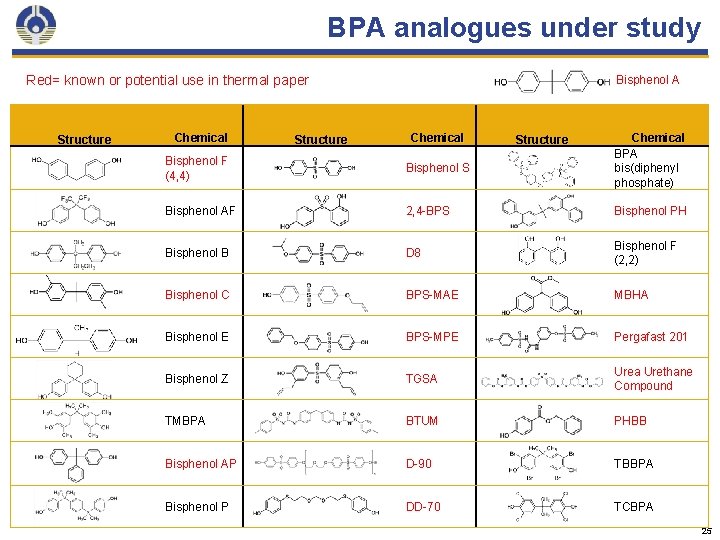
BPA analogues under study Red= known or potential use in thermal paper Structure Chemical Structure Bisphenol A Chemical Structure Chemical BPA bis(diphenyl phosphate) Bisphenol F (4, 4) Bisphenol S Bisphenol AF 2, 4 -BPS Bisphenol PH Bisphenol B D 8 Bisphenol F (2, 2) Bisphenol C BPS-MAE MBHA Bisphenol E BPS-MPE Pergafast 201 Bisphenol Z TGSA Urea Urethane Compound TMBPA BTUM PHBB Bisphenol AP D-90 TBBPA Bisphenol P DD-70 TCBPA 25
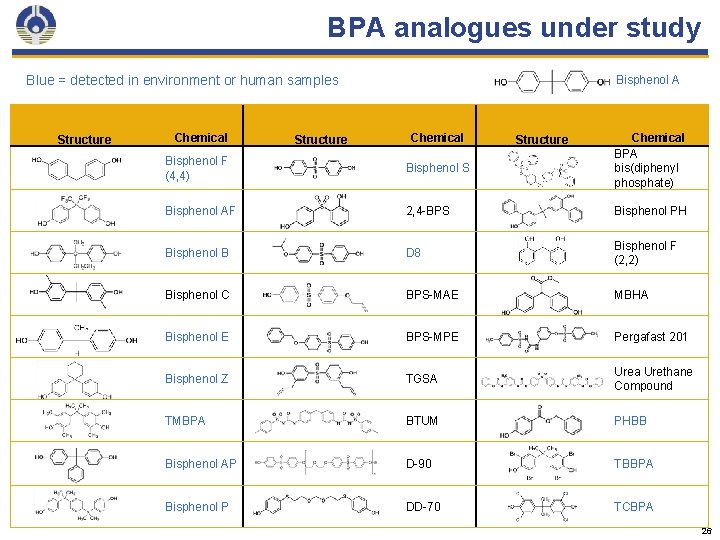
BPA analogues under study Blue = detected in environment or human samples Structure Chemical Structure Bisphenol A Chemical Structure Chemical BPA bis(diphenyl phosphate) Bisphenol F (4, 4) Bisphenol S Bisphenol AF 2, 4 -BPS Bisphenol PH Bisphenol B D 8 Bisphenol F (2, 2) Bisphenol C BPS-MAE MBHA Bisphenol E BPS-MPE Pergafast 201 Bisphenol Z TGSA Urea Urethane Compound TMBPA BTUM PHBB Bisphenol AP D-90 TBBPA Bisphenol P DD-70 TCBPA 26
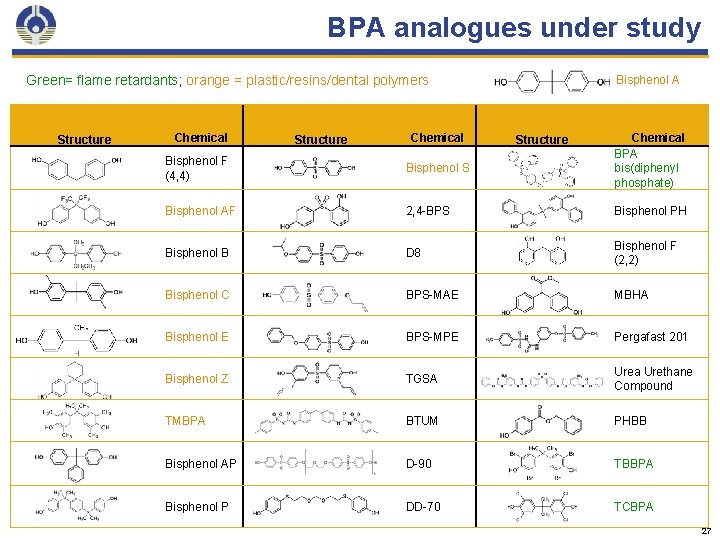
BPA analogues under study Green= flame retardants; orange = plastic/resins/dental polymers Structure Chemical Bisphenol A Structure Chemical BPA bis(diphenyl phosphate) Bisphenol F (4, 4) Bisphenol S Bisphenol AF 2, 4 -BPS Bisphenol PH Bisphenol B D 8 Bisphenol F (2, 2) Bisphenol C BPS-MAE MBHA Bisphenol E BPS-MPE Pergafast 201 Bisphenol Z TGSA Urea Urethane Compound TMBPA BTUM PHBB Bisphenol AP D-90 TBBPA Bisphenol P DD-70 TCBPA 27
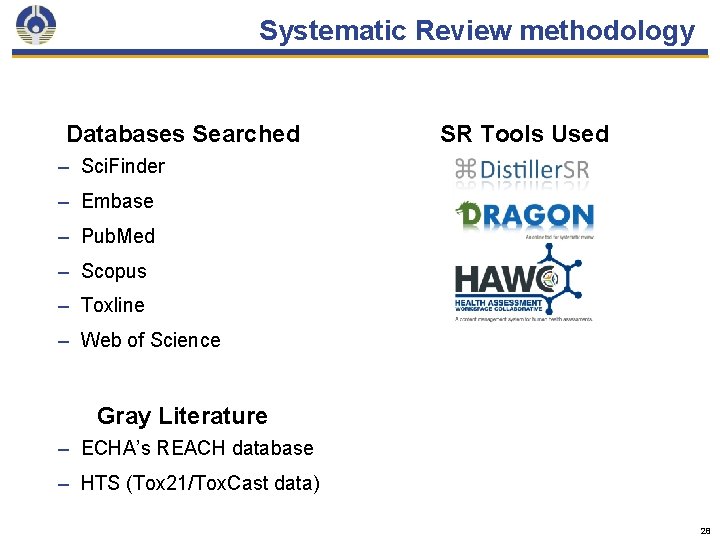
Systematic Review methodology Databases Searched SR Tools Used – Sci. Finder – Embase – Pub. Med – Scopus – Toxline – Web of Science Gray Literature – ECHA’s REACH database – HTS (Tox 21/Tox. Cast data) 28
Integrating the data Data Streams • Animal and in vitro data from literature searches • Non-peer reviewed data obtained from ECHA’s REACH database • Hazard IDs developed for the US EPA Df. E “Alternatives to BPA in Thermal Paper” • High throughput screening data 29
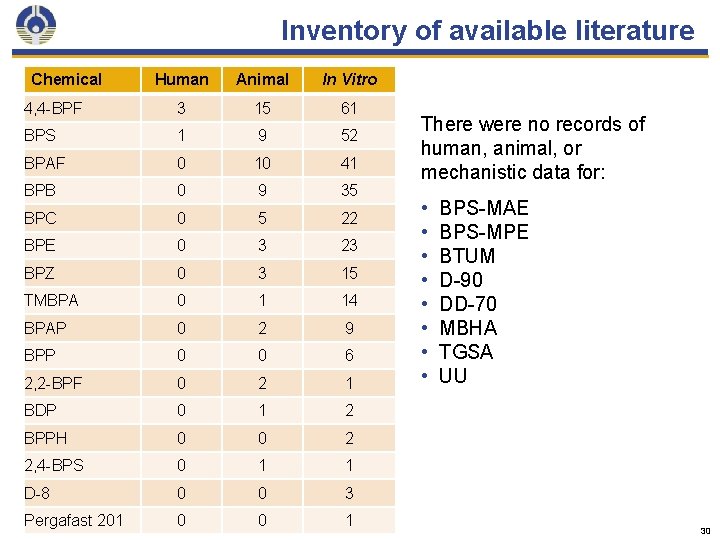
Inventory of available literature Chemical Human Animal In Vitro 4, 4 -BPF 3 15 61 BPS 1 9 52 BPAF 0 10 41 BPB 0 9 35 BPC 0 5 22 BPE 0 3 23 BPZ 0 3 15 TMBPA 0 1 14 BPAP 0 2 9 BPP 0 0 6 2, 2 -BPF 0 2 1 BDP 0 1 2 BPPH 0 0 2 2, 4 -BPS 0 1 1 D-8 0 0 3 Pergafast 201 0 0 1 There were no records of human, animal, or mechanistic data for: • • BPS-MAE BPS-MPE BTUM D-90 DD-70 MBHA TGSA UU 30
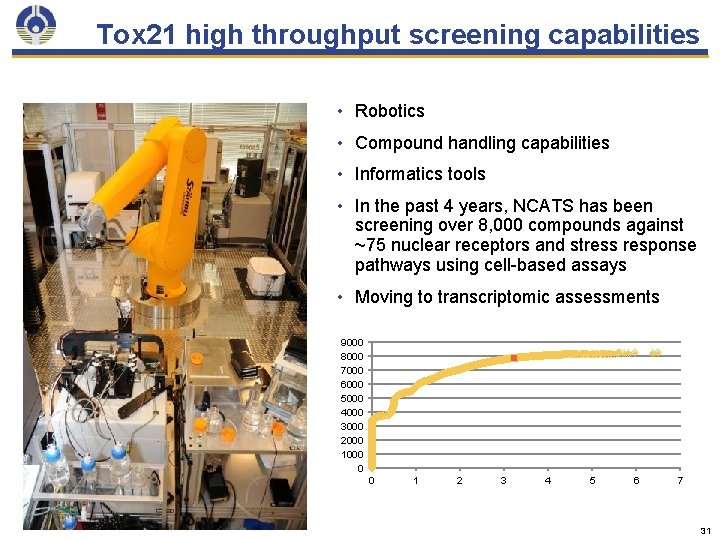
Tox 21 high throughput screening capabilities • Robotics • Compound handling capabilities • Informatics tools • In the past 4 years, NCATS has been screening over 8, 000 compounds against ~75 nuclear receptors and stress response pathways using cell-based assays • Moving to transcriptomic assessments 9000 8000 7000 6000 5000 4000 3000 2000 1000 0 0 1 2 3 4 5 6 7 31
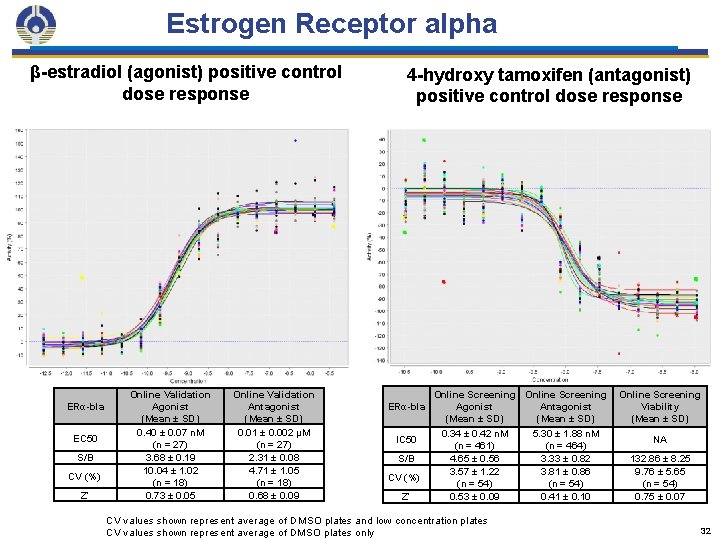
Estrogen Receptor alpha β-estradiol (agonist) positive control dose response ERα-bla EC 50 S/B CV (%) Z’ Online Validation Agonist (Mean ± SD) 0. 40 ± 0. 07 n. M (n = 27) 3. 68 ± 0. 19 10. 04 ± 1. 02 (n = 18) 0. 73 ± 0. 05 Online Validation Antagonist (Mean ± SD) 0. 01 ± 0. 002 μM (n = 27) 2. 31 ± 0. 08 4. 71 ± 1. 05 (n = 18) 0. 68 ± 0. 09 4 -hydroxy tamoxifen (antagonist) positive control dose response ERα-bla IC 50 S/B CV (%) Z’ Online Screening Agonist Antagonist (Mean ± SD) 0. 34 ± 0. 42 n. M (n = 461) 4. 65 ± 0. 56 3. 57 ± 1. 22 (n = 54) 0. 53 ± 0. 09 CV values shown represent average of DMSO plates and low concentration plates CV values shown represent average of DMSO plates only 5. 30 ± 1. 88 n. M (n = 464) 3. 33 ± 0. 82 3. 81 ± 0. 86 (n = 54) 0. 41 ± 0. 10 Online Screening Viability (Mean ± SD) NA 132. 86 ± 8. 25 9. 76 ± 5. 65 (n = 54) 0. 75 ± 0. 07 32
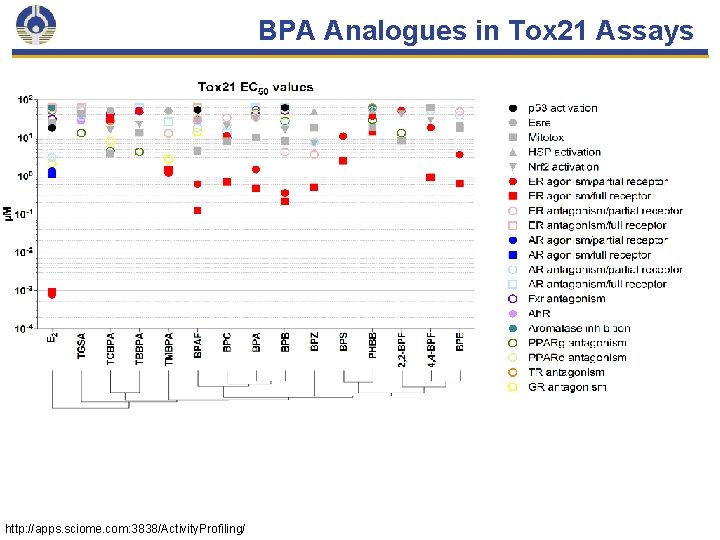
BPA Analogues in Tox 21 Assays http: //apps. sciome. com: 3838/Activity. Profiling/ 33
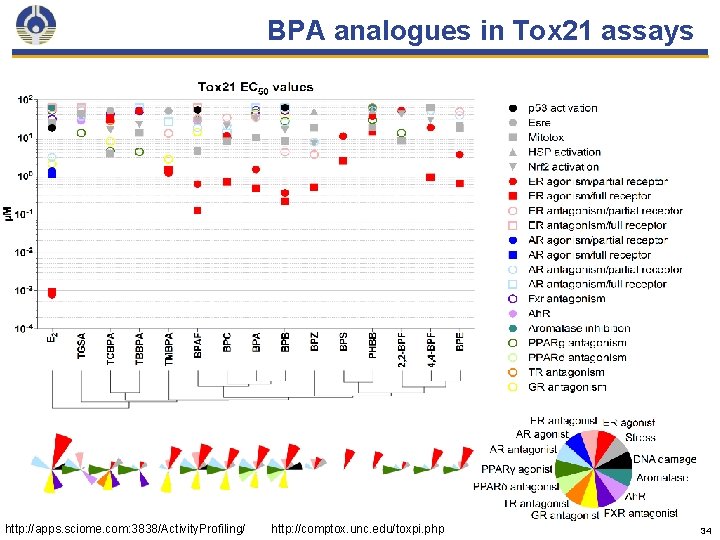
BPA analogues in Tox 21 assays http: //apps. sciome. com: 3838/Activity. Profiling/ http: //comptox. unc. edu/toxpi. php 34
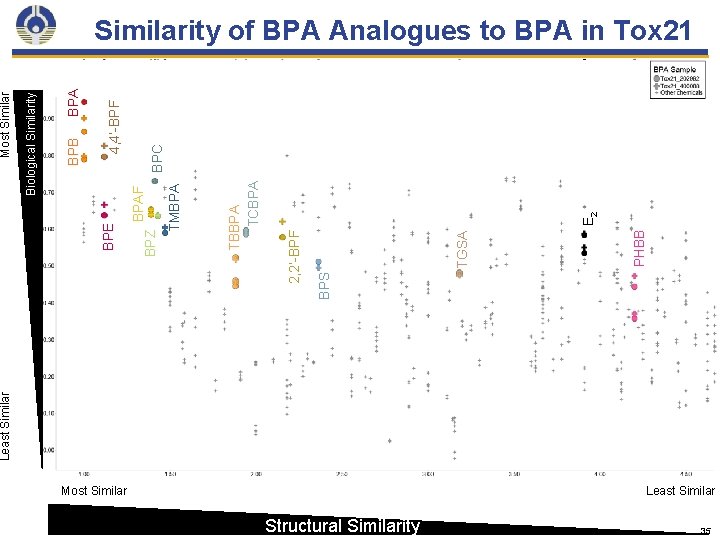
Least Similar Most Similar Structural Similarity PHBB TGSA E 2 TBBPA TCBPA 2, 2’-BPF BPS BPAF TMBPA BPZ BPE BPA BPC 4, 4’-BPF BPB Biological Similarity Most Similarity of BPA Analogues to BPA in Tox 21 Least Similar 35
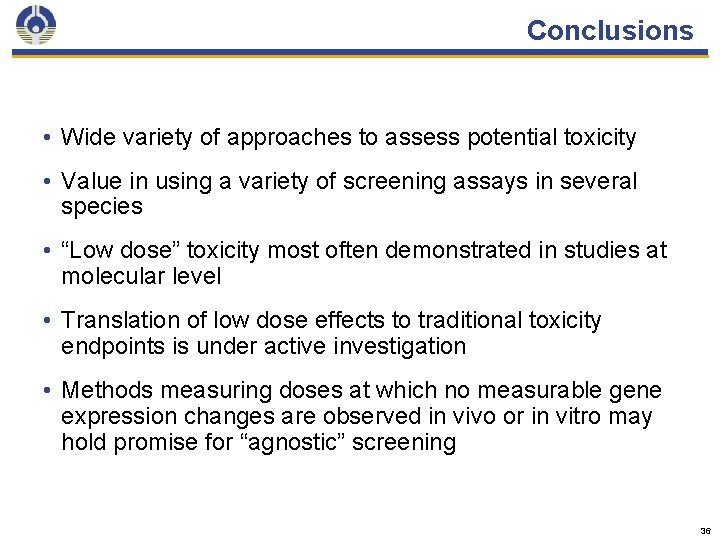
Conclusions • Wide variety of approaches to assess potential toxicity • Value in using a variety of screening assays in several species • “Low dose” toxicity most often demonstrated in studies at molecular level • Translation of low dose effects to traditional toxicity endpoints is under active investigation • Methods measuring doses at which no measurable gene expression changes are observed in vivo or in vitro may hold promise for “agnostic” screening 36

Questions? 37
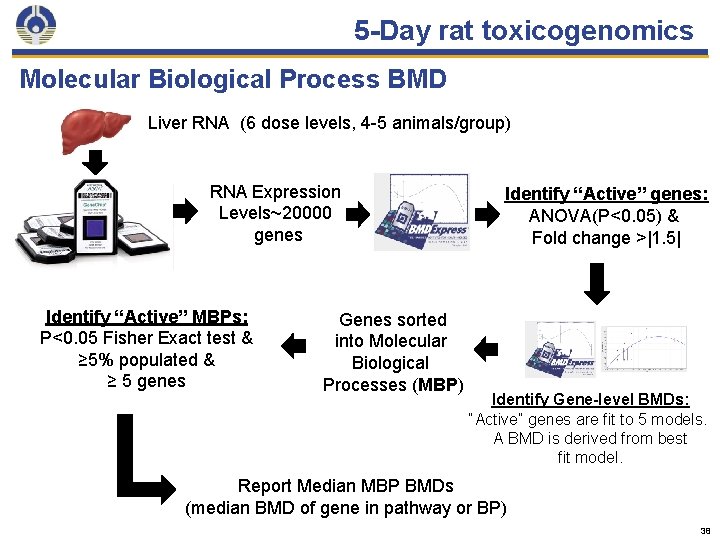
5 -Day rat toxicogenomics Molecular Biological Process BMD Liver RNA (6 dose levels, 4 -5 animals/group) RNA Expression Levels~20000 genes Identify “Active” MBPs: P<0. 05 Fisher Exact test & ≥ 5% populated & ≥ 5 genes Genes sorted into Molecular Biological Processes (MBP) Identify “Active” genes: ANOVA(P<0. 05) & Fold change >|1. 5| Identify Gene-level BMDs: “Active” genes are fit to 5 models. A BMD is derived from best fit model. Report Median MBP BMDs (median BMD of gene in pathway or BP) 38
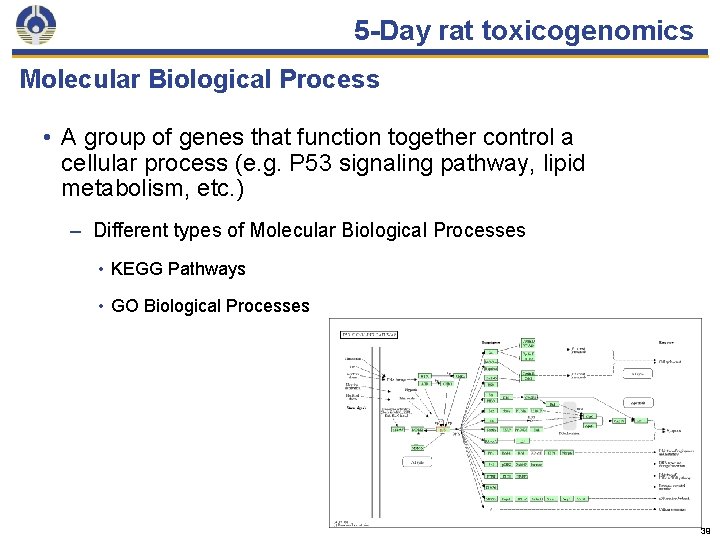
5 -Day rat toxicogenomics Molecular Biological Process • A group of genes that function together control a cellular process (e. g. P 53 signaling pathway, lipid metabolism, etc. ) – Different types of Molecular Biological Processes • KEGG Pathways • GO Biological Processes 39
5 -Day rat toxicogenomics Findings • Liver – MCHM • 22 Molecular Biological Processes active and had calculated BMD values • Minimum biological effect benchmark dose: 13 mg/kg/day- fatty acid metabolism – Crude MCMH mixture • 28 Molecular Biological Processes active • Minimum biological effect benchmark dose: 10 mg/kg/dayribosome biogenesis 40
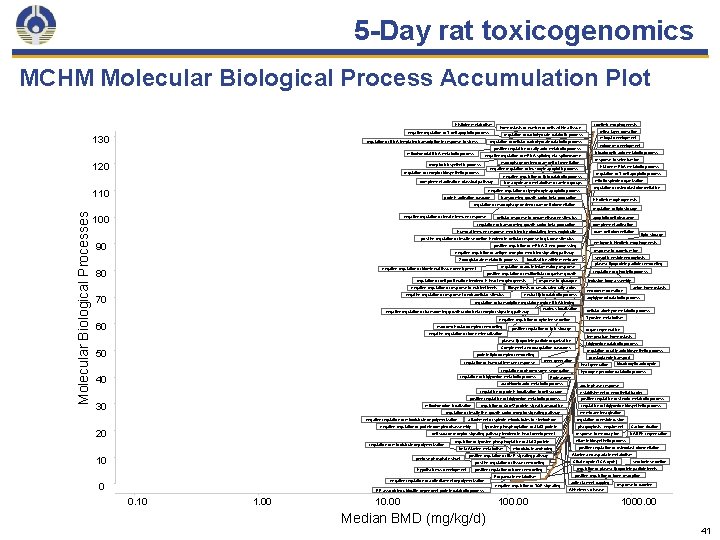
5 -Day rat toxicogenomics MCHM Molecular Biological Process Accumulation Plot Histidine metabolism 130 regulation of DNA-templated transcription in response to stress forelimb morphogenesis homeostasis of number of cells within a tissue negative regulation of T cell apoptotic process regulation of carbohydrate catabolic process regulation of cellular carbohydrate catabolic process positive regulation of fatty acid metabolic process mitochondrial DNA metabolic process 120 negative regulation of lipid catabolic process Urea cycle and metabolism of amino groups negative regulation of lymphocyte apoptotic process protein activation cascade transforming growth factor beta production negative regulation of innate immune response 100 apoptotic cell clearance regulation of transforming growth factor beta production complement activation foam cell differentiation positive regulation of insulin secretion involved in cellular response to glucose stimulus response to cadmium ion negative regulation of antigen receptor-mediated signaling pathway 80 localization within membrane regulation of acute inflammatory response negative regulation of biomineral tissue development regulation of cell proliferation involved in heart morphogenesis plasma lipoprotein particle remodeling inclusion body assembly response to glucagon Biosynthesis of unsaturated fatty acids negative regulation of response to extracellular stimulus 70 synaptic vesicle endocytosis regulation of glycolytic process positive regulation of multicellular organism growth negative regulation of response to nutrient levels lipid storage embryonic hindlimb morphogenesis positive regulation of m. RNA 3'-end processing 2 -oxoglutarate metabolic process regulation of osteoclast differentiation regulation of lipid storage cellular response to dexamethasone stimulus humoral immune response mediated by circulating immunoglobulin 90 regulation of T cell apoptotic process mitotic spindle organization hindlimb morphogenesis regulation of macrophage derived foam cell differentiation Molecular Biological Processes histone m. RNA metabolic process negative regulation of leukocyte apoptotic process complement activation, classical pathway 110 response to selenium ion macrophage derived foam cell differentiation regulation of receptor biosynthetic process midgut development ectoderm development tricarboxylic acid metabolic process negative regulation of m. RNA splicing, via spliceosome receptor biosynthetic process retina layer formation anion homeostasis endoderm formation neutral lipid catabolic process acylglycerol catabolic process regulation of transcription regulatory region DNA binding negative regulation of transforming growth factor beta receptor signaling pathway nucleus localization 60 macromolecular complex remodeling positive regulation of lipid storage organ regeneration negative regulation of bone mineralization temperature homeostasis plasma lipoprotein particle organization triglyceride catabolic process Complement and coagulation cascades 50 regulation of fatty acid biosynthetic process protein-lipid complex remodeling regulation of humoral immune response fever generation regulation of triglyceride metabolic process arachidonic acid metabolic process regulation of protein localization to cell surface 30 regulation of Cdc 42 protein signal transduction regulation of insulin-like growth factor receptor signaling pathway negative regulation of microtubule depolymerization attachment of spindle microtubules to kinetochore negative regulation of protein complex disassembly 20 tyrosine phosphorylation of Stat 3 protein cell surface receptor signaling pathway involved in heart development regulation of microtubule depolymerization 10 regulation of tyrosine phosphorylation of Stat 3 protein beta-Alanine metabolism pentose-phosphate shunt hypothalamus development positive regulation of tissue remodeling positive regulation of bone remodeling ER-associated ubiquitin-dependent protein catabolic process 0. 10 1. 00 microtubule anchoring positive regulation of BMP signaling pathway negative regulation of actin filament depolymerization 0 10. 00 Median BMD (mg/kg/d) Propanoate metabolism negative regulation of TOR signaling 100. 00 tricarboxylic acid cycle hydrogen peroxide catabolic process Proteasome positive regulation of triglyceride metabolic process mitochondrion localization prostaglandin transport heat generation regulation of chromosome segregation 40 cellular aldehyde metabolic process Tyrosine metabolism negative regulation of cytokine secretion acute-phase response establishment of endothelial barrier positive regulation of steroid metabolic process regulation of triglyceride biosynthetic process membrane invagination regulation of vesicle fusion phagocytosis, engulfment response to mercury ion Carbon fixation NADPH regeneration vitamin biosynthetic process positive regulation of osteoclast differentiation Alanine and aspartate metabolism Citrate cycle (TCA cycle) serotonin secretion regulation of plasma lipoprotein particle levels positive regulation of bone resorption actin filament capping Alzheimer's disease response to caffeine 1000. 00 41

Acknowledgements • Office of Health Assessment and Translation – – – – • Kyla Taylor Vickie Walker Stephanie Holmgren Cara Henning • Pam Ross Robyn Blain Ali Goldstone Dan Svoboda • External Collaborators – – – Caroline Baier-Anderson (US EPA) Lisa Truong (Oregon State University) • Patrick Allard (University of California – Los Angeles) Robert Tanguay (Oregon State University) Shoba Iyer (Cal-EPA OEHHA) • Fred Parham Jui-Hua Hsieh Ray Tice Scott Auerbach Steve Ferguson Tina Teng Julie Rice Mike De. Vito Paul Dunlap Sreenivasa Ramaiahgari Sue Fenton Andy Shapiro Brad Collins Joshua Addington Suramya Waidyanath Laboratory of Reproductive & Developmental Biology - Nathalie Pham (Cal-EPA OEHHA) Alex Merrick Programs Operation Branch – – Jon Hamm Scott Masten NTP Labs – – – Jessica Wignall Nigel Walker Biomolecular Screening Branch - ILS – • • Kristina Thayer (Director) Sciome – • Beruk Kiros ICF International – – – • Andy Rooney (Deputy Director) Kembra Howdeshell NTP Associate Director’s Office – – Office of Scientific Information Management – • • Abee Boyles Ken Korach Yin Li Toxicology Branch - Vicki Sutherland 42
- Slides: 42