
Surveillance and Control of Foot and Mouth Disease
- Slides: 49
Surveillance and Control of Foot and Mouth Disease: Following the Progressive Control Pathway Melissa Mc. Laws ADED Rounds Sept 2015 Slide
Presentation Outline – Background • Eu. FMD • Foot and Mouth Disease (FMD) • FMD in W. Eurasia – Progressive Control Pathway (PCP-FMD) • Principles, Stages • Application in W. Eurasia • Other applications • Lessons learned Slide 1
Key Messages • FMD is challenging to control • Need multi-disciplinary approach including economists, sociologists • PCP is a framework to facilitate this approach • Useful for other diseases – complementary to OIE tool for evaluation of Performance of the Veterinary Services (PVS) Slide 2
Acknowledgements • Eu. FMD: Keith Sumption, Chris Bartels, Jenny Maud, Fabrizio Rosso, Eoin Ryan, Kees van Maanen, Carsten Potzsch, Gunel Ismayilova • FAO/OIE FMD working group: G Ferrari, S Metwally, J Domenech, J Pinto, N Leboucq, L Weber-Vintzel • Veterinary Services: Georgia, Iran, Israel, Palestine, Turkey and other W. Eurasia countries • EUFMD Commission member states • EC (DG-SANCO –Trust Fund; Alf Füssel) • FAO World Reference Laboratory (WRL) Pirbright (D Paton, D King) • Supporting centres: • EUFMD Secretariat staff (N Rumich, C Carraz, I DAlessandro, E Tomat ) • FAO Ankara Slide
Introduction to Eu. FMD is a Commission of the Food and Agriculture Organisation of the UN (FAO) (established 1954) • Established to support member countries (37) in the European region to prevent and/or control FMD • Actions coordinated through DG SANTE of the European Commission Slide
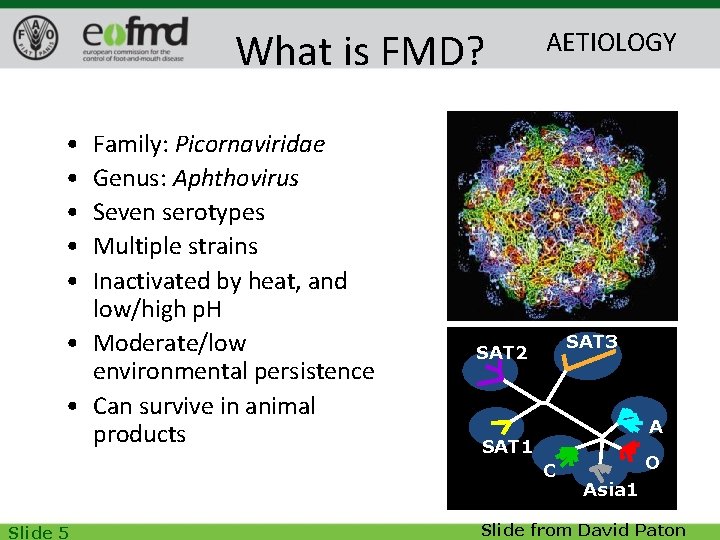
What is FMD? AETIOLOGY • • • Family: Picornaviridae Genus: Aphthovirus Seven serotypes Multiple strains Inactivated by heat, and low/high p. H • Moderate/low environmental persistence • Can survive in animal products SAT 3 SAT 2 A SAT 1 C Slide 5 O Asia 1 Slide from David Paton
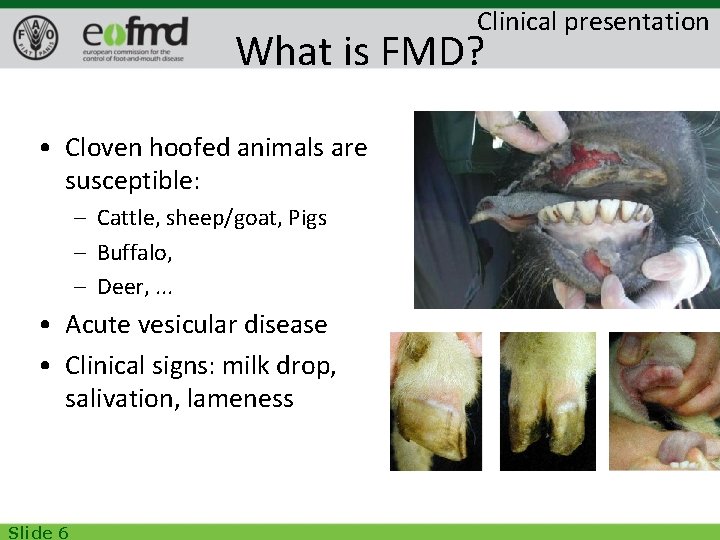
Clinical presentation What is FMD? • Cloven hoofed animals are susceptible: – Cattle, sheep/goat, Pigs – Buffalo, – Deer, . . . • Acute vesicular disease • Clinical signs: milk drop, salivation, lameness SAT 1 Slide 6
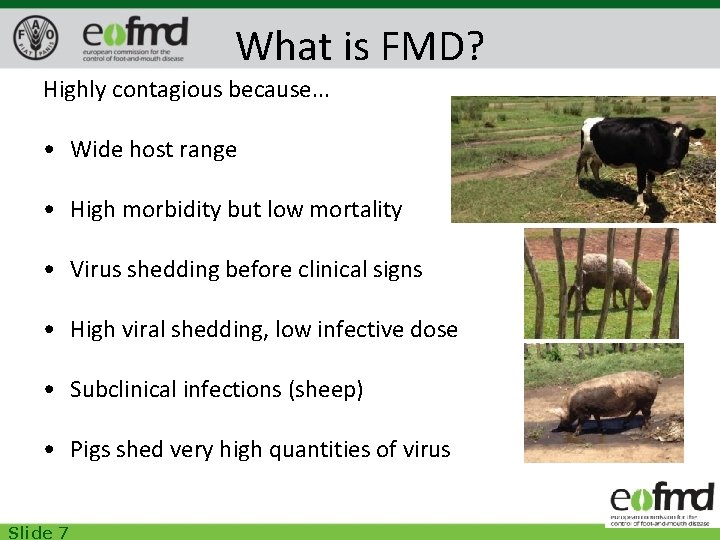
What is FMD? Highly contagious because. . . • Wide host range • High morbidity but low mortality • Virus shedding before clinical signs • High viral shedding, low infective dose • Subclinical infections (sheep) • Pigs shed very high quantities of virus Slide 7
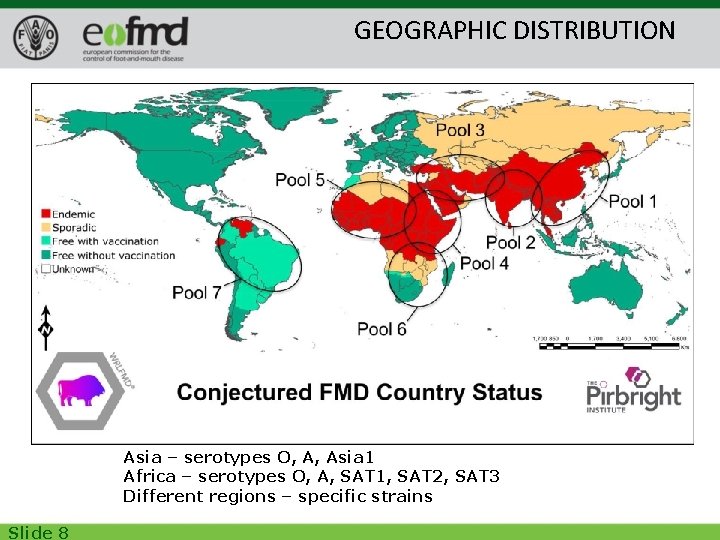
GEOGRAPHIC DISTRIBUTION Asia – serotypes O, A, Asia 1 Africa – serotypes O, A, SAT 1, SAT 2, SAT 3 Different regions – specific strains Slide 8
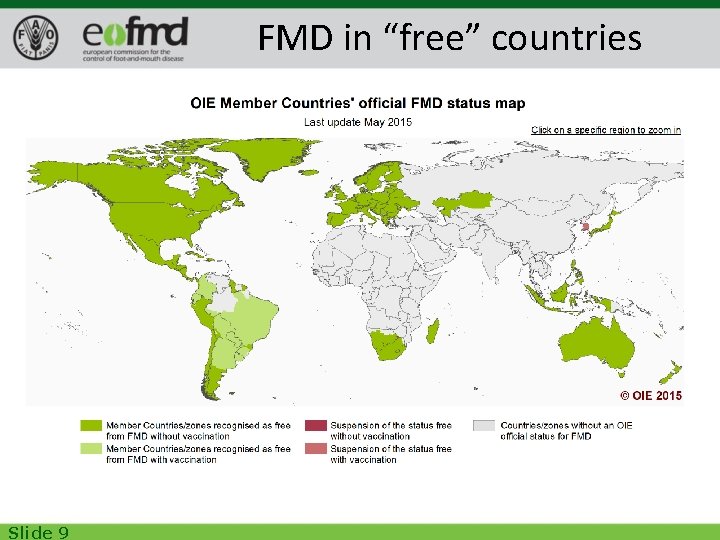
FMD in “free” countries Slide 9
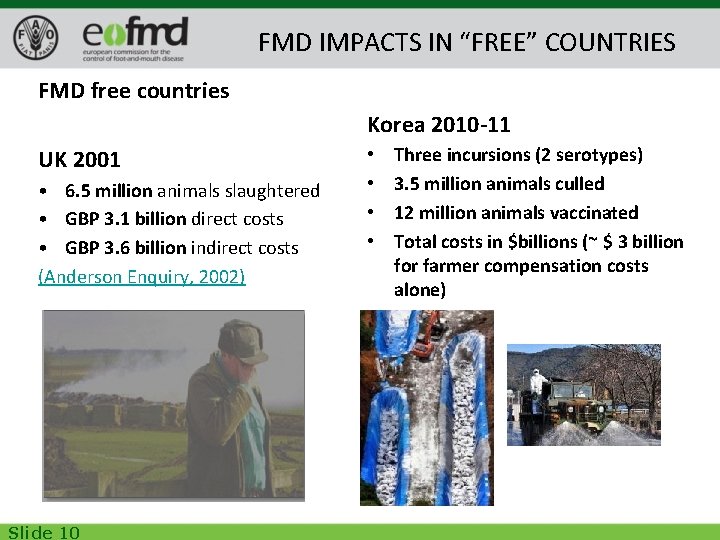
FMD IMPACTS IN “FREE” COUNTRIES FMD free countries Korea 2010 -11 UK 2001 • 6. 5 million animals slaughtered • GBP 3. 1 billion direct costs • GBP 3. 6 billion indirect costs (Anderson Enquiry, 2002) Slide 10 • • Three incursions (2 serotypes) 3. 5 million animals culled 12 million animals vaccinated Total costs in $billions (~ $ 3 billion for farmer compensation costs alone)
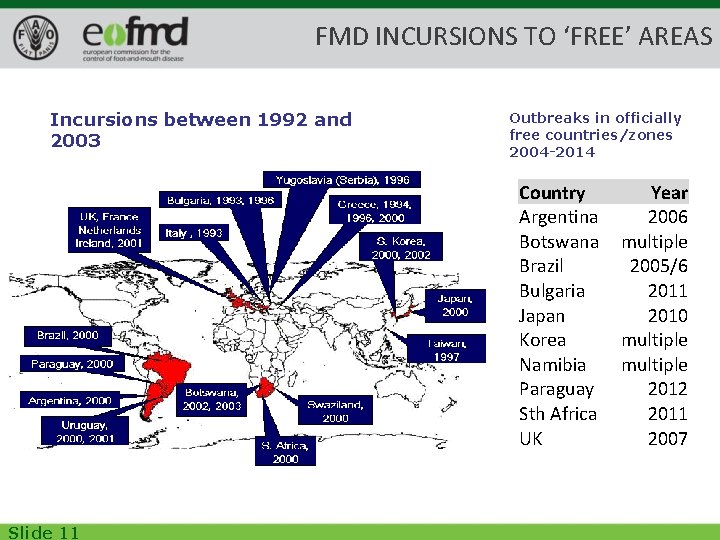
FMD INCURSIONS TO ‘FREE’ AREAS Incursions between 1992 and 2003 Outbreaks in officially free countries/zones 2004 -2014 Country Argentina Botswana Brazil Bulgaria Japan Korea Namibia Paraguay Sth Africa UK Slide 11 Year 2006 multiple 2005/6 2011 2010 multiple 2012 2011 2007
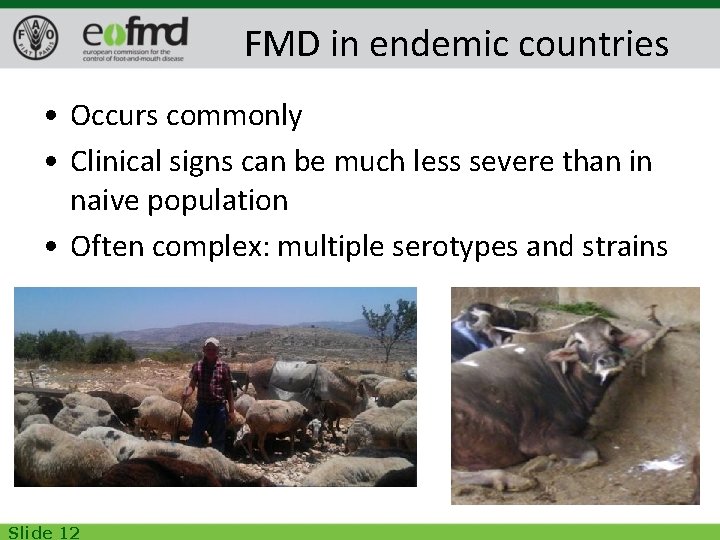
FMD in endemic countries • Occurs commonly • Clinical signs can be much less severe than in naive population • Often complex: multiple serotypes and strains Slide 12
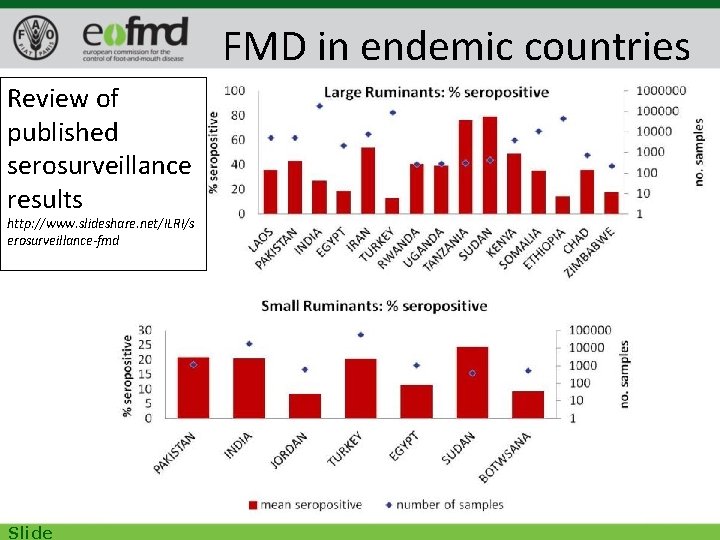
FMD in endemic countries Review of published serosurveillance results http: //www. slideshare. net/ILRI/s erosurveillance-fmd Slide
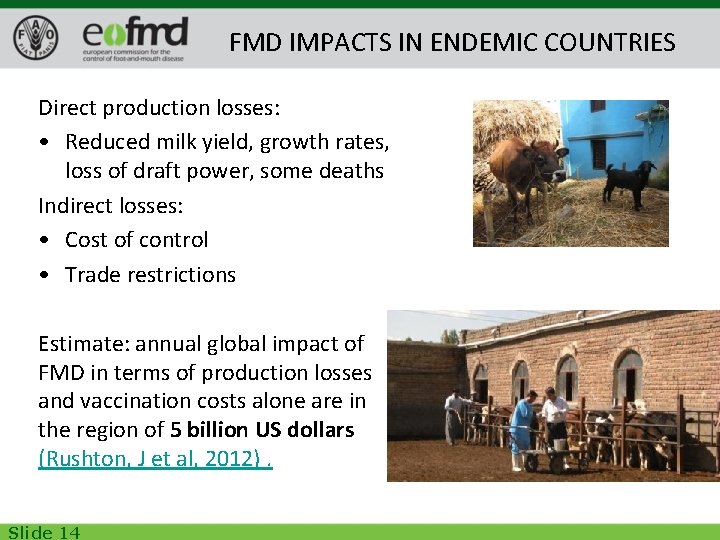
FMD IMPACTS IN ENDEMIC COUNTRIES Direct production losses: • Reduced milk yield, growth rates, loss of draft power, some deaths Indirect losses: • Cost of control • Trade restrictions Estimate: annual global impact of FMD in terms of production losses and vaccination costs alone are in the region of 5 billion US dollars (Rushton, J et al, 2012). Slide 14
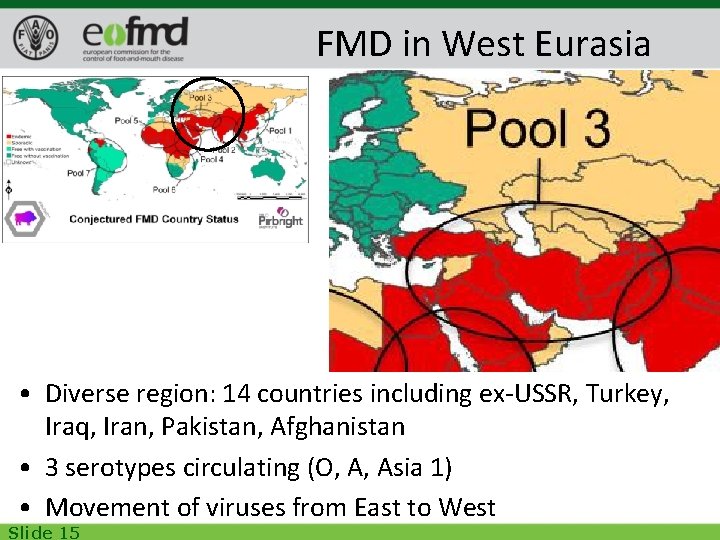
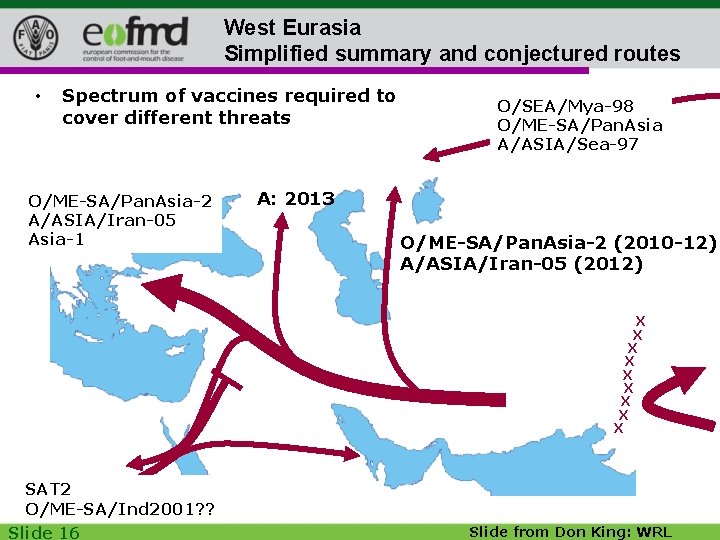
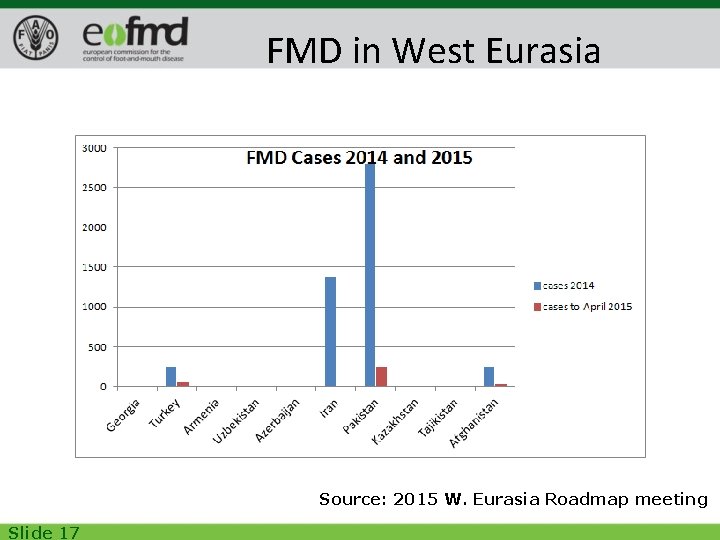
FMD in West Eurasia • Diverse region: 14 countries including ex-USSR, Turkey, Iraq, Iran, Pakistan, Afghanistan • 3 serotypes circulating (O, A, Asia 1) • Movement of viruses from East to West Slide 15
West Eurasia Simplified summary and conjectured routes • Spectrum of vaccines required to cover different threats O/ME-SA/Pan. Asia-2 A/ASIA/Iran-05 Asia-1 O/SEA/Mya-98 O/ME-SA/Pan. Asia A/ASIA/Sea-97 A: 2013 O/ME-SA/Pan. Asia-2 (2010 -12) A/ASIA/Iran-05 (2012) X X X X X SAT 2 O/ME-SA/Ind 2001? ? Slide 16 Slide from Don King: WRL
FMD in West Eurasia Source: 2015 W. Eurasia Roadmap meeting Slide 17
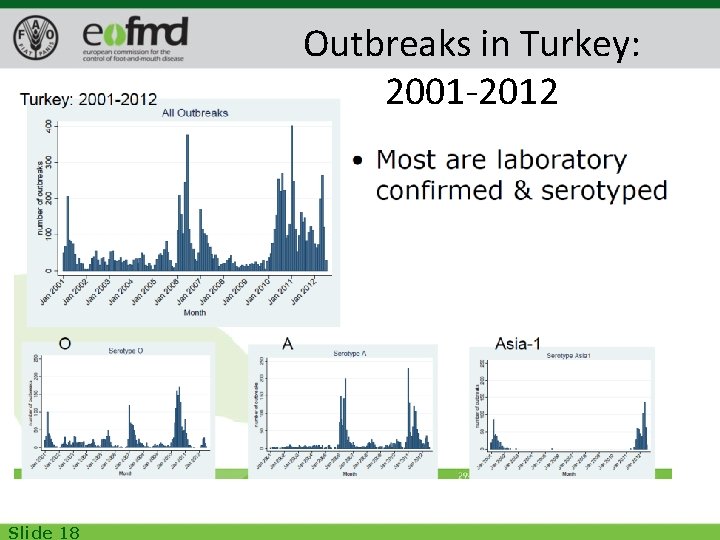
Outbreaks in Turkey: 2001 -2012 Slide 18
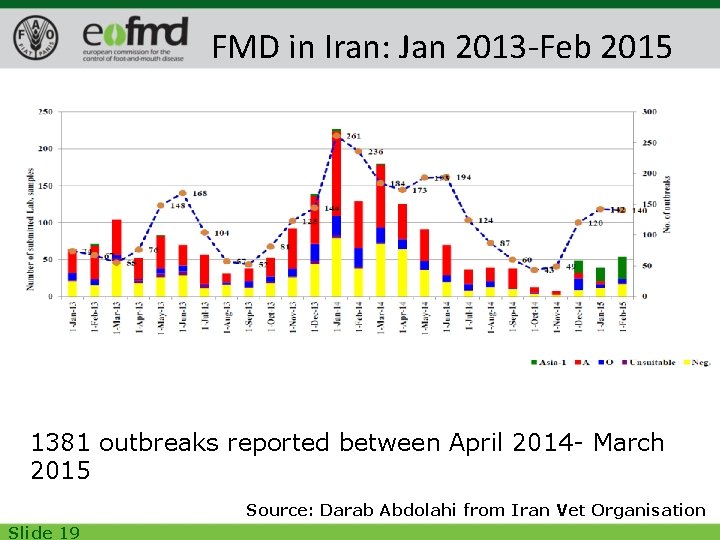
FMD in Iran: Jan 2013 -Feb 2015 1381 outbreaks reported between April 2014 - March 2015 Source: Darab Abdolahi from Iran Vet Organisation Slide 19
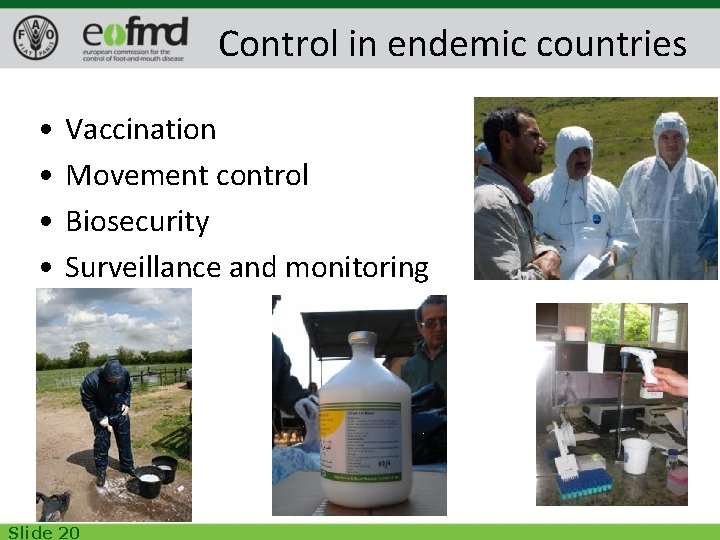
Control in endemic countries • • Vaccination Movement control Biosecurity Surveillance and monitoring Slide 20
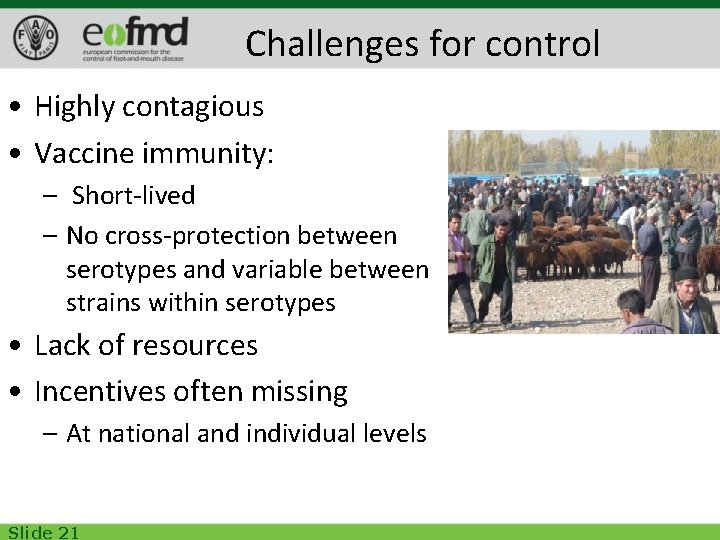
Challenges for control • Highly contagious • Vaccine immunity: – Short-lived – No cross-protection between serotypes and variable between strains within serotypes • Lack of resources • Incentives often missing – At national and individual levels Slide 21
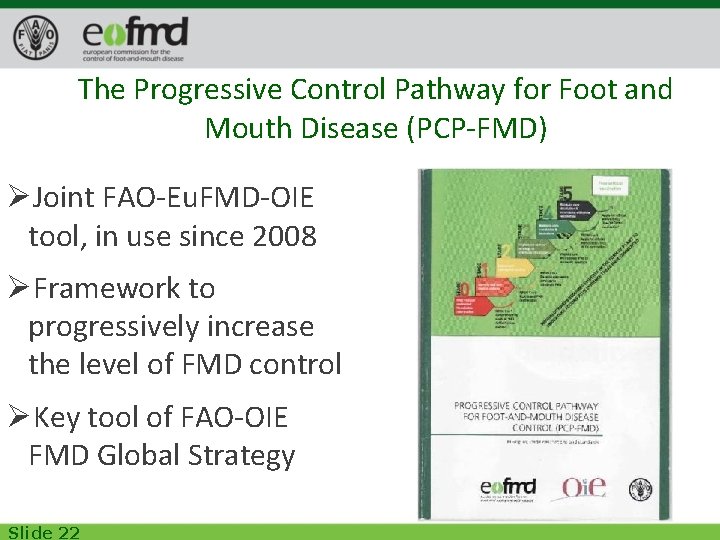
The Progressive Control Pathway for Foot and Mouth Disease (PCP-FMD) ØJoint FAO-Eu. FMD-OIE tool, in use since 2008 ØFramework to progressively increase the level of FMD control ØKey tool of FAO-OIE FMD Global Strategy Slide 22
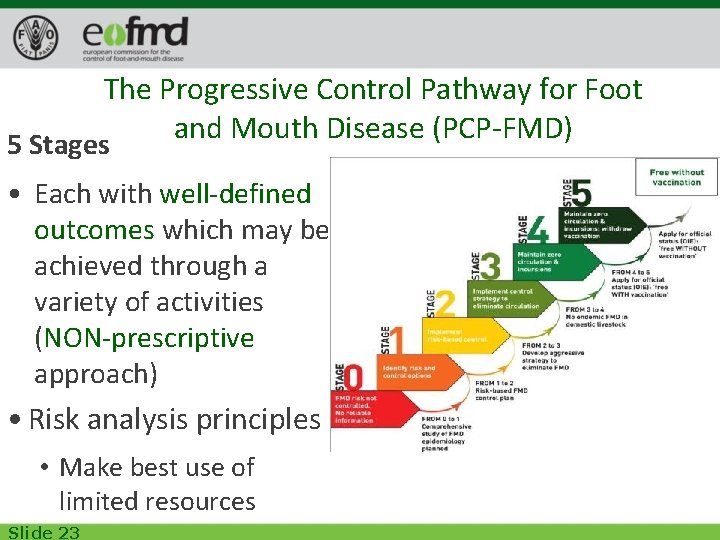
The Progressive Control Pathway for Foot and Mouth Disease (PCP-FMD) 5 Stages • Each with well-defined outcomes which may be achieved through a variety of activities (NON-prescriptive approach) • Risk analysis principles • Make best use of limited resources Slide 23
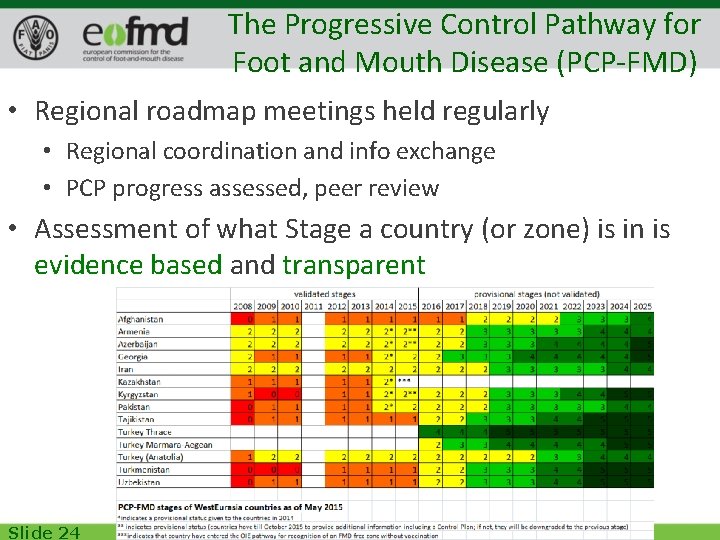
The Progressive Control Pathway for Foot and Mouth Disease (PCP-FMD) • Regional roadmap meetings held regularly • Regional coordination and info exchange • PCP progress assessed, peer review • Assessment of what Stage a country (or zone) is in is evidence based and transparent Slide 24
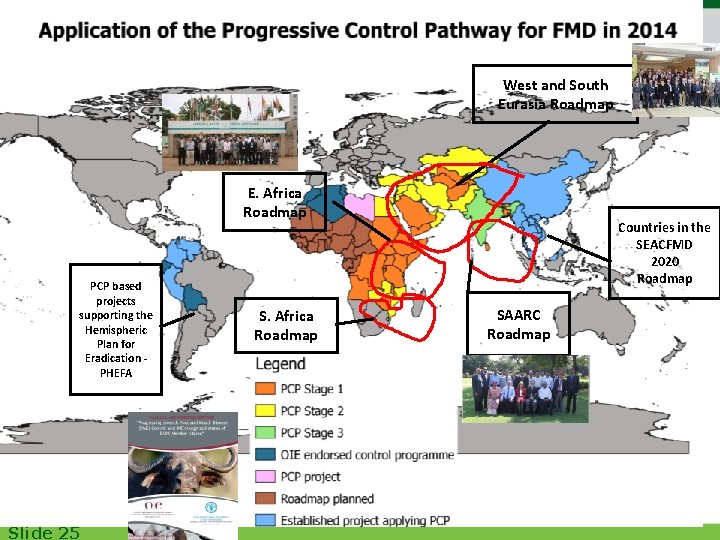
West and South Eurasia Roadmap E. Africa Roadmap PCP based projects supporting the Hemispheric Plan for Eradication PHEFA Slide 25 S. Africa Roadmap Countries in the SEACFMD 2020 Roadmap SAARC Roadmap
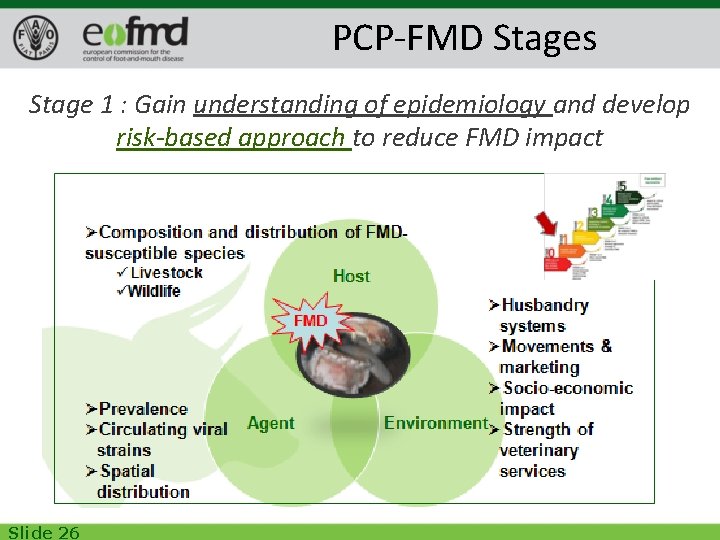
PCP-FMD Stages Stage 1 : Gain understanding of epidemiology and develop risk-based approach to reduce FMD impact Slide 26
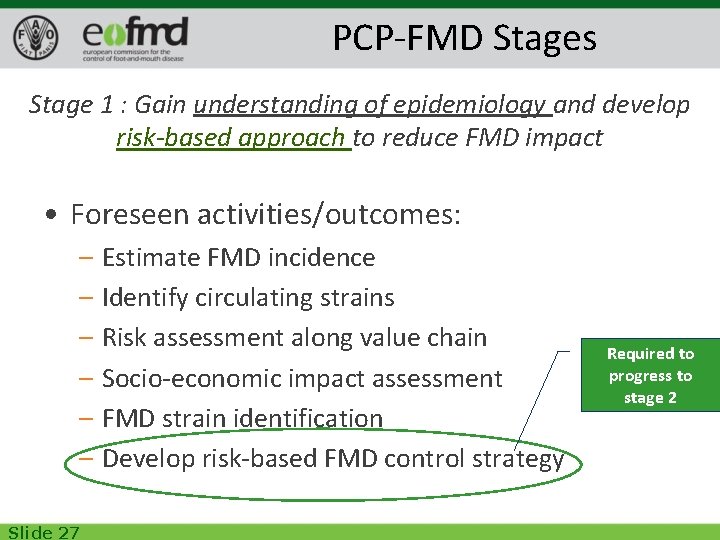
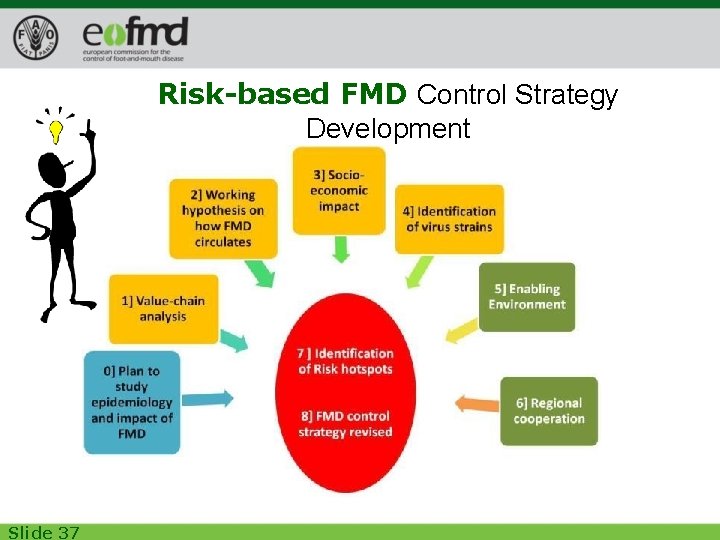
PCP-FMD Stages Stage 1 : Gain understanding of epidemiology and develop risk-based approach to reduce FMD impact • Foreseen activities/outcomes: – Estimate FMD incidence – Identify circulating strains – Risk assessment along value chain – Socio-economic impact assessment – FMD strain identification – Develop risk-based FMD control strategy Slide 27 Required to progress to stage 2
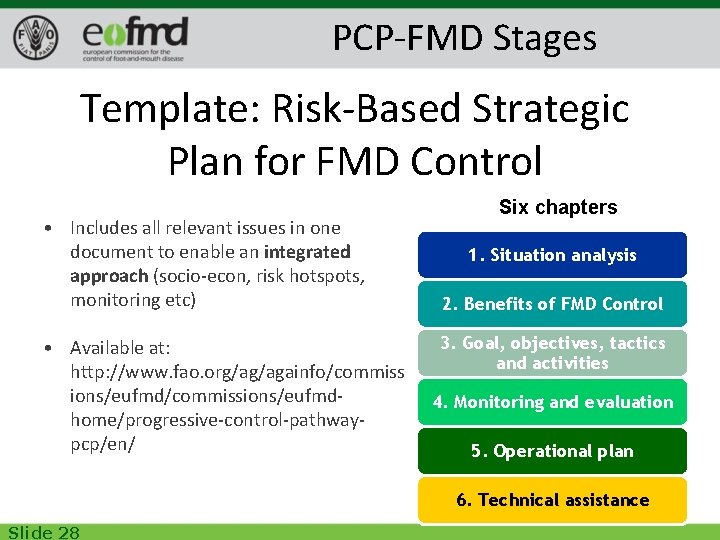
PCP-FMD Stages Template: Risk-Based Strategic Plan for FMD Control • Includes all relevant issues in one document to enable an integrated approach (socio-econ, risk hotspots, monitoring etc) • Available at: http: //www. fao. org/ag/againfo/commiss ions/eufmd/commissions/eufmdhome/progressive-control-pathwaypcp/en/ Six chapters 1. Situation analysis 2. Benefits of FMD Control 3. Goal, objectives, tactics and activities 4. Monitoring and evaluation 5. Operational plan 6. Technical assistance Slide 28
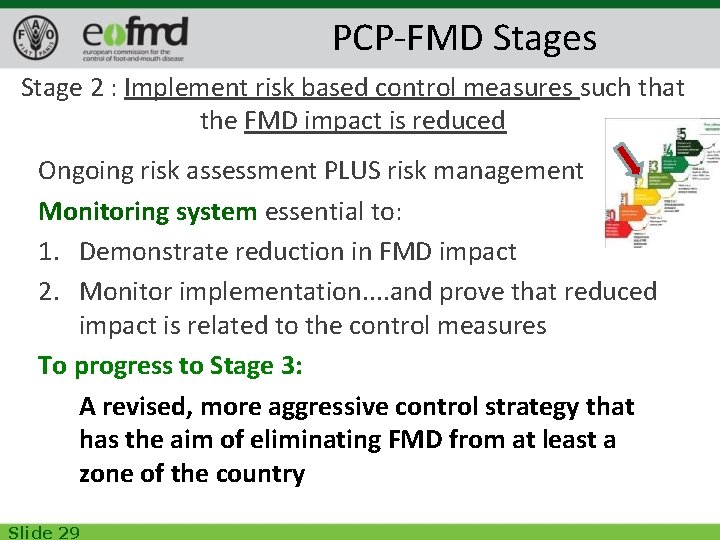
PCP-FMD Stages Stage 2 : Implement risk based control measures such that the FMD impact is reduced Ongoing risk assessment PLUS risk management Monitoring system essential to: 1. Demonstrate reduction in FMD impact 2. Monitor implementation. . and prove that reduced impact is related to the control measures To progress to Stage 3: A revised, more aggressive control strategy that has the aim of eliminating FMD from at least a zone of the country Slide 29
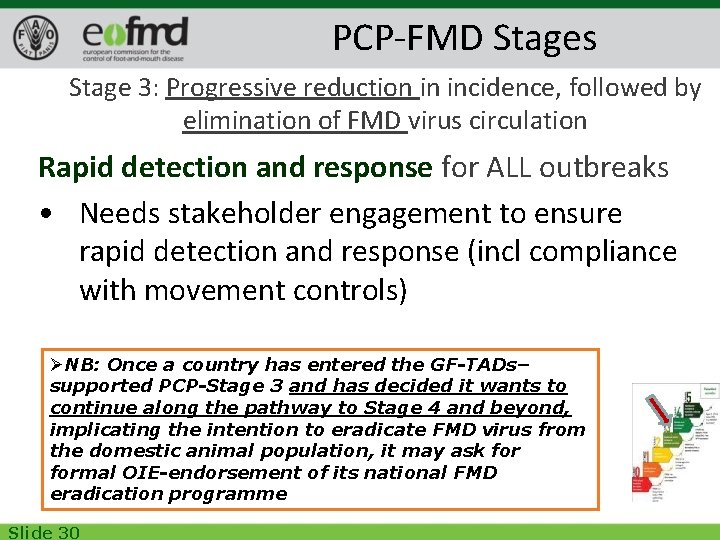
PCP-FMD Stages Stage 3: Progressive reduction in incidence, followed by elimination of FMD virus circulation Rapid detection and response for ALL outbreaks • Needs stakeholder engagement to ensure rapid detection and response (incl compliance with movement controls) ØNB: Once a country has entered the GF-TADs– supported PCP-Stage 3 and has decided it wants to continue along the pathway to Stage 4 and beyond, implicating the intention to eradicate FMD virus from the domestic animal population, it may ask formal OIE-endorsement of its national FMD eradication programme Slide 30
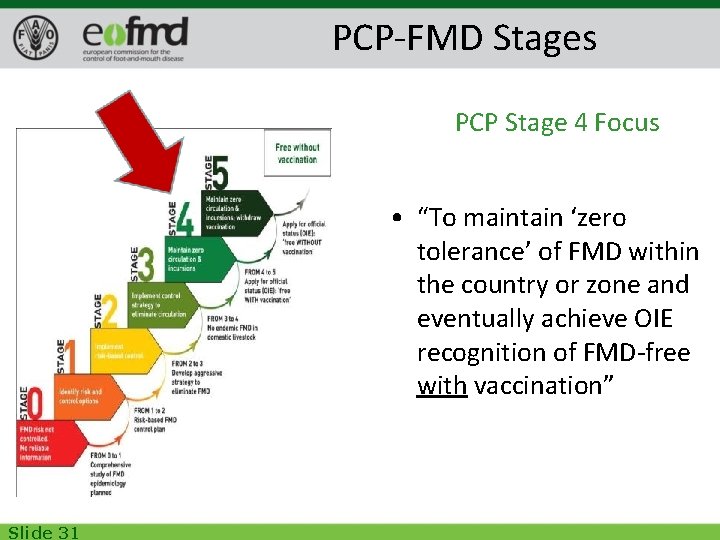
PCP-FMD Stages PCP Stage 4 Focus • “To maintain ‘zero tolerance’ of FMD within the country or zone and eventually achieve OIE recognition of FMD-free with vaccination” Slide 31
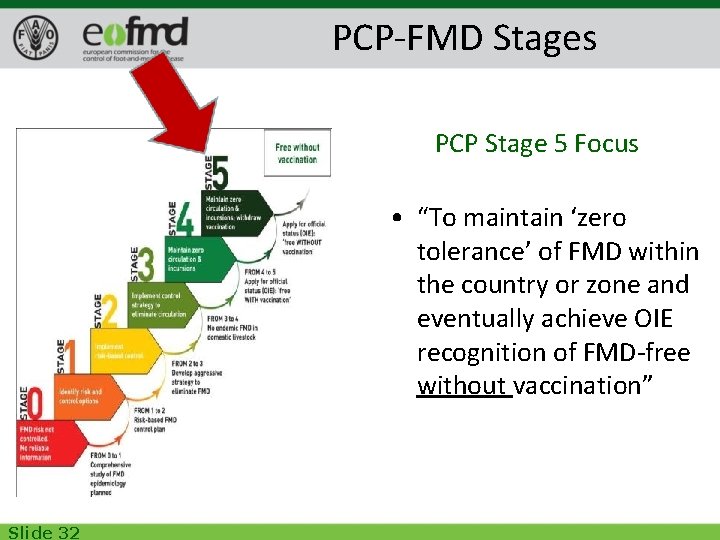
PCP-FMD Stages PCP Stage 5 Focus • “To maintain ‘zero tolerance’ of FMD within the country or zone and eventually achieve OIE recognition of FMD-free without vaccination” Slide 32
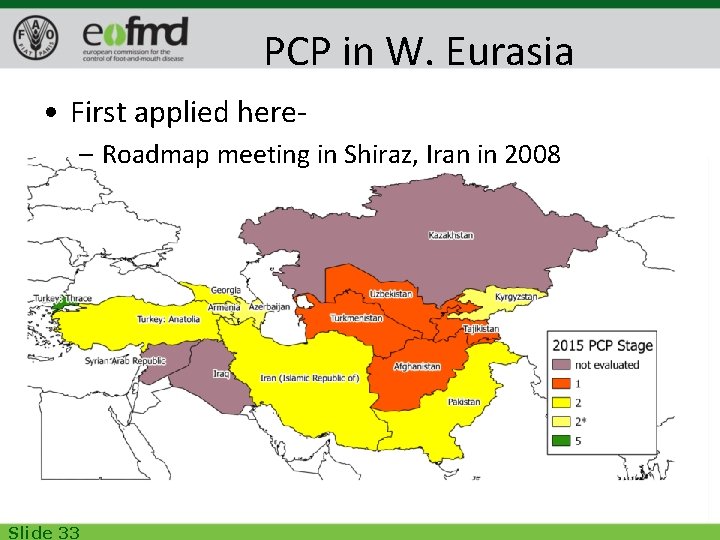
PCP in W. Eurasia • First applied here– Roadmap meeting in Shiraz, Iran in 2008 Slide 33
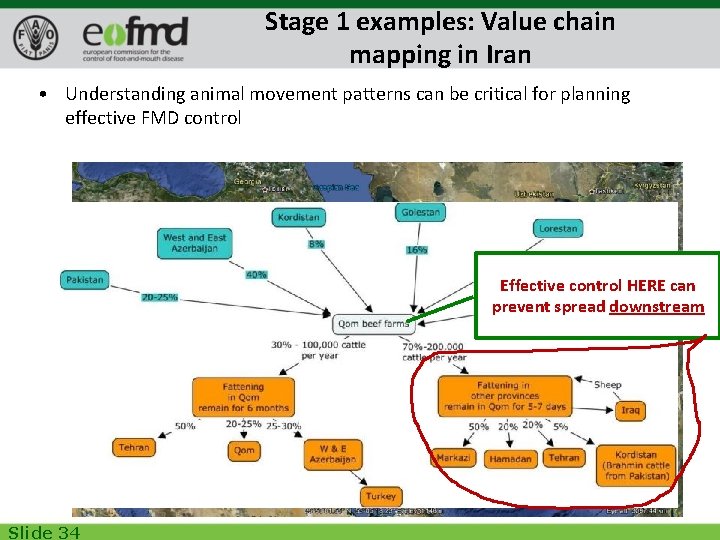
Stage 1 examples: Value chain mapping in Iran • Understanding animal movement patterns can be critical for planning effective FMD control Effective control HERE can prevent spread downstream Qom Slide 34
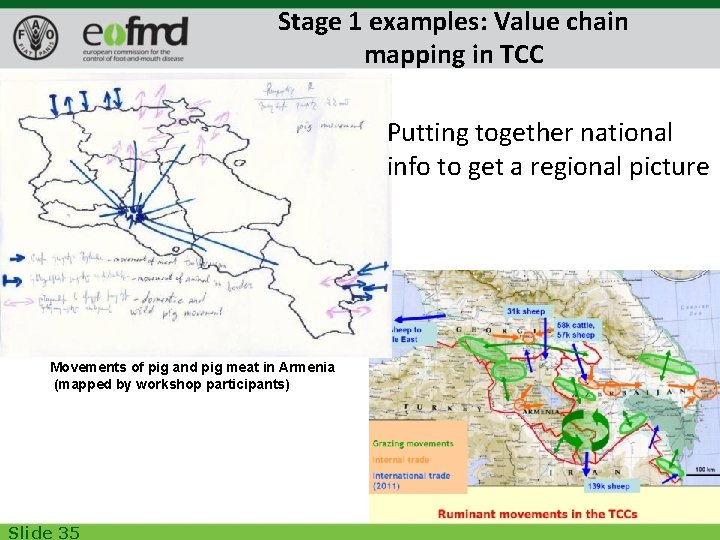
Stage 1 examples: Value chain mapping in TCC Putting together national info to get a regional picture Movements of pig and pig meat in Armenia (mapped by workshop participants) Slide 35
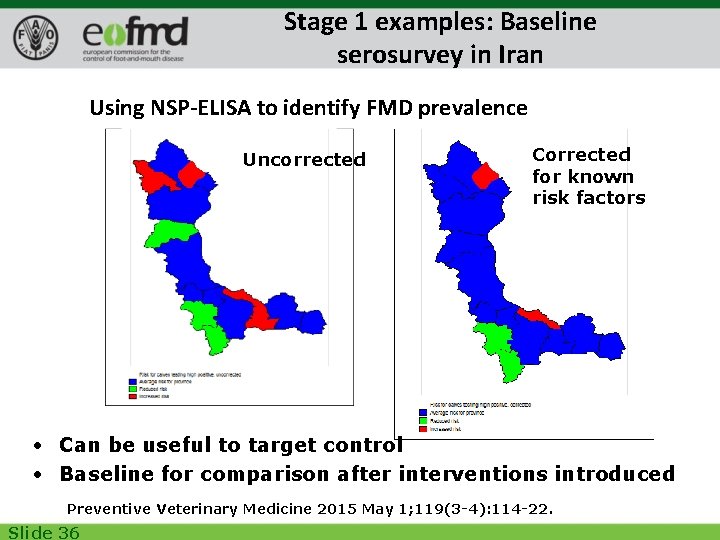
Stage 1 examples: Baseline serosurvey in Iran Using NSP-ELISA to identify FMD prevalence Uncorrected Corrected for known risk factors • Can be useful to target control • Baseline for comparison after interventions introduced Preventive Veterinary Medicine 2015 May 1; 119(3 -4): 114 -22. Slide 36
Risk-based FMD Control Strategy Development Slide 37
PCP Stage 1 –developing national strategy- with national ownership Slide 38
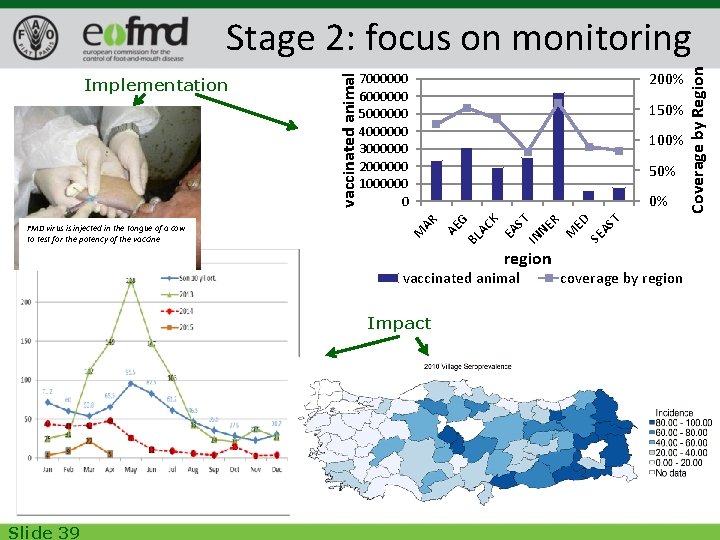
100% 50% AC K EA ST IN NE R M ED SE AS T BL AE G 0% region vaccinated animal Impact Slide 39 coverage by region Coverage by Region 150% AR FMD virus is injected in the tongue of a cow to test for the potency of the vaccine 200% 7000000 6000000 5000000 4000000 3000000 2000000 1000000 0 M Implementation vaccinated animal Stage 2: focus on monitoring
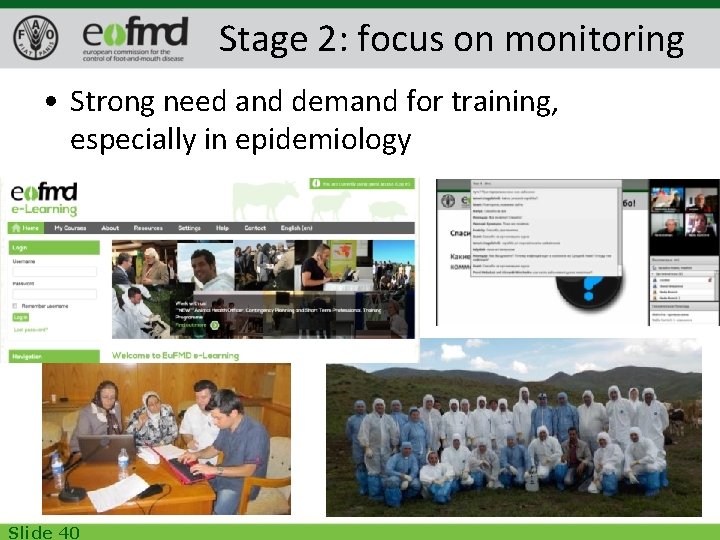
Stage 2: focus on monitoring • Strong need and demand for training, especially in epidemiology Slide 40
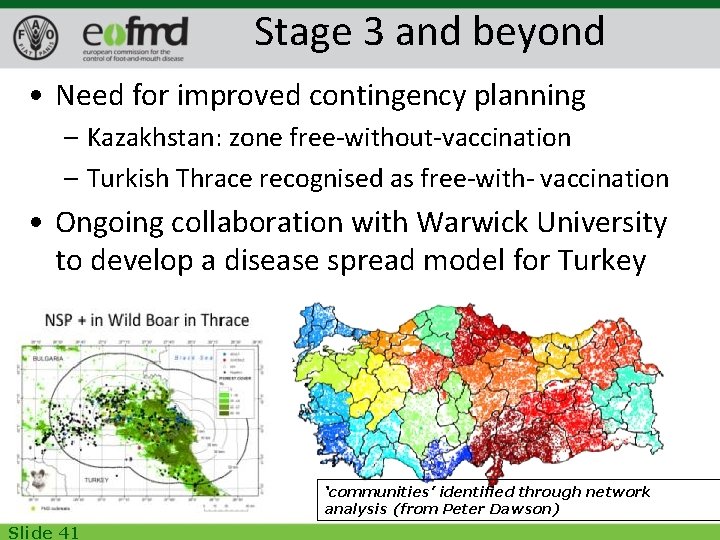
Stage 3 and beyond • Need for improved contingency planning – Kazakhstan: zone free-without-vaccination – Turkish Thrace recognised as free-with- vaccination • Ongoing collaboration with Warwick University to develop a disease spread model for Turkey ‘communities’ identified through network analysis (from Peter Dawson) Slide 41
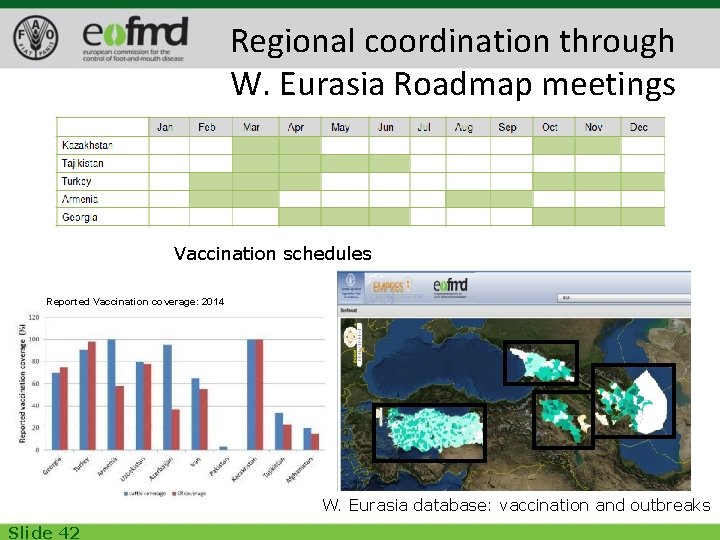
Regional coordination through W. Eurasia Roadmap meetings Vaccination schedules Reported Vaccination coverage: 2014 W. Eurasia database: vaccination and outbreaks Slide 42
Lessons learned from implementing PCP • Focus on fundamentals: – difference between ‘disease’ (clinical effect) and ‘infection’ (virus) – establish vaccine quality assurance • Management issues are important: – planning, prioritising, monitoring – inter-departmental FMD task force – trying to reach out to field level: district, local vets, farmer associations, NGOs. Slide 43
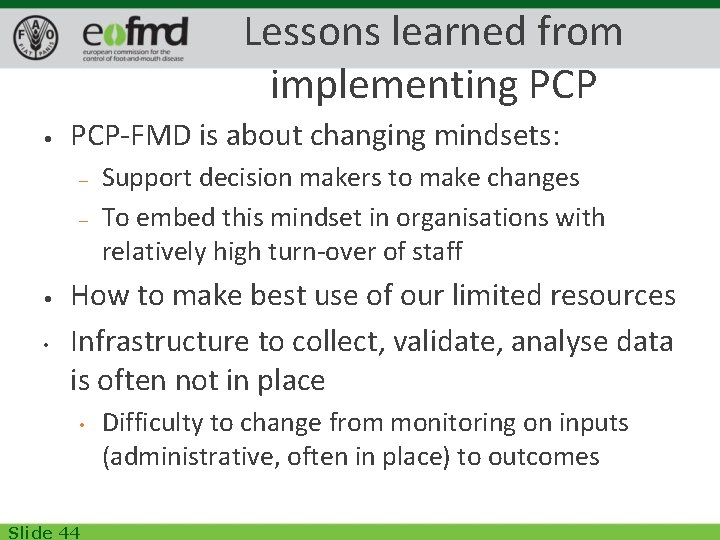
Lessons learned from implementing PCP • PCP-FMD is about changing mindsets: – – • • Support decision makers to make changes To embed this mindset in organisations with relatively high turn-over of staff How to make best use of our limited resources Infrastructure to collect, validate, analyse data is often not in place • Slide 44 Difficulty to change from monitoring on inputs (administrative, often in place) to outcomes
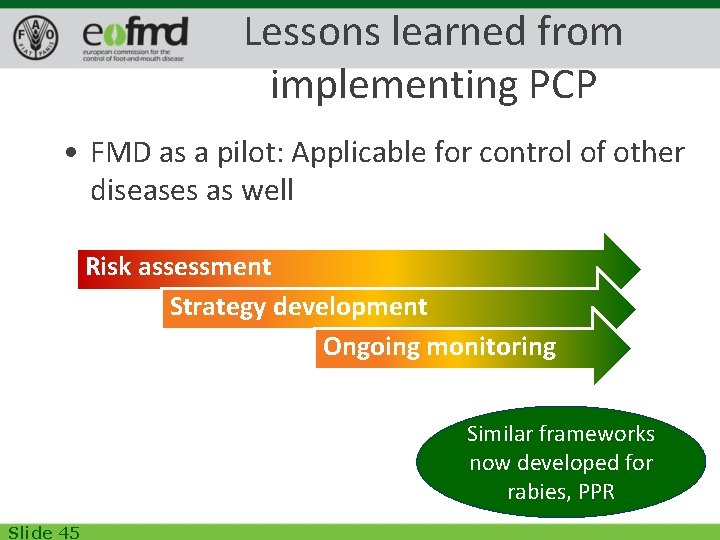
Lessons learned from implementing PCP • FMD as a pilot: Applicable for control of other diseases as well Risk assessment Strategy development Ongoing monitoring Similar frameworks now developed for rabies, PPR Slide 45
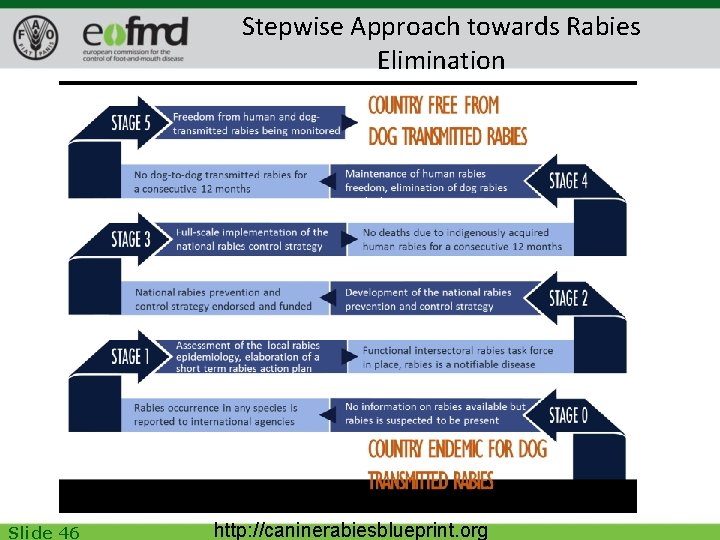
Stepwise Approach towards Rabies Elimination Slide 46 http: //caninerabiesblueprint. org
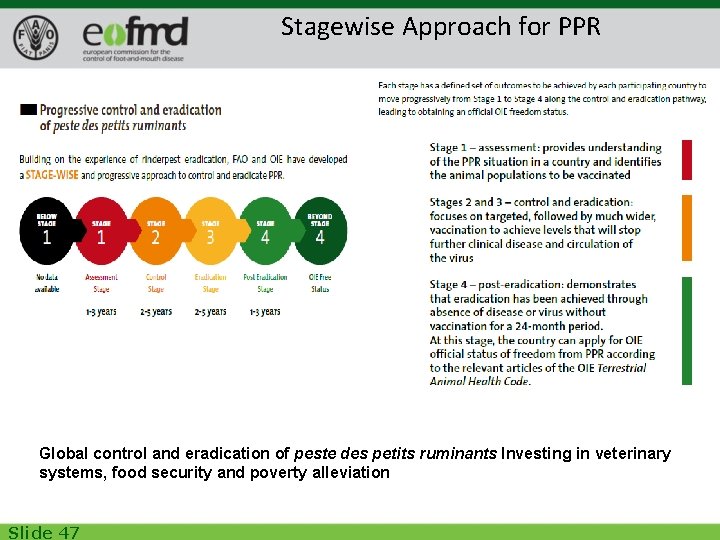
Stagewise Approach for PPR Global control and eradication of peste des petits ruminants Investing in veterinary systems, food security and poverty alleviation Slide 47
Thank you for listening! Questions? Slide 48