
Surprise Strike of Snakes Saliva Presented by Don

Surprise Strike of Snake’s Saliva Presented by: Don King Evangelista Jexter Lakandula III-BSCT
Outline of Discussion Snakes and Snake Venoms Cases of Snakebites in the World Relative Toxicities of envenomation and their mechanism Treatment for envenomation

Snake venom is highly modified saliva containing zootoxins used by snakes to immobilize and digest prey or to serve as a defense mechanism against a potential predator or other threat. The venom produced by the snake's venom gland apparatus is delivered by an injection system of modified fangs that enable the venom to penetrate into the target.
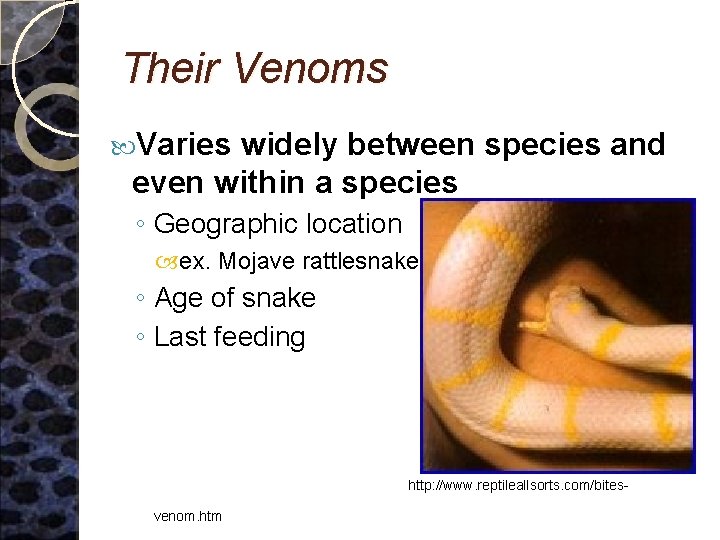
Their Venoms Varies widely between species and even within a species ◦ Geographic location ex. Mojave rattlesnake ◦ Age of snake ◦ Last feeding http: //www. reptileallsorts. com/bitesvenom. htm
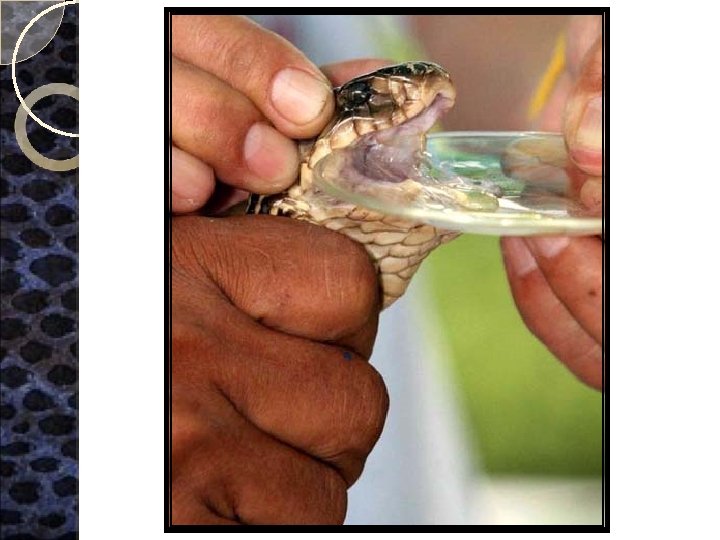

Constituents of Venom ü Snake venom is a concoction of proteins comprising of curaremimetic toxins, fasciculins, dendrodotoxins, and calciseptine. ü The non-toxic component is made of proteogylcans, phospholipases A 2, proteinases, and L-amino acid oxidase among other constituents. ü The toxic components neutralize the prey/threat , while the non-toxic components help the snake metabolize its prey.
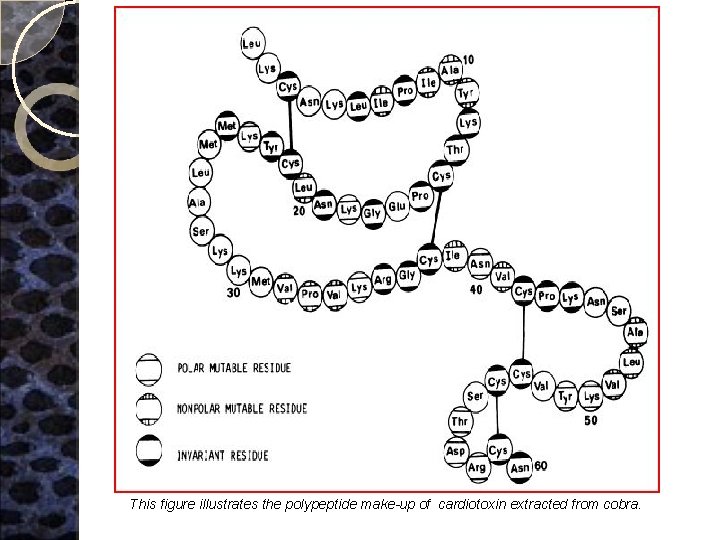
This figure illustrates the polypeptide make-up of cardiotoxin extracted from cobra.

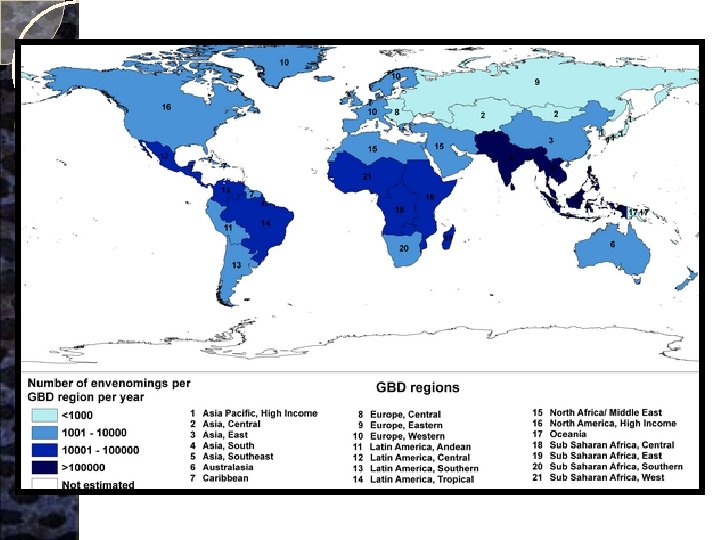
Cases and Incidence of Snakebites World Health Organization (WHO) reported 421, 000 envenomations and 20, 000 deaths from snakebites. However, the incidence of snakebites could be as high as 1. 8 million envenomations and 94, 000 deaths. Snakebites and resulting envenomations are common in locations with high snake populations. The highest burden of snakebites is in South Asia, Southeast Asia, and sub-Saharan Africa.

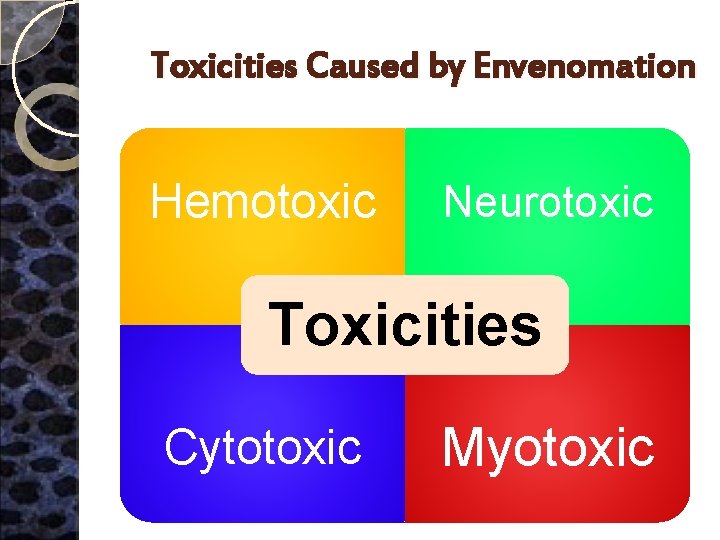
Toxicities Caused by Envenomation Hemotoxic Neurotoxic Toxicities Cytotoxic Myotoxic
Mechanism and Action of Toxicants Neurotoxic effects and myotoxic effects are generally accomplished by interfering with acetylcholine mechanism in the neuro-muscular junction or in the synaptic cleft. Figure 4 shows four key sites of this action (labelled T 1 -T 4). Toxins are released in the body through venom, and attack specific sites. Interfering with acetylcholine results in paralysis, and
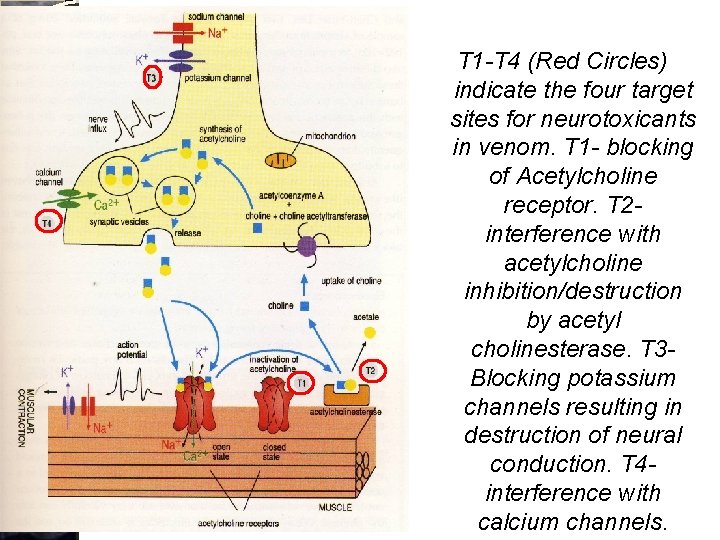
T 1 -T 4 (Red Circles) indicate the four target sites for neurotoxicants in venom. T 1 - blocking of Acetylcholine receptor. T 2 interference with acetylcholine inhibition/destruction by acetyl cholinesterase. T 3 Blocking potassium channels resulting in destruction of neural conduction. T 4 interference with calcium channels.
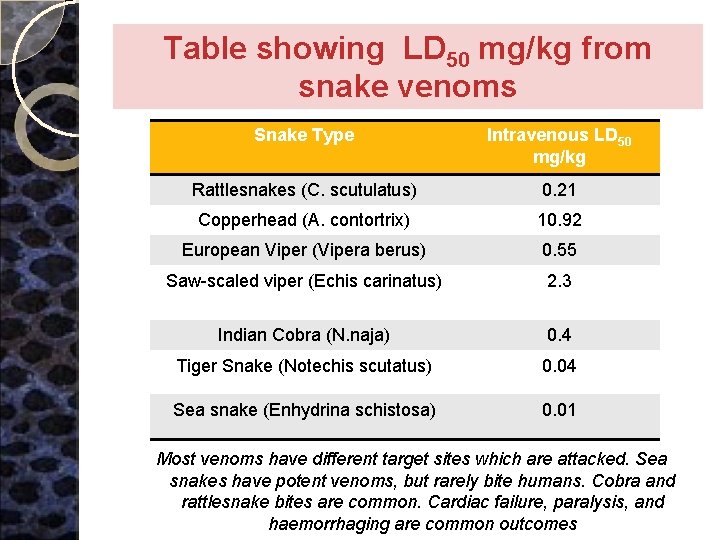
Table showing LD 50 mg/kg from snake venoms Snake Type Intravenous LD 50 mg/kg Rattlesnakes (C. scutulatus) 0. 21 Copperhead (A. contortrix) 10. 92 European Viper (Vipera berus) 0. 55 Saw-scaled viper (Echis carinatus) 2. 3 Indian Cobra (N. naja) 0. 4 Tiger Snake (Notechis scutatus) 0. 04 Sea snake (Enhydrina schistosa) 0. 01 Most venoms have different target sites which are attacked. Sea snakes have potent venoms, but rarely bite humans. Cobra and rattlesnake bites are common. Cardiac failure, paralysis, and haemorrhaging are common outcomes
Toxins in venoms such as cobratoxin attack different types of receptors. By having different arrangement of amino acids, and corresponding shapes, these toxins have multiple binding sites. This allows for quick action of the toxicant throughout the body. Distribution of venom through the body generally occurs through blood. Neurotoxicants bind to target sites and induce paralysis or spasms. Some snakes spit their venom as a defensive response to a threat. In humans, exposure to venom through ocular route causes severe irritation of the cornea and conjunctiva. Left untreated, it can cause permanent loss of vision. In spite of venom’s potency, there are treatments which can dramatically improve prognosis for an envenomed patient.
Treatment Antivenoms are manufactured by immunizing horse or sheep with venom from a particular species and then processing the serum from the animal. Monospecific venoms are administered in areas with one snake variety. Whereas, a polyspecific one is developed in a region with multiple snake varieties. Recently, mice have been injected with toxins. These in vitro techniques involve removing the spleen of the mice, culturing the immune cells and extracting the antibody from the colony.

THANK YOU!
- Slides: 19