
Surgical sutures and needles Presented By Dr Behzad
Surgical sutures and needles Presented By : Dr. Behzad Nemati Honar MD. MISF. Imam Hossein Hospital Shahid Beheshti University Of Medical Sciences

Special Thanks to ETHICON Company for Providing Educational Material of this Presentation
Why Sutures ? !
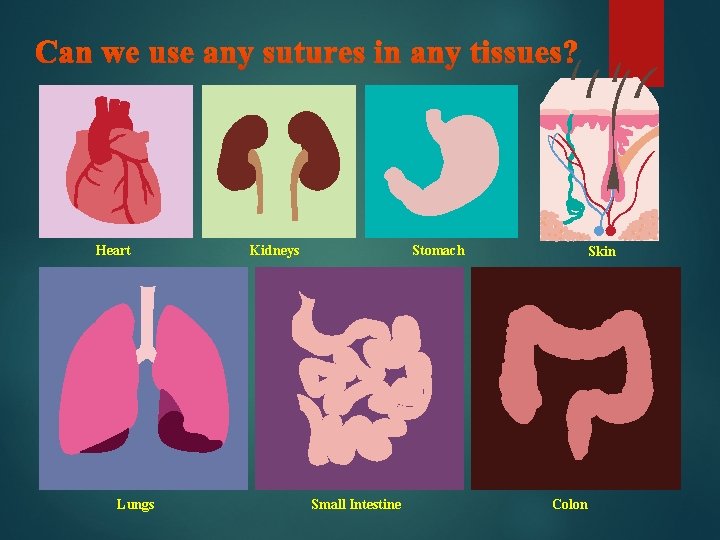
Heart Lungs Kidneys Stomach Small Intestine Skin Colon
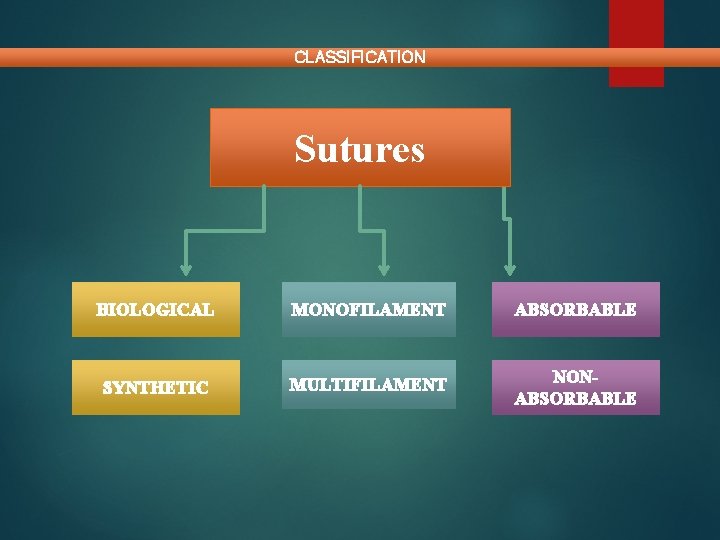
CLASSIFICATION Sutures BIOLOGICAL MONOFILAMENT ABSORBABLE SYNTHETIC MULTIFILAMENT NONABSORBABLE
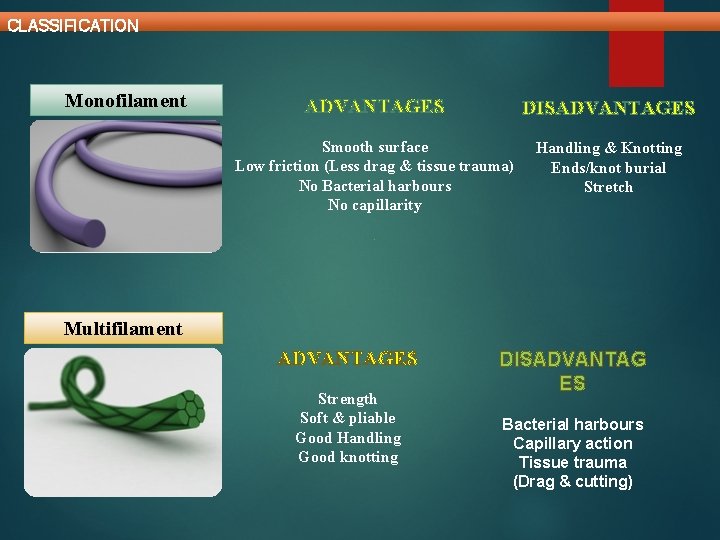
CLASSIFICATION Monofilament ADVANTAGES DISADVANTAGES Smooth surface Low friction (Less drag & tissue trauma) No Bacterial harbours No capillarity Handling & Knotting Ends/knot burial Stretch . Multifilament ADVANTAGES Strength Soft & pliable Good Handling Good knotting DISADVANTAG ES Bacterial harbours Capillary action Tissue trauma (Drag & cutting)
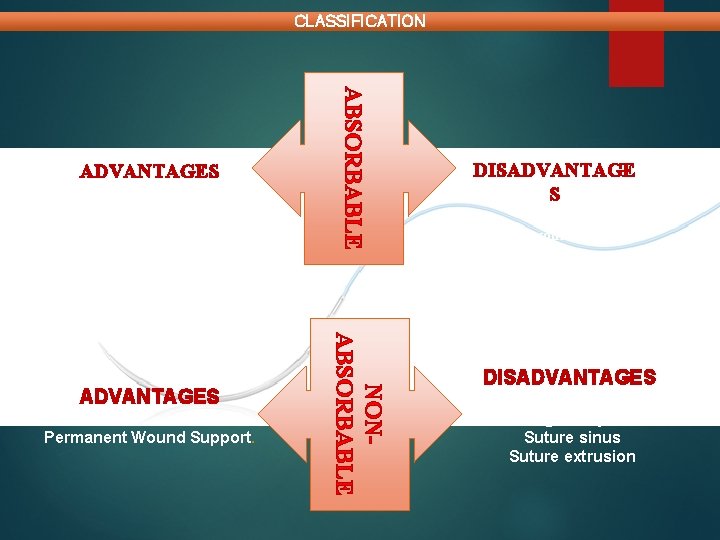
CLASSIFICATION Broken down by body No foreign body left Permanent Wound Support. NONABSORBABLE ADVANTAGES DISADVANTAGE S Time of wound support DISADVANTAGES Foreign body left Suture sinus Suture extrusion
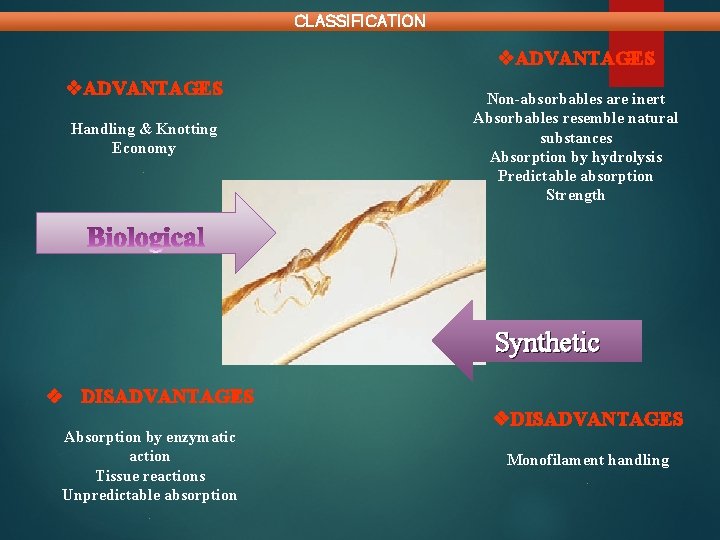
CLASSIFICATION v. ADVANTAGES Handling & Knotting Economy. Non-absorbables are inert Absorbables resemble natural substances Absorption by hydrolysis Predictable absorption Strength Synthetic v DISADVANTAGES Absorption by enzymatic action Tissue reactions Unpredictable absorption. v. DISADVANTAGES Monofilament handling.
Current Situation Using Cat Gut sutures is discontinue in Europe & Japan. Surgeons prefer to use Absorbable sutures instead of Non-Absorbable suture. Choosing between monofilament and multifilament is related to surgeon.
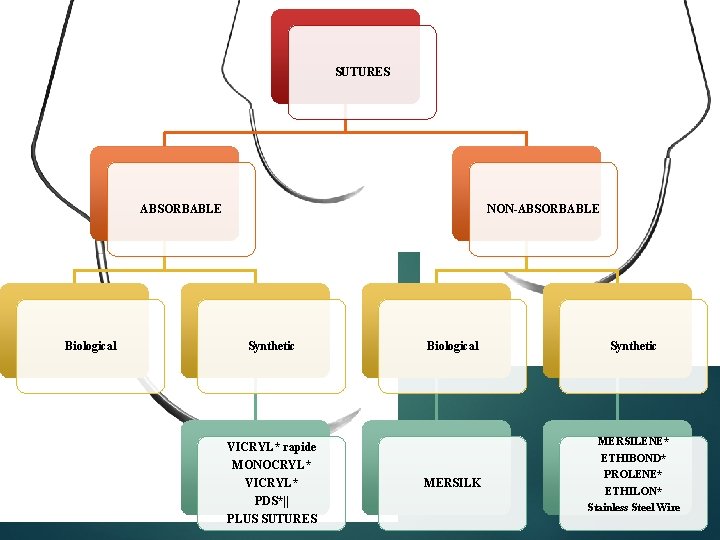
SUTURES ABSORBABLE Biological NON-ABSORBABLE Synthetic Biological VICRYL* rapide MONOCRYL* VICRYL* PDS*|| PLUS SUTURES MERSILK Synthetic MERSILENE* ETHIBOND* PROLENE* ETHILON* Stainless Steel Wire
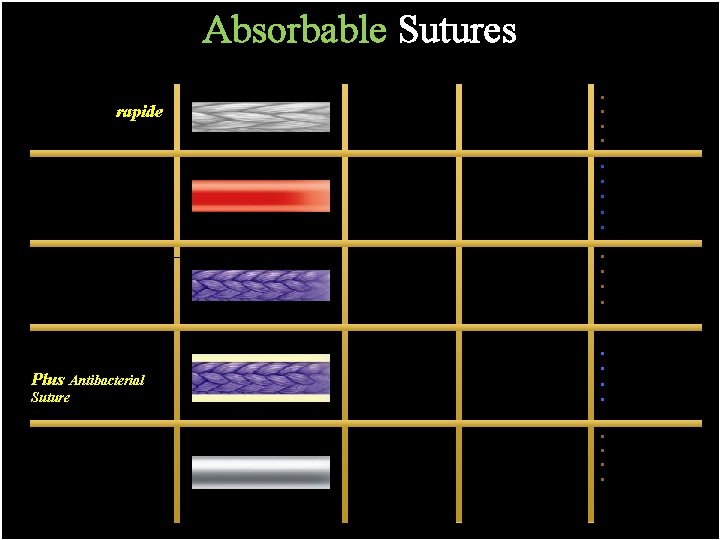
Absorbable Sutures Wound Support Mass Absorption VICRYL* rapide MONOCRYL* Coated VICRYL* Plus Antibacterial 10 days 20 days 30 days By 42 days • Skin • Perineum • Oral • Lacerations 90 - 120 days • Ligature • Mucosa • Obstetrics • Bowel • Skin 56 - 70 days • Ligature • General • Bowel • Ophthalmic 56 - 70 days • Ligature • General • Bowel • Orthopaedics 180 - 210 days • Traumatology • Ligaments • Fascia • Vessel anastomosis Suture PDS* II 60 days Typical Uses
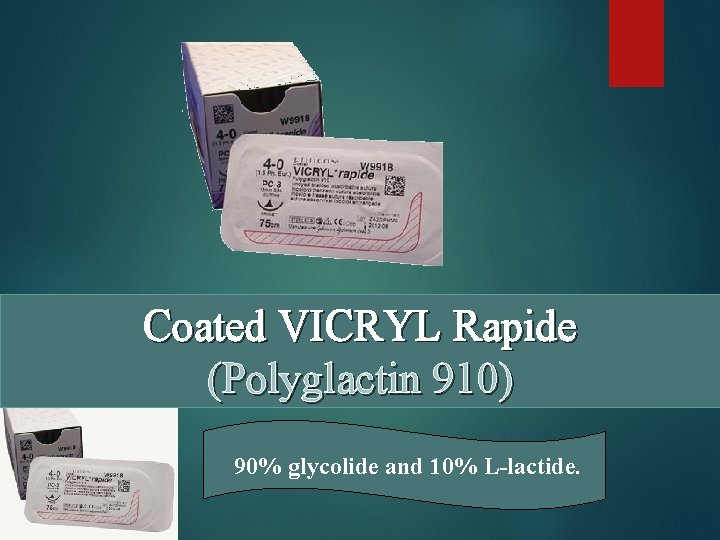
Coated VICRYL Rapide (Polyglactin 910) 90% glycolide and 10% L-lactide.
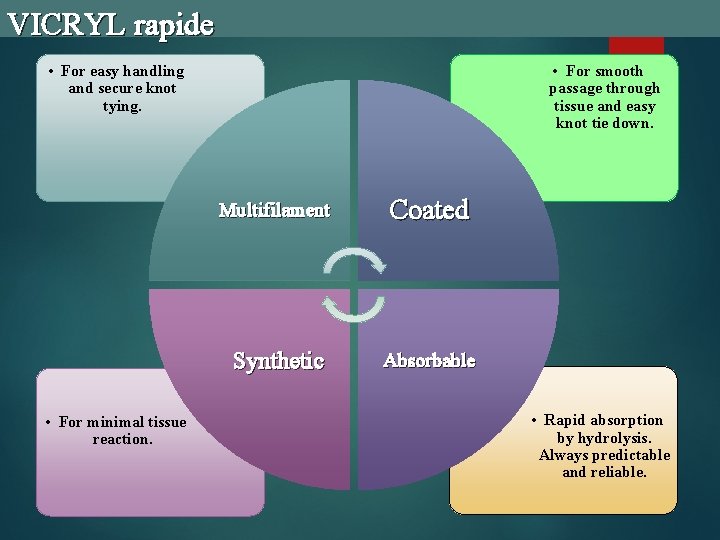
VICRYL rapide • For easy handling and secure knot tying. • For minimal tissue reaction. • For smooth passage through tissue and easy knot tie down. Multifilament Coated Synthetic Absorbable • Rapid absorption by hydrolysis. Always predictable and reliable.
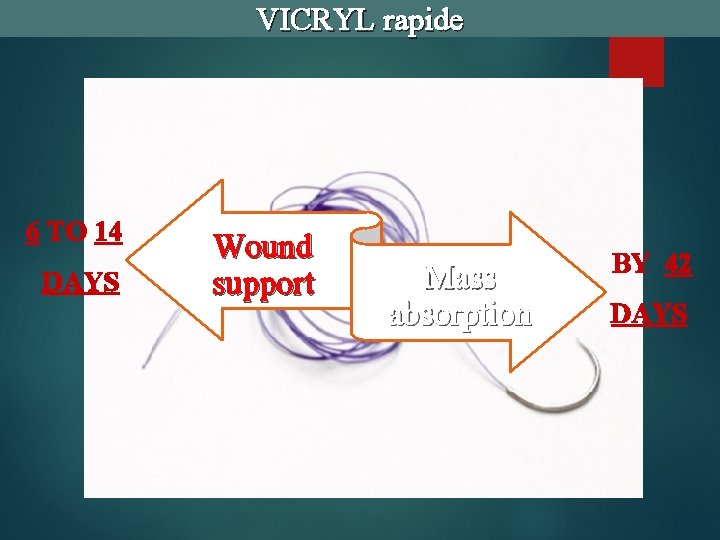
VICRYL rapide 6 TO 14 DAYS Wound support Mass absorption BY 42 DAYS
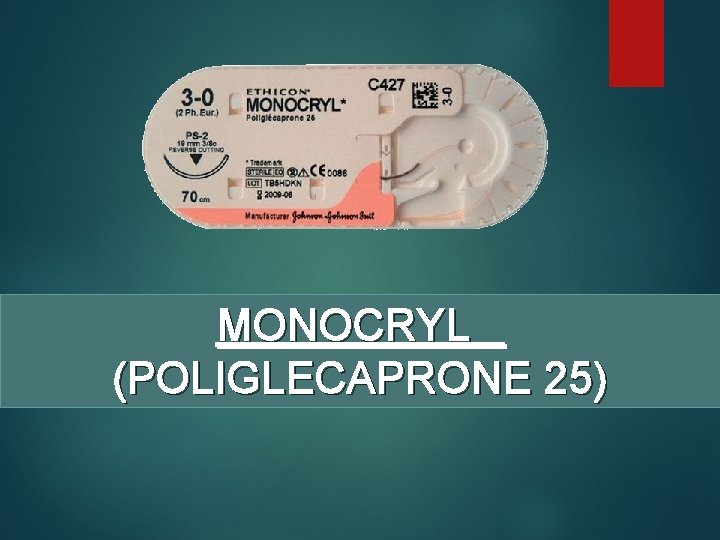
MONOCRYL (POLIGLECAPRONE 25)
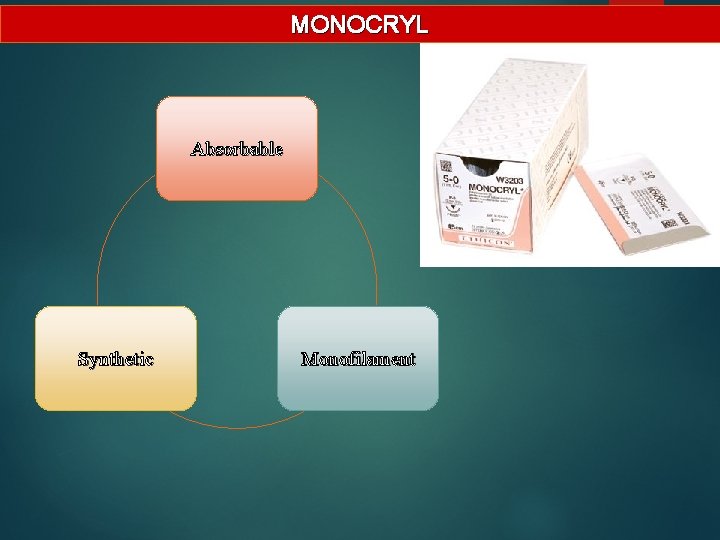
MONOCRYL Absorbable Synthetic Monofilament
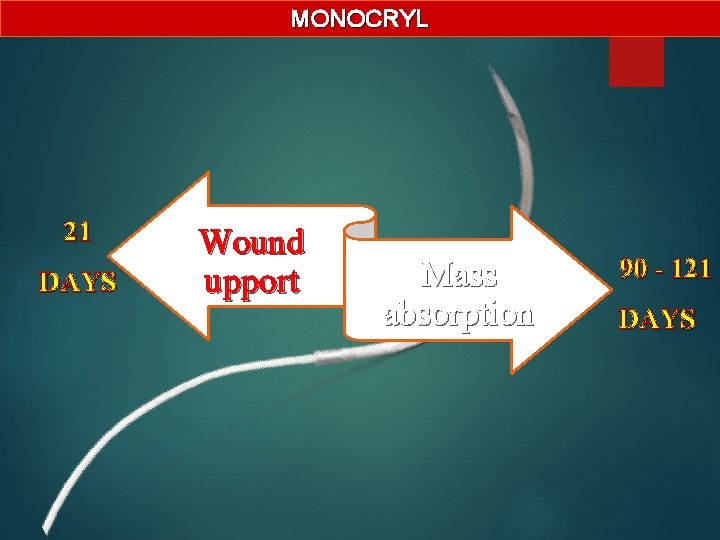
MONOCRYL 21 DAYS Wound upport Mass absorption 90 - 121 DAYS
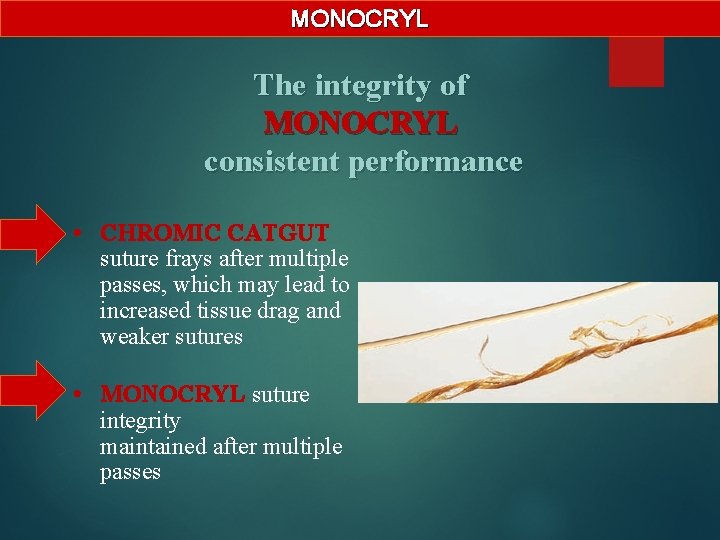
MONOCRYL The integrity of MONOCRYL consistent performance • CHROMIC CATGUT suture frays after multiple passes, which may lead to increased tissue drag and weaker sutures • MONOCRYL suture integrity maintained after multiple passes
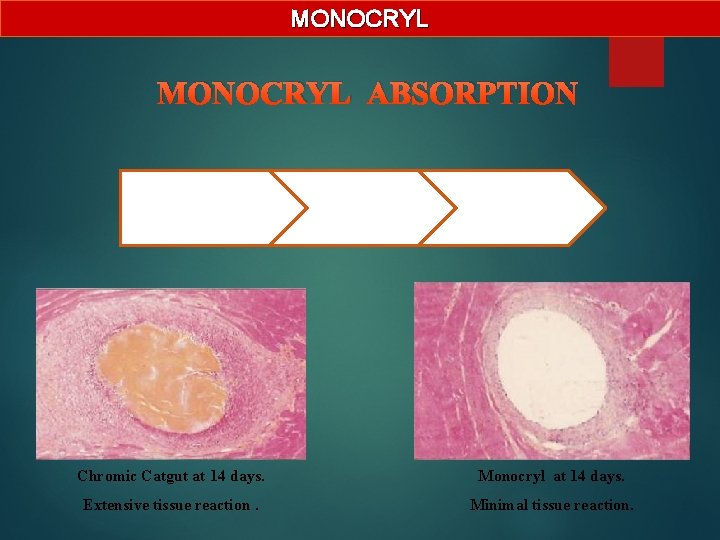
MONOCRYL ABSORPTION Synthetic Absorbable (Hydrolysis) Predictable absorption Minimal tissue reaction Chromic Catgut at 14 days. Monocryl at 14 days. Extensive tissue reaction. Minimal tissue reaction.
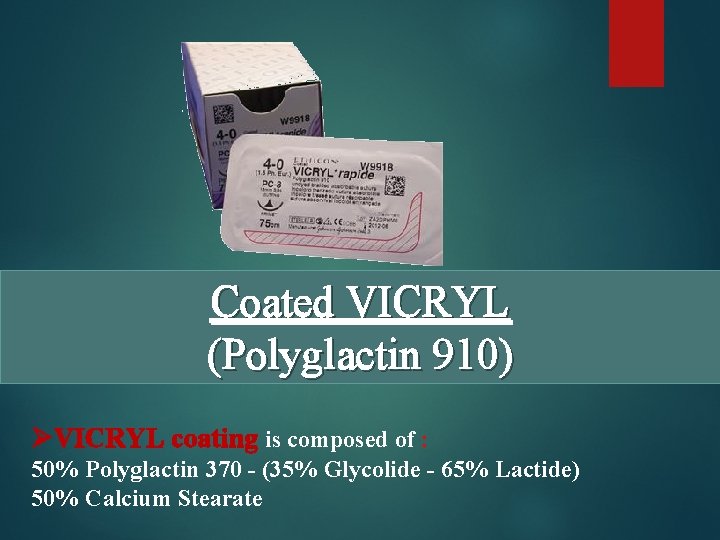
Coated VICRYL (Polyglactin 910) ØVICRYL coating is composed of : 50% Polyglactin 370 - (35% Glycolide - 65% Lactide) 50% Calcium Stearate
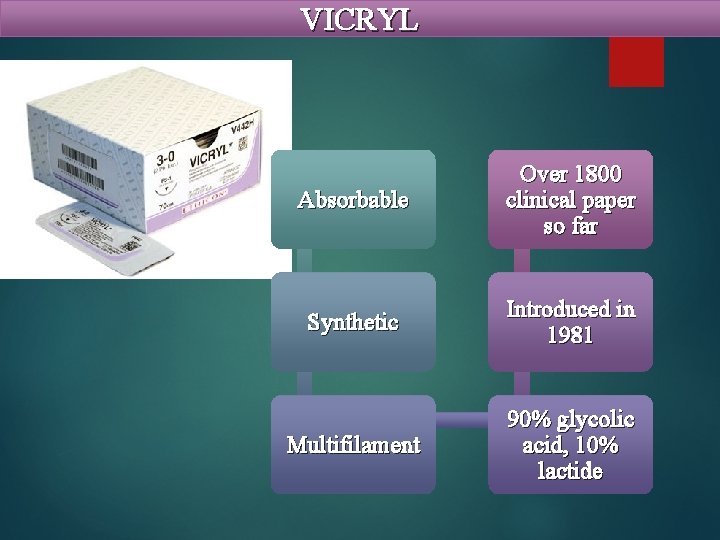
VICRYL Absorbable Over 1800 clinical paper so far Synthetic Introduced in 1981 Multifilament 90% glycolic acid, 10% lactide
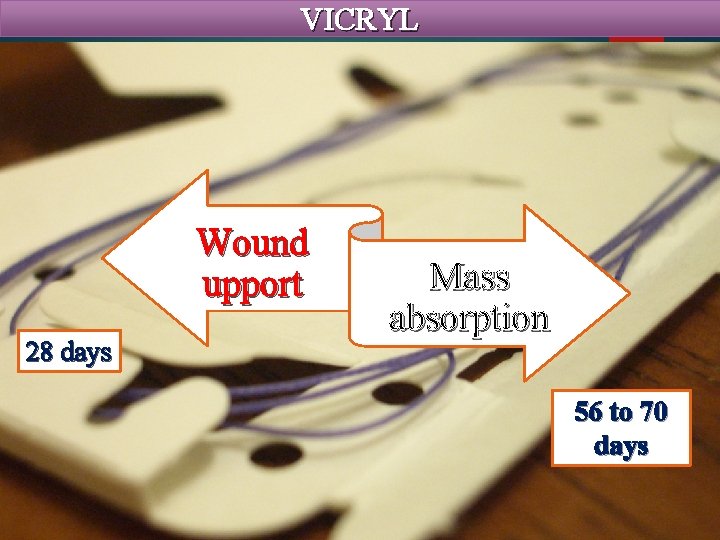
VICRYL Wound upport 28 days Mass absorption 56 to 70 days
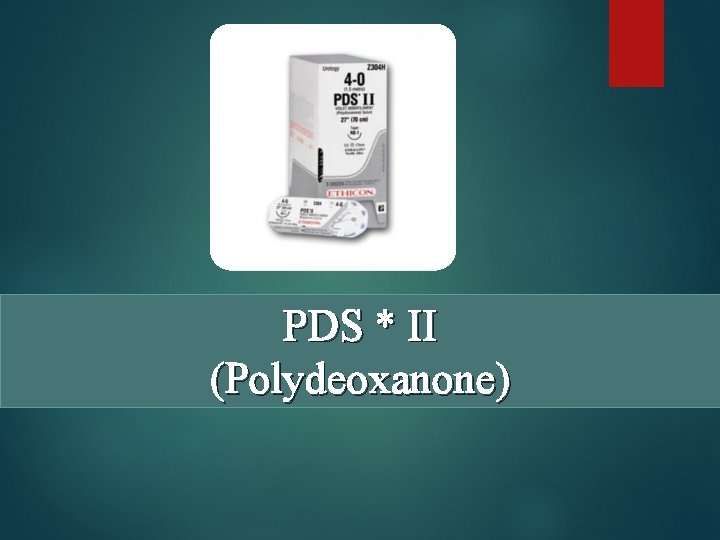
PDS * II (Polydeoxanone)
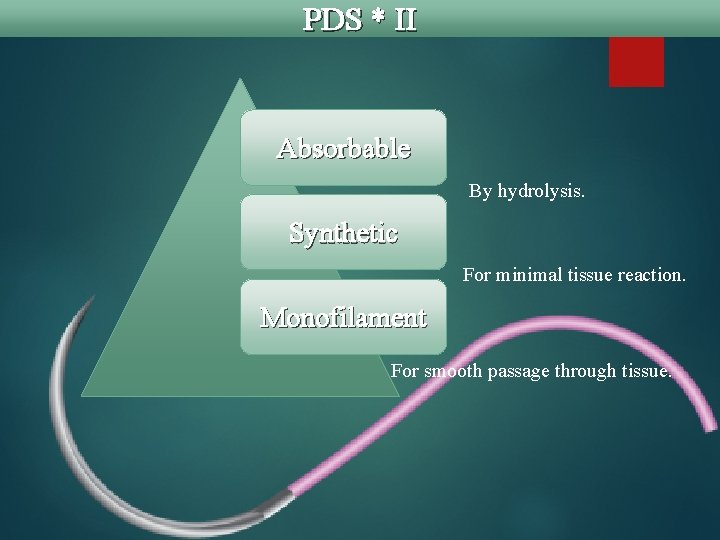
PDS * II Absorbable By hydrolysis. Synthetic For minimal tissue reaction. Monofilament For smooth passage through tissue.
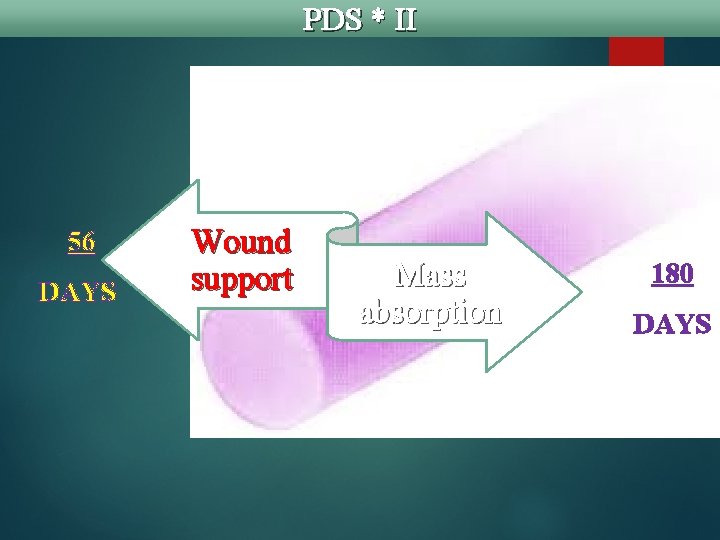
PDS * II 56 DAYS Wound support Mass absorption 180 DAYS
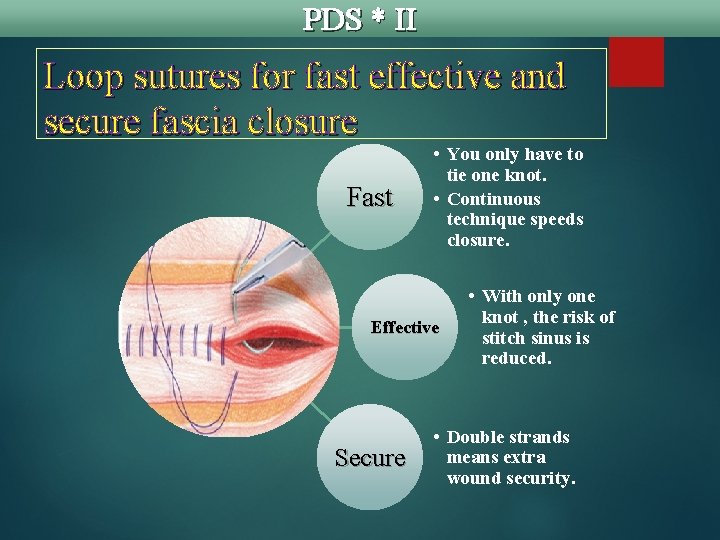
PDS * II Loop sutures for fast effective and secure fascia closure Fast • You only have to tie one knot. • Continuous technique speeds closure. Effective Secure • With only one knot , the risk of stitch sinus is reduced. • Double strands means extra wound security.

Plus Sutures
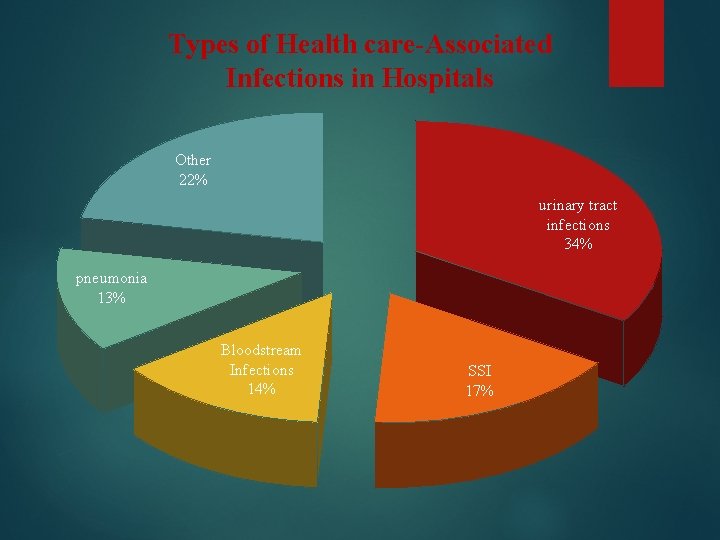
Types of Health care-Associated Infections in Hospitals Other 22% urinary tract infections 34% pneumonia 13% Bloodstream Infections 14% SSI 17%
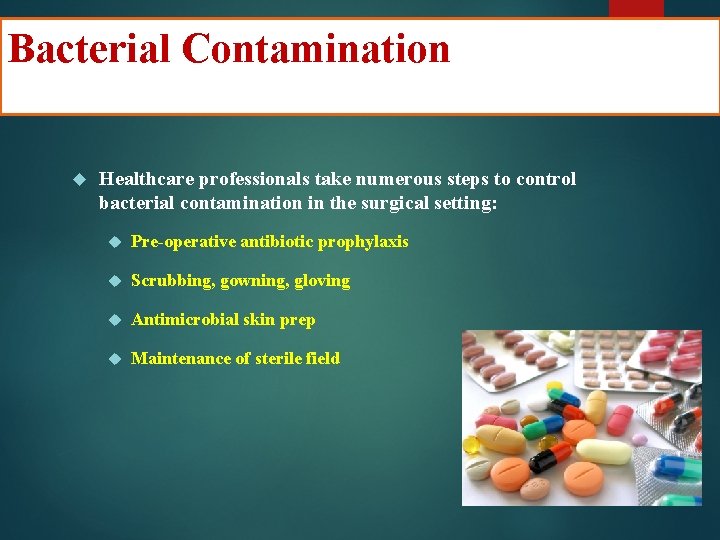
Bacterial Contamination Healthcare professionals take numerous steps to control bacterial contamination in the surgical setting: Pre-operative antibiotic prophylaxis Scrubbing, gowning, gloving Antimicrobial skin prep Maintenance of sterile field
Bacterial Contamination All of these measures are employed before the procedure and external to the patient. Doesn’t it make sense to try to control bacterial wound contamination during the procedure, and inside the patient?
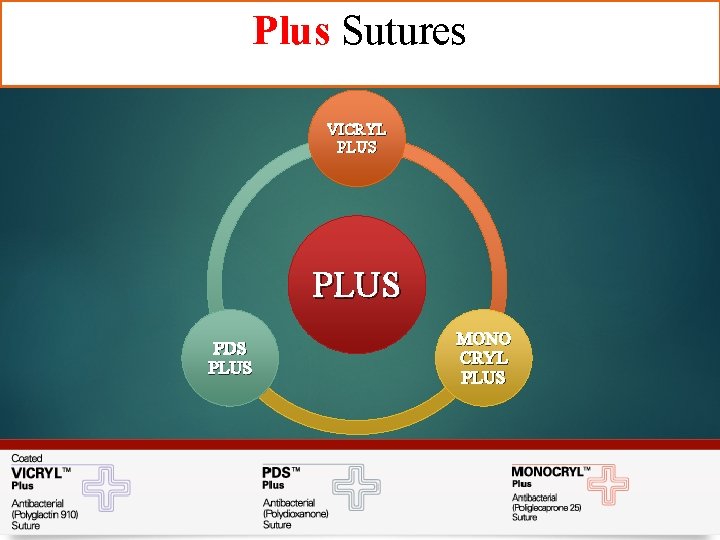
Plus Sutures VICRYL PLUS PDS PLUS MONO CRYL PLUS
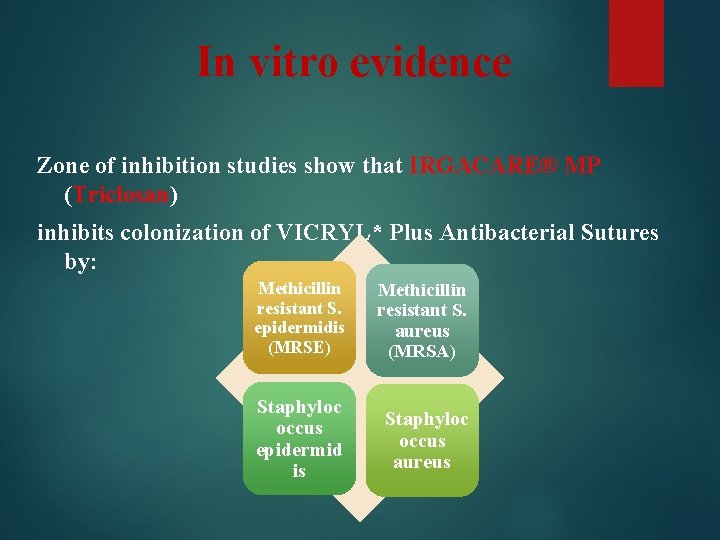
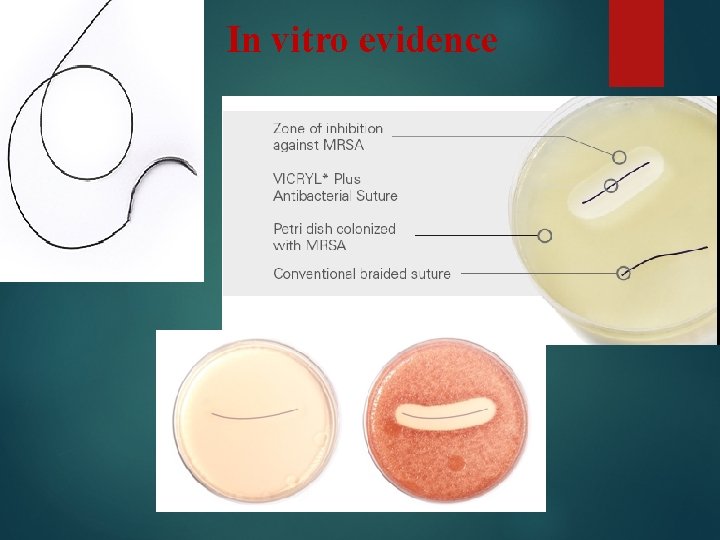
In vitro evidence Zone of inhibition studies show that IRGACARE® MP (Triclosan) inhibits colonization of VICRYL* Plus Antibacterial Sutures by: Methicillin resistant S. epidermidis (MRSE) Methicillin resistant S. aureus (MRSA) Staphyloc occus epidermid is Staphyloc occus aureus
In vitro evidence

NONABSORBABLE SUTURES
PROLENE* POLYPROPYLENE
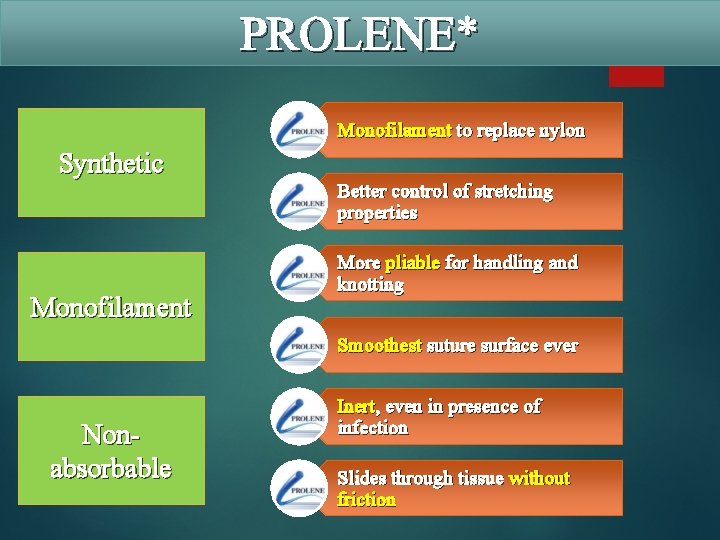
PROLENE* Monofilament to replace nylon Synthetic Monofilament Better control of stretching properties More pliable for handling and knotting Smoothest suture surface ever Nonabsorbable Inert, even in presence of infection Slides through tissue without friction
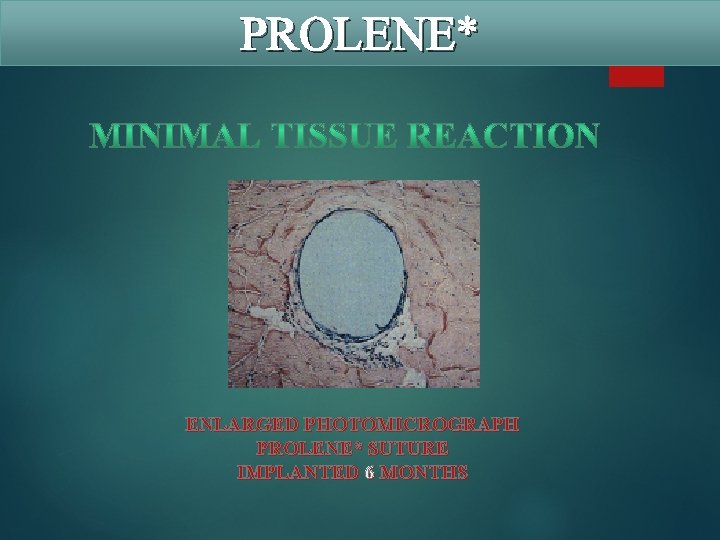
PROLENE* ENLARGED PHOTOMICROGRAPH PROLENE* SUTURE IMPLANTED 6 MONTHS
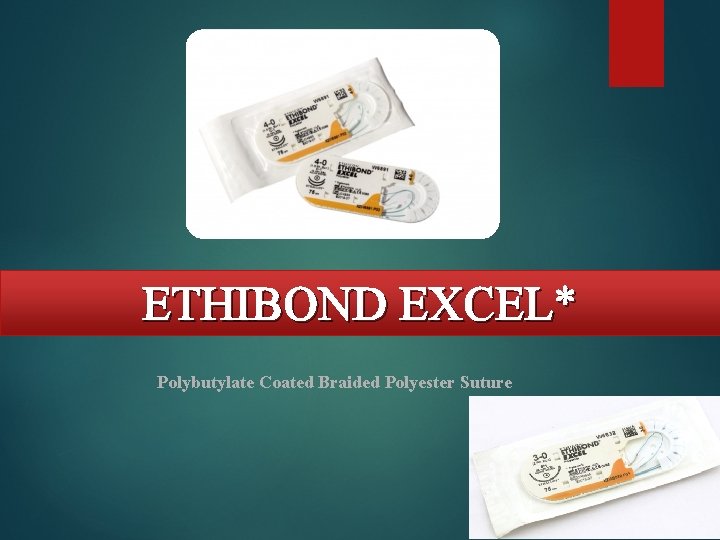
ETHIBOND EXCEL* Polybutylate Coated Braided Polyester Suture
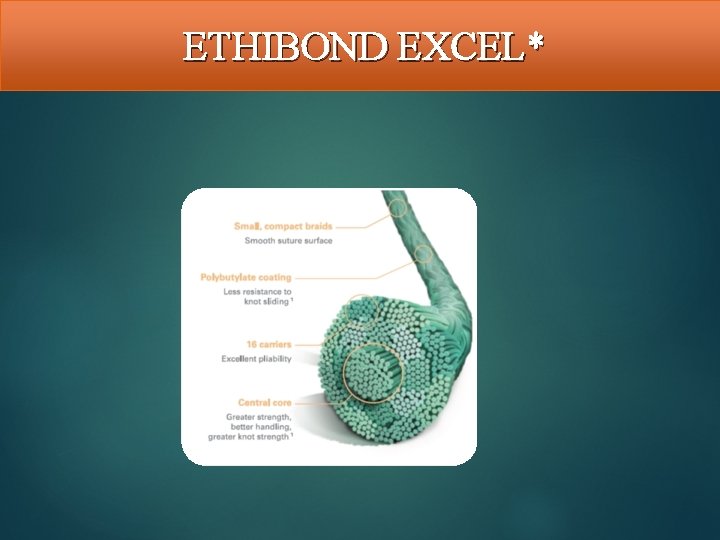
ETHIBOND EXCEL*
ETHIBOND EXCEL* Very strong Provides permanent wound support Good handling & knotting Polybutylate coating reduces bacterial harbours and capillarity Coating provides smooth passage through tissue Ideal for heart valve replacement
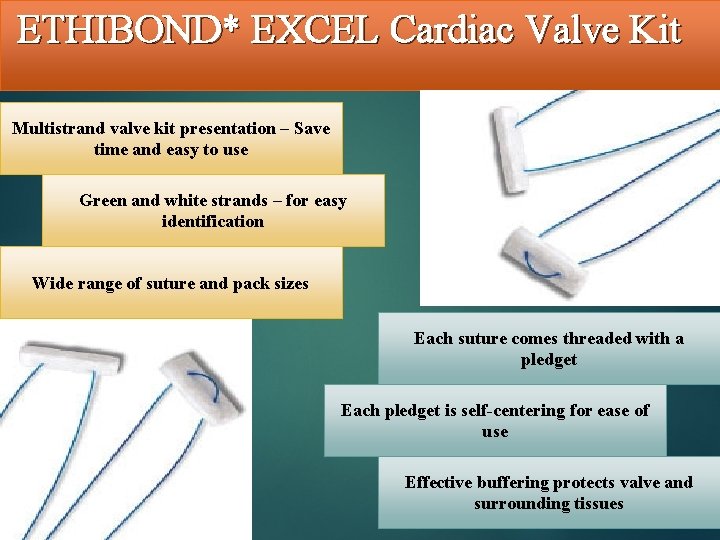
ETHIBOND* EXCEL Cardiac Valve Kit Multistrand valve kit presentation – Save time and easy to use Green and white strands – for easy identification Wide range of suture and pack sizes Each suture comes threaded with a pledget Each pledget is self-centering for ease of use Effective buffering protects valve and surrounding tissues
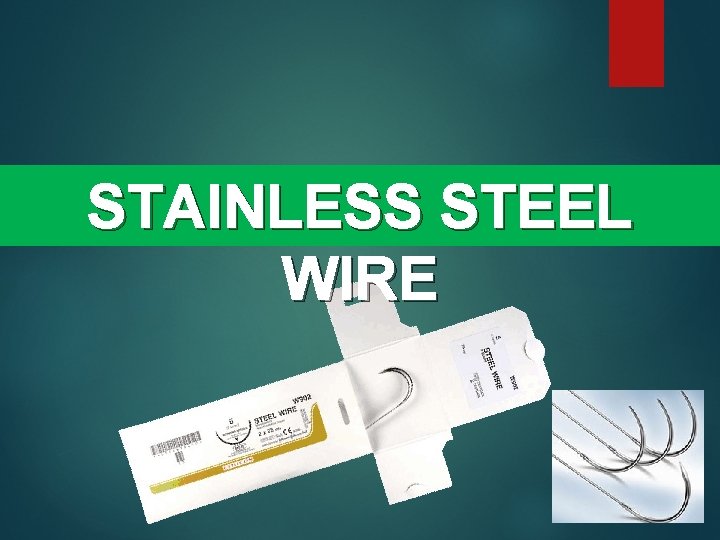
STAINLESS STEEL WIRE
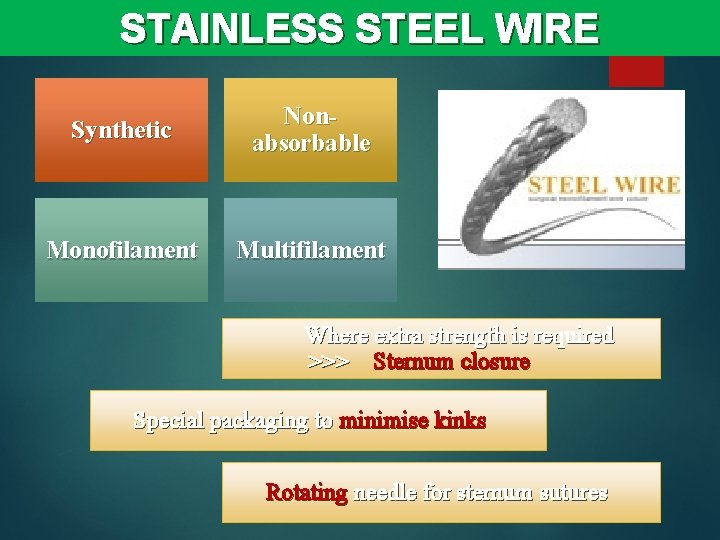
STAINLESS STEEL WIRE Synthetic Nonabsorbable Monofilament Multifilament Where extra strength is required >>> Sternum closure Special packaging to minimise kinks Rotating needle for sternum sutures
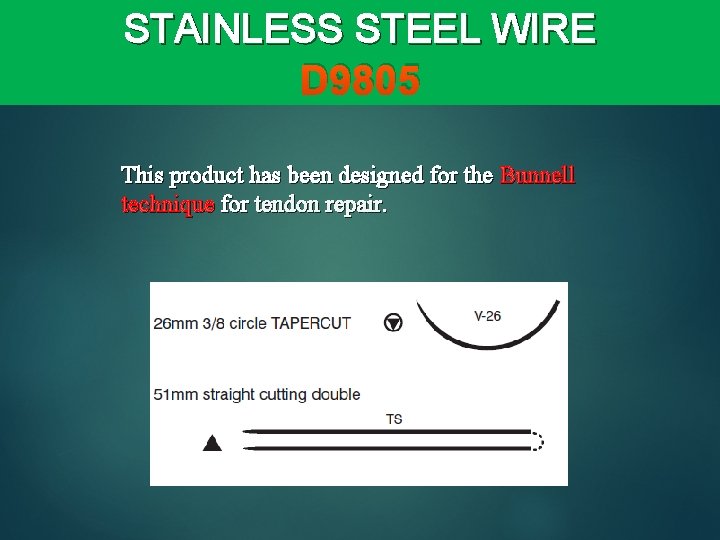
STAINLESS STEEL WIRE D 9805 This product has been designed for the Bunnell technique for tendon repair.
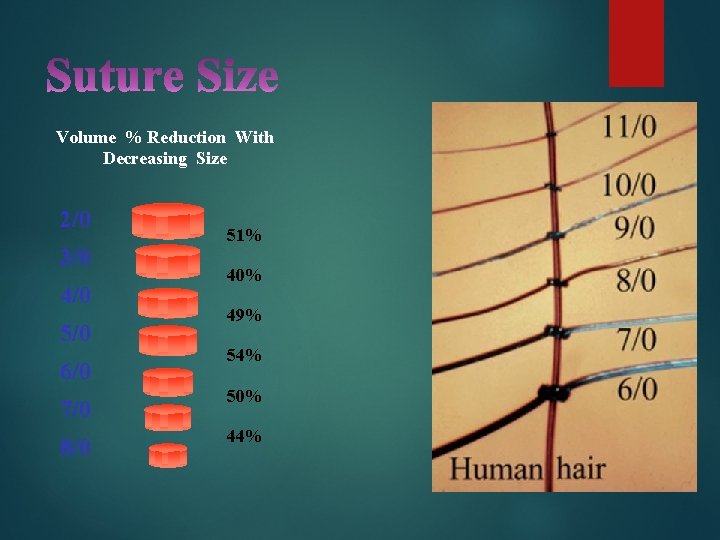
Volume % Reduction With Decreasing Size 2/0 3/0 4/0 5/0 6/0 7/0 8/0 51% 40% 49% 54% 50% 44%
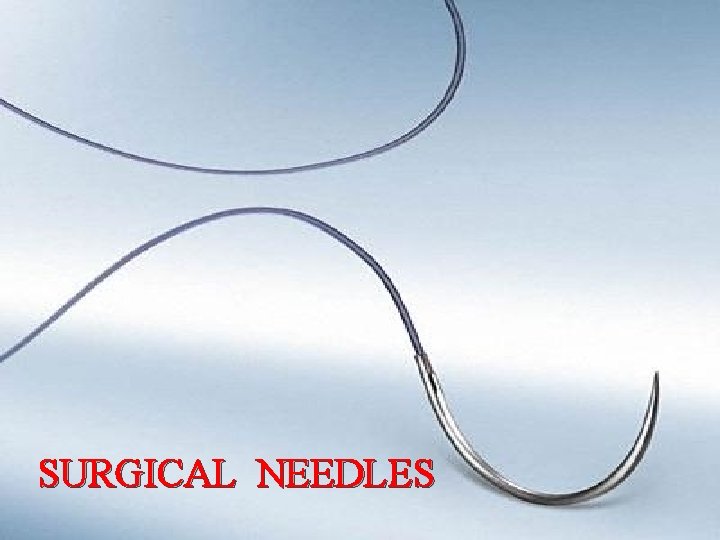
SURGICAL NEEDLES
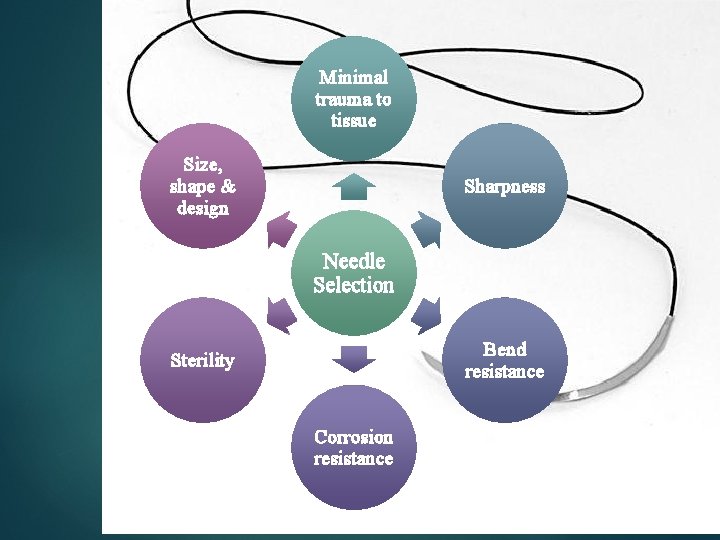
Minimal trauma to tissue Size, shape & design Sharpness Needle Selection Bend resistance Sterility Corrosion resistance
v. Selection & Use of Surgical Needles ADVANCED NEEDLE COATING INTELLIGENT GEOMETRY ET H A L L O Y
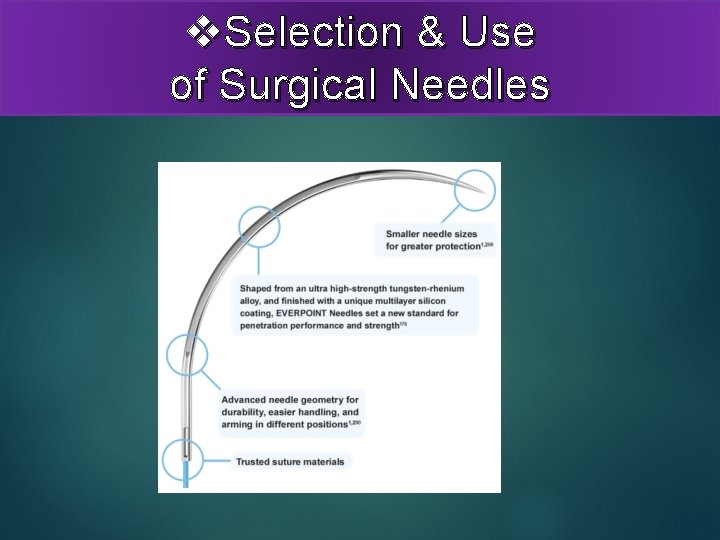
v. Selection & Use of Surgical Needles
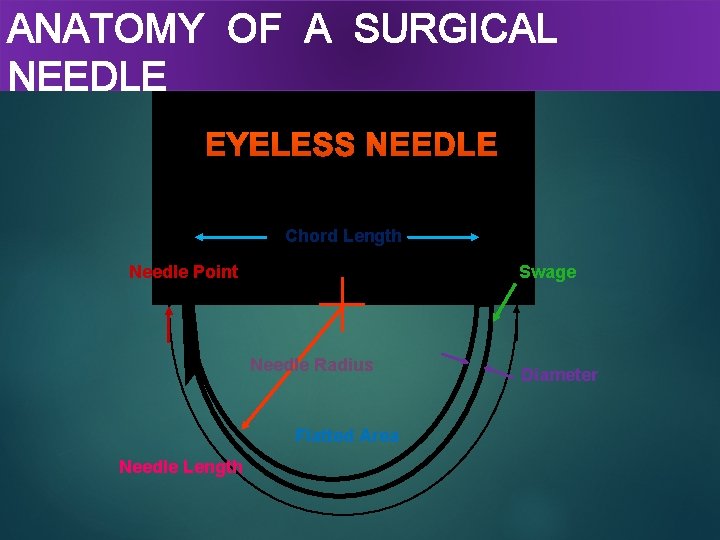
ANATOMY OF A SURGICAL NEEDLE Chord Length Needle Point Swage Needle Radius Flatted Area Needle Length Diameter
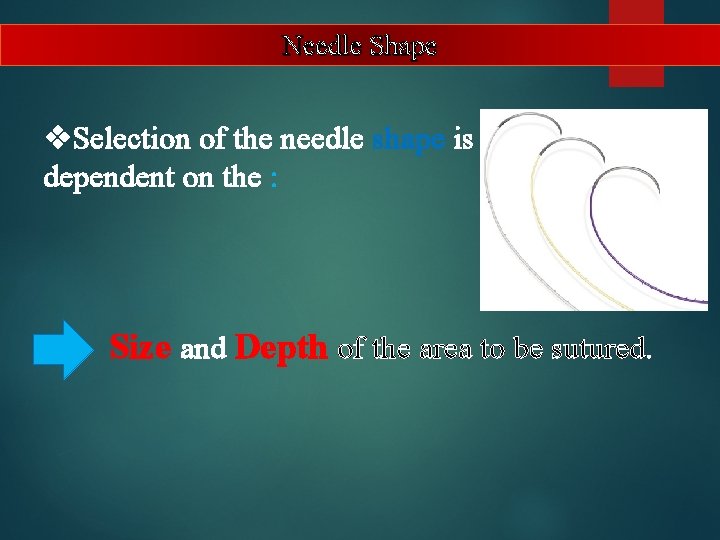
Needle Shape v. Selection of the needle shape is dependent on the : Size and Depth of the area to be sutured.
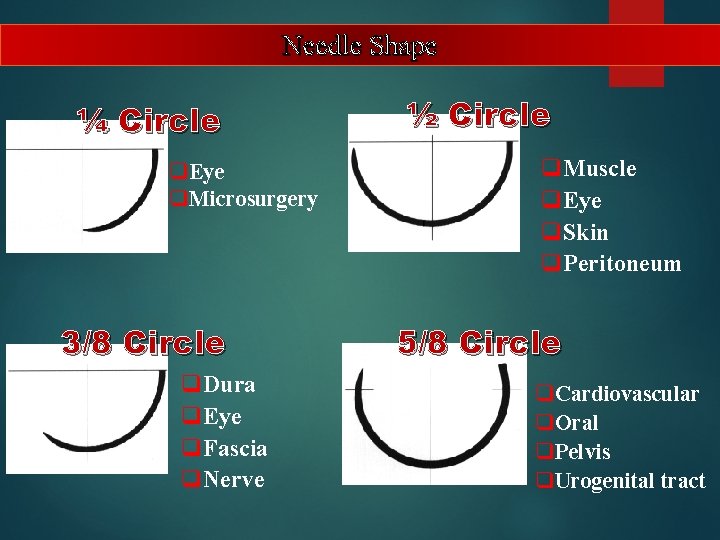
Needle Shape ¼ Circle q. Eye q. Microsurgery 3/8 Circle q. Dura q. Eye q. Fascia q. Nerve ½ Circle q. Muscle q. Eye q. Skin q. Peritoneum 5/8 Circle q. Cardiovascular q. Oral q. Pelvis q. Urogenital tract
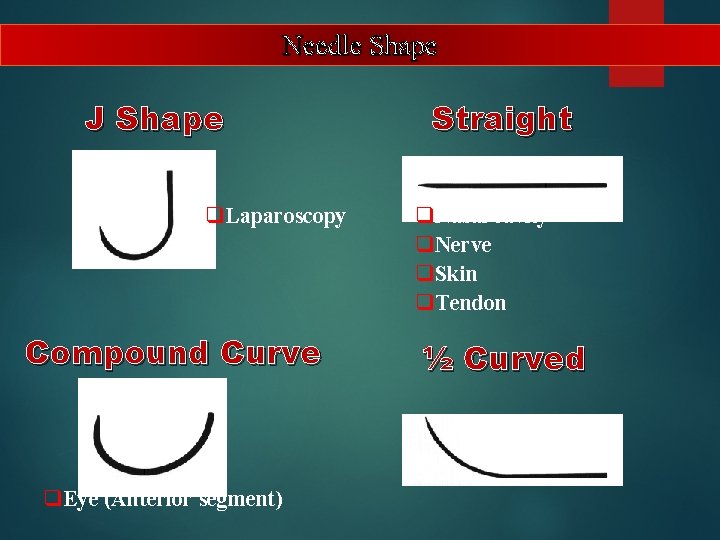
Needle Shape J Shape q. Laparoscopy Compound Curve q. Eye (Anterior segment) Straight q. Nasal cavity q. Nerve q. Skin q. Tendon ½ Curved
Needle Alloy +40% Y E THA LLO
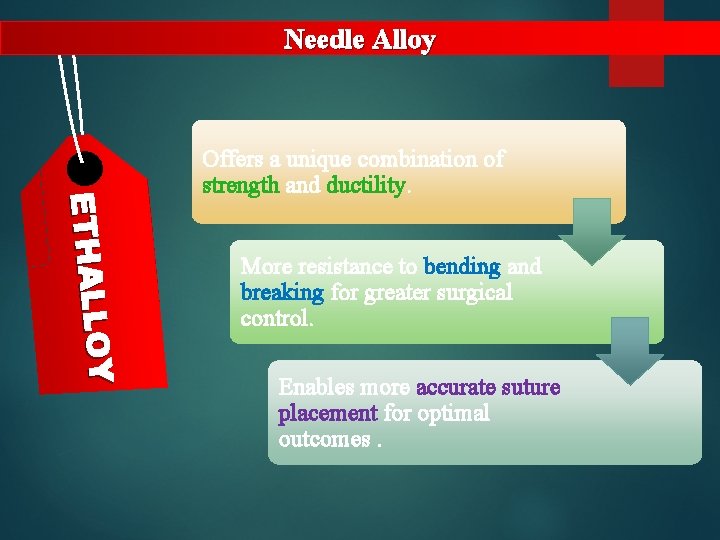
Needle Alloy Y E THA LLO Offers a unique combination of strength and ductility. More resistance to bending and breaking for greater surgical control. Enables more accurate suture placement for optimal outcomes.
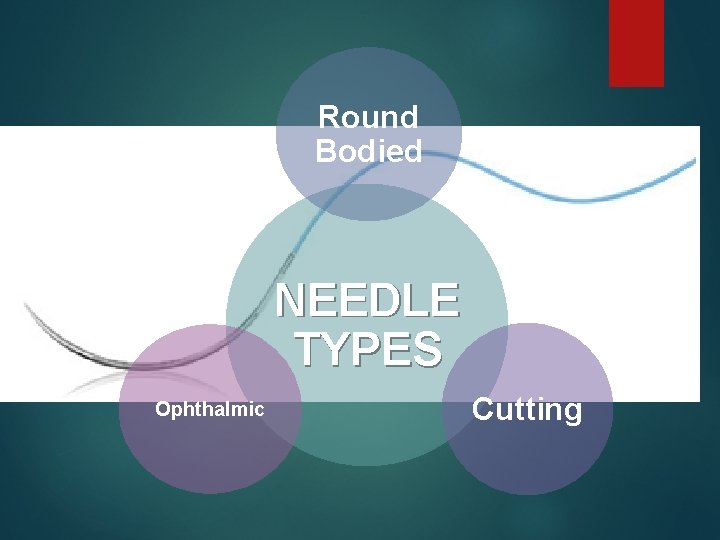
Round Bodied NEEDLE TYPES Ophthalmic Cutting
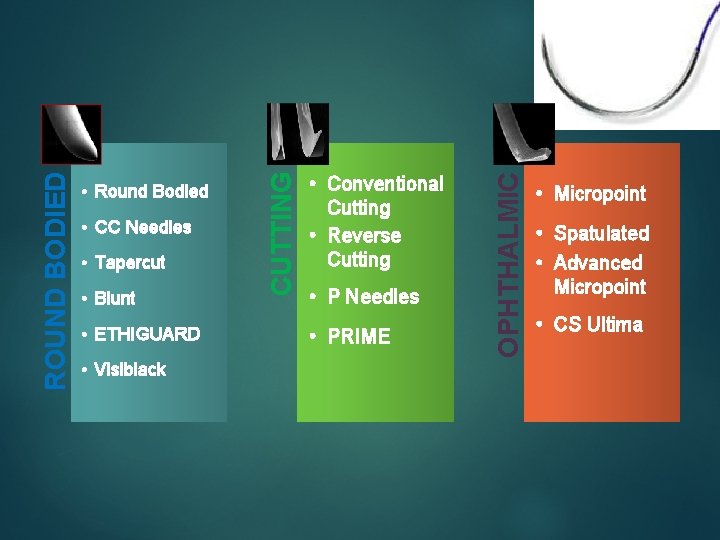
• Tapercut • Blunt • ETHIGUARD • Visiblack • Conventional Cutting • Reverse Cutting • P Needles • PRIME OPHTHALMIC • CC Needles CUTTING ROUND BODIED • Round Bodied • Micropoint • Spatulated • Advanced Micropoint • CS Ultima
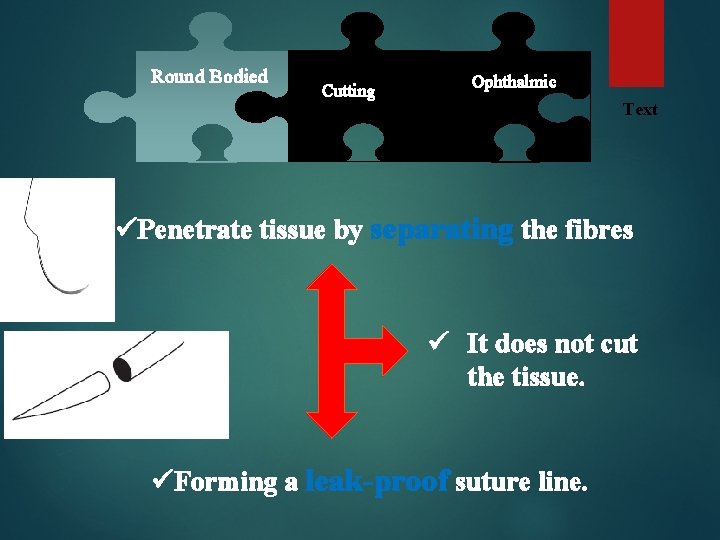
Round Bodied Cutting Ophthalmic Text üPenetrate tissue by separating the fibres ü It does not cut the tissue. üForming a leak-proof suture line.
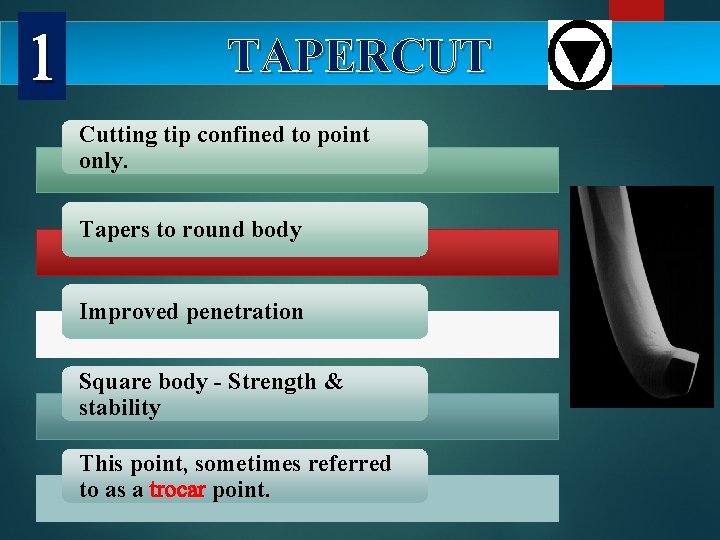
1 TAPERCUT Cutting tip confined to point only. Tapers to round body Improved penetration Square body - Strength & stability This point, sometimes referred to as a trocar point.
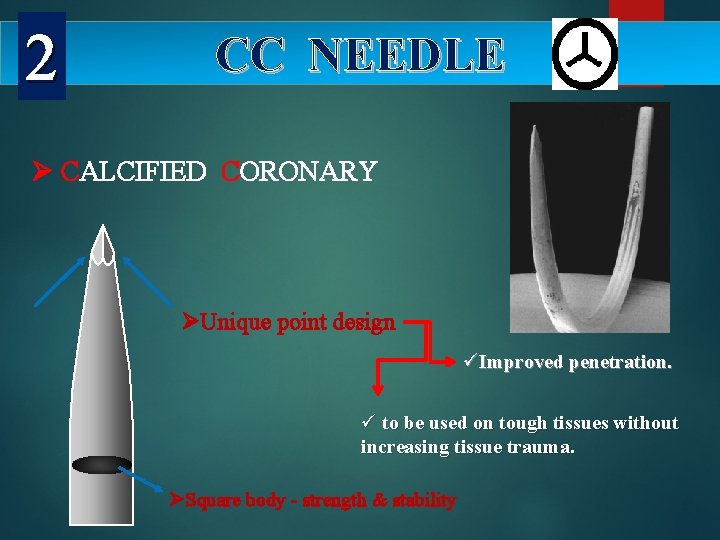
2 CC NEEDLE Ø CALCIFIED CORONARY ØUnique point design üImproved penetration. ü to be used on tough tissues without increasing tissue trauma. ØSquare body - strength & stability
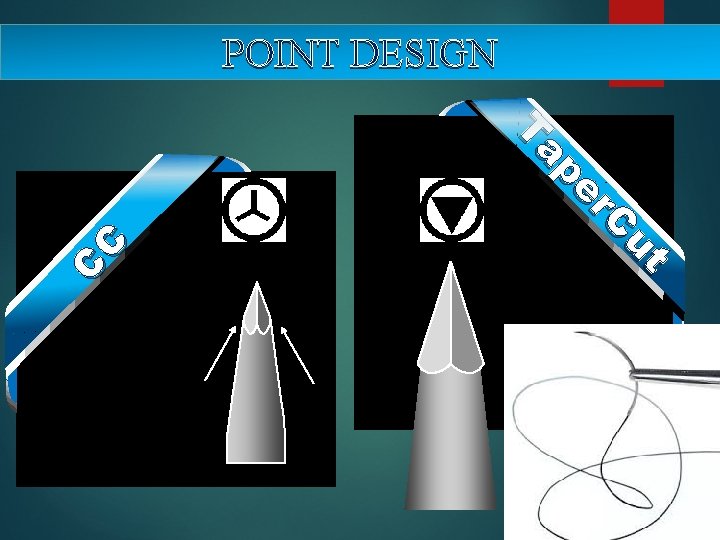
ut C er p Ta CC POINT DESIGN
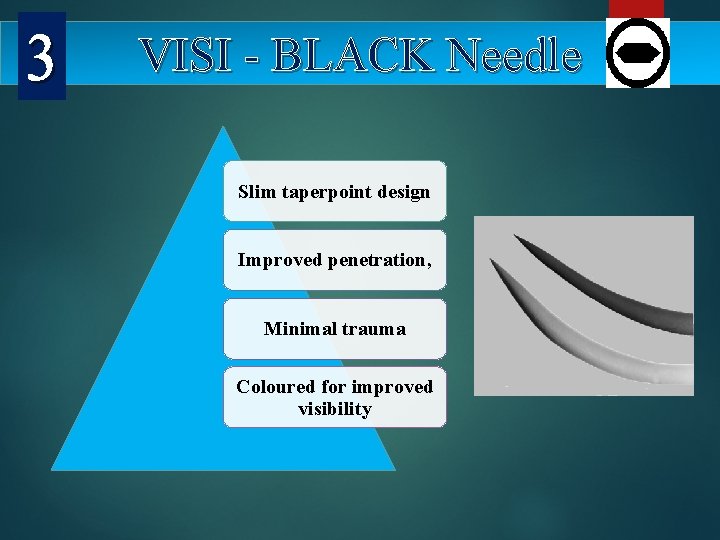
3 VISI - BLACK Needle Slim taperpoint design Improved penetration, Minimal trauma Coloured for improved visibility
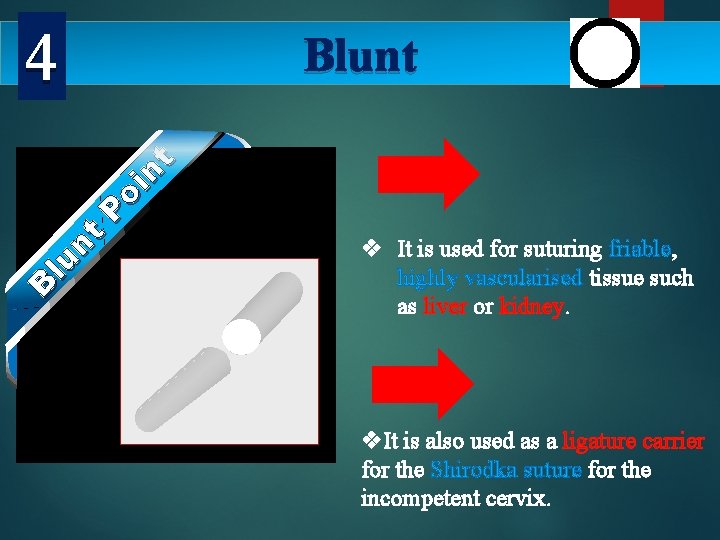
4 Bl u nt Po in t Blunt v It is used for suturing friable, highly vascularised tissue such as liver or kidney. v. It is also used as a ligature carrier for the Shirodka suture for the incompetent cervix.
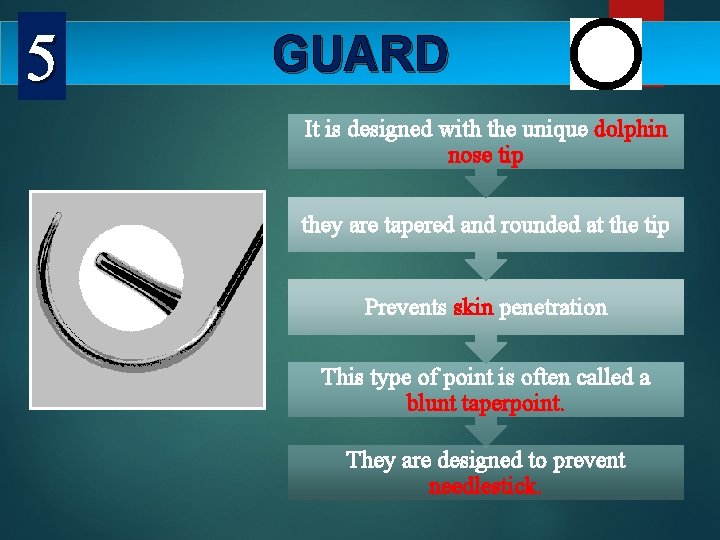
5 GUARD It is designed with the unique dolphin nose tip they are tapered and rounded at the tip Prevents skin penetration This type of point is often called a blunt taperpoint. They are designed to prevent needlestick.
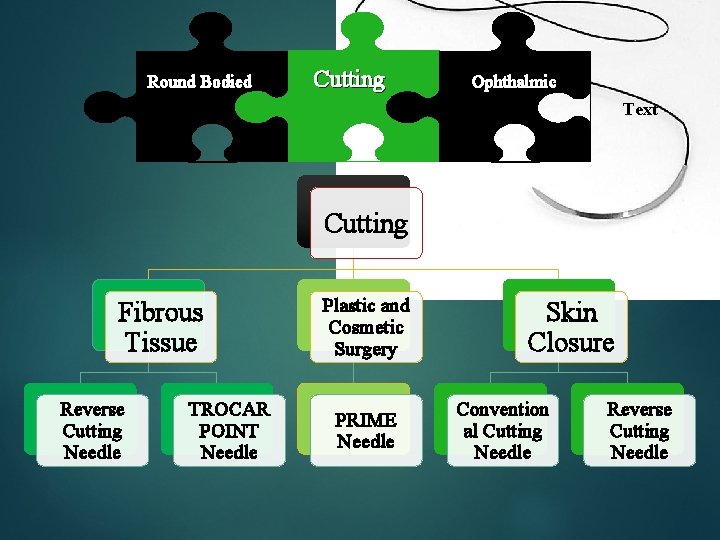
Round Bodied Cutting Ophthalmic Text Cutting Fibrous Tissue Reverse Cutting Needle TROCAR POINT Needle Plastic and Cosmetic Surgery PRIME Needle Skin Closure Convention al Cutting Needle Reverse Cutting Needle
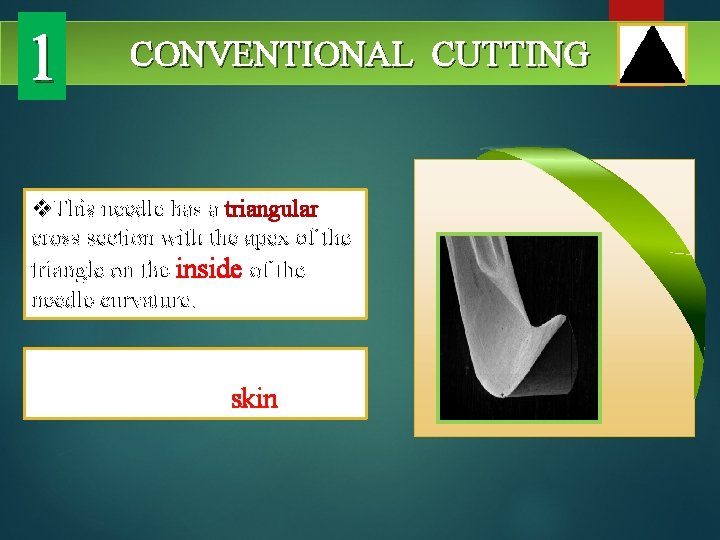
1 CONVENTIONAL CUTTING v. This needle has a triangular cross section with the apex of the triangle on the inside of the needle curvature. v. Conventional cutting needles are ideal needles for skin.
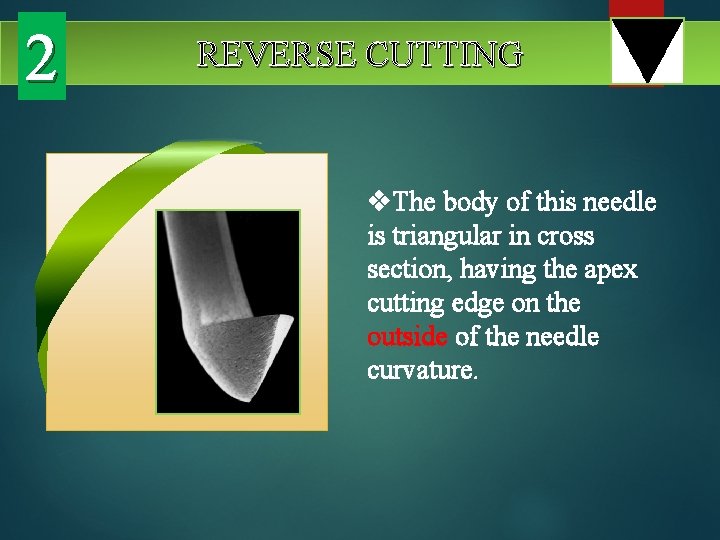
2 REVERSE CUTTING v. The body of this needle is triangular in cross section, having the apex cutting edge on the outside of the needle curvature.
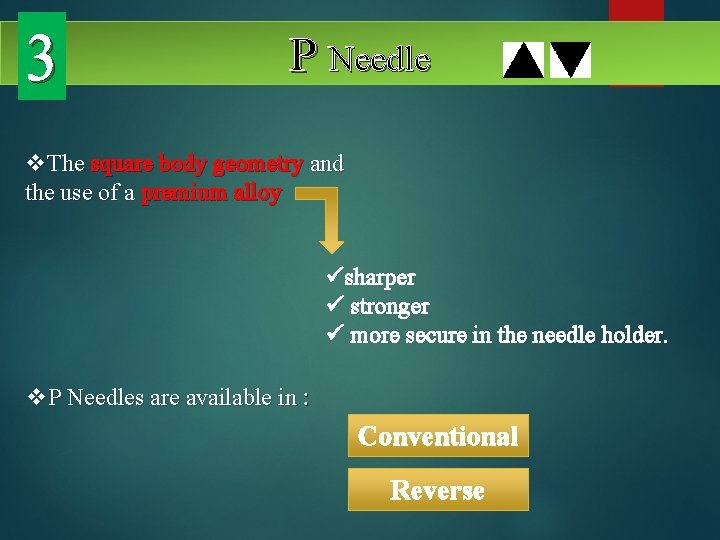
3 P Needle v. The square body geometry and the use of a premium alloy üsharper ü stronger ü more secure in the needle holder. v. P Needles are available in : Conventional Reverse
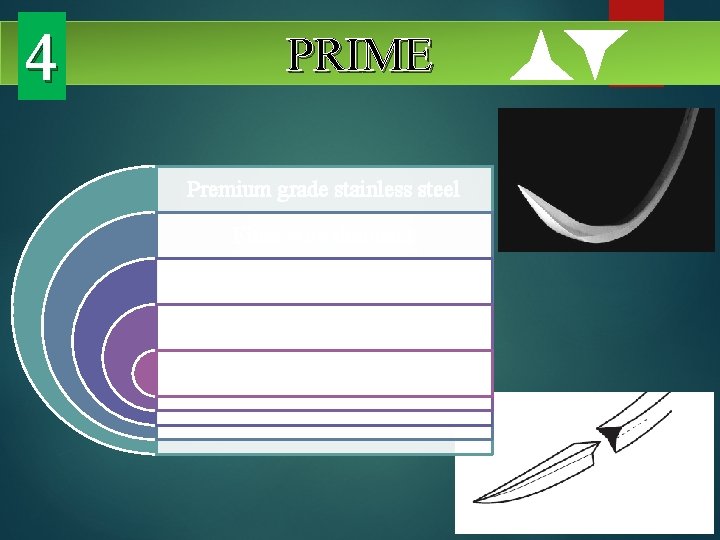
4 PRIME Premium grade stainless steel Finer wire diameter Hollow form point for penetration For Plastic and Cosmetic surgery Conventional or Reverse Cutting
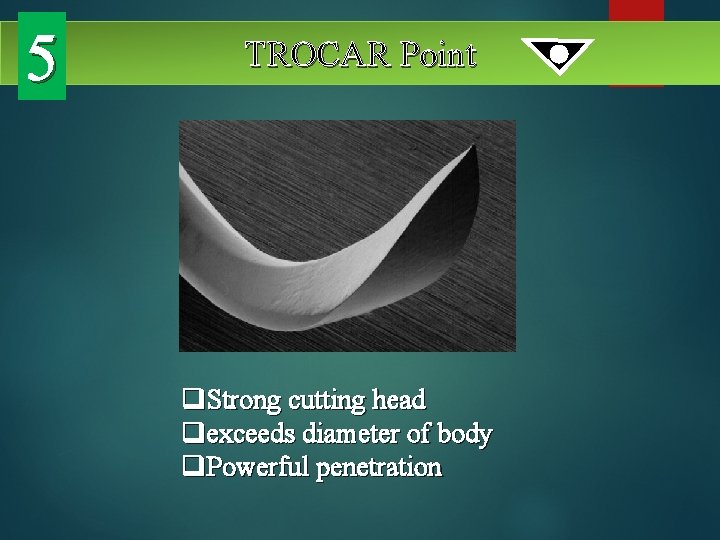
5 TROCAR Point q. Strong cutting head qexceeds diameter of body q. Powerful penetration
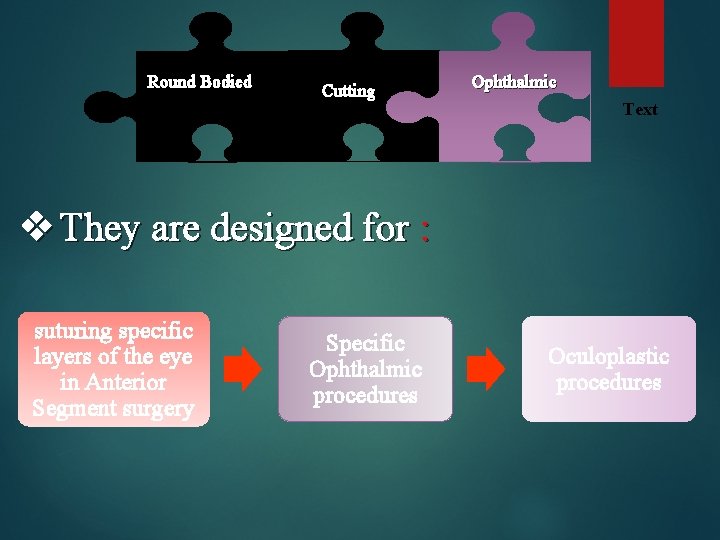
Round Bodied Cutting Ophthalmic Text v They are designed for : suturing specific layers of the eye in Anterior Segment surgery Specific Ophthalmic procedures Oculoplastic procedures
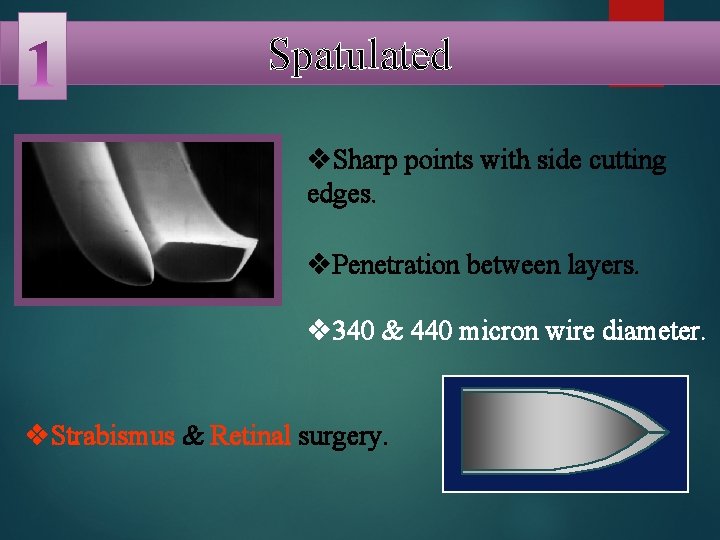
Spatulated v. Sharp points with side cutting edges. v. Penetration between layers. v 340 & 440 micron wire diameter. v. Strabismus & Retinal surgery.
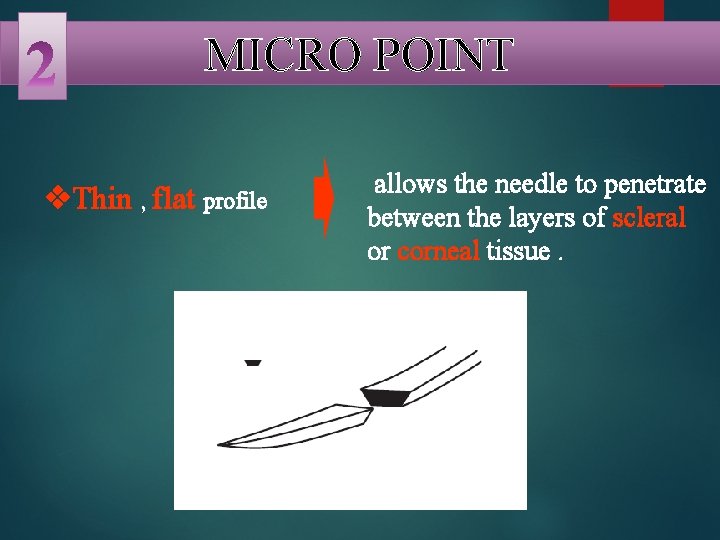
MICRO POINT v. Thin , flat profile allows the needle to penetrate between the layers of scleral or corneal tissue.
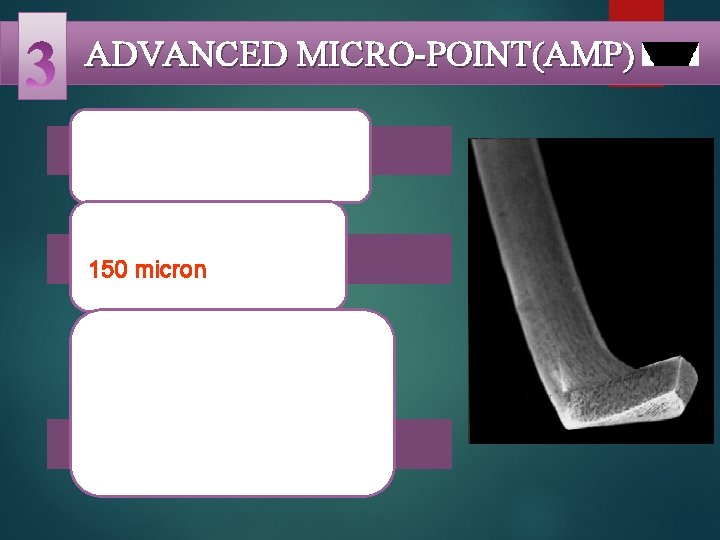
ADVANCED MICRO-POINT(AMP) Anterior segment surgery. They are formed from 150 micron wire. They have a compound curve shape version in addition to the normal part circle shapes.
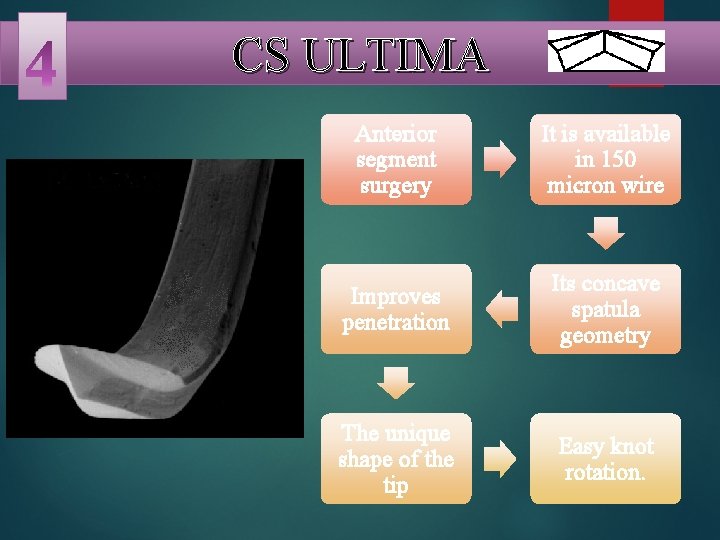
CS ULTIMA Anterior segment surgery It is available in 150 micron wire Improves penetration Its concave spatula geometry The unique shape of the tip Easy knot rotation.
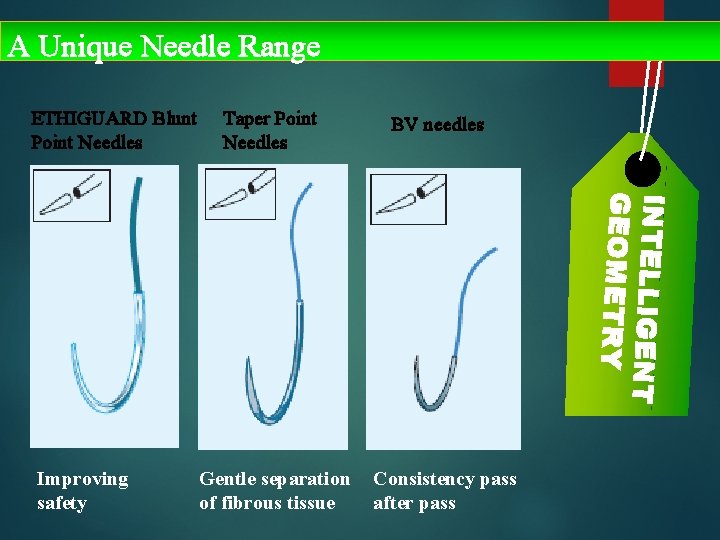
A Unique Needle Range ETHIGUARD Blunt Point Needles Taper Point Needles BV needles INTELLIGENT GEOMETRY Improving safety Gentle separation of fibrous tissue Consistency pass after pass
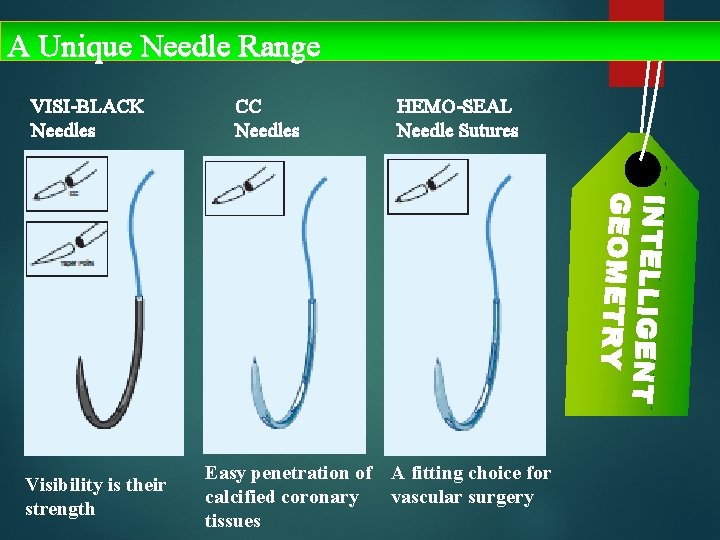
A Unique Needle Range VISI-BLACK Needles CC Needles HEMO-SEAL Needle Sutures INTELLIGENT GEOMETRY Visibility is their strength Easy penetration of A fitting choice for calcified coronary vascular surgery tissues
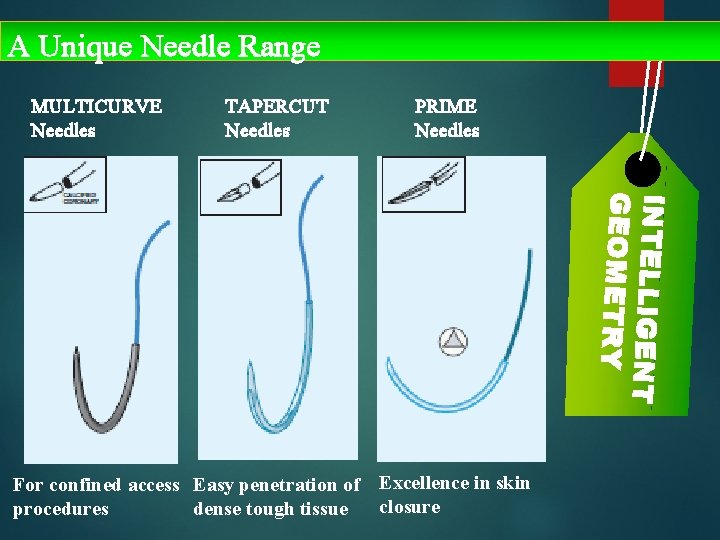
A Unique Needle Range MULTICURVE Needles TAPERCUT Needles PRIME Needles INTELLIGENT GEOMETRY For confined access Easy penetration of Excellence in skin closure procedures dense tough tissue
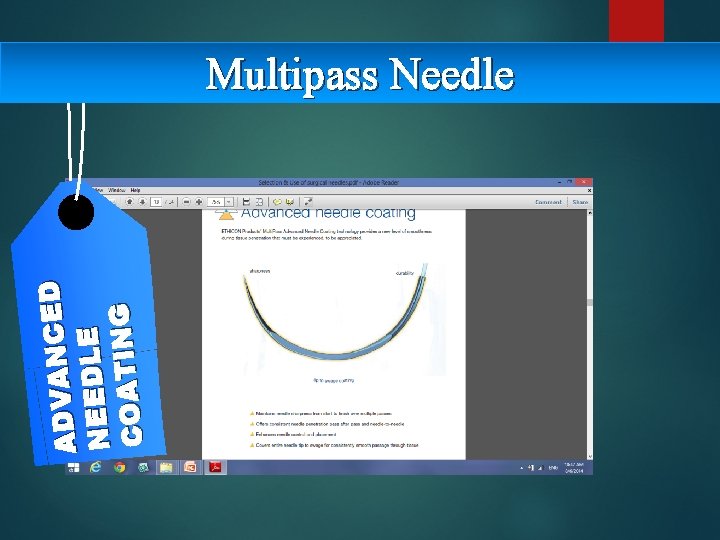
D E C N A V D A NEEDLE COATING Multipass Needle
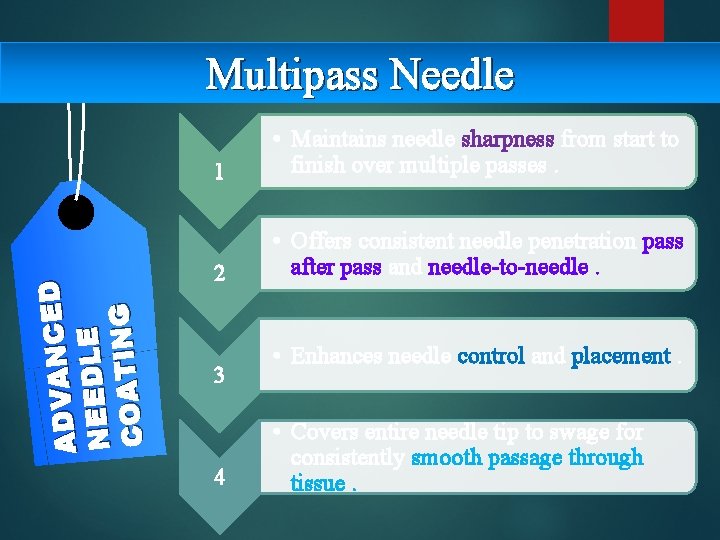
D E C N A V D A NEEDLE COATING Multipass Needle 1 • Maintains needle sharpness from start to finish over multiple passes. 2 • Offers consistent needle penetration pass after pass and needle-to-needle. 3 4 • Enhances needle control and placement. • Covers entire needle tip to swage for consistently smooth passage through tissue.
- Slides: 82