
Surgical neonatal emergencies 1 1AirwayRespiratory causes 1Choanal Atresia

- Slides: 33
Surgical neonatal emergencies 1
1)Airway/Respiratory causes: 1)Choanal Atresia Small NG tube unable to pass through nose. Bilateral atresia: cause Cyanosis that is relieved with crying. Is an emergency in the newborn. Requires an oral airway and surgical repair 2)Neck Masses A)Cystic Hygromas B)Tracheal anomalies 3)Thoracic masses/pulmonary lesions A)Congenital lobar emphysema: Overdistension of one or more lobes B)Congenital cystic adenomatous malformation: Multicystic mass of lung. C)Pulmonary agenesis: Absence of lung D)Congenital diaphragmatic hernia E)Tracheoesophageal fistula 2
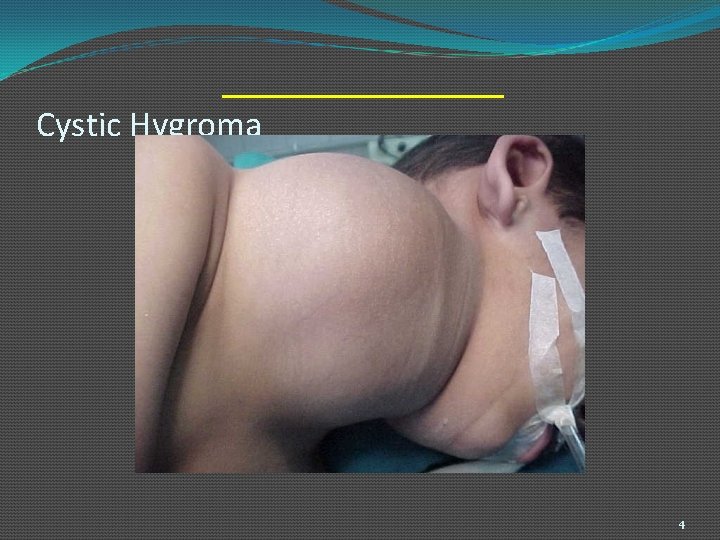
Cystic Hygroma Multiloculated cystic spaces Result of maldevelopment of lymphatic spaces Site: Neck, Axilla Complications Respiratory—large hygromas can extend into trachea Inflammation/Infection Hemorrhage Treatment Some pts require emergent surgery due to airway compromise Best treatment is complete excision 3
Cystic Hygroma 4
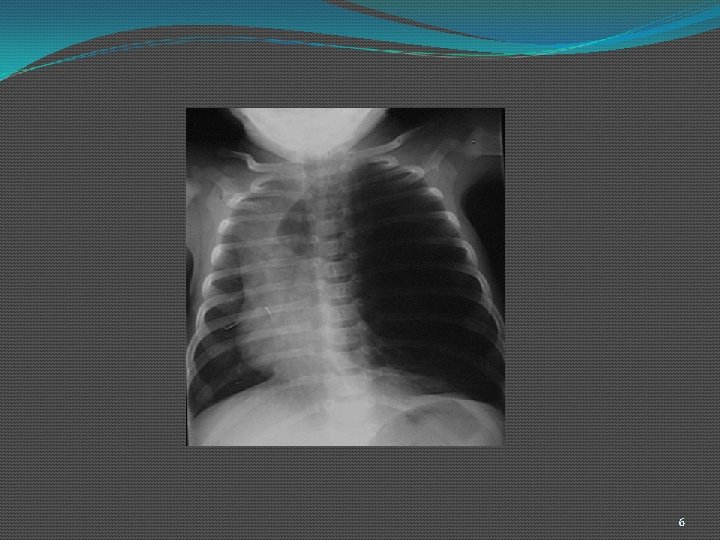
Congenital Lobar Emphysema overdistension of one or more lobes of lung which leads to compression of other parts of lung causing RD Diagnosis Usually can be made by plain CXR; Chest CT scan Treatment May require urgent surgical decompression with lobectomy 5
6
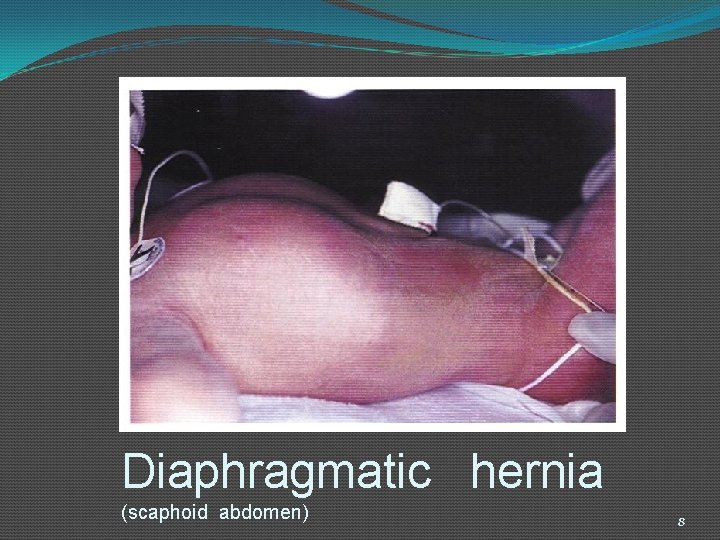
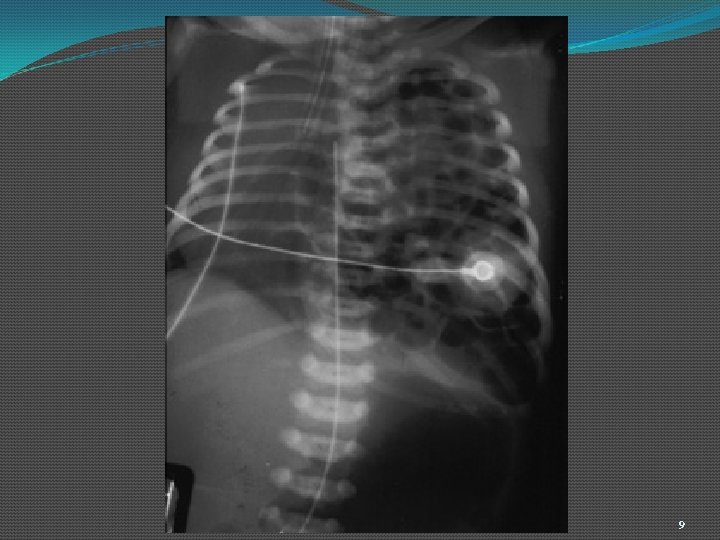
Congenital Diaphragmatic hernia Herniation of intestinal contents into the thoracic cavity resulting in underdeveloped lung tissue C/P: present with cyanosis, respiratory distress and scaphoid abdomen. Chest x ray : intestinal loops in the chest cavity Treatment: Immediate intubation and gastric decompression and surgical placement of abd tissue back into abd cavity. 7
Diaphragmatic hernia (scaphoid abdomen) 8
9
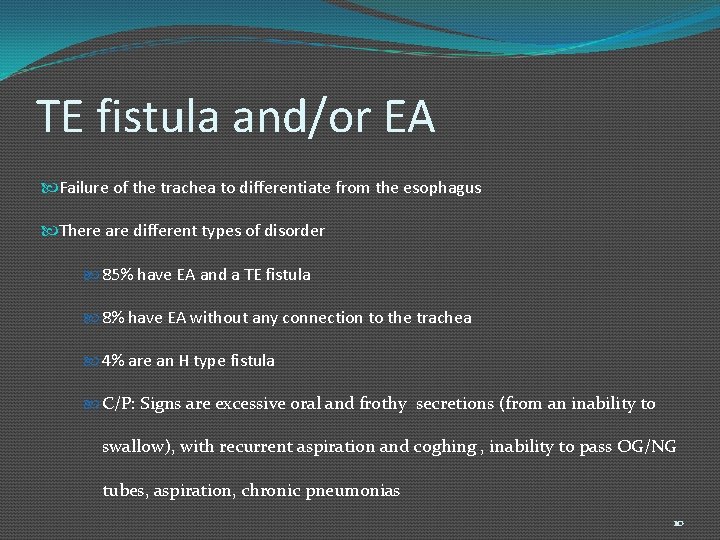
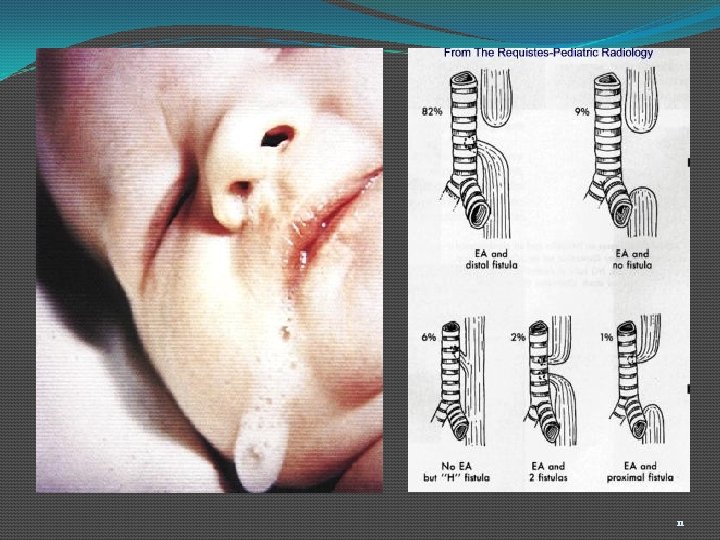
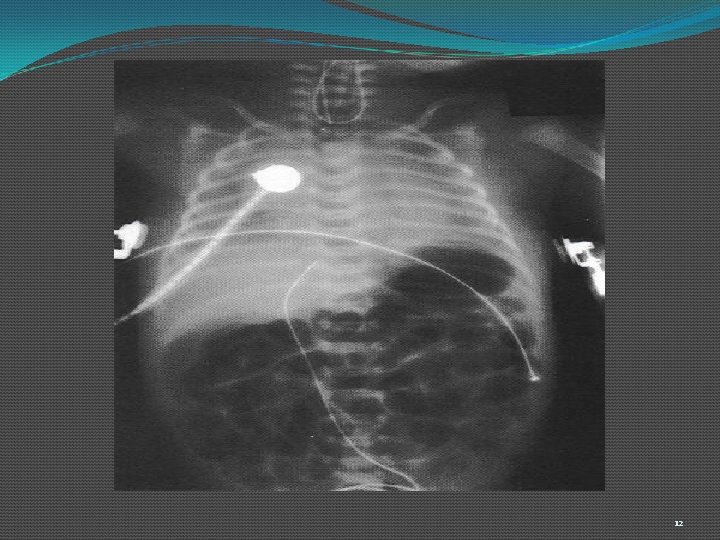
TE fistula and/or EA Failure of the trachea to differentiate from the esophagus There are different types of disorder 85% have EA and a TE fistula 8% have EA without any connection to the trachea 4% are an H type fistula C/P: Signs are excessive oral and frothy secretions (from an inability to swallow), with recurrent aspiration and coghing , inability to pass OG/NG tubes, aspiration, chronic pneumonias 10
11
12
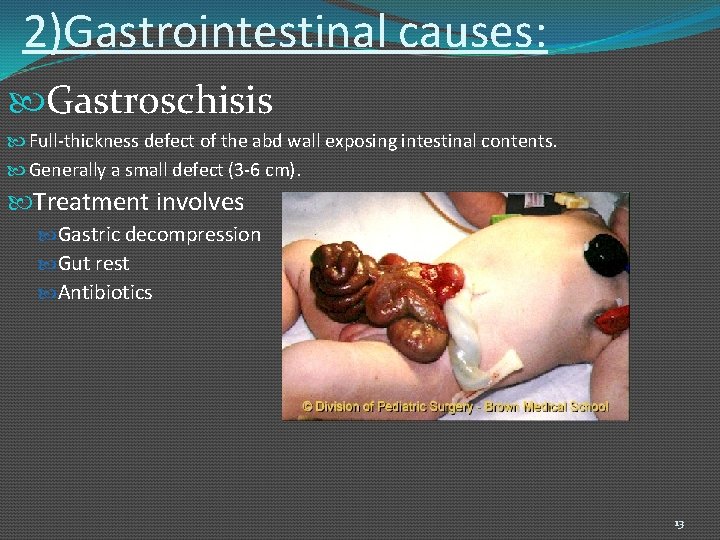
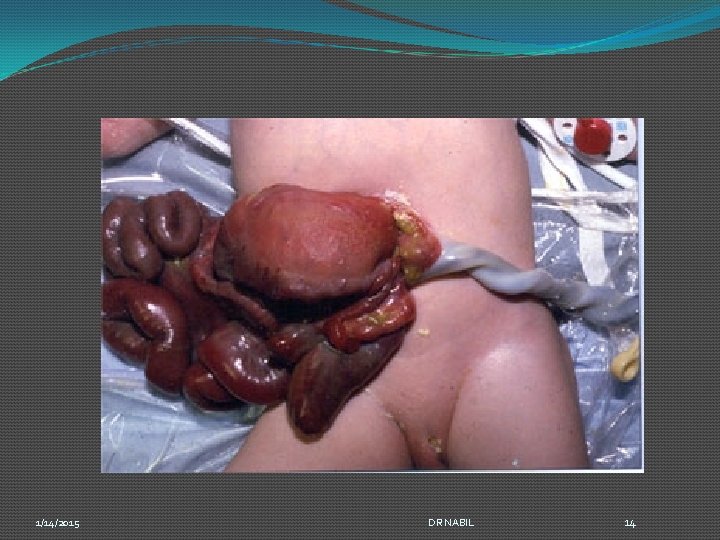
2)Gastrointestinal causes: Gastroschisis Full-thickness defect of the abd wall exposing intestinal contents. Generally a small defect (3 -6 cm). Treatment involves Gastric decompression Gut rest Antibiotics 13
1/14/2015 DR NABIL 14
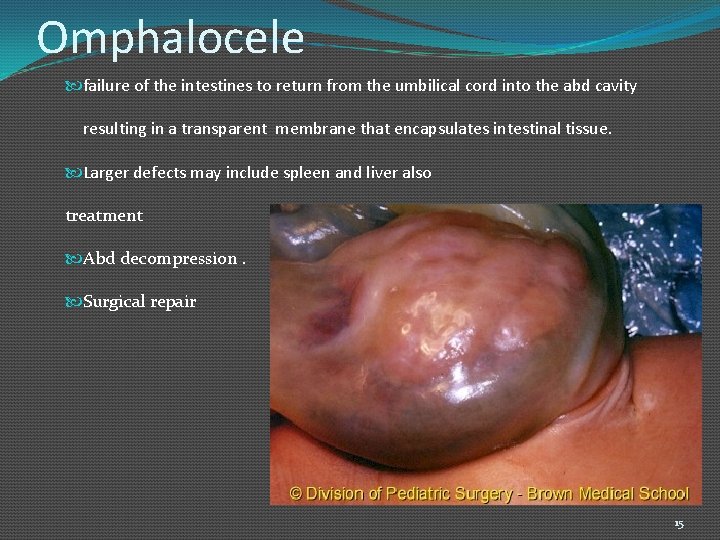
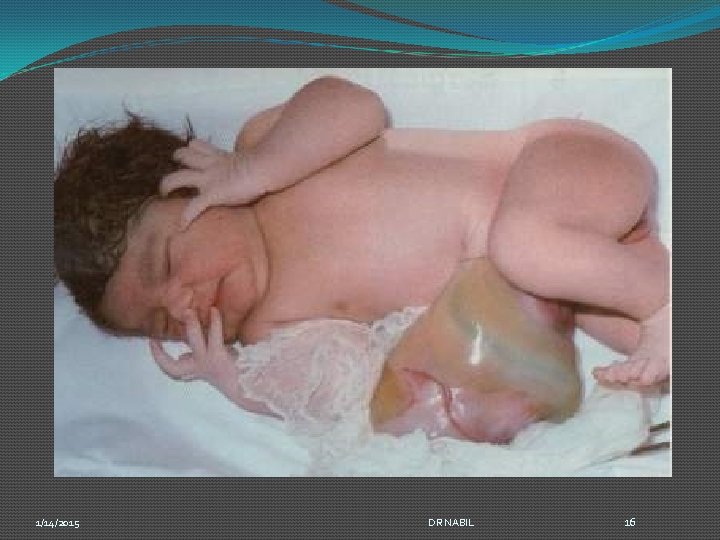
Omphalocele failure of the intestines to return from the umbilical cord into the abd cavity resulting in a transparent membrane that encapsulates intestinal tissue. Larger defects may include spleen and liver also treatment Abd decompression. Surgical repair 15
1/14/2015 DR NABIL 16
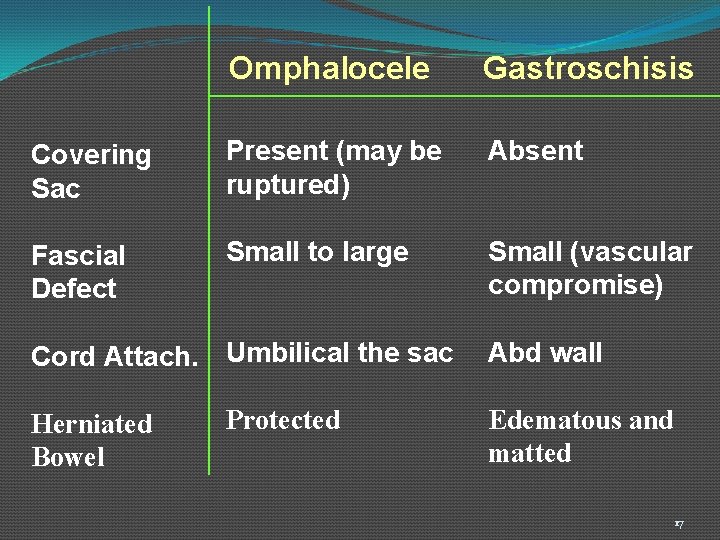
Omphalocele Gastroschisis Covering Sac Present (may be ruptured) Absent Fascial Defect Small to large Small (vascular compromise) Cord Attach. Umbilical the sac Herniated Bowel Protected Abd wall Edematous and matted 17
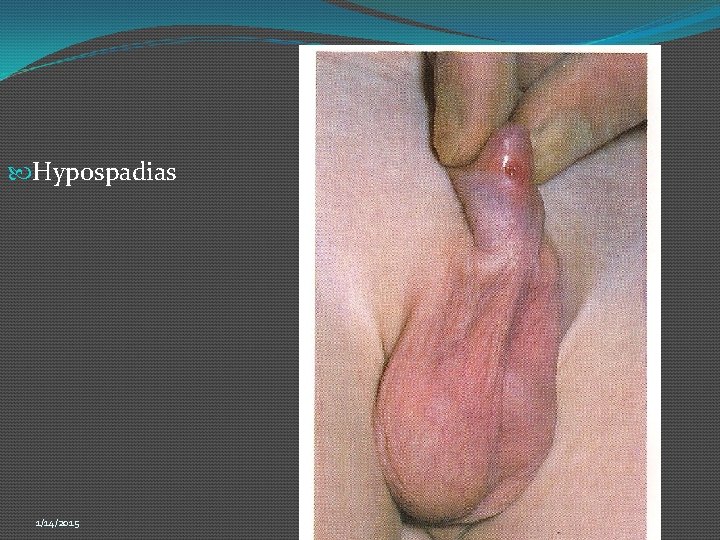
Hypospadias 1/14/2015 DR NABIL 18
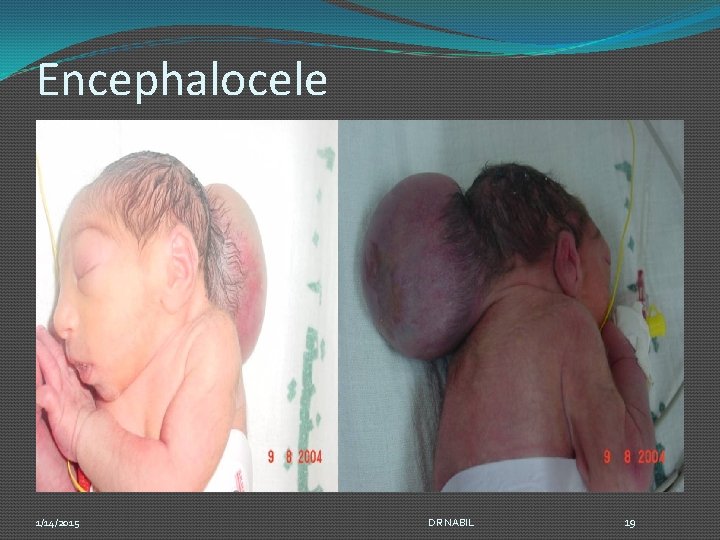
Encephalocele 1/14/2015 DR NABIL 19
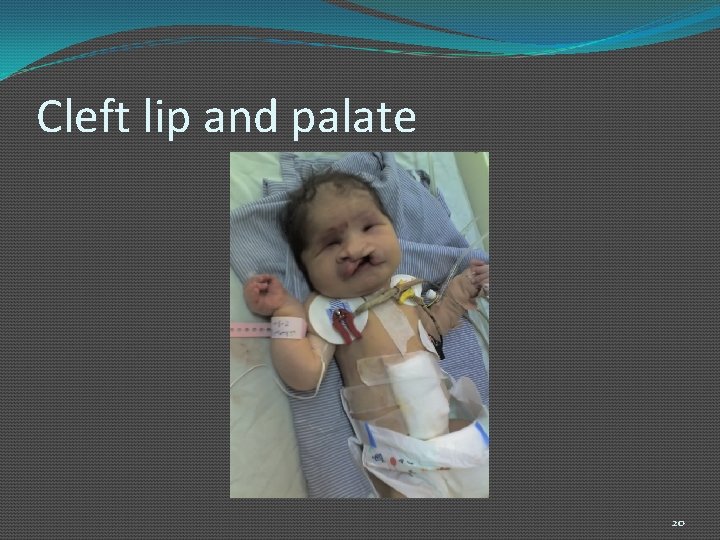
Cleft lip and palate 20
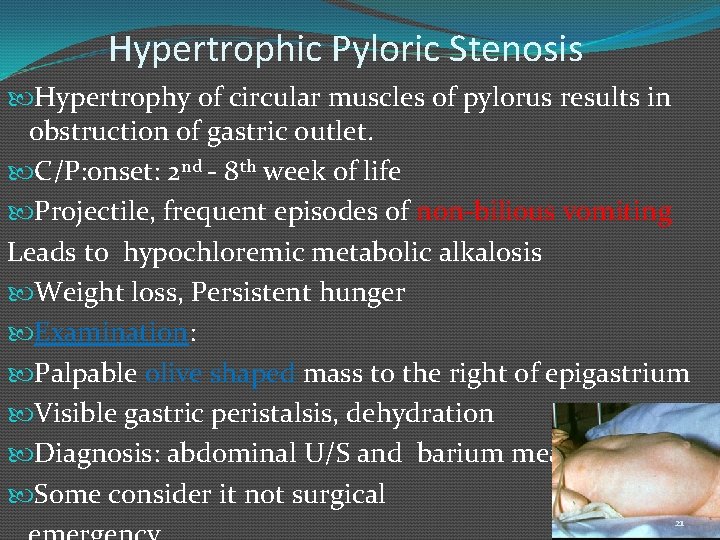
Hypertrophic Pyloric Stenosis Hypertrophy of circular muscles of pylorus results in obstruction of gastric outlet. C/P: onset: 2 nd - 8 th week of life Projectile, frequent episodes of non-bilious vomiting Leads to hypochloremic metabolic alkalosis Weight loss, Persistent hunger Examination: Palpable olive shaped mass to the right of epigastrium Visible gastric peristalsis, dehydration Diagnosis: abdominal U/S and barium meal Some consider it not surgical 21
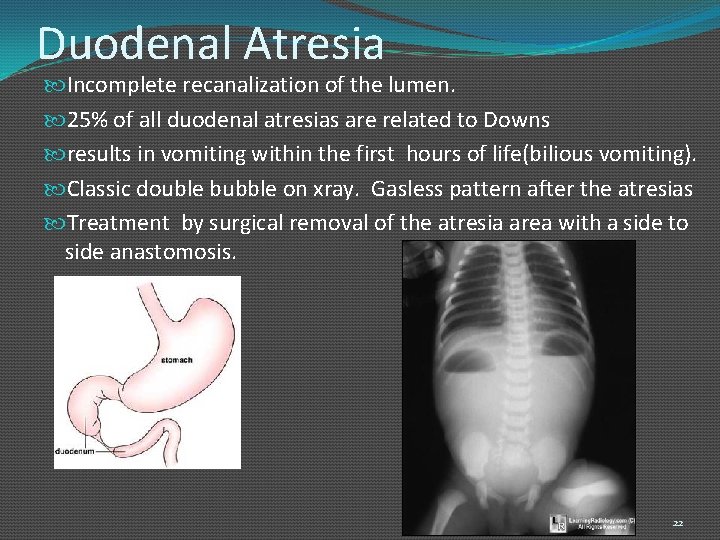
Duodenal Atresia Incomplete recanalization of the lumen. 25% of all duodenal atresias are related to Downs results in vomiting within the first hours of life(bilious vomiting). Classic double bubble on xray. Gasless pattern after the atresias Treatment by surgical removal of the atresia area with a side to side anastomosis. 22
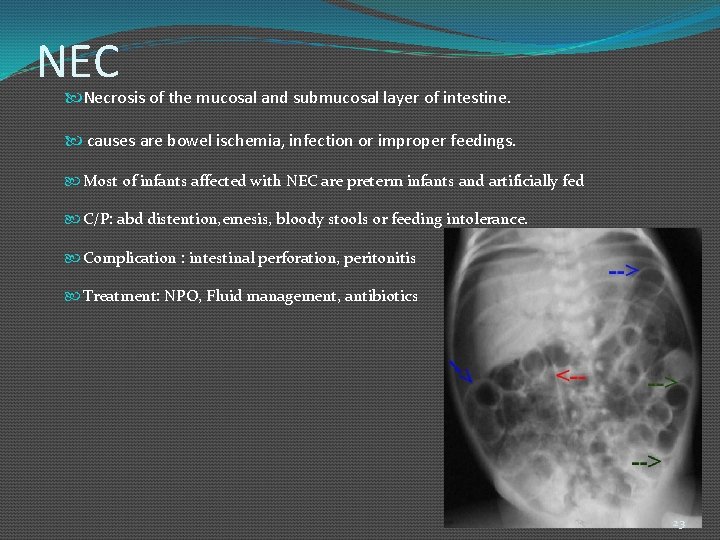
NEC Necrosis of the mucosal and submucosal layer of intestine. causes are bowel ischemia, infection or improper feedings. Most of infants affected with NEC are preterm infants and artificially fed C/P: abd distention, emesis, bloody stools or feeding intolerance. Complication : intestinal perforation, peritonitis Treatment: NPO, Fluid management, antibiotics 23
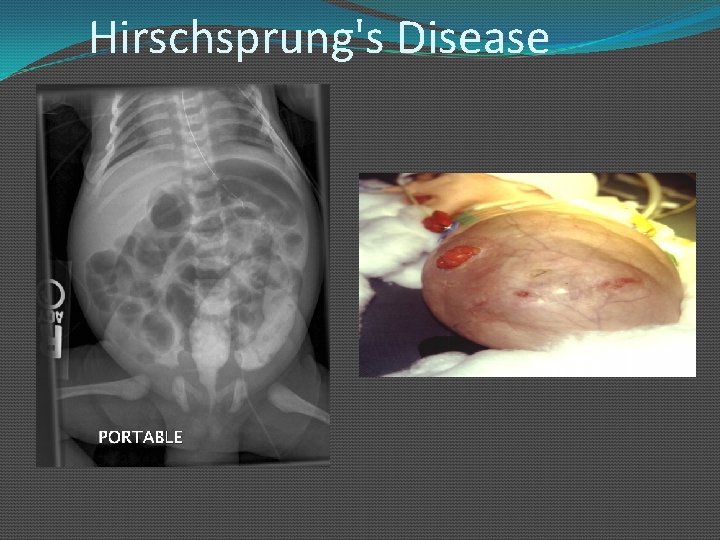
Hirshprungs disease Also known as megacolon or aganglionic colon Cause: Congenital absence of ganglionic cells in the distal colon and rectum causing failure of the colon to relax thus causing a restrictive, narrowed area. Site: rectum is always involved. C/P: bilious vomiting, failure to pass stools and abdominal distention. All infant should pass first stool within 48 hrs of birth. Abdominal x-ray: dilated colon proximal to the affected part Diagnosis is only definitive by performing a rectal biopsy Treatment involves a complete removal of the affected aganglionic zone, allowing for 7 -10 days of bowel rest and slow reintroduction of feeds. 24
Hirschsprung's Disease
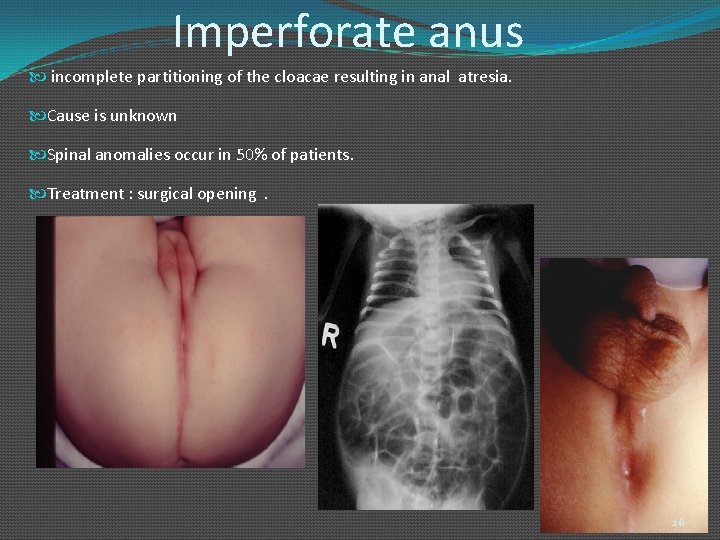
Imperforate anus incomplete partitioning of the cloacae resulting in anal atresia. Cause is unknown Spinal anomalies occur in 50% of patients. Treatment : surgical opening. 26
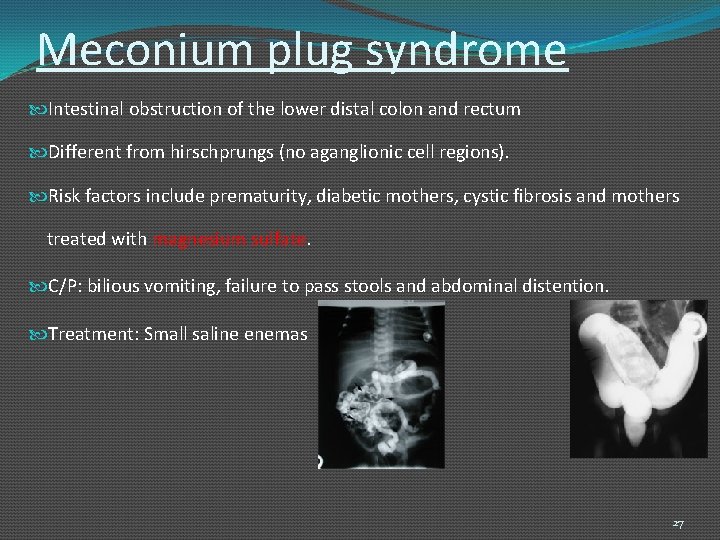
Meconium plug syndrome Intestinal obstruction of the lower distal colon and rectum Different from hirschprungs (no aganglionic cell regions). Risk factors include prematurity, diabetic mothers, cystic fibrosis and mothers treated with magnesium sulfate. C/P: bilious vomiting, failure to pass stools and abdominal distention. Treatment: Small saline enemas 27
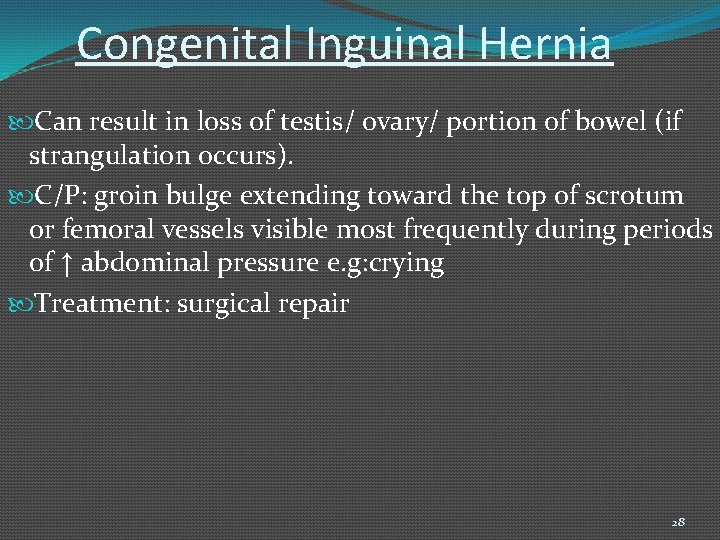
Congenital Inguinal Hernia Can result in loss of testis/ ovary/ portion of bowel (if strangulation occurs). C/P: groin bulge extending toward the top of scrotum or femoral vessels visible most frequently during periods of ↑ abdominal pressure e. g: crying Treatment: surgical repair 28
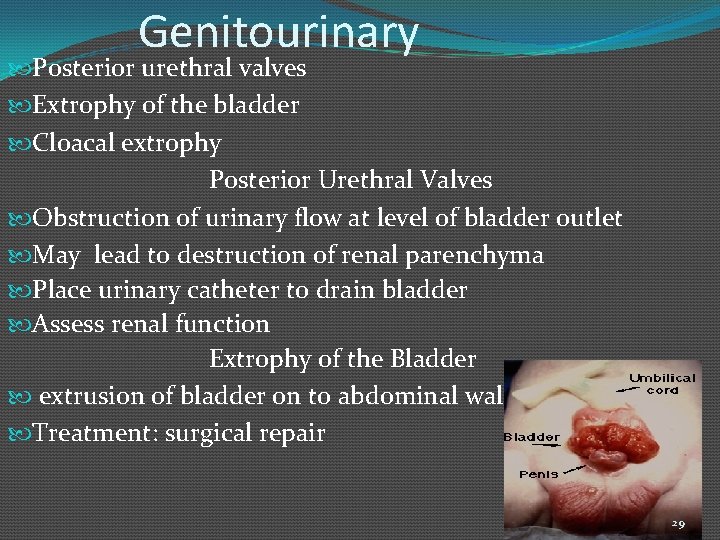
Genitourinary Posterior urethral valves Extrophy of the bladder Cloacal extrophy Posterior Urethral Valves Obstruction of urinary flow at level of bladder outlet May lead to destruction of renal parenchyma Place urinary catheter to drain bladder Assess renal function Extrophy of the Bladder extrusion of bladder on to abdominal wall Treatment: surgical repair 29
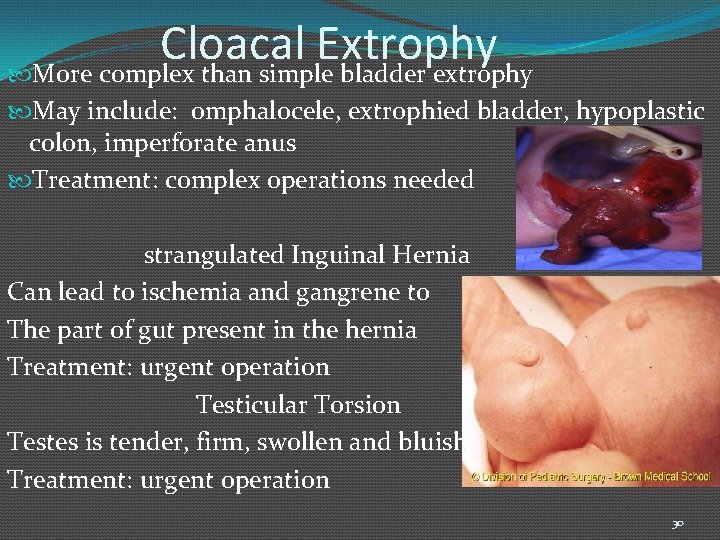
Cloacal Extrophy More complex than simple bladder extrophy May include: omphalocele, extrophied bladder, hypoplastic colon, imperforate anus Treatment: complex operations needed strangulated Inguinal Hernia Can lead to ischemia and gangrene to The part of gut present in the hernia Treatment: urgent operation Testicular Torsion Testes is tender, firm, swollen and bluish Treatment: urgent operation 30
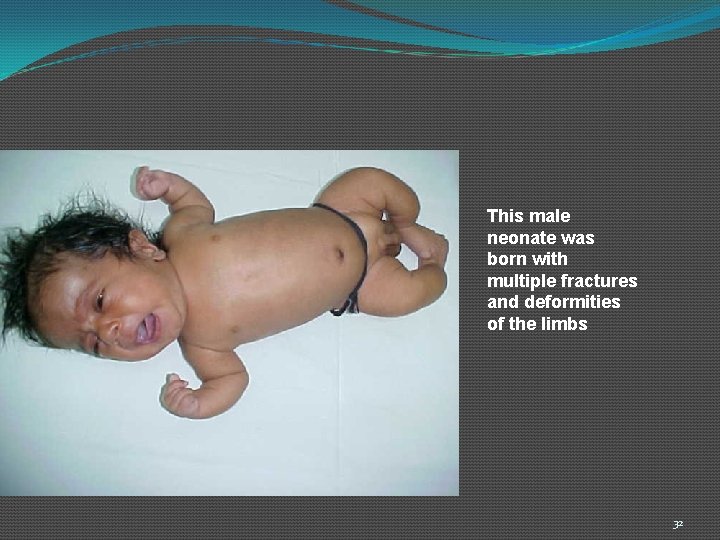
Osteogenesis Imperfecta • Autosomal dominant • Reduction in collagen formation Treatment a. Growth hormone • b. Bisphonate 31
This male neonate was born with multiple fractures and deformities of the limbs 32
Thank you 33