
Surgical approach of patients with crhons disease By
Surgical approach of patients with crhons disease By: Hanaa Tashkandi
Abdominoperineal resection: n Anterior resection: anterior proctosigmoidectomy with colorectal anastomosis. *Low anterior resection: resection of the rectum below the peritoneal reflection. n
Q: Why the sigmoid is being removed most of the times with the rectum ? n A : usually the blood supply to the sigmoid is not adequate to sustain the anastomosis after the IMA is transected. n
n The anastomosis post resection usually result in a significant alteration in the bowel habit …. WHY ?
Due to loss of normal rectal capacity. . which is called LAR syndrome… n Symptoms: n frequent small bowel movements”clustering” n
n How to prevent this?
It can be prevented by designing J-Pouch. as a proximal componant of the anastomosis. . But if the anastomosis above 9 cm from the anal verge , there will be little benefit from the J-pouch compared to end anastomosis. n
In obese patients or patients with narrow pelvis. . n J-pouch is technically difficult because the bulk of the pouch will fit into the pelvis. . n n so
We can do reservoir with COLOPLASTY. . n About 10 cm colotomy , 6 cm from the devided end of the colon. . n This colotomy is closed transversely to increase the rectal space. n
Right hemicolectomy: n resection of few centimeters of the terminal ileum ( 4 -6 cm ) and colon up to the division of middle colic vessel into right and left. n
Left hemicolectomy: n resection from the splenic fexure to the rectosigmid junction n
Extended right hemicolectomy: n it is used for transverse colon tumors. n Division of the right and middle colic arteries at their origin with removal of the right and transverse colon supplied by these vessels. n
Sigmoidectomy: n removal of the colon between the partially retroperitoneal descending colon and the rectum. n
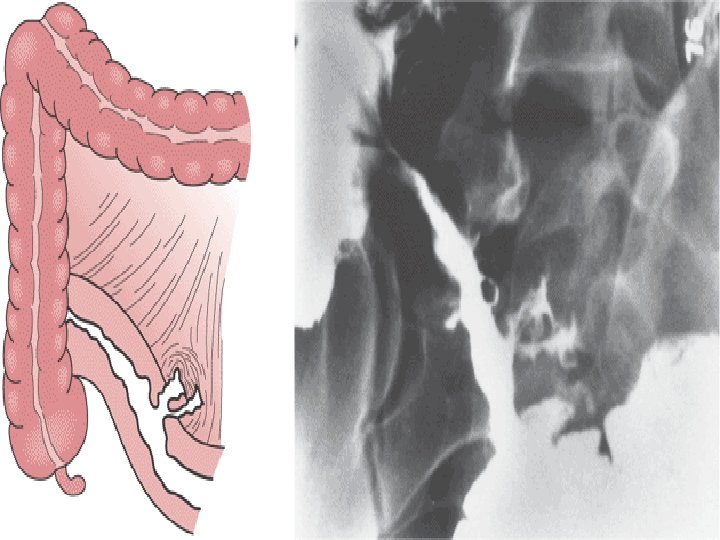
Crohns disease Pattern of the disease: n 1 -inflammation n 2 -sticture n 3 -perforation n
Important considerations: n -crohns disease is a recurring disorder that can not be cured with surgical resection. n -the aim of surgery is palliation. n -surgery must strive to alleviate symptoms as effectively as possible without exposing the patient to excessive morbidity. n
n Non resectional techniques as strictureplasty may be required to avoid excessive loss of the intestine…. n Resectional techniques may be necessary to remove only the severely afftected portion of the GIT. . leaving the mild asympotomatic diseased parts intact.
Indications for surgery
Failure of medical treatment *symptoms of acute flare do not improve or new complications of crohns develop during optimal treatment n *significant side effects related to the treatment. n *symptoms may resolve only during systemic steroid therapy and recur with each attempt to withdrow the steroid. n
n Surgery is indicated if the patient cant be weaned of the steroid within 3 -6 months.
Intestinal obstruction Chronic partial obstruction of the small intestine is more common than acute complete obstruction n Acute recurrent inflammation leads to bowel thickening and chronic scarring which eventually cause fixed stricture. n
n So patients with obstructive symptoms that result from fibrotic fixed strictures need surgery.
Enteric fistula n n Asymptomatic entero enteric fistula don’t require surgical intervention but any why they indicate severe disease. A fistula is an indication for surgery only if: *causing discomfort or embarrasses the patient( enterocutanous or entero vaginal ). *has a potential to induce significant complications. (Enter vesical)
Abscess and inflammatoy mass An abscess from crohns that has been drained percutaneously is very likely to recur or result in enterocutaneous fistula. n So surgical resection is advised after successful drainage. . n
hemorrhage Un common in crohns. n But frequent with crohns colitis than small bowel crohns. n
perforation Is rare; ; n Only in 1% of the cases. n
Cancer and suspected cancer Crohns patient are at increased risk for adenocarcinoma of the colon and small intestine. . n Prevelance 0. 3% for small bowel adeno. K. n 1. 8% for large bowel adeno. K. n Most of the time is multifocal and poorly differentiated. n
Growth retardation
Pre op evaluation Small bowel enema. n Colonoscopy n CT abdomen and pelvis(if suspecting abscess or inflammatory mass ) n Fistuloscan. n Meticulous mechanical bowel prep even if the procure involving small bowel only. n
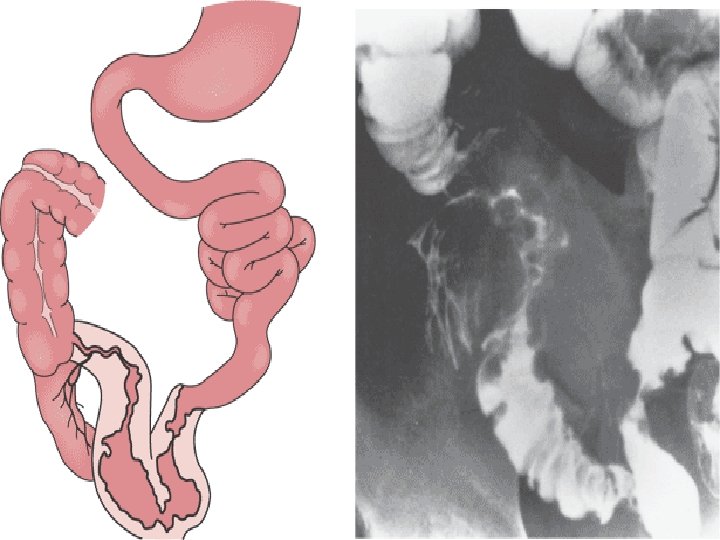
surgery Abdominal exploration: n examination of the whole small bowel which requires release of adhesions. n any inflammatory adhesions should be suspected to have a fistulous tract. n adhesions that may be result from cancer should be resected in bloc. n
resection It should be wide enough to encompass the limits of gross disease. . n Wider resection offer no benefit in term of lessening the rate of recurrence. n Also the extend of mesenteric resection has no impact on term of recurrence. n
n Once the resection is completed , the proximal and distal margins of the specimen should be examined to ensure they are free of GROSS disease.
Minimally invasive surgery Laparoscopy. n To date , the largest experience with crohns is ileocecal resection. n The cecum and ascending colon are mobilized laparoscopically. n Then, a small incision on the abdomen is done. . n
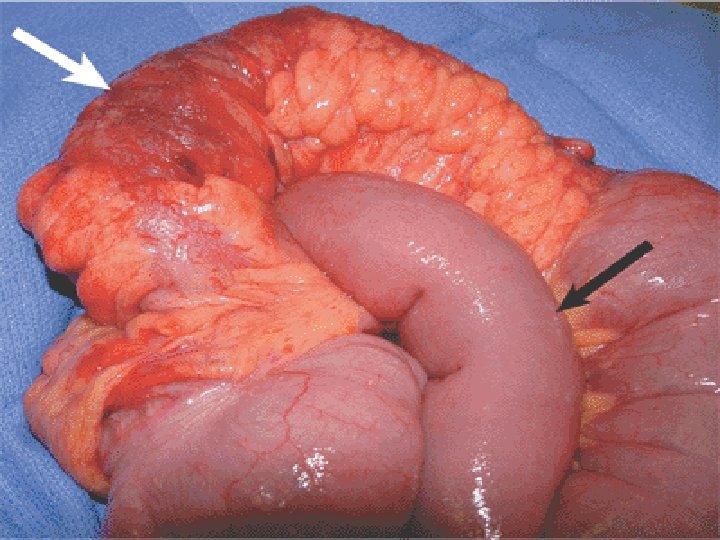
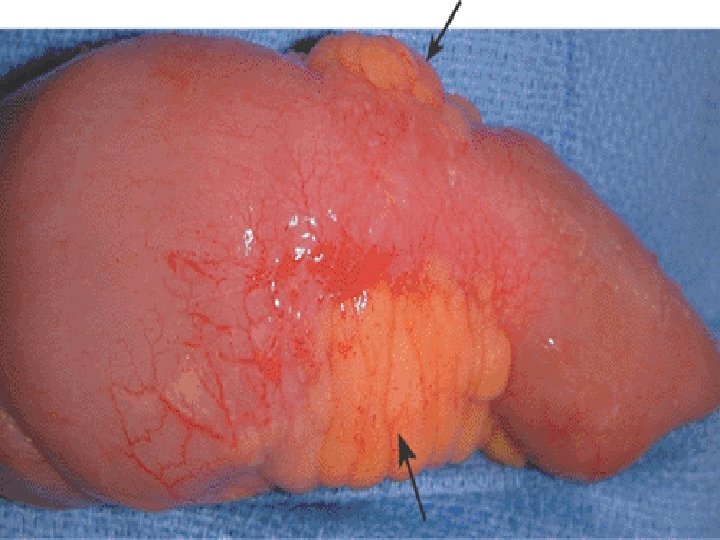
Then the mobilized segment of the bowel is exteriorized. . n Vision of the bowel and transection of the mesentery is accomplished extracorporeally and a standard anastomosis is done. n
Contraindication for lap Criticlly ill pts. who are unable to tolerate a pneumoperitoneum due to hypotention or hypercapnia. n Pts with dense adhesions, intra abdominal sepsis or complex fistulation. . n
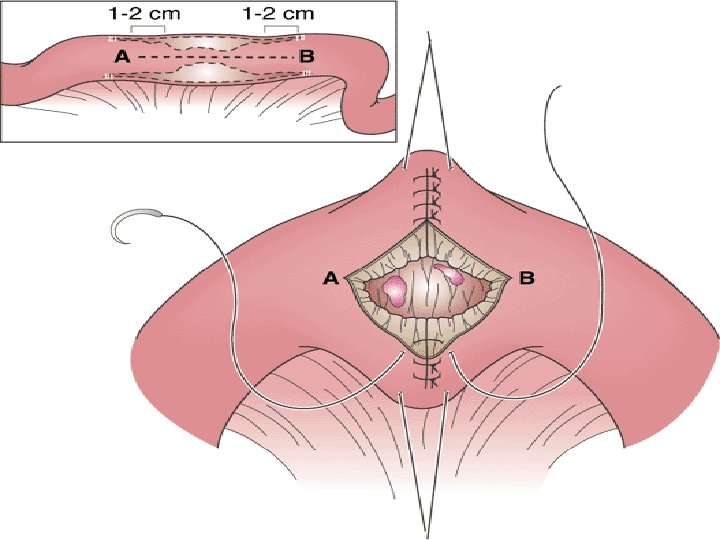
strictureplasty Indications: n for jejunoileitis with single or multiple fibrotic stricture. . n isolated stricture in the duedenum. n
contraindications Segment with acute inflmmation or phlegmon. n Pt with generalized peritonitis. n Long high grade stricture resulting from extremely thickened and rigid intestinal wall as this need resection. n
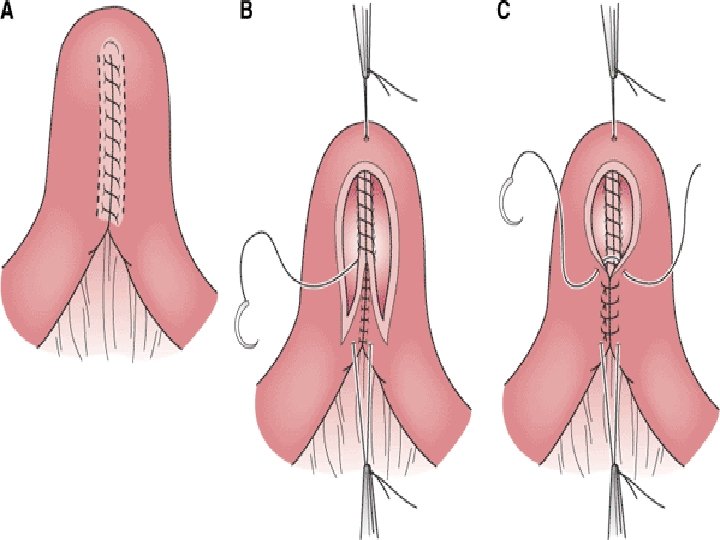
Methods 1 - HEINEKE-MICULICZ: n Longtudinal enterotomy is done on the antimesenteric side. n Which then close transverly ‘’. . n Used if the stricure is < 7 cm. n Bx should be taken. n
2 - FINNEY: n Used for long stricture up to 15 cm. n Result in the formation of divericum. n Used less frequantly bec. of its side effects. n
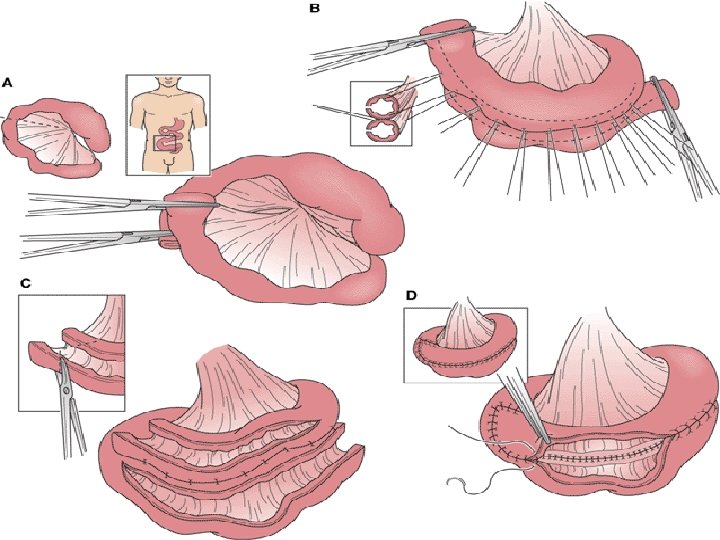
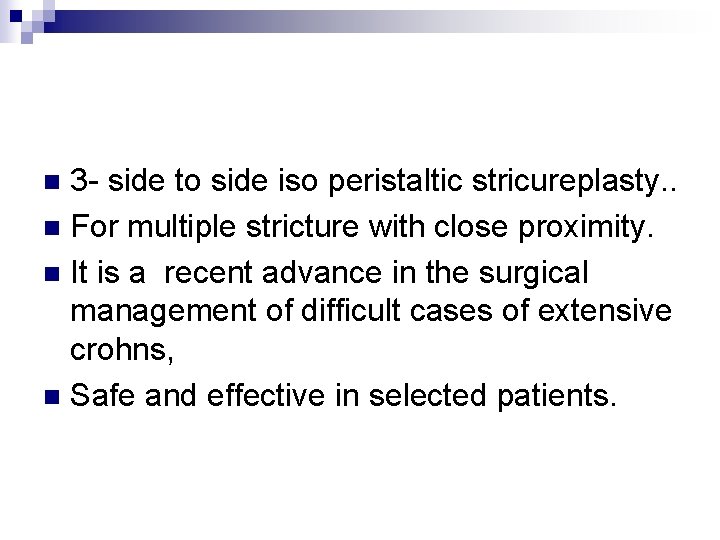
3 - side to side iso peristaltic stricureplasty. . n For multiple stricture with close proximity. n It is a recent advance in the surgical management of difficult cases of extensive crohns, n Safe and effective in selected patients. n
Notes No randomized controlled studies have directly compared recurrence rate after resection vs strictureplasty. . n But on observation , , the rapid recurrence of symptoms following strictureplasty has not proved to be a problem. n
Crohns of the colon Segmental colectomy. n Ileocecal resection with primary anastomosis. n Total abdominal colectomy with ileoproctostomy. n Total proctocolectomy with permennat end ileostomy. n
Note: n Because of the recurrent nature of crohns , , a restorative procedure as ileal pouchanal anastomosis is inappropriate. n
Ileocolitis: n -ileocecal resection with primary anastomosis. . n Any why, , disease tends to recur at the anastomotic or pre anastomotic ileum. n
Extensive crohns colitis with rectal sparing: n -if not responding to medical treatment, total colectomy. . n -commenly the rectum is spared and ileorectal anastomosis can be done. . n So , , permenant ileostomy can be avoided or at least delayed. . n
Unfortunatley, , recurence after total abdominal colectomy with ileorectal anastomosis is common. . n Many of these patients ultimatly will require proctectomy with permenant ileostomy’’ n
Perianal crohns disease Abscess. n Fistulae. n Fissures. n stenosis. n Hypertrophied skin tags. n ----each one of them is treated accordingly. . n

Thank you
- Slides: 54