
Surgical Approach 6 Criteria for Bariatric Surgery In





Surgical Approach 6
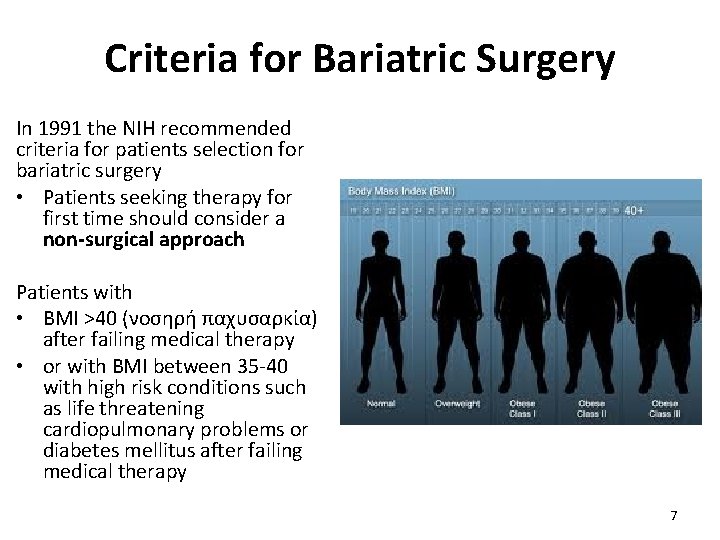
Criteria for Bariatric Surgery In 1991 the NIH recommended criteria for patients selection for bariatric surgery • Patients seeking therapy for first time should consider a non-surgical approach Patients with • BMI >40 (νοσηρή παχυσαρκία) after failing medical therapy • or with BMI between 35 -40 with high risk conditions such as life threatening cardiopulmonary problems or diabetes mellitus after failing medical therapy 7
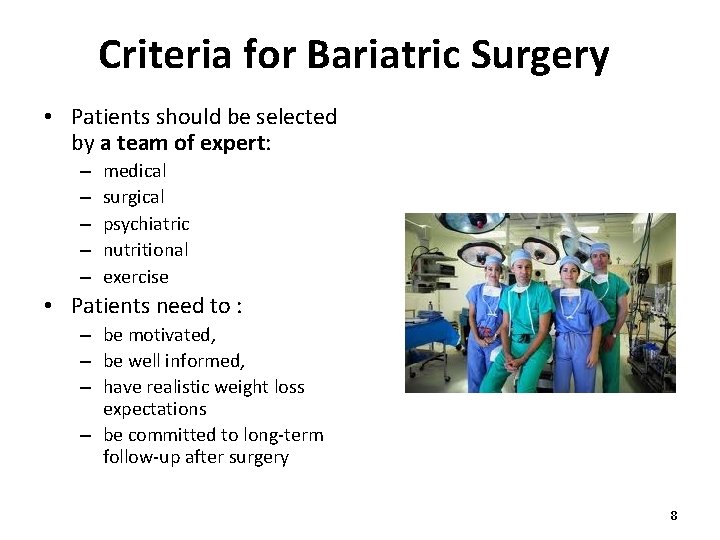
Criteria for Bariatric Surgery • Patients should be selected by a team of expert: – – – medical surgical psychiatric nutritional exercise • Patients need to : – be motivated, – be well informed, – have realistic weight loss expectations – be committed to long-term follow-up after surgery 8
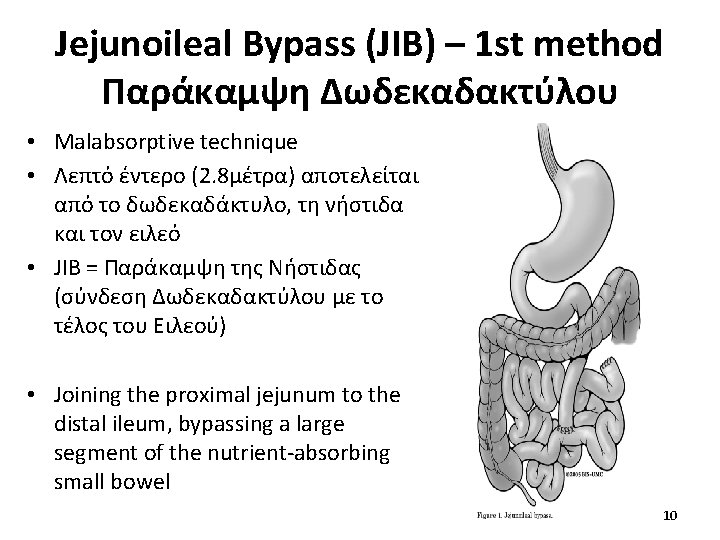
Bariatric Approach • Bariatric (Βάρος + Ιατρική) Operations are – Restrictive (περιοριστικές) (limiting the amount of food ingested) – Malabsorptive (δυσαπορροφητικές) (limiting the amount of nutrient absorbed) • or – Combination • The choice of procedure is guided by: – – – Patients’ BMI Age Comorbidity The cost of the operation Patient’s and Surgeon’s choice 9
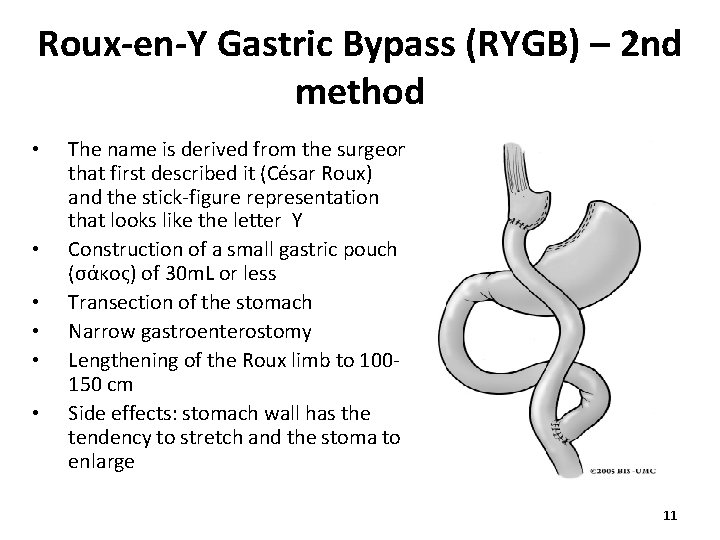
Roux-en-Y Gastric Bypass (RYGB) – 2 nd method • • • The name is derived from the surgeon that first described it (César Roux) and the stick-figure representation that looks like the letter Y Construction of a small gastric pouch (σάκος) of 30 m. L or less Transection of the stomach Narrow gastroenterostomy Lengthening of the Roux limb to 100150 cm Side effects: stomach wall has the tendency to stretch and the stoma to enlarge 11

Complication for RYGB • Mortality rate is 0. 5% • Early complications (επιπλοκές) • Anastomotic leak (1. 9%) • Pulmonary embolism (0. 6%) • Wound infection (2. 9% laparoscopic vs 6. 6% open operation) • Late complications • Incisional hernia (0. 5% laparoscopic vs 8. 6% open oper. ) • Stenosis of the gastrojejunal anastomosis (4. 7% in 2. 5 years) • Bowel obstruction (3. 2% in 2. 5 years) • Gallstone formation (32%) • Malnutrition • Low levels of: iron, vitamin B 12, vitamin D and Calcium 12
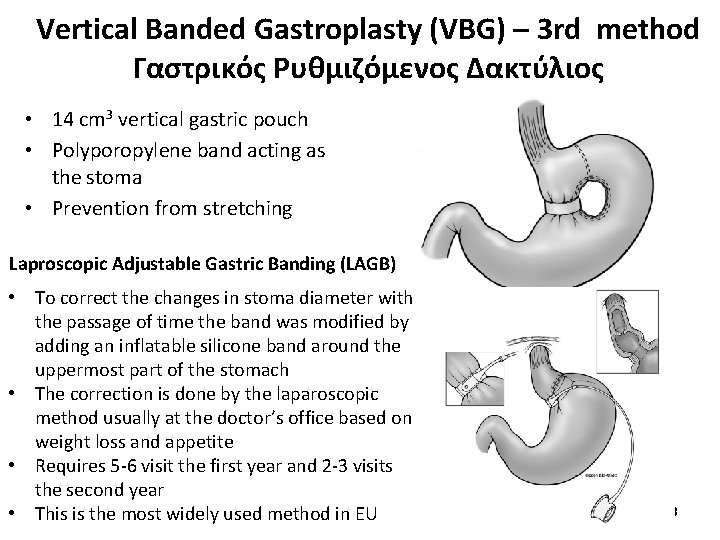
Vertical Banded Gastroplasty (VBG) – 3 rd method Γαστρικός Ρυθμιζόμενος Δακτύλιος • 14 cm 3 vertical gastric pouch • Polyporopylene band acting as the stoma • Prevention from stretching Laproscopic Adjustable Gastric Banding (LAGB) • To correct the changes in stoma diameter with the passage of time the band was modified by adding an inflatable silicone band around the uppermost part of the stomach • The correction is done by the laparoscopic method usually at the doctor’s office based on weight loss and appetite • Requires 5 -6 visit the first year and 2 -3 visits the second year • This is the most widely used method in EU 13
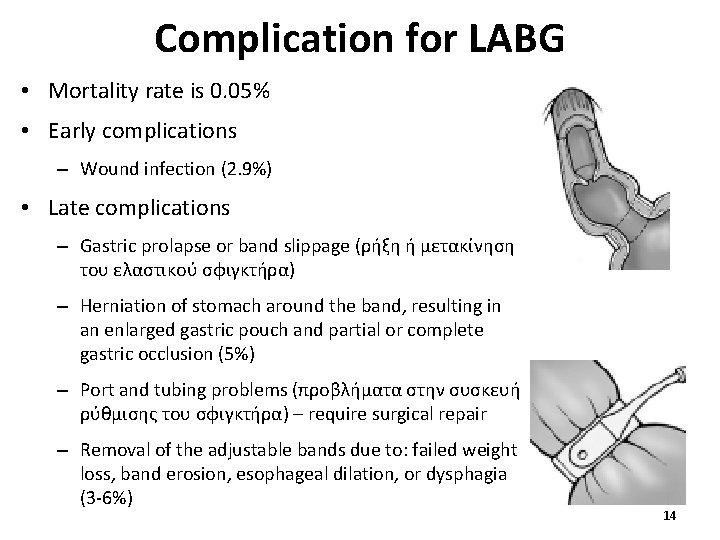
Complication for LABG • Mortality rate is 0. 05% • Early complications – Wound infection (2. 9%) • Late complications – Gastric prolapse or band slippage (ρήξη ή μετακίνηση του ελαστικού σφιγκτήρα) – Herniation of stomach around the band, resulting in an enlarged gastric pouch and partial or complete gastric occlusion (5%) – Port and tubing problems (προβλήματα στην συσκευή ρύθμισης του σφιγκτήρα) – require surgical repair – Removal of the adjustable bands due to: failed weight loss, band erosion, esophageal dilation, or dysphagia (3 -6%) 14
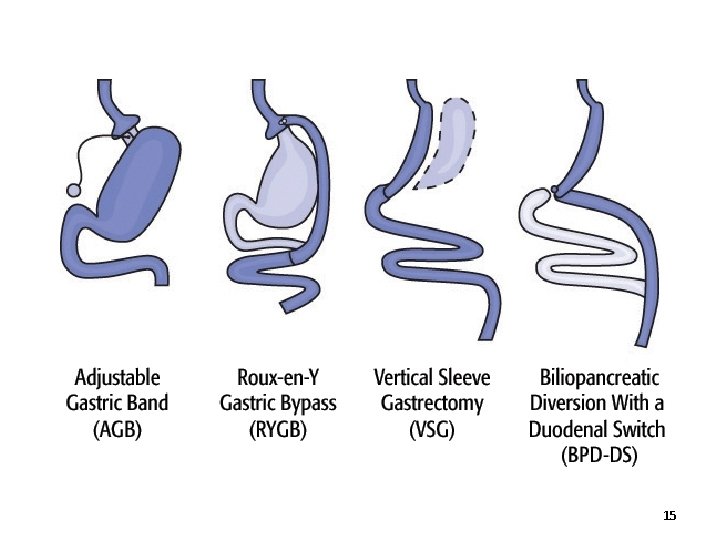
15
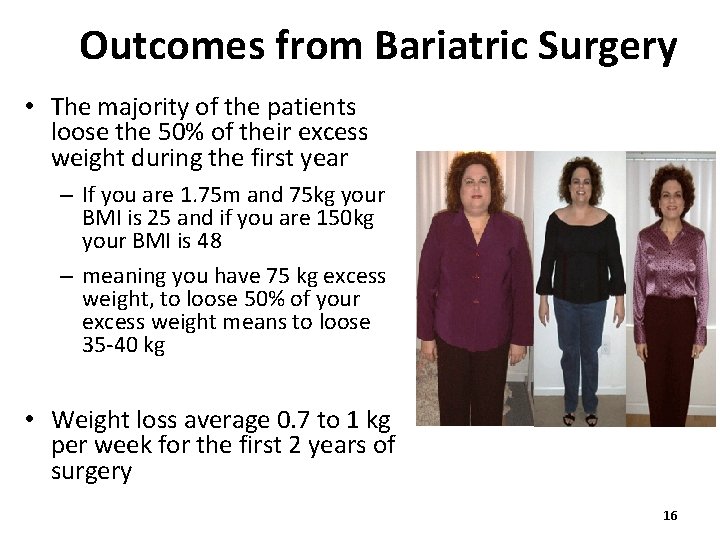
Outcomes from Bariatric Surgery • The majority of the patients loose the 50% of their excess weight during the first year – If you are 1. 75 m and 75 kg your BMI is 25 and if you are 150 kg your BMI is 48 – meaning you have 75 kg excess weight, to loose 50% of your excess weight means to loose 35 -40 kg • Weight loss average 0. 7 to 1 kg per week for the first 2 years of surgery 16
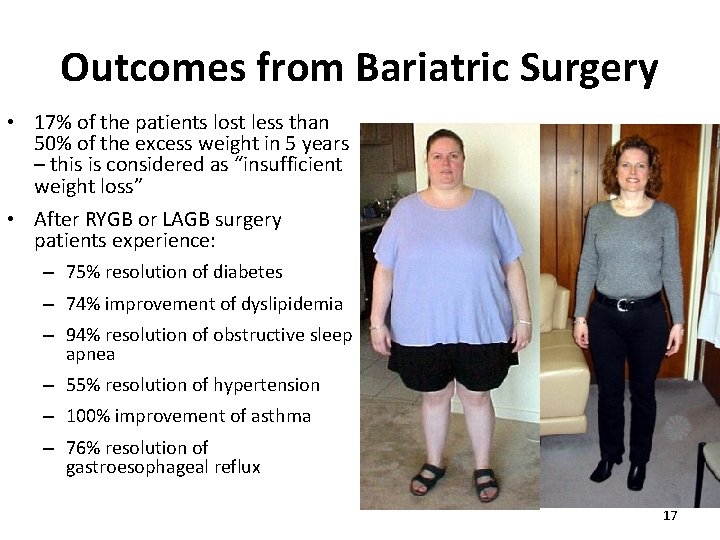
Outcomes from Bariatric Surgery • 17% of the patients lost less than 50% of the excess weight in 5 years – this is considered as “insufficient weight loss” • After RYGB or LAGB surgery patients experience: – 75% resolution of diabetes – 74% improvement of dyslipidemia – 94% resolution of obstructive sleep apnea – 55% resolution of hypertension – 100% improvement of asthma – 76% resolution of gastroesophageal reflux 17
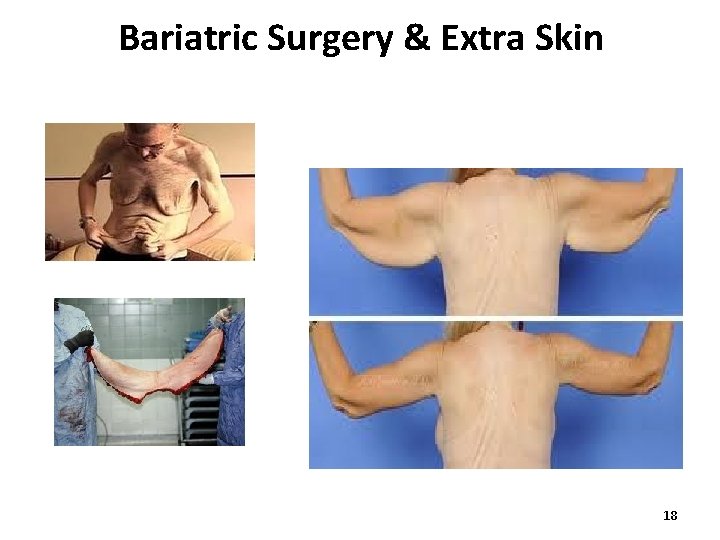
Bariatric Surgery & Extra Skin 18
Pharmacological Approach 19
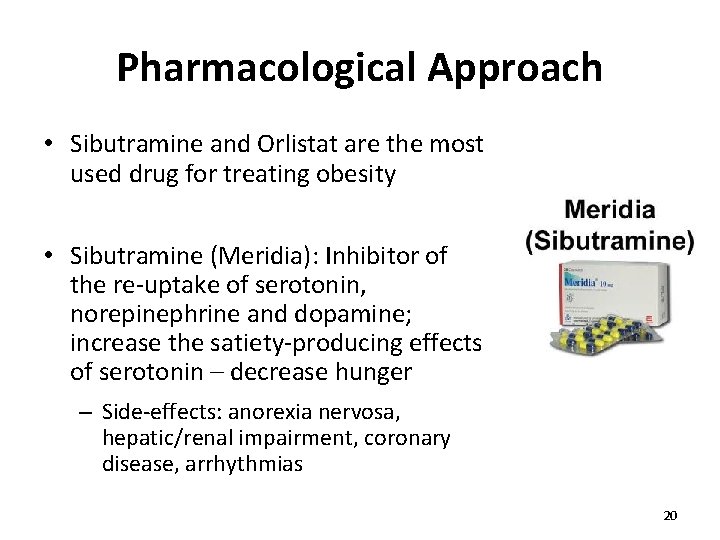
Pharmacological Approach • Sibutramine and Orlistat are the most used drug for treating obesity • Sibutramine (Meridia): Inhibitor of the re-uptake of serotonin, norepinephrine and dopamine; increase the satiety-producing effects of serotonin – decrease hunger – Side-effects: anorexia nervosa, hepatic/renal impairment, coronary disease, arrhythmias 20
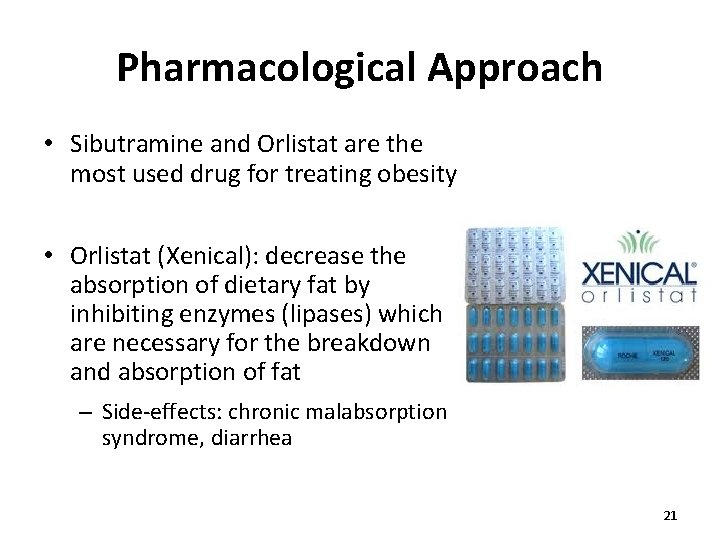
Pharmacological Approach • Sibutramine and Orlistat are the most used drug for treating obesity • Orlistat (Xenical): decrease the absorption of dietary fat by inhibiting enzymes (lipases) which are necessary for the breakdown and absorption of fat – Side-effects: chronic malabsorption syndrome, diarrhea 21

Behavioral Approach 22

Behavioral Approach • Behavior-modification programs in obesity – Modify eating habits – Increase physical activity – Promoting better health • This system provides appropriate rewards when patients exhibit the desire behavior 23
Modify Eating Habits • • Keep a dietary intake log Eat breakfast Eat small and frequent meals Do not eat junk food (fast food) Cut down alcohol consumption Do not eat 3 hours before you go to sleep Avoid high calories food (deserts, cakes etc) • In 18 wk of therapy, patients achieved 9. 9 kg weight loss but only the 66% of these patients maintained this weight after 52 wk 24
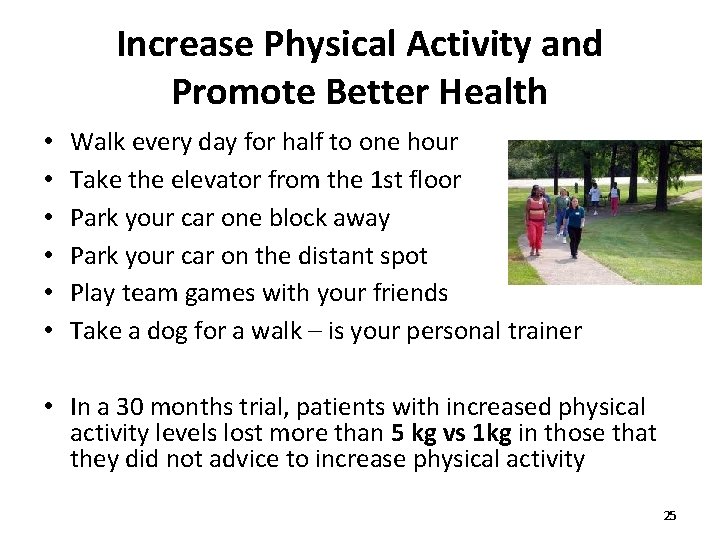
Increase Physical Activity and Promote Better Health • • • Walk every day for half to one hour Take the elevator from the 1 st floor Park your car one block away Park your car on the distant spot Play team games with your friends Take a dog for a walk – is your personal trainer • In a 30 months trial, patients with increased physical activity levels lost more than 5 kg vs 1 kg in those that they did not advice to increase physical activity 25
Nutritional Supplements 26
Nutritional Supplements • Providing Nutrients – In hypocaloric diets (decrease energy intake) • Stimulating Weight Loss – Diminishing hunger – Increasing resting metabolic rate • Information about Dietary Supplements can be found in: – www. cfsan. fda. gov, www. ods. od. nih. gov, www. nas. org, www. eatright. org/public/conferences. And. Events/92_supplguide. cfm, www. iom. edu, www. naturaldatabase. com 27
Nutritional Supplements • Terminology- Ορολογία – DRI: Dietary Reference Intake (αναφορά διαιτολογικής κατανάλωσης) • Composition of diets for schools, prisons, hospitals or nursing homes • Industries developing new food stuffs • Healthcare policy makers and public health officials – RDA: Recommended Dietary Allowances (προτεινόμενηεπιτρεπόμενη διαιτολογική κατανάλωση) – AI: Adequate Intake (επαρκείς κατανάλωση) – UL: tolerable Upper Levels (ανώτερα επιτρεπόμενα όρια κατανάλωσης) 28
Dietary Supplements for Achieving Nutrient Adequacy • Nutrient-containing dietary supplements contains essential nutrient that might be low or lacking in reducing diets (very low calories diet<800 - 500 calories, low calories diet 1200 -1500 calories) • These are: – multivitamins (100% RDA) – Calcium, Iron, Vitamin C – B complex – Vitamin D + Calcium – Electrolytes – Potassium (K) – Protein and amino acid complex – Formulated food 29
Dietary Supplements for Stimulating Weight Loss • Stimulate or enhance weight loss (for those in diet) by altering body functions (anorectic effect or increase energy output) • Dietary supplements are regulated as FOODS and the law generally assumes that are safe unless proven otherwise…. . • Some of those supplements might interact with other medication • Some of the ingredients are unknown or uncharacterized • Some are contaminated • Do not use them during: Pregnancy, Lactation, or immediately before surgery 30
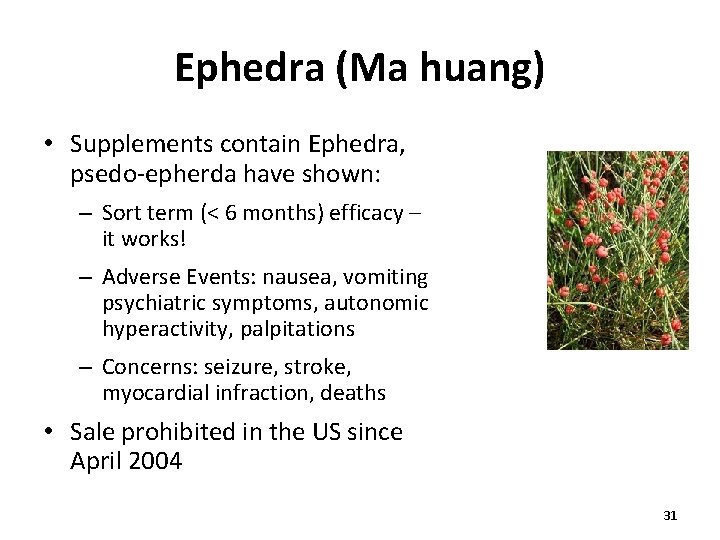
Ephedra (Ma huang) • Supplements contain Ephedra, psedo-epherda have shown: – Sort term (< 6 months) efficacy – it works! – Adverse Events: nausea, vomiting psychiatric symptoms, autonomic hyperactivity, palpitations – Concerns: seizure, stroke, myocardial infraction, deaths • Sale prohibited in the US since April 2004 31
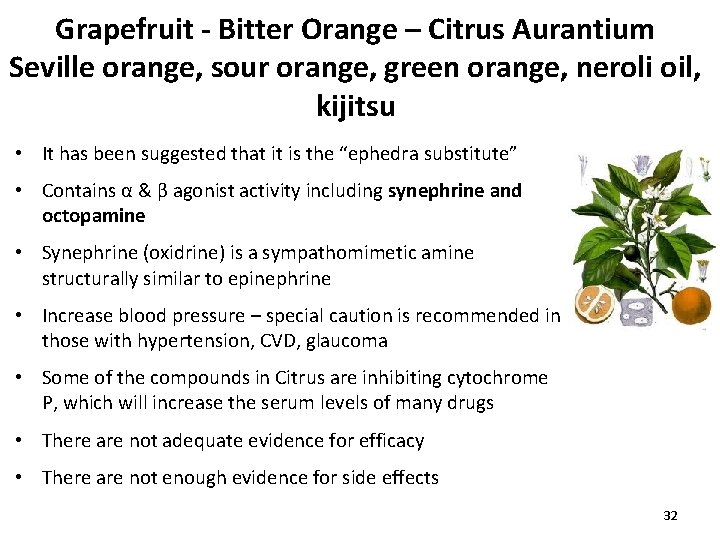
Grapefruit - Bitter Orange – Citrus Aurantium Seville orange, sour orange, green orange, neroli oil, kijitsu • It has been suggested that it is the “ephedra substitute” • Contains α & β agonist activity including synephrine and octopamine • Synephrine (oxidrine) is a sympathomimetic amine structurally similar to epinephrine • Increase blood pressure – special caution is recommended in those with hypertension, CVD, glaucoma • Some of the compounds in Citrus are inhibiting cytochrome P, which will increase the serum levels of many drugs • There are not adequate evidence for efficacy • There are not enough evidence for side effects 32
Chromium Picolinate • Chromium + Picolinic Acid • Studies have shown a small but significant reduction in body weight of approximately 200 gr / week • No adverse reactions have been reported • Further research is needed 33
Conjugated (συγκολλημένα) Linoleic Acid (CLA) • In animals reduce body fat and increase lean body mass • In humans CLA consumption does not show the same results • No evidence for weight reduction • Instead there are evidence that increase hepatic size and increase insulin resistance 34
Chitosan • Chitosan is produced by Chitin which is found in the exoskeleton of lobsters and other shellfish • It claims that reduce fat absorption from the diet and therefore could reduce body weight • Studies have shown that NO-EFFECT at all • Some gastrointestinal symptoms have been reported 35
Green Tea • Green tea contains several polyphenolic components known as catechins • Catechins increase fat utilization from the mitochondria and exert an antioxidant effect • In humans reduce LDL, body fat and visceral fat in 12 weeks of supplementation • Reduces Iron body levels • Further studies are needed 36
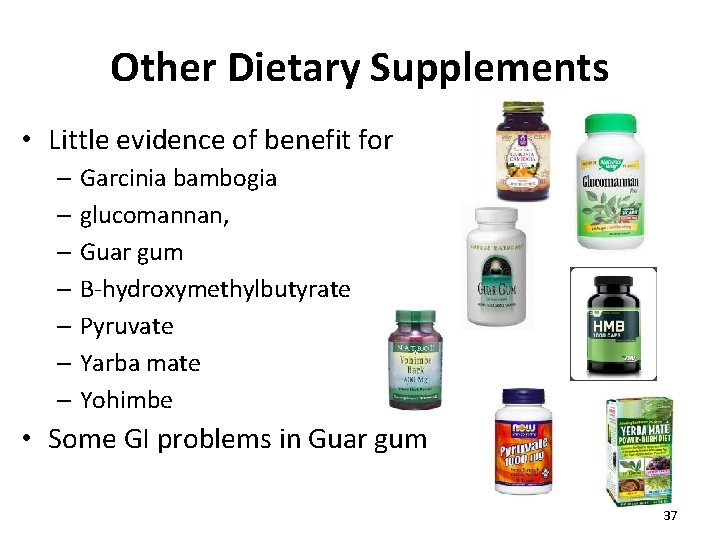
Other Dietary Supplements • Little evidence of benefit for – Garcinia bambogia – glucomannan, – Guar gum – B-hydroxymethylbutyrate – Pyruvate – Yarba mate – Yohimbe • Some GI problems in Guar gum 37
Calcium Supplements • The data are inconsistent • In animals Ca supplementation reduce body fat • In humans in randomized double blind placebo controlled studies Ca did not effect body weight • No adverse reactions • Further studies are needed to establish whether Ca supplements or dairy products can increase weight loss in Low-calories diet 38
Summary • Bariatric Surgery is the most effective way for loosing weight (when all other ways have failed) • Obesity-medication have many side-effects • In very low-calories diet, it is very important to take nutrient supplements to improve the nutritional status and avoid malnutrition • There are not enough evidence to support that dietary supplements enhance weight reduction and promote health 39

- Slides: 40