
Surgi Count Safety Sponge System Jade Richardson Stryker
- Slides: 10
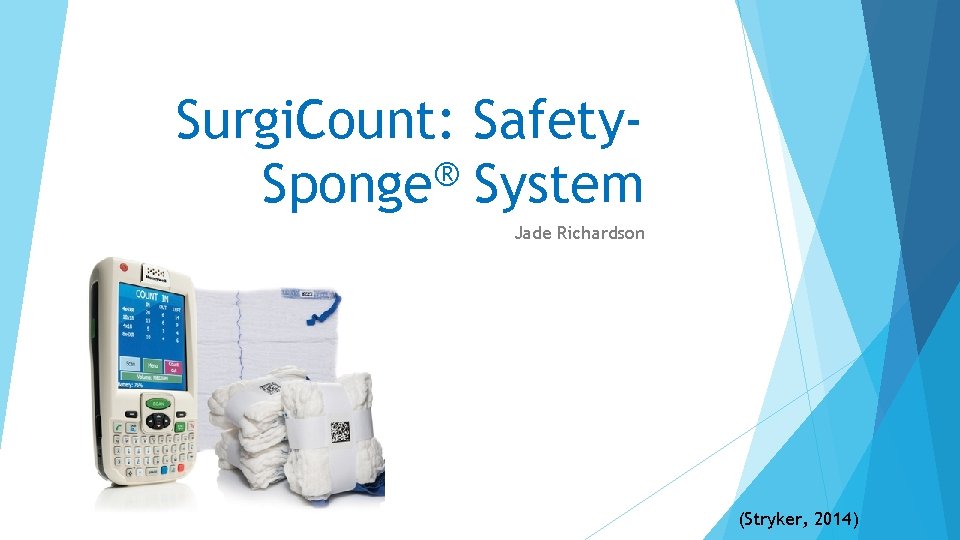
Surgi. Count: Safety® Sponge System Jade Richardson (Stryker, 2014)
Presentation Outline What the Surgi. Count Safety-Sponge® System is Why the Surgi. Count Safety-Sponge® System was introduced and needed The impact that the Surgi. Count Safety-Sponge® System made in the operating room How the Surgi. Count Safety-Sponge® System is monitored in the operating room How the use of the Surgi. Count Safety-Sponge® System could be improved
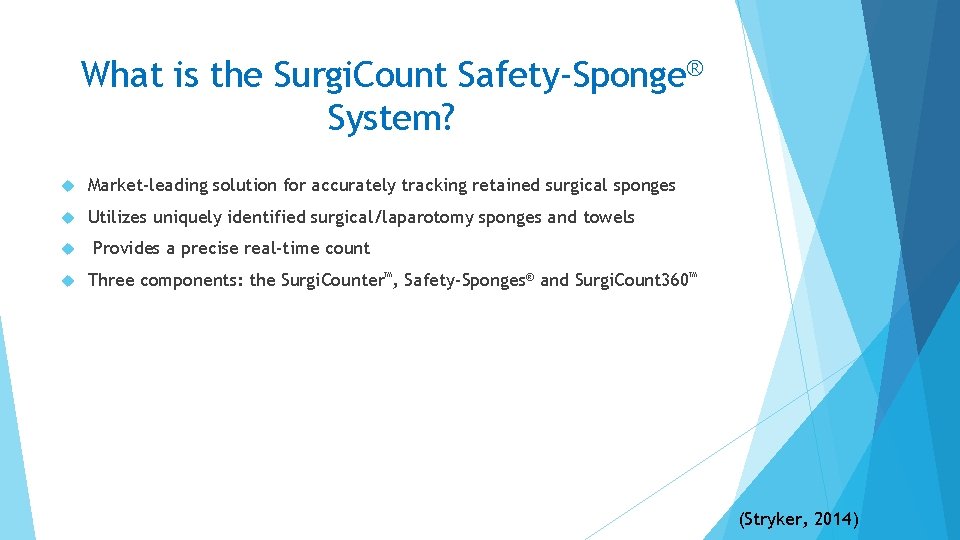
What is the Surgi. Count Safety-Sponge® System? Market-leading solution for accurately tracking retained surgical sponges Utilizes uniquely identified surgical/laparotomy sponges and towels Provides a precise real-time count Three components: the Surgi. Counter™, Safety-Sponges® and Surgi. Count 360™ (Stryker, 2014)
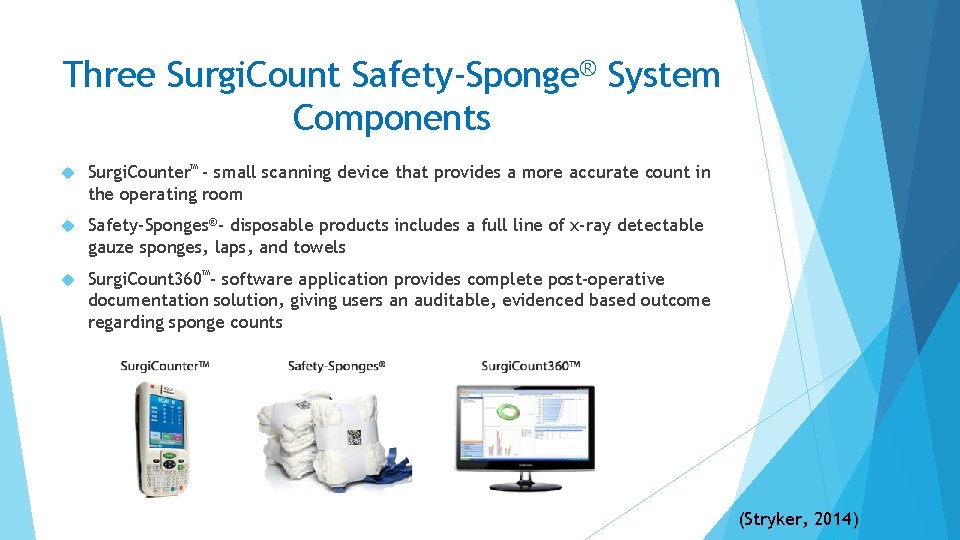
Three Surgi. Count Safety-Sponge® System Components Surgi. Counter™ - small scanning device that provides a more accurate count in the operating room Safety-Sponges®- disposable products includes a full line of x-ray detectable gauze sponges, laps, and towels Surgi. Count 360™- software application provides complete post-operative documentation solution, giving users an auditable, evidenced based outcome regarding sponge counts (Stryker, 2014)
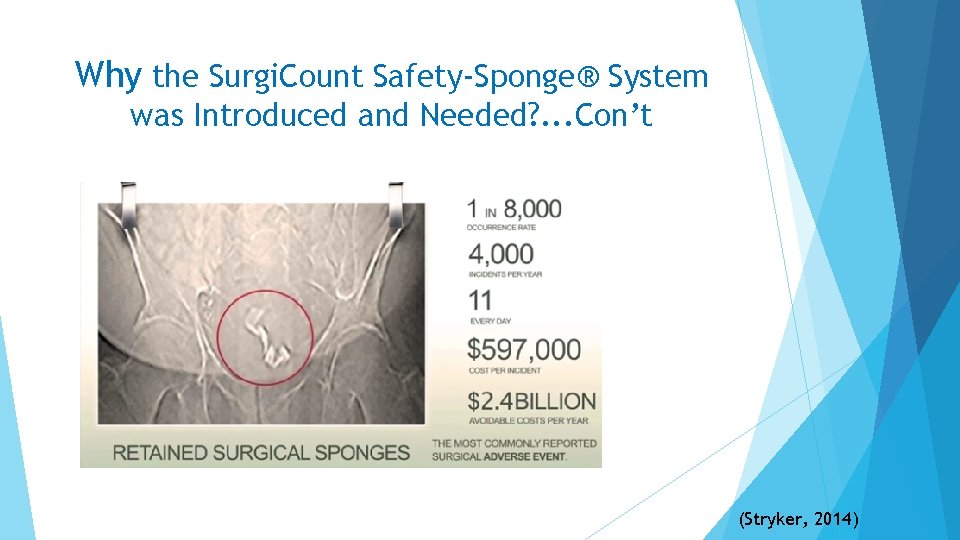
Why the Surgi. Count Safety-Sponge® System was Introduced and Needed? Introduced to help prevent one of the most surgical errors (Stryker, 2104) Retained surgical sponges Despite sponge-counting standards, failure to maintain an accurate count is a common error (The Joint Commission, 2011) To improve counting performance (The Joint Commission, 2011) To enable hospitals to improve patient safety (Stryker, 2014) Infection Additional surgery Permanent injury Patient fatality
Why the Surgi. Count Safety-Sponge® System was Introduced and Needed? . . . Con’t (Stryker, 2014)
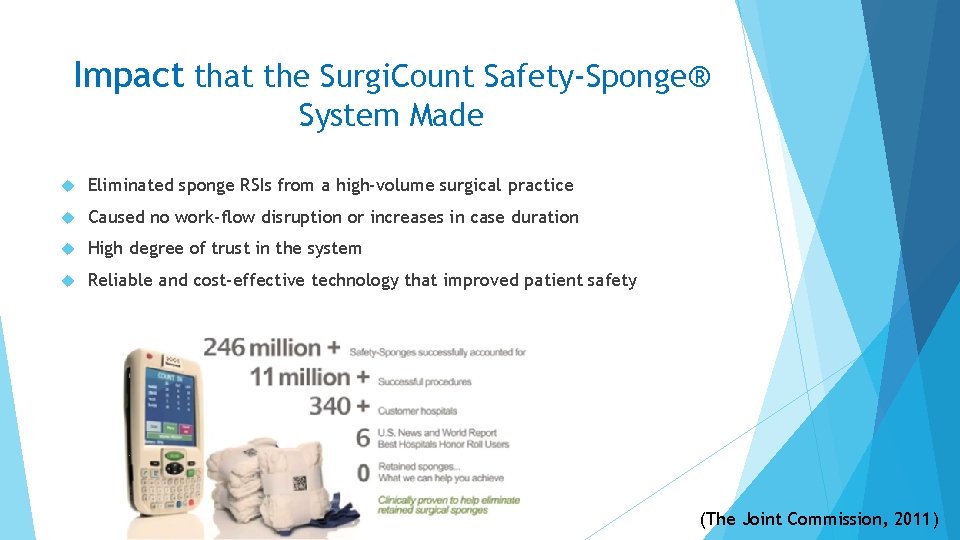
Impact that the Surgi. Count Safety-Sponge® System Made Eliminated sponge RSIs from a high-volume surgical practice Caused no work-flow disruption or increases in case duration High degree of trust in the system Reliable and cost-effective technology that improved patient safety (The Joint Commission, 2011)
How the Surgi. Count Safety-Sponge® System is Monitored in the Operating Room Individual procedure reports created on the Surgi. Counter™ can be automatically downloaded and aggregated into Surgi. Count 360 Information captured is customizable and includes procedure specific information Procedure specific information includes the exact time each individual Safety. Sponge® was accounted for before and after being removed from the patient Additional procedure specific information can include: Patient name or ID Surgical staff for that procedure Individual Safety-Sponges intentionally left in the patient for wound packing purposes (Stryker, 2014)
How the Use of the Surgi. Count Safety. Sponge® System Could be Improved Currently there are no policies stating where the sponges should be when they are scanned and only that they should be scanned once the surgeon starts closing The problem with the current policy is the abdominal cavity may not be closed all the way creating an opportunity for a retained sponge The use of the Surgi. Count Safety-Sponge® System could be improved by implementing a policy that states: No gauze sponges, laps, and towels will be scanned out while on the sterile field All gauze sponges, laps, and towels will be scanned out once they are passed off the sterile field and into the kick bucket This policy will prevent any sponges being passed back to the surgeon to be utilize in an incision
References Stryker. (2014). Surgi. Count Safety-Sponge® System. Retrieved from http: //www. surgicountmedical. com/safety-sponge-system/ The Joint Commission. (2011). Eliminating Retained Surgical Sponges. The Joint Commission Journal on Quality and Patient Safety, 37(2), 50 -58. Retrieved from http: //www. surgicountmedical. com/docs/Feb-2011 -Joint-Commission. Journal. pdf