
Surgery of ischemic heart disease Common types of
- Slides: 45
Surgery of ischemic heart disease
Common types of Heart operations • • • Coronary artery bypass grafting (CABG) Valve replacement (AVR, MVR) Valve repair (MVP, TVP, AVP) Congenital op. (ASD, VSD, …) Heart transplantation and alternatives Combined operations (CABG+AVR, CABG+MVP/MVR, …. . ) Dissection or aneurism of the ascending aorta Tumors of the Heart Constrictive pericarditis Pacemaker / ICD implantation
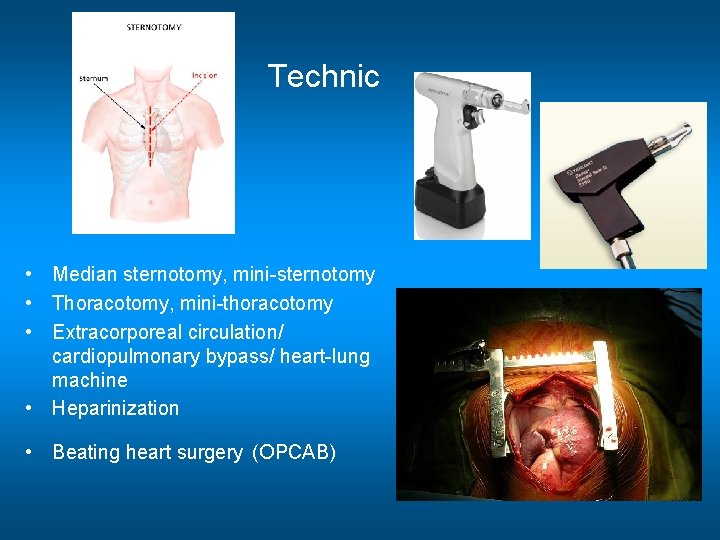
Technic • Median sternotomy, mini-sternotomy • Thoracotomy, mini-thoracotomy • Extracorporeal circulation/ cardiopulmonary bypass/ heart-lung machine • Heparinization • Beating heart surgery (OPCAB)
Coronary artery bypass surgery (CABG) Treatment strategies for coronary artery disease • Medical – Nitrate, anti-TCT, lysis, beta-blocker, Ca 2+ channel blocker… • Interventional – PCI: stent implantation, balloon dilatation, rotablator therapy • Surgical – Coronary artery bypass, endarterectomy, patch, LV aneurism resection, plication
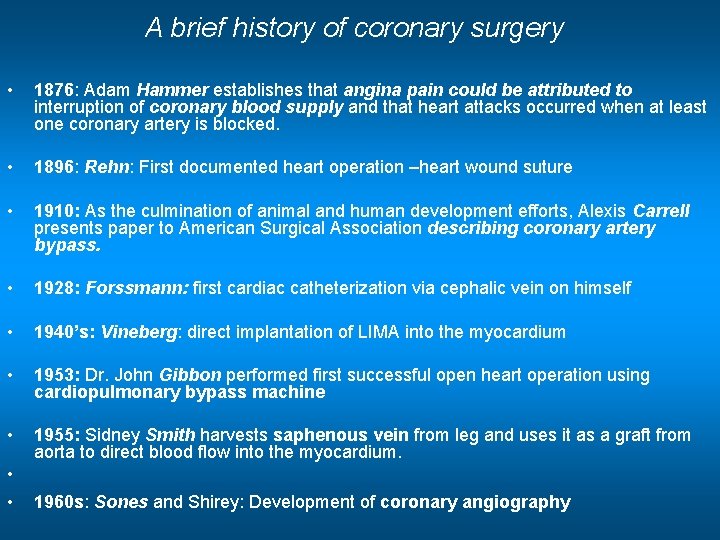
A brief history of coronary surgery • 1876: Adam Hammer establishes that angina pain could be attributed to interruption of coronary blood supply and that heart attacks occurred when at least one coronary artery is blocked. • 1896: Rehn: First documented heart operation –heart wound suture • 1910: As the culmination of animal and human development efforts, Alexis Carrell presents paper to American Surgical Association describing coronary artery bypass. • 1928: Forssmann: first cardiac catheterization via cephalic vein on himself • 1940’s: Vineberg: direct implantation of LIMA into the myocardium • 1953: Dr. John Gibbon performed first successful open heart operation using cardiopulmonary bypass machine • 1955: Sidney Smith harvests saphenous vein from leg and uses it as a graft from aorta to direct blood flow into the myocardium. • • 1960 s: Sones and Shirey: Development of coronary angiography
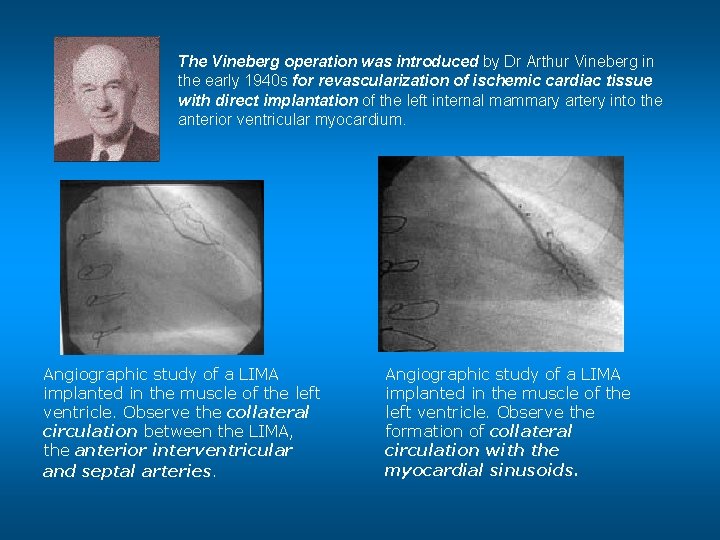
• The Vineberg operation was introduced by Dr Arthur Vineberg in the early 1940 s for revascularization of ischemic cardiac tissue with direct implantation of the left internal mammary artery into the anterior ventricular myocardium. Angiographic study of a LIMA implanted in the muscle of the left ventricle. Observe the collateral circulation between the LIMA, the anterior interventricular and septal arteries. Angiographic study of a LIMA implanted in the muscle of the left ventricle. Observe the formation of collateral circulation with the myocardial sinusoids.
- For many years, Vineberg procedure was the most successful surgical therapy of angina. - In 1956, Charles Bailey successfully performed the first human coronary endarterectomy in seven patients. By 1958, William Longmire reported successful coronary endarterectomy without cardiopulmonary bypass in 5 patients. - Yet, without coronary angiography all these early attempts for surgical treatment of angina pectoris could not be well planned, and the results could not be objectively verified. - The idea of direct operative approach to patch, or to bypass diseased coronary arteries was entertained by many cardiologists and cardiac surgeons. - In 1910, Alexis Carrel, the famous pioneer of vascular anastomosis performed aortocoronary bypass grafting in dogs, and predicted that such an approach may have a role in the treatment of coronary artery disease in the future. - Coronary bypass operations had to wait until coronary angiography was developed in 1958 by Frank Mason Sones, Jr. .
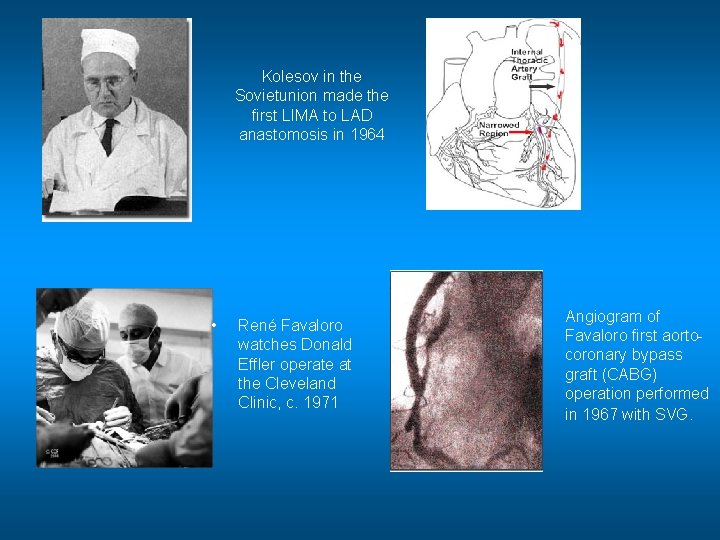
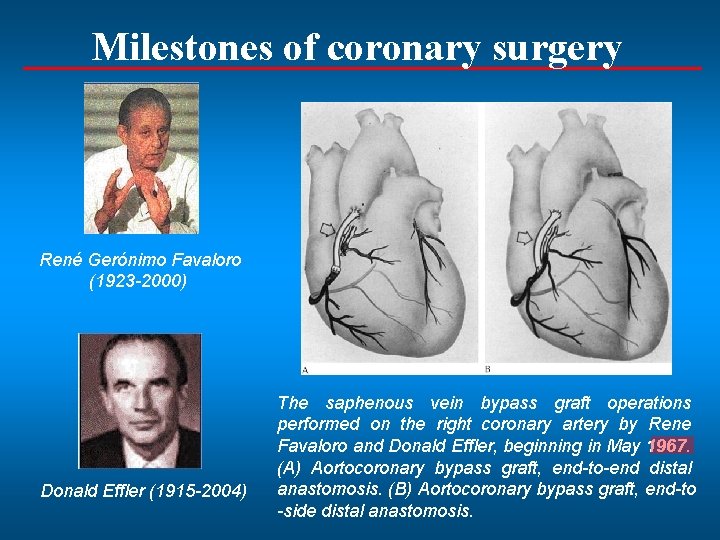
Kolesov in the Sovietunion made the first LIMA to LAD anastomosis in 1964 • René Favaloro watches Donald Effler operate at the Cleveland Clinic, c. 1971 Angiogram of Favaloro first aortocoronary bypass graft (CABG) operation performed in 1967 with SVG.
Milestones of coronary surgery René Gerónimo Favaloro (1923 -2000) Donald Effler (1915 -2004) The saphenous vein bypass graft operations performed on the right coronary artery by Rene Favaloro and Donald Effler, beginning in May 1967. (A) Aortocoronary bypass graft, end-to-end distal anastomosis. (B) Aortocoronary bypass graft, end-to -side distal anastomosis.
• 1970 s: Worldwide spread of CABG on CPB, • 1990 s: Modern off pump operations (OPCAB, beating heart), minimally invasive direct CAB (MIDCAB) • 1998: totally endoscopic robot-assisted CAB (TECAB) • 2000: The American Heart Association reports that 350, 000 U. S. patients undergo CABG each year.
Diagnostic procedures for CABG • • Anamnesis, physical exam, laboratory findings ECG, ergometry Echocardiography Isotope scan Coronary angiography, heart catheterization Cardiac CT Cardiac MRI
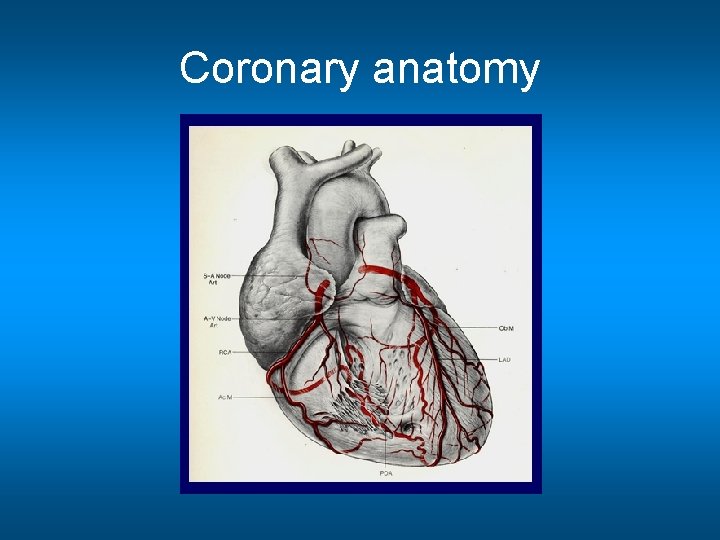
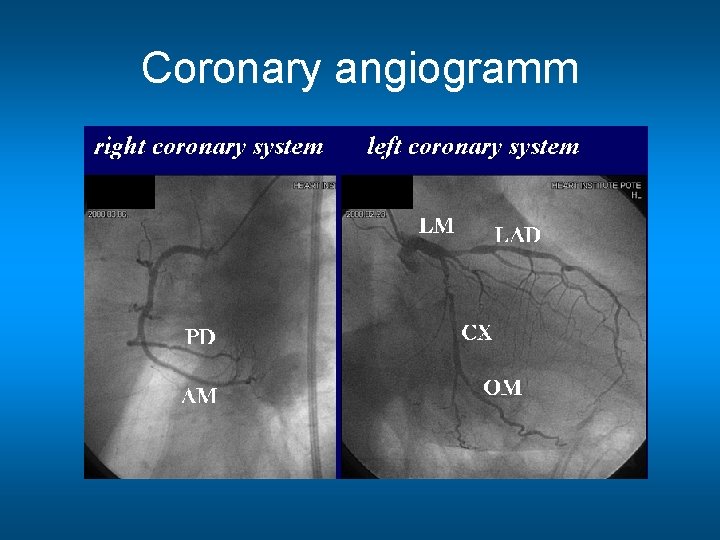
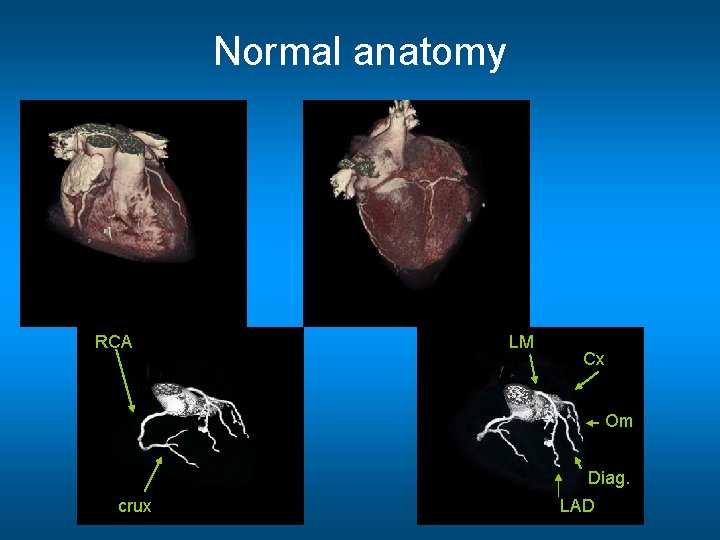
Coronary anatomy
Coronary angiogramm
Normal anatomy RCA LM LM Cx Om Diag. crux LAD
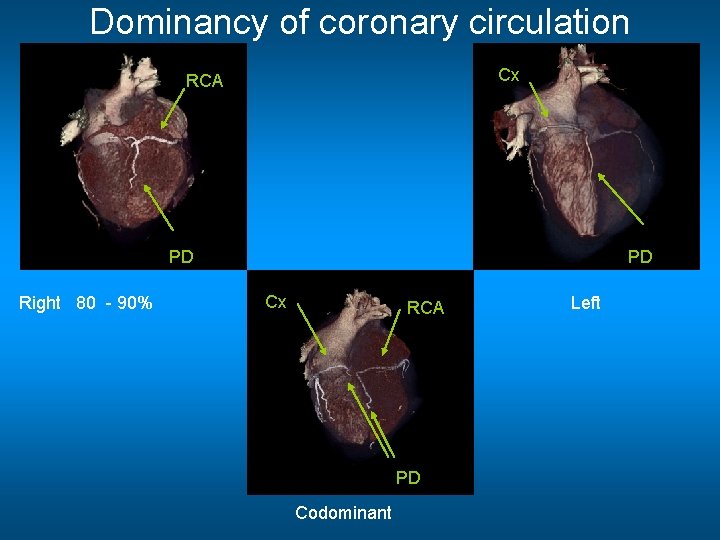
Dominancy of coronary circulation Cx RCA PD Right 80 - 90% PD Cx RCA PD Codominant Left
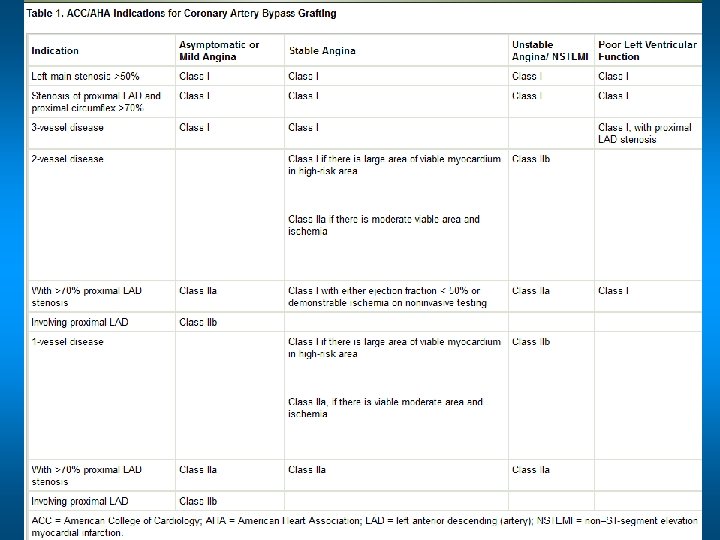
Indications for CABG • Significant organic coronary stenosis supplying considerable myocardium • Viable myocardium
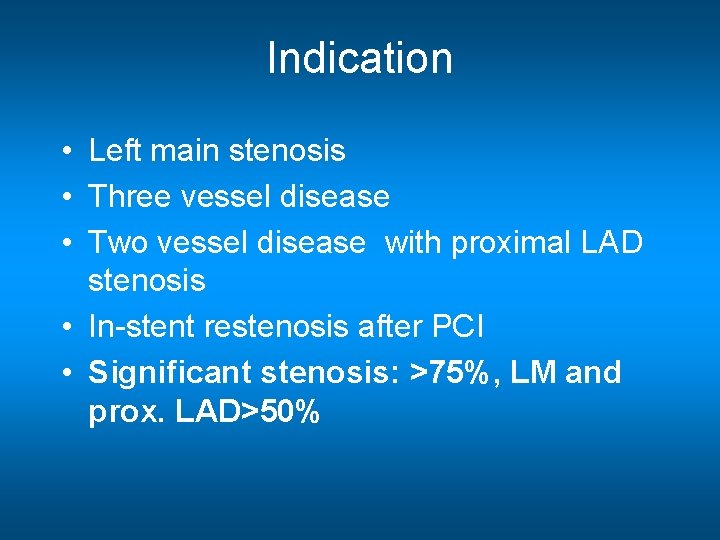
Indication • Left main stenosis • Three vessel disease • Two vessel disease with proximal LAD stenosis • In-stent restenosis after PCI • Significant stenosis: >75%, LM and prox. LAD>50%
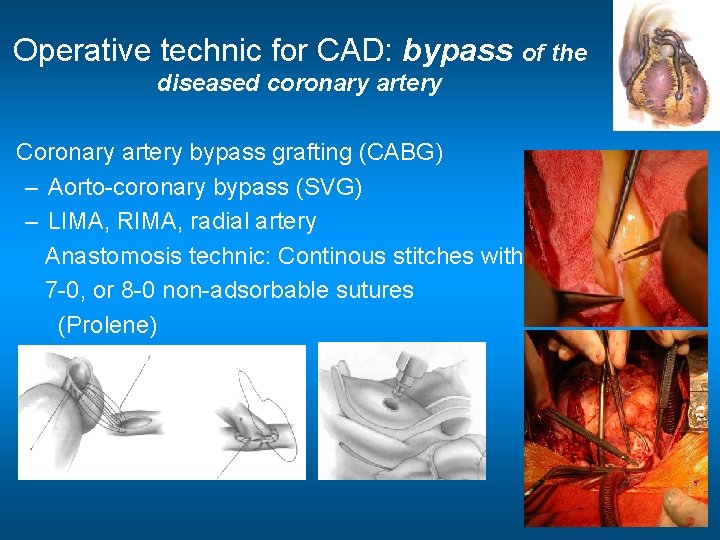
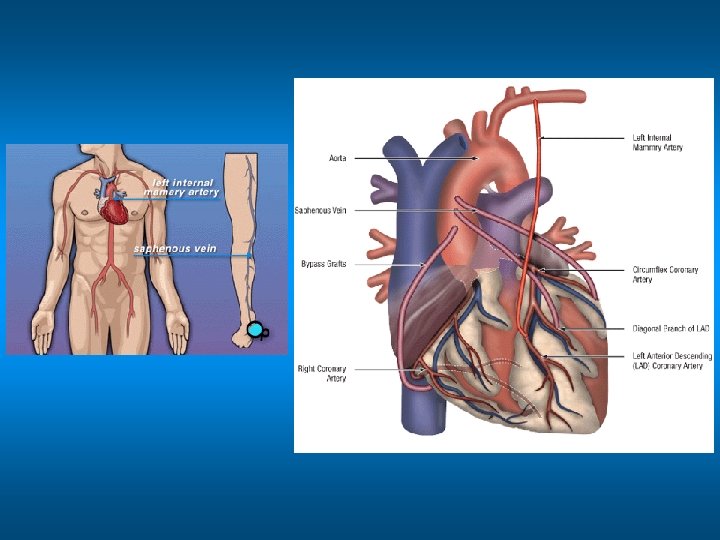
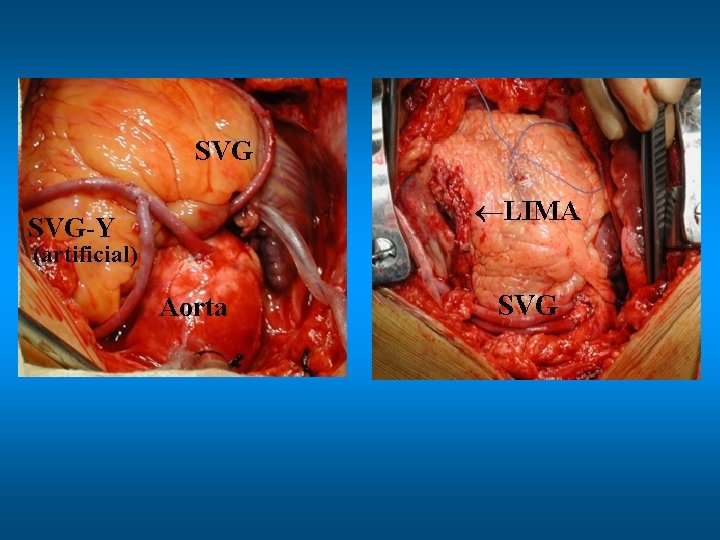
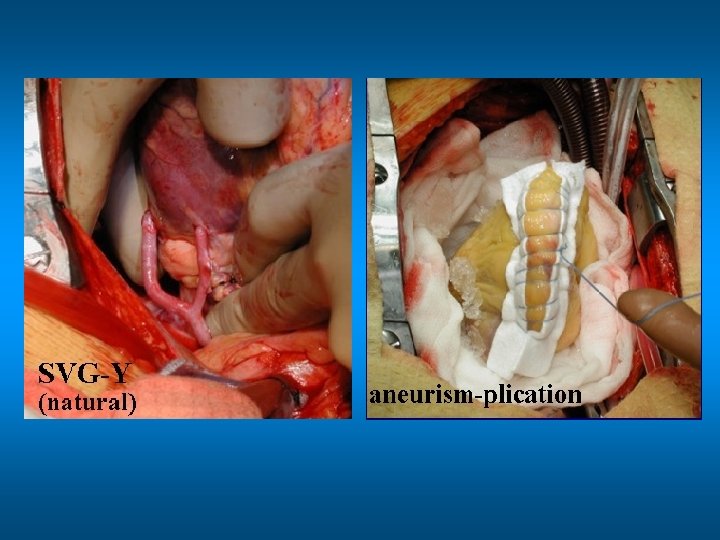
Operative technic for CAD: bypass of the diseased coronary artery Coronary artery bypass grafting (CABG) – Aorto-coronary bypass (SVG) – LIMA, RIMA, radial artery Anastomosis technic: Continous stitches with 7 -0, or 8 -0 non-adsorbable sutures (Prolene)
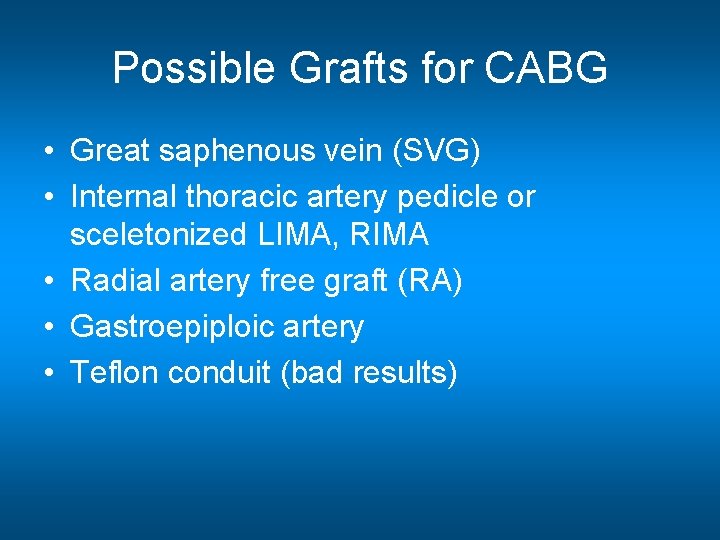
Possible Grafts for CABG • Great saphenous vein (SVG) • Internal thoracic artery pedicle or sceletonized LIMA, RIMA • Radial artery free graft (RA) • Gastroepiploic artery • Teflon conduit (bad results)
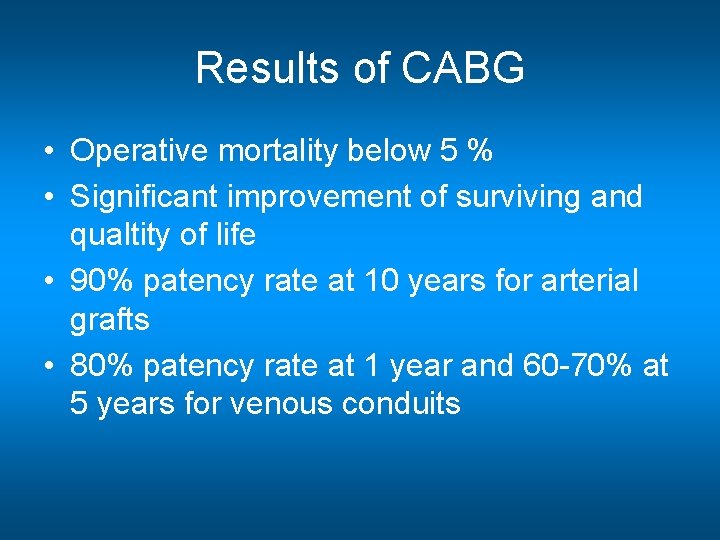
Results of CABG • Operative mortality below 5 % • Significant improvement of surviving and qualtity of life • 90% patency rate at 10 years for arterial grafts • 80% patency rate at 1 year and 60 -70% at 5 years for venous conduits
When internal mammary arteries are utilized: • 1. operative mortality and the rate of perioperative myocardial infarction decrease. • 2. patency rate (early and late) is higher than with SVG • 3. major events, mainly myocardial infarction, are less frequent; • 4. an independent predictor of late survival in all categories of patients • 5. improve left ventricular performance; • 6. improve exercise tolerance; • 7. resist degenerative changes.
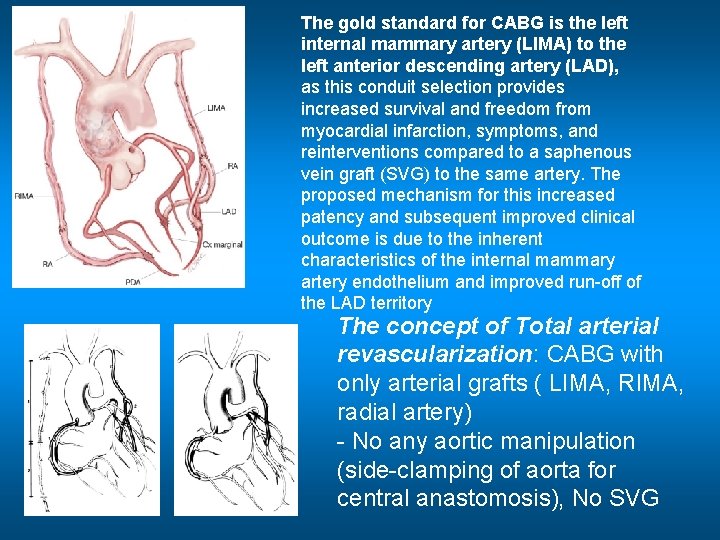
The gold standard for CABG is the left internal mammary artery (LIMA) to the left anterior descending artery (LAD), as this conduit selection provides increased survival and freedom from myocardial infarction, symptoms, and reinterventions compared to a saphenous vein graft (SVG) to the same artery. The proposed mechanism for this increased patency and subsequent improved clinical outcome is due to the inherent characteristics of the internal mammary artery endothelium and improved run-off of the LAD territory The concept of Total arterial revascularization: CABG with only arterial grafts ( LIMA, RIMA, radial artery) - No any aortic manipulation (side-clamping of aorta for central anastomosis), No SVG
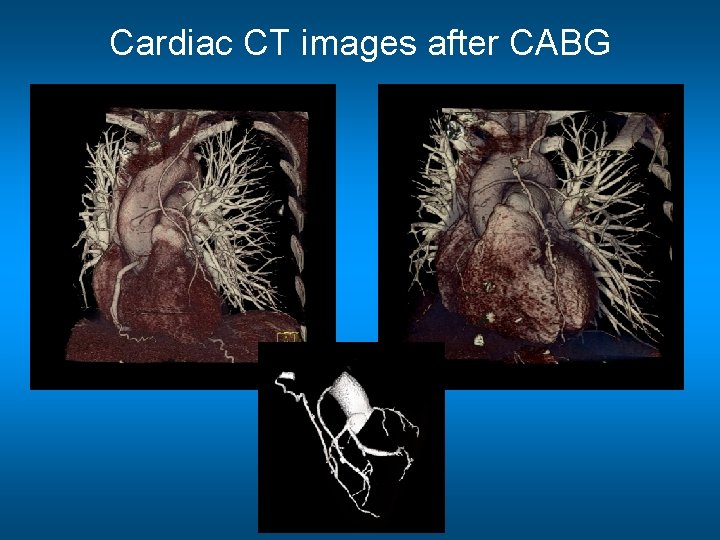
Cardiac CT images after CABG
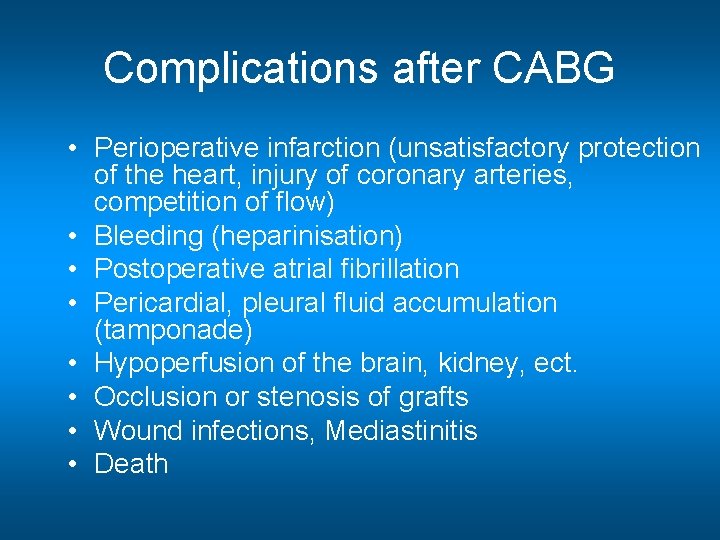
Complications after CABG • Perioperative infarction (unsatisfactory protection of the heart, injury of coronary arteries, competition of flow) • Bleeding (heparinisation) • Postoperative atrial fibrillation • Pericardial, pleural fluid accumulation (tamponade) • Hypoperfusion of the brain, kidney, ect. • Occlusion or stenosis of grafts • Wound infections, Mediastinitis • Death
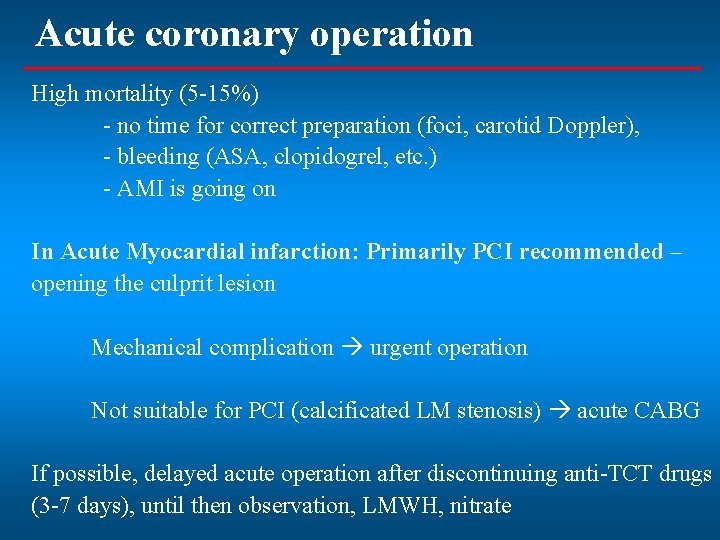
Acute coronary operation High mortality (5 -15%) - no time for correct preparation (foci, carotid Doppler), - bleeding (ASA, clopidogrel, etc. ) - AMI is going on In Acute Myocardial infarction: Primarily PCI recommended – opening the culprit lesion Mechanical complication urgent operation Not suitable for PCI (calcificated LM stenosis) acute CABG If possible, delayed acute operation after discontinuing anti-TCT drugs (3 -7 days), until then observation, LMWH, nitrate
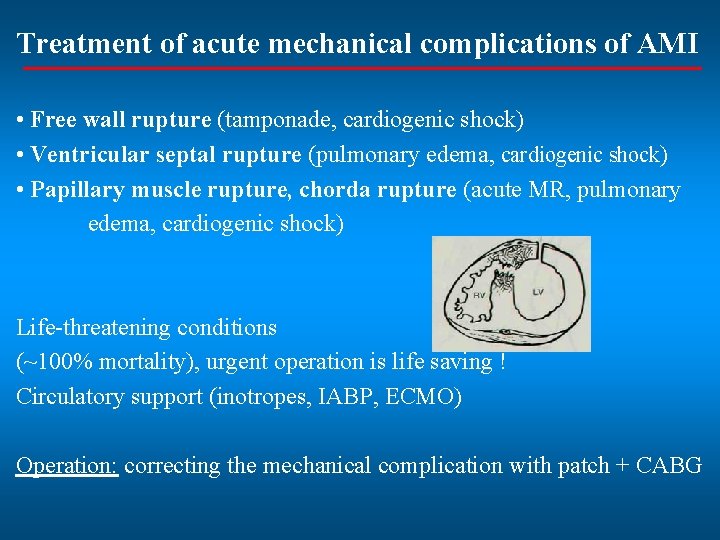
Treatment of acute mechanical complications of AMI • Free wall rupture (tamponade, cardiogenic shock) • Ventricular septal rupture (pulmonary edema, cardiogenic shock) • Papillary muscle rupture, chorda rupture (acute MR, pulmonary edema, cardiogenic shock) Life-threatening conditions (~100% mortality), urgent operation is life saving ! Circulatory support (inotropes, IABP, ECMO) Operation: correcting the mechanical complication with patch + CABG
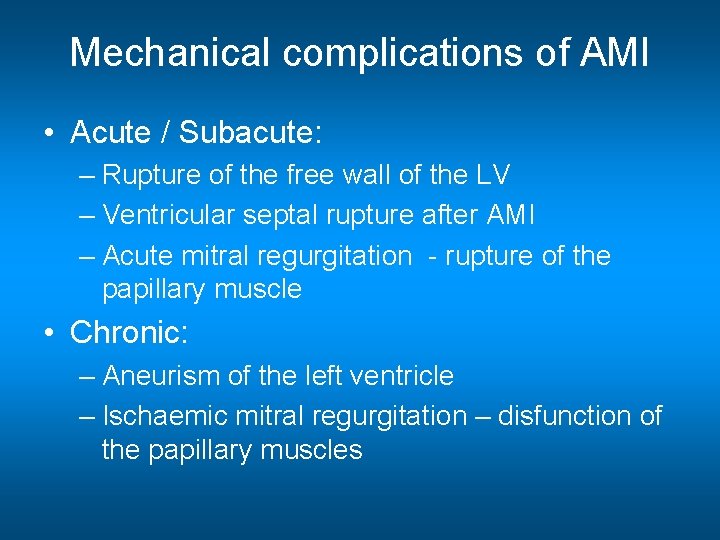
Mechanical complications of AMI • Acute / Subacute: – Rupture of the free wall of the LV – Ventricular septal rupture after AMI – Acute mitral regurgitation - rupture of the papillary muscle • Chronic: – Aneurism of the left ventricle – Ischaemic mitral regurgitation – disfunction of the papillary muscles
Types of CABG operations 1. Coronary bypass surgery on cardiopulmonary bypass (CPB) - extracorporeal circulation (ECC), heart-lung machine, On-Pump operation 2. Minimally (Less) invasive coronary artery bypass surgery • minimally invasive direct coronary artery bypass (MIDCAB), • off-pump coronary artery bypass (OPCAB), • totally endoscopic, robot-assisted coronary artery bypass grafting (TECAB)
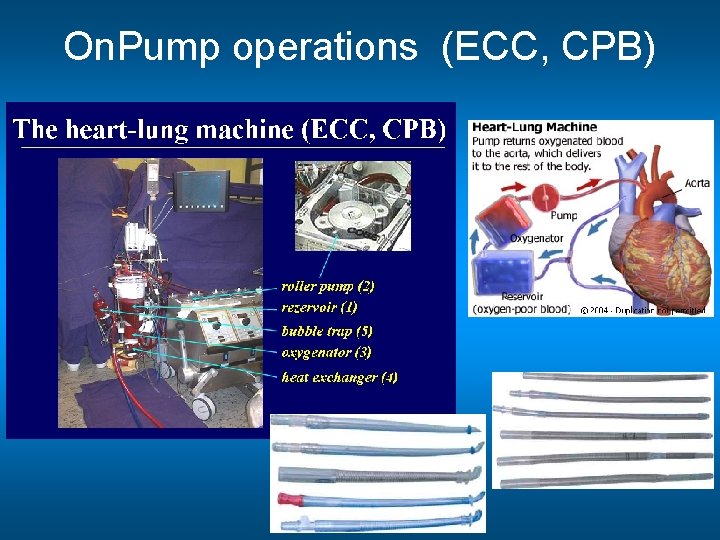
On. Pump operations (ECC, CPB)
On. Pump operation (CPB) • Bloodless area with excluding the heart and lungs • Stable (motionless) operative area • Stroke volume is independent of manipulations of the heart • Possibility of opening the heart chambers • Easy access for any coronary artery (bloodless, empty heart)
But. . • Several possible complications of ECC (arteficial surface of the tube system and oxygenator) and cross-clamping of the aorta: • • • Haemolysis, anaemia Systemic inflammatory response Transient immunodeficiency Haemostasis disturbances, DIC Embolization (air, plaque, plastics) Locoregional hypoperfusion (kidney, brain)
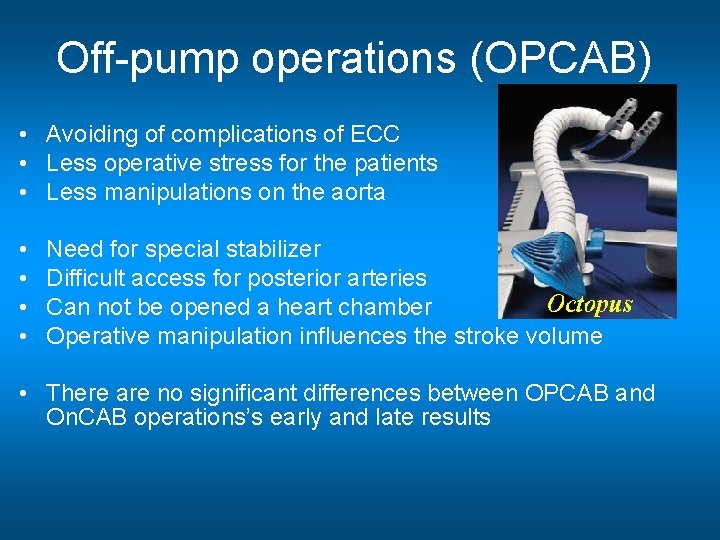
Off-pump operations (OPCAB) • Avoiding of complications of ECC • Less operative stress for the patients • Less manipulations on the aorta • • Need for special stabilizer Difficult access for posterior arteries Can not be opened a heart chamber Operative manipulation influences the stroke volume • There are no significant differences between OPCAB and On. CAB operations’s early and late results
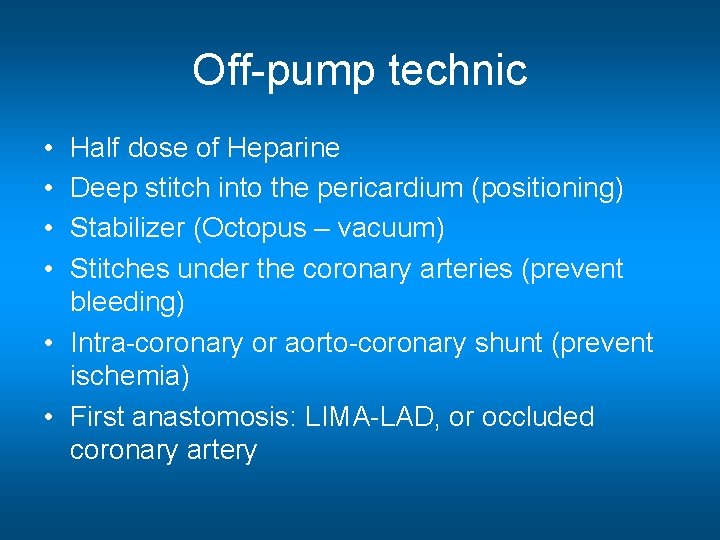
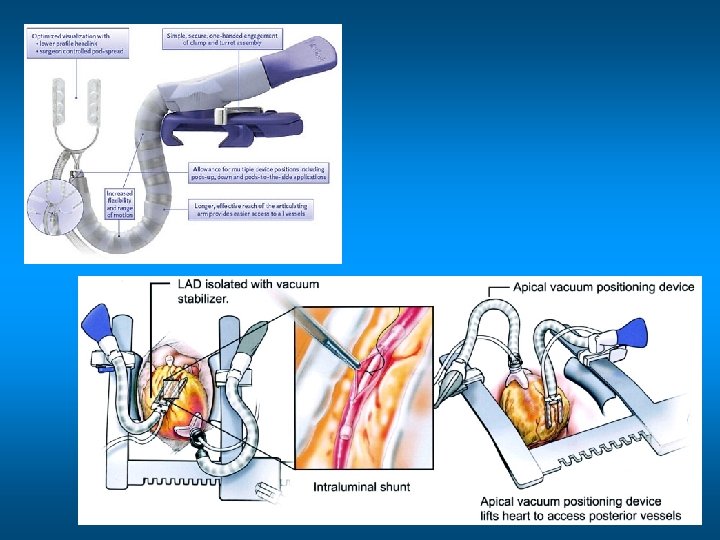
Off-pump technic • • Half dose of Heparine Deep stitch into the pericardium (positioning) Stabilizer (Octopus – vacuum) Stitches under the coronary arteries (prevent bleeding) • Intra-coronary or aorto-coronary shunt (prevent ischemia) • First anastomosis: LIMA-LAD, or occluded coronary artery
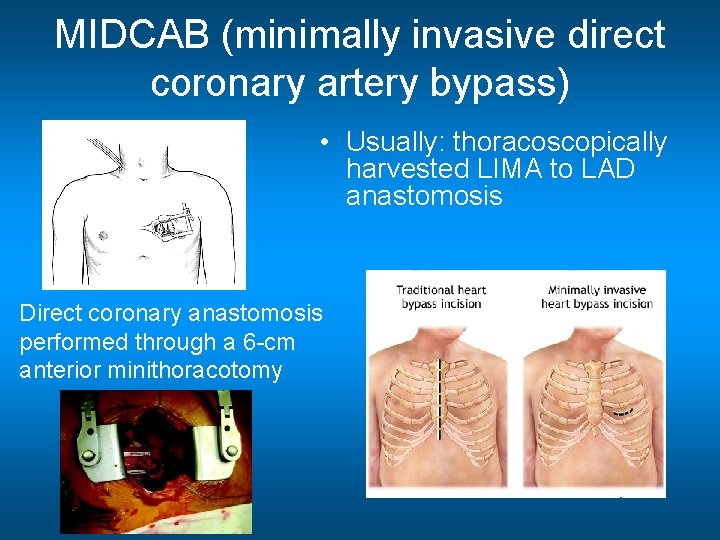
MIDCAB (minimally invasive direct coronary artery bypass) • Usually: thoracoscopically harvested LIMA to LAD anastomosis Direct coronary anastomosis performed through a 6 -cm anterior minithoracotomy
Robotic totally endoscopic coronary artery bypass (TECAB) • TECAB is a minimally invasive endoscopic surgical approach using robotic telemanipulation system to perform CABG on the arrested or beating heart. • The complete surgical procedure is performed through port incisions (3 -4, 1 cm long) using robotic telemanipulation. Robotic CABG is technically demanding and requires completion of a learning curve. • The main advantages of robotic TECAB are a significant reduction of surgical trauma and preservation of thoracic integrity (no sternotomy) and earlier return to normal activities.
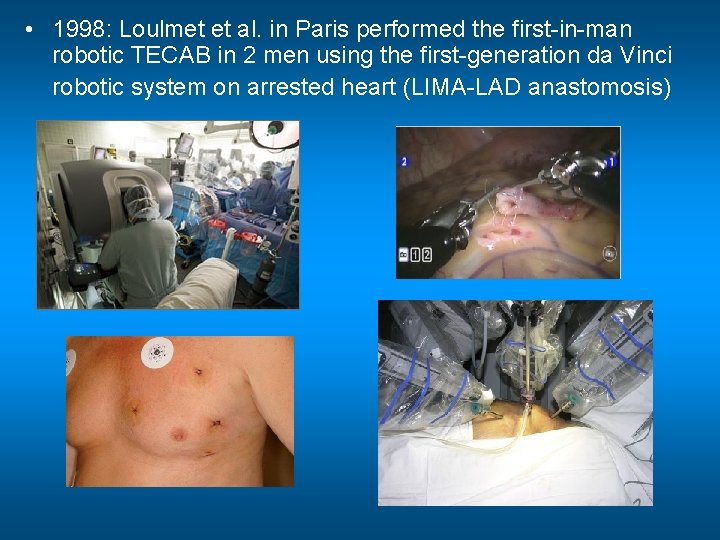
• 1998: Loulmet et al. in Paris performed the first-in-man robotic TECAB in 2 men using the first-generation da Vinci robotic system on arrested heart (LIMA-LAD anastomosis)
• Hybrid Revascularization For patients with complex lesion another newly emerging alternative is hybrid revascularization. Under this paradigm, both percutaneous coronary intervention and minimally invasive CABG surgery are performed during the same procedure. Typically, the LIMA is anastomosed to the LAD, whereas the right and circumflex systems are stented. (MIDCAB / TECAB LIMA-LAD + Cx. OM and RCA stent implantation)
Follow-up for CABG Cardiac surgery control at 8 weeks after operation: complaints, wound heeling, sternum stability, ECG, Echocardiography Cardiology control every 6 months or annually (ECG, stress test, Echocardiography), on demand interventional or cardiac surgical control, see family physician Anti-platelet drugs life-long, if should be stopped before any intervention administer LMWH Secondary prevention: lifestyle, diet, drugs (statin, anti-TCT, -blocker, etc. )
What is the future? • • Stent implantation? CABG, MIDCAB, TECAB Hybrid operation Drugs? Prevention Gene therapy, stem cell therapy Arteficial grafts? Tissue engineering?