
SURFIN THROUGH STAAR REPORTING CATEGORY 1 BIOMOLECULES AND
SURFIN’ THROUGH STAAR REPORTING CATEGORY 1: BIOMOLECULES AND CELLS
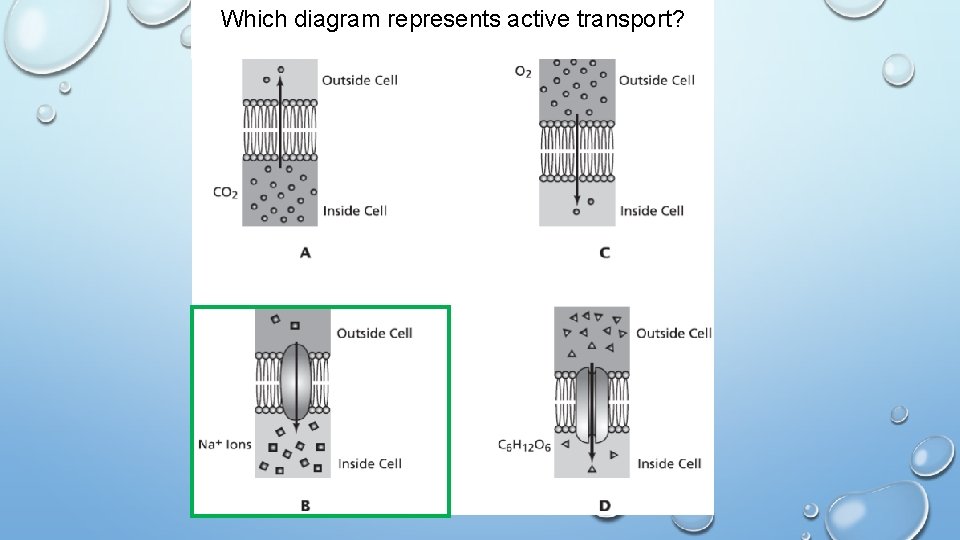
Which diagram represents active transport?
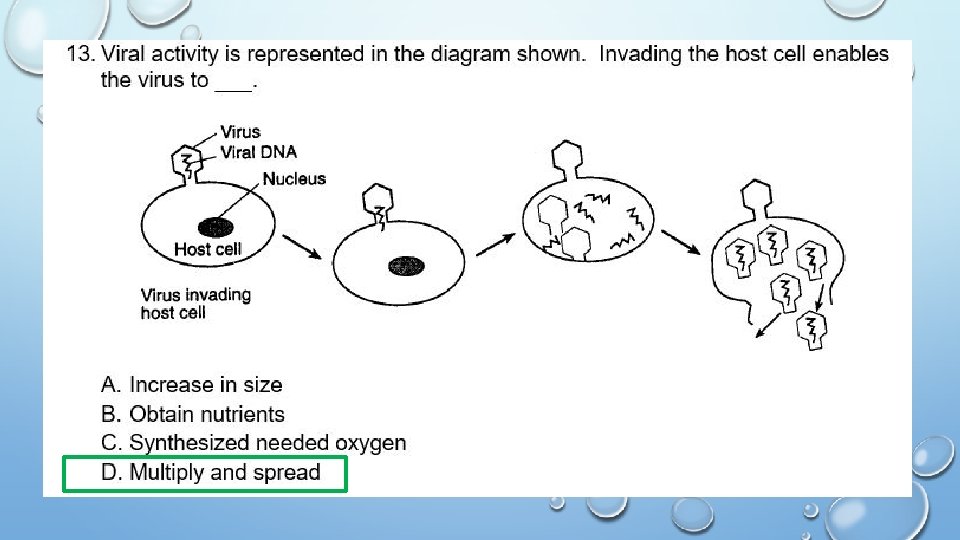

People infected with HIV (human immunodeficiency virus) have an increased risk of dying from secondary infections. Which of these best explains how HIV increase the danger of secondary infections? A. HIV produces antigens that damage red blood cells B. HIV adds genetic material from harmful pathogens C. HIV destroys helper T-cells D. HIV consumes nutrients like a parasite
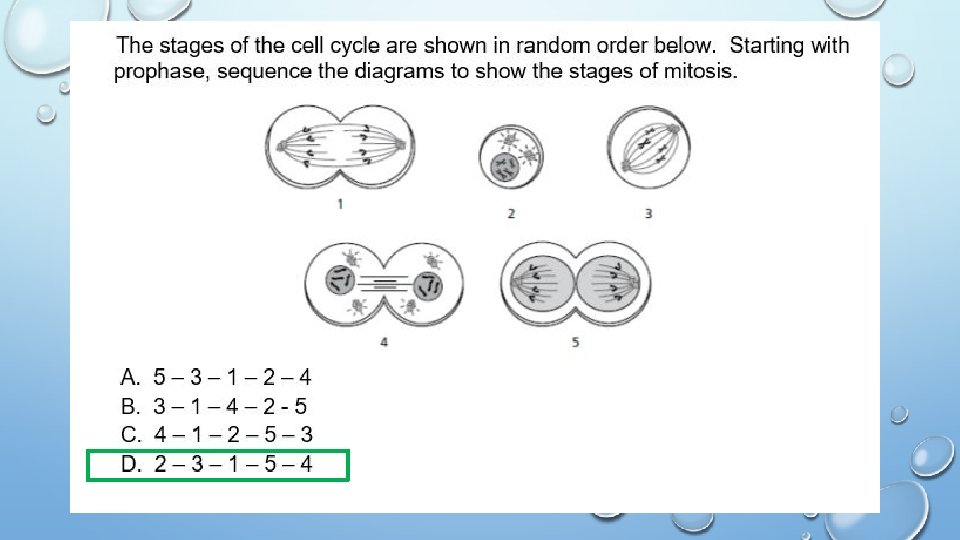
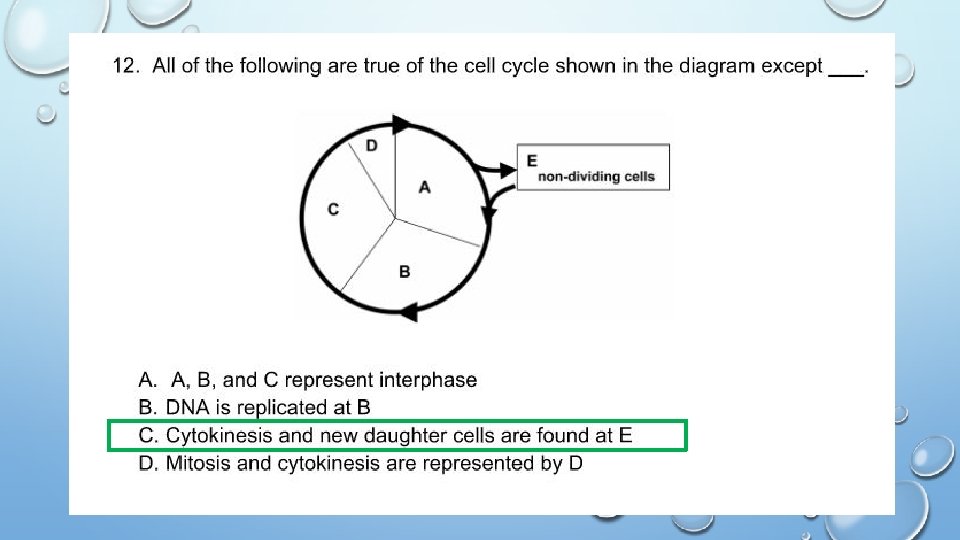
All of the following are true about DNA replication except ___. A. It is semiconservative B. It occurs during the S-phase of the cell cycle C. It allows daughter cells to have exact copies of the genetic code D. It reduces the chromosome number by half for the production of gametes
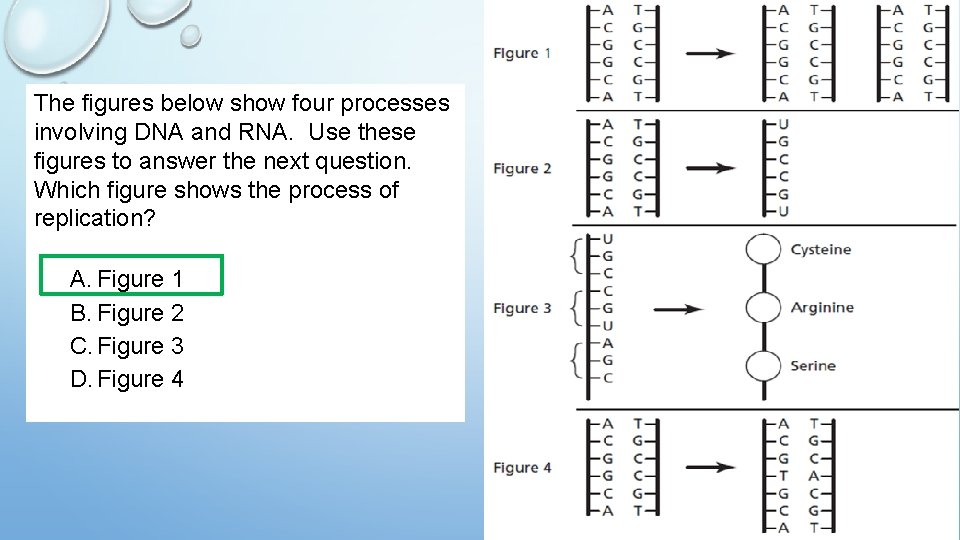
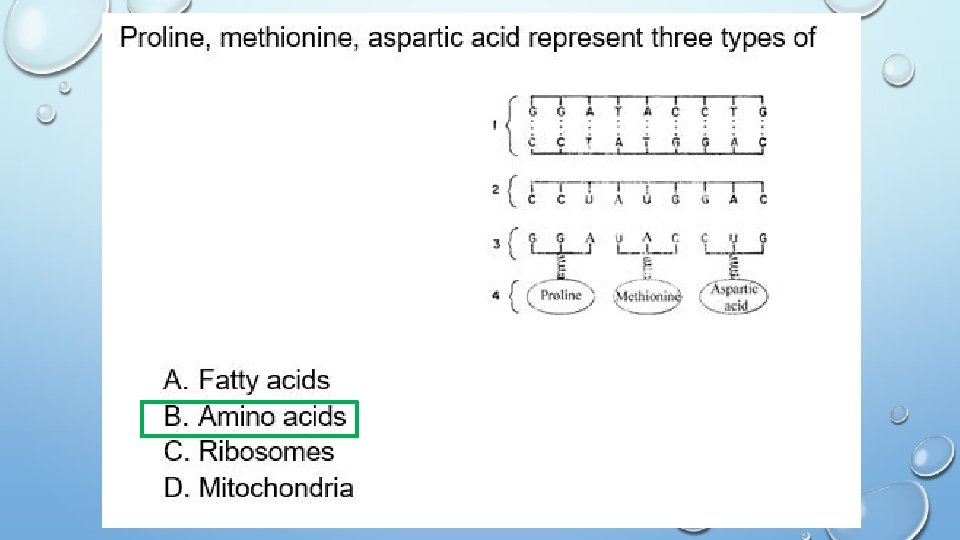
The figures below show four processes involving DNA and RNA. Use these figures to answer the next question. Which figure shows the process of replication? A. Figure 1 B. Figure 2 C. Figure 3 D. Figure 4
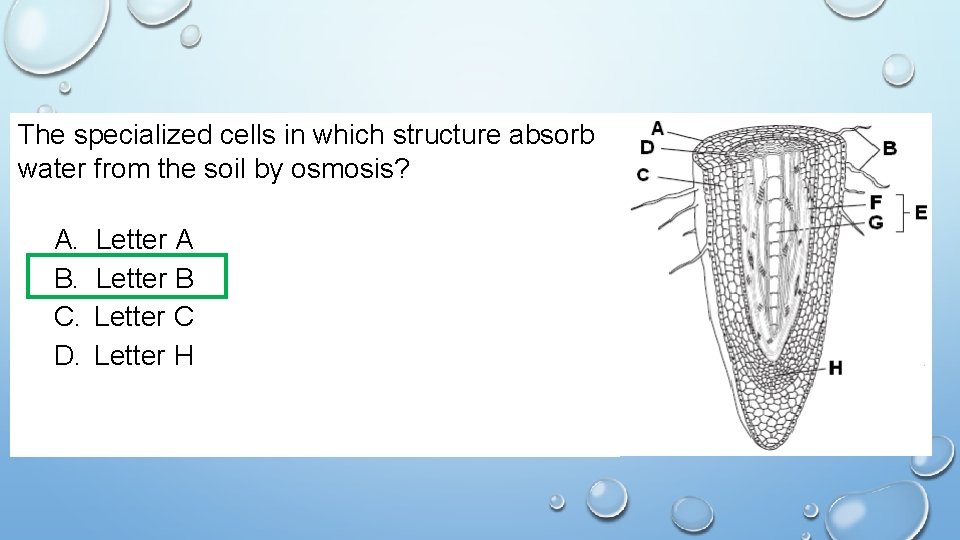
The specialized cells in which structure absorb water from the soil by osmosis? A. Letter A B. Letter B C. Letter C D. Letter H
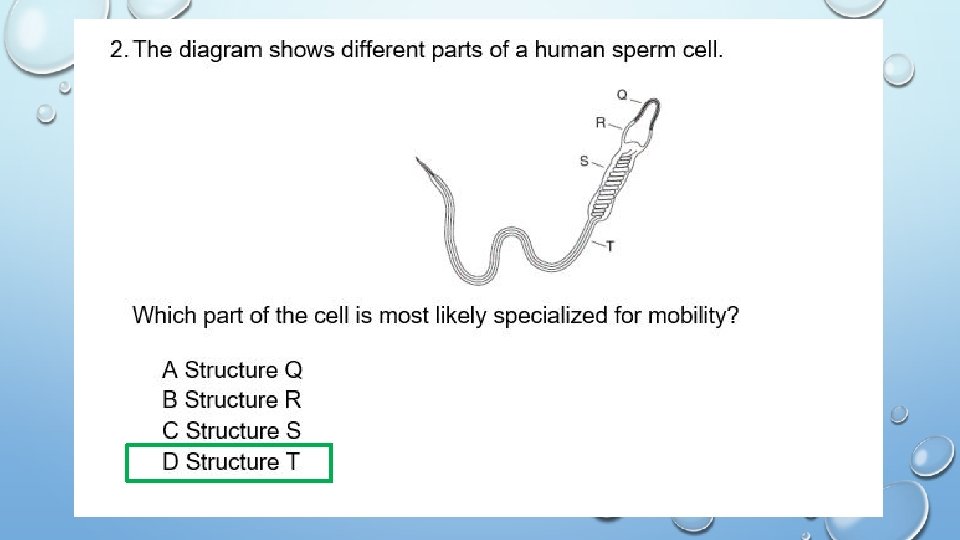
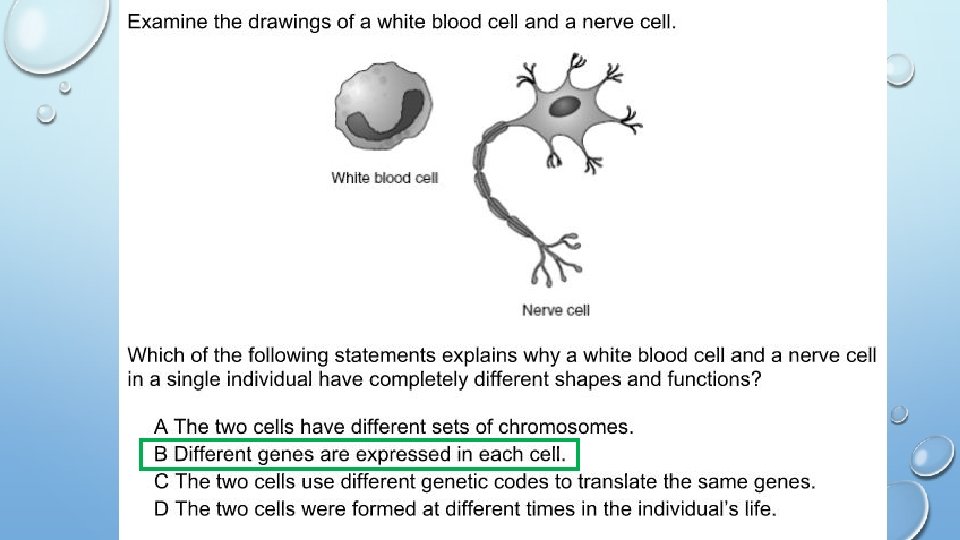
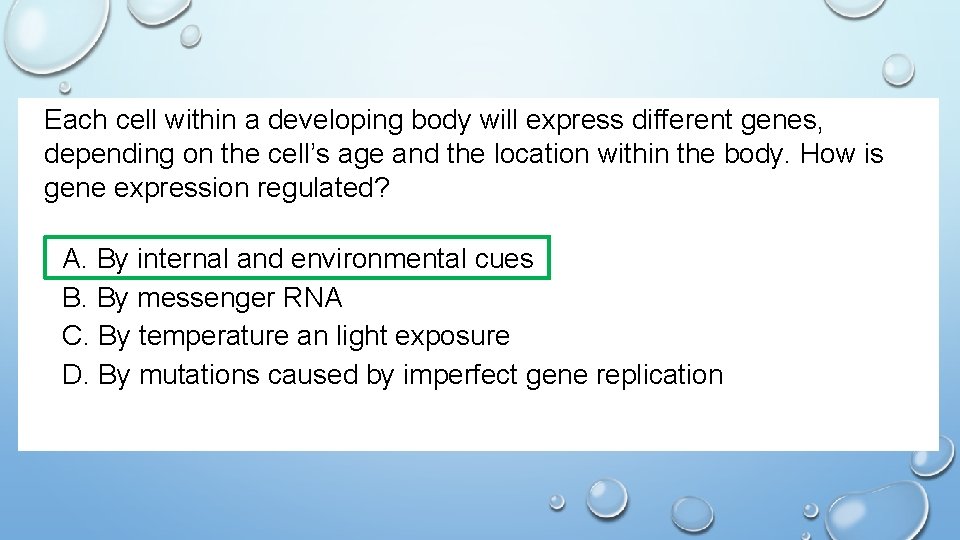
Each cell within a developing body will express different genes, depending on the cell’s age and the location within the body. How is gene expression regulated? A. By internal and environmental cues B. By messenger RNA C. By temperature an light exposure D. By mutations caused by imperfect gene replication
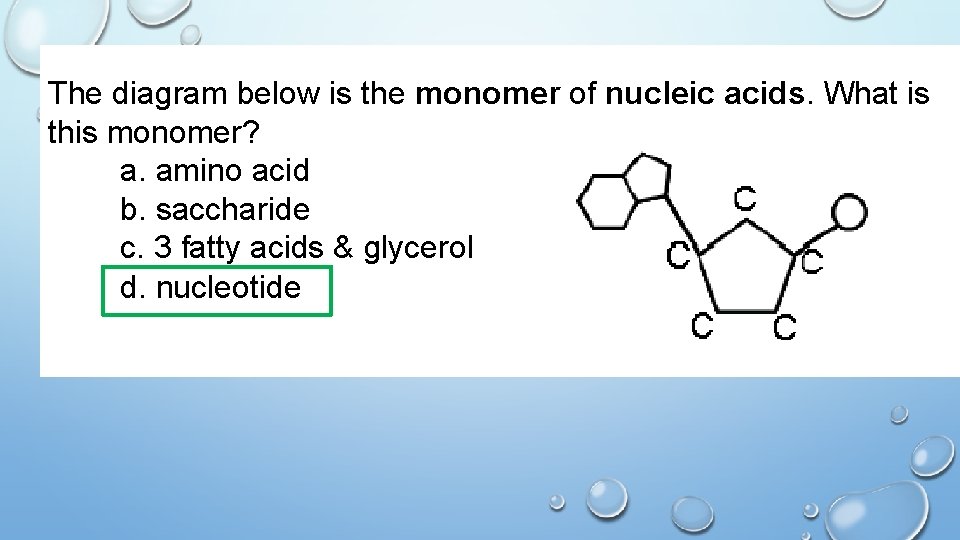
The diagram below is the monomer of nucleic acids. What is this monomer? a. amino acid b. saccharide c. 3 fatty acids & glycerol d. nucleotide
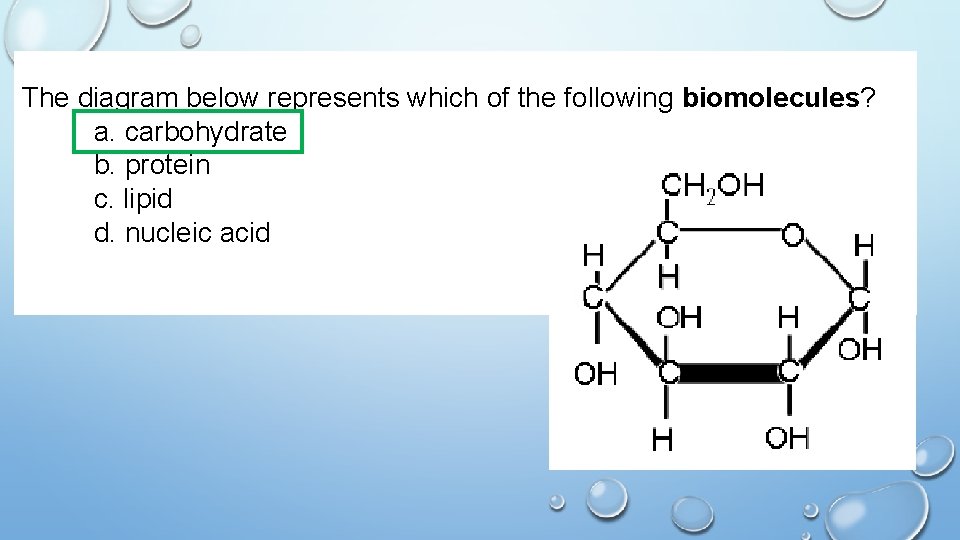
The diagram below represents which of the following biomolecules? a. carbohydrate b. protein c. lipid d. nucleic acid
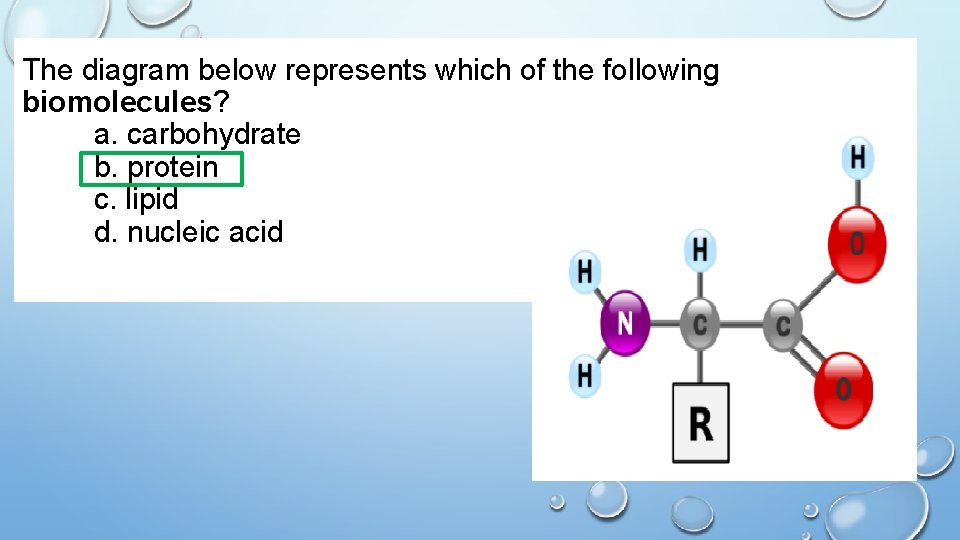
The diagram below represents which of the following biomolecules? a. carbohydrate b. protein c. lipid d. nucleic acid
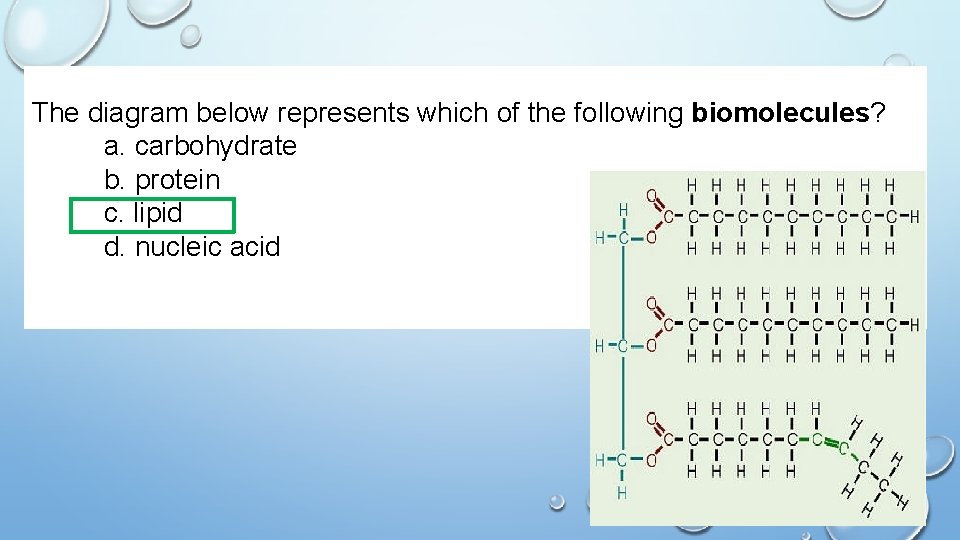
The diagram below represents which of the following biomolecules? a. carbohydrate b. protein c. lipid d. nucleic acid
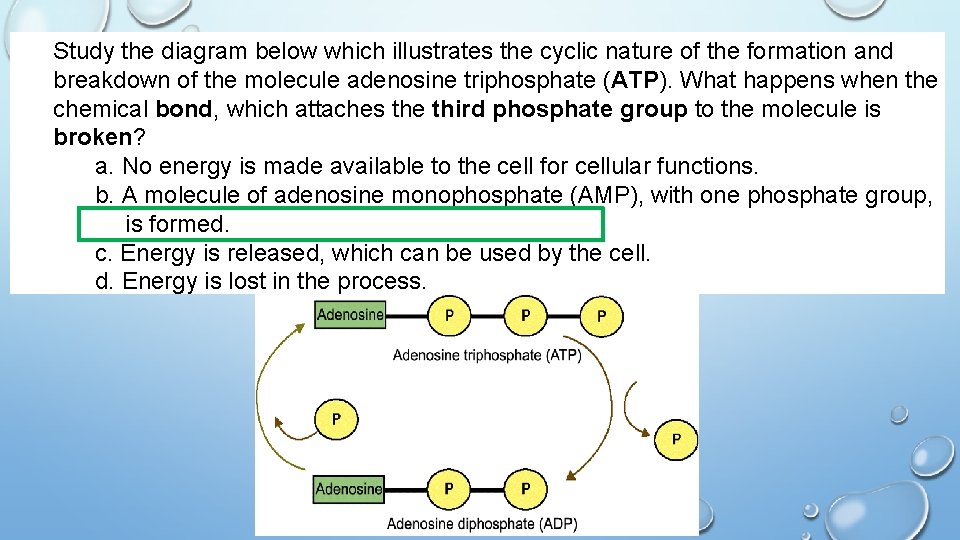
Study the diagram below which illustrates the cyclic nature of the formation and breakdown of the molecule adenosine triphosphate (ATP). What happens when the chemical bond, which attaches the third phosphate group to the molecule is broken? a. No energy is made available to the cell for cellular functions. b. A molecule of adenosine monophosphate (AMP), with one phosphate group, is formed. c. Energy is released, which can be used by the cell. d. Energy is lost in the process.
Which molecules store and transmit genetic information? A. Lipids B. Proteins C. Nucleic Acids D. Carbohydrates
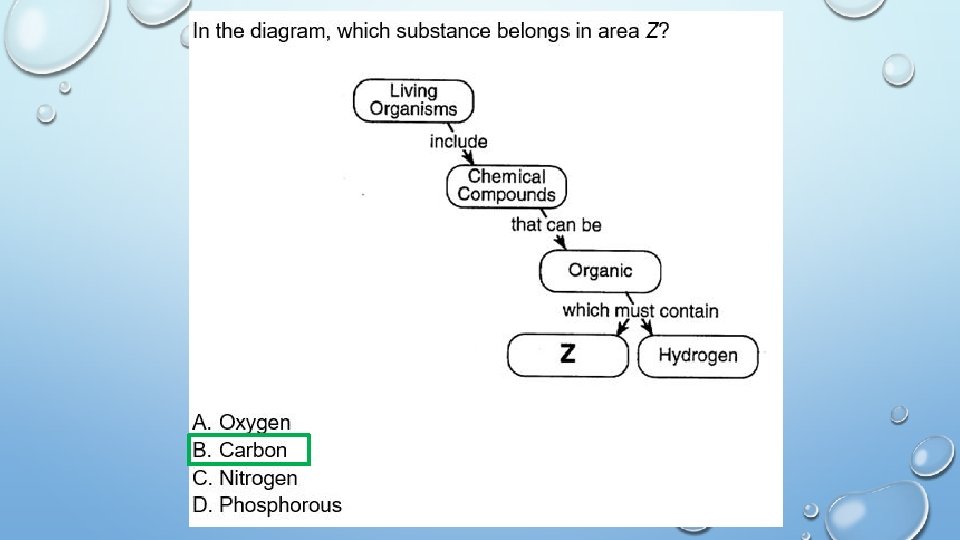
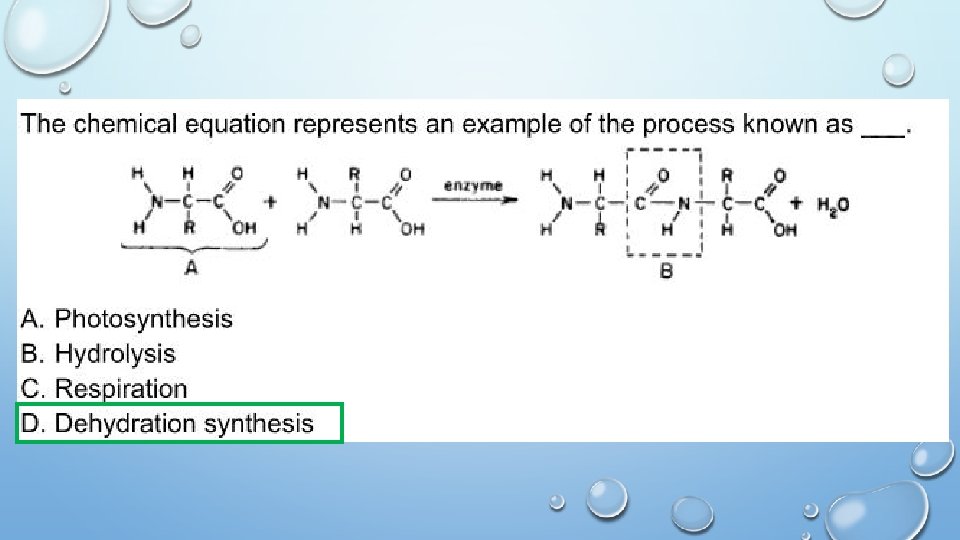
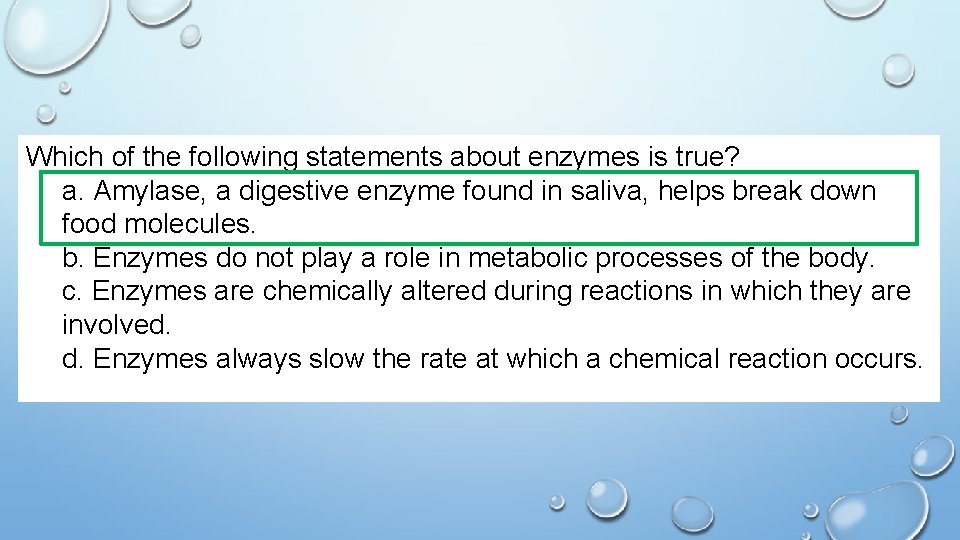
Which of the following statements about enzymes is true? a. Amylase, a digestive enzyme found in saliva, helps break down food molecules. b. Enzymes do not play a role in metabolic processes of the body. c. Enzymes are chemically altered during reactions in which they are involved. d. Enzymes always slow the rate at which a chemical reaction occurs.
- Slides: 28