
Surface Weather Map a k a Surface Synoptic
- Slides: 13
Surface Weather Map a. k. a: Surface Synoptic Chart
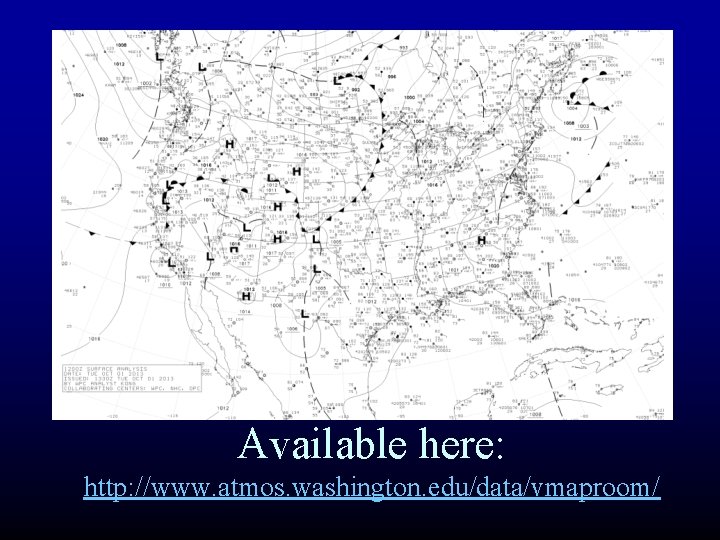
Available here: http: //www. atmos. washington. edu/data/vmaproom/
Why Surface Weather Maps? • Summarizes weather conditions at the surface (where we are!) • Using a progression of charts can see how weather is evolving. • Summarizes our conceptional model of the atmosphere (fronts).
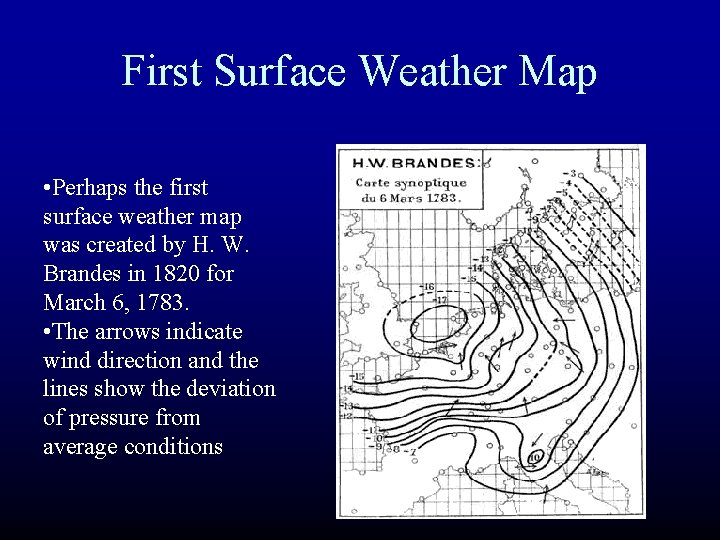
First Surface Weather Map • Perhaps the first surface weather map was created by H. W. Brandes in 1820 for March 6, 1783. • The arrows indicate wind direction and the lines show the deviation of pressure from average conditions
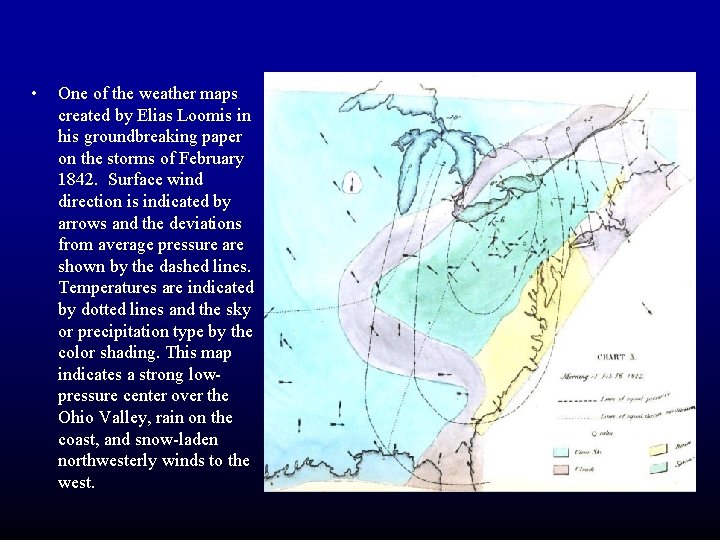
• One of the weather maps created by Elias Loomis in his groundbreaking paper on the storms of February 1842. Surface wind direction is indicated by arrows and the deviations from average pressure are shown by the dashed lines. Temperatures are indicated by dotted lines and the sky or precipitation type by the color shading. This map indicates a strong lowpressure center over the Ohio Valley, rain on the coast, and snow-laden northwesterly winds to the west.
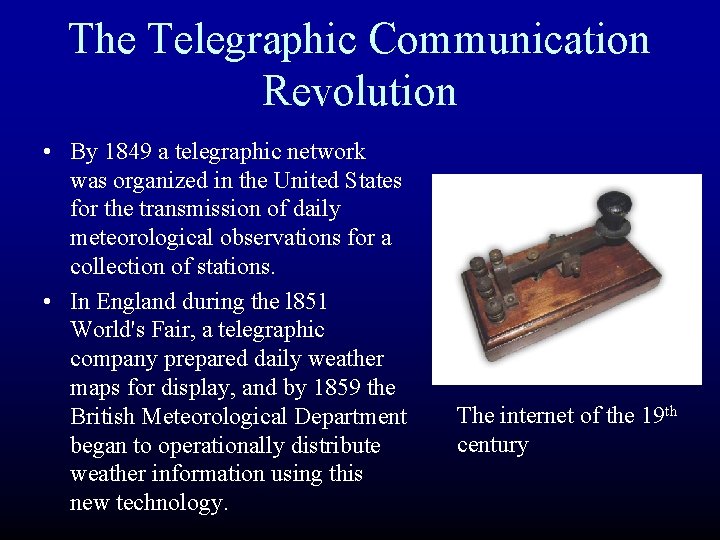
The Telegraphic Communication Revolution • By 1849 a telegraphic network was organized in the United States for the transmission of daily meteorological observations for a collection of stations. • In England during the l 851 World's Fair, a telegraphic company prepared daily weather maps for display, and by 1859 the British Meteorological Department began to operationally distribute weather information using this new technology. The internet of the 19 th century
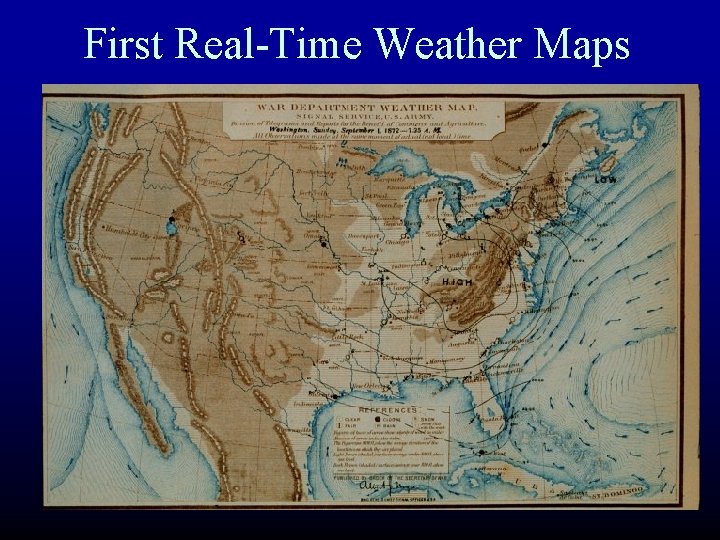
First Real-Time Weather Maps
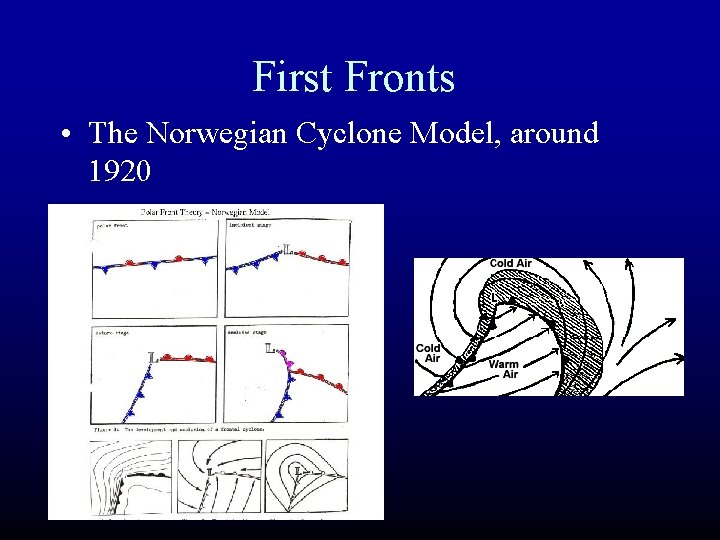
First Fronts • The Norwegian Cyclone Model, around 1920
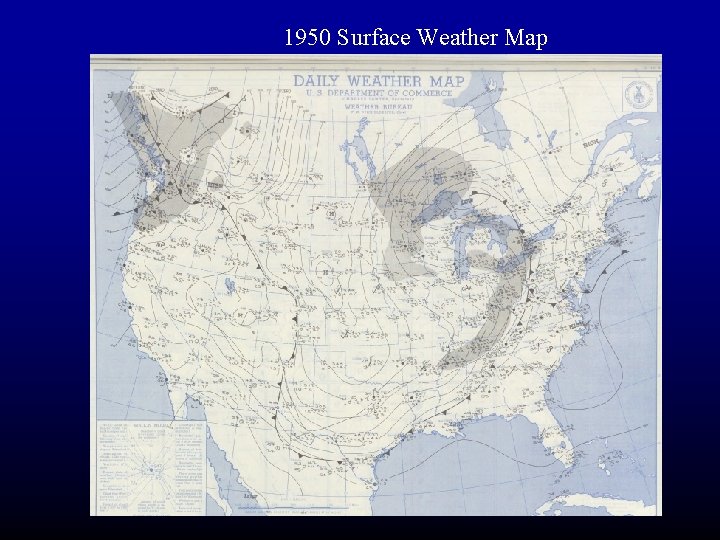
1950 Surface Weather Map
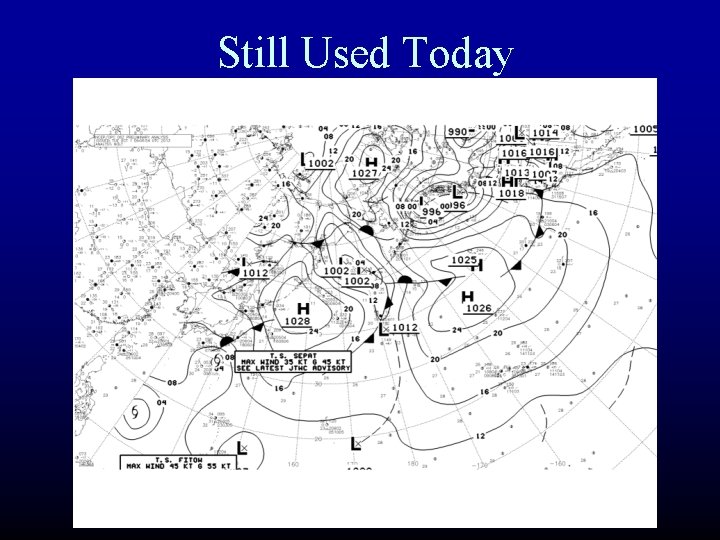
Still Used Today
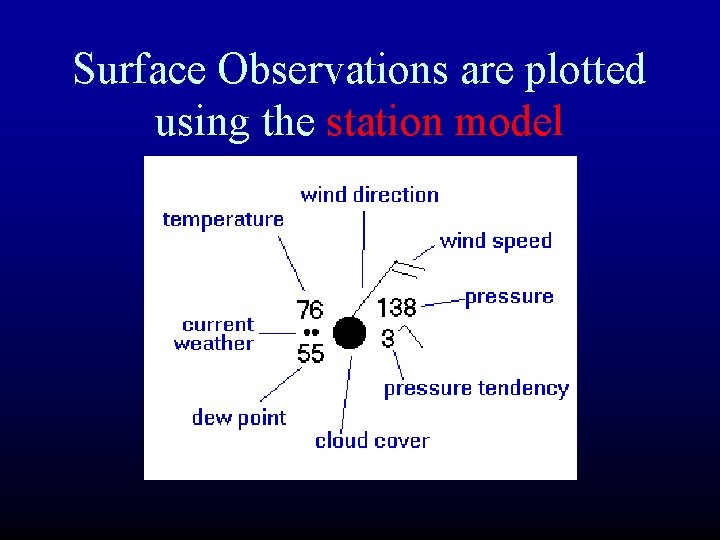
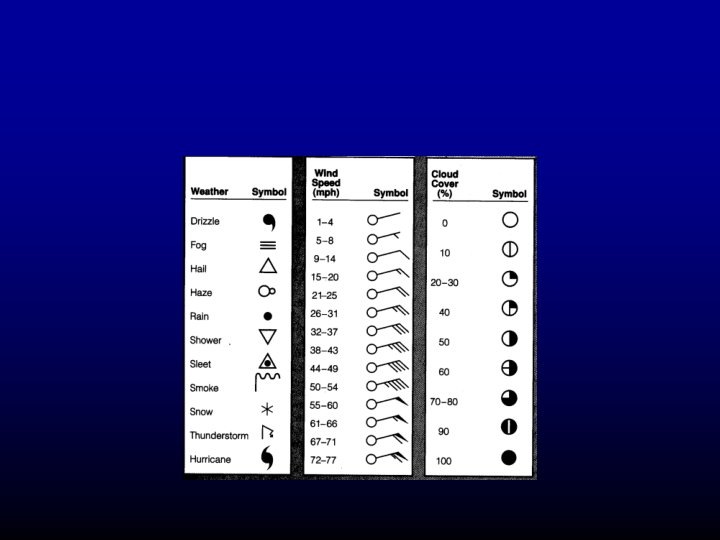
Surface Observations are plotted using the station model