
Surface Water Streams and Rivers Stream Erosion and


- Slides: 34
Surface Water Streams and Rivers Stream Erosion and Deposition River Valleys Flood Plains and Floods
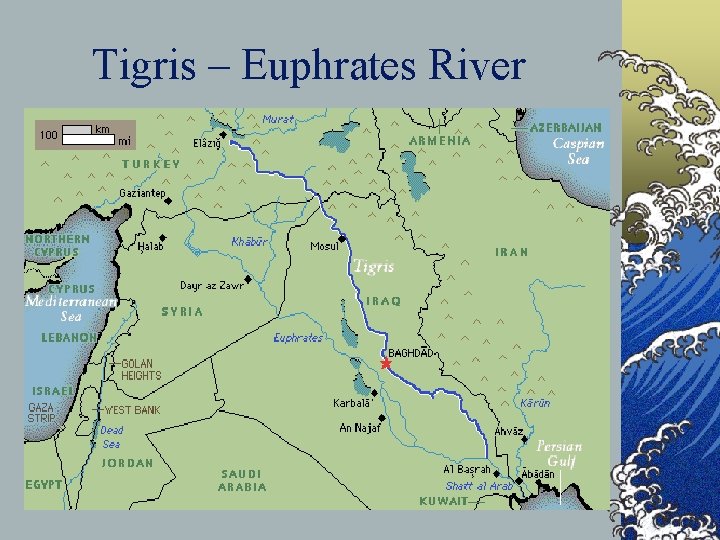
Tigris – Euphrates River
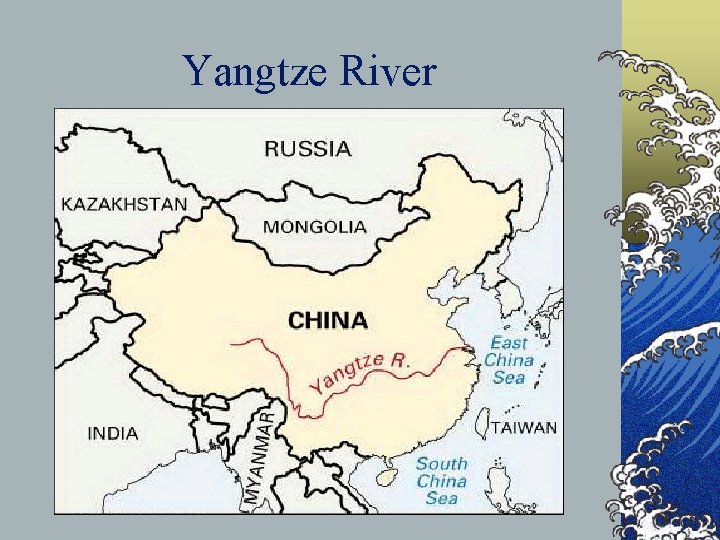
Yangtze River
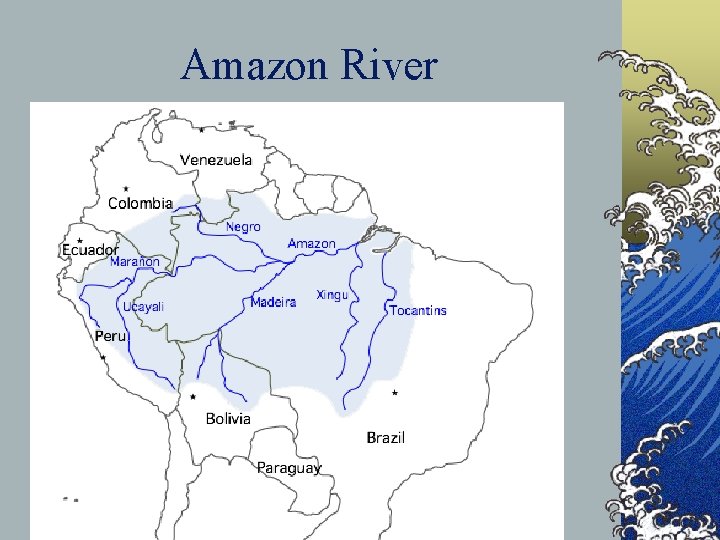
Amazon River
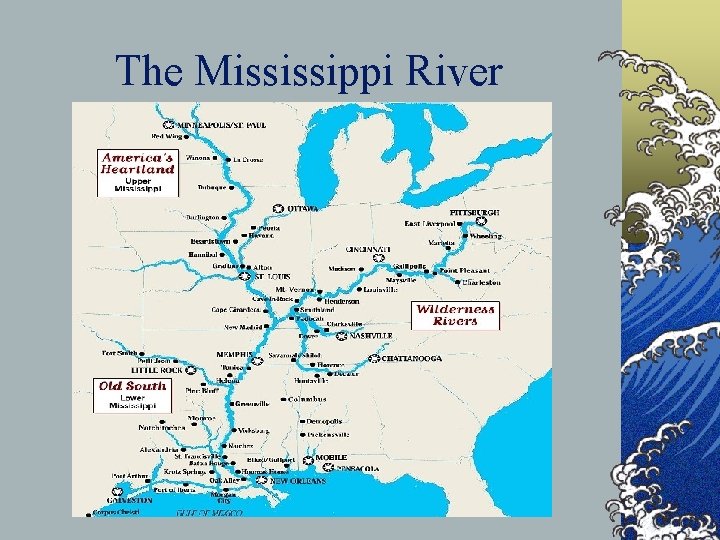
The Mississippi River
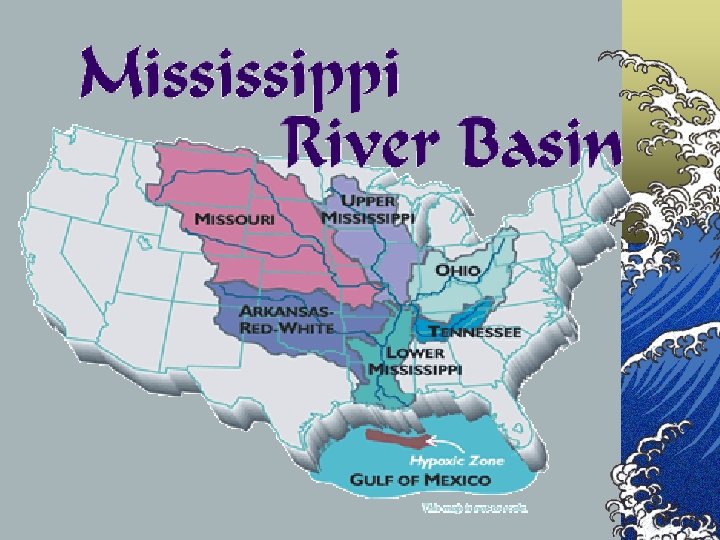
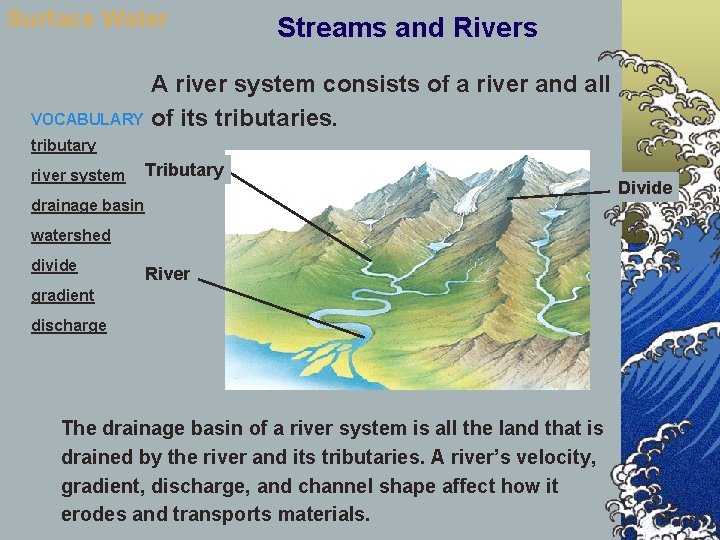
Surface Water Streams and Rivers A river system consists of a river and all VOCABULARY of its tributaries. tributary river system Tributary drainage basin watershed divide River gradient discharge The drainage basin of a river system is all the land that is drained by the river and its tributaries. A river’s velocity, gradient, discharge, and channel shape affect how it erodes and transports materials. Divide
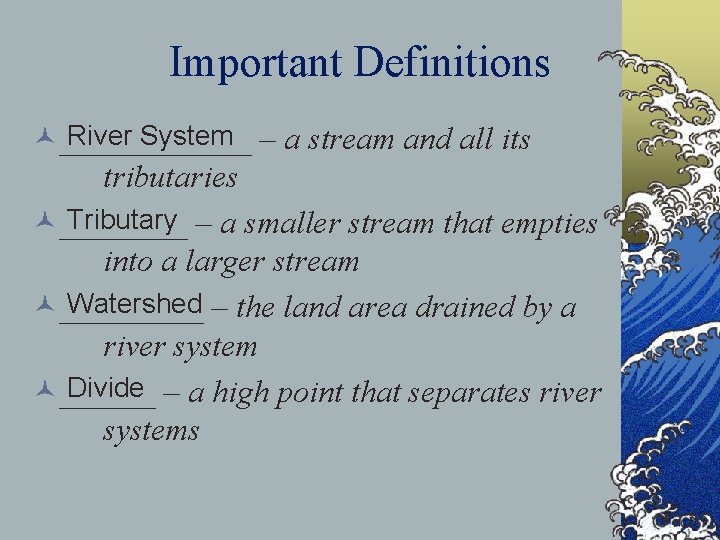
Important Definitions River System – a stream and all its ©______ tributaries Tributary – a smaller stream that empties ©____ into a larger stream Watershed – the land area drained by a ©_____ river system Divide – a high point that separates river ©______ systems
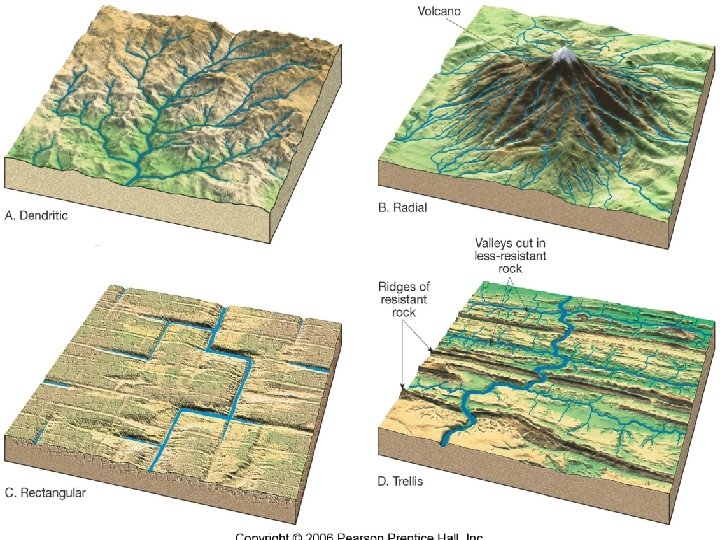
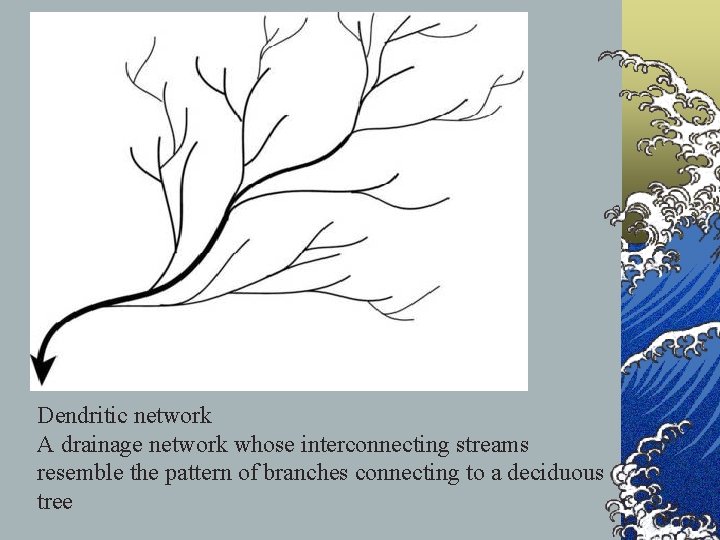
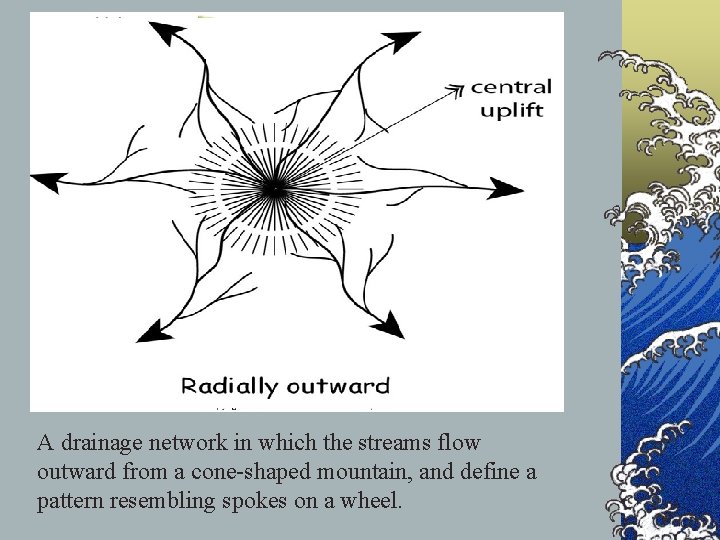
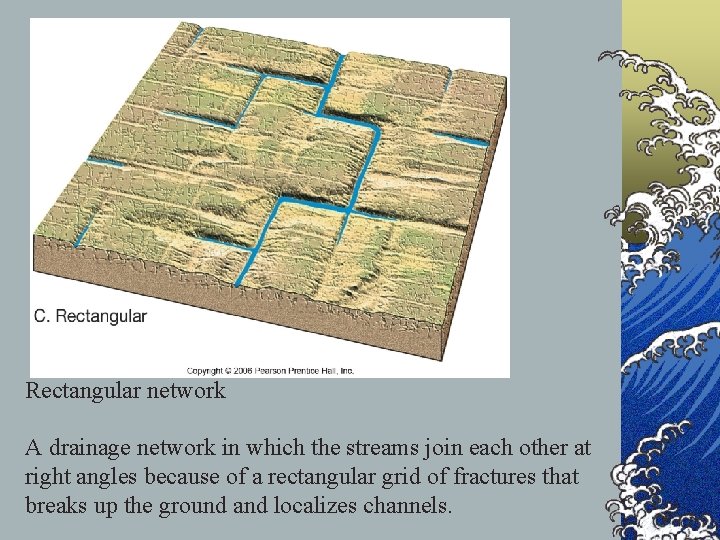
River Channels and Drainage There are different types of river channel patterns and river drainage patterns. 1. 2. 3. 4. Dendritic Radial Rectangular Trellis
Dendritic network A drainage network whose interconnecting streams resemble the pattern of branches connecting to a deciduous tree
Radial network A drainage network in which the streams flow outward from a cone-shaped mountain, and define a pattern resembling spokes on a wheel.
Rectangular network A drainage network in which the streams join each other at right angles because of a rectangular grid of fractures that breaks up the ground and localizes channels.
Trellis network A drainage system that develops across a landscape of parallel valleys and ridges so that major tributaries flow down the valleys and join a trunk stream that cuts through the ridge; the resulting map pattern resembles a garden trellis.
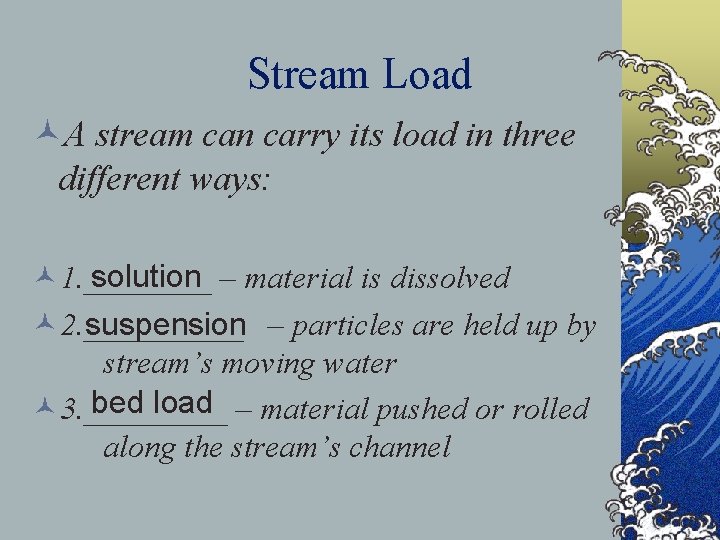
Surface Water Stream Erosion and Deposition VOCABULARY deposition pothole load suspension Rivers wear down Earth’s surface and erode and deposit materials. A river may carry materials in solution, in suspension, and in its bed load competence capacity delta Flow Suspension: Silt and clay Bed load: sand, gravel, pebbles and boulders Materials carried in solution cannot be seen.
Stream Load ©A stream can carry its load in three different ways: solution – material is dissolved © 1. ____ © 2. _____ suspension – particles are held up by stream’s moving water bed load – material pushed or rolled © 3. _____ along the stream’s channel
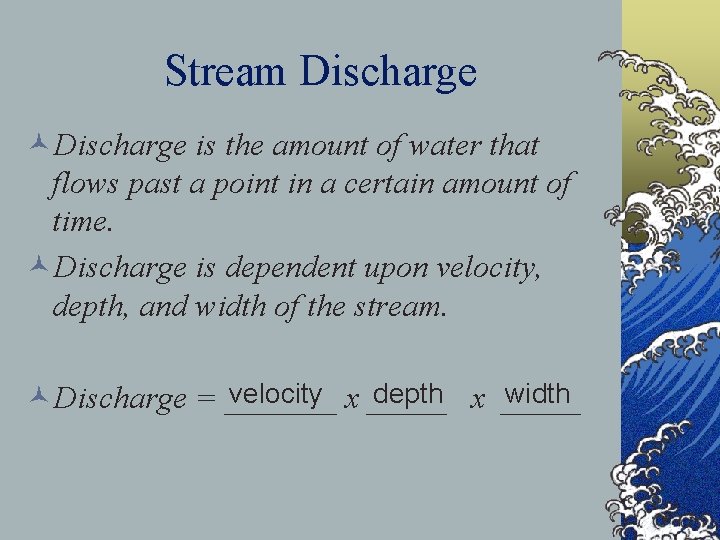
Stream Discharge ©Discharge is the amount of water that flows past a point in a certain amount of time. ©Discharge is dependent upon velocity, depth, and width of the stream. velocity x _____ depth x _____ width ©Discharge = _______
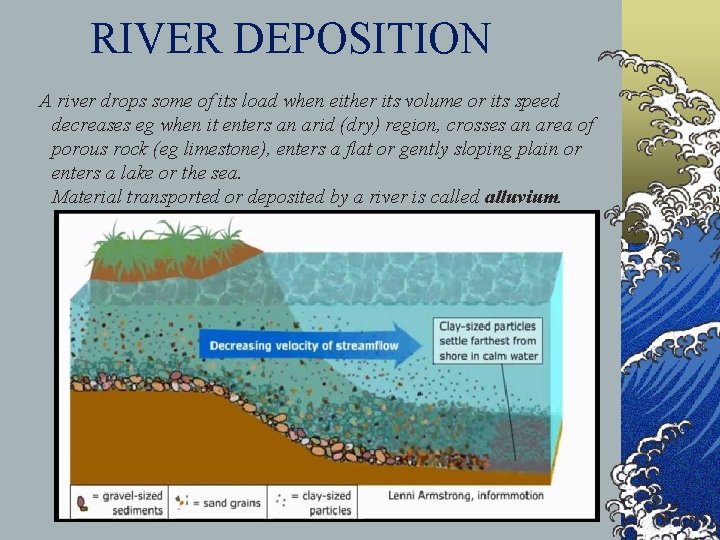
RIVER DEPOSITION A river drops some of its load when either its volume or its speed decreases eg when it enters an arid (dry) region, crosses an area of porous rock (eg limestone), enters a flat or gently sloping plain or enters a lake or the sea. Material transported or deposited by a river is called alluvium.
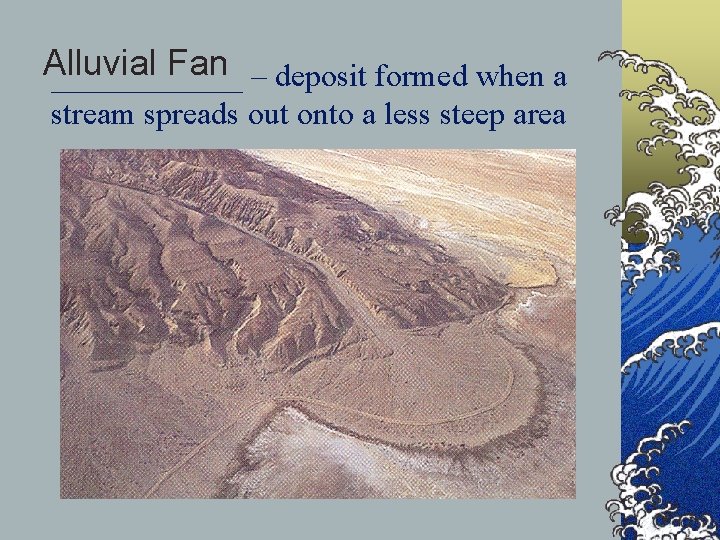
Alluvial Fan ______ – deposit formed when a stream spreads out onto a less steep area
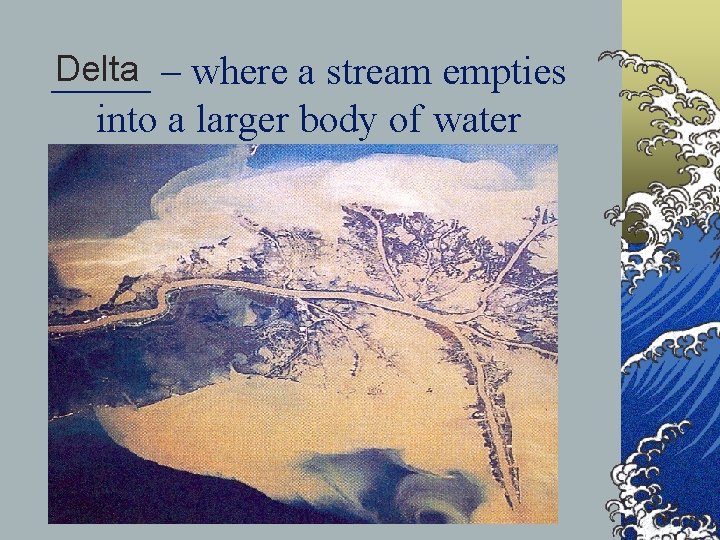
Delta – where a stream empties _____ into a larger body of water
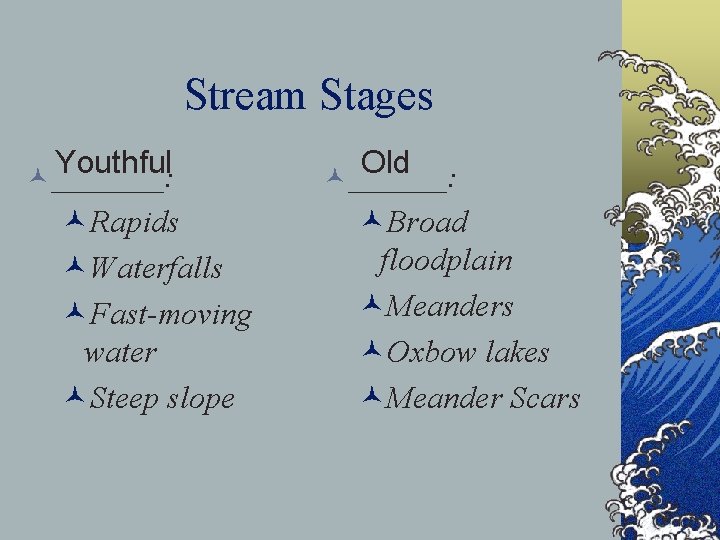
Stream Stages Youthful © ____: ©Rapids ©Waterfalls ©Fast-moving water ©Steep slope Old © _______: ©Broad floodplain ©Meanders ©Oxbow lakes ©Meander Scars
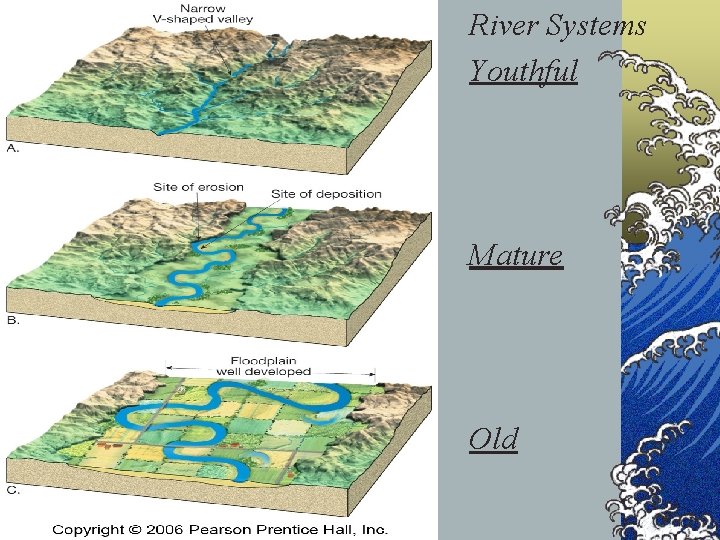
River Systems Youthful Mature Old
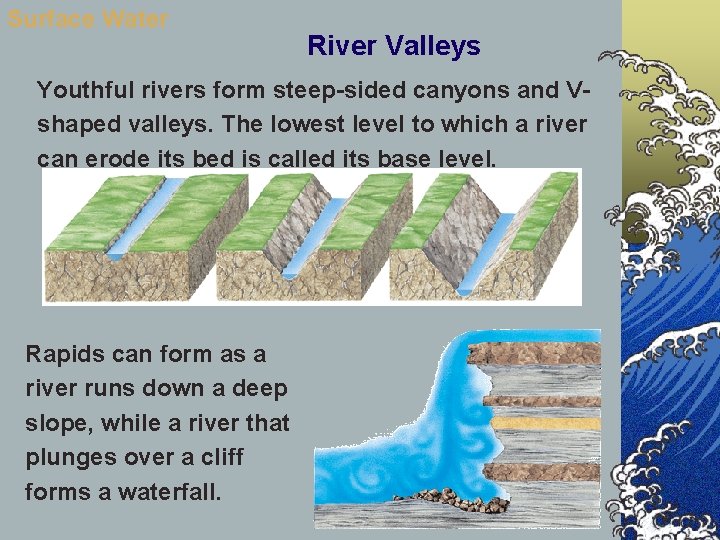
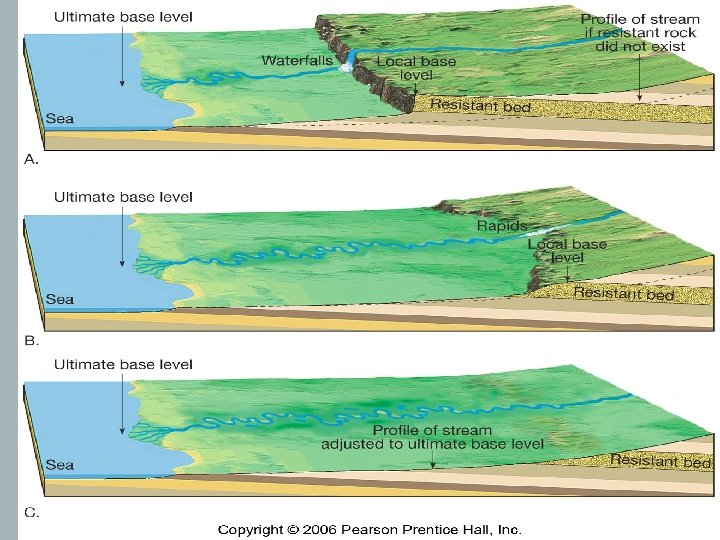
Surface Water River Valleys Youthful rivers form steep-sided canyons and Vshaped valleys. The lowest level to which a river can erode its bed is called its base level. Rapids can form as a river runs down a deep slope, while a river that plunges over a cliff forms a waterfall.
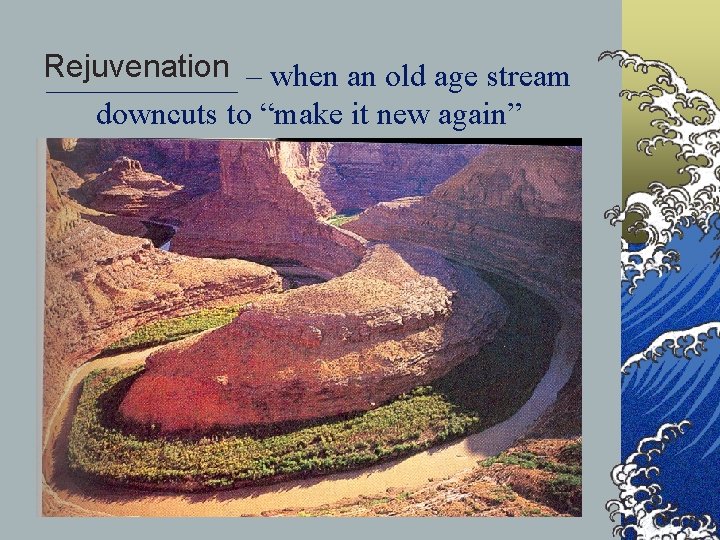
Rejuvenation ______ – when an old age stream downcuts to “make it new again”
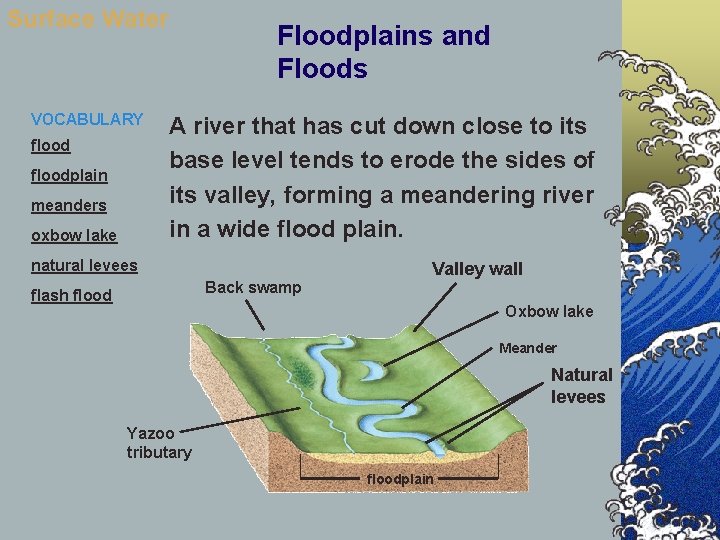
Surface Water VOCABULARY floodplain meanders oxbow lake Floodplains and Floods A river that has cut down close to its base level tends to erode the sides of its valley, forming a meandering river in a wide flood plain. natural levees Back swamp flash flood Valley wall Oxbow lake Meander Natural levees Yazoo tributary floodplain
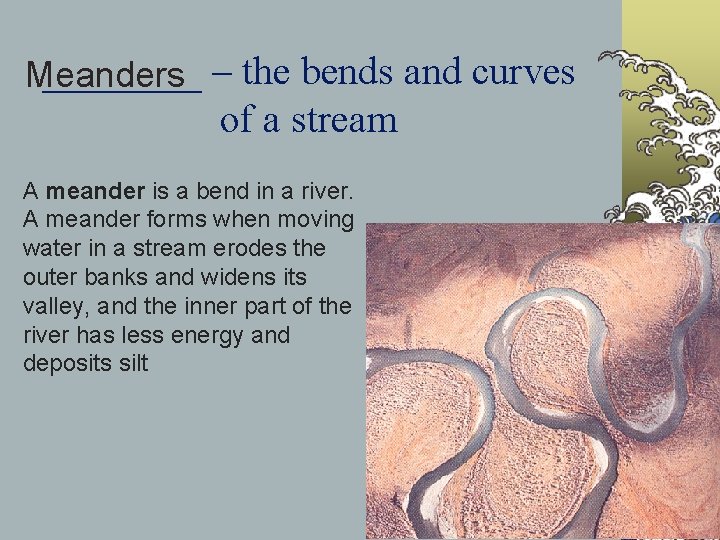
____ – the bends and curves Meanders of a stream A meander is a bend in a river. A meander forms when moving water in a stream erodes the outer banks and widens its valley, and the inner part of the river has less energy and deposits silt
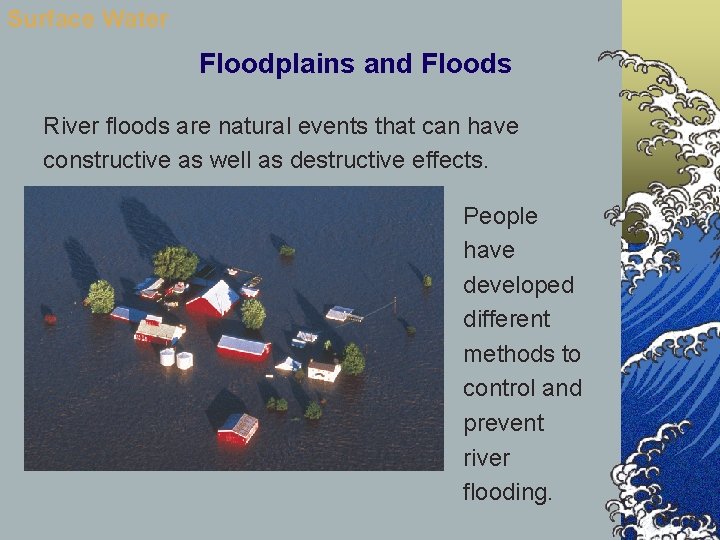
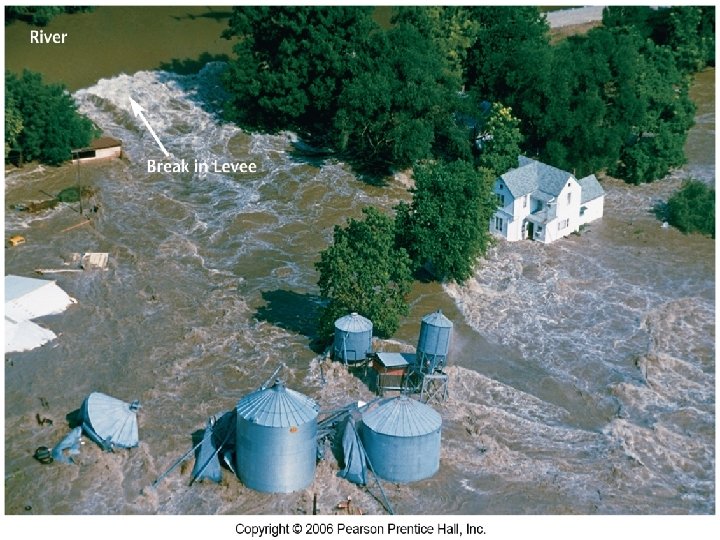
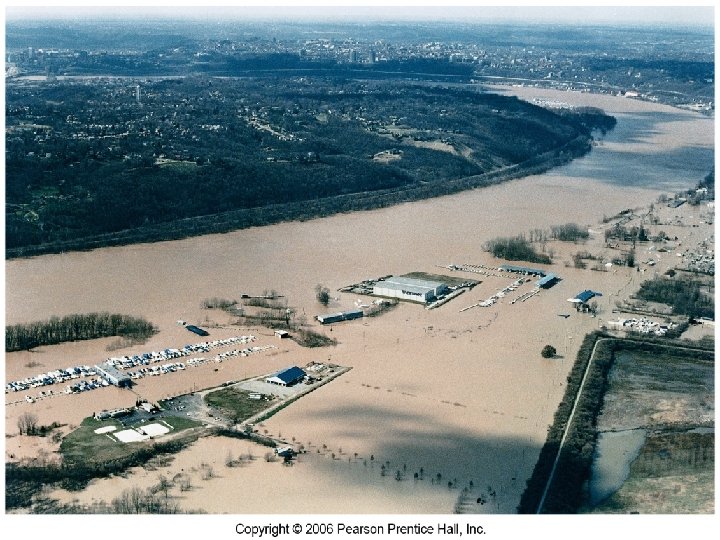
Surface Water Floodplains and Floods River floods are natural events that can have constructive as well as destructive effects. People have developed different methods to control and prevent river flooding.
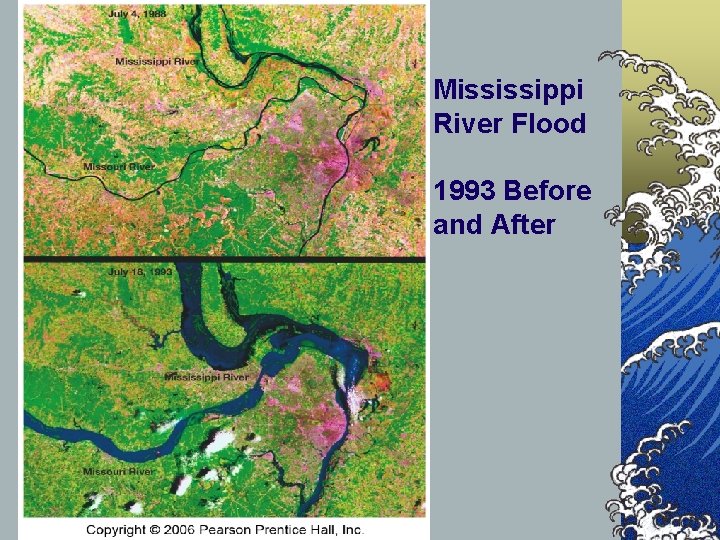
Mississippi River Flood 1993 Before and After
Vocabulary Review Ø Flood: The phenomenon whereby a river overflows its banks. Ø Flood plain: A wide, level area that borders a river and is covered by its water during a flood. Ø Meander: Broad: looping bends in a river. Ø Oxbow lake: A crescent-shaped body of water formed when sediments deposited by a river cut off a meander from the river. Ø Natural levees: Elevated ridges along a river’s bank that are formed by the deposition of the river’s sediment load. Ø Flash flood: A sudden flood, usually caused by intense, heavy rainfall.