
Surface Water Simulation Group Comprehensive watershed scale model
![Augusta Creek Landuse and Soil Distribution Area [ha] 9662. 0400 WATERSHED: Area [acres] %Wat.](https://slidetodoc.com/presentation_image_h2/efcecfa34d6e8eea84f06709baa52772/image-15.jpg "Augusta Creek Landuse and Soil Distribution Area [ha] 9662. 0400 WATERSHED: Area [acres] %Wat.")
- Slides: 23
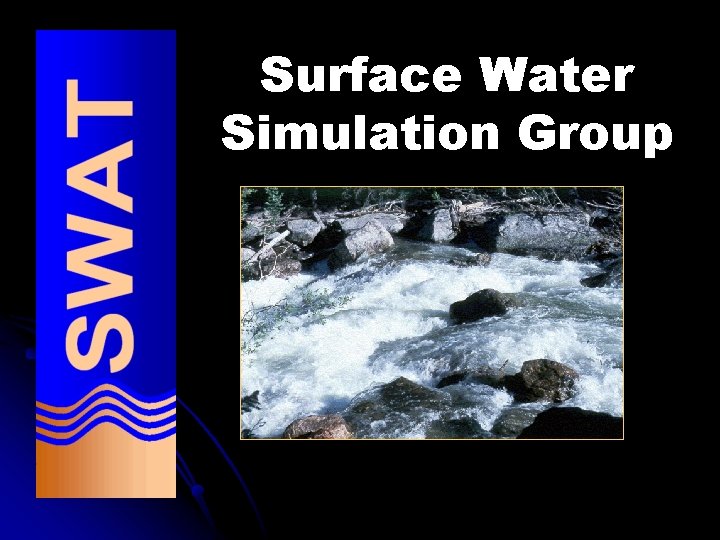
Surface Water Simulation Group
Comprehensive watershed scale model developed and supported by the USDA-ARS capable of simulating surface and groundwater hydrology under different management practices in hydrologically complex watersheds.
Applications US-EPA BASINS Multipurpose Environmental Analysis System for Performing Watershed and Water Quality Studies System for Supporting Development of Total Maximum Daily Loads (TMDL’s). SWAT Included in Basins 3. 0
Applications Assessment of CAFOs on Water Quality Hydrologic and Water Quality Impacts resulting from Land Use Change within Watersheds Assessing Impact of Climate Change
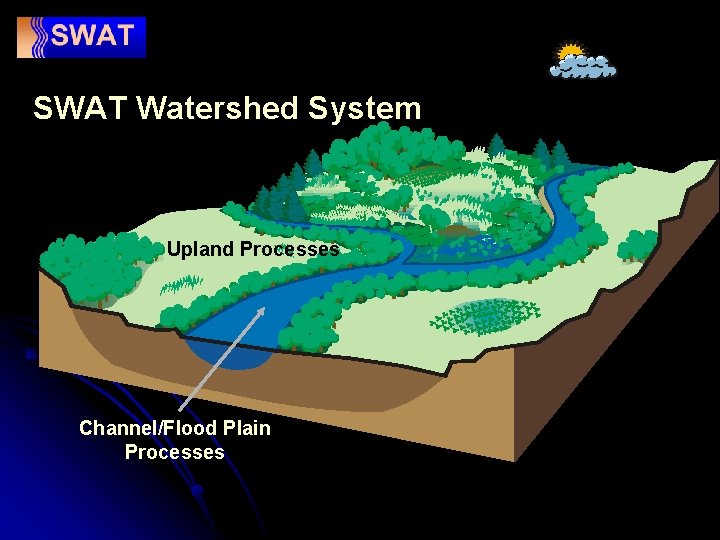
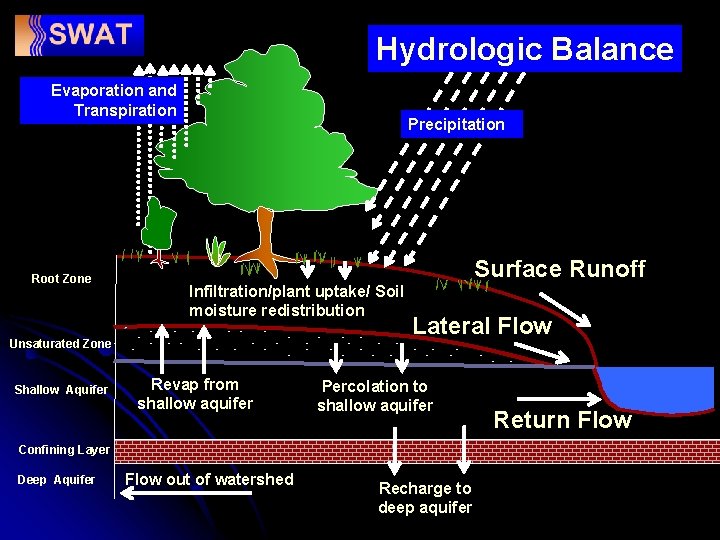
SWAT Watershed System Upland Processes Channel/Flood Plain Processes
Possible Configurations Cells Subwatersheds Hydrologic Response Units Output from other Models - EPIC, SWAT Point Sources - Treatment Plants
SWAT Strengths Upland Processes Comprehensive Hydrologic Balance Physically-Based Inputs Plant Growth – Rotations, Crop Yields Nutrient Cycling in Soil Land Management - BMP Tillage, Irrigation, Fertilizer, Pesticides, Grazing, Rotations, Subsurface Drainage, Urban-Lawn Chemicals, Street Sweeping
General Description Continuous Time Daily Time Step (Sub-hourly) One Day to Hundreds of Years Readily available input – Physically based Distributed Parameter Unlimited Number of Subwatersheds Comprehensive – Process Interactions Simulate Management
Hydrologic Balance Evaporation and Transpiration Root Zone Precipitation Infiltration/plant uptake/ Soil moisture redistribution Unsaturated Zone Shallow Aquifer Revap from shallow aquifer Surface Runoff Lateral Flow Percolation to shallow aquifer Confining Layer Deep Aquifer Flow out of watershed Recharge to deep aquifer Return Flow
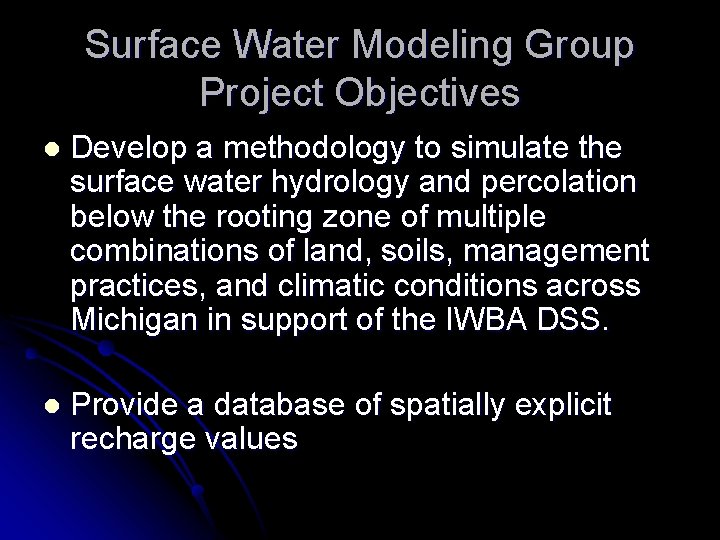
Surface Water Modeling Group Project Objectives l Develop a methodology to simulate the surface water hydrology and percolation below the rooting zone of multiple combinations of land, soils, management practices, and climatic conditions across Michigan in support of the IWBA DSS. l Provide a database of spatially explicit recharge values
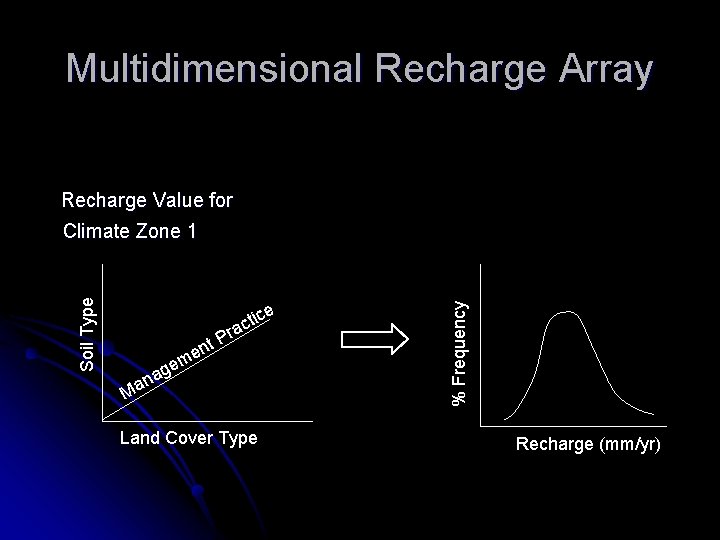
Multidimensional Recharge Array Recharge Value for tice c ra P nt e em ag n a M Land Cover Type % Frequency Soil Type Climate Zone 1 Recharge (mm/yr)
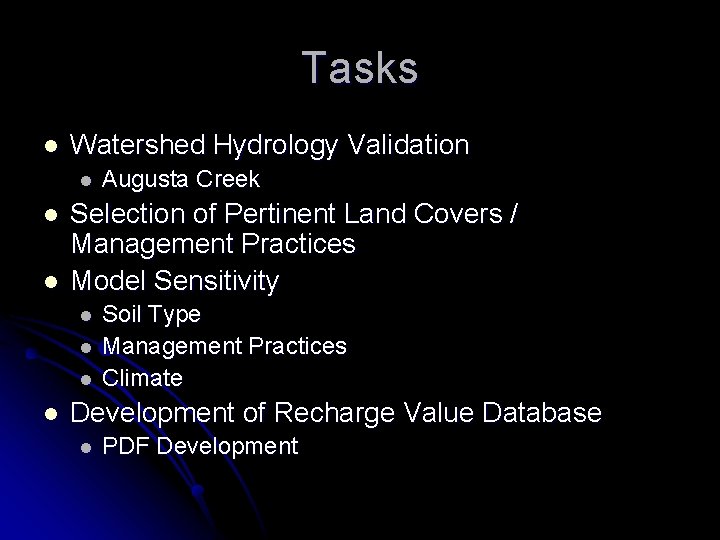
Tasks l Watershed Hydrology Validation l l l Selection of Pertinent Land Covers / Management Practices Model Sensitivity l l Augusta Creek Soil Type Management Practices Climate Development of Recharge Value Database l PDF Development
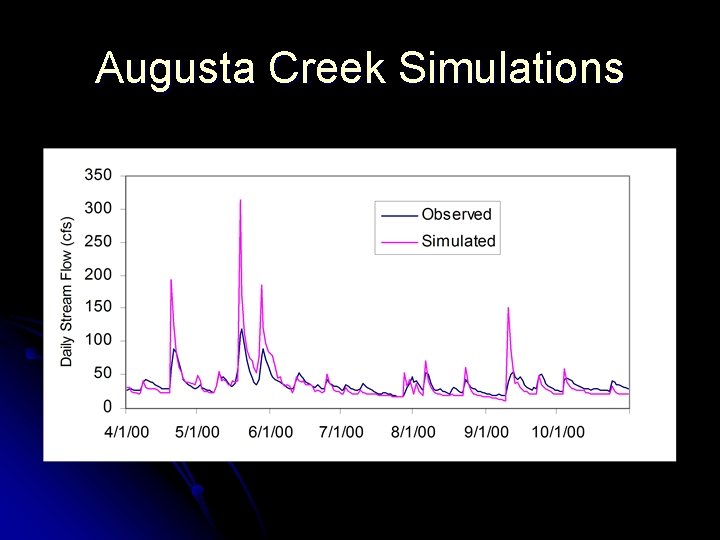
Watershed Validation Augusta Creek l Small watershed near KBS l 38. 9 mi 2 l Available data for surface water, groundwater, and ecological modeling teams l Watershed will be used to validate modeling approaches
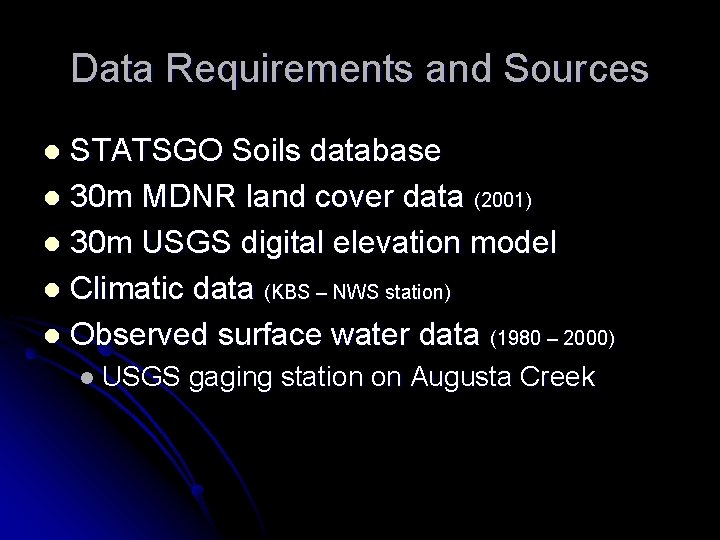
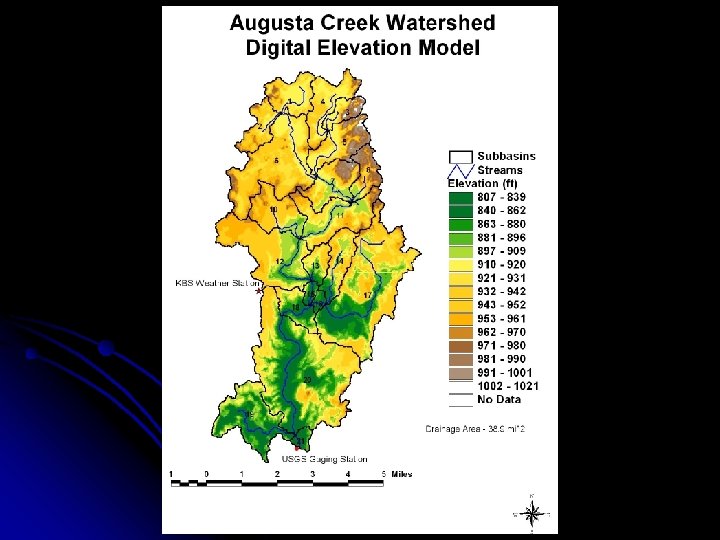
Data Requirements and Sources STATSGO Soils database l 30 m MDNR land cover data (2001) l 30 m USGS digital elevation model l Climatic data (KBS – NWS station) l Observed surface water data (1980 – 2000) l l USGS gaging station on Augusta Creek
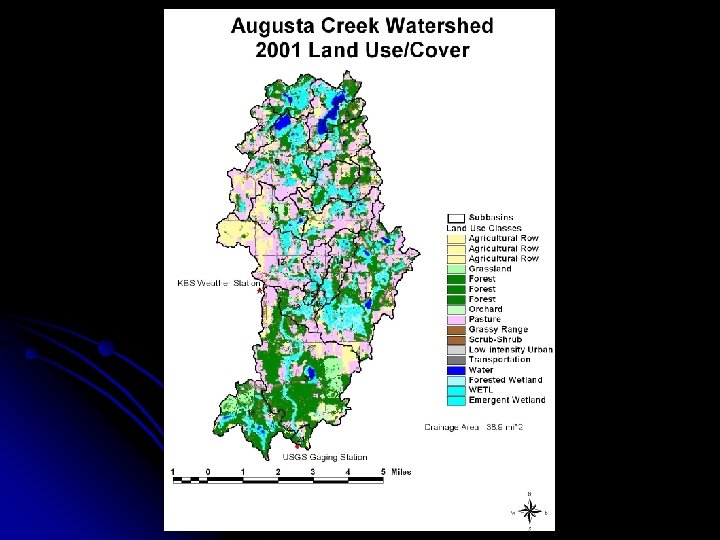
Augusta Creek Landuse and Soil Distribution Area [ha] 9662. 0400 WATERSHED: Area [acres] %Wat. Area 23875. 3839 LANDUSE: Pasture-->PAST 3060. 1836 Range-Grasses-->RNGE 650. 0890 Water-->WATR 90. 5050 Wetlands-Forested-->WETF 543. 5344 Wetlands-Mixed-->WETL 1000. 0179 Wetlands-Non-Forested-->WETN 31. 5641 Kentucky Bluegrass-->BLUG 195. 8813 Forest-Deciduous-->FRSD 2255. 8207 Forest-Evergreen-->FRSE 430. 7276 Agricultural Land-Row Crops-->AGRR 1361. 6308 Orchard-->ORCD 42. 0854 7561. 8668 1606. 4024 223. 6423 1343. 1006 2471. 0943 77. 9966 484. 0326 5574. 2458 1064. 3495 3364. 6579 103. 9952 31. 67 6. 73 0. 94 5. 63 10. 35 0. 33 2. 03 23. 35 4. 46 14. 09 0. 44 3694. 0817 4417. 1788 205. 5288 15558. 5947 15. 47 18. 50 0. 86 65. 17 SOIL: MI 047 MI 091 MI 036 MI 045 1494. 9441 1787. 5716 83. 1747 6296. 3496
Augusta Creek Simulations
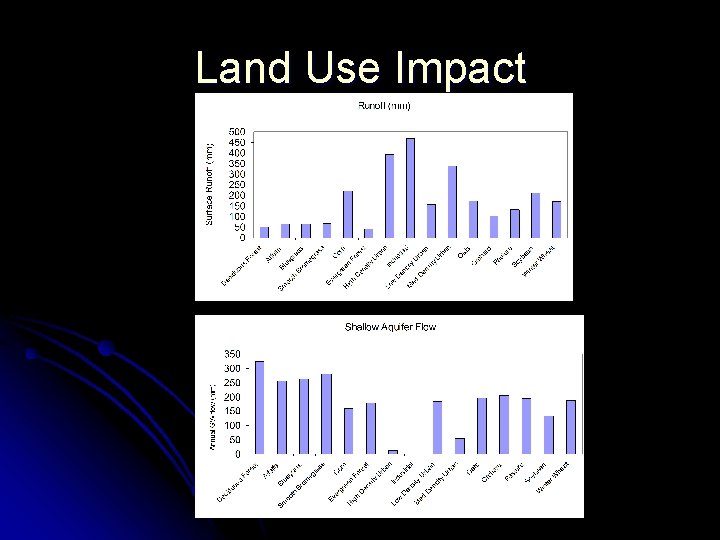
Land Use Impact
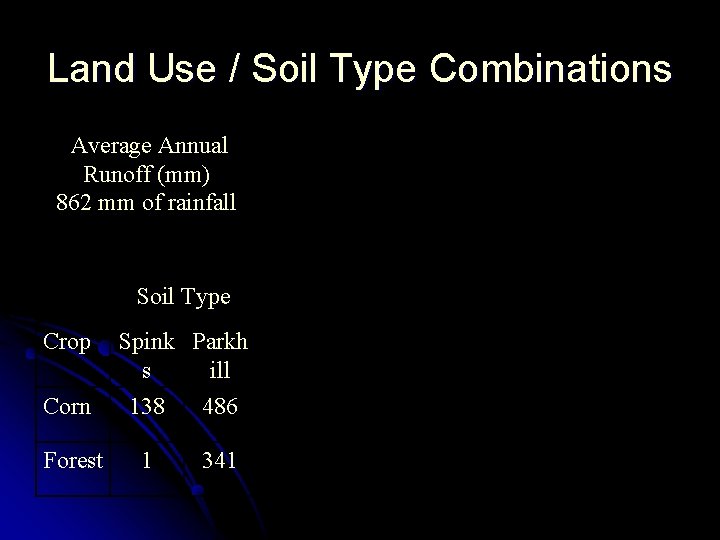
Land Use / Soil Type Combinations Average Annual Runoff (mm) 862 mm of rainfall Soil Type Crop Corn Forest Spink Parkh s ill 138 486 1 341
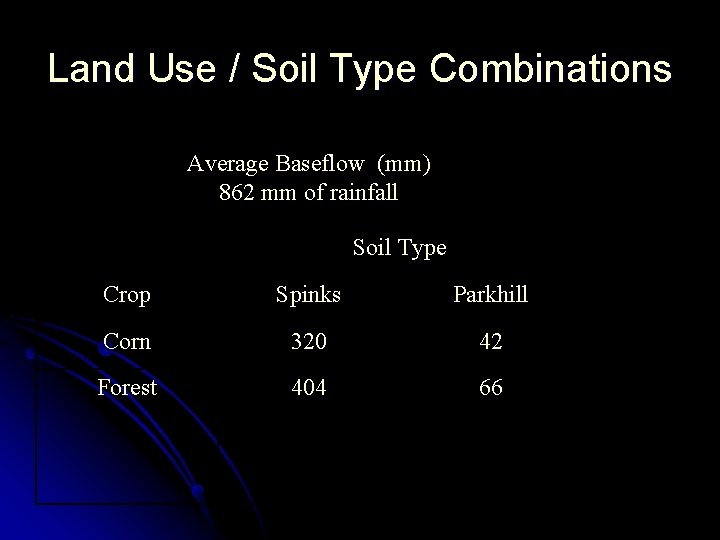
Land Use / Soil Type Combinations Average Baseflow (mm) 862 mm of rainfall Soil Type Crop Spinks Parkhill Corn 320 42 Forest 404 66
Where to go from here? l l Have the ability to perform a water balance on every soil in the state. Available long-term daily weather data (100+ yrs) distributed across the climate regions of the state. Need to finalize land use – management combinations Begin mass simulations of combinations of soil / landuse / climate l Quality control – result analysis
Questions